Pink tulips are a popular spring flower renowned for their cup-shaped flowers and rich historic significance. It got its name from the Turkish word “tulbent,” meaning “turban,” justifying its flower shape. The 17th-century tulip mania increased the demand and prices of these blooms before declining. This left a lasting impact, contributing to the charm of pink tulips centuries after the historic event.
In this article, I will share some interesting insights about the pink tulips, like their meaning, care, planting, and popular uses.
Quick answer
The pink tulip is a spring perennial bulb part of the Liliaceae family, which has been popular for its cup-shaped blooms and significance in the Ottoman Empire and later in the Tulip Mania. These flowers are a symbol of love and good luck, best planted in the fall and used as cut flowers for events and home decor.
What is a Pink Tulip? Features and Historical Significance
A spring perennial bulb belonging to the Liliaceae family, the pink tulip gained popularity due to its cup-shaped blooms and its importance during the Ottoman Empire and Tulip Mania.
Part of the Liliaceae family, pink tulips were first found in Kazakhstan and were later popularized as they reached the Ottoman Empire in the 16th century. With the growing influence of the Ottomans, tulips became much more significant, with tulip gardens and their use in literature and paintings.
They were considered a symbol of luck in Turkey and were embroidered as a good luck charm on clothes. The Ottomans left, but the enduring appeal of tulips stood the test of time, as they are widely recognized as a popular spring flower with symbolism relating to affection and admiration and are also used on Mother’s Day.
Quick warning
According to ASPCA, all the tulip varieties are toxic to pets.
Meaning and Symbolism of Pink Tulips
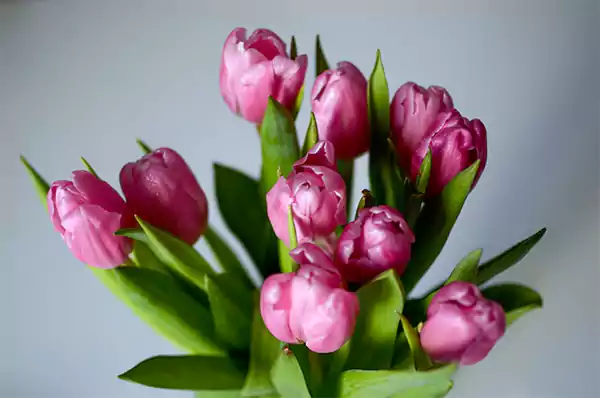
Pink tulips are a symbol of love and affection, like many pink flowers. While they have strong historical significance, tying them to the idea of good luck and prosperity, these early-season bloomers have various meanings, making them extremely versatile.
1. Deep Love and Affection
- The pink tulips are a symbol of deep love and affection, similar to all the pink flowers, and can be paired with white roses in a flower arrangement for Valentine’s Day or a similar occasion.
2. Rebirth and New Beginnings
- These early bloomers grace the gardens from late March to early May and, therefore, rightly, are associated with the meaning of new beginnings and rebirth.
- Pair them up with some white flowers, which are also symbolic of new beginnings for baby showers and wedding flower bouquets.
3. Good Luck and Charity
- In the Ottoman Empire, these ornamental blooms were a symbol of good luck and charity, printed on clothes and tiles.
- The Victorians associated the pink tulips with the idea of warmth and generosity.
5 Pink Tulip Varieties for Your Garden
The most popular variety of the pink tulip is the Angelique flower, which grows in a blush pink color. Apart from this, other pink tulip flowers in the list include Antoinette, Bella Blush, Beauty Trend, and Columbus.
Take a look at the 5 popular pink tulip varieties that can be grown at home or used in bouquets.
1. Angelique
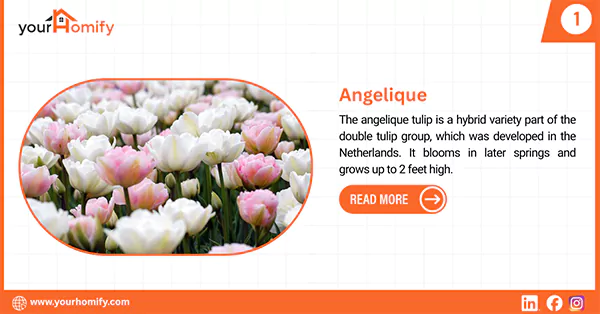
- Botanical name: Tulipa ‘Angelique’
- Height: 1-2 feet
- Native Area: Netherlands
Part of the Double Tulip Group, the Angelique tulip is a hybrid flower developed in the Netherlands in the 1950s. Blooming late in spring, this variety is popularly grown in garden borders and used in flower arrangements for weddings.
2. Antoinette
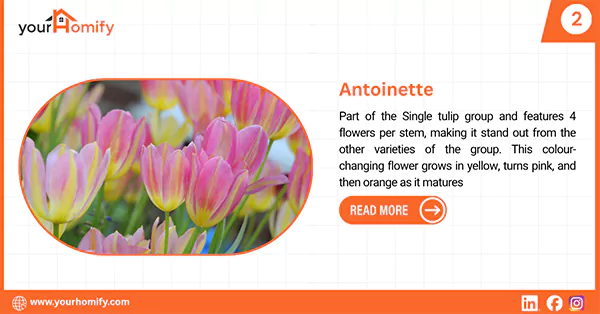
- Botanical name: Tulipa ‘Antoinette’
- Height: 1-2 feet
- Native Area: Developed in the Netherlands
Antoinette Tulip is a member of the single late tulip group with 4 blooms per stem and blooms in late spring, like the other varieties. Initially, they grow in the color yellow and transform to blush pink and then to orange upon maturity.
3. Bella Blush
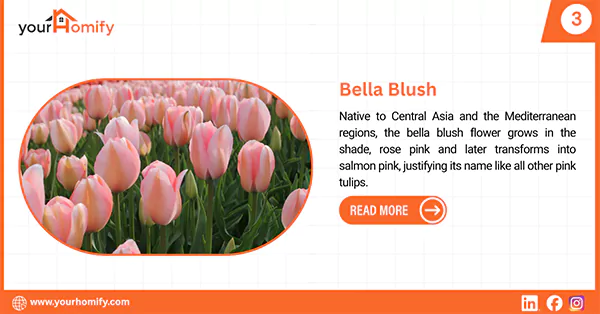
- Botanical name: Tulipa Darwin Hybrid ‘Bella Blush’
- Height: 1-2 feet
- Native Area: Central Asia to the Mediterranean basin
The Bella Blush tulip, as the name suggests, is a pink flower that changes color upon maturity from rose pink to a salmon pink, which is true for all these different types.
Best grown in full sun to partial shade and sandy, loamy, acidic soil, the color-changing features make it a garden favorite.
4. Beauty Trend
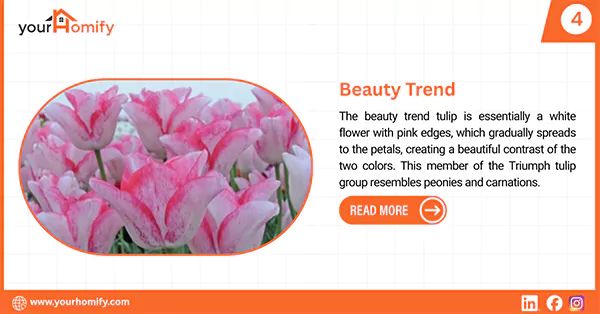
- Botanical name: Tulipa ‘Beauty Trend’
- Height: 1-2 feet
- Native Area: Central Asia to the Mediterranean basin
The Beauty Trend tulip is a white flower with pink edges, which later spreads evenly on the petals, making it look subtle yet elegant. Part of the Triumph Tulip Group, the closely packed petals of these pink blooms resemble peonies or carnations.
5. Columbus
- Botanical name: Tulipa ‘Columbus’
- Height: 1-2 feet
- Native Area: Developed in the Netherlands
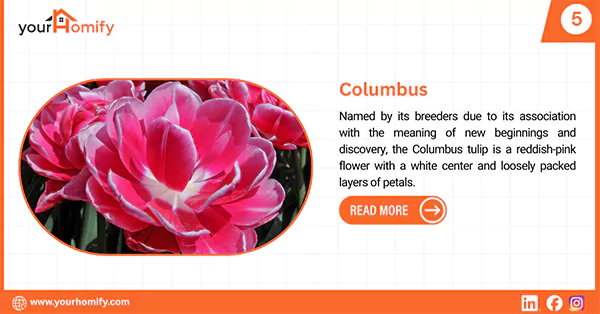
The Columbus tulip is a reddish-pink flower with a white center that has loosely packed layers, giving it a voluminous look that resembles peonies. This plant gets its name from its Dutch breeders, who associated the flower with discovery and new beginnings.
How to Grow Pink Tulips at Home?
Pink tulips are best planted in the fall through bulbs. They are beginner-friendly flowers grown easily as indoor plants in containers or garden beds.
Before I take you through the planting steps, here are the growing requirements essential for planting:
Growing Requirements
| Growing Zone | USDA zones 3-8 |
| Planting Time | Fall |
| Sunlight | Full sun to partial shade |
| Watering | Consistent |
| Fertiliser | Balanced fertilizer/bulb food |
| Soil Type | Well-draining, slightly acidic soil |
Planting
For people living in warmer zones, later September to early October is the perfect time to get the pink tulip bulbs planted, but for zones below 3, start planting around early September before the ground freezes.
Here is how I grow my pink tulips in my garden beds:
- Select a spot in the garden with well-draining acidic soil that receives direct sunlight.
- Turn up the soil and add compost for added nutrition.
- Dig an 8-inch deep hole, and place the bulb in it with the pointed tip facing upwards.
- Fill up the soil and dab well to remove any air pockets and water immediately.
- Do not overwater the plant; tulips do not like damp soil.
- Place them at least 6 inches apart for better air circulation.
- You can add a layer of balanced fertilizer or bulb food to accelerate the growth, but in the recommended quantity only.
YourHomify Suggestion
Tulip bulbs have enough nutrients for their development, hence feeding the fertilizer only when required. Overfeeding can lead to root burn.
Care Guide for Pink Tulips
Tulip fire is the most common problem faced by the pink tulips, which can be prevented by being vigilant during purchase. Apart from this, tulips are easy to maintain, both in the garden and in vases alike.
Garden
- Sunlight: Place it in full sun for 6+ hours for the best blooms.
- Temperature: 13-18 °C is ideal for growing the pink tulips outdoors. Avoid planting in warmer climates, as it gives birth to a lot of diseases.
- Water: Instead of making frequent, shallow splashes, try to soak the soil thoroughly until it is 6 inches below the surface. Consistent watering is essential initially, but with well-draining soil, as the pink tulips do not thrive in damp soil.
- Pests and Diseases: As mentioned above, tulip fire is the most common disease in tulips, which can be prevented through mindful purchase, maintaining a clean garden and avoiding cultivation in warm weather.
YourHomify Tip
Brown spots and distorted leaves/petals are a sign of Tulip fire. Discard the plant immediately in case of infestation, and do not plant anything in the place for at least 2 years.
Vase
Pink tulips can last up to 14 days in a vase, provided the right care. Whether homegrown or store-bought, the care tips for the cut flowers remain the same:
I follow these 5 steps for the longest-lasting pink tulips:
- Cut the stems at a 45-degree angle for the best water absorption.
- Fill a vase with lukewarm water and flower food, and place the stems in it gently.
- Do not expose these flowers to direct sunlight, as it can scorch the leaves and petals.
- Change the water regularly to avoid contamination. The moment it turns cloudy, it’s time for a change.
Conclusion
Pink tulips are a timeless classic for the gardens, which started gaining influence during the Ottoman Empire. Symbolic of the idea of love, good luck and affection, these spring flowers are easily planted in garden beds and can be utilized in flower arrangements for special occasions, with up to 2 weeks of vase life with proper care.
FAQs
What do the pink tulips symbolize?
The pink tulips are symbolic of the idea of love and good luck.
What are the most popular pink tulips?
Some popular pink tulip varieties are ‘Bella Blush’ and ‘Angelique.’
What is the history of pink tulips?
The pink tulips were discovered in Kazakhstan and popularized in the Ottoman Empire as a symbol of beauty and elegance.
What are pink tulips called?
Pink tulips are not a single variety; they are known by different names like ‘Bella Blush,’ ‘Columbus,’ or ‘Angelique.’
What does it mean if you give someone a pink tulip?
Gifting someone a pink tulip is symbolic of affection and admiration.
Pink tulips to grow – BBC Gardeners Magazine