


Black Iris is one of the most talked-about rare flowers in the gardening world. This family features some really elegant blooms for the landscape, but nothing quite matches the charm of a black iris flower, which feels unique and instantly catches the eye.
These flowers are symbolic of power, rebellion, and mystery, and, contrary to popular belief, can be grown easily at home. Come along as I share a detailed guide about the black iris flower with its meaning, varieties, and planting guide.
Quick answer
The black iris is a perennial wildflower from the Iris family, which, in reality, has just dark purple blooms that look black to the naked eye. These flowers bloom from late spring to early summer and are symbolic of the idea of mystery, elegance and sophistication.
What is a Black Iris Flower, and Are They Real?
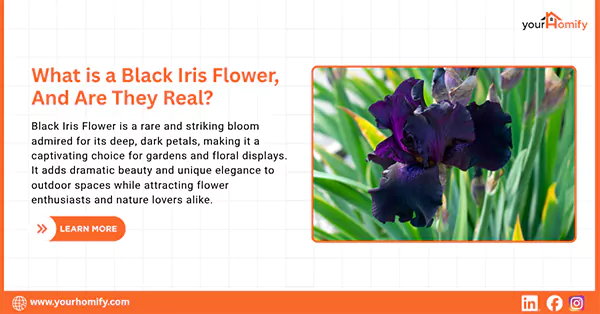
Native to the Eastern Mediterranean, the black iris is a perennial wildflower. Part of the Iris plant family, these summer flowers bloom from late spring to early summer and grow up to 3 feet tall.
The black iris flower does not exist in reality; it is just a dark shade of purple iris that looks almost black to the naked eye. These unique flowers perfectly complement the light coloured blooms, along with being excellent pollinators, which maintains the health of the garden.
Moving ahead, I will share the meaning, growing guide and varieties of the flowers.
Black Iris Flower Meaning and Symbolism
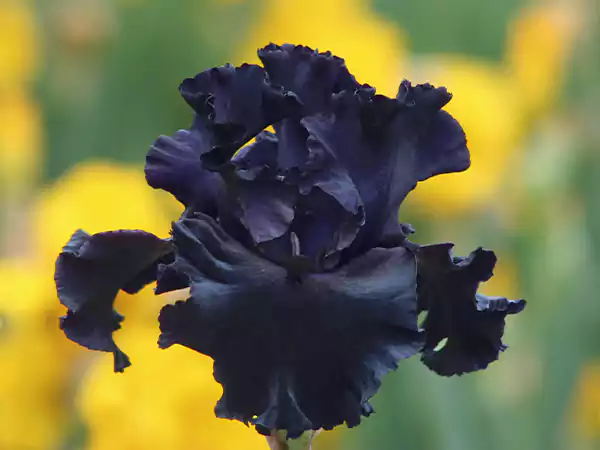
The black iris flower meaning is associated with dark and mysterious themes; these flowers are often used to add a dramatic touch to the space due to their dramatic symbolism.
Take a look at the core meaning and symbolism of the black iris flower:
- According to the language of flowers, the black iris flower is associated with the idea of elegance and sophistication.
- The black iris flower, due to its colour, is linked to the idea of mystery, power and rebellion. They are often used to convey the idea of going against the norm, which is true to their nature, as the black flowers stand out from other flowers in the garden.
- Due to their bold and dramatic colour symbolism, the black iris flowers are used in gothic events and flower arrangements paired with light-coloured blooms to create a beautiful contrast.
Different Varieties of the Black Iris Flower
Although true black iris does not exist, there are types of dark purple iris and some hybrid varieties that are classified as types of black iris flowers.
Take a look at the popular varieties of the black iris blooms to grow at home:
1. Tall Bearded Iris
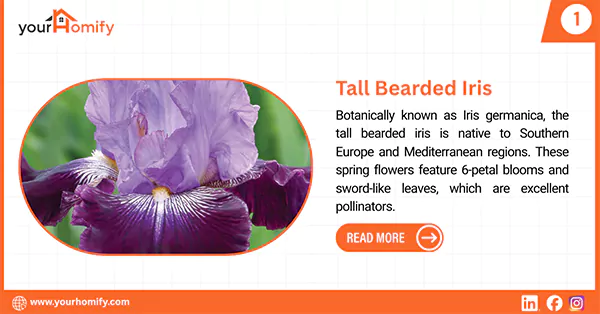
- Botanical name: Iris germanica
- Native area: Southern Europe and the Mediterranean
- Height: 2-4 feet
- Hardiness: USDA zones 3-9
One of the most popular varieties of the black iris flowers, the tall bearded iris is an ornamental bloom that features orchid-like flowers and sword-like leaves with 3 petals facing upwards and 3 downwards.
These flowers bloom in various colours other than black, and are excellent pollinators
2. Black Gamecock Iris
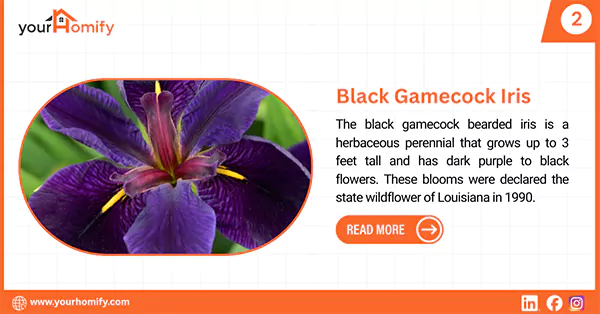
- Botanical name: Iris ‘Black Gamecock’
- Native area: Southeastern America
- Height: Up to 3 feet
- Hardiness: USDA zones 4
Also known as Louisinia iris, the black gamecock iris is a herbaceous perennial featuring elegant dark purple to black bearded flowers. These blooms are ideally grown in water gardens or pond hedges as they thrive in damp soil.
The Louisiana iris was declared the State Wildflower of Louisiana in 1990.
3. Iris Nigricans
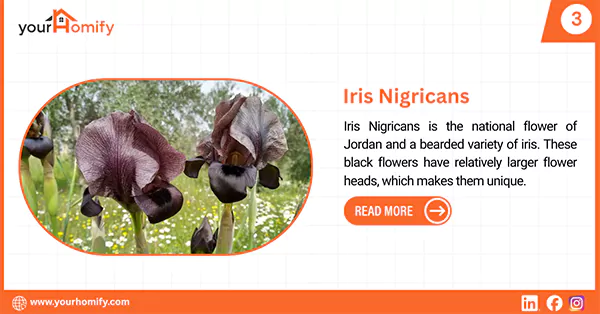
- Botanical name: Iris nigricans Dinsm
- Native area: Eastern Mediterranean
- Height: Up to 2 feet
- Hardiness: USDA zones 7-9
Popularly known as the National flower of Jordan, the Iris nigricans is a perennial spring flower, which is a bearded variety of iris and grows relatively large flowers compared to the types in the family.
They thrive in full sun, well-draining soil and are toxic for pets.
4. Iris Petrana
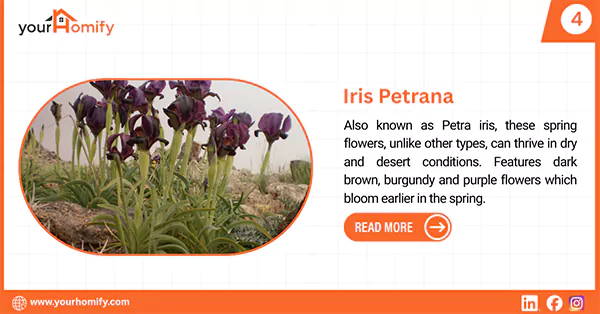
- Botanical name: Iris petrana
- Native area: Jordan and Israel
- Height: 2-3 feet
- Hardiness- USDA zones 8b-10
Commonly known as Petra iris, the iris petrana features burgundy, dark brown and purple to black flowers that comparatively bloom earlier than other varieties.
Unlike the other iris varieties, the iris petrana thrives in desert conditions and does not require consistently moist soil, which makes it ideal for woodlands and deserts.
How to Grow the Black Iris Flower?
Late summer is the best time to plant the black iris to give the roots enough time to develop before winter dormancy.
While there are no true black irises, here is a growing guide to plant identical black flowers in your garden, starting with the growing guide:
Growing Requirements
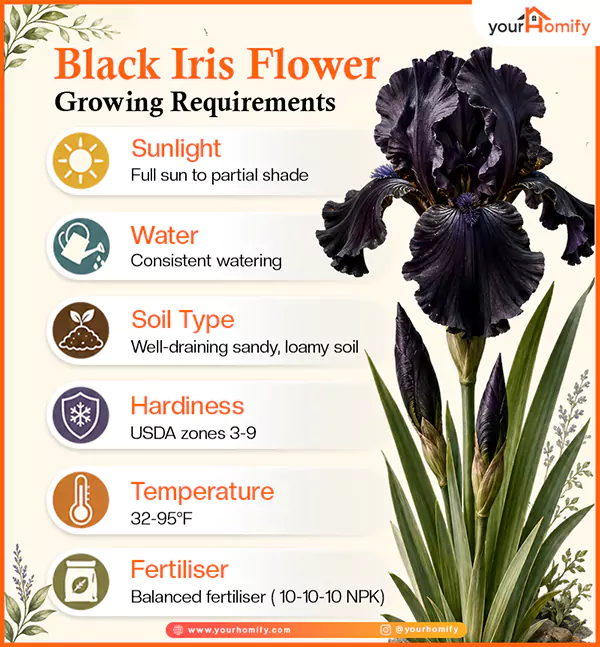
Black iris flowers are really picky about the sunlight and water requirements; it is important to ensure that the growing requirements are taken care of properly.
Take a look at the main planting requirements for a better yield:
| Sunlight | Full sun to partial shade |
| Water | Consistent watering |
| Soil Type | Well-draining sandy, loamy soil pH – 6-6.5 |
| Hardiness | USDA zones 3-9 |
| Temperature | 32-95°F |
| Fertiliser | Balanced fertiliser ( 10-10-10 NPK) |
Planting
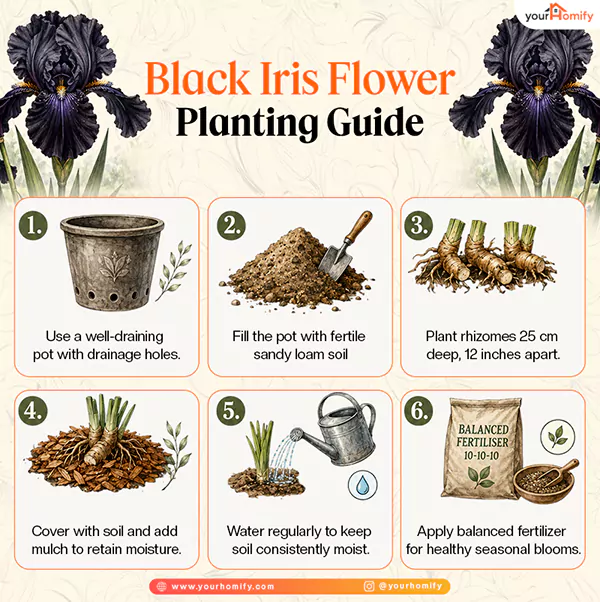
The black iris flower is planted using rhizomes, prefers moist conditions and can be grown along the edges of a pond easily. That is how I usually plant them, and there is no better sight!
Here is my tried and tested black iris planting guide for the upcoming summer:
- Take a well-draining pot with enough drainage holes to avoid waterlogging.
- Fill up the pot with fertile planting mix, ideally sandy loamy soil.
- Now dig a 25 cm deep hole in the pot and place the rhizomes carefully with at least 12 inches of gap for proper air circulation.
- Fill up the soil carefully and cover with a layer of mulch for moisture retention and to suppress weeds.
- Water thoroughly, as these black flowers are not highly drought-tolerant and thrive in moist soil.
- Feed the plant with a balanced fertiliser during the growing season for added nutrients and stronger blooms.
How to Care for Black Iris Flowers at Home?
Black irises thrive in 6+ hours of direct sunlight, but they do well in a little shade as well, which protects them from sunburn.
Apart from basic growing requirements, there is not much that the black iris flower needs for maintenance. I have listed down 4 non-negotiable care tips for the black iris:
1. Sunlight
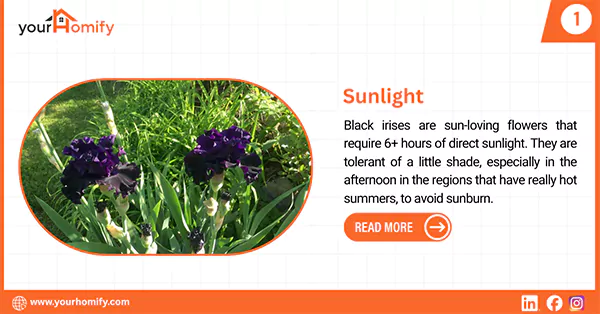
- They are ideally planted in full sun for the best results. These wildflowers can tolerate a little shade, but I would not recommend it, as it can compromise the quality of the blooms.
- 6+ hours of direct sunlight is ideal. In areas with extreme summers, you can consider afternoon shade, but not an excessive amount.
2. Watering
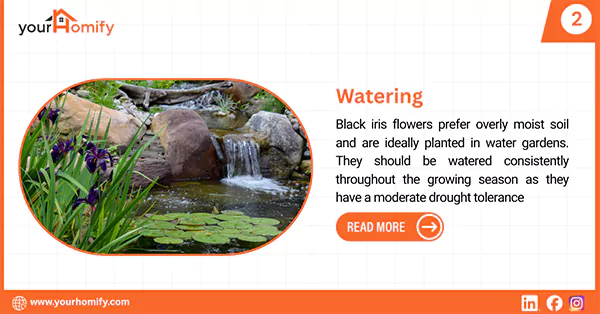
- Black iris loves consistently moist soil and hence can be planted near a pond and water accents.
- These flowers have a moderate drought-tolerance, but can not tolerate dry spells, hence make sure you water the plant once a week.
- Another important point is to regularly check waterlogging due to overwatering, which can cause root rot.
- In case of waterlogging, propagate the plant into new soil immediately.
3. Fertiliser
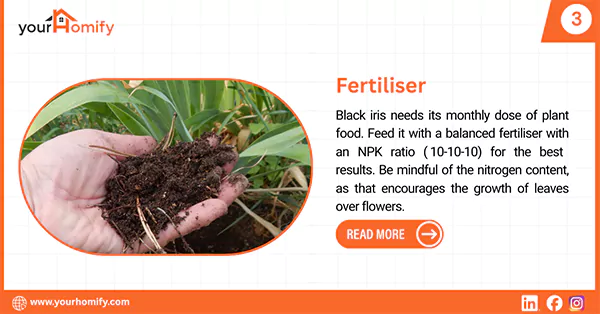
- The best time to fertilise the black iris is late winter to early spring, during the dormant period, when the plant is entering its growing season.
- Use a balanced fertiliser with a 10-10-10 NPK ratio. Make sure the nitrogen content is not extremely high, as it promotes foliage growth at the expense of blooms.
- Hydrate the plant well before feeding, and do not go overboard with fertiliser, as it can lead to root burn.
4. Pruning
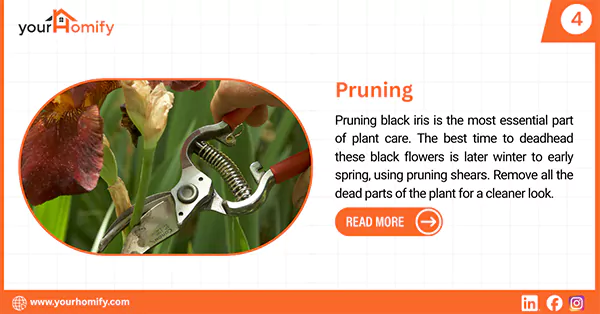
- Pruning is my favourite step of plant care as it helps me give a whole new shape and a neat appearance to the plant.
- The best time to prune these black flowers is late winter or early spring to encourage growth.
- Snip off all the dead and deceased parts of the plant gently using pruning shears. Make sure you do not prune a lot, as that can shock the plant.
Did you know?
According to ASPCA, the black iris flower is toxic to humans and pets.
Concluding Remarks
Growing rare coloured flowers is always a rewarding process, and black iris was no different. This wildflower instantly stands out in the garden without much effort. Symbol of power, rebellion and elegance, these summer flowers are a perfect balance of dramatic tension and soft elegance that can elevate any landscape.
Growing them might feel like a tedious task, but it gets easier with time as the care is minimal. My advice would be to plant them near water accents for the best results and not to go overboard with any step.
FAQs
How rare are black iris flowers?
The black iris is one of the rarest flowers in the world due to its unique flower colour, which is just a mix of dark purple and maroon, which looks like black.
What does a black iris flower represent?
Black iris is symbolic of a lot of ideas, but essentially, it is associated with the idea of elegance, sophistication, power and rebellion.
Is there a true black iris?
No, there are true black irises, but a variety of extremely dark purple irises which look black to the naked eye.
What is the best fertiliser for irises?
The best fertiliser for the black iris is a balanced fertiliser with a 10-10-10 NPK ratio.
What is the best time to prune black iris?
The best time to prune the black iris is late winter to early spring, after the plant emerges from winter dormancy.
Iris ‘Deep Black’ – BBC Gardeners’ World


Types of Black Flowers: 20 Dark & Beautiful Varieties
[…] black iris is the national flower of Jordan. It means strength and royalty. The petals of the bloom have a […]
41 Types of Orange Flowers: Names, Meanings & Pictures
[…] colors other than orange like, black, blue, pink, cream, golden, purple, red, and white. The black iris flower contrasts well with the orange ones in a flower […]