If you are bored with the old classic flowers in the garden and want to grow something more striking and long-lasting, then the blue iris flower has all you need in its orchid-like, fragrant flowers.
Apart from being excellent ornamental indoor plants, these blue flowers are widely used in cut-flower arrangements and are historically associated with wisdom, faith, and hope. As we move further, I will walk you through a detailed guide to blue iris, covering its meaning, varieties, and growing and care.
Quick answer
The blue iris is a rhizomatous perennial flower part of the iris family. These summer flowers grow orchid-like flowers and sword-shaped leaves. Symbolic of the idea of hope, wisdom and faith, these ornamental flowers are used in flower arrangements.
What is a Blue Iris Flower? Features and Taxonomy
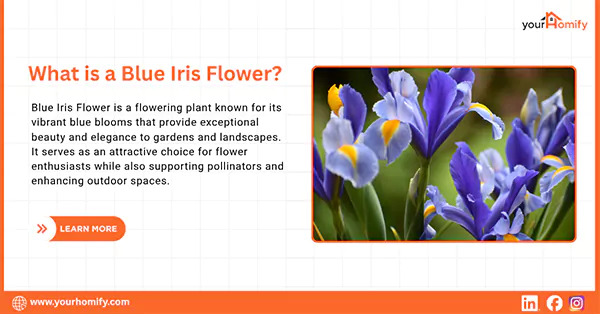
Part of the Iris family, the blue iris is a rhizomatous perennial flower native to Asia, Africa, and Europe, which features orchid-like flowers with a strong fragrance that instantly elevates the vibe of the garden.
Blue iris is one of the few blue flowers and the tallest iris varieties to exist. These drought-tolerant flowers bloom from late spring to early spring and are ideally grown in a water garden accent or containers. Deriving its name from the Greek goddess Iris, the flower is associated with the idea of wisdom, hope, and faith.
Before diving into meaning, growing, and care guide, take a look at the taxonomy of the blue iris flower for a better understanding:
| Botanical name | Iris spuria |
| Kingdom | Plantae |
| Division | Magnoliophyta |
| Class | Liliopsida |
| Order | Liliales |
| Family | Iridaceae Juss. |
| Genus | Iris L. |
Blue Iris Flower Meaning and Symbolism
The blue iris flower gets its name from the Greek goddess of the rainbow, who was a messenger between heaven and the earth. These blue flowers, therefore, are associated with the idea of hope, wisdom, and faith.
In the Victorian era, the blue iris flowers were symbolic of the idea of admiration and faith, and were also used in wedding flower arrangements and decor to convey their symbolic meaning with love and faith.
Different Varieties of Blue Iris Flower
Bearded iris is the most famous type of blue iris. While blue is a rare flower to exist, some beautiful iris varieties can add the charm of blue to your garden.
Here are some popular blue iris varieties that you must plant:
1. Bearded Iris
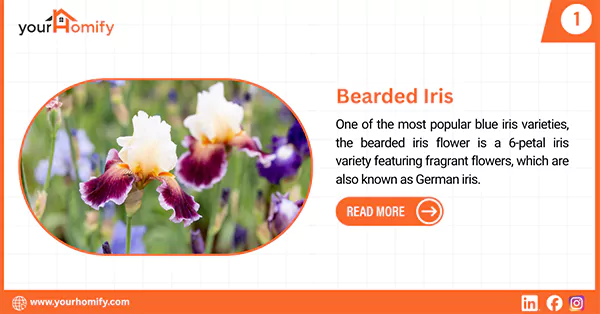
- Botanical name: Iris germanica
- Native Area: Southern Europe and Mediterranean regions
- Height: 3 feet
Also known as German Iris, the bearded iris is the most popular type of blue iris flower. These fragrant flowers feature 6 petals and a frilly beard in the centre, hence the name, along with sword-like leaves.
Similar to all the iris varieties, this type also thrives in well-draining soil, but not extremely moist, and is toxic to pets.
2. Blue Flag Iris
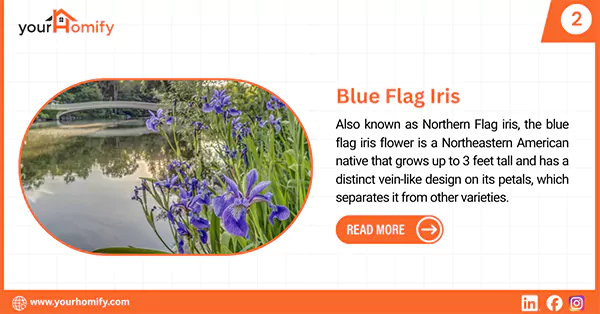
- Botanical name: Iris versicolor
- Native Area: Northeastern America
- Height: 2-3 feet
Popularly known as the Northern Blue flag, the blue flag iris flower gets its name from the Middle English word flagge, which means reed, referring to its blade-shaped leaves. These flowers can be identified using the vein-like design on their leaves.
Unlike the bearded iris, this iris variety prefers completely damp soil and is hence found in waterlands.
3. Siberian Iris
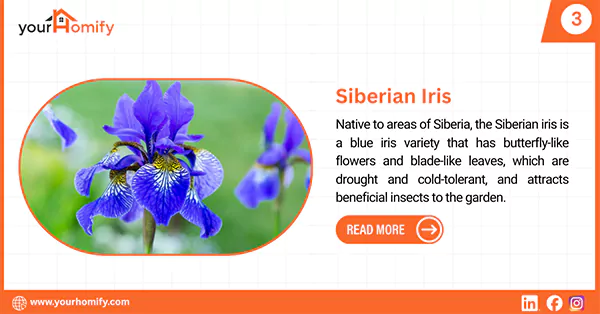
- Botanical name: Iris sibirica
- Native Area: Eastern Europe, Asia, and Russia
- Height: 2-4 feet
Siberian iris features butterfly-like, beautiful flowers with blade-like leaves, which are excellent pollinators, adding to the charm and health of the garden. These drought-tolerant flowers like moist soil but can tolerate a little dry spell and have a good tolerance to cold as well.
4. Japanese Iris
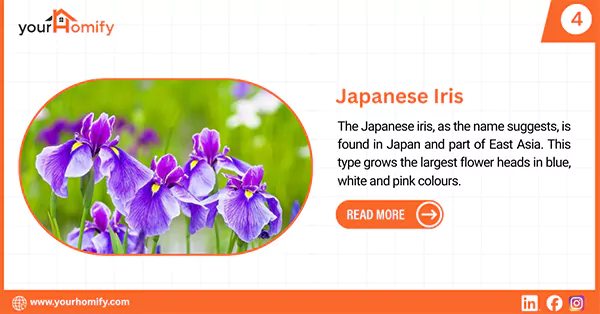
- Botanical name: Iris ensata
- Native Area: Asia
- Height: 2-4 feet
Japanese iris is a summer flower that also grows pink and white flowers apart from its distinctive blue blooms. They thrive in loamy, clay soil that drains well and is watered thoroughly.
In this huge Iris family, the Japanese iris has the largest flower heads.
How to Grow the Blue Flag Iris at Home?
Blue iris is a summer flower that is best planted in late summer or early fall. They thrive in wet soil conditions and do not benefit from mulching.
Growing Requirements
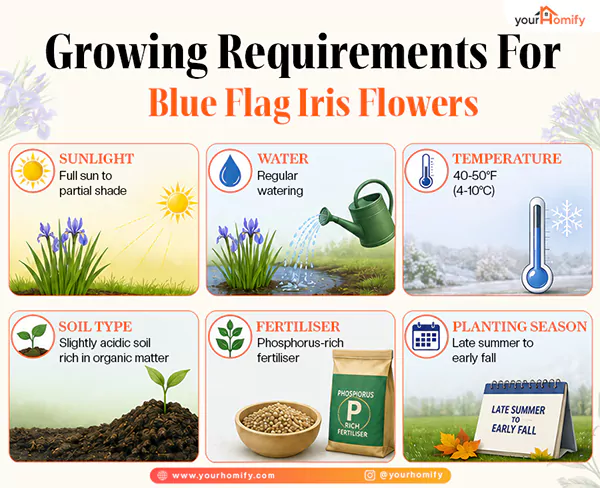
Before diving into the planting guide, take a look at the growing requirements to harvest the best yield of blue irises:
| Sunlight | Full sun to partial shade |
| Water | Regular watering |
| Temperature | 40-50°F |
| Soil Type | Slightly acidic soil rich in organic matter. pH- 6.0-7.0 |
| Fertiliser | Phosphorus-rich fertiliser |
| Planting Season | Late summer to early fall |
Planting Guide
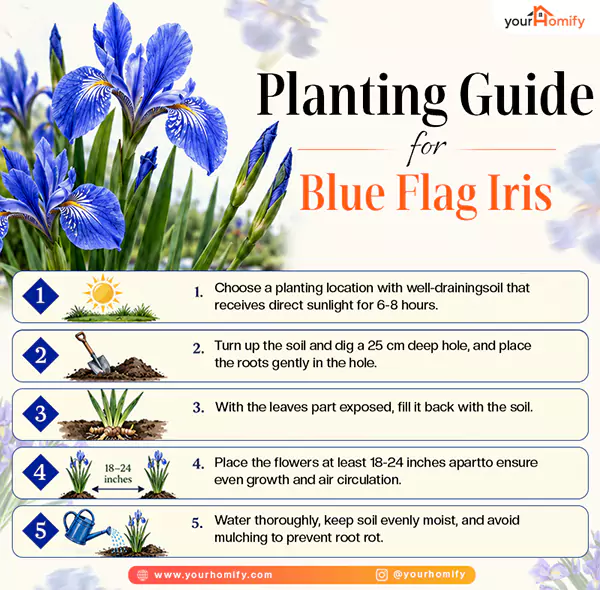
These summer flowers are rhizomatous perennial blooms that are planted using rhizomes. Soak them in water overnight before planting to hydrate them and prevent root rot.
Take a look at this easy planting guide to grow blue iris at home:
- Choose a planting location with well-draining soil that receives direct sunlight for 6-8 hours.
- Turn up the soil and dig a 25 cm deep hole, and place the roots gently in the hole.
- With the leaves part of the exposed, fill it back with the soil.
- Place the flowers at least 18-24 inches apart to ensure even growth and air circulation.
- Water the plant thoroughly as the blue iris flower prefers evenly moist soil, but avoid mulching, as that can lead to root rot.
Gardening insight
The blue iris flowers are deer-resistant as they are not drawn towards their leaves and flowers, which makes outdoor planting easier and hassle-free.
How to Care for the Blue Flower Iris?
Also known as Spuria iris, these drought-tolerant flowers are low-maintenance blooms that can be maintained without hassle.
Here are 4 easy care tips for the blue iris that have worked for me effortlessly over the years:
1. Sunlight
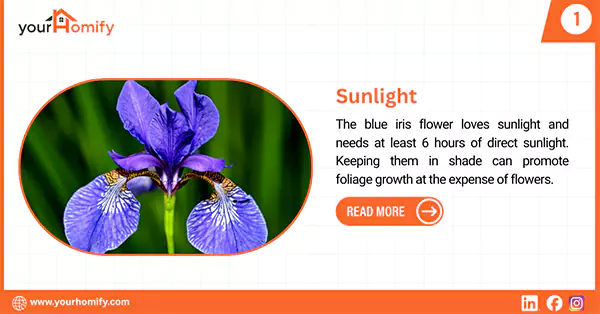
- The blue iris flower loves sunlight and thrives in full, direct sunlight for 6-8 hours.
- While they are tolerant of a little shade, extreme shade can promote more foliage growth and adversely affect bloom growth.
2. Water
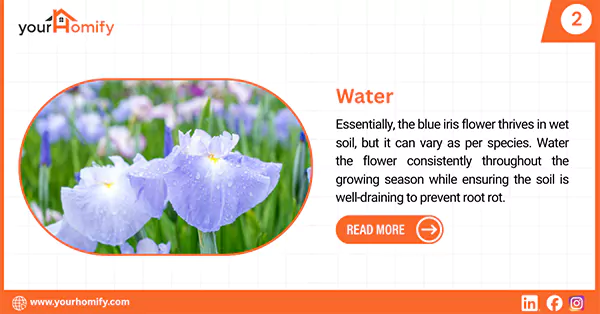
- Watering is an important factor in ensuring the growth of the blue iris flower.
- Different types have their own requirements, as the bearded iris thrives in dry soil while the blue flag iris needs consistently moist soil.
- While blue iris flowers love moisture, act mindfully while planting a specific variety.
3. Fertiliser
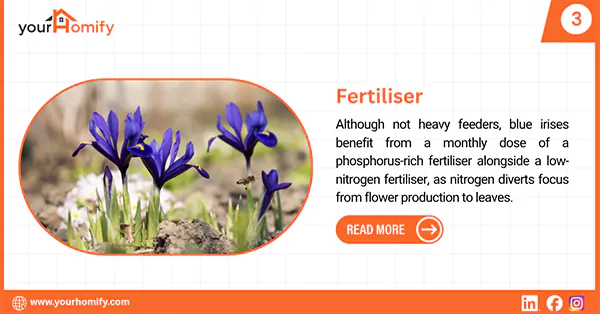
- Blue iris flowers are not heavy feeders, but the requirement varies per species, and hence, do not apply one process to all.
- The perfect type of blue iris is a low-nitrogen and high-phosphorus plant food.
- Feed the plant monthly during the growing season for the best results.
- A high nitrogen fertiliser leads to excessive foliage growth at the expense of the flowers.
4. Propagating
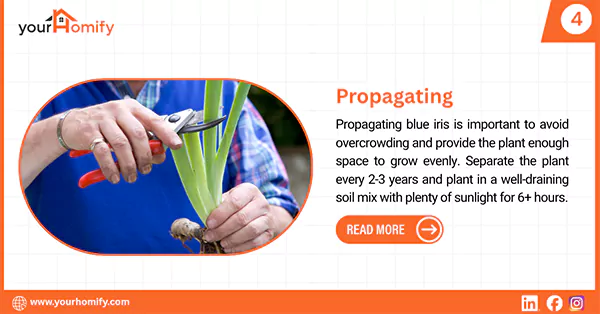
- Propagating the blue flower iris might not be the most essential care tip, but it helps in maintaining the look of the flower and preventing overcrowding, especially if they are growing in containers.
- They should ideally be divided every 2-3 years for the best results.
- Just gently remove them using garden shears, divide the roots, and place them in a larger pot with well-draining soil.
- Follow the same steps as planting, and you are good to go.
Did you know
According to ASPCA, the iris flower is toxic to pets and should be kept away from their reach.
Concluding Remarks
Blue-coloured flowers in the garden are no less than a treat, and blue iris is a perfect flower to add charm to your garden. While these summer flowers seem like tough blooms to grow, their care guide is rather simple.
These flowers are a symbol of wisdom, faith and hope and are used in wedding flower arrangements and indoor decor due to their orchid-like blooms, which are perfect to elevate any space effortlessly.
FAQs
What does the blue iris symbolise?
The blue iris flower is a symbol of wisdom, hope and faith.
Do coffee grounds help irises?
While coffee grounds are acidic and rich in nitrogen, they can harm the blue iris flower, which thrives in alkaline soil.
Do blue irises like sun or shade?
The blue iris flower thrives in full sunlight for 6+ hours.
Is blue iris toxic to dogs?
Yes, the blue iris flower is toxic to dogs.
Are blue irises rare?
No, the blue iris is not a rare flower; only the colour is unique and rare to exist.
- Iris ‘Blue Staccato’– BBC Gardeners’ World
- 10 Gorgeous Iris Varieties That Will Make Your Garden Pop During Bloom Season– Yahoo