Flowers can make any garden look bright and welcoming, but not all flowers bloom throughout the season. If you ever wondered which species to plant during different times of the year, this seasonal flower guide is for you.
From cheerful spring blossoms to hardy winter perennials, knowing what to plant can make your gardening journey easier and enjoyable. In this guide, you will discover popular seasonal blooms and simple tips to keep your garden looking beautiful all year round.
Quick Answer
A seasonal flowers guide helps gardeners choose flowers that bloom best during different times of the year. During Winter, flowers like English Primrose, Winter Jasmine, Hellebore, Crocus, and Camellia bloom the best. In spring, Daffodil, Hyacinth, Pansy, Snowdrops, and Tulips are the right flowers to plant. Whereas during summers, Sunflowers, Marigolds, Impatiens, Morning Glory, and Zinnias are the best, and in fall, African Daisies, Petunia, Sweet Alyssum, Globe Amaranth, and Russian Sage are the right choice to make.
5 Best Winter Seasonal Flowers for a Beautiful Garden
As I started exploring the seasonal flowers guide, “winter flowers” stand out with unique blooms like English Primrose, Winter Jasmine, Hellebore, Crocus, and Camellia that add color and charm to any landscape. Below, I have listed five popular cool flowers that can brighten your garden with their attractive blooms.
1. English Primrose
- Botanical Name: Primula vulgaris
- Hardiness Zone: 4-9 USDA
- Native Range: Western and Southern Europe
- Bloom Time: February to May
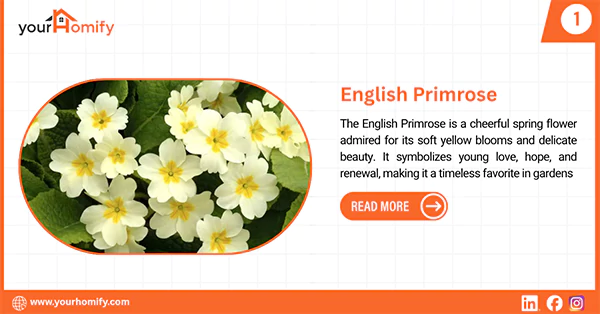
English Primrose, also known as the February birth flower, is a cheerful winter bloom appreciated for its delicate blossom in shades of yellow, pink, white, purple, and blue. It thrives in cool temperatures and brightens the garden during the colder months. The species is low-maintenance and is valued for its long flowering season.
2. Winter Jasmine
- Botanical Name: Jasmine nudiflorum
- Hardiness Zone: 6-10 USDA
- Native Range: China, Tibet, Yunnan
- Bloom Time: December to March
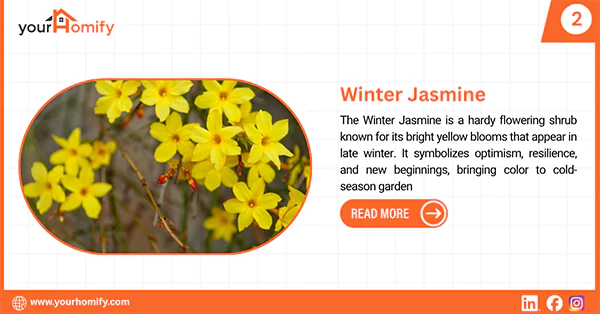
Winter Jasmine is one of the earliest flowers to bloom in winter, producing bright yellow blossoms on arching green stems. This hardy deciduous shrub is native to China and can tolerate hard winter conditions, adding vibrancy to the gardens. It is often grown on slopes, retaining walls, and trellises for its graceful appearance and stunning seasonal display.
3. Hellebore
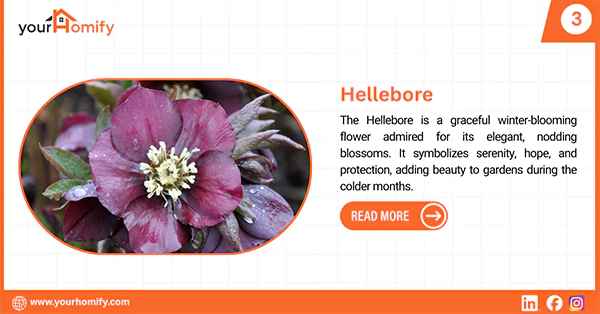
- Botanical Name: Helleborus spp.
- Hardiness Zone: 4-9 USDA
- Native Range: Woodlands of Europe and Western Asia
- Bloom Time: December to March
Hellebore is one of the most admired winter flowers, known for blooming when many other species remain dormant. Also called the Christmas rose, or Lenten rose, this shade perennial bears cup-shaped flowers available in a wide range of colors. Typically blooming from late winter to early spring, this flower’s leaves are equally stunning, adding elegance to every space.
4. Camellia
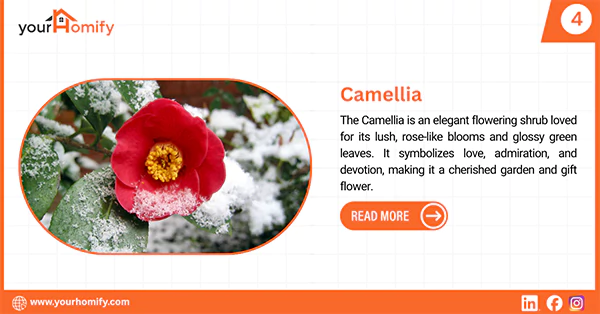
- Botanical Name: Camellia japonica
- Hardiness Zone: 7-10 USDA
- Native Range: Eastern and Southern Asia
- Bloom Time: October to December
Camellia is one of the most admired winter flowers, producing large, rose-like blooms in shades of pink, red, and white. It blooms from late fall through winter when other plants remain inactive. I personally like growing Camellias in containers since they are extremely low-maintenance, available in a wide range of colors, and tend to add a winter cheer to any garden space.
5. Crocus
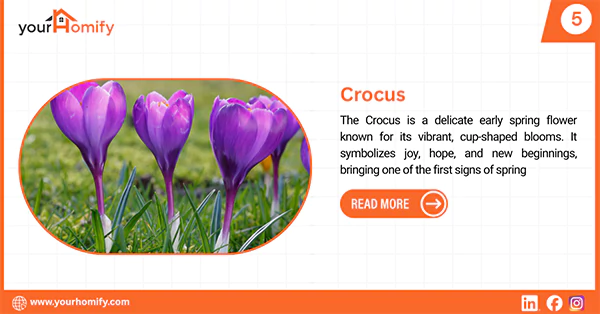
- Botanical Name: Crocus spp.
- Hardiness Zone: 5-9 USDA
- Native Range: Mediterranean, Greece, and the Aegean Islands
- Bloom Time: January to March
Crocus is one of the earliest winter-blooming flowers, often growing spectacularly in cold soil or even light snow. Its cup-shaped blooms appear in shades of purple, yellow, white, and lavender, adding vibrant color to your winter gardens. The flower is also known to symbolize hope, renewal, and new beginnings, making it a seasonal favorite.
5 Spring Seasonal Flowers to Add Color and Beauty to Your Garden
Spring is one of the most rewarding seasons for gardeners, bringing fresh growth, vibrant colors, and abundant blooms after harsh winter conditions. In this seasonal flowers guide, I have highlighted five beautiful spring flowers that can easily brighten your garden bed and attract beneficial pollinators.
1. Daffodil
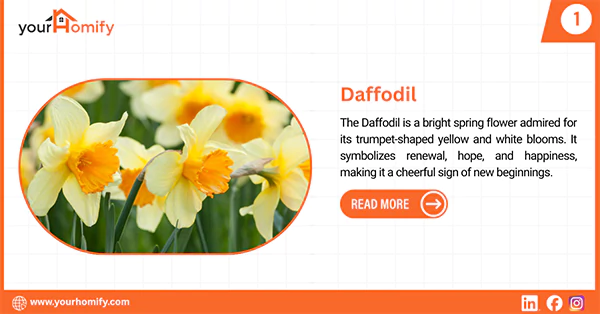
- Botanical Name: Narcissus spp.
- Hardiness Zone: 4-8 USDA
- Native Range: Meadows of Europe, North Africa, and Asia
- Bloom Time: February to May
Daffodil is a classic spring-blooming flower known for its bright yellow, white, or orange trumpet-shaped blooms. The golden yellow blossoms with glossy green stalks create a beautiful contrast in any landscape. Also known as the March birth flower, this hardy perennial is low-maintenance, deer-resistant, and symbolizes renewal, hope, and fresh starts.
2. Tulip
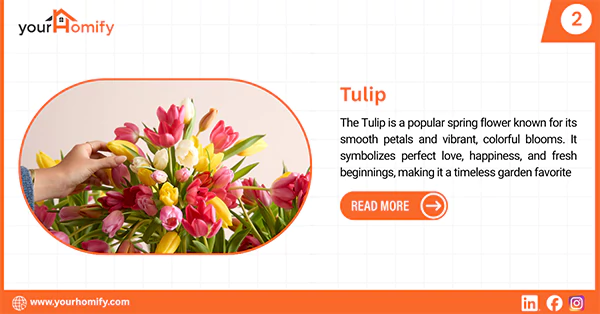
- Botanical Name: Tulipa spp.
- Hardiness Zone: 3-8 USDA
- Native Range: Central and Western Asia, Southern Europe
- Bloom Time: Mid March to late April (depends on the variety)
Tulips are known for their elegant cup-shaped blooms and wide range of shades, including red, yellow, pink, purple, and white. The symmetrical growth of the blossoms makes them a popular choice among many gardeners and florists. Adding vibrancy to large landscapes, the tulip flower meaning is linked to love, happiness, admiration, and long-lasting joy.
3. Hyacinth
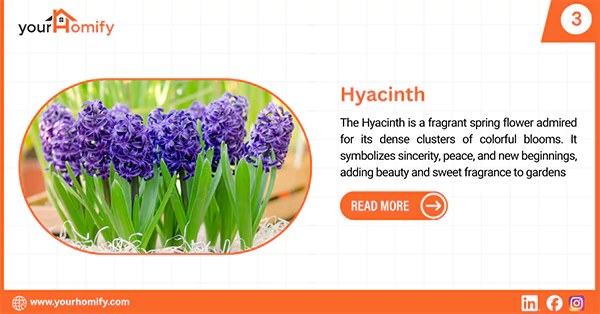
- Botanical Name: Hyacinthus orientalis
- Hardiness Zone: 3-8 USDA
- Native Range: Turkey, Syria, Lebanon
- Bloom Time: February to April
Hyacinth is a fragrant spring flower known for its dense, clustered blooms and vibrant colors. It is mostly planted in containers or grown as border cover flowers in rock gardens. The species is available in a wide range of colors, including pink, purple, blue, yellow, white, and lilac. Many associate Hyacinths with joy and cheerfulness, as they carry the essence of the spring season.
4. Pansy
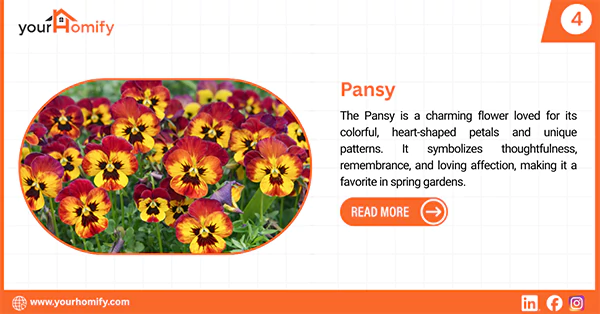
- Botanical Name: Viola × wittrockiana
- Hardiness Zone: 7-11 USDA
- Native Range: Europe
- Bloom Time: March-July
Pansy is a charming flower known for its velvety petals and distinctive face-like patterns. It is mainly grown as an indoor plant, can thrive in cool temperatures, and adds instant brightness to gardens, borders, and containers. Pansies are widely appreciated as they symbolize love, remembrance, and affection.
5. Snowdrops
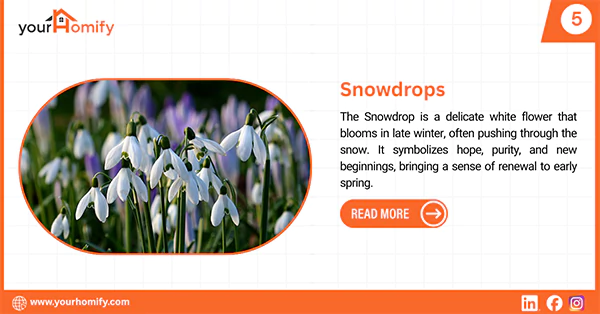
- Botanical Name: Galanthus
- Hardiness Zone: 3-9 USDA
- Native Range: Europe and Southwestern Asia
- Bloom Time: February to March
The drooping bell-shaped blooms of snowdrops may make them appear delicate or fragile, but this spring flower can withstand harsh weather conditions. These are known as the first flowers of the season and are associated with purity, innocence, spirituality, and new beginnings. As the January birth flower, it is perfect for gifting and floral arrangements.
5 Summer Seasonal Flowers to Grow in Your Garden
I personally feel that summer flowers are the most beginner-friendly blooms. They simply need moderate watering and well-draining soil for optimal growth. If you are starting your gardening journey, adding the below-mentioned low-maintenance summer seasonal flowers to your garden space can be a rewarding experience.
Looking for “flowers to plant in june” specifically? Early summer is prime planting time for varieties like Sunflowers, Zinnias, and Marigolds.
1. Sunflower
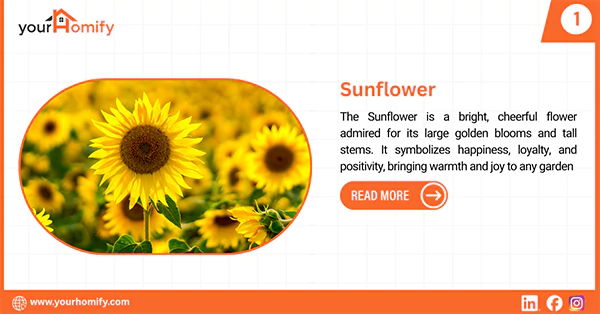
- Botanical Name: Helianthus annuus
- Hardiness Zone: 2-11 USDA
- Native Range: North America, Mexico, Arizona
- Bloom Time: July to October
Sunflowers are one of the best summer blooms and were originally cultivated in Arizona and New Mexico as a food source. According to the United States Department of Agriculture, there are around 52 varieties of this flower, and almost all of them are native to North America and Mexico. It is a fast-growing, low-maintenance bloom and is mainly planted for its seeds and oil.
2. Zinnia
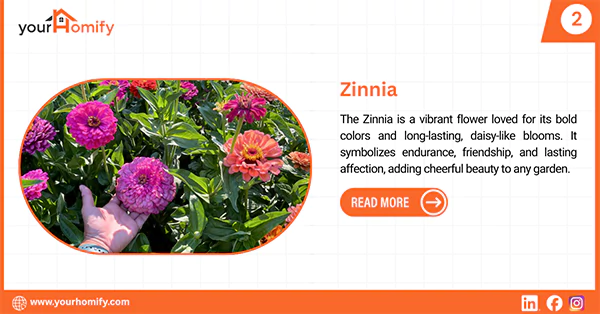
- Botanical Name: Zinnia elegans
- Hardiness Zone: 2-11 USDA
- Native Range: Mexico, Central America, Southwestern USA
- Bloom Time: March – December
Zinnias are annual summer flowers that thrive in full sunlight. They need a minimum of 5-6 hours of direct sun exposure and cannot tolerate extreme frost conditions. The bloom has a vase life of 7 days and is known to attract many beneficial pollinators. Zinnias are often used as cut flowers for gifting and floral decor at weddings.
3. Marigolds
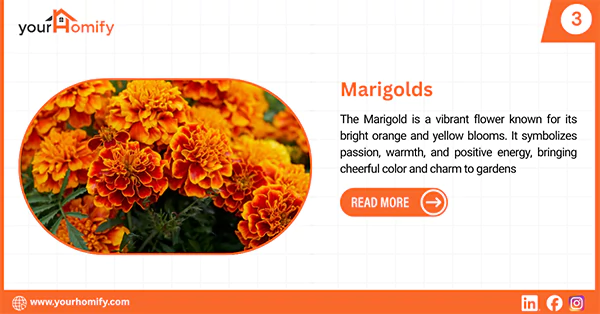
- Botanical Name: Targetes
- Hardiness Zone: 2-11 USDA
- Native Range: Central and South America
- Bloom Time: March to May
Marigolds are a diverse genus in themselves that comprises different annual and perennial plants. They are known for their vibrant and fragrant blooms that are available in a wide range of shades. Belonging to the Aster family, these summer flowers are natural pest repellents and are typically planted as companion plants in many large landscapes.
4. Impatiens
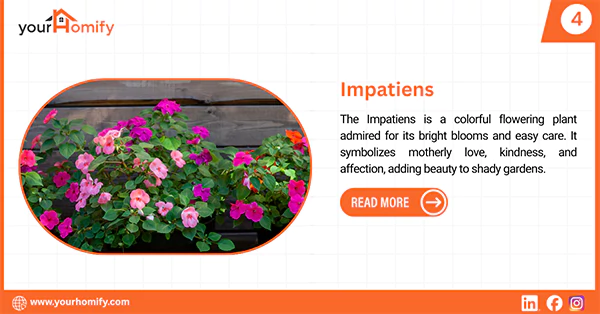
- Botanical Name: Impatiens spp
- Hardiness Zone: 10-11 USDA
- Native Range: Tropical and Subtropical regions of Africa
- Bloom Time: April to December
If you wish to add a splash of color to your garden space, Impatiens are the perfect flowers. These fast-growing and dense-flowering species are often grown in planters, hanging baskets, and containers. Also known as touch-me-not flowers, they are available in stunning hues and are used as filler blooms in floral arrangements or in making corsages.
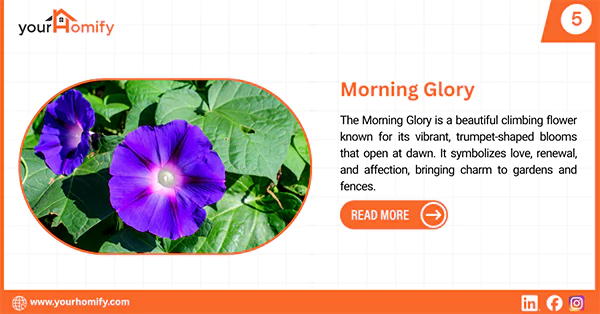
5. Morning Glory
- Botanical Name: Ipomoea purpurea
- Hardiness Zone: 2-11 USDA
- Native Range: Tropical America and Africa
- Bloom Time: June to October
Morning glories were mainly used in China for their medicinal properties. These are fast-growing, twining plants and are widely appreciated for their attractive blooms. Native to tropical areas like Kenya, Mozambique, Tanzania, and Zimbabwe, Impatiens perform best when grown in areas with partial shade. The species do not get easily affected by pests and diseases, but do need regular monitoring.
5 Fall Seasonal Flowers to Grow in Your Garden
This sentence is unchanged — just link the phrase: “Fall flowers” are mainly known for their rich hues, making any outdoor space look vibrant and lively during the autumn season. In this section, I have added 5 beautiful fall flowers that you can add to your front lawn and make your surroundings look cooler.
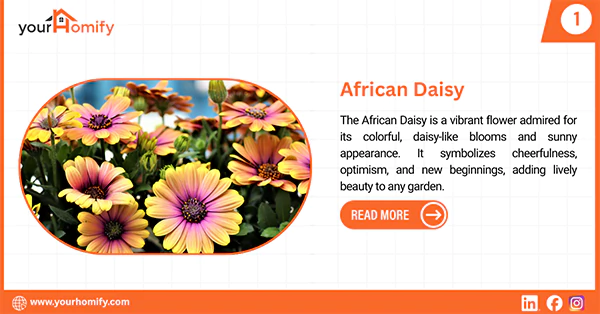
1. African Daisy
- Botanical Name: Osteospermum
- Hardiness Zone: 9-11 USDA
- Native Range: Southern and Tropical Africa
- Bloom Time: May to October
African daisies are better known as Cape Daisy or Blue-eyed Daisy, and are highly sought after for their magnificent blooms. The blossoms are available in a wide range of colors, from white, pink, blue, and purple, with centers having deep blue or black spots, making them a visually appealing addition to any garden space.
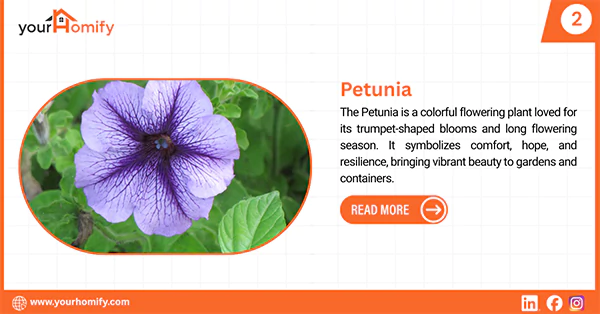
2. Petunia
- Botanical Name: Petunia spp.
- Hardiness Zone: 9-11 USDA
- Native Range: South America
- Bloom Time: March to September
Petunias are perfect fall flowers and are valued for their stunning hues. They are popularly grown as border cover plants. As per research done by the Association of Academic Researchers and Faculties, beyond their aesthetic appeal, petunias are traditionally appreciated for their medicinal properties. Its leaves and petals are used to make herbal teas to treat inflammation and joint pain.
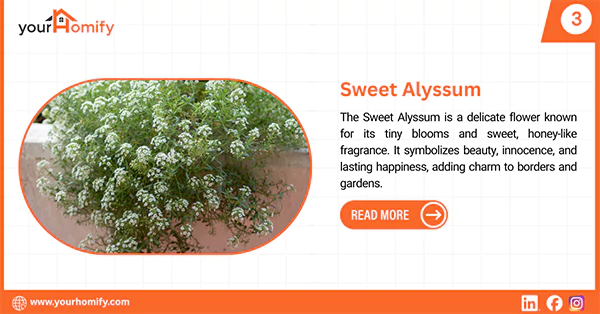
3. Sweet Alyssum
- Botanical Name: Lobularia maritima
- Hardiness Zone: 5-9 USDA
- Native Range: Canary Islands and Mediterranean Region
- Bloom Time: December to April
Sweet Alyssum is a charming, low-maintenance, and fragrant fall flower. The scent of this four-petaled bloom is often compared to that of honey. It is mostly grown in rock gardens, border edges, or hanging baskets. Sweet Alyssum is typically grown in large landscapes to attract beneficial pollinators and is non-toxic to humans and pets.
4. Globe Amaranth
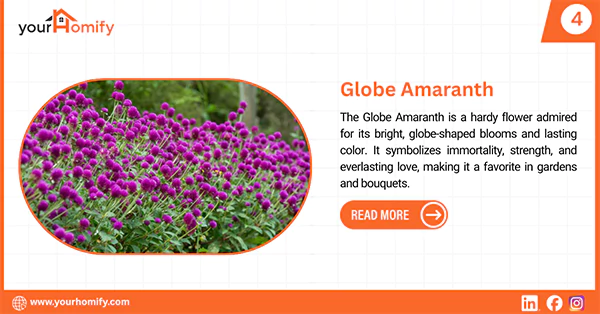
- Botanical Name: Gomphrena globosa
- Hardiness Zone: 9-11 USDA
- Native Range: Central and South America
- Bloom Time: June to November
Also known as Bachelor’s Button and Globe Flower, Globe Amaranth is appreciated for its long-lasting flowering qualities. With an upright growth habit, they typically grow up to 6-24 inches tall. The blossoms of the species are not frost-tolerant and are often used to make infused teas and soups. It is a pollinator-friendly plant and is non-toxic to pets and humans.
5. Russian Sage
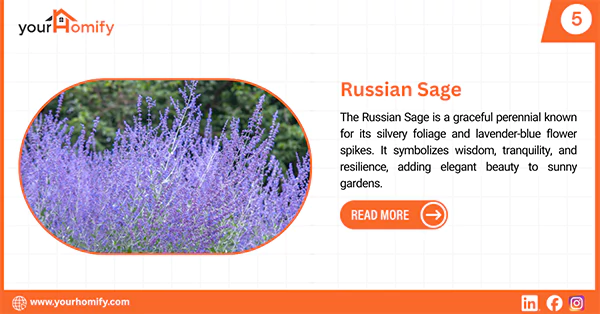
- Botanical Name: Salvia yangii
- Hardiness Zone: 4-9 USDA
- Native Range: Central and Southwestern Asia
- Bloom Time: August- October
Russian Sage is a woody herbaceous plant. It can thrive in various weather conditions and is mainly planted to add a pop of color to the front lawns. Though the blooms are harmless, their foliage is said to be toxic to humans and pets and should not be ingested.
How to Care for Seasonal Flowers for Long-Lasting Blooms
Proper care is essential for keeping flowers healthy and blooming throughout the year. While sunlight, watering, and feeding needs may vary, a few simple practices can help your plants thrive in changing weather conditions.
| Season | Sunlight | Watering | Soil Needs |
| Winter | Maximum sunlight exposure. A minimum of 5-6 hours of bright direct light are needed for optimal growth. | Water the plants only when the top 2 inches of the soil feel dry. Overwatering during winter can cause root rot. | A well-balanced, nutrient-rich, fertile, and permeable soil works best for winter flowers. Loosen the soil if it is too firm. |
| Spring | Spring flowers perform best in partial shade. Direct sun exposure can scorch the leaves and the blooms. | Moderate watering is ideal for these flowers. Adjust the frequency if you notice waterlogging. | Some spring blooms like growing in damp soil, while others prefer being planted in a well-aerated mix. |
| Summer | 4-6 hours of direct sunlight is perfect for summer flowers. It is ideal to protect them from the afternoon sun. | Heavy watering is needed. Allow the water to dry out before the next watering session to avoid waterlogging and root rot. | Mulch the soil surface properly. Cover the top layer of the soil in your pot with organic material for healthy growth. |
| Fall | Fall flowers need full sun exposure. 5-6 hours of direct sunlight is needed for healthy growth. | Proper watering 2-3 times a week is needed. Make sure that the soil is not too soggy before the next watering session. | A permeable potting mix works well for the fall blooms. Make sure the soil is well-aerated. |
Conclusion
Seasonal flowers can bring color, fragrance, and life to a garden throughout the year. If you would rather not replant every season, several “long blooming perennials” can keep your beds colourful with far less upkeep. By choosing blooms that naturally thrive in every weather, you can enjoy healthier, longer flowering plants. We hope this seasonal flowers guide can help you plan a garden that stays attractive from spring to winter. With the right selection and care, one can create a vibrant outdoor space.
FAQs
What is the 3:5:8 rule for flowers?
The 3:5:8 rule is what florists follow while preparing a bouquet. It basically means adding 3 focal flowers, 5 secondary flowers, and 8 filler flowers to make the arrangement look more defined.
What flowers are in season for October?
If you wish to add alluring flowers to your garden in October, Dahlias, Chrysanthemums, Marigolds, and Sunflowers can be an ideal addition.
What plant says “I love you”?
Though roses are said to be the ideal flowers representing affection and long-lasting love, the hoya hoya heart and the magine bean plant are also used to express similar sentiments.
What flower plants are in season now?
In June, summer flowers like zinnia, impatiens, morning glory, and sunflowers are typically grown. But the ideal selection depends on the region you are living in and the soil conditions.
Which flower blooms for 12 months?
African Violet and Lantana are known as enduring blooms that can withstand any weather conditions and can bloom for 12 months.