


Climbing roses feature long canes that reach up to 8-15 feet tall. They produce medium- to large-sized flowers that generally bloom in small clusters. While they rely on man-made support to elevate their long canes, they are used to add structure and vibrancy to a landscape.
Thus, in this guide, you’ll discover the 5 best climbing rose varieties for your garden fence with their pictures and simple care requirements to help them grow healthy and bloom beautifully longer.
Quick Answer
Eden Climber (Pierre de Ronsard), Grand Hotel, Golden Showers, Lady of Shalott, and New Dawn are some popular climbing rose varieties for your garden fence.
What Does Climbing Rose Mean?
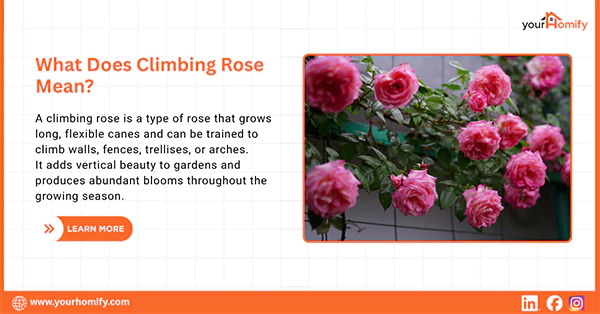
Climbing roses are not a distinct botanical species. This variety has long, vigorous canes. They are specifically adapted to grow vertically and are used to cover walls, fences, trellises, and arbours.
Unlike any other shrubs, the different climbing rose varieties require manual support and tying techniques to form a structure and secure their flexible stems.
5 Best Climbing Rose Varieties For Your Garden Fence?
Eden Climber, Grand Hotel, Golden Showers, Lady of Shalott, and New Dawn are some popular climbing rose varieties.
1. Eden Climber (Pierre de Ronsard)
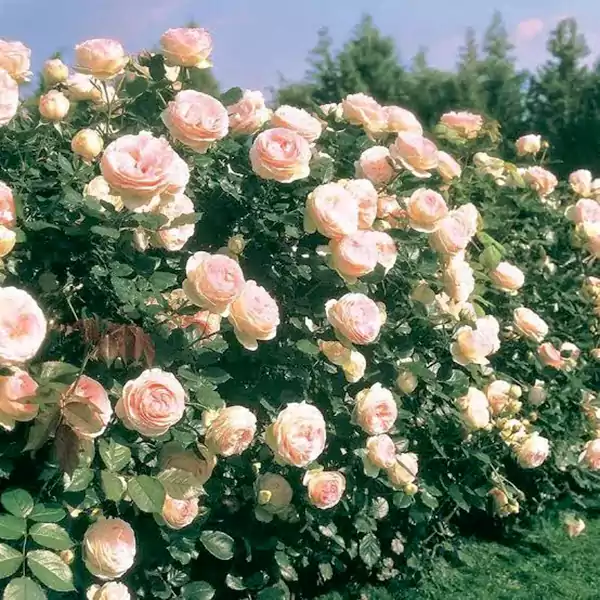
Eden Climber, named the World’s Favorite Rose in 2006, is one of the highly regarded, romantic climbing roses. It is widely recognized and loved for its classic-style bloom of blush-pink and creamy white with carmine edges. Rather than a strong scent, it has a blend of subtle, light, often tart fragrance.
Eden Climber typically reaches 8 ft to 12 ft in height and 5 ft to 6 ft in width, producing a massive flush of beautiful flowers and is considered perfect to grow in late spring.
2. Grand Hotel
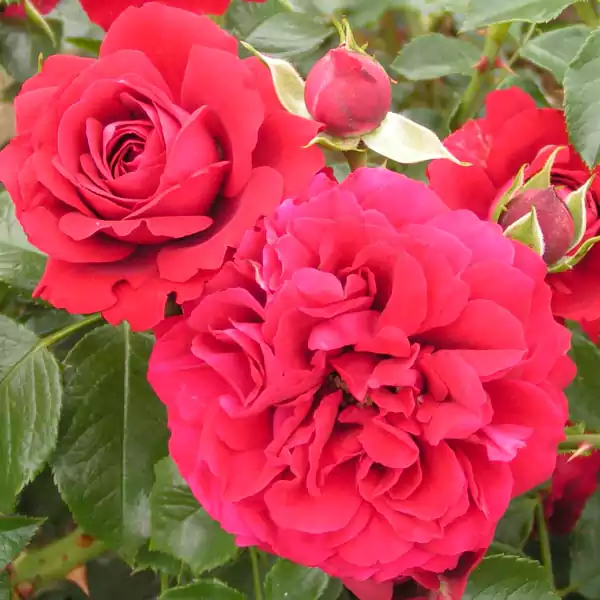
Grand Hotel, bred by Sam McGredy, is another mesmerizing climbing rose variety, with a moderate to strong fragrance. Ideal for a 6 ft garden fence, wall, or archway, its vigorous climbers produce striking canes of brightening, velvety red against the dark-green foliage.
Its flowers are often large (almost 4 inches across, with 40 petals around), compared to other climbing rose varieties with a high-centered, ruffled tea shape. However, in an overly humid or wet climate, it is slightly susceptible to black spots, calling for extra care and attention to thrive.
3. Golden Showers
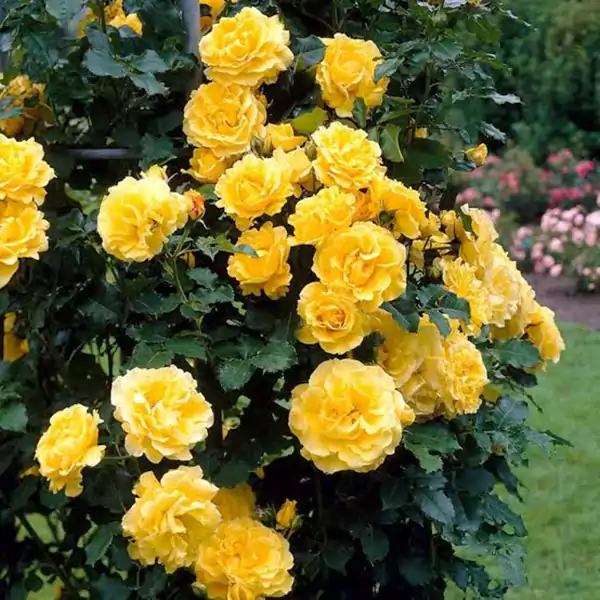
Golden Showers spreads a refreshing, bright sunshine shade all over the place with its blooming, semi-double, yellow flowers and is known to be one of the fast-growing climbing rose varieties. It has a mild, sweet fragrance that delivers a slight hint of tea and liquorice in the air, freshening your garden with an unforgettable aroma.
The stems are nearly thornless, making it one of the most preferred climbing rose varieties among others, especially for fences, arches, and trellises. You can easily grow them in spring, as they continuously grow from late spring to fall.
4. Lady of Shalott
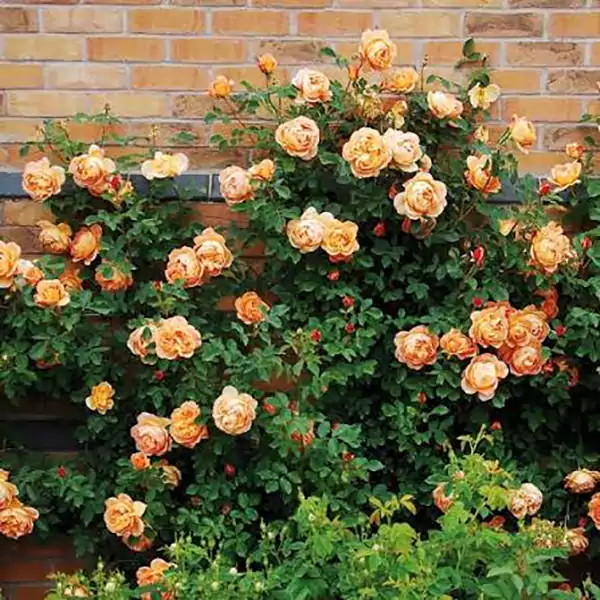
Lady of Shalott, sired by David Austin in 2009, is a compact variety of climbing rose. Officially known as the English Shrub Rose, it possesses a highly adaptable, vigorous growth habit. This variant grows up to 8 ft to 10 ft in height when its trails get proper, strong support, like a fence, trellis, or obelisk, featuring chalice-shaped apricot-orange and orange–red flowers,
This climbing rose variant is highly disease-resistant (particularly against black spots) and supports reblooming with heavily flushed flowers from summer to autumn.
5. New Dawn
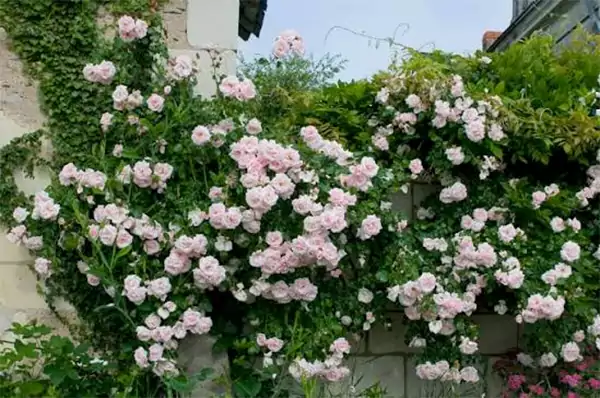
New Dawn leaves come up with their dark green foliage contrasted with the semi-double, pink flowers, which fade into pale, pearl-whitish as they age. It boasts heavy flowering and grows around 10 ft to 15 ft, from early summer to the first frosts.
However, this variant requires specific attention, such as New Dawn, which can handle partial shade but needs full sun for maximum bloom. Also, its stems are heavy and full of thorns; thus, its trails call for a strong, stable structure to support growth.
Ideal Care Guide For Climbing Roses
Caring for climbing rose varieties requires a complete balance of proper sunlight, horizontal training, regular watering and a combination of well-drained soil. By maintaining all these aspects properly, you can have blooming climbing roses on your garden fence perfectly.
1. Determine Planting Location
Typically, climbers require 6–8 hours of direct, full sunlight to grow properly. So, try to place them in a region with intense heat and directly exposed to the bright, fresh morning sun.
Apart from this, set up the fence, trellis, or arch at least 1–2 feet away from the wall, allowing an easy airflow for the climbers.
Climbing rose varieties require a fertile, loamy soil with a pH of 5.5 to 6.5.
2. Training & Pruning
Rose climbers do not cling on their own. You have to tie their long, flexible canes to the support structure, where they can thrive and bloom. However, train canes to grow either horizontally or at 45° as much as possible, forcing stems to produce upward-flowering shoots.
As for pruning, in the first few years, trim climbers in late winter or early spring. Also, always cut the dead, diseased, or crossing branches first for better growth.
3. Watering & Feeding
Try to maintain the root zone evenly moist while watering the base only to keep the rose climber stem dry, preventing disease and fungal infections like black spots. Remember to apply an equivalent of 1 inch of rainfall weekly.
Furthermore, in early spring, as new growth begins, you can feed the climber high-quality, time-release rose fertilizer or a general garden fertilizer to support its growth and eliminate fungi on its surface.
4. Pest & Winter Care
You can add a 2–3 inch layer of organic mulch around the base of the climbers to regulate soil temperature and retain moisture. Additionally, with soft garden twine, secure the plant canes, preventing any sort of wild winds.
Apart from this, if the temperature continuously drops or starts freezing, protect your climbing rose varieties by wrapping the canes with a layer of burlap. Also, mulch heavily on their surface once the first frost passes.
Conclusion
Climbing rose varieties are an excellent choice for transforming an ordinary garden into a heavenly floral display. From the classic Lady of Shalott and Golden Showers to aesthetic New Dawn, Eden Climber, and Grand Hotel, each variant offers unique colors, fragrance, and growth habit.
Thus, now that you have the names of the best climbers with the care guide in your hands, what are you waiting for? Go and grow abundant blooms, adding timeless charm to your place, year after year!
FAQs
What is the best type of climbing rose?
New Dawn, Don Juan, Grand Hotel, and Golden Showers are some of the best types you can consider growing. However, the “best” variant depends on the region, climate, and space you are trying to grow rose climbers.
What is the longest-flowering climbing rose?
You can opt for a repeat-blooming variety, such as Lady Banks, New Dawn, and Eden Climber, that delivers the longest and most continuous flowering.
Is there any disadvantage to growing climbing rose varieties?
Although the rose climber offers a stunning, visually appealing atmosphere, its aggressive, thorny canes often cause safety hazards. To eliminate this, you have to constantly train and prune, and apply high-quality pesticides.
What is the fastest-growing climbing rose?
New Dawn and Lady Banks are considered the fastest-growing climbing rose varieties that can thrive up to 15–20 feet in a single season.
What is the lifespan of the climbing rose?
Climbing roses are one of the long-lived plants. You may spot specimens 50 to 100 years old around foreign countries.





Orange Roses Meaning Explained: From History to Gifting
[…] for rose varieties that do not disappoint? Westerland is your answer! It is a vigorously growing climbing rose variety that grows about 96-144 inches tall, and the bloom size is around 3-3.5 inches. With a rich and […]
The Best Vinyl Fencing to Consider for House Privacy
[…] the USA” looks good on a brochure, but the thing is, origin alone won’t tell you how a garden fence will handle a hot August or a strong wind. Try to ask whether the product meets ASTM F964, the […]
How Long Do Roses Last? Vase Life & Care Tips
[…] Climbing Roses […]