

From the elegance of lavender to the grace of lilies, flowers that start with L add their own charm to the garden. Every alphabet has a unique library of spring flower names under it, and the letter L is no different in having a versatile variety of blooms that can fit in all garden styles.
Come along and explore the flowers that start with L with unique features and care guides.
Quick answer
The flowers that start with L are lantana, lavender, Lenten rose, lily, lavatera, lunaria, lotus, lilac, lungwort, Lisianthus, liatris, loosestrife, lady’s slipper orchid, and many more.
List of 40 Flowers That Start With L
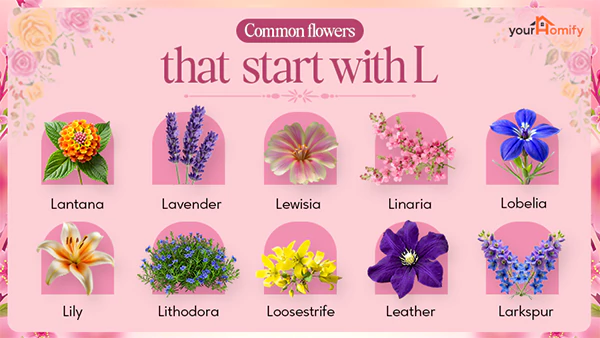
The flowers that start with L are lantana, lavender, lenten rose, lily, lavatera, lotus, lunaria, lisianthus, and more that are used for planting and gifting.
Take a look at the list of 40 flowers that start with L:
- Lantana
- Lavender
- Lenten Rose
- Lily
- Lavatera
- Lotus
- Lunaria
- Lisianthus
- Leonotis Leonurus
- Lady’s Slipper Orchid
- Lilac
- Lungwort
- Lycoris Albiflora
- Liatris
- Lucerne
- Loosestrife
- Lady’s Mantle
- Leopard’s bane
- Lobster’s Claw
- Lily of the Valley
- Love-in-the-mist
- Larkspur
- Lobelia
- Linaria
- Lobularia maritima
- Layia Platyglossa
- Limnanthes douglasii
- Limonium sinuatum
- Love-in-a-puff
- Lallemantia
- Lupine
- Lewisia
- Leucojum
- Ladybells
- Limonium
- Lasiandra
- Leucas
- Lippia Multiflora
- Lathyrus odoratus
- Lechenaultia
20 Perennial Flowers that Start with an L: Blooms that Come Back Every Year
Perennial flowers are plants that grow for more than 1 year and come back in the spring after dying back in the frost. They are an ideal option for smart landscaping patterns that do not need consistent planting every year and are also low-maintenance.
Lantana
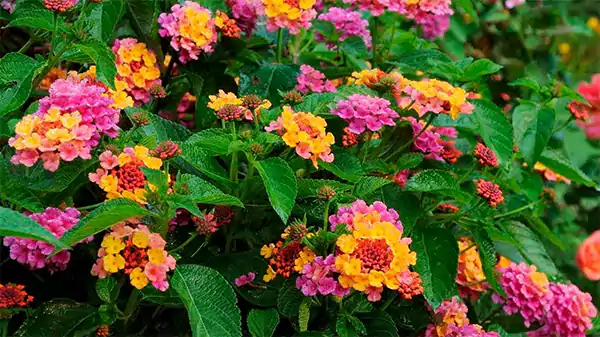
Lantana is a flowering genus of perennial herbaceous plants with over 150 cultivars that grow white, yellow, and pink flowers along with bright green foliage.
| Botanical name | Lantana |
| Native | America and Africa |
| Growing Requirements |
|
| Hardiness | USDA zones 9-11 |
Lavender
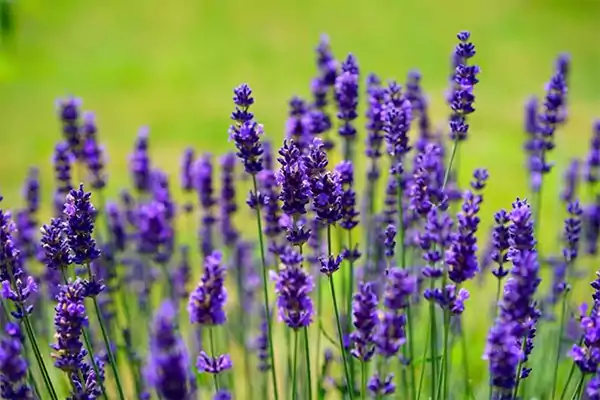
Belonging to the Lamiaceae family, lavender is most popularly used as an ornamental piece in bouquets or decorations. These purple spike-like blooms with their silver-green foliage and beautiful fragrance are the perfect upgrade for your garden.
| Botanical name | Lavandula |
| Native | Mediterranean regions |
| Growing Requirements | Full sunlight and well-draining soil |
| Hardiness | USDA zones 5-10 |
Lenten Rose
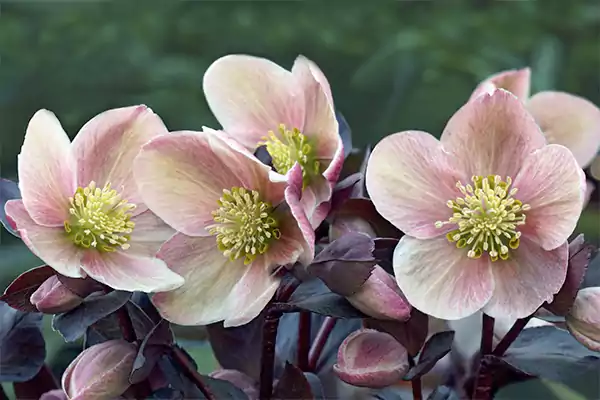
Commonly known as “Hellebore,” the Lenten rose is a herbaceous plant that blooms during winter and hence is also renowned as a “Christmas Rose.”
Lenten roses are shade-loving plants and therefore low-maintenance, but according to the ASPCA, they are toxic for pets, so they should be kept away from them.
| Botanical name | Helleborus |
| Native | Europe and Asia |
| Growing Requirements |
|
| Hardiness | USDA zones 4-9 |
Lily
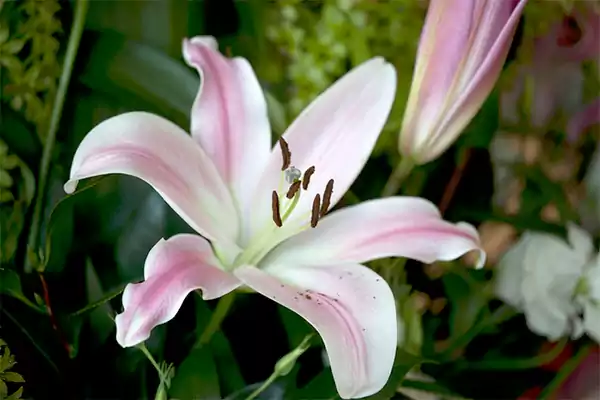
Lilies are categorized as one of the most popular blooms, which are used for their ornamental value. It grows big star-shaped flowers in the colours pink, white, red, and orange and typically reaches up to a height of 6 feet.
Popular varieties include Oriental and Asiatic lilies.
Please note that the lily of the valley and the calla lily are not types of true lilies.
| Botanical name | Lilium |
| Native | Northern hemisphere |
| Growing Requirements | Full to partial shade Well-draining soil with consistent moisture. |
| Hardiness | USDA zones 3-9 |
Lavatera
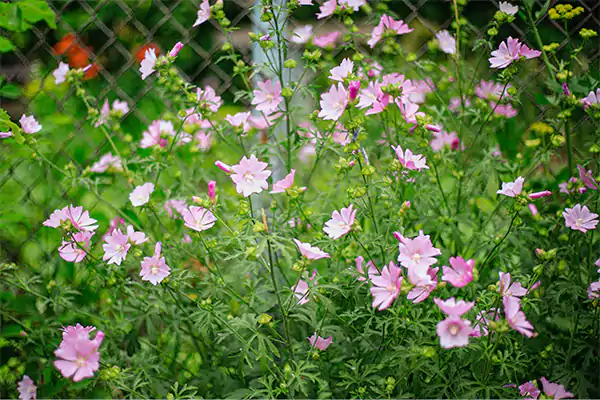
Lavatera is a low-maintenance flower with hints of purple veins on the petals. This evergreen perennial shrub is a summer flower that grows up to 6 feet tall and is perfect for wall borders and landscaping beauty that can be enjoyed all year long.
| Botanical name | Lavatera |
| Native | Western Mediterranean |
| Growing Requirements | Full sun and well-draining soil. Drought-tolerant once established |
| Hardiness | USDA zones 6-8 |
Lotus
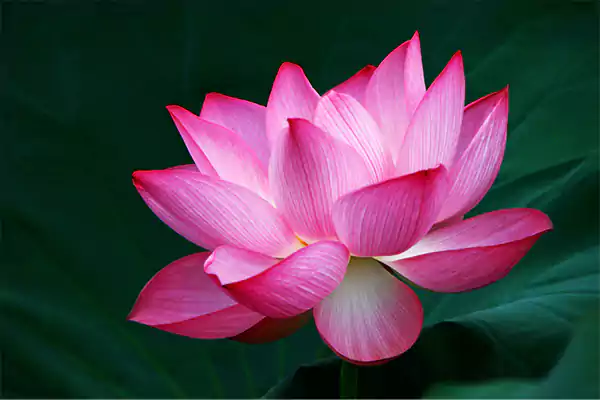
Lotus is an aquatic pink flower that is mainly grown in warm and most conditions. It likes to be submerged and planted in 12 inches of water, and hence is also grown as an indoor water plant.
Grown in the colours of pink, white, and yellow, all of them have different meanings and significance across different cultures.
Interestingly, the lotus is the National flower of India and Vietnam.
| Botanical name | Nelumbo nucifera |
| Native | Africa, Asia, and Australia |
| Growing Requirements | Full sun and 12 inches of water above the soil to imitate the native growth habitat. |
| Hardiness | USDA zones 6-11 |
Lunaria
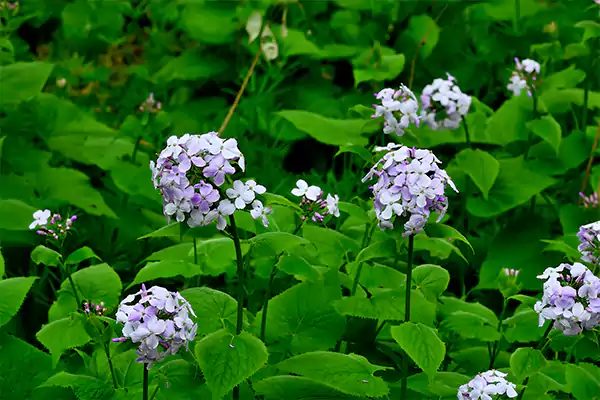
Belonging to the Brassicaceae family, Lunaria is also known as the “Honesty” or “Money plant” because of the seed pods the plant produces after growing small 4-petal flowers in the form of a cluster.
If you know how to dry flowers, you must be familiar with the lunaria flowers, as they are popularly used for dried flower bouquets.
| Botanical name | Lunaria spp. |
| Native | Europe and Western Asia |
| Growing Requirements | Full sun to partial shade Soil pH- 6.0 -7.0 |
| Hardiness | USDA zones 4-8 |
Lisianthus
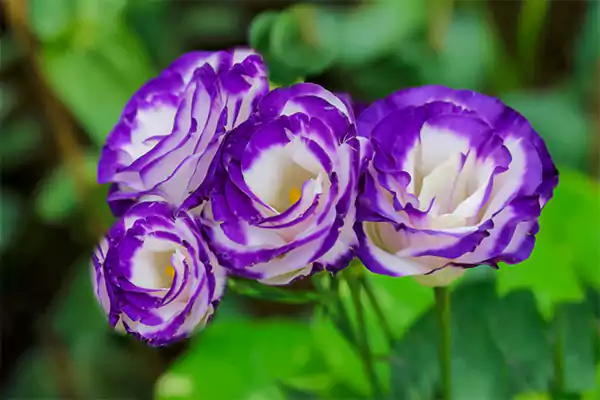
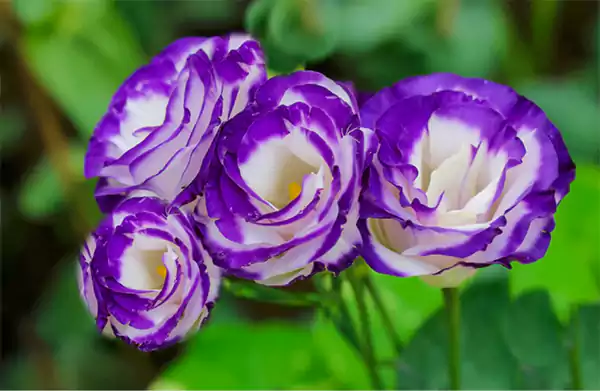
Part of the Gentianaceae family, lisianthus is a herbaceous perennial shrub that I once confused with a white rose due to its close resemblance.
The bell-shaped flowers of the lisianthus bloom in the colours pink, white and purple, up to 3 feet tall, which are the most commonly used in flower arrangements for special occasions.
| Botanical name | Lisianthus |
| Native | North America |
| Growing Requirements | Full sun exposure for 8 hours with well-draining, moist soil. |
| Hardiness | USDA zones 8-10 |
Leonotis Leonurus
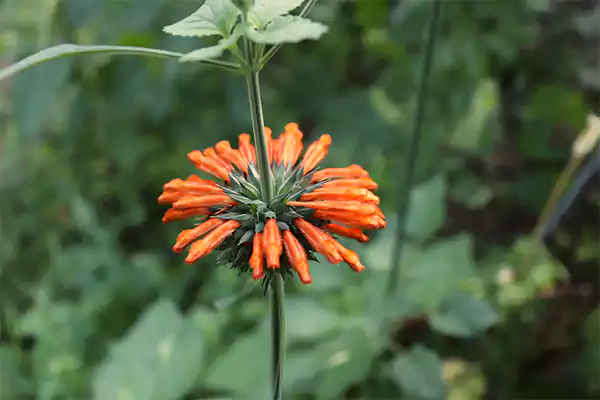
As the name suggests, Leonotis leonurus bears orange flowers that resemble a lion’s tail. This tropical flower of the mint family, like English lavender, blooms in summer and looks beautiful when planted or paired with the salvia plant.
| Botanical name | Leonotis Leonurus |
| Native | South Africa |
| Growing Requirements | 6 hours of direct sunlight, well-draining sandy loam soil |
| Hardiness | USDA zones 8-11 |
Lady’s Slipper
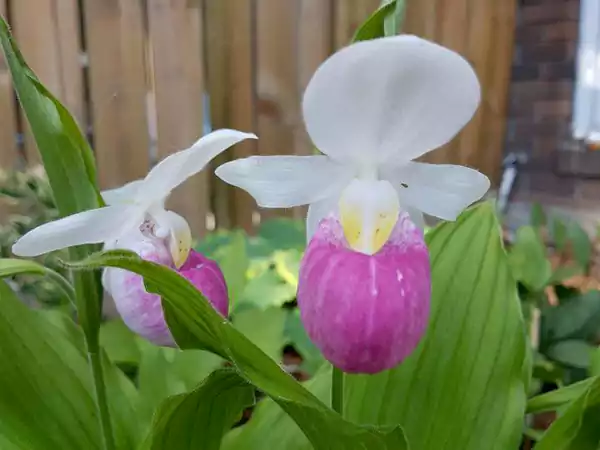
Lady’s slipper is a member of the orchid family and has inflated petals that resemble a lady’s slipper. Reaching up to the height of 3 feet, these herbaceous perennial plants are a pollinator magnet.
Historically, Native Americans used the plant extracts for medicinal purposes to treat fever and insomnia.
| Botanical name | Cypripedioideae |
| Native | North America, Europe and Asia |
| Growing Requirements | Indirect sunlight Neutral soil pH – 6.0 – 7.0 |
| Hardiness | USDA zones 2-9 |
Lilac
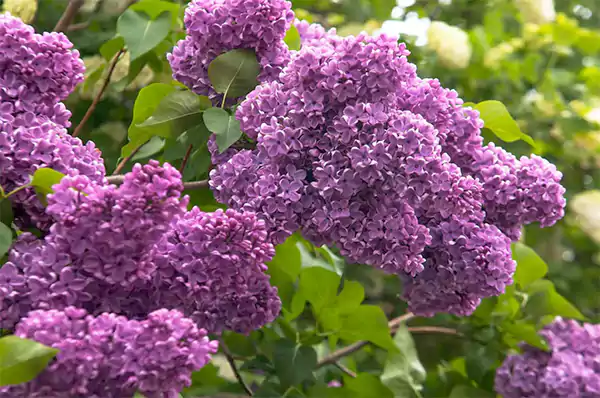
Lilac is one of my favorite purple flowers that start with L, which are fragrant blooms that grow in small clusters of flowers.
Belonging to the olive family, along with forsythia and types of Jasmine, lilac makes for an excellent cut flower and landscaping staple that comes back every year.
| Botanical name | Syringa vulgaris |
| Native | Europe |
| Growing Requirements | Full sun exposure, well-draining loamy soil. |
| Hardiness | USDA zones 3-7 |
Lungwort
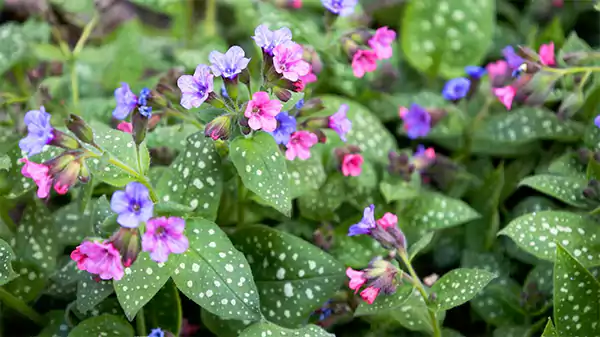
Growing not more than 1 foot tall, this member of the Boraginaceae family is commonly used as a ground cover due to its low-growing habit.
Multiple small mixed-colour flowers with big green leaves that have small white dots on them give this plant a unique look altogether.
| Botanical name | Pulmonaria spp. |
| Native | Europe and Western Asia |
| Growing Requirements | Partial shade, alkaline soil pH 7.0 8.0. Drought-tolerant once established |
| Hardiness | USDA zones 3-8 |
Lycoris Albiflora
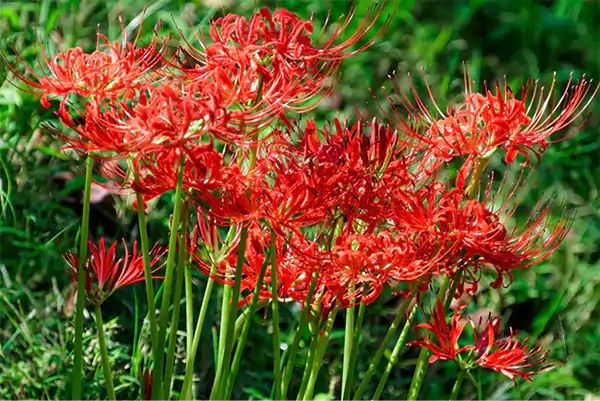
Another name for this flower that starts with L is “spider lily” due to the spider-leg-like flower structure. Apart from the flower, the foliage of the plant resembles that of the March birth flower, the daffodil.
Lycoris flowers bloom from late summer to fall in the vibrant colors of pink, red, yellow, and orange.
| Botanical name | Lycoris |
| Native | Southern Asia |
| Growing Requirements | Full sun to partial shade. Loamy or sandy well-draining soil |
| Hardiness | USDA zones 5-9 |
Liatris
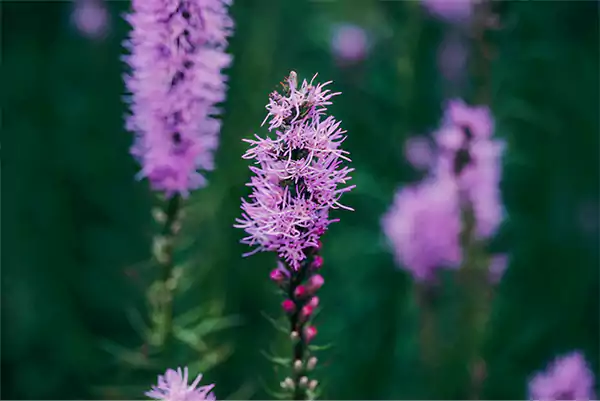
Much like the October birth flowers, marigold, the Liatris flower belongs to the daisy plant family and grows spiky, upright flowers that are similar to lavender blooms.
I have been growing these perennial flowers for the tall blooms that reach up to 5 feet for garden borders and that pop of colour to the usual green landscape.
| Botanical name | Liatris spicata |
| Native | Central and Eastern America |
| Growing Requirements | 6 hours of direct sunlight |
| Hardiness | USDA zones 3-9 |
Lucerne
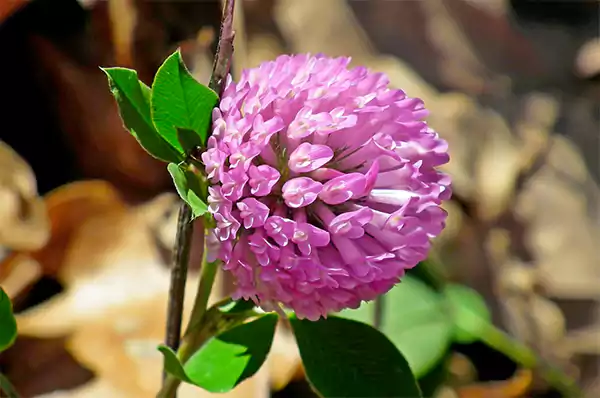
Lucerne belongs to the Fabaceae family and features small 4-petal pea-shaped flowers.
Although a great pollinator magnet, lucerne planting can be a little troublesome, as it releases a chemical that hinders the growth of neighboring plants.
| Botanical name | Medicago sativa |
| Native | South-west Asia |
| Growing Requirements | Full sun, sandy and loamy soil. pH: 6.5-7.5 |
| Hardiness | USDA zones 3-9 |
Loosestrife
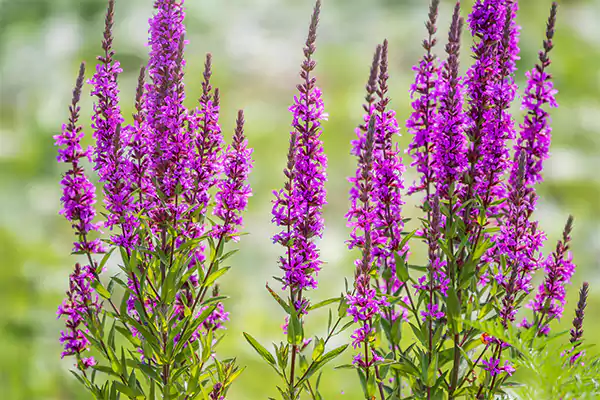
Lythrum is a flowering genus that includes over 200 species under its wide umbrella, which are further divided into “true lythrum” and the “Lysimachia” genus.
Popular for its spiky purple flowers that bloom from late summer to early fall, it is considered extremely invasive; use caution.
| Botanical name | Lythrum salicaria |
| Native | Europe, Asia and North Africa |
| Growing Requirements | 6-8 hours of direct sunlight, wet clay soil. |
| Hardiness | USDA zones 4-9 |
Lady’s Mantle
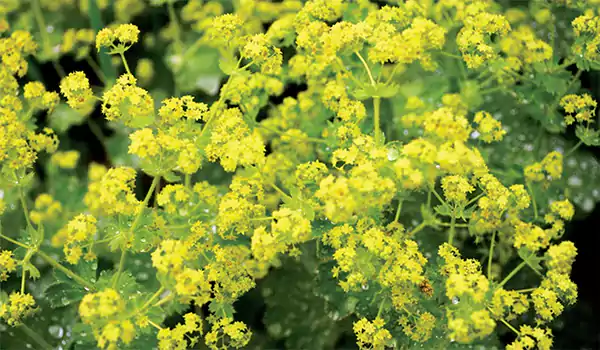
The name of the flower is a beautiful association of the shape of the leaves and the Virgin Mary’s mantle.
There is no dull moment after planting the lady’s mantle as a garden border or a ground cover because of the bright green foliage with lime -yellow flowers for every void of the garden, especially where the sunlight does not reach.
| Botanical name | Alchemilla mollis |
| Native | Southern Europe and Asia |
| Growing Requirements | Full to partial shade, sandy, loamy and clay soil. Consistent moisture but also drought- tolerant once established. |
| Hardiness | USDA zones 3-8 |
Leopard’s bane
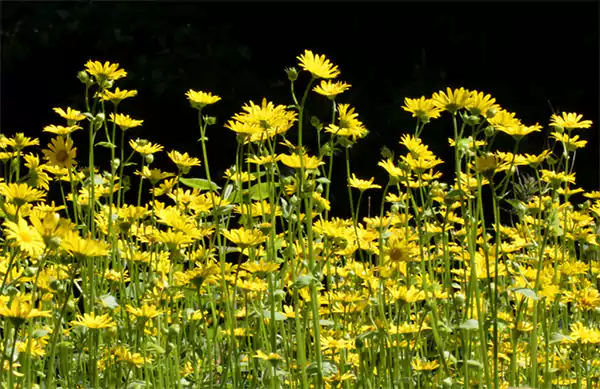
Leopard’s bane is a perennial herbaceous plant that grows daisy-like yellow flowers with green, heart-shaped leaves.
The name is most likely due to a popular belief that the roots of the flower can kill a leopard, fascinating, right? I love growing the leopards’ bane to add that pop of yellow to my garden borders.
| Botanical name | Doronicum orientale |
| Native | Southeast Europe, Southwest Asia and Siberia |
| Growing Requirements | Full sun to partial shade, loamy or clay soil. Regular watering as they are not drought-tolerant. |
| Hardiness | USDA zones 4-8 |
Lobster’s Claw
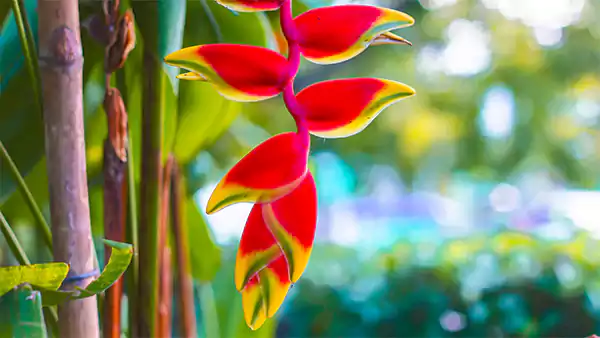
No doubts about why it is named the lobster’s claws, as the bright red flowers in themselves are the answer. These uniquely shaped flowers that start with the letter L are hanging plants that bloom from late spring to early autumn.
One of the most loved ornamental flowers, the lobster’s claw is considered a deer-resistant flower.
| Botanical name | Heliconia |
| Native | Tropical America |
| Growing Requirements | Full sun to partial shade, consistent moisture. Soil pH- 6.5 – 7.0 |
| Hardiness | USDA zones 10-12 |
Lily of the Valley
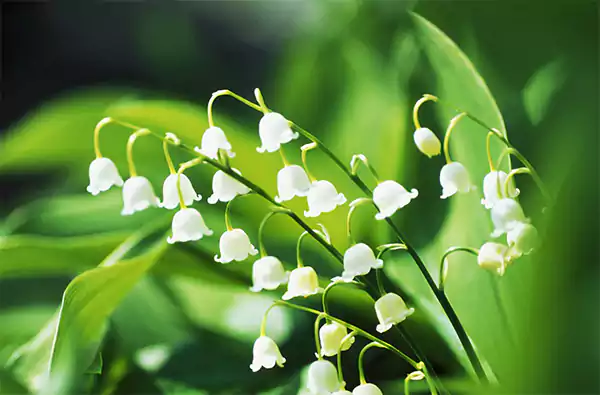
Similar to the Snake plant varieties, the Lily of the Valley also belongs to the Asparagus family. The delicate bell-shaped flowers with a fragrant scent are the perfect way to welcome spring to your garden.
With a height of almost 12 inches, the lily of the valley makes for an excellent ground cover.
| Botanical name | Convallaria majalis |
| Native | Europe and Asia |
| Growing Requirements | Full to partial shade, consistent watering. |
| Hardiness | USDA zones 3-8 |
10 Annual Flowers that Start with L: Add Personality to the Garden
Annual flowers are the plants that grow, mature, and die in the same year and need to be replanted again every time. The benefit of the growing annuals is that they provide consistent colour to the garden until frost.
Love-in-the-Mist
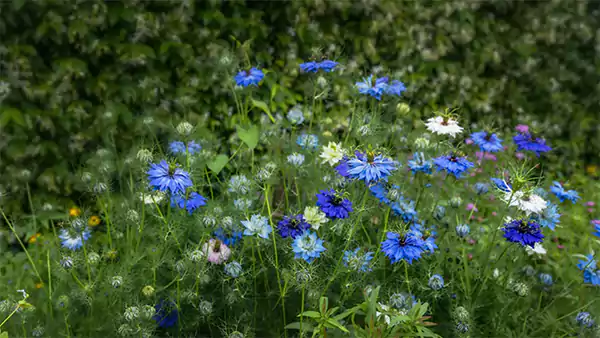
Commonly known as Nigella, the love-in-the-mist flower looks like a treat to watch. With their white, purple and blue flowers, these herbaceous perennial flowers have fern-like foliage that surrounds the flowers, resembling mist.
I absolutely adore them for their airy look and use them as filler flowers in the gardens for that colourful aesthetic.
| Botanical name | Nigella damascena |
| Native | Europe, Southwest Asia and North Africa |
| Growing Requirements | Full to partial shade, sandy and loamy soil. Water consistently, drought-tolerant once established. |
| Hardiness | USDA zones 9-11 |
Larkspur
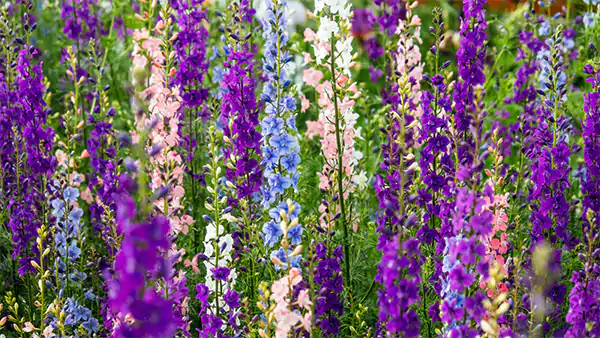
Larkspur and Delphinium both belong to the Ranunculaceae family, but are different flowers, as the latter is more densely packed than the Larkspur.
Another point is that I feel larkspur has a lower-effort planting and is beginner-friendly.
It is also interesting to note how many “L” flowers have a spike-shaped appearance.
| Botanical name | Delphinium |
| Native | Northern Hemisphere, Europe, Asia and North America |
| Growing Requirements | Full shade, soil pH- 6.5-7.5 Constant watering |
| Hardiness | USDA zones 3-9 |
Lobelia
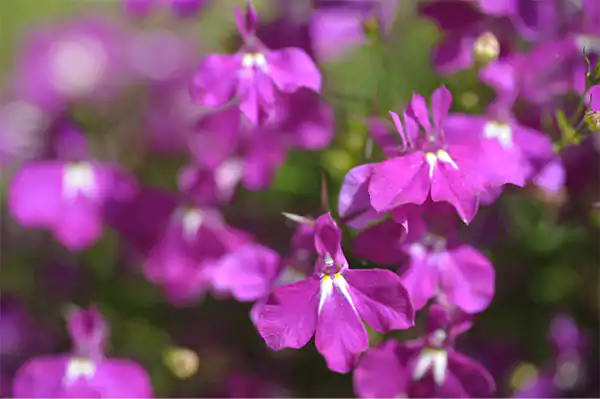
Lobelias are 5-petaled, small pink and blue flowers that have a trailing and an upright variety. They have a shallow-root system and, therefore, are perfect as hanging plants, which is how they are planted at my house.
This plant genus includes over 400 species of plants, which are excellent pollinating magnets.
| Botanical name | Lobelia erinus |
| Native | South Africa and North America( varies per species) |
| Growing Requirements | Full sun to shade( in a hot climate) Soil needs to be moist. |
| Hardiness | USDA zones 3-9 |
Linaria
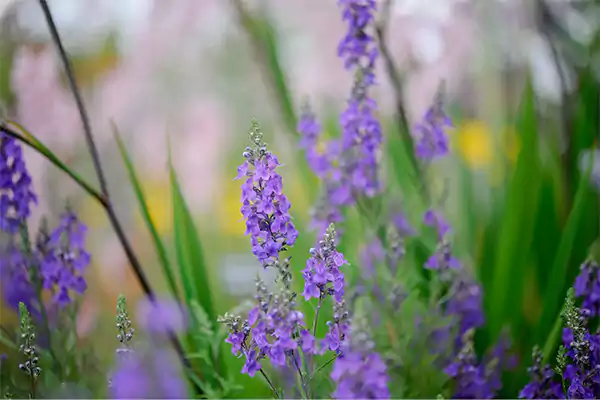
Popularly known as the ‘Purple toadflax,’ Linaria is a unique perennial that also grows spike-like flowers, similar to those of lavender, and is also popular for being a pollinator-friendly plant.
| Botanical name | Linaria |
| Native | Mediterranean regions |
| Growing Requirements | Moist soil and partial shade plant |
| Hardiness | USDA zones 3-4 |
Lobularia Maritima
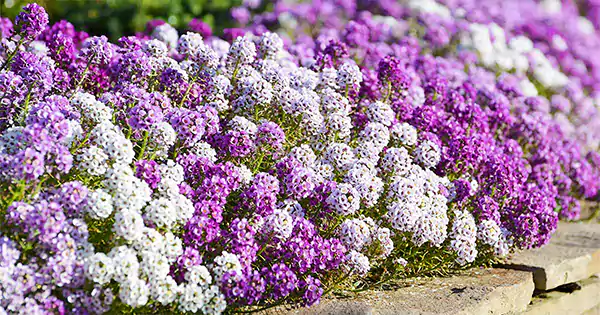
Commonly known as sweet alyssum, these annual flowers bloom in the colours white, purple and pink with a honey-scent fragrance. These clusters of flowers look luscious in a garden border.
| Botanical name | Lobularia Martima |
| Native | Mediterranean regions |
| Growing Requirements | Full sun to partial shade, well-drained soil. |
| Hardiness | USDA zones 9-11 |
Layia Platyglossa
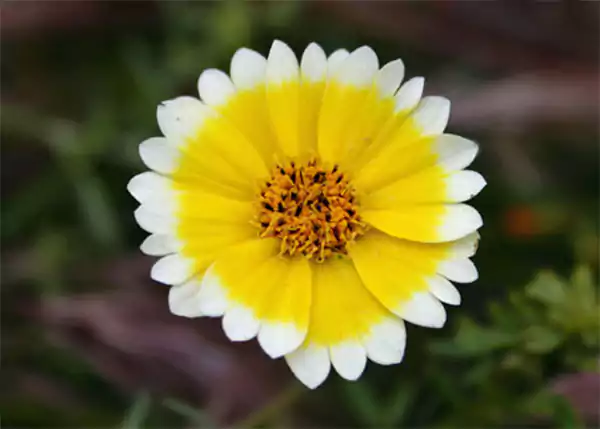
Quite similar to the Limnanthes douglasii, the coastal tidytips grow daisy-like flowers with a yellow center and white tips, which have been gracing my garden as an annual flower and sometimes a container plant for years now.
| Botanical name | Layia Platyglossa |
| Native Area | North America |
| Growing Requirements | Full sun for 6+ hours, sandy loamy well-drained soil, and drought tolerance. |
| Hardiness | USDA zones 3-10 |
Limnanthes douglasii
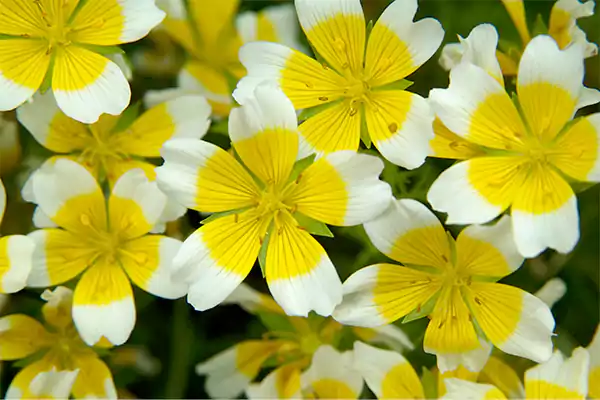
Also known as the poached egg plant due to the yellow center and white edges of the petals, these pollinator-friendly plants grow cup-shaped, beautiful blooms that are popular as garden borders or container plants.
| Botanical name | Limnanthes douglasii |
| Native Area | California |
| Growing Requirements | Full sun to partial shade with well-draining soil. |
| Hardiness | USDA zones 4-8 |
Limonium sinuatum
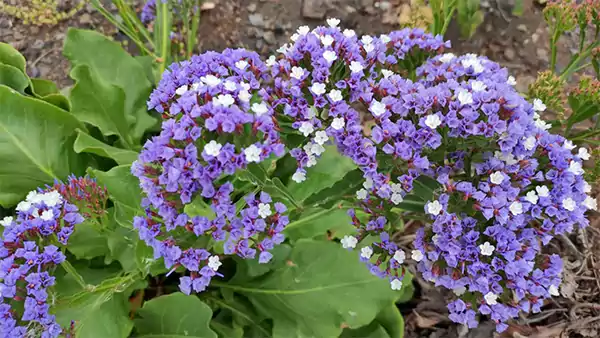
Bring into your garden the charm of the Limonium sinuatum and its small purple, white and yellow flowers and big green leaves. This annual herbaceous plant is also grown as a perennial depending on the climate.
| Botanical name | Limonium sinuatum |
| Native Area | Mediterranean regions |
| Growing Requirements | 6+ hours of sunlight, well-draining sandy soil, and low water needs (drought-tolerant). |
| Hardiness | USDA zones 8-9 |
Love-in-a-Puff
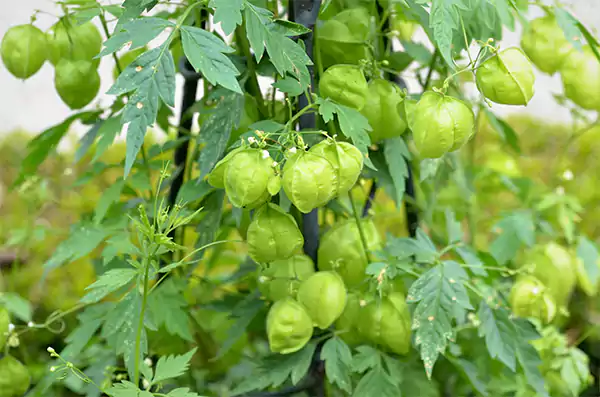
Love-in-a-puff is a trailing vine from the Sapindaceae family. What fascinates me the most is the green balloon-like pods similar to a paper lantern, which I had never seen before. This self-seeding variety stores its seeds inside these pods, which have a little heart on them.
| Botanical name | Cardiospermum halicacabum |
| Native Area | Tropical regions of Africa, Asia and South Asia. |
| Growing Requirements | Full sun, consistent moisture and a trellis for support. |
| Hardiness | USDA zones 8-11 |
Lallemantia
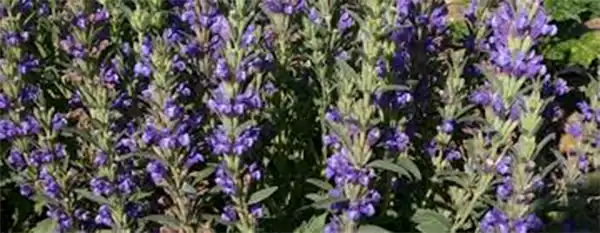
Lallemantia is a member of the mint family, related to peppermint. This drought-tolerant annual flower grows purple flowers and green foliage and reaches up to 20 cm high.
These plants are mostly used for their medicinal properties and as garden borders.
| Botanical name | Lallemantia |
| Native Area | Western Asia |
| Growing Requirements | Full sun for 6+ hours, drought-tolerant, light loamy, simple but well-draining soil. |
| Hardiness | USDA zones 6-9 |
An Extended List of 10 Small Flowers that Start with L
Apart from the famous flowers that start with L, some blooms always remain unknown. Here is a list of some unique small “L” flowers that every anthophile must know.
| S. No. | Image | Name and Description |
| 31. | 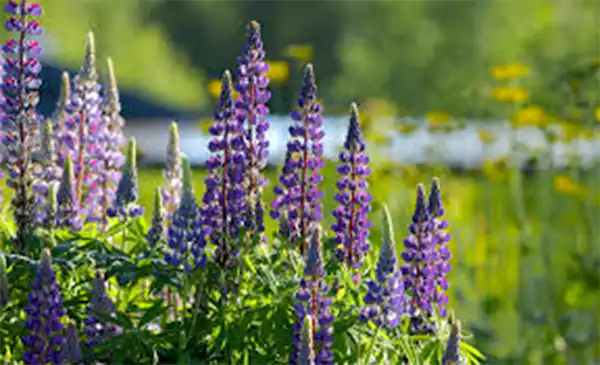 | Lupine Botanical name: Lupinus Native: North America Height: 1-5 feet Special features: Pollinator magnet and nitrogen-fixing abilities |
| 32. | 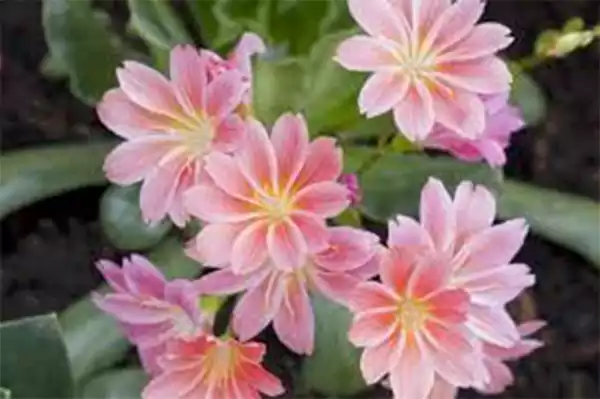 | Lewisia Botanical name: Lewisia Native: North America Height: Up to 1 foot Special features: Drought-tolerant once established |
| 33. | 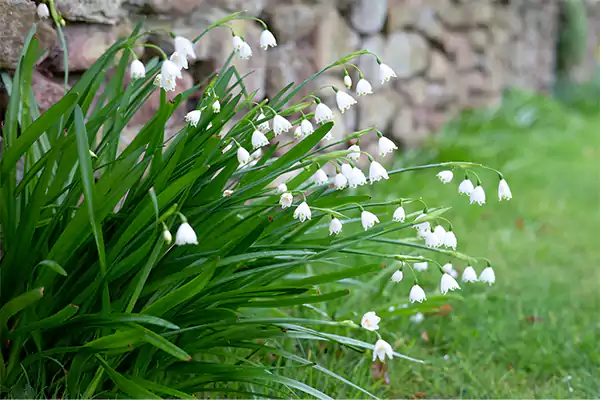 | Leucojum (Summer Snowflake) Botanical name: Leucojum aestivum Native: Europe, Iran and Western Asia Height: Up to 2 feet Special features: Deer-resistant flower |
| 34. | 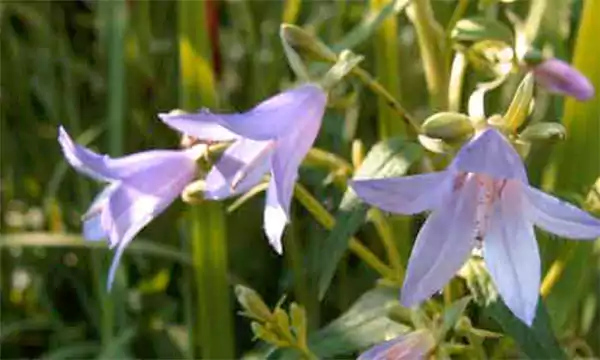 | Ladybells Botanical name: Adenophora Native: Asia Height: 1-3 feet Special features: Pollinator-attracting flower |
| 35. | 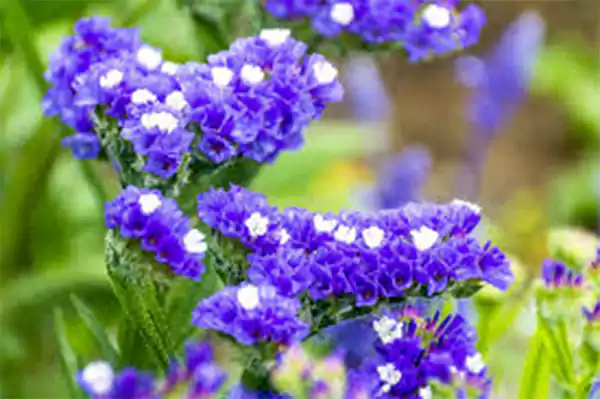 | Limonium Botanical name: Limonium spp. Native: Europe, Asia and North Africa Height: 1-3 feet Special features: Drought-tolerant |
| 36. | 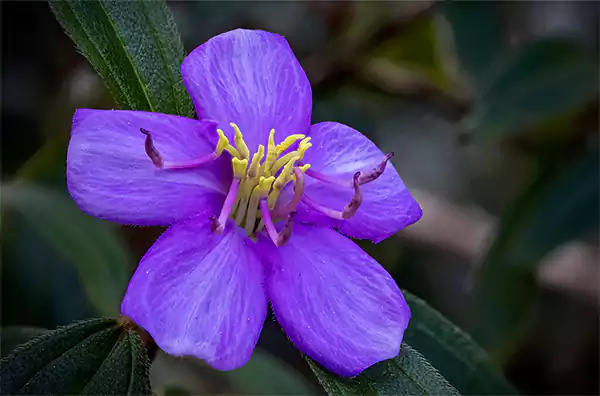 | Lasiandra Botanical name: Lasiandra aspera Native: India, Southeast Asia Height: Up to 2 feet Special features: Fragrant flowers have medicinal uses. |
| 37. | 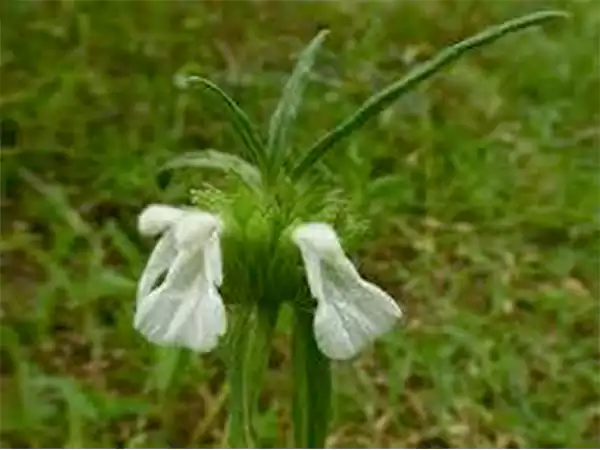 | Leucas Botanical name: Leucas aspera Native: Asia Height: Up to 2 feet Special features: Leaves are used for medicinal purposes |
| 38. | 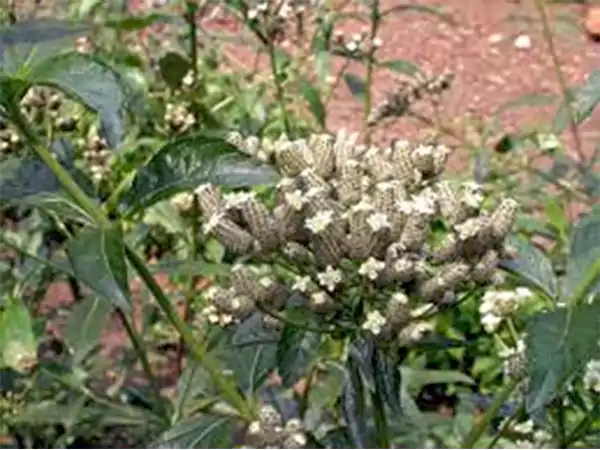 | Lippia Multiflora Botanical name: Lippia Multiflora Native: Sub-Saharan Africa Height: Up to 13 feet Special features: Edible leaves with aromatic scent, also used as a medicine. |
| 39. | 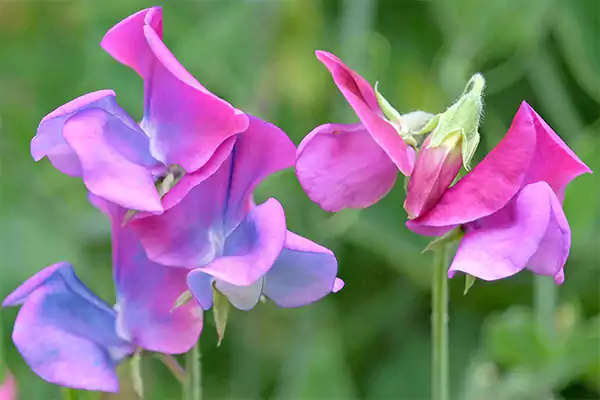 | Lathyrus odoratus Botanical name: Lathyrus odoratus Native: Southern Italy Height: 3 feet( shrubs), 7 feet( climbers) Special features: Fragrant flowers |
| 40. | 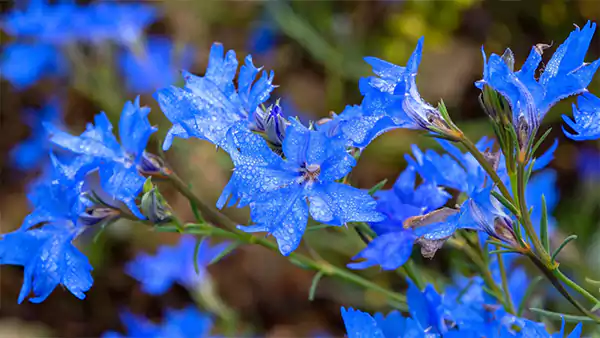 | Lechenaultia Botanical name: Lechenaultia spp. Native: Western Australia Height: Up to 4 feet Special features: Drought-tolerant |
Concluding Remarks
The words ‘love’ and ‘life’ start with L, and that is exactly what the flowers that start with L add to your garden. The charm of lavender and the simplicity of lantana—no garden style can stay void of these flowers.
It is time to upgrade the gardening space with flowers that start with letter L and bring the charm of these versatile blooms home.
FAQs
What are some perennial flowers that start with L?
Lavender, Lantana and Lenten Rose are some perennial flowers that start with L.
Which are the purple flowers that start with L?
Liatris, Lupin and Lilac are purple coloured flowers that start with an L.
What are the drought-tolerant flowers that start with the letter L?
Lavatera, Lungwort and Lallemantia are the drought-tolerant varieties of the “L” letter flowers.
What are the rare flowers that start with an L?
Rare flowers that start with L include Lycoris, Lady’s slipper and Lysimachia.
Which flower that starts with an L is toxic to pets?
The Lenten rose is a flower that starts with the letter L that is considered toxic to pets.
L- Plants– University of Florida