


Rose plants are famous for the beauty and fragrance of the flowers. You can easily expand the plant family by propagating roses. The plants can be propagated by soil and water propagation methods. Start by cutting a stem and planting it in soil, or you can place the plant in water till it grows roots and then transfer it to soil.
In this guide, I have discussed the detailed propagation process, with main challenges, tips for care, and the best time for propagation. Also, read the tips to preserve the stem after cutting it.
Quick Answer
To grow roses from cuttings, choose a healthy 6–9 inch stem and make a diagonal cut below a node. Plant the cutting in well-draining soil or place it in water until roots develop. Keep it in bright indirect light with proper moisture, and transplant it once strong roots form.
How to Propagate Rose from Cuttings?
To propagate rose cuttings, gardeners can either do water propagation or soil propagation. The first step of propagation is cutting a stem 6 to 9 inches from the plant and making a diagonal cut at the bottom. After that, plant it directly in soil or let the roots grow out in water and then put it in the soil. Walk through the detailed process of water and soil propagation of a plant.
1. Propagation in soil
The first step is to take a pot with proper drainage and fill it with soil mix, then cut a stem from the plant and put the stem inside the soil. After that, provide proper water and sunlight to the plant. Learn the detailed process of soil propagation of rose cuttings below.
Step 1: Choose a Stem
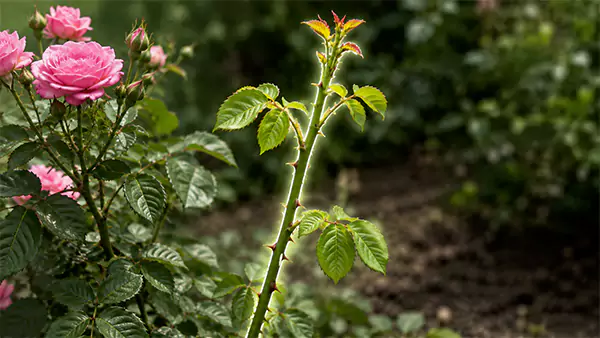
You can take a stem from any rose plant; just ensure the plant is healthy and the stem you are taking is long, healthy, and strong. An old wood stem will take time, and there is a chance it does not respond in the same way; taking a new stem will ensure quick and healthy growth.
Step 2: Prepare the Stem
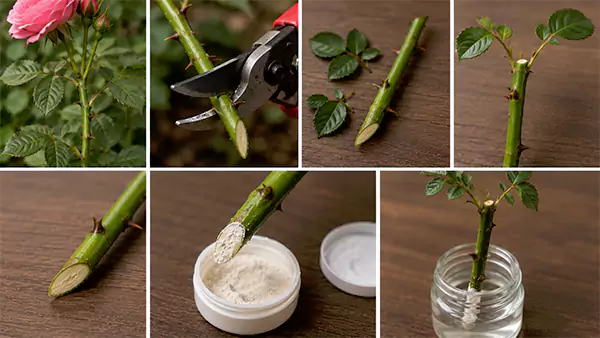
Now clean the stem and make a 45-degree angle cut below the node; use sharp scissors. Also remove some of the leaves that are directly above the cut. Now dip the stem in rooting hormone if you feel the need (this is totally optional; it is a chemical to speed growth).
If you are not putting the cutting in soil right away, please put it in water for that time. Leaving the stem can cause dehydration in the plant.
Step 3: Prepare the Pot
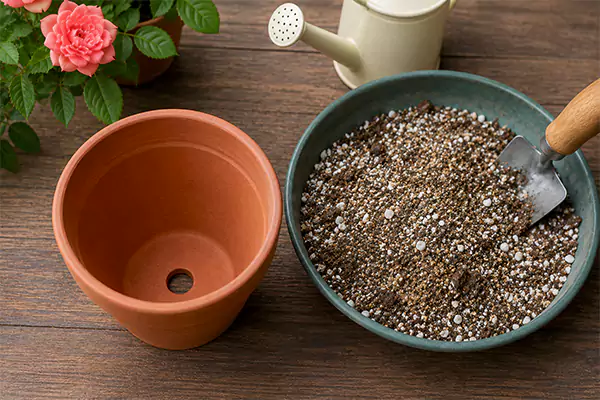
Take a pot that has proper drainage holes. Now take a soil mix that has equal parts coarse sand and perlite or vermiculite in it. This combination works well. Hydrate the soil and let it dry a little. Before planting, ensure the soil is moderately wet. The roots and stem can rot due to excess moisture.
Step 4: Plant the Stem
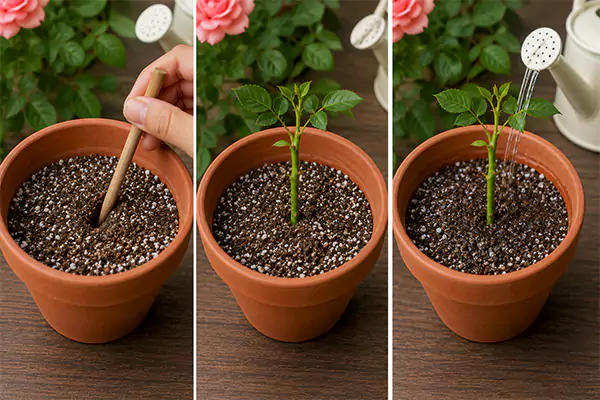
Now take a pencil or a small stick to make a hole in the soil. After that, take the stem and put it inside the hole. Make sure the stem is straight, and the cut is covered with the soil properly; don’t press the stem harshly. Now dampen the soil slowly, and once the stem is surrounded by soil, leave it.
Step 5: Cover the Plant
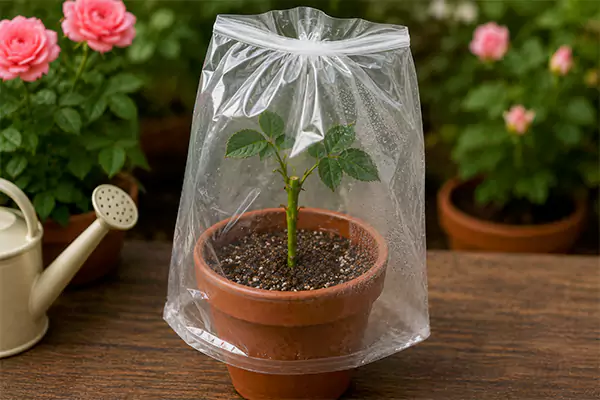
For quick growth, take a transparent polythene bag or jar, then pour some water into it for good moisture. After that, cover the plant with polyethylene. Make sure there is some air inside; the covering will trap the moisture. This will help in the quick growth of the roots.
Step 6: Watering the Plant
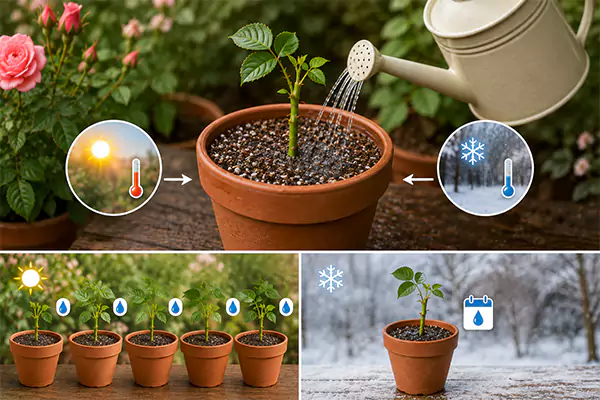
The watering mainly depends on the season; new plants need extra water. If you are planting the rose in summer, you may have to water it 3 to 4 times a week, ensuring that it is properly moist. In winter, the moisture stays for a long time. You can water it 1 time a week.
2. Propagation in Water
There is one more method to propagate roses by water. The process is simple: you have to start propagation in water, and once the roots grow, you have to transfer it to soil. Walk through the steps of propagating roses with water.
Step 1: Take the Cutting
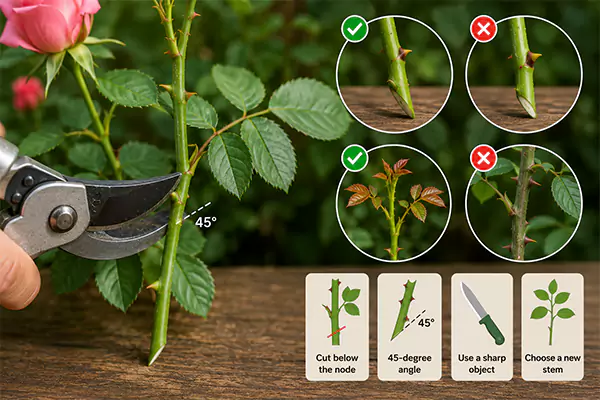
While cutting the rose stem, you have cut the stem below the node. Make sure you use a sharp object for a proper cut, and the stem cut should be at a 45-degree angle. It is best to choose a new stem for cutting because it grows roots faster.
Step 2: Prepare the Stems

Take the stem and snip off all the leaves except the leaves at the upper part near the flower. This will prevent the stem from drying out. Now clean the stem, and it is ready to go into the water.
Step 3: Put it in Water
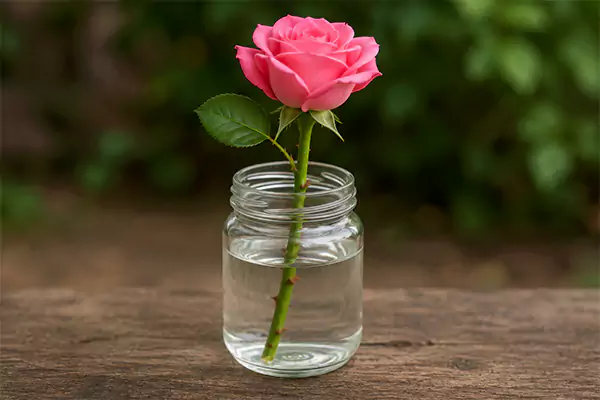
Now take lukewarm water in a jar, and put the stem in the water. Make sure the leaves are not getting into the water, because they can rot in the water. Now put the jar in a place that has an indirect source of sunlight.
Step 4: Maintain the Plant
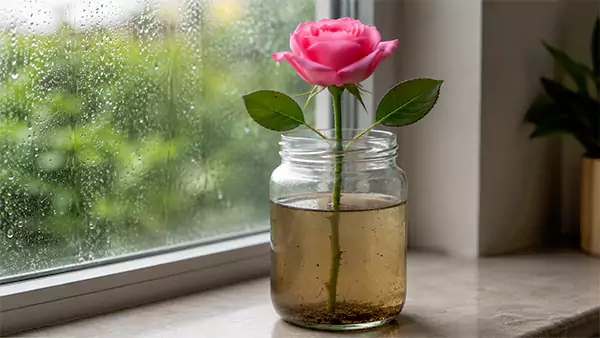
Check the plant every day; if the water feels dirty, change it. It is important to change the plant water every 4 to 5 days to minimize the chances of fungal or bacterial infections. If the root seems slimy, change the water and wash it; it may be an indication of fungus.
Step 5: Potting up the Plant
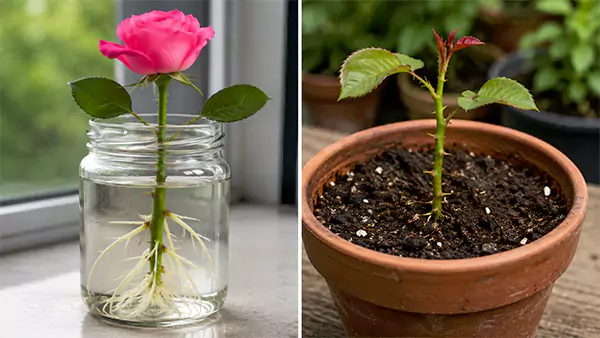
After the root growth reaches 2 to 3 inches and starts sprouting, you should transfer it to soil. Take a pot that has holes for proper drainage and fill it with soil mix. Don’t press the soil while filling. Then make space for the plant and slowly cover the roots with soil.
Tips for Caring for and Preserving Rose Cuttings
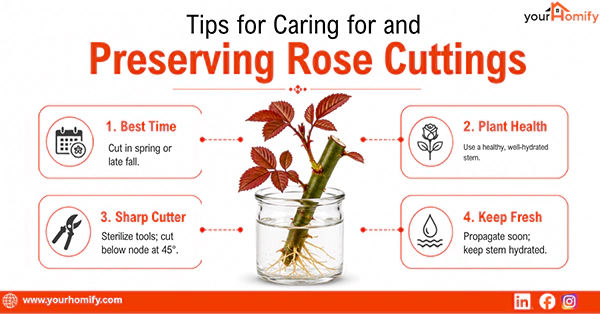
While cutting a rose stem for planting, make sure the season is appropriate, the plant is healthy, you make the cut correctly, and the stem is not kept for long after cutting. Go through the tips for cutting the rose stem and preserving it.
- Best Time: Make sure that you are cutting the plant during the spring or late fall season. These seasons suit the rose plant, and it encourages the healing and growth of the plant.
- Plant Health: It is important that the stem you are cutting is fully hydrated and the mother plant is healthy. If the mother plant has fungal and bacterial growth or is dehydrated, then it can also affect the new plant and stop proper growth of the new plant.
- Sharp Cutter: Use only clean and sharp knives. Infectious tools can infect the plant while cutting, which can result in a rotten stem or root. Ensure you sterilize them. Sharpen them before cutting; an inaccurate cut can also slow growth. Make sure the cut is below the node and at 45 degrees.
- Keeping the stem: Ensure you are not keeping the stem for a long time. Leaving it 1 hour after cutting is not concerning. After that, it can start dehydrating. To stop dehydration, prune roses and remove the extra leaves except the leaves near the flower. Keep the stem in water if you have to leave it unpropagated for a longer time.
Caring Tips After Planting Rose
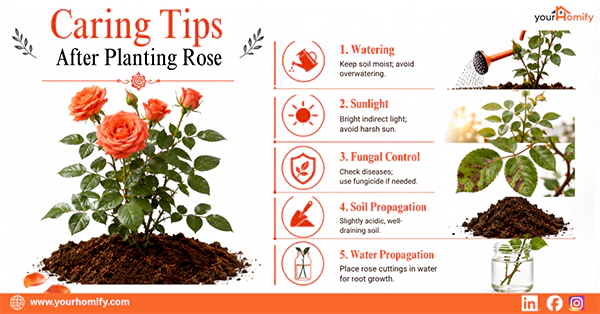
There are some things that you should keep in mind after planting, like proper watering, sunlight rules, and tips for fungal control. I have discussed the tips in detail and also mentioned a special tip for soil and water propagation.
- Watering: Ensure that you are maintaining proper moisture in the plant. Watering is very important; 2 to 3 times a week in summer or once a week in winter can be enough. If the top 2 to 3 inches of soil is getting drier, you can water more often. If your plant’s leaves are getting yellow, it means you are watering too much; minimize watering.
- Sunlight: Use fluorescent lights for 12-16 hours daily. They help in the propagation process, especially in the winter months. Make sure there is no direct sunlight with strong rays; indirect light sources are best for growth.
- Fungal Control: Keep checking the plant from time to time for rose diseases and mix a fungicide for extra safety. Mix mycorrhizal fungi in the soil, as it helps the roses grow and gives a better root system. Root hormones also help in growth and prevent fungus.
- Soil propagation: Soil with acidic properties is ideally better for rose growth; you can add organic compost or ground bark to improve drainage and to improve nutrition.
- Water propagation: While propagating, put the rose clipping in the jar. They release natural hormones in the water that help speed up the development of the rose roots.
What are the Main Challenges in Rose Propagation?
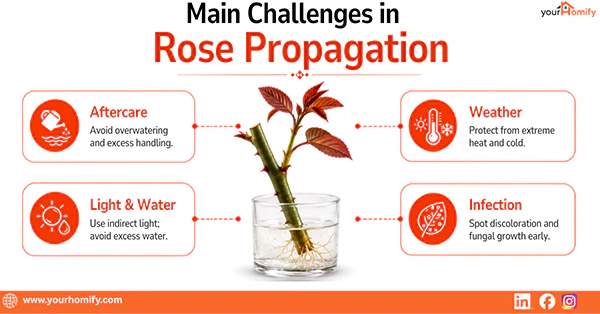
Small mistakes and negligence can be harmful to the plants, like providing direct light or overwatering, not caring for the plant properly, planting in bad weather, and most dangerously, not resolving infection.
- Overcautious in Aftercare: Being overcautious about these summer flowers can also cause harm to it, like thinking too much while watering or delaying it, moving the plant continuously, using soil with fertilizers, or feeding it prematurely. Small things like checking the plant and being overprotective, checking every small growth, can be harmful to the plant.
- Wrong Weather: If you are planting the stem in peak summer or winter, then it can spoil the results because growth slows down in these seasons and the roots can rot or grow very slowly.
- Excess Light or Water: Not providing the accurate amount of water and sunlight can also affect the plant’s growth and can be a reason for a rotting plant or roots. Direct sunlight can affect the plant; make sure you are putting the plant in a room that has a source of sunlight, but put it away from the window.
- Infection: Ignoring small things like holes in leaves, green, blue, or black growth on the stem can be dangerous. If you see any kind of change in color on the stem, then clean it and spray fungicide that will protect it from future issues.
What is the Best Time for Rose Propagation?
The best seasons for planting roses are considered spring and fall. Studies say that if you are planting a rose plant, the outdoor temperature should vary from 55 degrees Fahrenheit to 90 degrees Fahrenheit. The plants give the best results during that time.
Usually, gardeners prefer planting while the outdoor temperature is between 70 and 80 degrees Fahrenheit, and they get the best results: quick growth, strong stems, no infection, and beautiful flowers. Cut the plant early in the morning and plant it as soon as possible, when the plants are fully hydrated, which helps the plants adjust quickly.
Sum Up!
The planting of roses via cuttings is not difficult if you have the complete guide. Here I have summed up all the important points related to the planting of roses. There are two major ways to propagate rose cuttings: one is by putting them directly into soil, and the second is to grow the roots in water and then transfer them into soil.
Make sure you are following the points while cutting the stem, while planting, and also after completion of the plantation. May your plant bloom and you get beautiful flowers with a mesmerizing fragrance.
FAQs
Are roses easy to propagate from cuttings?
Roses can propagate easily from cuttings. Make sure the stem is strong and healthy when cutting it from the plant. Before planting, make a 45-degree angle cut below the node, and the plant will grow quickly.
Can I root rose cuttings in water?
Yes, you just have to keep the stem in water for 3 to 4 weeks; ensure the water is clean. You will get to see the roots coming in a few days; after the roots show up, transfer it to soil.
How to take rose cuttings in October?
Take a stem that has grown recently. Then plant it in the soil. In winter, the stems take some time to grow, and make sure you are not watering too much.
Can you put rose cuttings straight into soil?
Yes, make the cut properly, ensure the nodes are submerged in the soil properly, and water 3 -4 times to ensure there is moisture. For quick growth, ensure the soil has a high pH.
How long do rose cuttings take to root?
In water, it will take 2 week maximum to start the rooting process and will complete within 4 weeks. In soil, it will take more than a month for proper rooting.
- How to take rose cuttings– BBC Gardeners World






Mother's Day Carnations: History & Color Meanings
[…] Roses symbolize love and admiration, and that’s why it is a popular choice for gifting to loved ones. […]