Succulents are a type of plant that has the ability to store water in its leaves. This feature makes them drought-tolerant and easier to manage. While their water needs are minimal, it requires proper planning, as they are susceptible to root rot or wilting due to overwatering.
These low-maintenance indoor plants are perfect for container planting from outdoor garden hedges. If you are planning to bring them home, let me take you through a detailed guide on how to water succulents with common challenges and a step-by-step guide on the same.
Quick answer
Succulents are best watered through the ‘soak and dry’ method, which basically involves watering the plant until it is completely soaked in water and waiting for it to dry before repeating the same process. This ensures proper drainage and prevents overwatering. The watering needs of succulents varies as per season, plant, and container type. Analyze and water accordingly.
How to Water Succulents Properly?
The ‘soak and dry’ method is the most efficient watering method for succulents. It ensures that the plant receives water only when it is completely dry. Gardeners use the finger rule to determine the soil moisture and then water accordingly.
For better clarity, I have curated a step-by-step guide for watering succulents that has personally worked for me over the years:
- Step 1: Start by checking the soil moisture using the two-finger rule. Place your finger 2 inches deep in the soil. If it’s dry, then it’s time to water.
- Step 2: Water the plant soil thoroughly until all the water is absorbed by the soil.
- Step 3: You can also place the pot in a tray filled with 2 inches of water. The plant will absorb the water through the drainage holes.
- Step 4: Do not go overboard with this step, as it can lead to root rot.
What is the Best Water for Succulents?
Rainwater and distilled water are ideally the best types of water for succulents as they provides the right kind of nutrients to the plants without making it weak.
Selecting the right kind of water is also an important step in determining plant quality. Here are 2 best water options for succulents used by gardeners:
1. Rain Water
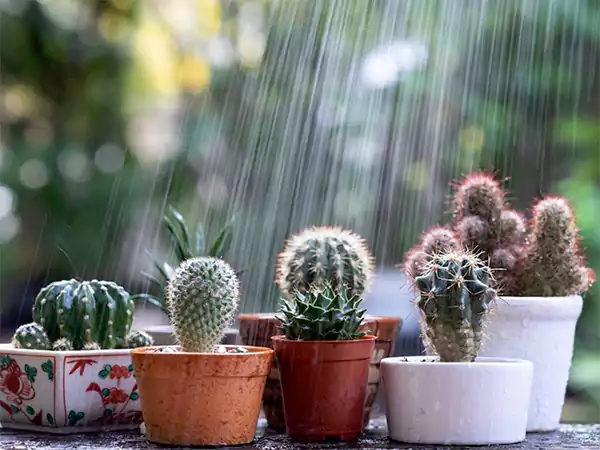
Rainwater is the best source of water for succulents. Succulents thrive in an acidic pH between 6.0 and 6.5, which is best achieved through rainwater. It contains nitrogen and various other micronutrients like zinc, manganese, copper, and iron, which are passed to the plant roots.
While rainwater cannot be a constant source of watering for succulents, I would recommend collecting it whenever possible.
2. Distilled Water
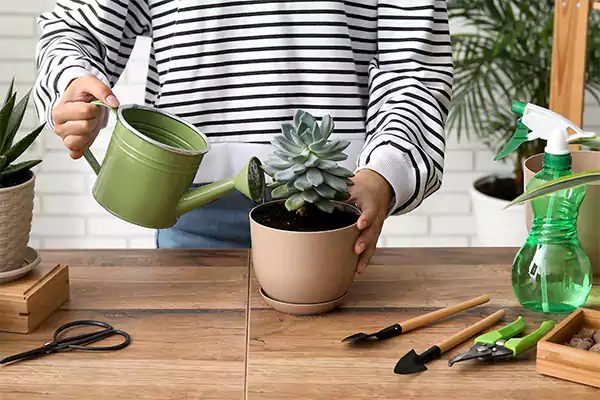
Distilled water is another great alternative for succulent watering. It is free of toxins and does not harm the plant, unlike soft water. While it does not contain any toxins, there are also no additional minerals present for the benefit of the plant.
Signs of Underwatering and Overwatering in Succulents?
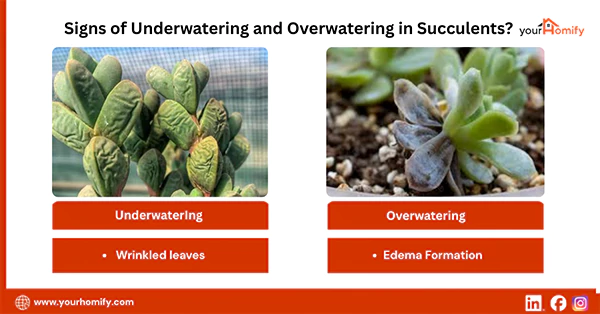
Overwatering is one of the most common mistake in succulents, which leads to premature wilting.
While reading a plant is easy, with dull and drooping leaves, finding out the root cause is the main task. Hence, I have mentioned below the signs of underwatering and overwatering succulents for a better analysis.
1. Overwatering
The most common sign of overwatering is edema, which causes soft and mushy leaves. Overwatering leads to root rot, hence always checking the soil for any sort of fungal infection, especially while repotting. Change the soil mix in case of any rot.
Spot any black leaves or black marks on the leaves. They are usually a sign of overwatering, and that your soil is not draining the water well. Dead leaves are also a sign of overwatering because excess water leads to fungal infection, which in turn kills the plants.
2. Underwatering
Underwatering is often overlooked in succulents because of their drought tolerance. Dry leaves are the most prominent sign of underwatering, not only in succulents but in all plants.
Another thing to spot is wrinkled leaves, which are also a sign that the plant is not being watered properly. Aerial roots appear on the stems only when the soil has been left dry for too long.
What Factors Influence the Succulent Watering Frequency?
Many factors like season, planting area, container, and plant type affect the watering frequency of watering succulents.
Watering schedule should be adjusted as per the following factors to ensure better plant management:
1. Planting Area
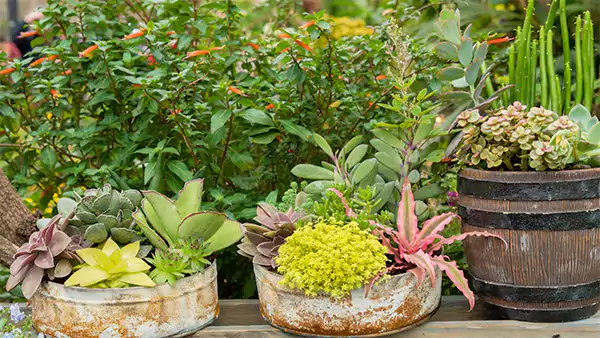
Indoor succulents require less frequent watering than outdoor ones. This is because the outdoor plants are exposed to bright sunlight and wind, which makes the water evaporate much faster. Therefore, they need to be watered more frequently.
To be precise, water an indoor succulent every 10-12 days and outdoor plants once a week.
2. Season
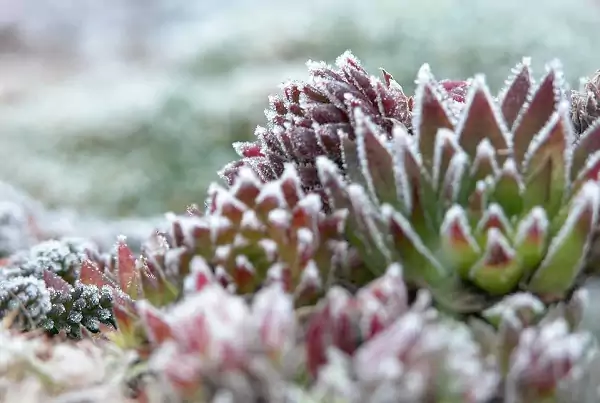
Seasonal changes affect the watering frequency of succulents. Spring and summer demand regular watering because the soil warms up while the process of photosynthesis and transpiration are taking place simultaneously.
As fall approaches, the water frequency decreases because the metabolism of the plant slows down as it reaches the state of dormancy.
Check the soil moisture before watering. Note that succulents have the ability to survive without watering for a long time as they have water stored in their thick stems.
3. Container Type
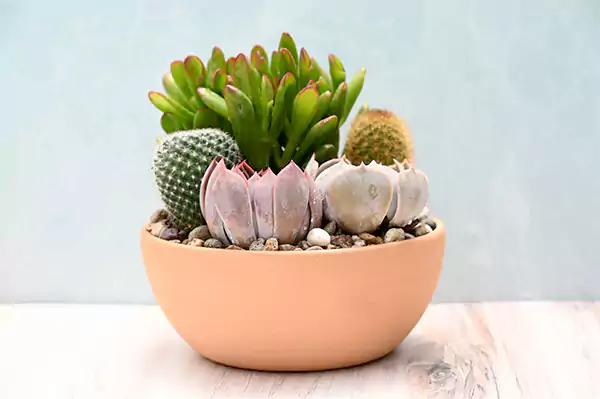
Containers with proper drainage holes are preferred for succulents. Terracotta pots are the best containers for succulents because they ensure water drainage and proper aeration, which lets their roots breathe.
Due to the presence of drainage holes, the plant needs more watering as the soil gets dry way too quickly. If your container does not have drainage holes, it needs less frequent watering, but look out for waterlogging.
4. Plant Type
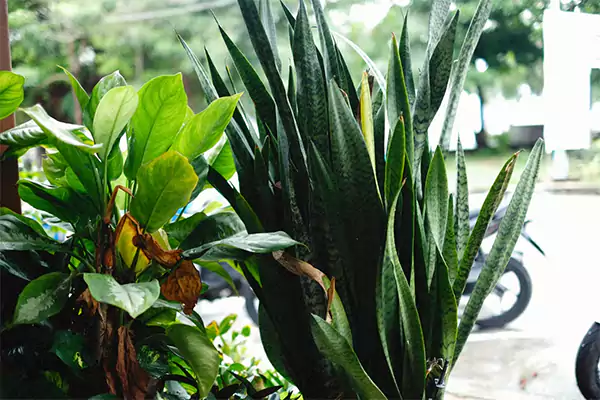
According to the PennState Extension, there are over 10,000 types of succulent species, all with different watering needs. The ones with thin leaves need more frequent watering than the thick-leaved succulents.
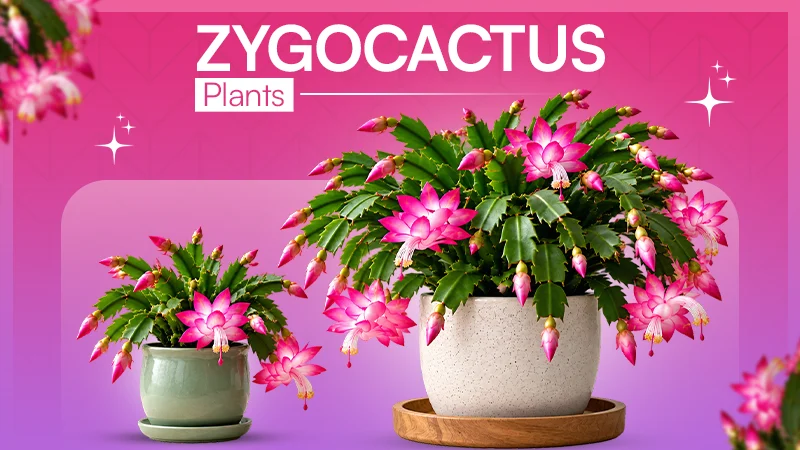
For example, snake plants and jade plants have moderate watering needs, while Christmas cactus needs to be watered regularly.
Common Mistakes to Avoid While Watering Succulents
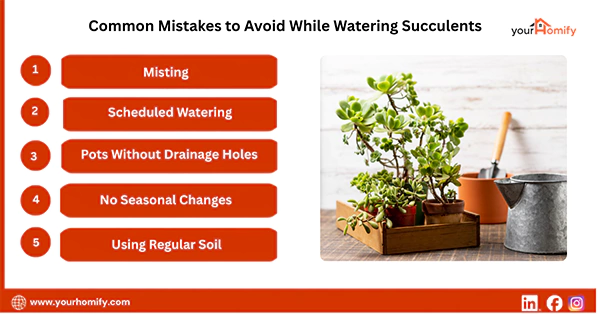
Misting succulents is never recommended because it does not benefit them at all. Learning how to water succulents is hassle free until you do not make simple mistakes which create a big impact.
Here are some common succulent watering mistakes that you should completely avoid:
- Misting: Just sprinkling water on the leaves does not help succulents because they require deep watering. Unlike other plants, you need to pour enough water deep in the soil for it to survive long enough without it, if required.
- Scheduled Watering: Creating a watering schedule is great but watering should be a flexible process that changes as per the plant’s needs. Keep checking the plant for any signs of under or overwatering and water accordingly.
- Pots Without Drainage Holes: Always pick pots with enough drainage holes. Containers without drainage holes lead to waterlogging and ultimately root rot.
- No Seasonal Changes: Watering changes as per season. Spring and summer require more frequent watering, while fall and winter do not benefit from regular watering.
- Using Regular Soil: Succulents prefer a succulent soil mix, which is best suited for their nutrient requirements, providing them with proper aeration and drainage. Using regular soil mix can lead to root rot and stunted growth.
YourHomify suggestion
If your pot does not have drainage holes, you can drill a drainage hole yourself at the bottom of the container.
Concluding Remarks
Learning how to water succulents is not as easy as it seems. It requires proper planning and the use of proper kinds of water. Rainwater being the best source of water for these plants, I also prefer distilled water if available. Some core points to consider are checking the soil moisture and signs of under- and overwatering to properly assess the plant situation and water accordingly.
Watering succulents can be made easy if certain common mistakes are avoided completely, like the same schedule for all seasons, using pots without drainage holes and more.
FAQs
Should you water succulents from top or bottom?
Succulents can be watered either ways. Watering from the bottom ensures better root growth. Top watering approach can sometimes lead to fungal growth if the leaves are damaged.
How often should you water an indoor succulent?
An indoor succulent should be watered less frequently than outdoor plants. Once a week works, but always check the soil moisture first.
How do I water succulents in pots without drainage?
In pots without drainage holes, water half the amount of soil present and let it completely dry before watering again.
Should you submerge your succulents in water?
Yes, you can submerge the succulents in water if the pots have drainage holes. It will help it absorb water efficiently.
What is the correct way to water succulents?
The correct way to water succulents is by pouring the water right on the soil without misting the leaves and waiting for the soil to dry out before watering again.