


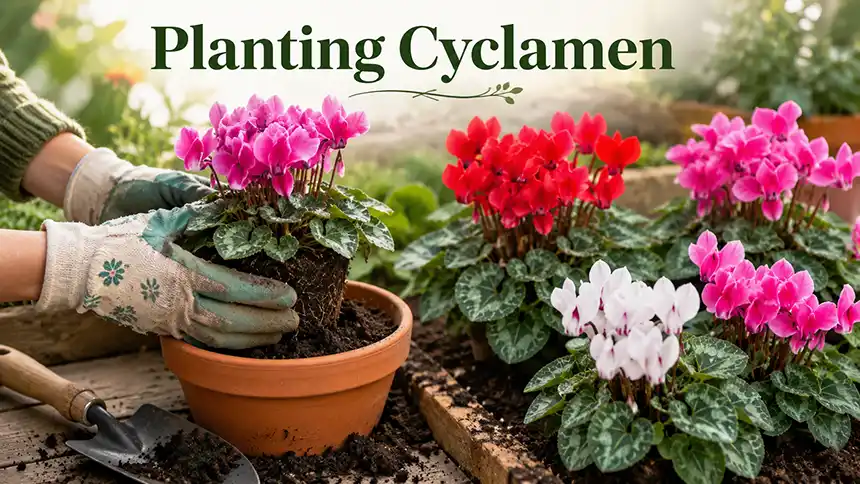
Delicate yet resilient, Cyclamen are winter beauties that will only thrive year-round if given proper attention. With their heart-shaped leaves and vibrant blooms, Cyclamen care is all about understanding their seasonal needs, including when to plant cyclamen at the right time to provide proper care throughout the growing season.
This article will guide you on how to care for cyclamen, whether planted indoors or outdoors. Let’s explore the essentials of keeping this balcony garden plant happy and blooming.
Quick Answer
Plant cyclamen tubers 1–2 inches deep in well-drained, shaded soil, with the crown level with or slightly above the surface to prevent rot. Outdoors, plant in late summer to early autumn; indoors, position in bright, indirect light. Water from the base and avoid wetting the crown directly.
When to Plant Cyclamen Tubers?
Cyclamen are flowering plants valued for their colorful blooms and attractive foliage. Choosing the right planting time and location matters because this species prefers growing in specific temperature and soil conditions. Unlike true bulbs such as tulips or daffodils, cyclamen grow from tubers.
The best time to plant cyclamen is generally late summer to early spring, depending on the species. Indoor varieties can be planted easily, while outdoor varieties should be planted before the main growing season. Planting time also depends on the cyclamen type and local climate. Outdoor varieties can be easily grown in harsh climatic conditions.
Types of Cyclamen: Exploring the Different Cultivars
Cyclamen plants come in a variety of species, each offering unique colors, growth habits, and patterns. Before you learn how to care for cyclamen plants, it is important to explore the different cultivars and appreciate their diversity.
1. Persian Cyclamen (Cyclamen persicum)
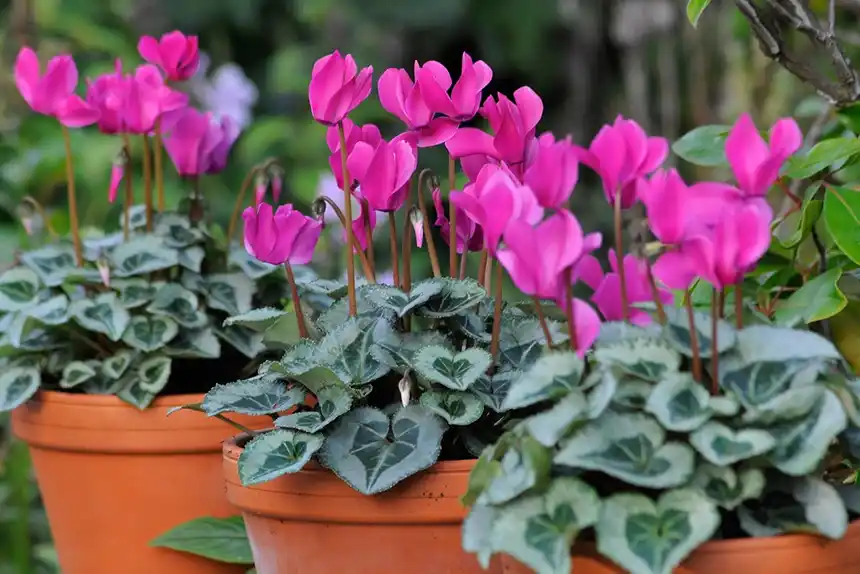
The most common indoor variety, Cyclamen persicum, features large, colorful blooms in pink, red, and white shades. Its heart-shaped leaves with silver marbling are its main attraction. Native to the Eastern Mediterranean region, this cultivar grows best in cool, indoor temperatures.
2. Hardy Cyclamen (Cyclamen hederifolium)
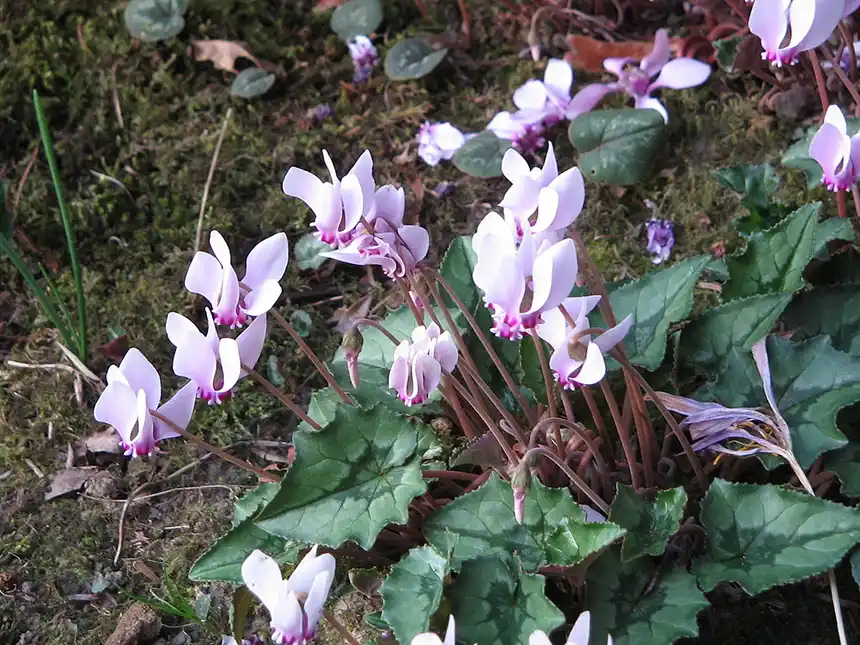
Cyclamen hederifolium is a hardy outdoor species that produces fragrant pink flowers in spring and white flowers in autumn. The ivy-shaped leaves of the flower mostly appear after flowering, making it an ideal and visually appealing addition to my front lawn. This genus is native to the Northern Mediterranean region.
3. Eastern cyclamen (Cyclamen coum)
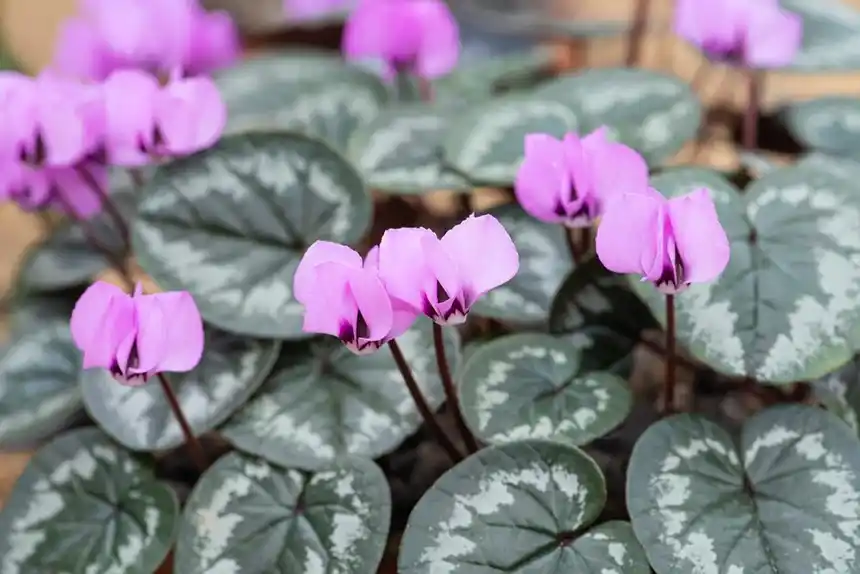
A winter-blooming variety, Cyclamen coum, offers small, rounded leaves and vibrant magenta or purple flowers. Usually blooms from late winter to early spring, this Cyclamen species is perfect for woodland gardens. This is a hardy perennial and can even tolerate frosty climatic conditions.
4. European Cyclamen (Cyclamen purpurascens)
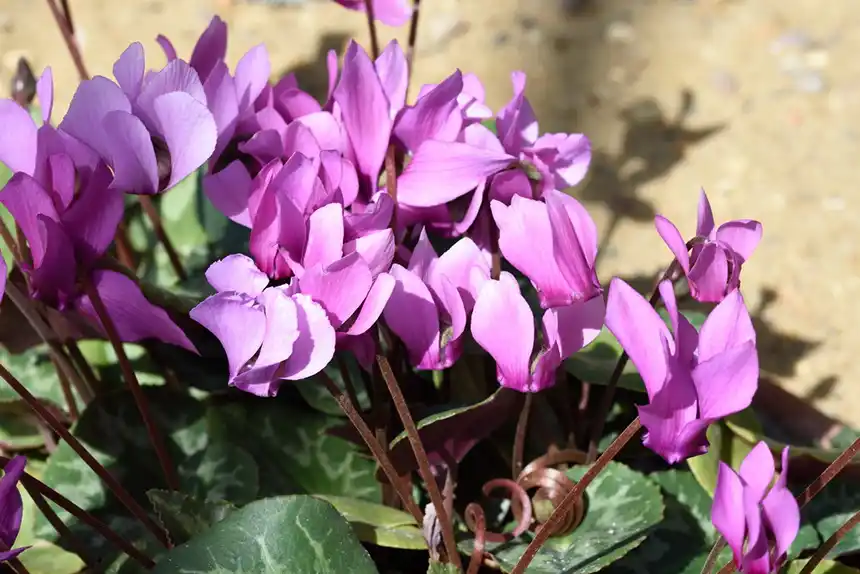
Known for its strong fragrance and evergreen nature, the European Cyclamen mainly blooms in summer and grows best in cooler and shaded spots.
The deep purple pink flowers stand out beautifully against the dark green foliage, creating a stunning contrast. Native to Europe, Northern Italy, and Slovenia, this cultivar remains unharmed in winter frost.
5. Greek Cyclamen (Cyclamen graecum)

As the name suggests, this stunning variety is native to Greece and is a perennial plant with heart-shaped, dark green leaves. The intricately patterned leaves of the genus are its focal point of attraction. Its vibrant flowers, ranging from dark pink to purplish pink, make it an ideal ornamental Cyclamen variety.
From popular florist Cyclamen to hardy perennials, each cultivar brings its own beauty and resilience. Understanding its different types allows me to choose the perfect one for my front lawn, adding year-round charm to my plant collection.
Indoor vs Outdoor Cyclamen Planting Comparison
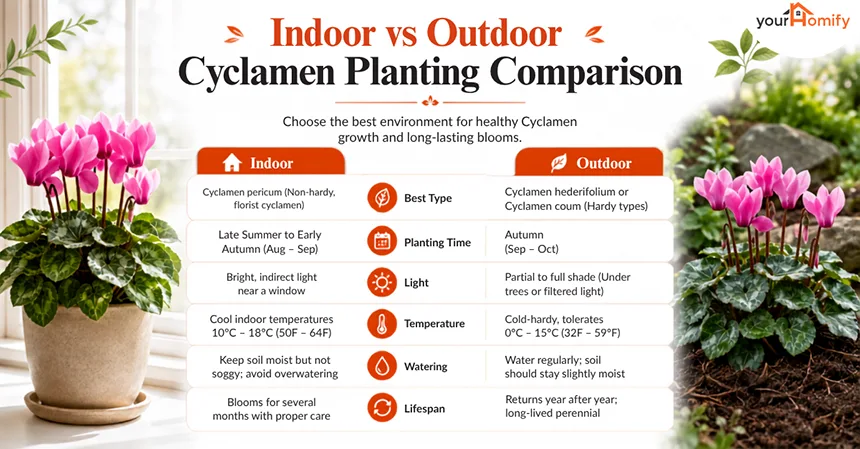
Cyclamen plants usually thrive in cool temperatures and bright indirect light, whether grown indoors or outdoors. Here is a detailed comparison for your reference.
| Feature | Indoor | Outdoor |
| Best Type | Cyclamen persicum (non-hardy) | Hederifolium or coum (hardy species) |
| Best Time to Plant | Flexible, but preferably in late summer or early autumn | Late summer to early autumn is the ideal time for planting. |
| Light | Bright, indirect light near a north-facing window. | Partial shade or best grown under filtered sunlight. |
| Temperature | Prefers growing in cool areas (50–65°F / 10–18°C) | Can be grown in mild to cold winters; dormant in dry and hot weather. |
| Watering | Water only when the top few inches of the soil feels dry. | Keep the soil moist during the growing season. |
| Lifespan | These are typically seasonal bloomers and can go dormant. | These are perennials and return every year from tubers. |
Where to Plant Cyclamen? (Ideal Growing Conditions)
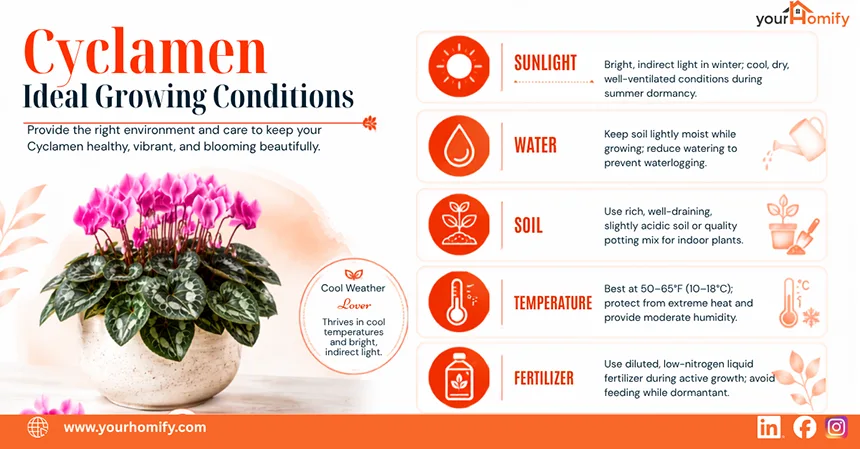
Caring for a cyclamen plant indoors and outdoors requires patience and understanding of its seasonal needs. With the right balance of sunlight, water, and temperature, Cyclamen care can be easy, and you can witness blooming spring flowers in your garden space.
| Sunlight Exposure: During winter, bright and indirect sunlight works best for the plant. In summer, when the plant is dormant, try placing the pot indoors in a cool, dry spot with good air circulation. |
| Water Needs: Frequent watering is needed during the initial growing stages, only to keep the soil moist. Once the plant is established, adjust the frequency to avoid waterlogging. |
| Soil Type: Prefers growing in organically rich, permeable soil, which is slightly acidic in nature. If you are planning to grow it as a low-light indoor plant, try using a regular potting mix. |
| Temperature and Humidity: Cyclamen plants cannot thrive in extreme heat zones. They prefer cool temperatures between 50°F and 65°F (10–18°C), and can tolerate slightly cooler nights. It is important to provide high humidity to the plant, especially during winter |
| Fertilizer: A diluted liquid fertilizer with a low nitrogen level works best for Cyclamen plant care. Do not fertilize the plant when it’s dormant, as it can damage the stem of the plant. |
Mastering Cyclamen plant care is all about being attentive and following the accurate care guide. By providing the plant with the ideal growing conditions, you can witness lush foliage in no time.
How to Plant Cyclamen? (Step-by-Step)
Once you’ve reviewed the ideal growing conditions above, follow these steps to plant your cyclamen tuber
Step 1: Choose the Right Location
Plant the tuber in a spot where it can get partial sun to full shade. If you are planting them indoors, place the container near a north- or east-facing window.
Step 2: Position the Tuber
Place the tuber with the top (crown) sitting level with or slightly above the soil surface. Burying the crown too deep traps moisture and can lead to crown or stem rot.
Step 3: Space the Cyclamen Properly
It is always better to plant the cyclamen tubers 4-6 inches apart from each other for a denser display. Once you plant them, gently press the soil around the base to make it firm.
Step 4: Use the Right Soil and Water Moderately
Water the tuber lightly right after planting. For ongoing soil and watering guidance, see the Growing Conditions section above
How to Pot, Repot, and Propagate Cyclamen
When it comes to Cyclamen care, understanding its potting, repotting, and propagation needs is essential for healthy growth and continuous blooming. This delicate flower will reward you with lush greenery if grown under ideal conditions.
Potting
If you are seeking answers to how to look after a cyclamen, let me tell you, following the correct potting method is one of the steps. Always begin by choosing a pot that’s slightly larger than the tuber and has excellent drainage.
Make sure to use equal parts of peat, perlite, and potting mix to ensure optimal growth. The tuber should be placed just below the soil surface, ensuring it is not buried too deeply to prevent root rot.
Pro Tip: Keep the pot in a cool, dry, and shady spot away from direct sunlight. Overwatering should be avoided. The soil should be slightly moist but never soggy.
Repotting
Cyclamen generally needs repotting every 1–2 years, usually after their dormant period. Gently remove the tuber, clean off old soil, and inspect for any signs of root rot or pest infestation. A fresh potting mix helps rejuvenate the plant and promote healthy growth for the next blooming season.
You can also trim all the dead roots or overgrown roots for easy potting. Tickle or loosen them to improve air circulation, and always repot the plant in a pot that is at least 10% taller and wider than the previous one.
Pro Tip: Always handle the tuber carefully while repotting Cyclamen and avoid disturbing the roots too much during the process.
Propagation
This process can be done through the seeds or division of tubers. Many experts prefer growing them from seeds by sowing in moist soil in a shaded area during late summer. Cover the seeds with a fine layer of soil mix, sand, or fine grit.
Germination takes about 4–6 weeks. For the tuber division, mature tubers can be carefully split into sections, each having a growth node, and should be replanted in fresh soil.
Pro Tip: Propagation requires patience. Note that a new flower might also take a year or more to flower.
Proper potting, timely repotting, and thoughtful propagation ensure a strong base for a thriving Cyclamen plant. It is also important to understand its natural growth cycle and ideal growing conditions to have a vibrant genus year after year.
Caring For Cyclamen in Different Seasons
Although Cyclamen are said to be low-maintenance and most of them are active during winter, they need special care during different seasons of the year.
Winter (Active Growing Season)
Keep the plant in a cool, shaded room. Avoid placing them under direct heat. The ideal temperature to maintain for Cyclamen indoors is between 50°F and 65°F (10–18°C) . Water is only required when the topsoil feels dry. Keep the soil evenly moist, not soggy.
Summer (Dormant Season)
Cyclamen tend to shed their leaves during this season. Adjust the frequency of watering during the summer and allow the plant to rest. Do not use any kind of fertilizer during the dormant season, as it can deteriorate the soil quality and kill the plant.
Spring and Fall
During spring, the leaves of the plant become yellow and gradually fall. Reduce the water frequency to a minimum, and place the pot in an area where there is no light and protect it from rain. Once you notice fresh leaves emerging during fall, start watering again. Move the plant back to a light spot, preferably near a south-facing window.
Only with the right seasonal care, Cyclamen will reward you with beautiful year-long blooms. These attractive perennial garden plants can also make stunning ground covers if given proper attention.
Common Pests and Diseases Affecting Cyclamen
Though it is a low-maintenance species, caring for cyclamens indoors or outside is not entirely easy. Even the most well-cared-for Cyclamen plants are prone to different kinds of pests and plant diseases. Recognizing them at early stages prevents any kind of serious damage and ensures long-lasting blooms.
Here are some common pests and plant diseases that can affect the health of your Cyclamen, whether indoors or outdoors.
| Cyclamen Mites: The name Cyclamen mites derives from the fact that Cyclamen is its primary host. Not clearly visible to the naked eye, these mites are translucent and can cause serious damage to the genus. |
| Leaf Spot: Yellow-brown or grey circular spots on the backside of the leaf. This is a kind of fungal infection and is usually caused by overwatering or poor soil conditions. Consider applying a fungicide for timely treatment. |
| Aphids: Aphids are the most common pest on cyclamen plants. They feed on the stems of the genus and leave a sticky residue on the plant known as honeydew. This causes the leaf to yellow and results in stunted growth. |
| Mealybugs: These can easily be spotted due to the cotton-like residue they leave on the plants after sucking all the nutrients. It can lead to distorted growth and should be treated as soon as spotted. Isolate the affected plant and use an insecticidal soap. |
| Fungus Gnats: These are small flies that live in the soil and feed on roots. To manage gnats, avoid overwatering and ensure that the soil is well-draining. Use insecticidal soap or apple cider vinegar to treat these sticky flies. |
With just a little care and maintenance, one can witness flourishing blooms in your front lawn. If you are looking for smart ways to elevate your home decor with a houseplant, there is nothing better than a vibrant Cyclamen blooming on your kitchen window.
Conclusion
Caring for the Cyclamen plant is a rewarding experience once you understand its natural need from planting cyclamen to providing the right growing conditions. Although the process looked difficult in the beginning, providing the plant with the right growing conditions can reward you with flowering blooms every year. Make sure that you are regularly checking for pests and other plant diseases. Taking timely action can improve the quality and the lifespan of the species.
FAQs
What time of the year do you plant cyclamen?
Cyclamen tubers should be planted in late summer or early autumn (between September and November). This time period allows the plant to establish roots before it produces leaves and flowers.
Do Cyclamen like sun or shade?
Cyclamen prefer growing under bright, indirect sunlight. If you are planning to grow it indoors, try placing it near an east- or north-facing window.
Why are Cyclamen so hard to grow?
Cyclamen is a low-maintenance plant. By simply providing the genus with the right growing conditions, you can keep it happy and thriving. After flowering, Cyclamen tend to shed their leaves during their dormant period. Adjust the watering frequency and allow the plant to rest.
How many years do Cyclamen last?
Cyclamen can live for many years. With proper care and under ideal growing conditions, the plant can live for up to 100 years.
- Cyclamen – Wisconsin Horticulture
- How to Grow Indoor Cyclamen – BBC Gardeners
- Cyclamen Plant, Flower, Facts – Britannica

Cat Safe Flowers: 18 Non-Toxic Flowers for Cats
[…] cyclamen flowers, you will get a compound named terpenoid saponins; this is very poisonous for cats and […]