


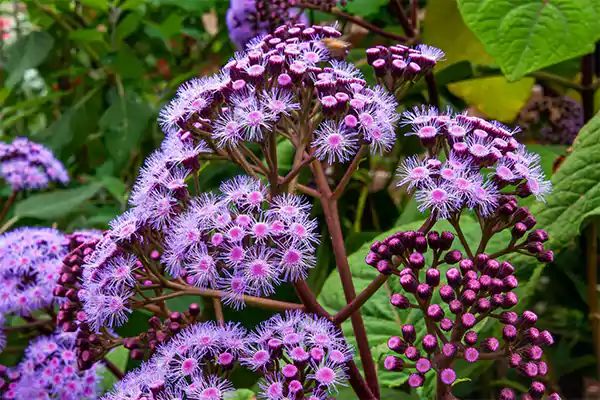
Every plant has different sun needs, which determine its growth rate and quality. While the sun is essential for plant care, some blooms naturally do not need direct sunlight; they are called shade perennials.
Shade-hardy plants are perfect for making your garden bloom with colour all year long while being low-maintenance. There are times when some spot in my garden is empty because it does not receive adequate sunlight, that is when shade perennials come to my rescue.
If you face a similar issue and are wondering what the best low-light plants to grow are, here is a list of 30 shade perennials you can grow.
What are Shade Perennials, and their Different Types?
The shade perennials are the plants that prefer low-light conditions to survive or can tolerate a little morning sun. It is important to understand that many shade-hardy perennials can also prefer full sun.
Growing the shade perennials is an effective way to fill the bleak corners of your garden where sunlight rarely reaches. Having said that, the above-listed plants are all shade perennials, but before planting, it is a gardener’s responsibility to check the adequate sunlight requirements and the watering needs that come together to make the plant as healthy as possible.
Take a look at the following table to understand the different types of shade for better planting:
| Shade Type | Description |
| Full sun | Complete exposure to the sun for at least 6 hours. |
| Partial Shade | When the plant receives shade for the hot hours of the day and sunlight for the rest. |
| Full Shade | In this condition, plants receive less than 4 hours of sunlight and mostly grow in shade. Ideal for the low-light plants. |
| Dappled shade | The type of light that is filtered through trees. It is also known as “filtered sunlight.” Ideal for plants sensitive to both complete shade and sun. |
| Deep shade | Deep shade means absolutely no sun exposure and light penetrating through dense trees. |
Many plants are sensitive to complete sun exposure, and some to shade; the understanding of the right kind of shade is optimal for the best results.
13 Shrubs Shade Perennials for a fuller look to the Garden
Shrubs are medium-sized woody plants that live for more than 2 years. They have multiple small stems that grow in a dense, bushy form, giving the garden a fuller look.
Abelia
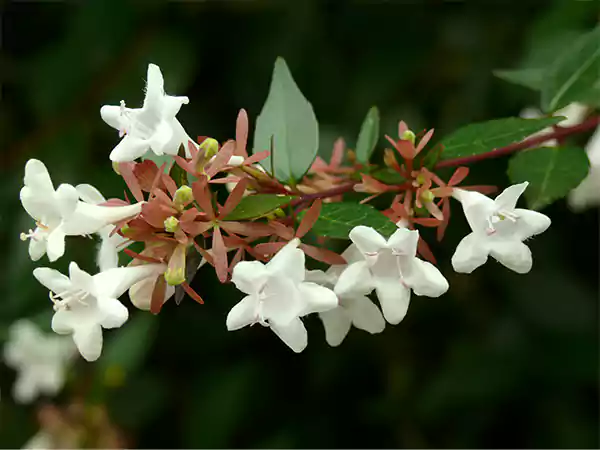
Much like the Scabiosa, Abelia belongs to the Caprifoliaceae family and grows trumpet-shaped flowers with oval-shaped leaves.
This perennial shrub is native to Central China and Mexico and prefers partial shade but can also grow in full sun.
| Botanical name | Abelia × grandiflora |
| Shade Type | Partial shade |
| Height | 3-6 ft tall |
| Spread | 2-8 feet |
| Hardiness | USDA zones 5-9 |
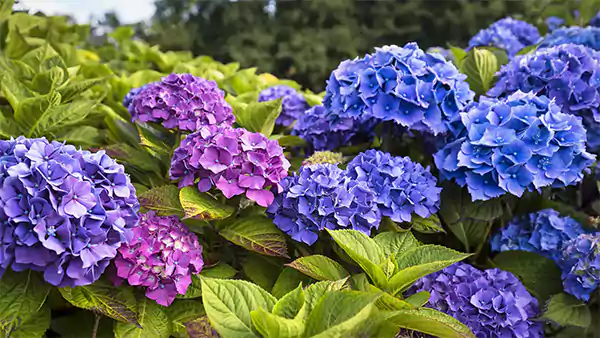
This deciduous shrub is a part of the Hydrangeaceae family, which is native to the regions of East Asia and America.
Hydrangeas grow clusters of small flower shapes like an umbrella in the shade, pink, purple, yellow and white.
| Botanical name | Hydrangea macrophylla |
| Shade Type | Partial shade |
| Height | Up to 10 feet, can be 25 feet for some varieties |
| Spread | 10 feet |
| Hardiness | USDA zones 3-9 |
Mahonia
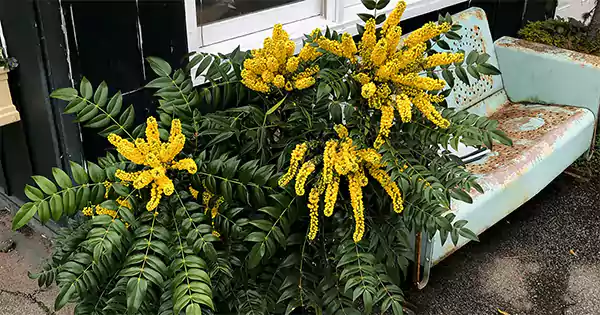
This shade plant belongs to the Berberidaceae family and grows long, yellow, candle-shaped flowers with green leaves. Mahonias also grow edible berries in summers and are “touch-sensitive.”
These deer-resistant shade perennials bloom from November to March.
| Botanical name | Depends on the species |
| Shade Type | Partial to full shade |
| Height | 1-20 feet |
| Spread | Up to 20 feet |
| Hardiness | USDA zones 5-10 |
Camellias
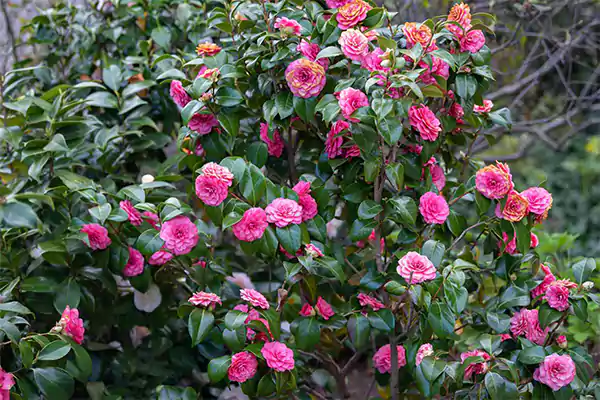
Camellias are evergreen shrubs that belong to the Theaceae family and grow rose-like flowers in the colours pink, red and white. They ideally bloom from late winter to early spring and are considered cat-safe flowers.
| Botanical name | Camellia |
| Shade Type | Dapple light to partial shade |
| Height | 6-12 feet |
| Spread | Up to 10 feet |
| Hardiness | USDA zones 7-9 |
Bush Honeysuckle
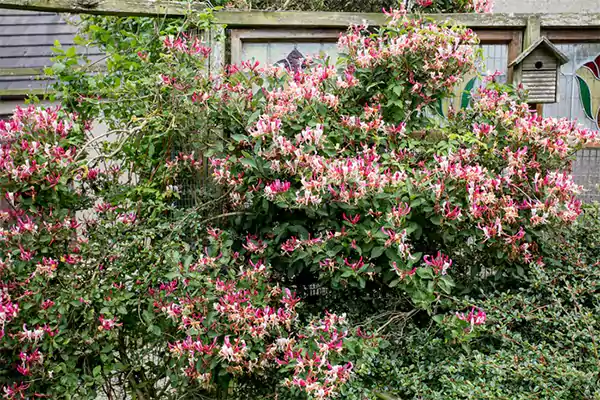
Also popularly grown as a vine, the honeysuckle flower is a June birth flower and is native to North America, Asia and Europe. Honeysuckle is quite popular for its sweet fragrance and being associated with the idea of happiness and love.
| Botanical name | Lonicera |
| Shade Type | Partial shade |
| Height | 6-20 feet |
| Spread | Up to 15 feet |
| Hardiness | USDA zones 5-9 |
Azalea
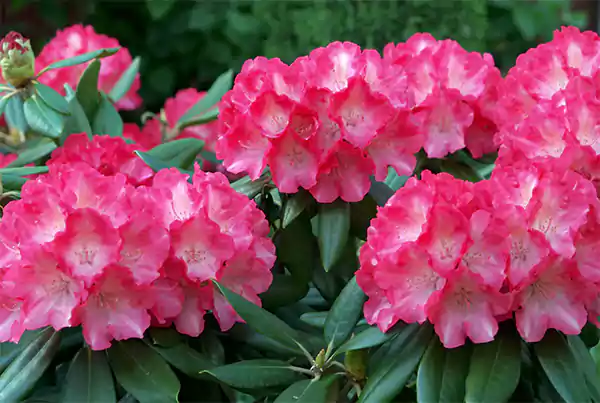
Similar to the blueberry bush, Azalea also belongs to the Ericaceae plant family and is native to Asia and North America. Renowned for its funnel-shaped spring flowers, which bloom between April and May.
Stay a little cautious while planting, as the ASPCA says these perennial blooms are toxic for pets.
| Botanical name | Rhododendron |
| Shade Type | Partial shade |
| Height | 3-10 feet |
| Spread | 3-10 feet |
| Hardiness | USDA zones 6-9 |
Japanese Pieris
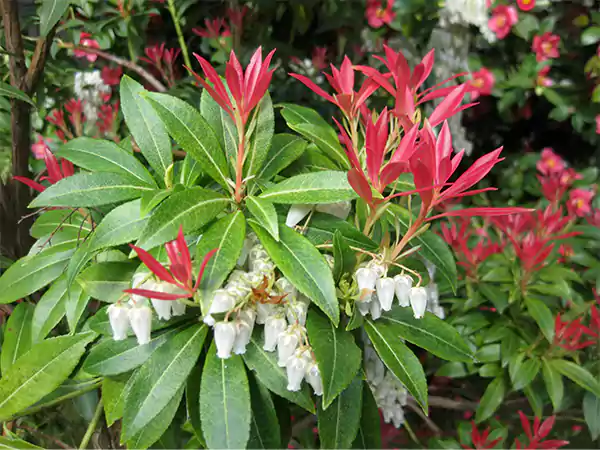
Just like the bell flowers, this perennial shrub also grows bell-shaped flowers in the shade, white, red and pink. Also popularly known as the “Lily of the Valley Bush”, Japanese Pieris is an ideal choice for hedges, lawn border or even balcony gardens.
| Botanical name | Pieris japonica |
| Shade Type | Partial shade |
| Height | Up to 12 feet all |
| Spread | 5-8 feet wide |
| Hardiness | USDA zones 5-8 |
Dogwood
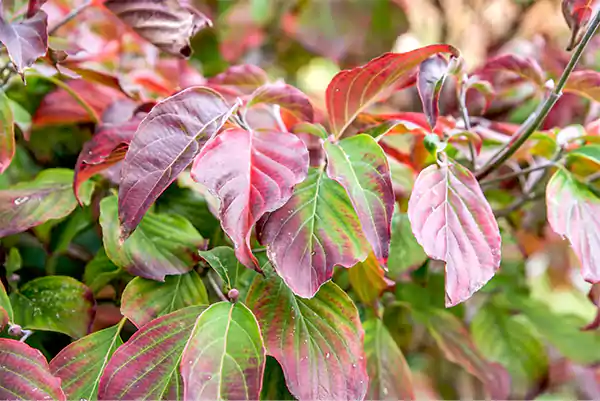
A popular flowering genus with over 60 species of plants under it. Many varieties of dogwoods produce red raspberry-like fruit that is edible but has a shorter shelf life, lasting not more than 2 days.
However, avoid eating the fruit produced by the American variety as it is toxic for humans.
| Botanical name | Cornus spp. |
| Shade Type | Partial shade |
| Height | 12-30 feet |
| Spread | Up to 10 feet |
| Hardiness | USDA zones 2-9 |
Heavenly Bamboo
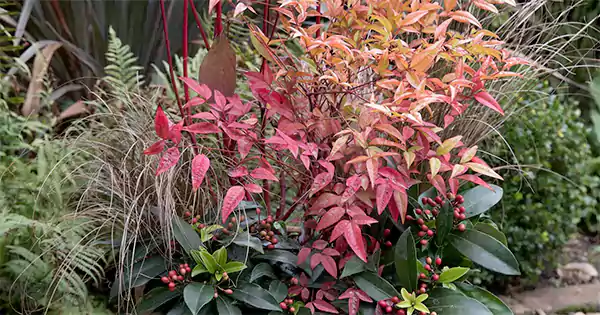
Also known as Nandina, the Heavenly Bamboo is deer resistant shade perennials, which is part of the Berberidaceae family and is native to the region of Eastern Asia.
Surprisingly, this shade perennial is not a true bamboo but is named so due to the similar-looking leaves.
| Botanical name | Nandina domestica |
| Shade Type | Partial shade |
| Height | Up to 8 feet |
| Spread | 2-5 feet tall |
| Hardiness | USDA zones 6-9 |
Chinese Yew
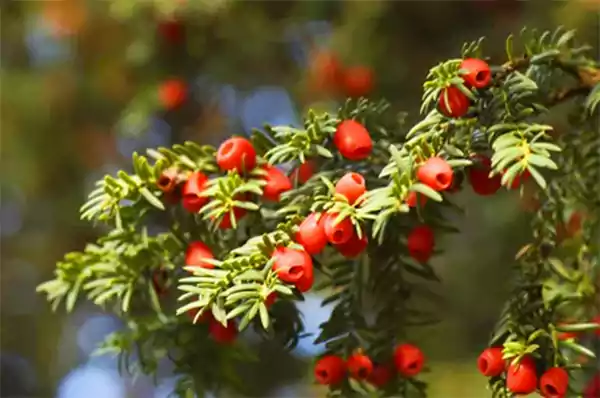
The Chinese yew, as the name suggests, is native to China and is a part of the taxaceae family. This shade perennial grows small, leather-like leaves with yellowish flowers and red berries, which have a really toxic seed.
Popularly used for the garden borders, this low-maintenance plant is considered drought-tolerant once established.
| Botanical name | Taxus Chinensis |
| Shade Type | Partial shade |
| Height | 10-15 feet |
| Spread | 10-15 feet |
| Hardiness | USDA zones 5-7 |
Mountain Laurel
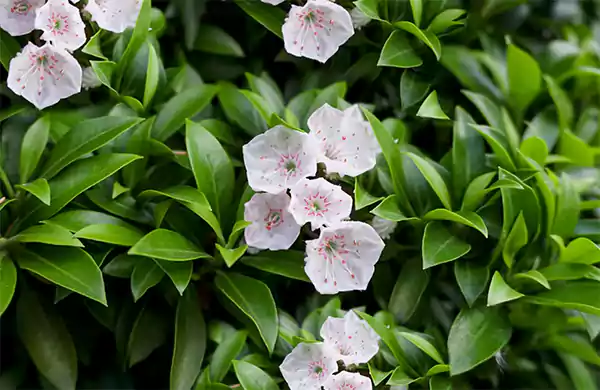
The Mountain laurel features small cup-shaped flowers and leaves similar to those of the laurel tree. Credited to the native habitat of North America, this shade perennial is named the “Mountain Laurel.”
Although a great addition to the outdoor living space, the leaves and flowers of the mountain laurel are toxic, as claimed by ASPCA.
| Botanical name | Kalmia latifolia |
| Shade Type | Dapple light |
| Height | Up to 15 feet |
| Spread | 5-15 feet |
| Hardiness | USDA zones 4-9 |
Red Buckeye
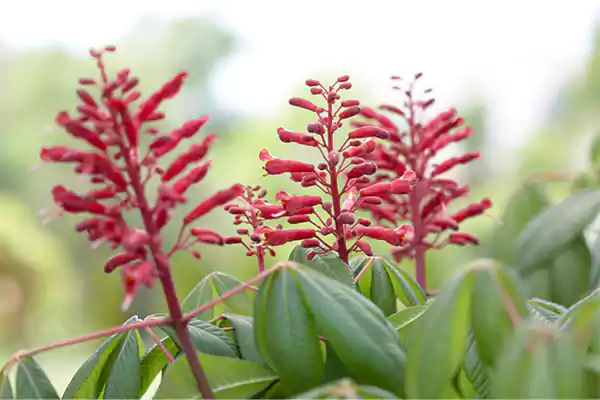
The redbuckeye is a pollinator and hummingbird-attracting partial shade perennial that grows spike-like red flowers. Interestingly, the seeds of the flowers are brown with a spot at the centre that resembles the eyes of a buck, hence the name.
I usually plant this perennial shade plant for an ornamental show of bright red flowers, which also provides various ecological benefits.
| Botanical name | Aesculus pavia |
| Shade Type | Partial shade |
| Height | 10-20 feet |
| Spread | 10-15 feet |
| Hardiness | USDA zones 5-9 |
Daphne
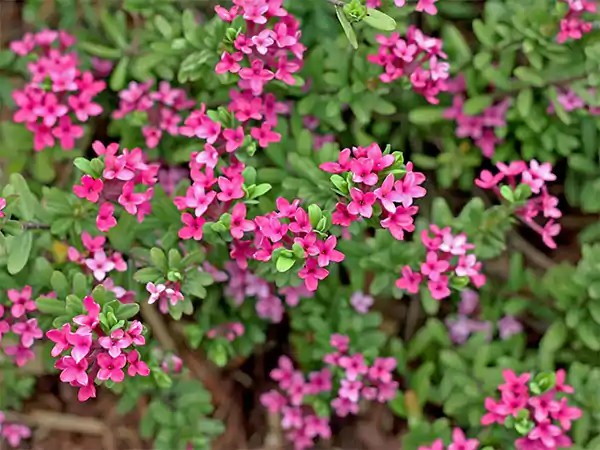
Most varieties of this shade perennial are evergreen plants that flower all year long, adding to the beauty of your garden. I grow this shrub mostly for the cluster of pink flowers that also grow in the colours white or yellow.
Additionally, the fragrance of these blooms makes every effort worth planting.
| Botanical name | Daphne odora |
| Shade Type | Partial shade |
| Height | Up to 5 feet |
| Spread | 2-3 feet |
| Hardiness | USDA zones 5-9 |
17 Herbaceous Shade Perennial: Add Texture and Colour to the Landscape
Herbaceous plants are classified based on their delicate stems, unlike shrubs or trees. They can grow both as an annual and a perennial, depending on the variety.
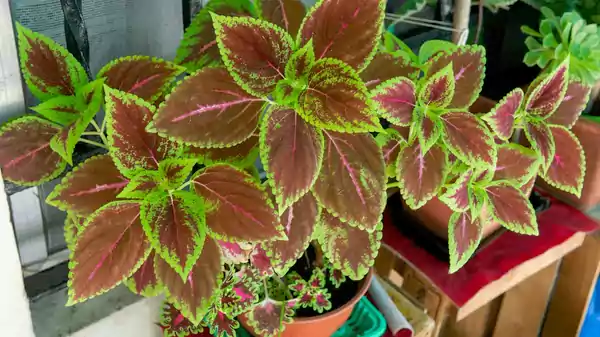
Coleus, or the painted nettle, makes for an excellent indoor plant that is also an excellent perennials shade loving plant. The unique colour and texture of this low-maintenance plant, which also attracts beneficial birds and insects, sets it apart from other shade plants.
Always a treat to grow the colourful coleus plant at home!
| Botanical name | Coleus Scutellarioides |
| Shade Type | Partial to full shade |
| Height | Up to 3 feet |
| Spread | 1-3 feet |
| Hardiness | USDA zones 10-11 |
Hellebore
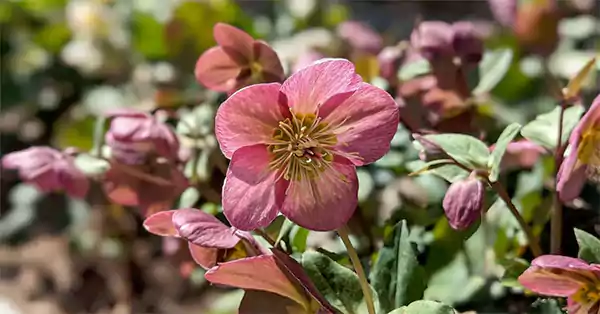
Also known as the Christmas roses, hellebore is a flowering genus with over 20 species of flowers under it. Hellebore is associated with the zodiac sign Sagittarius and considered to be toxic to pets.
| Botanical name | Helleborus |
| Shade Type | Dappled shade |
| Height | 1-2 feet tall |
| Spread | Up to 2 feet |
| Hardiness | USDA zones 3-9 |
Begonia
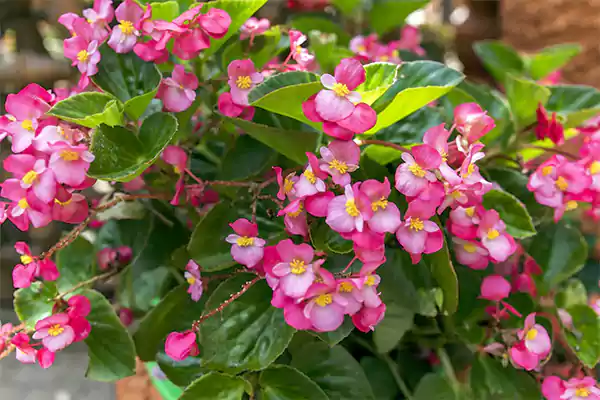
Welcome spring with Begonias, my favourite part shade perennials that are a perfect upgrade to the indoor space. Begonia is a flowering genus with more than 2,000 species of monoecious plants and asymmetrical flowers.
Add one more reason to plant the beautiful begonias, as they are also air-purifying plants.
| Botanical name | Begonia |
| Shade Type | Dappled light |
| Height | 6-24 inches |
| Spread | Up to 24 inches |
| Hardiness | USDA zones 9-11 |
Hosta
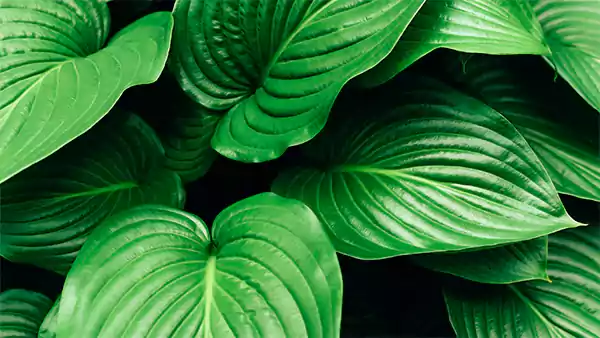
The hosta is a genus of flowering plant that is famous for its bright green foliage. Although it does grow long lavender bell-shaped flowers in spring, the most striking features are the heart-shaped leaves with a vein-like design on them.
Why should flowers get all the attention when leaves can steal the show too!
| Botanical name | Hosta spp. |
| Shade Type | Partial to full shade |
| Height | Up to 4 feet |
| Spread | About 6 feet wide |
| Hardiness | USDA zones 3-9 |
Bleeding Heart
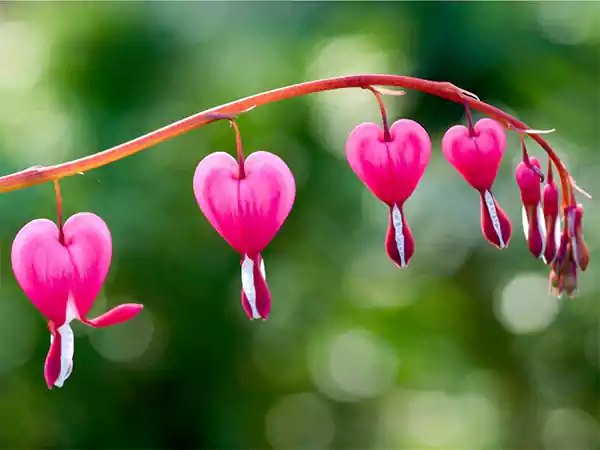
Associated with a Japanese legend of tragic love, the bleeding heart plant, with its heart-shaped flowers are enough to turn heads. One of my favourite perennial garden shade plants, the bleeding heart, is native to East Asia and hence is also called the ‘ Asian Bleeding Heart.’
The Pet Poison Helpline claims this perennial plant to be toxic for pets and humans.
| Botanical name | Lamprocapnos spectabilis |
| Shade Type | Partial shade( can tolerate a little sun) |
| Height | 2-3 feet |
| Spread | Up to 3 feet |
| Hardiness | USDA zones 3-9 |
Pulmonaria
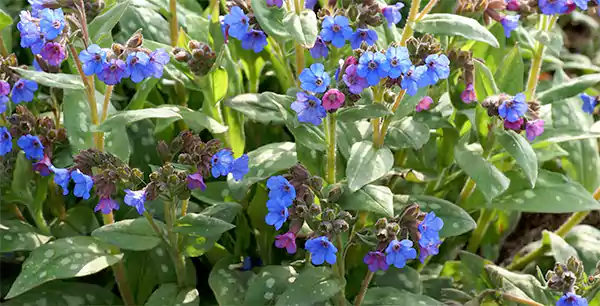
If colour-changing flowers are your vibe, then you will love pulmonaria, just like me. This herbaceous perennial plant grows tubular flowers that change their colour from pink to blue on maturing.
My gardener friend praises these blooms as being low-effort but better result plants.
| Botanical name | Pulmonaria |
| Shade Type | Partial to full shade |
| Height | Up to 1 foot |
| Spread | 1-2 feet |
| Hardiness | USDA zones 3-9 |
Foxglove
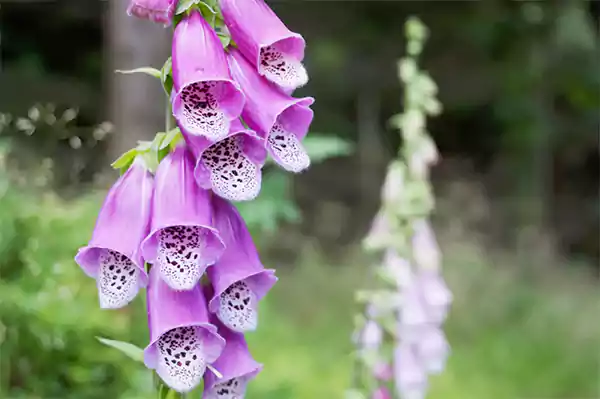
What better addition to the garden than the elegant lavender foxglove that has flowers facing downwards, resembling the fingers of a glove.
Perfect for vertical gardening, foxglove is considered toxic for both animals and humans and hence should be kept out of reach of pets and children.
If planning to plant these shade perennials, make sure the soil is consistently moist.
| Botanical name | Digitalis purpurea |
| Shade Type | Dappled light |
| Height | 2-5 feet |
| Spread | Up to 2 feet |
| Hardiness | USDA zones 4-9 |
Daylily
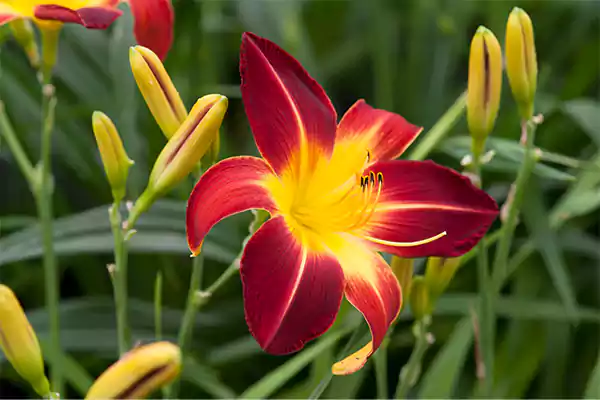
The unique and versatile trumpet-shaped flowers growing in a variety of colours are a sight to behold. Daylilies bloom from late summer to fall and are renowned for their ornamental values.
Additionally, growing them is extremely low-effort as they can tolerate heat and low-water conditions really well.
| Botanical name | Hemerocallis |
| Shade Type | Afternoon shade( although prefers full sun) |
| Height | 1-4 feet |
| Spread | About 3 feet wide |
| Hardiness | USDA zones 3-9 |
Yellow Corydalis
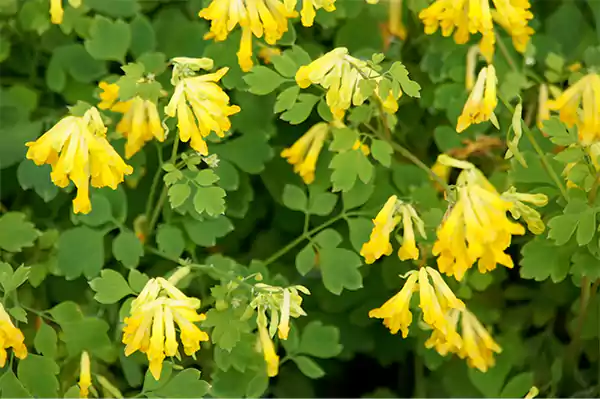
Accompanying the yellow flower group, this perennial flowering plant also grows yellow tubular blooms that grace the gardens from late spring to early fall.
As someone who has grown these lovely bloom I would advise pruning them regularly to maintain healthy flowers for a long time.
| Botanical name | Pseudofumaria lutea |
| Shade Type | Partial to full shade |
| Height | Up to 2 feet |
| Spread | 1-2 feet |
| Hardiness | USDA zones 4-8 |
Turtlehead
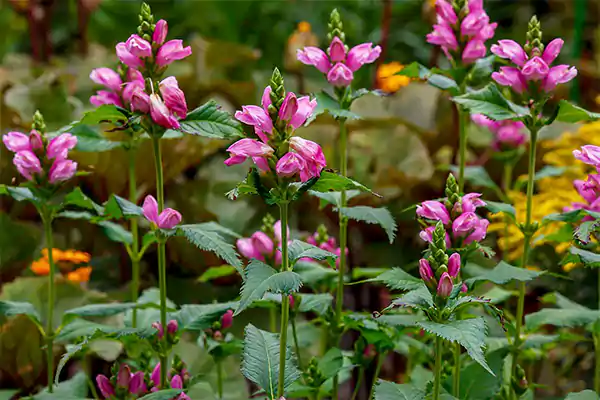
Turtle head is a herbaceous shade plant that is named after the resemblance to a turtle’s head. This perennial plant grows pink, red and white flowers that bloom through late fall.
It is mostly deer-resistant due to its bitter taste and is considered low-maintenance to grow in home gardens.
| Botanical name | Chelone |
| Shade Type | Partial to full shade |
| Height | 2-3 feet |
| Spread | 1-2 feet |
| Hardiness | USDA zones 3-9 |
Lady’s Mantle
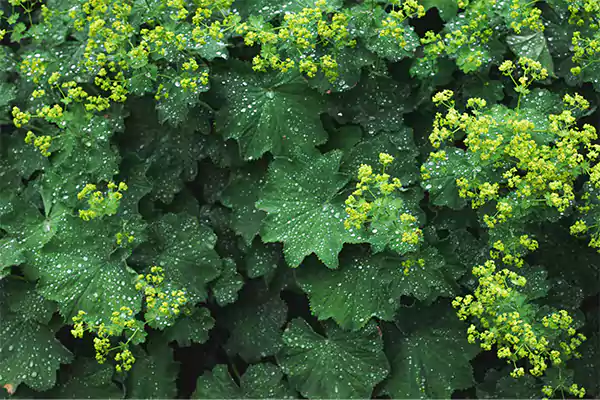
Native to the regions of Europe and Asia, the Lady’s mantle, with that dramatic name, grows really big green leaves and small yellow-green flowers.
This name is an association of the Virgin Mary’s mantle with the shape of the leaves. I like it when plants have their own share of historical “roots.”
| Botanical name | Alchemilla mollis |
| Shade Type | Partial shade |
| Height | 1-1.5 feet |
| Spread | Up to 2 feet |
| Hardiness | USDA zones 3-8 |
St. John’s Wort
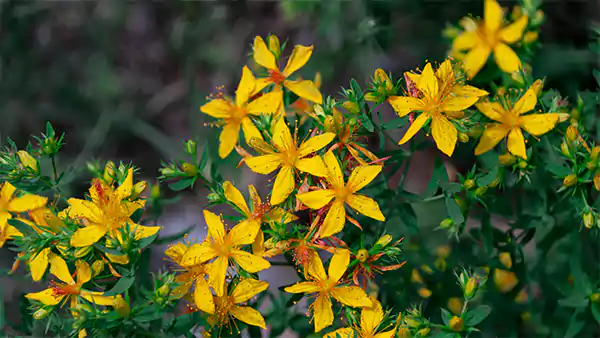
Associated with the ideas of joy and protection, this yellow flower has bright yellow blooms with green leaves and translucent oil glands.
Additionally, this deer-resistant shade-hardy perennial is credited with neuroprotective properties as per NCBI.
| Botanical name | Hypericum perforatum |
| Shade Type | Partial shade |
| Height | 1-3 feet |
| Spread | 2-4 feet |
| Hardiness | USDA zones 5-9 |
Toad Lily
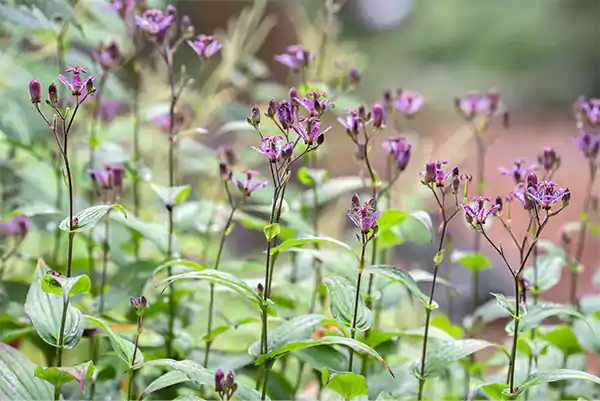
Often a point of confusion, Toad lily is not related to Calla lily as they belong to the Liliaceae and Arum plant family, respectively. Toad lily, in fact, is a herbaceous shade loving perennial that grows striking star-shaped lavender flowers with purple spots.
These deer-resistant flowers are safe for dogs but can cause a little inconvenience for cat owners if planted indoors.
| Botanical name | Tricyrtis hirta |
| Shade Type | Partial to full shade |
| Height | 1-3 feet |
| Spread | 1-2 feet |
| Hardiness | USDA zones 4-9 |
Golden Star
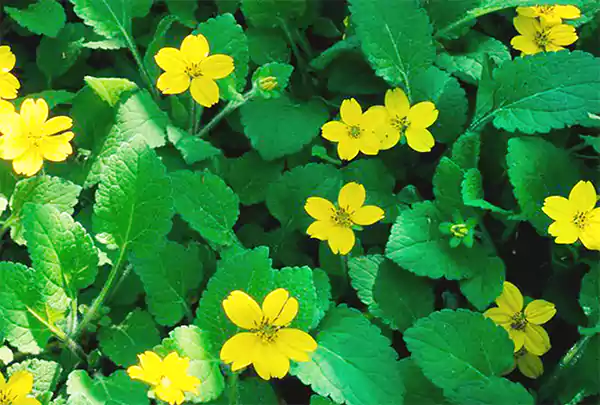
The yellow star-shaped flowers give this perennial ground cover its unique name. With its mat-forming trailing growth habit, the golden star is deer-resistant and grows daisy-like blooms, which perfectly elevate the look of the garden better than ever.
Also, this shade perennial needs to be consistently watered to maintain healthy growing conditions.
| Botanical name | Chrysogonum virginianum |
| Shade Type | Partial shade |
| Height | Up to 1 foot |
| Spread | 1.5 feet wide |
| Hardiness | USDA zones 5-9 |
Spiderwort
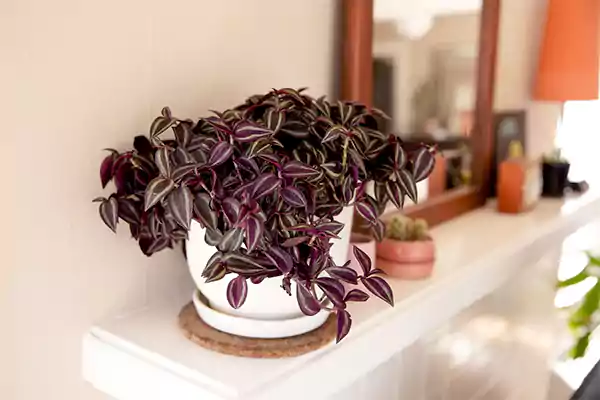
Whether grown as a water plant or on a hanging plant, spiderwort is one of the most popular indoor plant choices, and I give the entire credit to the lace-like leaves that beautifully trail down the pot.
Giving full justice to the name, the leaves produce a sap-like residue when the stems are cut, a fascinating feature, right?
| Botanical name | Tradescantia |
| Shade Type | Partial shade |
| Height | Up to 3 feet |
| Spread | 1-2 feet |
| Hardiness | USDA zones 4-9 |
Caladium
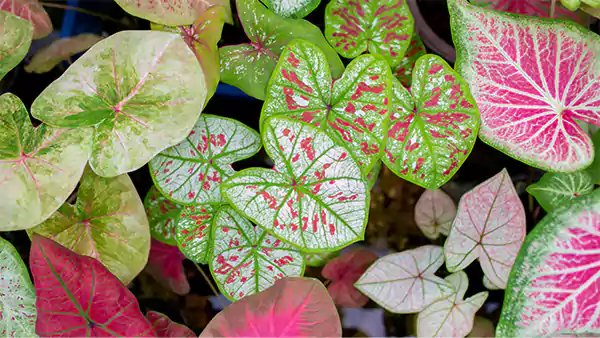
Popularly known as the “Elephant’s ear”, the Caladium is known for the heart-shaped leaves which grow in vibrant colours like pink, green and white.
These tropical tuberous perennials are native to Central and South America. Although, really low effort to grow, I would advise keeping the soil consistently moist for healthy growth.
| Botanical name | Caladium bicolor |
| Shade Type | Partial shade |
| Height | 1-3 feet |
| Spread | Up to 2 feet |
| Hardiness | USDA zones 9-12 |
Periwinkle
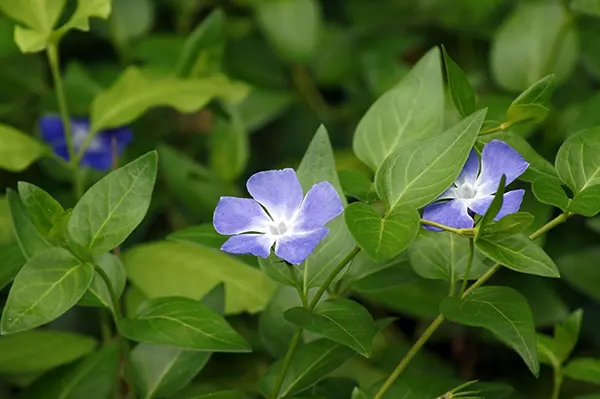
Vinca minor/major are often confused with the annual vinca (Catharanthus roseus), but both differ in terms of their growth habit.
The periwinkle flowers have been my go-to shade perennials. Their simple but alluring 5-petal flowers with glossy green leaves are a landscaping staple, especially in their native habitat of Asia, Europe, and Northwest Africa.
| Botanical name | Vinca |
| Shade Type | Partial shade |
| Height | 18 inches tall |
| Spread | Up to 8 feet wide |
| Hardiness | USDA zones 4-9 |
Wrapping Up
Growing shade perennials is one smart gardening decision that I made years back. Not only does it give the garden a proper structure, but it also helps in maintaining a consistent colour and texture throughout the year.
The best part about the shade-hardy perennials is also that they are really low-maintenance, given the different shade type requirements, so no corner of the garden/lawn is left unplanted, whether indoors or outdoors.
What perennial flowers grow in the shade?
Some shade hardy perennials that flower are Daylily, Caladium, Foxglove and Hellebore.
What are some deer-resistant shade perennials?
Mahonia, Turtlehead and Heavenly Bamboo are some deer-resistant shade perennials.
What are the benefits of growing shade perennials?
Growing perennial plants in shade is beneficial because they are extremely low-maintenance and provide colour and structure to the garden all year long.
Is the bleeding heart plant a shade hardy perennials?
Yes, the bleeding heart plant is a shade-hardy plant.
Do shade perennials die if exposed to sunlight?
No, some shade perennials can survive in sunlight; it entirely depends on the type of shade requirement of the plant.
- The best shade-loving plants – BBC Gardeners
- 24 Shade-Loving Perennials to Brighten Your Garden– Yahoo

Types of Peonies: 3 Main Types & 25 Popular Varieties
[…] in spring. These have soft, green stems and reach up to 7 feet in height. These plants are hardy perennials; they offer a wide range of […]