Sometimes, the most powerful health ingredients are already sitting in our kitchen, quietly doing their job. Fenugreek, or methi, is an ingredient that has been used for generations and is now gaining attention as a modern superfood. Therefore, growing a fenugreek plant in your home garden is beneficial.
From improving digestion to supporting weight loss, it offers a wide range of benefits simply and naturally. Being an annual plant, it is easy to grow and care for.
This article breaks down everything about foenegriek plant and seeds, so it’s easier to understand, grow, and use while keeping in mind its potential side effects.
Foenegriek (Fenugreek): Plant Overview and Uses
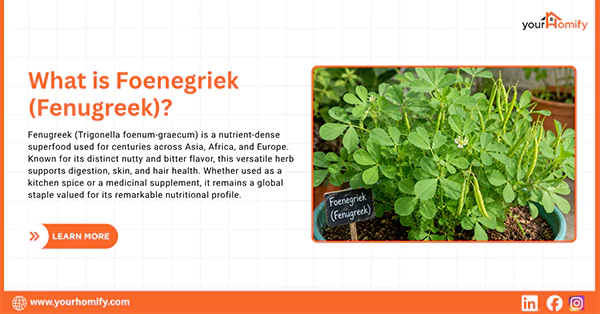
Foenegriek, widely known as fenugreek or methi dana, is a powerful herb that has been used for centuries in cooking and medicine. From improving digestion to supporting hair and skin health, this ingredient has now gained popularity as a superfood. Its versatility and health benefits make it a staple in many households worldwide.
The plant has been valued widely across Asia, the Middle East, North Africa, and Europe, and its leaves are known to have a nutty and slightly bitter taste.
It comes from the plant Trigonella foenum-graecum and has a remarkable nutritional profile. It is not just a kitchen spice but a nutrient-dense ingredient.
Botanical Profile and Characteristics of the Foenegriek Plant
Here is a clear and concise botanical profile of the foenegriek plant for your understanding. Trigonella foenum-graecum is an annual herbaceous species that is highly valued for its aromatic and nutrient-dense seeds.
| Kingdom | Plantae |
| Family | Fabaceae (legume family) |
| Genus | Trigonella L. |
| Species/Botanical Name | Trigonella foenum-graecum L |
| Plant Type | Annual, herbaceous crop |
| Leaf Structure | Light to dark green trifoliate leaves |
| Plant Height | Grows up to 30-60 cm |
| Color | Green, light yellow |
| Aroma | Bitter and earthy taste similar to maple syrup |
How to Grow and Care for Foenegriek Plant?
Trigonella foenum-graecum, or foenegriek is native to Southern Europe and Asia. This annual species has long been cultivated for medicinal qualities and can be easily grown in home gardens or as an indoor plant.
- Prefer sowing the seeds in late spring or early autumn as the foenegriek plant thrives in warm soil and is not frost-tolerant.
- Sow the seeds directly in the garden soil, as this annual plant cannot withstand transplanting.
- Make sure that the soil is well-draining and has a pH of 6.0 – 7.0. The species can grow well in poor soil, but a well-nourished, loose soil works best.
- Ensure to sow the seeds in an area where the plant can get a minimum of 4-6 hours of daily sunlight. Cover the plants with a thin mesh during a dry spell.
- Water the plant regularly to keep the soil consistently moist. Make sure that the soil doesn’t dry out and is not waterlogged. Water only when the top layer of the soil feels slightly dry.
- In general, the foenegriek plant does not require much fertilizer. When you notice the leaves getting droopy or yellow, add organic compost to the soil to encourage growth.
- Allow the plant to grow 4-6 leaves before you decide to prune. Use a clean pair of scissors or pruning shears to cut off the top portion of the stems or remove any dead or damaged leaves.
- Propagating or repotting the foenegriek plant is not recommended as the roots of the species are sensitive. It is difficult for the plant to tolerate transplantation.
Nutritional Profile of the Foenegriek Plant
Before you start including any seeds, fruits, or vegetables in your daily meals, it’s important to know what they can do for your health and how nutritious they are. Here is how the bioactive compounds of the Foenegriek seeds contribute to the health benefits.
| Nutritional Profile of Foenegriek Seeds (Per 100g) | |
| Energy | 323-370 kcal |
| Protein | 23-26 g |
| Total Fat | 6.4-9.5 g |
| Carbohydrates | 58 g |
| Dietary Fiber | 25 g |
| Iron | 33.5-34 mg |
| Magnesium | 191 mg |
| Potassium | 770 mg |
| Calcium | 176 mg |
| Copper | 1.1 mg |
The high fiber content and iron density of foenegriek seeds make it an excellent addition to any of your recipes. Although it is not generally consumed in large amounts, its limited quantity is what makes it all the more precious. Its nutritional benefits do not make it a magical ingredient, but it does explain its everlasting position in the spice corner of every kitchen.
What are the Health Benefits of Fenugreek Seeds?
The benefits of fenugreek go beyond its flavor and identity in household kitchens. It contains many important phytochemicals that together make it an essential superfood.
Let us quickly explore some of the health benefits that these seeds offer and what makes them a nutrient-dense addition to any lifestyle.
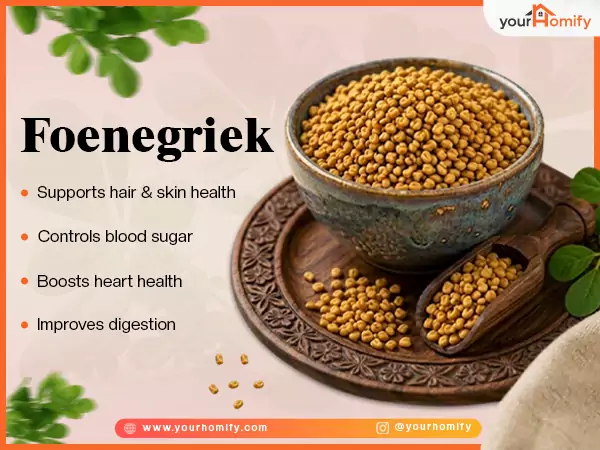
- Controls Blood Sugar Levels: Fenugreek seeds are extremely helpful for people with type 2 diabetes. The fiber-rich content slows down the absorption of carbohydrates and manages spikes in glucose after meals.
- Supports Digestive Health: If you are looking for ways to enhance your digestive health naturally, foenegriek might just be an ideal addition to your daily diet. It eliminates indigestion and bloating and helps relieve constipation.
- Promotes Heart Health: Methi seeds significantly reduce total cholesterol levels and tend to improve cardiovascular health/. The fiber content eliminates extra fat from the body and reduces triglycerides.
- Aids in Weight Management: Fenugreek seeds aid in weight management by suppressing the appetite, reducing fat accumulation, and boosting metabolism through galactomannan, the main fiber compound of the seed.
- Enhances Lactation in Breastfeeding Mothers: Herbal teas or fenugreek supplements are popular and effective solutions used to increase breast milk supply. The organic galactagogue enhances the flow of milk.
- Supports Hormonal Balance: Compounds such as diosgenin present in methi seeds help prevent hormonal imbalance. In women, it manages PMS cramps, and in men, it improves libido and enhances their physical performance.
- Improves Skin and Hair Health: Since the seeds are rich in protein and iron, they stimulate hair follicles. The antioxidants fight oxidative stress, act as a gentle cleanser, and further reduce acne breakouts and blemishes.
- Supports Liver Function: Fenugreek seeds are known to improve hepatic defence enzymes and protect the liver from oxidative stress. It improves the fatty liver condition and also protects the tissue from alcohol damage.
Uses of Foenegriek Seeds in Daily Life
Foenegriek seeds are one of those rare ingredients that easily fit into everyday routines, whether in the kitchen or as a natural remedy. Its versatility makes it simple to include in meals, drinks, and home care practices.
Here are some of the multiple practical uses of methi dana to support overall wellness.
1. Culinary Uses (Cooking & Food)
- Fenugreek seeds are commonly used as a spice in Indian dishes like curries, dals, and pickles.
- Leaves of the fresh methi plant are cooked as a vegetable or added to parathas and sabzis.
- Sprouted fenugreek seeds can be added to salads for extra nutrition or for tempering in soups.
- Foenegriek tea is usually consumed for its digestive benefits and helps in body detoxification.
2. Medicinal Uses (Home Remedies)
- Soaked foenegriek seeds are taken in the morning on an empty stomach to treat bloating and inflammation.
- Foenegriek water is often consumed to reduce cholesterol levels and manage blood sugar levels.
- Powdered methi seeds are consumed with salads or with other seeds to treat hormonal imbalance.
- The leaves and seeds of this medicinal plant are widely used to make herbal oils or ointments for treating various hair or skin problems.
Many people also make foenegriek paste and apply it to the scalp to reduce hairfall and dandruff. It is also used to make face toners or DIY masks to improve skin texture and reduce acne. The fact that this ingredient can be widely used makes it an even more essential addition to your daily life.
Side Effects of Fenugreek Seeds
Feonegreek is generally safe when consumed in moderate amounts, but like any natural remedy, it can cause side effects if taken excessively or without proper guidance. Understanding its possible risks helps in using it safely as a part of a daily routine.
- Possible Digestive Issues: Overconsumption may lead to bloating, gas, or diarrhea. Some people may experience mild stomach discomfort, especially when taken on an empty stomach.
- Allergic Reactions: Fenugreek may trigger allergies in some individuals. Symptoms can include skin rashes, itching, swelling, or breathing issues. People who are allergic to peanuts or chickpeas should be cautious.
- Blood Sugar Levels May Drop Too Low: Methi seeds can significantly lower blood sugar levels. This may cause dizziness or weakness, especially for people who are already taking diabetes medications.
- Effects During Pregnancy: High doses of fenugreek are not recommended during pregnancy. It may stimulate uterine contractions and increase the risk of complications.
- Unusual Body Odor: Regular intake of methi seeds may cause a maple syrup-like smell in sweat or urine. Though this is harmless, the odor is noticeable.
Foenegriek offers many benefits, but it’s important to use it mindfully. Sticking to the recommended amounts and paying attention to how your body reacts can help you avoid unwanted effects.
Conclusion
Foenegriek, also known as methi, stands out as a simple yet powerful addition to a healthy lifestyle. From its rich nutritional profile to its wide range of benefits for digestion, weight management, hair, and skin, it offers both traditional value and modern relevance.
By understanding the right ways to use fenugreek, it becomes easier to make the most of its benefits. Overall, this humble ingredient proves that natural remedies can still play a strong role in supporting everyday health and wellness.
FAQs
What are the health benefits of foenegriek seeds?
Foenegriek offers a wide range of benefits, such as improving digestion, treating inflammation and hormonal imbalance, improving cardiovascular health, and enhancing overall hair and skin health.
What are the potential side effects of the methi seeds?
Overconsumption of methi seeds can cause severe side effects like bloating, diarrhea, stomach discomfort, and even uterine contractions in pregnant women.
How can I use foenegriek seeds to reduce hairfall?
Foenegriek seeds can either be used to make DIY hair masks or methi water can be used as a leave-in toner to reduce hairfall and treat dandruff.