Sunflowers, or Helianthus annuus, come in annual and perennial varieties. Native to America, they have been historically used for medicine, dye, food, and oil. Characterized by their thick, hairy stem, with large yellow flowers that have white, brown, or green in their centre, they grow up to around 4 meters tall.
Sunflower seeds germinate very easily and are an asset to any outdoor space. It is a long-lasting flower with an average vase life of 5-7 days that can be planted any time between March and May. Sunflowers’ symbolism is linked with loyalty, joy, and unwavering faith.
In this article, I cover how to grow sunflowers from seeds, their necessary growth requirements, and harvesting and care tips to maintain them.
Quick Answer
Sunflowers can be transplanted or grown from seeds. The former involves acclimating the seeds to sunlight, preparing the site, digging a hole, transplanting an offshoot, and assisting the stalks with proper support. The latter includes picking an appropriate location/time and preparing the bed to spread the seeds, well-spaced and covered with soil. Regular watering is required in both methods.
How to Grow Sunflowers Using the Transplanting Method? (Human Techniques)
Transplanting involves acclimating the seedlings for a few hours every day over a week, preparing the site, digging a hole, gently removing the plant, watering before and after planting, and supporting the stalks well.
I’ll take you through each and every step of my growing guide in detail to make this process easy to understand.
Step 1: Acclimate the Seeds
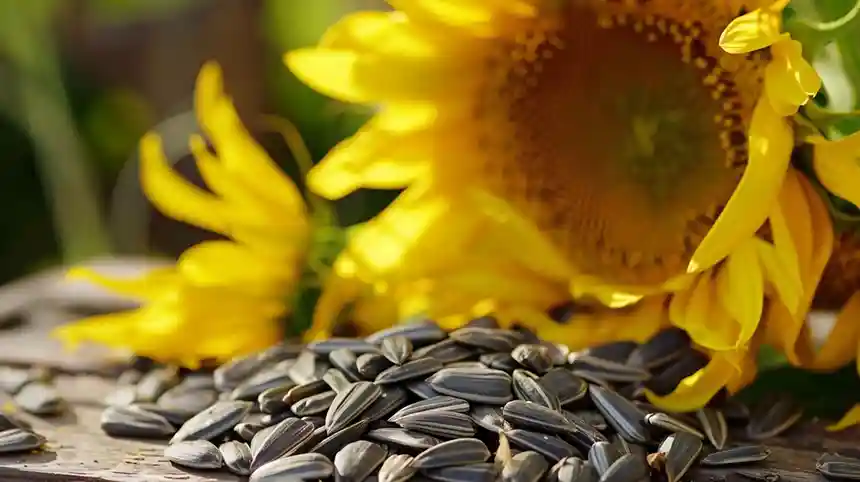
Sunflower seedlings require 1-2 hours of direct sun initially, and you need to gradually increase the number of hours for them so they get used to being outdoors and become hard on the outside. Protect the seeds against strong winds since they are highly vulnerable to physical damage and dehydration.
Step 2: Prepare the Site
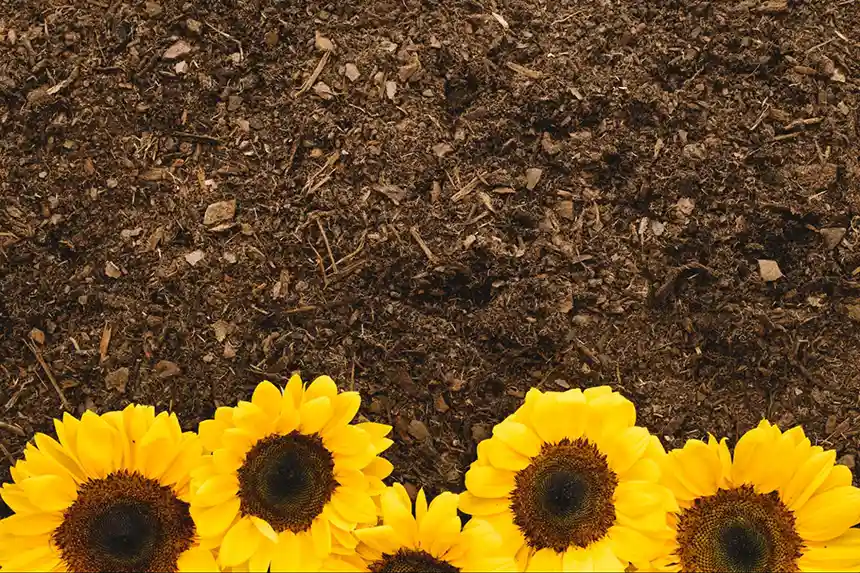
Sunflowers need 6-8 hours of full sun on a daily basis, which is why it is important to pick a sunny spot that has well-drained soil. Clear all weed, grass around the planting soil, and loosen up the native soil for the sunflowers to develop a taproot properly.
Step 3: Dig a Hole
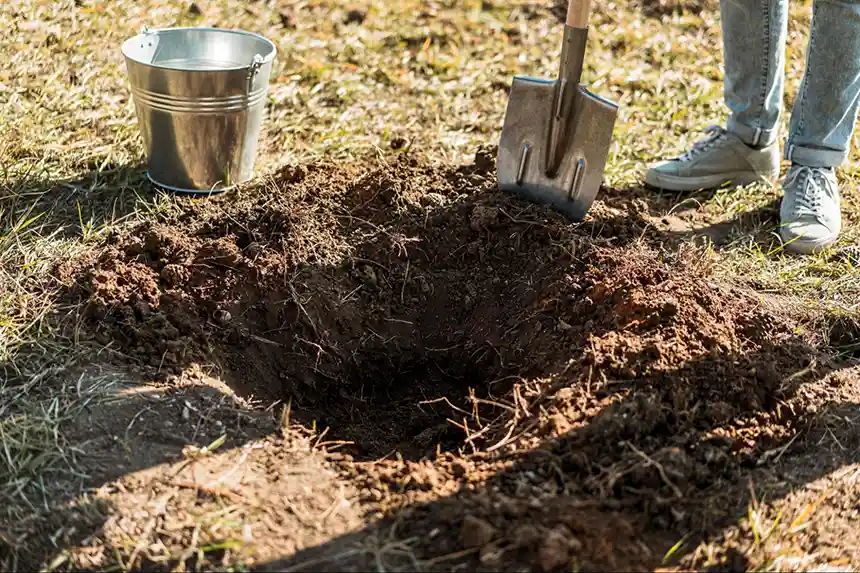
Dig a hole slightly larger than the root ball, about 2-3 inches deep. Mix a little compost or a slow-release organic fertilizer into the bottom of the hole and soak the hole with water before use.
Step 4: Remove the Plant
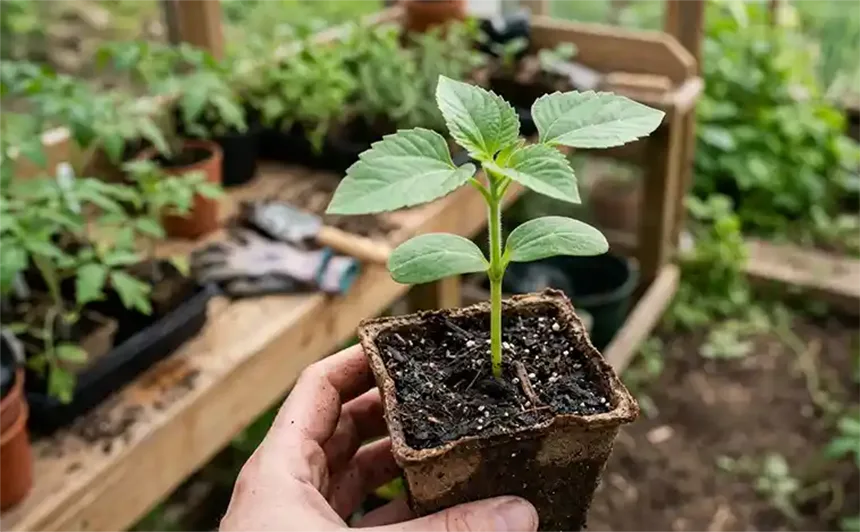
Tip the container, or you could also use a small tool like a garden trowel or a widger to lift the seedling out without shaking or tearing the roots.
Step 5: Water the Plant
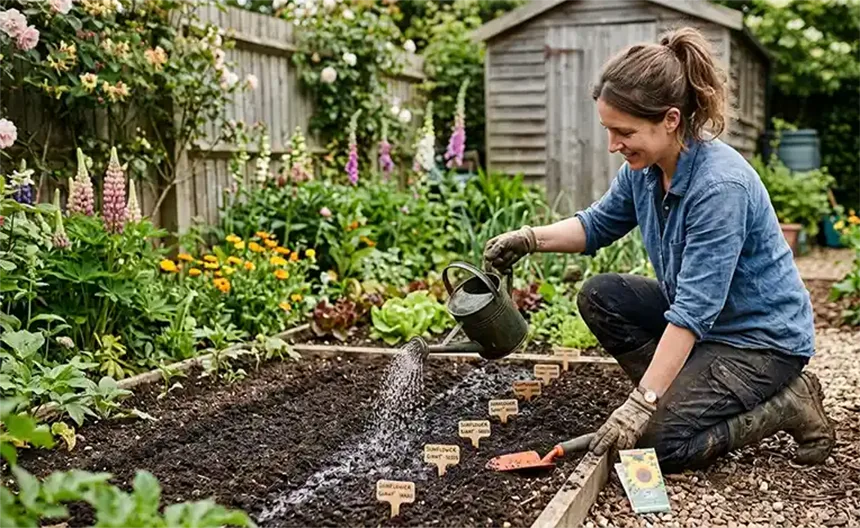
Watering the sunflower before and immediately after transplanting helps the roots settle into the new soil. I would suggest keeping the soil consistently moist for 2-3 weeks right after planting to promote growth. You could follow this routine every other day.
Step 6: Support the Stalks
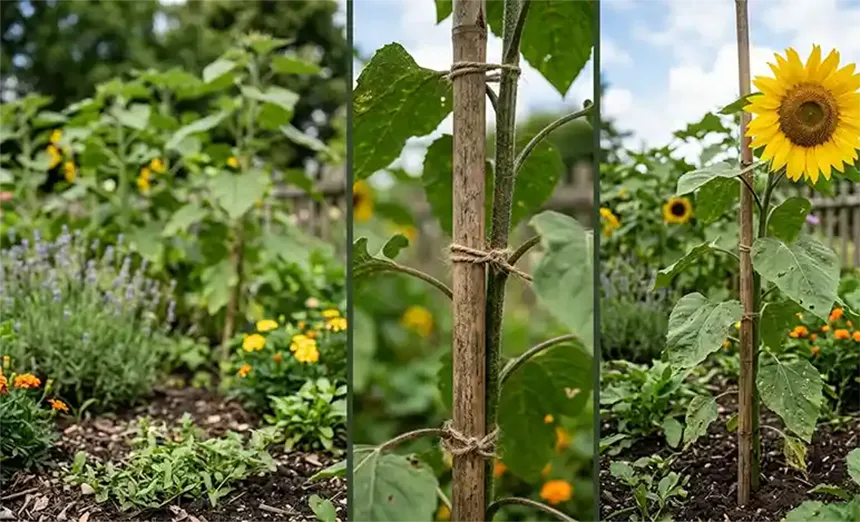
Sunflowers have a sensitive taproot that doesn’t like being disrupted, so insert a sturdy bamboo cane or a tree stake into the soil next to the plant. I suggest putting some distance from the base to avoid damaging the main root and pushing it a foot deep for a solid anchor. Fasten the stem to the stake with garden twine and add more ties as the flower grows.
How to Grow Sunflowers from Seeds?
To grow sunflowers from seeds, choose a location and time for planting, prepare the bed, sow the seeds and cover them with soil, and water them well.
Now let me explain all the aforementioned steps to you in detail.
Step 1: Choose a Location
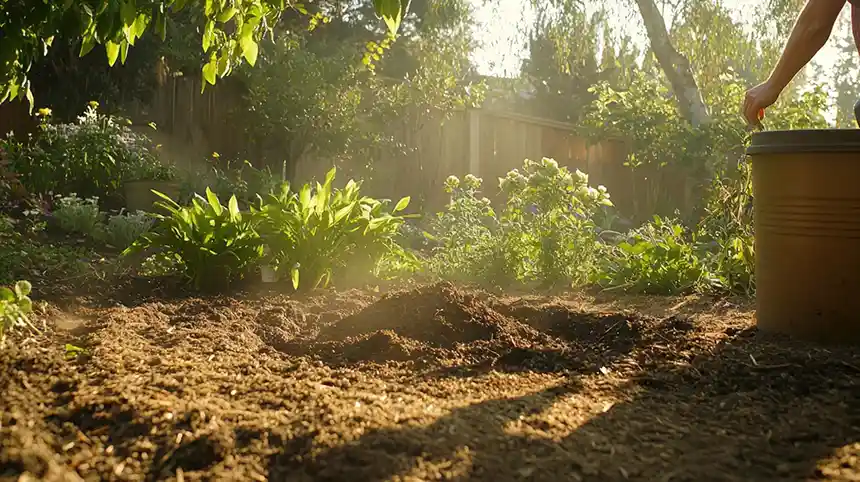
Choose a warm location that gets 6-8 hours of direct sunlight daily. The seeds should be taken outside after all the frost is gone and the soil temperature is about 50-60℉, which is mostly in the spring season.
Step 2: Pick the Correct Time

Late spring to early summer, when the soil is warm, is best for germination. New seeds should be planted every 10-14 weeks from May through August to enjoy continuous blooms. Sunflowers prefer slightly acidic to alkaline soil, with a pH range between 6 and 7.5.
Step 3: Prepare the Bed
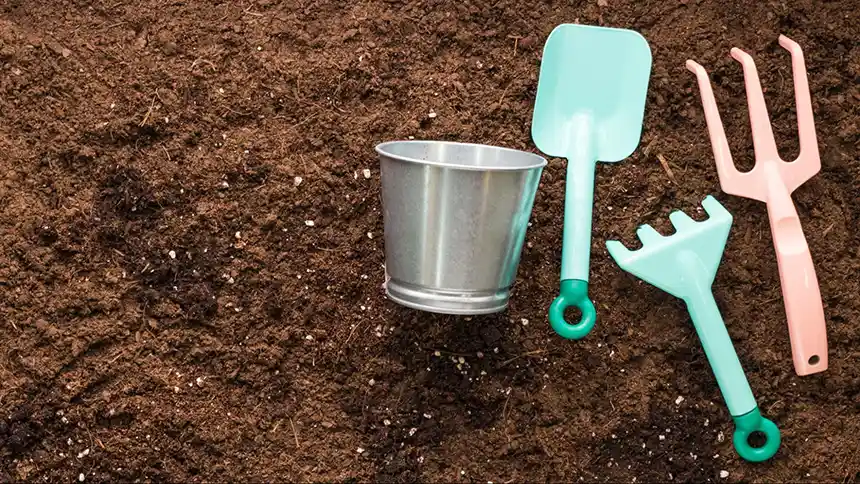
A 3-inch layer of all-purpose garden soil in the top 6-8 inches of native soil enriches the bed with nutrients and helps roots establish quickly. I noticed that this step also improves drainage.
Step 4: Sow the Seeds
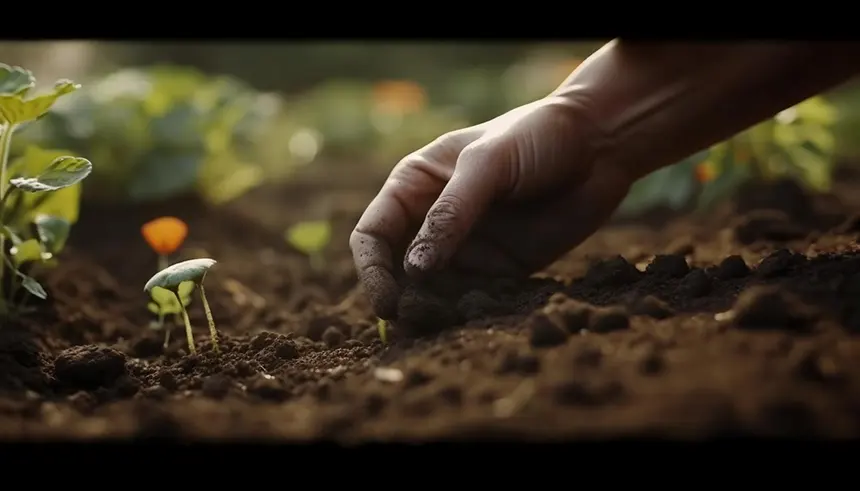
I use my thumb to push each seed about 1 inch deep into the soil and space it according to its variety. 6 inches is enough for the smallest variety, and 12-24 inches for the giant variety. Now cover the hole when you’re done planting them.
Step 5: Water Them Properly
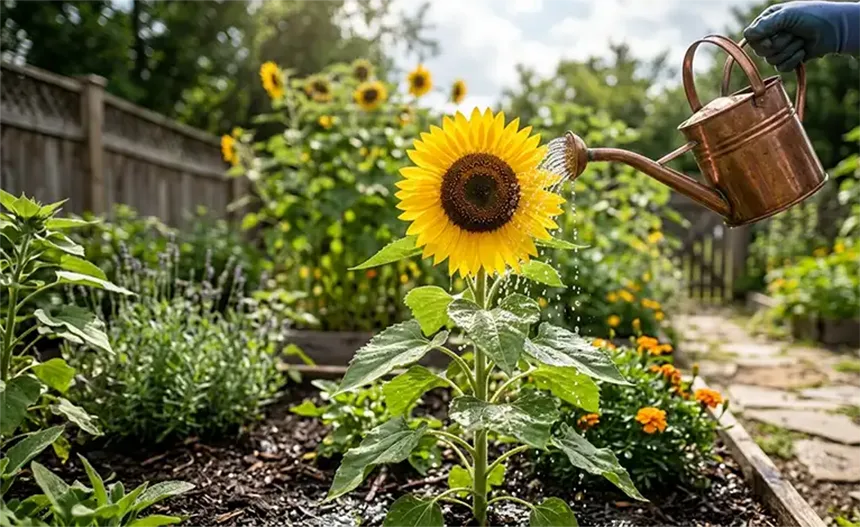
The planting area should be watered thoroughly immediately after sowing the seeds to keep the soil consistently moist until seedlings emerge. Keep in mind that excessive watering causes waterlogging, which makes the plant rot.
Single-Stem vs. Branching: Choosing How Your Sunflower Grows (Genetic Growth Habits)
Single-stem and branching are two genetic sunflower growth habits. The genetic growth of sunflowers depends on factors such as growth habits, space needs, timeline, and maintenance.
Let me walk you through each factor in detail in relation to both of these methods.
I. Single-Stem Sunflowers

- Growth Habit: A single stem produces one tall, unbranched stalk with a single large flower. You get one flower per seed, and when it is done, no flowers will bloom off that stem further.
- Space Needs: The plants should be spaced 6 inches apart, depending on the variety. Very close spacing will lead to smaller blooms; similarly, a good amount of spacing will give you larger yellow flowers.
- Timeline: Single-stem matures faster, and it takes about 50-60 days to bloom.
- Maintenance: Single-stem varieties should never be pinched, or they won’t bloom. They are mostly ideal for sequential planting and sowing every week to ensure a continuous harvest of flowers.
Some common single-stem varieties are ProCut, Sunrich, and Vincent.
II. Branching Sunflowers
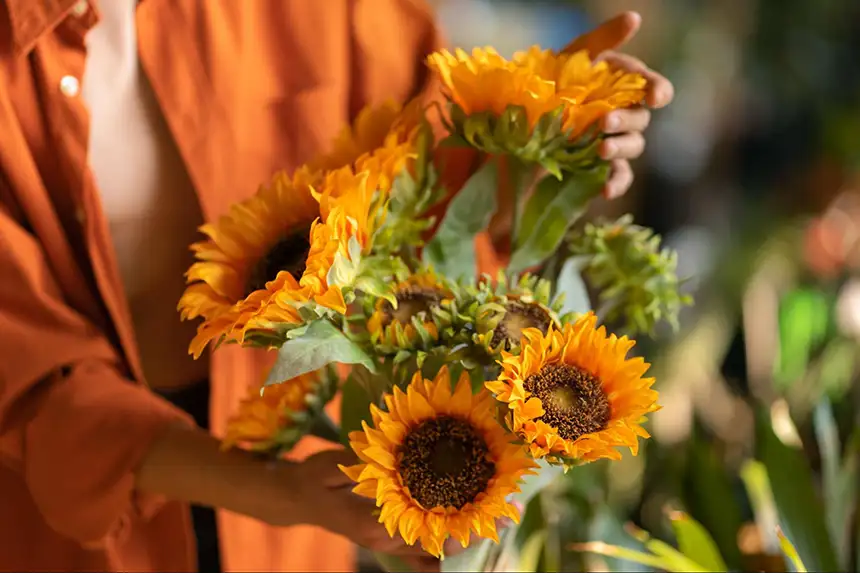
- Growth Habit: Branching sunflowers produce multiple side branches and multiple blooms from a single seed.
- Space Needs: Branching flowers require much more horizontal spacing, so they should be placed 12-24” apart, ideally. This prevents overcrowding and wide sprawling of the flowers when they bloom.
- Timeline: Branching sunflowers have a longer flowering period because the blossoms open in succession over a sustained timeframe, which is about 65-100 days. They extend their total lifespan until the first frost.
- Maintenance: Pinching works for this method. You can take out the first bud that comes out of the plant; it stimulates the plant to branch more and send out 6-8 long, straight stems with a bud on each of them.
Some common varieties are Gold Rush, Autumn Beauty, and Sorghum, or Teddy Bear.
Growing Requirements for Sunflowers
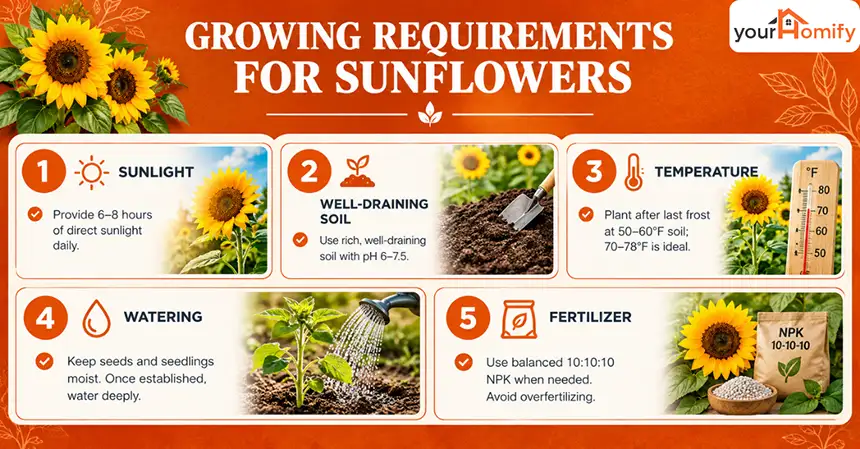
Growing requirements that impact your sunflowers the most, from what I have observed during my own planting experience, include 6-8 hours of direct sunlight, well-draining soil, warm temperatures, water/irrigation needs, and fertilizers.
- Sunlight: Sunflowers need full sun for 6-8 hours every day to promote growth, heliotropism, and stalk strength. Keeping them under shade leads to weak, thin, or stunted plants.
They can also survive with partial shade, but the stems may become weak and leggy, and the flower head will stay small. However, during extreme temperatures, some filtered shade can protect the plant from heat stress while still meeting daily needs.
- Well-draining Soil: Pick well-draining soil so the roots do not sit in water for long hours. Since these flowers prefer slightly acidic to alkaline soil, a pH range between 6 and 7.5 is ideal.
Sunflowers are mostly tolerant of all soil types and will flourish without a lot of hard work, but rich soil with organic compost will give you larger blooms.
- Temperature: Seeds should be planted after the last frost when the soil temperature is between 50 and 60℉. Mid-March or early April are the suggested months for seedling sunflower plants. Optimum growth takes place when the temperature is around 70-78℉.
The seeds can tolerate lower temperatures, but their growth becomes very slow and may result in poor yields.
- Water/Irrigation: The soil needs to be consistently moist for seeds and young seedlings, so water your plants twice a week or every other day once the plant is established to promote strong root growth.
The sunflower plant is drought-tolerant, and its extensive root system allows it to extract more soil moisture. This is why irrigation tends to have a longer benefit to sunflowers than other crops. Short droughts don’t affect seed yields because they are not stressed due to their root volume. Ensure that they have an adequate water supply 20 days before the yield period, and repeat it if there is a dry spell.
- Fertilizers: According to Oregon State University, a 10:10:10 NPK ratio is good for sunflowers. Liquid fertilizers are the preferred option, but they should be used only when the plant is about 8-20 cm tall, simply because it doesn’t need such heavy nutrition before this growth. Nitrogen could be used in higher amounts to boost height, while tomato feed boosts the blooms.
Fresh potting compost and fertilizer make for a good growing environment for the flowers, but it is important to remember that too much fertilizer is poisonous and can cause stunted growth in plants.
YourHomify Insight Box: Sunflowers do well across hardiness zones 2-11, doing well in most climatic conditions from intense heat to cold winters.
How to Harvest Sunflowers?
To harvest sunflowers, inspect the flowers, cut the head, and remove and dry the seeds.
Moving further, I will explain all these steps in detail.
1. Inspect the Flowers
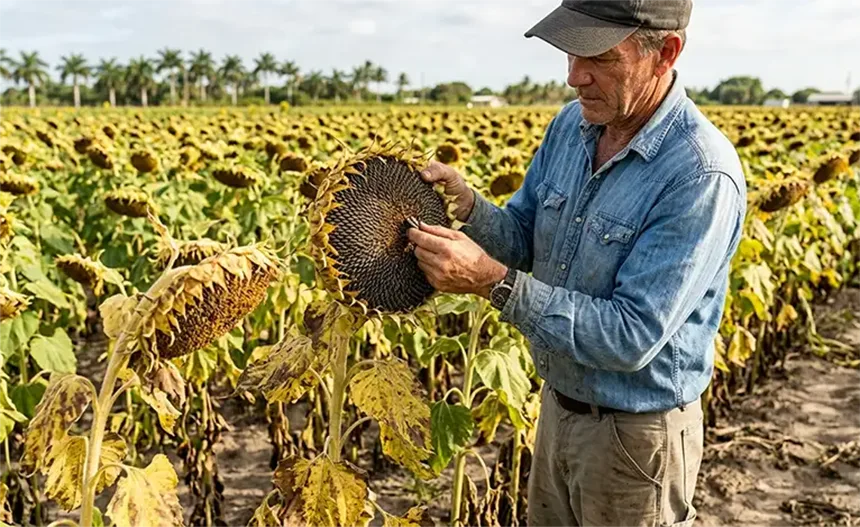
The back of the sunflower head should change from green to yellow or light brown, with some tan spots. Food hero suggests that the petals should be completely dry, withered, or almost on the verge of falling off. Inspect the seeds for plumpness and clear striping. They should pop loose easily upon touch.
2. Cut the Head
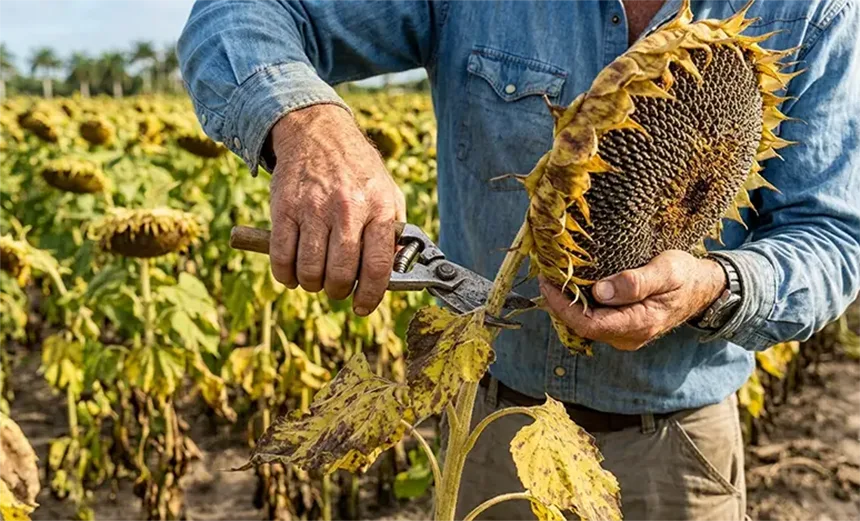
Cut the stalk with sharp scissors or pruners about 8-12 inches down from the flower head. This should be done when the flower petals are fading between late summer and early fall. Use the remaining stem as a handy workspace handle or hanging hook.
3. Remove the Seeds
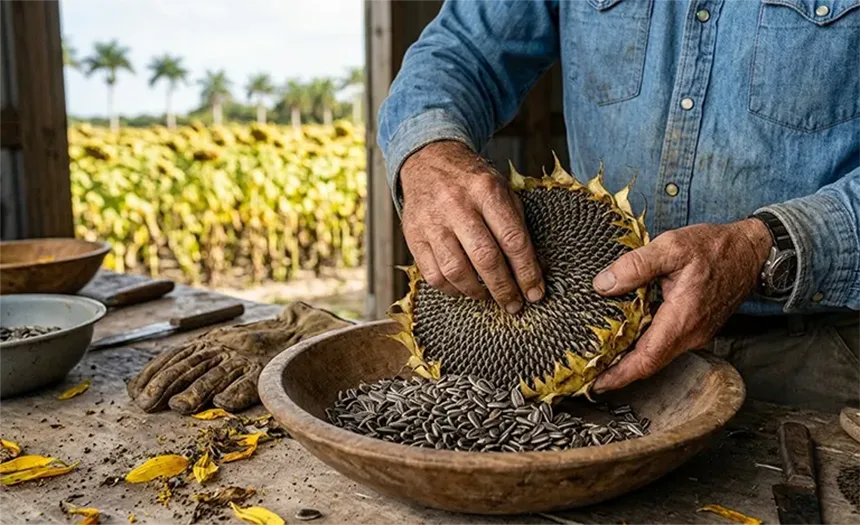
Once the head is completely dry and brittle, I use my thumb or a stiff brush across the flower head over a large bucket/container to pop the seeds free. You can wear gloves to do this and remove the extra petal, sunflower matter later from this batch.
4. Dry the Seeds and Store Them
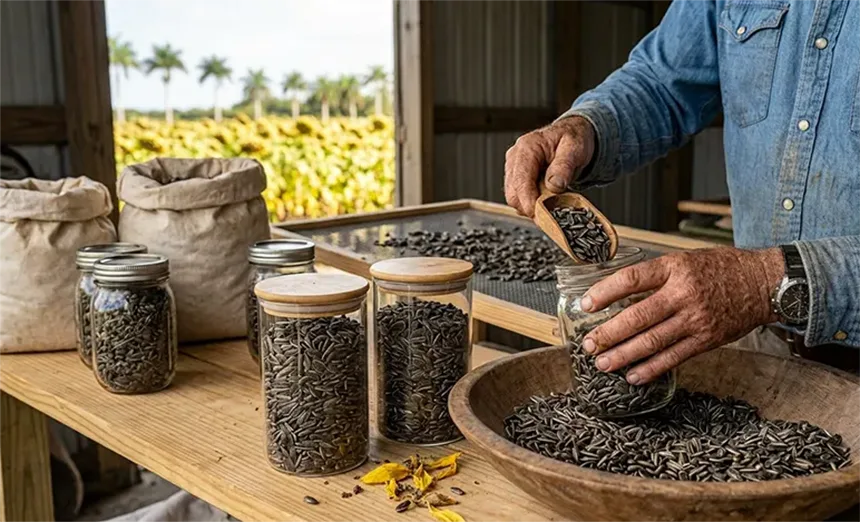
Use a colander to rinse the seeds and pick out all the extra bits that aren’t seeds. Line a cardboard or wooden crate with newspaper and paper towels, and spread the seeds into a thin, single layer, leaving some space between each of them. Allow them to dry overnight.
Store the seeds in an airtight container in a cool, dry place if the seeds are to be replanted. They will last you for years if stored this way.
Care Tips for Sunflowers
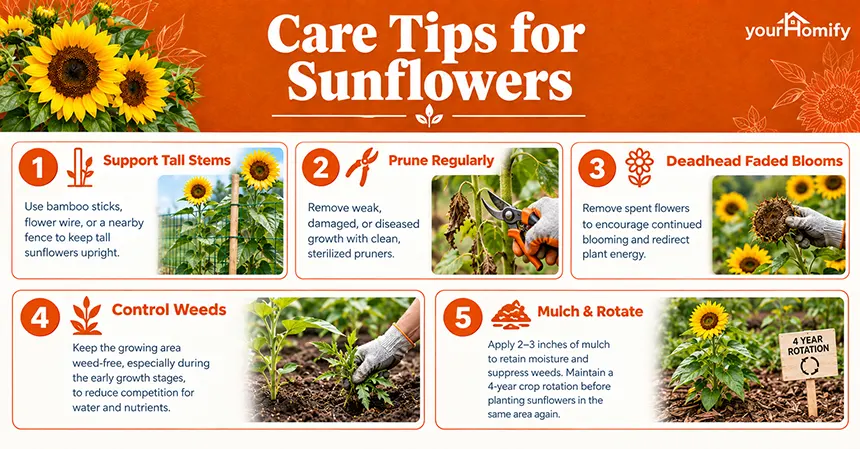
According to my research and experience, sunflowers require supporting the stem of the plant, pruning, deadheading, taking care of weeds, mulching, and dividing sunflowers every 4 years.
I’ll explain each care tip in detail, so you can help your sunflowers to grow strong and healthy.
- Support: The taller varieties of sunflowers might need support to prevent them from falling over, since they have a heavy flower head. You can use a flower wire or bamboo sticks and tie them loosely around the plant stem to keep it upright. Additionally, you can place them near a fence or wall for support.
- Pruning: Perennial flowers like sunflowers should be pruned twice a year. Use hand pruners or hedge shears and sterilize them properly. Trim off the sick, weak, and damaged plants. Dispose of them in a compost bin. Give them your desired shape after you have put away all the unhealthy branches. Water them post-pruning to keep away the stress of trimming.
- Deadheading: Remove flowers that have reached the end of their cycle. This promotes continued blooming for the rest of the sunflowers that are actively growing and prevents the plant from putting energy into producing more seeds.
- Weeds: Sunflowers are susceptible to weed competition during their initial growing stages. They act as hosts for significant pests and diseases and tend to take up space, nutrients, and water. Weeds can cause up to 60-90% yield loss in sunflowers. Therefore, integrated management is important. You need to know which species are present and their distribution around your field. Critical stages where you need to be extra alert are the period between sowing and germination, which lasts about 6-10 weeks.
- Mulching: Mulching helps in keeping the weeds away. Such weed-infested plants should be removed by hand rather than using toxic chemicals. It also helps in keeping the soil moist and cool, which helps in protecting the roots of your plants. I apply a thin layer of mulch of around 2-3 inches in late spring after the soil has warmed and keep it away from the stems. Straw mulch, grass clippings, leaf mulch, wood chips, and bark are great mulching options.
- Crop Division: Sunflower is a good preceding crop that leaves behind a great soil environment and plant residue for a favorable balance to grow more crops. However, a cultivation break of 4 years should be maintained since sunflowers are not a very self-tolerant variety. Suitable crops for rotation are cereals, maize, and sugar beet, but legumes should be avoided as they are high in nitrogen.
YourHomify Insight Box: Sunflowers are non-toxic to cats, dogs, and horses, according to ASPCA. Touching the stems can cause mild allergies or rashes in humans, so I would recommend wearing gloves.
Mistakes to Avoid While Planting Sunflowers
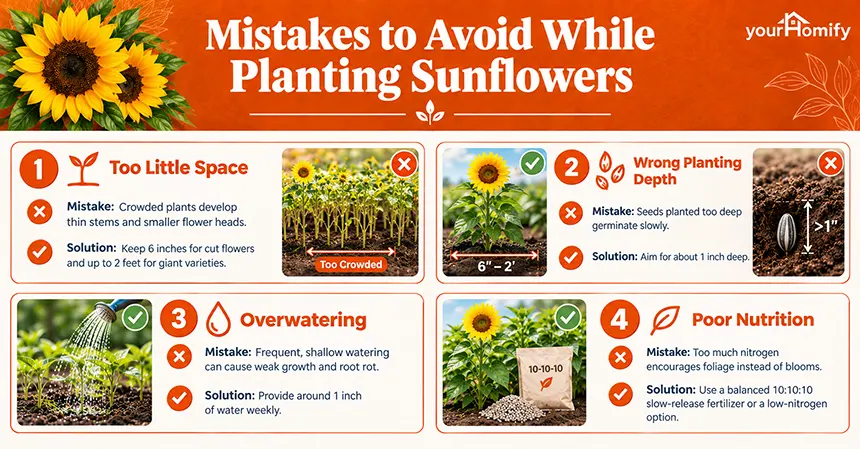
Mistakes that I have made while planting sunflowers are underestimating the space required for them to grow, getting the depth wrong, overwatering, and not providing enough nutrition.
Let me explain all these mistakes in detail so that you can avoid them.
1. Underestimating Space Requirements
If sunflowers don’t get enough space to grow because all of them are huddled up together in a compact space, they might be bent out of shape. This could also result in thinned stems and smaller heads.
Solution: It is important to plant seeds at an adequate distance of about 6 inches for cut flowers and up to 2 feet from each other for the giant variety to prevent diseases and poor growth.
2. Getting the Depth Wrong
Sowing seeds too deeply slows down germination and reduces the energy of the plant during the initial growth stages. Similarly, if the sowing is done too shallowly, it increases the risk of the seed drying out.
Solution: I sow my seeds about 1 inch deep, depending on the moisture levels and soil texture. Light soil allows deeper sowing, while heavy soil requires shallow sowing.
3. Overwatering
Shallow and frequent watering keeps the plant near the surface, leaving it more vulnerable to heat stress and wind damage. Such sunflowers will not grow much in size or even bloom. The plants will appear droopy and wilted. They also have a higher probability of getting root rot.
Solution: Create a schedule where you provide around 1 inch of water every week. If the topsoil looks dry, give the plant a gentle soaking to help it grow. Germinating seeds require even less water.
4. Neglecting Nutritional Needs
Extremely high levels of nitrogen in sunflowers lead to excessive vegetative growth, a higher risk of diseases, delayed maturity, and reduced seed oil content with a low-quality yield.
Low levels of nitrogen reduce the protein and oleic acid content, limiting crop yield. Plants lacking phosphate result in reduced growth and dark-grey necrosis around the lower leaves. Potassium deficiency reduces the oil content in sunflowers.
Solution: A balanced ratio of 10:10:10 in slow-release fertilizers, or a product low in nitrogen, will support the entire plant with foliage growth and encourage more blooms.
Pests and Diseases in Sunflowers
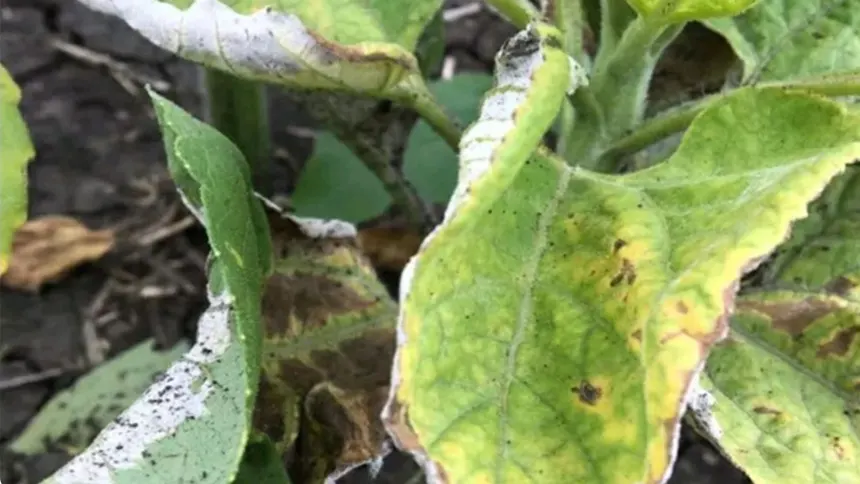
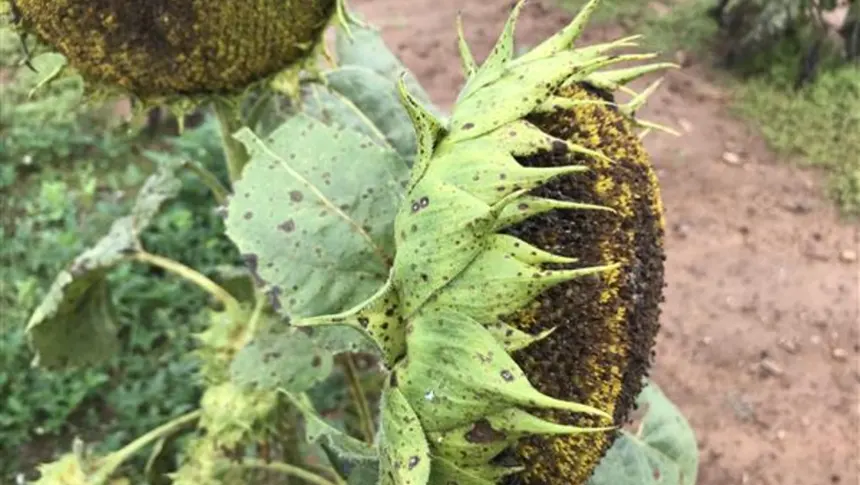
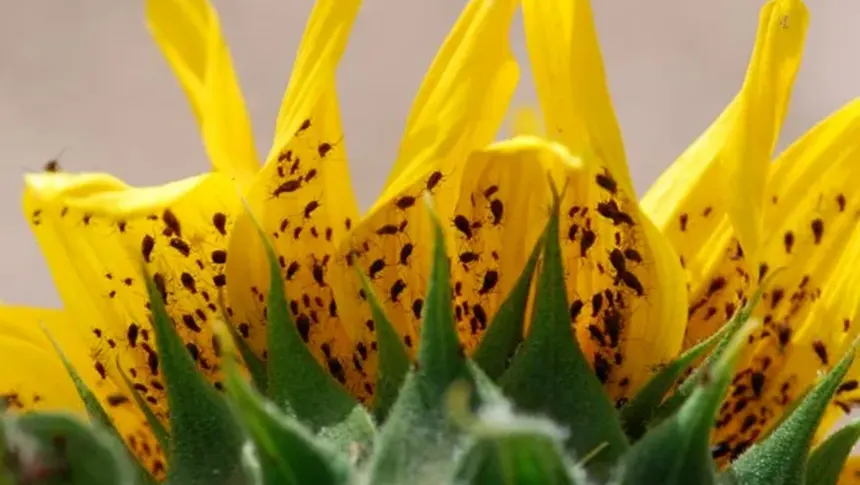
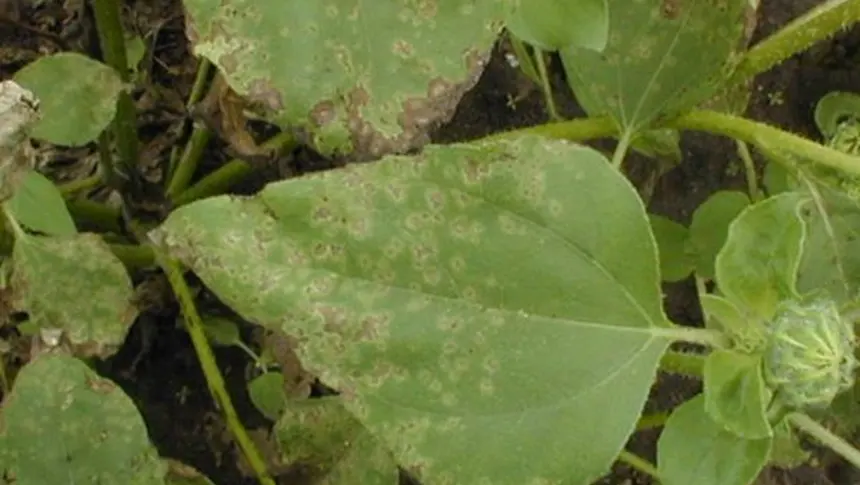
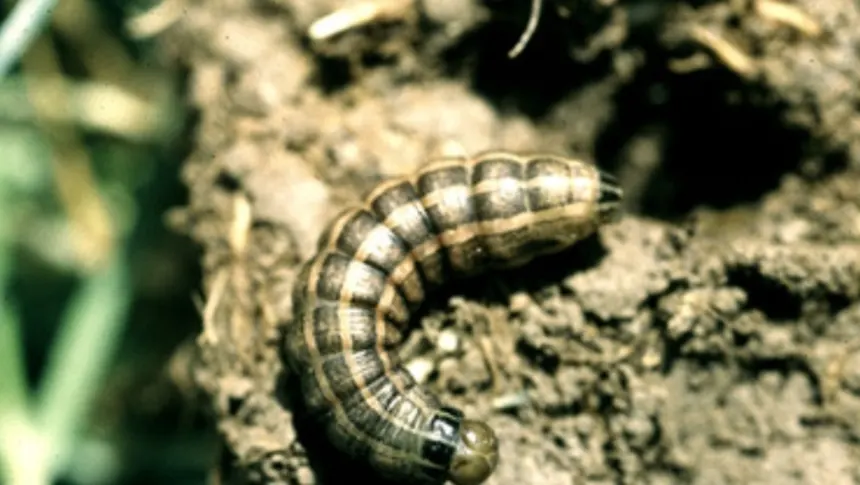
Some of the common pests and diseases that I have noticed frequently harming my flowers are downy mildew, Alternaria leaf blight, aphids, Septoria leaf spot, and cutworms.
Now let me explain all about these pests and diseases, along with their solution.
Concluding Remarks
Sunflowers are one of those flowers that have a big, bright bloom. I find them delightful to look at, and the energy they emit is absolutely contagious. There are different methods to grow them, depending on whether you want single flowers or if you want to curate a bouquet for a special event. To help them grow well, place them in direct sunlight, use permeable soil, and water the plants weekly.
Proper pest management and storage techniques will help you sustain not only the beautiful blooms, but you can also make sunflower oil out of the seeds after drying. They are good for heart health and rich in fatty acids and antioxidants, protecting the cells in our body.
FAQs
Are sunflowers easy to grow from seed?
Sunflowers are some of the easiest and fastest flowers to grow. Plant the seeds about an inch deep after the last frost and put 6 inches of space between them for smaller varieties, 12 inches to 2 feet for the wider variety.
What is the best month to plant a sunflower seed?
April and May are the best months to plant sunflower seeds. The soil finally warms after the final spring frost, with temperatures between 50 and 60℉. For the northern regions, late May to early June is a good time, while March to April are the perfect months in southern areas.
How do I plant sunflower seeds step-by-step?
Choose a spot that gets 6-8 hours of direct sunlight, use loose, well-draining soil, and mix it with compost so that the roots grow strong. Plant the seeds about an inch or two deep beneath the soil, space them well, and provide water weekly.
Can you take a seed from a sunflower and plant it?
Yes, a seed can be taken from a sunflower to grow a new one. To harvest a seed, wait for your original plant to mature and inspect the seeds, since they should be plump and firm. Dry and store the seeds until the next planting season.
How long does it take for a sunflower to flower from a seed?
Typically, a sunflower takes somewhere between 70 and 100 days to grow and bloom. The dwarf variety matures faster, taking only 55-60 days, while the giant variety tends to take over 100 days sometimes.