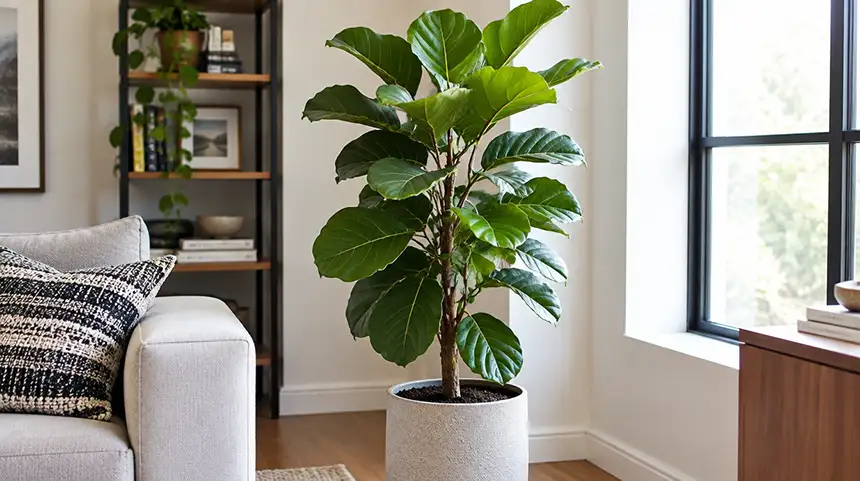
Imagine bringing home a healthy fiddle leaf fig with big, healthy green leaves. You place it near a window, water it regularly, and wait for it to grow happily. Then, a few weeks later, the leaves start turning brown or droopy.
What went wrong?
Fiddle leaf fig care is simple, but you need to follow the right steps for the species to flourish. Whether you grow them indoors or outdoors, understanding their basic needs such as sunlight, water, soil, and temperature settings is necessary.
I will keep things simple in this guide and explain what exactly you need to do to keep this lush, green plant thriving. Learn the ideal growing conditions, maintenance tips, common pest problems, and their solutions.
Bookmark it for later – your fiddle leaf fig will thank you!
Quick Answer
Fiddle leaf fig care is relatively easy. Provide bright, indirect light, well-draining soil, moderate watering, warmth, and good humidity. Water only when the top 2-3 inches of the soil feels dry; do not let the roots sit in water for long. Use a balanced NPK fertilizer, and you are good to go!
Fiddle Leaf Fig Plant: A Brief Overview of the Houseplant
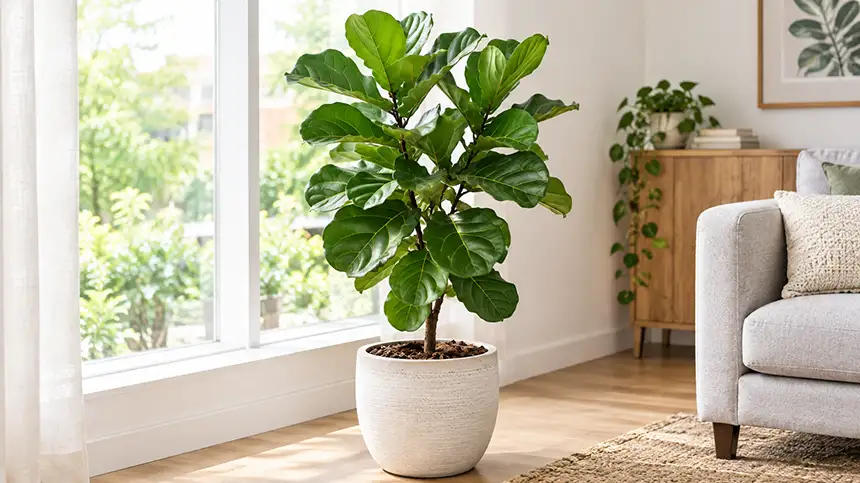
The Fiddle Leaf Fig, also known as Ficus lyrata, is a large and glossy tropical houseplant that has violin-shaped leaves. Native to the lush rainforests of western and central Africa, this indoor green plant is often used as a statement piece in homes, offices, and many commercial settings.
| Botanical Name | Ficus lyrata |
| Family | Moraceae (Mulberry and Fig family) |
| Hardiness Zone | 9-11 USDA (outdoors) |
| Appearance | Large, thick, and glossy leaves |
| Mature Size | 72-120 in tall, 36-60 in wide |
| Light Requirements | Bright indirect sunlight |
| Watering Schedule | Water only when the soil feels dry |
| Soil Type | Well-draining, organic-rich soil |
| Growth Type and Habit | Upright evergreen plant |
| Toxicity | Toxic to pets and humans |
| Maintenance | Moderate |
| Lifespan | 10-25 years indoors with proper care |
Although this species is known to add drama and height to an indoor space, it is not just a beautiful plant to look at. According to feng shui (a Chinese practice), the fiddle leaf fig is highly valued to enhance the positive energy of our surroundings.
Many expert interior designers recommend adding this beautiful plant to the Southeast corner (for wealth) or East corner (for family harmony) to maximize its positive energy.
Fiddle Leaf Fig Care: Ideal Growing Conditions (Indoors & Outdoors)
Caring for fiddle leaf fig indoors is different from caring for it outdoors in several aspects. The sunlight, water, soil, and temperature needs are distinct in both conditions. Understanding the unique ficus plant care tips is essential to keep this leafy gem thriving.
Fiddle Leaf Fig Plant Care – Indoors
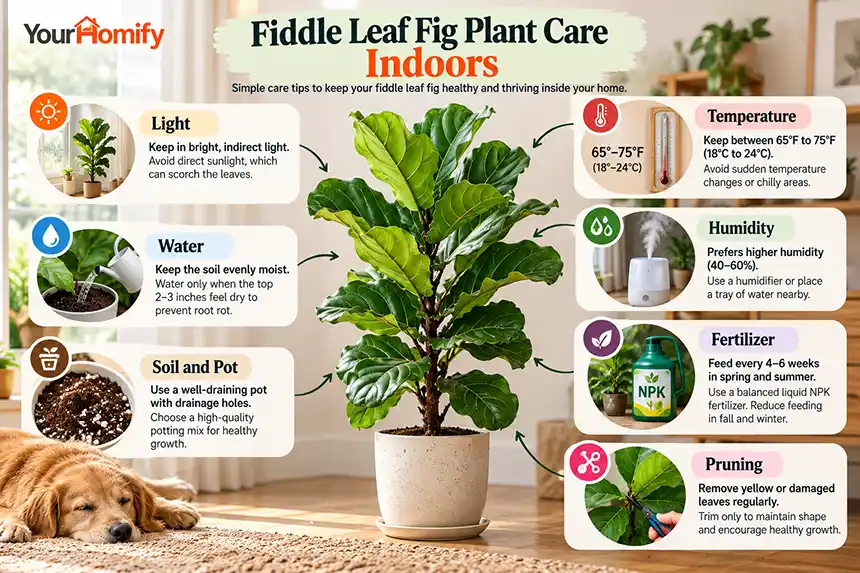
- Light: The fiddle leaf ficus performs best in bright, indirect light. Avoid placing the container in direct sunlight.
- Water: Make sure that the soil is evenly moist. Water only when the top 2-3 inches feel dry to prevent root rot.
- Soil and Pot: The pot or the container should have proper drainage holes. Use only high-quality potting mix for proper flowering.
- Temperature: The ideal range is 65°F to 75°F (18°C to 24°C). Do not place the pot in areas where there is a sudden change in temperature or the weather is mostly chilly.
- Humidity: Prefers higher humidity (40-60%). Use a humidifier or place a tray of water nearby.
- Fertilizer: Feed every 4-6 weeks in spring and summer. A balanced liquid NPK fertilizer works best for the species. Reduce feeding in fall and winter.
- Pruning: Make sure to remove all the yellow or damaged leaves. Trimming should only be done to maintain the shape and encourage healthy growth.
Fiddle Leaf Fig Plant Care – Outdoors
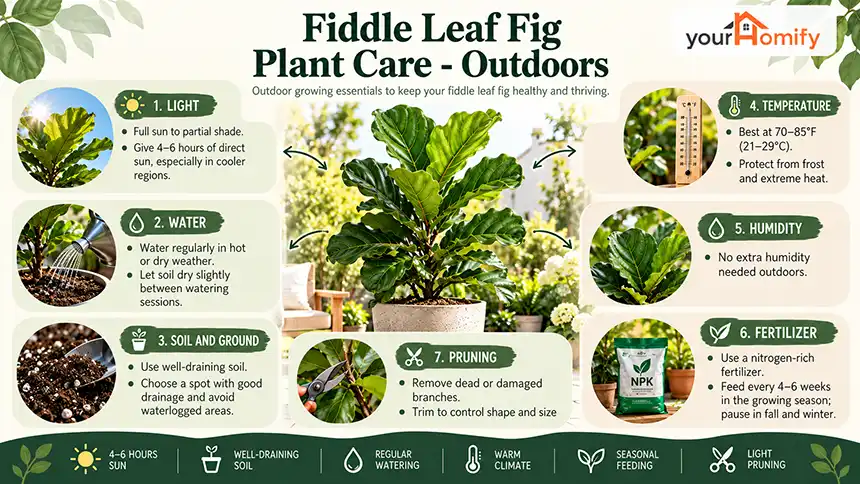
- Light: Full sun to partial shade works best if you are planting the fiddle leaf fig outdoors. Make sure that it gets direct sunlight for at least 4-6 hours, especially in colder regions.
- Water: Regular watering is required during hot or dry periods. Adjust the frequency and let the soil dry slightly before each watering session.
- Soil and Ground: Use well-draining soil. If planting in the ground, choose a spot with good drainage and avoid waterlogged areas.
- Temperature: The fiddle leaf plant thrives in 70-85°F (21-29°C). Protect the plant from extreme heat or frost conditions.
- Humidity: Doesn’t need extra humidity outdoors.
- Fertilizer: A nitrogen-rich fertilizer works best for this genus. Feed every 4-6 weeks during the growing season. Give a break in fall and winter.
- Pruning: Remove dead or damaged branches. Trim the plant to maintain its shape and size.
With the right care routine, your fiddle leaf fig will flourish, adding an eye-catching element to any space. Whether it’s basking indoors or enjoying the sun outside, it requires proper attention in both environments.
How to Keep a Fiddle Leaf Thriving: Care and Maintenance Tips
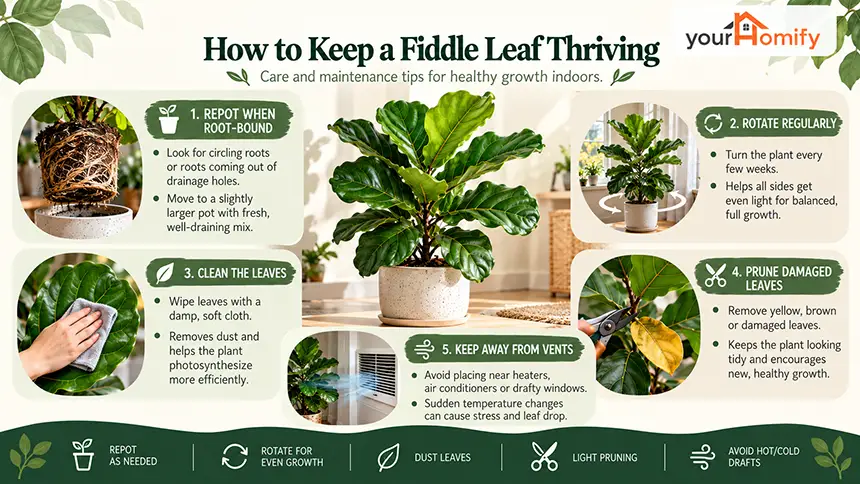
If you are looking for smart ways to elevate your home decor using houseplants, the fiddle leaf plant should be at the top of your list.
Here are some essential tips that you should keep in mind while adding this beauty to your room space.
|
|
|
|
|
Pests, Diseases, and Common Problems Affecting The Plant
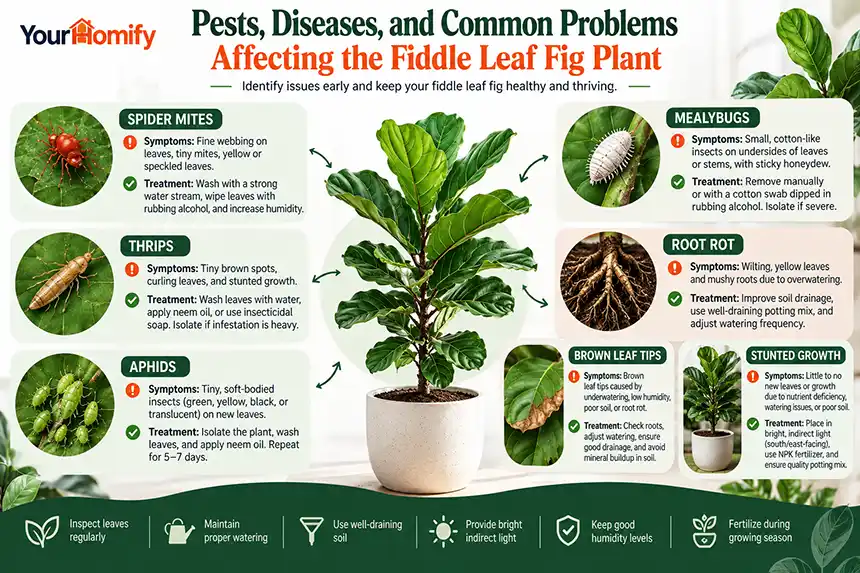
When it comes to the fiddle fig plant, there are a number of pests and diseases that one needs to watch out for. Spider mites, mealybugs, thrips, aphids, and root rot can slowly kill the plant.
Though the species is believed to be low-maintenance, it is important to keep an eye on it so that they remain healthy and blooming.
| Pest/Disease | Symptoms and Treatment |
Spider Mites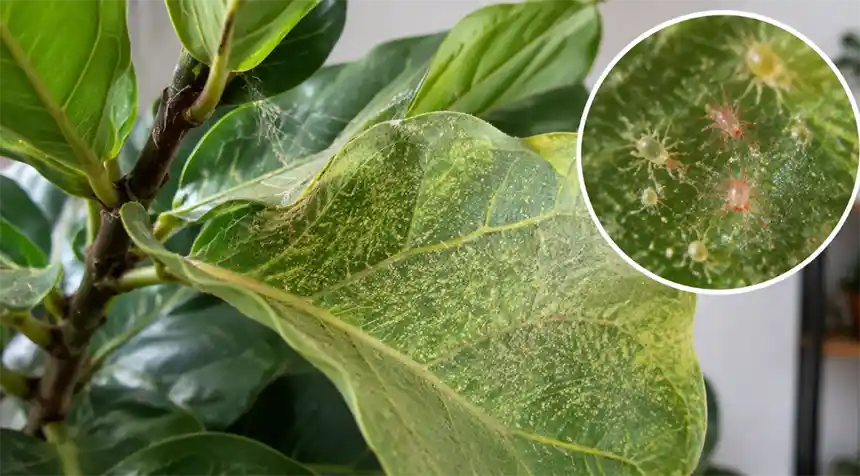 | Symptom: If you notice fine webbing on the surface of the leaves, it is most likely affected by spider mites. Treatment: Wash the plant with a strong stream of water. Wipe the leaves with rubbing alcohol and increase humidity around the plant. |
Aphids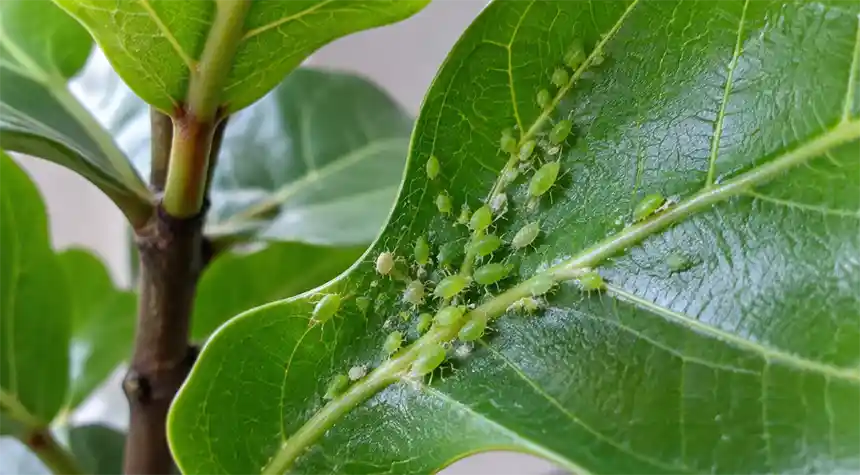 | Symptom: If you notice tiny soft-bodied insects (green, yellow, black, or translucent) on the newly growing leaves, the plant has been infested by aphids. Treatment: Isolate the plant, wash the leaves properly, and apply neem oil. Repeat the treatment for 5-7 days until the aphids are gone. |
Mealybugs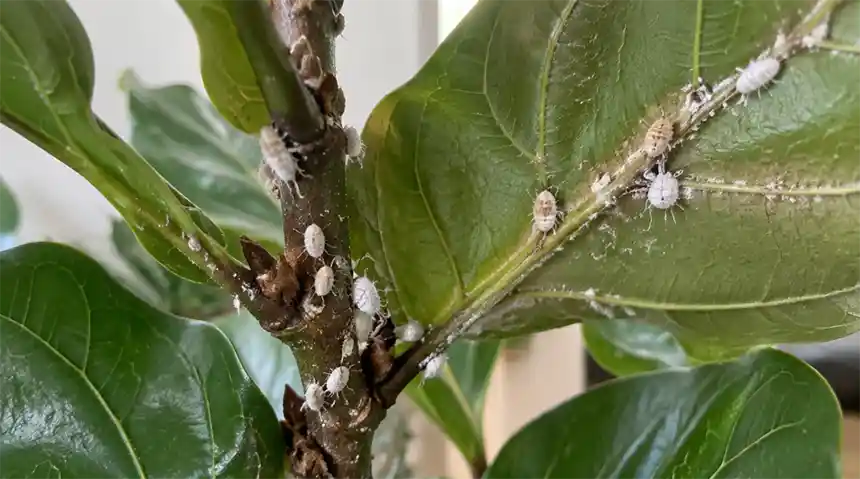 | Symptom: These are small, cotton-like insects on the underside of the leaves or on the stem. You will notice sticky honeydew on the foliage. Treatment: These can be removed manually or using a cotton swab dipped in rubbing alcohol. Isolate the plant in case of heavy infestation. |
Thrips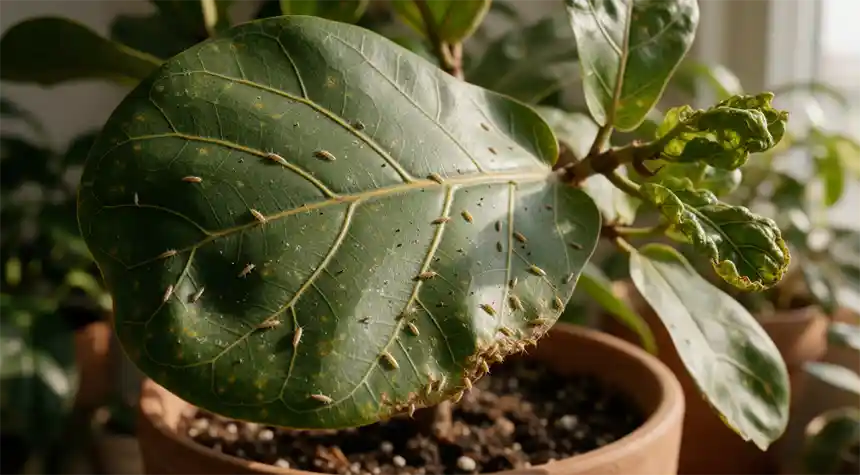 | Symptom: Ever noticed tiny brown spots on the surface of the leaves? If the leaves curl up and the growth of the plant slows down, it is likely affected by thrips. Treatment: Wash the leaves with a strong water stream and apply neem oil. You can also use insecticidal soaps or horticultural oil. Isolate the plant in case of heavy infestation. |
Root Rot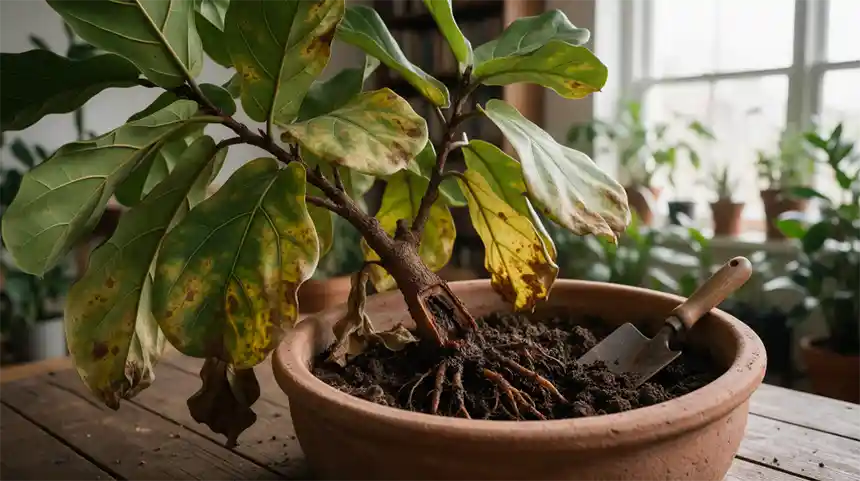 | Symptom: The main cause of root rot is overwatering. If you notice the leaves wilting or turning yellow, it is likely because of root rot. Treatment: Improve the drainage of the soil and make sure that you use a good-quality potting mixture. Adjust the frequency of watering, especially during frost season. |
Brown Leaf Tips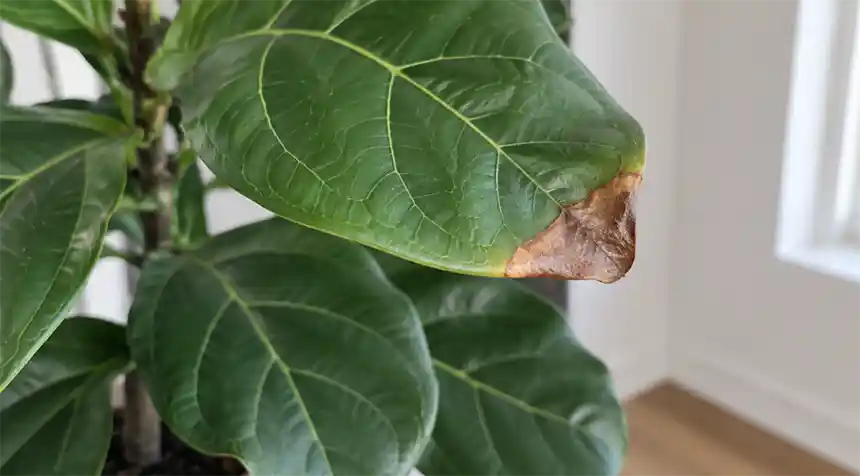 | Symptom: Underwatering, low humidity, or poor soil conditions can turn the tips of the leaves brown. Root rot also contributes to this problem. Treatment: Check the roots properly, adjust the watering frequency, and ensure proper soil drainage. Make sure the soil does not contain heavy mineral deposits. |
Stunted Growth Rate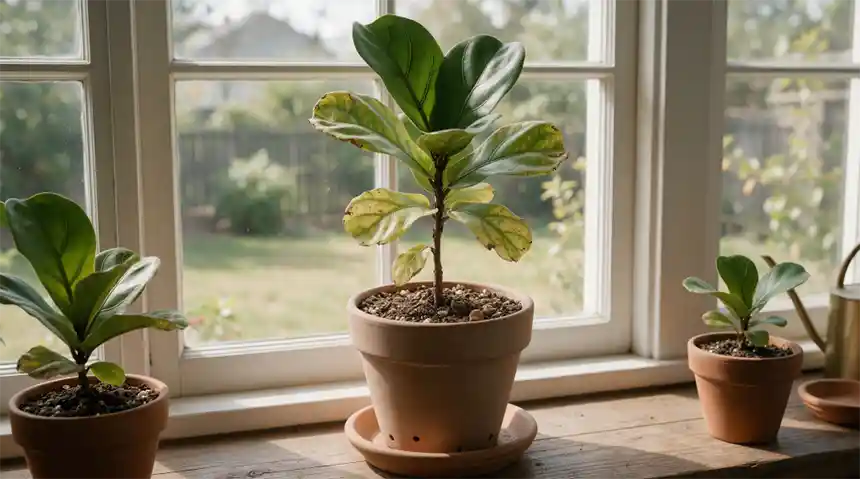 | Symptom: If you notice that your plant has stopped growing and producing new leaves, it is likely suffering from stunted growth. This happens because of nutrient deficiency, watering issues, and poor soil. Treatment: Keep the plant near a south- or east-facing window so that it gets proper sunlight. Add NPK fertilizer to encourage new growth, and ensure the potting mixture is of good quality. |
Final Words
The first time I saw a fiddle leaf fig plant, I understood why it is admired by both seasoned gardeners and novice flora lovers. The large, dark green, violin-shaped leaves of the species can make any space fresh and lively. You may think of it as just another houseplant, but it has its own unique charm.
I will not say that this is entirely a low-care plant, but once you grasp what all it takes to survive, you will understand it does not demand much. Keep this guide saved and come back whenever you need a quick fiddle leaf fig care refresher.
FAQs
Why are fiddle leaf figs so hard to care for?
Although Fiddle leaf figs are low-maintenance, they are considered hard to care for because of their sensitive tropical needs. The right amount of sunlight and water, with good quality soil and plant food, can do all the magic.
Where is the best place to put a fiddle leaf fig indoors?
The best place to put a fiddle leaf fig plant indoors is near a south- or east-facing window. Make sure that the species gets bright but indirect sunlight to prevent stunted and leggy growth.
What is the lifespan of a fiddle leaf fig?
A fiddle leaf fig, if planted outdoors, can survive for at least 25-50 years. With proper care, you may witness some species even lasting for 100 years. If you are adding this gem indoors, give it proper care so that it can thrive.
Are fiddle leaf fig plants poisonous to cats?
Yes, the species is extremely toxic to cats and dogs. It can also be poisonous to humans if ingested in large quantities.
- Fiddle-leaf fig (Ficus lyrata): Home – New York Botanical Garden
- Ficus lyrata – NC State Extension Research Paper