


A rose is a perennial flowering plant. It has soft petals, a sweet fragrance, and thorny stems and is available in beautiful colors. Being one of the most popular flowers in the world, roses are called the “Queen of the Flowers”. This flower can be easily grown in gardens, parks, and even containers.
Many novice flower lovers believe roses are difficult to grow and that’s exactly why I created this rose flowers guide.
In this blog, I will help you explore their history, meanings, popular types, growing techniques, and solutions to common pest problems.
Quick Answer
Rose flowers are beautiful, fragrant blooms from the Rosa genus, available in thousands of varieties and colors. They symbolize love, friendship, gratitude, and new beginnings. Most roses grow best in 6-8 hours of sunlight, fertile, acidic to neutral soil with a pH of about 6.0-7.0, regular watering when the top 1-2 inches of the soil feels dry, a balanced NPK rose fertilizer, and require scheduled pruning.
What are the Key Features of the Rose flower?
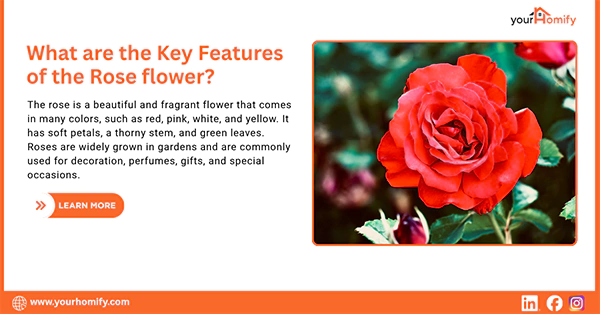
A rose is a woody, perennial flowering flower that belongs to the Rosa genus and is known for its beautiful blooms, pleasant fragrance, and wide range of colors.
Botanically called Rosa, this flower comes in various colors, including red, pink, white, yellow, orange, peach, purple, and many bi-colored varieties. It blooms from spring through fall, with many modern varieties blooming all year long. The species is pollinator-friendly and attracts bees, butterflies, and other beneficial pollinators.
It is available in thousands of varieties and can be easily grown in garden beds, borders, containers, and on trellises. The flower is widely used for landscaping, gifting, and celebrations, and it is also considered a symbol of love, beauty, friendship, and remembrance across many cultures.
History and Origin of Rose Flowers
According to the World History Encyclopedia, roses are among the oldest cultivated flowers. Scientists believe that the flower first appeared around 35 million years ago, and their traces have been found in the fossil records of Europe, Asia, and North America.
- Many ancient civilizations valued roses for more than just their beauty. According to Greek mythology, the goddess of flowers, Chloris, created a new flower; Dionysus, the god of wine and flowers, gave it an alluring scent; Aphrodite, the goddess of beauty and pleasure, gave the rose its name by rearranging the letters of her son Eros’s name.
- The Egyptians used roses in ceremonies and to make perfumes, while the Greeks and Romans decorated homes and temples with the flower. Some also used the petals to make scented oils, medicines, and herbal teas.
- During the 18th and 19th centuries, breeders crossed Chinese and European varieties, producing many hybrid species with longer blooming periods and in many new shades. In 1986, the United States designated the rose as the official flower and floral emblem.
Today, there are more than 300 species of roses and over 30,000 hybrid varieties. They are grown in home gardens, parks, flower farms, and botanical centers across the world.
Rose Flower Meaning and Symbolism
Roses are associated with romantic love, passion, happiness, appreciation, and motivation. Different shades carry distinct meanings, making them one of the most thoughtful flowers for gifting and special occasions.
1. What do Different Rose Colors Mean?
The red rose’s meaning is love, romance, passion, and respect. They are commonly used for gifting on occasions like Valentine’s Day, anniversaries, and proposals. White rose meaning is purity, innocence, peace, and a fresh start. They are a meaningful choice for common occasions like weddings, remembrance events, and funerals.
Pink rose meaning is gratitude, admiration, joy, and appreciation. They are perfect for celebrating birthdays, thank-you gifts, Mother’s Day, and Father’s Day. Yellow rose meaning, on the other hand, is friendship, happiness, warmth, and care. They are often exchanged on common occasions like Friendship Day and any happy celebration to celebrate a strong connection.
Orange rose meaning is enthusiasm, energy, excitement, and desire. Their vibrant color makes them ideal for celebrating achievements and new beginnings. Purple rose meaning is enchantment, royalty, and love at first sight. They are gifted on occasions like romantic events or proposal parties.
The black rose meaning is farewell, mystery, strength, and fresh starts. They are often used for themed floral arrangements or at motivational or gratitude events, as floral decor.
2. What Does a Rose Symbolize in Different Cultures?
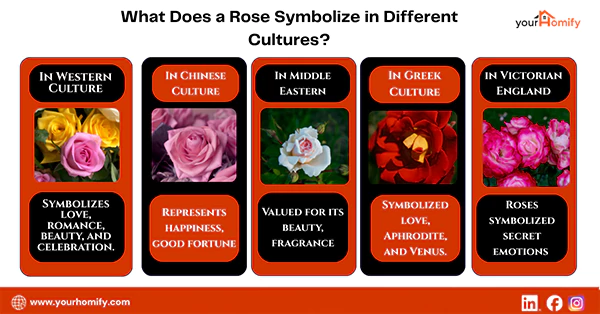
In Western cultures, roses are considered a universal symbol of love, romance, beauty, and celebration. Ancient Greece and Rome closely linked the bloom with the goddesses of love, Aphrodite and Venus, making the flower an epitome of beauty, passion, and undying love.
In China, the flower was associated with happiness, prosperity, good fortune, and harmonious relationships. Roses were popularly grown in gardens because of their elegance and positive vibe. Valued for their beauty and fragrance, in Middle Eastern traditions roses are to this date widely used to make perfumes, rose water, herbal teas, and skincare products. During Victorian England, different shades of rose flowers were used to send secret messages, allowing people to express their feelings without speaking.
Irrespective of the color and variety, rose flowers remain one of the most meaningful blooms. Their timeless elegance and rich symbolism make them one of the most admired flowering species.
What are the Different Types of Rose Flowers?
Hybrid tea roses, floribunda roses, grandiflora roses, climbing roses, shrub roses, ground cover roses, and Rambling Roses are some different and popular types of this species. Let us study these in detail in this section.
1. Hybrid Tea Roses
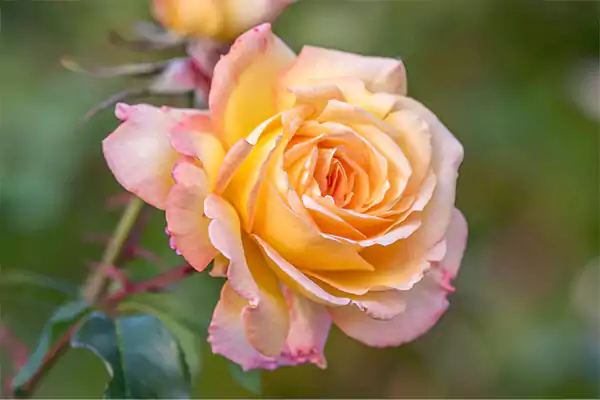
These are one of the most popular types that produce large flowers with long stems, making them an ideal choice for bouquets and floral arrangements. Example: Peace Rose
The flower size of this type ranges from 3-5 inches in diameter, and these are specifically bred for their fragrance. Each bloom has a vase life of 7-14 days and is mildly pollinator-friendly.
2. Floribunda Roses
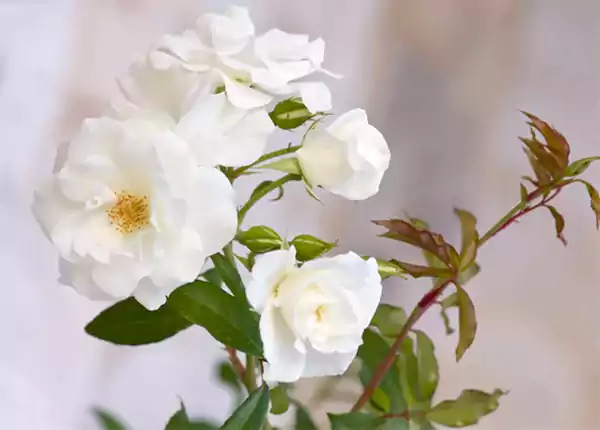
This type features clusters of flowers instead of a single bloom on each stem. They continuously grow throughout the season and are easy to maintain. Example: Iceberg Rose
The individual blossom of this type ranges from 2 to 4 inches in diameter. Some varieties of this type are used to make scents, while others have no fragrance. Floribunda are highly attractive to bees and other beneficial pollinators, and each cut bloom can last for 4-7 days in a vase.
3. Grandiflora Roses
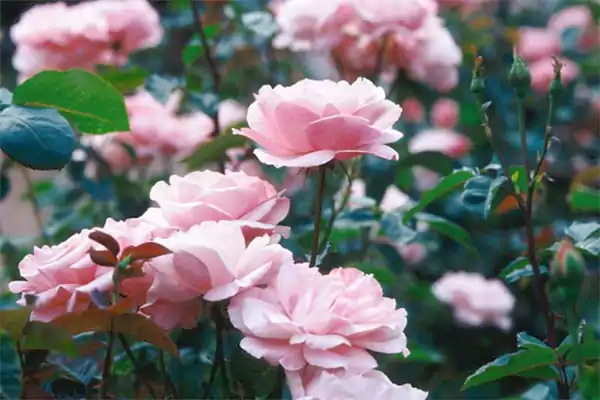
Grandiflora roses are a combination of hybrid tea roses and floribunda roses. They produce large blooms with a cluster flowering habit and are excellent landscape flowers. Example: Queen Elizabeth Rose
Many modern grandiflora varieties are bred for their fragrance, while some are said to have almost no scent. Each bloom grows about 3 to 4 inches in diameter and has a vase life of up to 7-10 days. Majorly bred as landscape flowers, these are mildly pollinator-friendly.
4. Climbing Roses
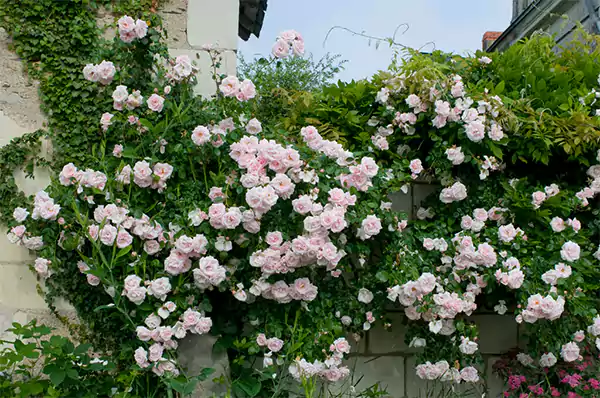
These have long, flexible canes that can easily grow on fences, pergolas, arches, and trellises. Several “climbing rose varieties” are often used to create stunning vertical displays in gardens. Example: New Dawn Rose
Climbing roses typically feature larger blooms ranging from 3-6 inches in diameter. The cuttings have a vase life of 4-7 days and are not highly scented, which makes them ideal for a balcony garden. Since they have double petals, it makes it difficult for pollinators.
5. Shrub Roses
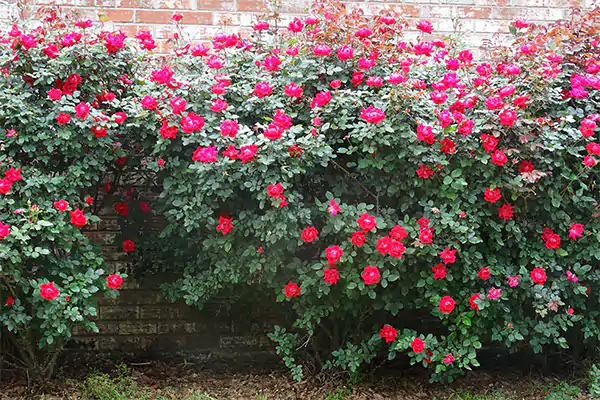
Shrub roses are hardy, deer-resistant, and easy to grow. They usually have a naturally bushy structure, which is why they are ideal for hedges and border covers. Example: Knock Out Rose
The flower size of shrub roses is generally 1-5 inches. Whether they are fragrant or not depends on the variety you choose, and all of them have a vase life of 5-7 days. These are highly pollinator-friendly.
6. Ground Cover Roses
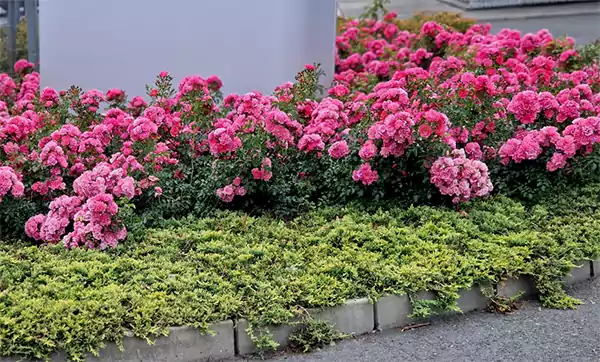
These usually spread outward instead of growing upright. They are excellent for covering slopes, borders, and empty spaces. Example: Flower Carpet Pink Rose
Ground cover roses are usually petite and grow about 1.5-3.5 inches in diameter. Their scent varies by cultivar, and they have a vase life of 5-7 days. This type is highly attractive to bees and other pollinators.
7. Rambling Roses
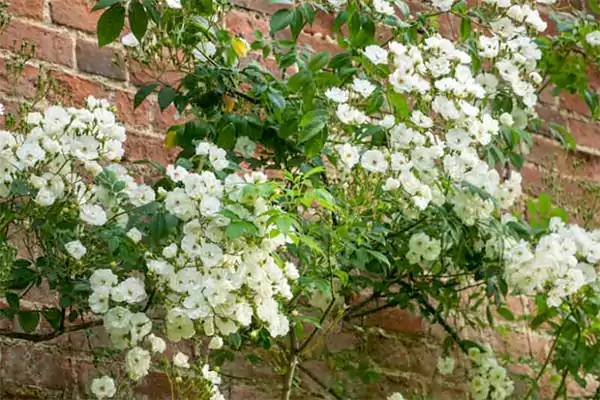
Rambling roses grow very long canes and bloom heavily, often once a year. They are ideal for covering large walls, old trees, gazebos, and fences. Example: Rambling Rector Rose
This fast-growing variety features blooms that are typically 1-2 inches in diameter. Some popular cultivars of this type are highly scented. They have a relatively shorter vase life of about 4-6 days and are excellent pollinators.
Now we know that roses are grouped into different types based on their growth habit, flower shape, blooming pattern, and usage. Some varieties are perfect for gardens, while others are ideal for walls or containers.
How to Grow Rose Flowers Successfully?
To grow rose flowers successfully, choose the right location, provide enough sunlight, plant in well-draining soil, water properly, feed the plant with NPK fertilizer, mulch around the base, and prune regularly.
Once established, they can reward you with beautiful blooms year after year. Follow this rose flowers guide below to help your roses stay healthy and flower abundantly.
- Choose the Right Location: Pick a spot that receives plenty of sunlight and make sure there is good air circulation around the flower. Avoid planting near large trees that compete for water and soil nutrients.
- Provide Enough Sunlight: Roses are sun-loving flowers and require 6-8 hours of direct sunlight every day. Though morning sun is ideal, as it also helps reduce fungal diseases, roses can thrive in afternoon shade as well.
- Plant in Well-Drained, Fertile Soil: Use loose, well-draining soil rich in organic matter. A slightly acidic to neutral soil pH of about 6.0-7 is ideal. Avoid planting them in heavy clay soil that stays soggy after watering.
- Water Properly: Consistent watering keeps roses healthy, especially during the active growing season. Always water at the base of the flower instead of just wetting the leaves, and keep the soil evenly moist but not waterlogged.
- Feed Roses With the Right Fertilizer: Every 4-6 weeks, apply a balanced NPK fertilizer during the growing season — our “rose fertilizer guide” covers what to use and when.
- Mulch Around the Flower: Spread a 2-3 inch layer of organic mulch around the base of the flower. Leave a small gap around the stem to prevent rot and refresh the layer as soon as it breaks down.
- Prune and Deadhead Regularly: Remove dead, damaged, or diseased branches and shape the flower to improve air circulation — see our full guide on “how to prune roses” for timing and technique.
By following this simple care guide, you can witness flourishing rose flowers from spring through fall.
How to Pot Rose Flowers? Step-by-Step Guide
To pot rose flowers, choose the right pot, prepare a well-draining potting mix, add the soil mixture, prepare the flower, position the rose correctly, deeply water it, apply mulch, and place the pot in a sunny location.
Potting rose flowers helps them establish healthy roots and produce more blooms. Follow these simple steps for the best results.
For the most economical way to start a rose bed, many gardeners prefer learning “how to plant bare root roses” during the dormant season.
Step 1: Choose the Right Pot. Select a container that is at least 16-20 inches wide and deep with proper drainage holes. Ceramic flower pots, plastic, or terracotta pots-everything works well for roses.
Step 2: Prepare a well-draining potting mix. Fill the container with a rich organic soil mix. I generally add 40% potting soil, 30% compost, 20% coco peat, and 10% perlite or coarse sand.
Step 3: Add the potting mix. Fill the pot about one-third full with the prepared soil mix. Gently press the soil to remove large air pockets without compacting the soil.
Step 4: Prepare the rose flower before potting. Remove the flower from its nursery container. Loosen the roots and dust off all the excess soil. Trim all the damaged and dead roots.
Step 5: Position the rose. Place the flower in the center of the pot. Keep the root level with the soil surface. Add the remaining potting mix around the roots. Gently press the soil to support the flower. Make sure to leave about 1-2 inches of space between the top layer of the soil and the rim of the container for watering.
Step 6: Water the rose flower deeply until it drains from the holes at the bottom of the pot. This helps all the loose soil around the roots to settle down and remove any air pockets.
Step 7: Add mulch. Spread a 1-2 inch layer of organic mulch around the base of the flower. Keep the mulch a few inches away from the stem to prevent it from getting mushy.
Place the pot in a location where it can receive 6 – 8 hours of direct sunlight. Make sure the flower gets proper air circulation to reduce any pest or disease infestation.
Common Rose Pests and Diseases (With Solutions)
Aphids, Japanese Beetles, Scale Insects, Rust, and Root Rot are some common rose diseases. Even healthy flowers can sometimes attract pests or develop diseases. Regularly checking on them, watering them correctly, and keeping the garden clean can prevent such issues.
| Pest/Disease | Signs or Symptoms | Solution |
| Aphids | Small green or black insects on new shoots and flower buds. | Spray the flowers with a strong stream of water and use neem oil. |
| Japanese Beetles | Large holes in leaves and damaged flowers. | Remove them manually and use insecticidal soaps and row covers. |
| Scale Insects | Small brown or white bumps on stems and leaves, weak flower growth. | Gently scrape off scales and use horticultural oil during the dormant season. |
| Rust | Orange or rust colored spots on the underside of leaves. | Remove infected leaves, keep foliage dry, and apply fungicide. |
| Root Rot | Yellow and wilting leaves, black or mushy roots. | Improve soil drainage, reduce watering, and avoid waterlogging. |
Inspect your rose flowers every week for early signs of pests and prune regularly to improve airflow through the flowers. Remove all the fallen leaves and spent flowers to reduce the spread of diseases.
Conclusion
Roses are more than just beautiful flowers – they are symbols of love, joy, friendship, and celebration. With thousands of varieties to choose from, I believe that there is a perfect rose for every garden type. I hope this rose flowers guide has helped you understand the basic needs of the bloom along with some alluring types.
From their stunning colors and rich symbolism to their easy care guide, roses bring beauty to every landscape, and growing them has always been a rewarding experience for me.
FAQs
What type of rose is David Austin?
David Austin is an old-fashioned rose type that generally features rosette-shaped blooms and has intoxicating fragrances.
How are coffee grounds beneficial for rose bushes?
Coffee grounds act as natural and gentle fertilizer for rose bushes. They improve drainage and aeration and help suppress flower fungi.
What is the rarest color for a rose?
Blue, black, and green roses are considered the rarest colors of the rose flower as rose lacks the genetic ability to produce these colors.
Which rose is the most popular?
The Knock Out Rose is one of the most popular varieties as it is extremely hardy, deer-resistant, and low maintenance.
What are the ideal growing conditions for roses?
The ideal growing conditions for roses include abundant sunlight for 6-8 hours, well-draining or organic soil with a pH between 6.0- 7.0, and consistent watering.
- Growing Roses – New Mexico State University
- Rose Types Explained (In Pictures) – BBC Gardeners World Magazine
- Roses Complete Guide – Royal Horticultural Society
A Flower Wall: Meaning, Types, Uses & DIY Guide
[…] different types of flowers instead of using the same flower. For instance, roses with peonies and chrysanthemums perfectly complement each other in a flower wall […]
How to Dry Roses: 5 Easy Methods That Actually Work
[…] the rose flowers undisturbed for about 2-3 weeks. If the bloom or the petals feel dry and slightly crisp, and the […]
Alabama State Flower: Camellia Facts, History & Meaning
[…] Camellia, designated in 1959. It is a beautiful winter garden plant that looks like a mix between a rose and a peony. Usually found in shades of pink, red, white, and lilac, the species is widely […]
Flower Colors and Their Meanings: A Complete Guide
[…] only roses, but red tulips are also equally stunning. Both can give a cleaner, modern look to the bouquet. […]
How to Preserve Flowers & Wedding Bouquets Forever
[…] Roses maintain their shape and color in both resin and pressed formats. Silica gel and freeze-drying are good options, too. Variety matters in this case, because red roses tend to dry darker, while white roses turn beige, and it is difficult to maintain the light shade. […]
Carnation Flower Meaning: Colors & Symbolism
[…] flower looks like a rose due to the texture, but carnation is a cheaper option. These flowers are used as gifts on occasions […]
White Flowers Meaning: 15 Types, Meanings & Symbolism
[…] the Victorian language of flowers, white lilies, camellias, and roses were specifically used to express spiritual love and beauty. People typically gifted these blooms […]