


Mexican flowers are a variety of blooms that are native to Mexico. These flowers are tied to centuries of historical and cultural significance. Mexico and its relationship with flowers is way beyond aesthetic purposes. Many famous flower festivals, like Flower Camino de las Flores and FYJA Flower and Garden Festival, have some focal flowers like dahlias and marigolds to portray the rich flora of the country. Traditional rituals of the country use Mexican paper flowers for decor purposes for affordability when the real blooms are not available.
Moving further in the article, let me take you through a detailed guide about the Mexican flowers along with a list of 10 flowers and some basic growing tips.
Quick answer
Mexican flowers include beautiful blooms like dahlia, marigold, orchid, poinsettia, and Mexican honeysuckle. Many have deep cultural meanings and symbolism, representing love, remembrance, beauty, celebration, and good fortune. Mexican flowers are widely used in gardens, festivals, religious traditions, and celebrations.
List of 10 Popular Mexican Flowers: Names, Meanings & Symbolism
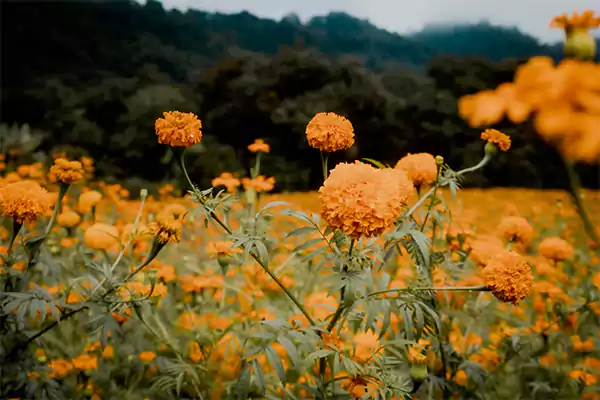
Here’s a list of 10 popular Mexican flowers, from dahlias symbolizing elegance and marigolds representing remembrance to orchids associated with love. Learn about each flower’s name, meaning, symbolism, and cultural significance.
10 Popular Mexican Flowers
- Marigold
- Mexican Hat Flower
- Dahlia
- Mexican Poppy
- Chocolate Cosmos
- Mexican Honeysuckle
- Sword Lily
- Mexican Morning Glory
- Pineapple Sage
- Mexican Bird of Paradise
1. Marigold
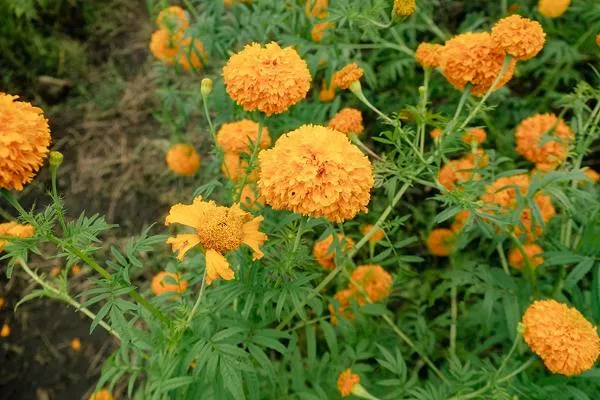
Marigold is also known as the October birth flower, along with the flower cosmos, because this flower blooms in the same month. These pom-pom-like blooms are pollinator-friendly and can last up to 2 weeks in a vase with proper maintenance. They grow up to 6 inches to 4 feet high with 5-inch-large blooms.
These orange flowers are used in many traditional festivities in Asian countries, along with being culturally significant in Mexico. The Day of the Dead in Mexico uses the marigold as a symbol of life and death. These summer flowers are pollinator-friendly and can last up to 2 weeks in a vase with proper maintenance.
2. Mexican Hat Flower
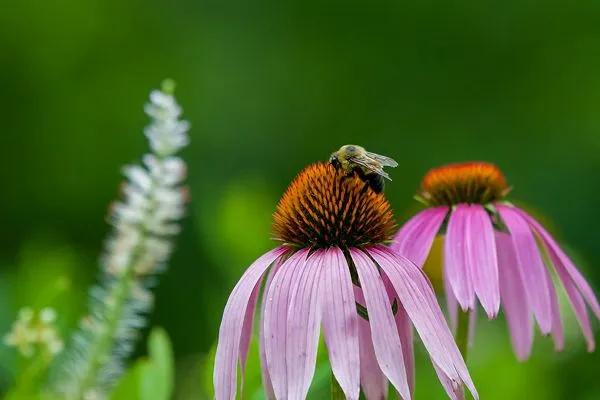
The Mexican hat flower is commonly known as the upright prairie coneflower and is a long-blooming perennial. They are named so due to their unique cone-like shape, which makes them extremely favourable for landscape gardening. They usually bloom around May and June up until October. Native to Mexico, these native varieties grow up to 1-3 feet with blooms up to 12 inches large. The Mexican hat flower has an earthy aroma that attracts various pollinating insects to the garden.
In Mexico, they are associated with the idea of resilience and abundance. While they can be used as cut flowers, coneflowers have a short vase life of 10-12 days.
3. Dahlia
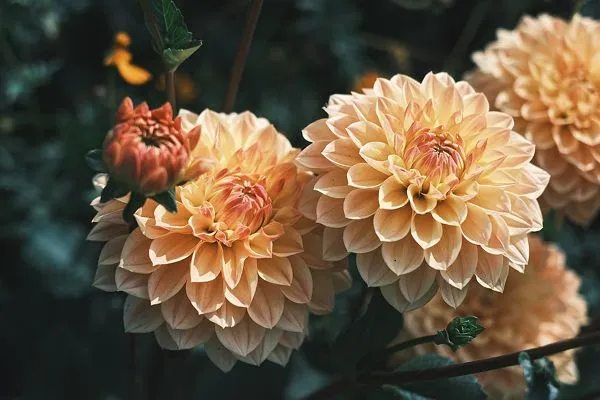
Dahlias are popular summer flowers that feature large, rounded blooms 1- 10 inches wide, which grow up to 12 inches to 6 feet in different colours like pink,red, orange, white and purple except blue. These flowers do not have a noticeable scent but are great pollinators and are known to attract a variety of bees and butterflies. They were declared the national flower of Mexico in 1963 due to their symbolism with the country’s biodiversity.
Dahlias bloom from June to September and make excellent cut flowers with a long vase life. With proper care, they can last up to 2 weeks in a cut flower arrangement.
4. Mexican Poppy
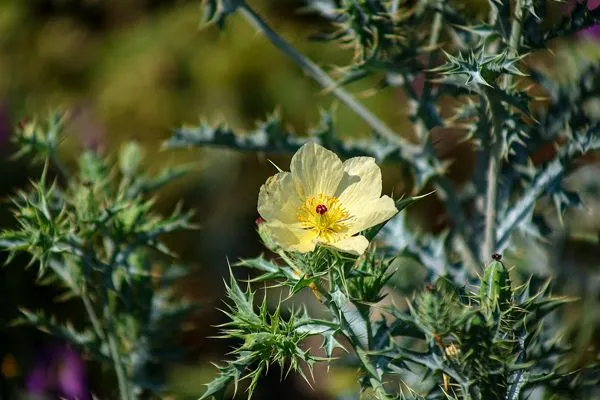
Mexican poppies are popular early spring flowers typically grown for their papery cup-shaped flowers. They reach up to a height of 24 inches with 2-4 inches large blooms. Poppies bloom from February to May and are best grown as indoor plants. They are excellent pollinators and grow in shades of orange, yellow, red, and golden.
The Mexican poppy flowers last up to 7-14 days in a vase. They are extremely significant for Mexican people due to their medicinal properties.
5. Chocolate Cosmos
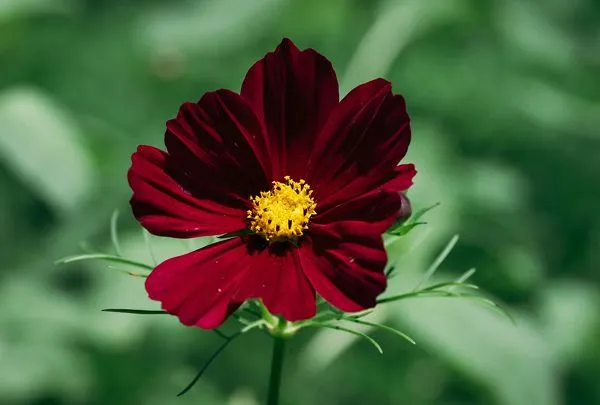
Chocolate cosmos is a tender flowering perennial that grows up to 30 inches, featuring 2-inch-large flowers. These dark red flowers are shaped like a daisy and have a distinct chocolate-like fragrance. The blooms have a velvety texture and bloom around June and July. These pollinator-friendly flowers are a symbol of beauty and order in Mexico.
The chocolate cosmos is a rare flower and endemic to Mexico. They can be used in flower arrangements for special occasions, with a vase life of over 1 week.
6. Mexican Honeysuckle
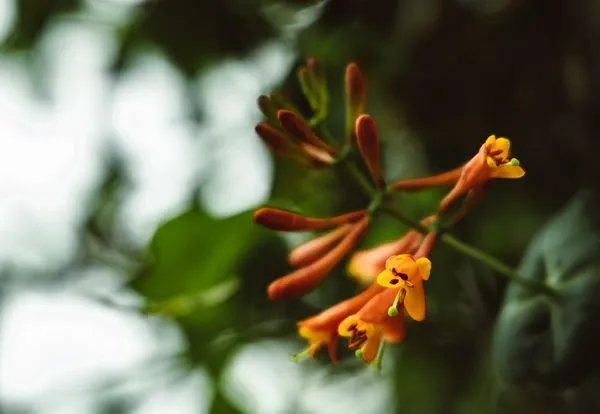
Mexican honeysuckle is an evergreen shrub that grows up to 2-4 feet tall. These yellow-orange flowers are shaped like trumpets and grow as large as 2 inches long. They have a sweet, honey-like scent, which blooms through spring to fall, from March to November, providing year-round foliage.
Honeysuckles are known to be hummingbird flowers, attracting beneficial pollinating insects to the garden. They are a symbol of joy and positivity, and can last up to 5 days in a vase. As per NCBI, honeysuckle has anti-inflammatory properties which helps in treating cardiovascular diseases.
7. Sword Lily
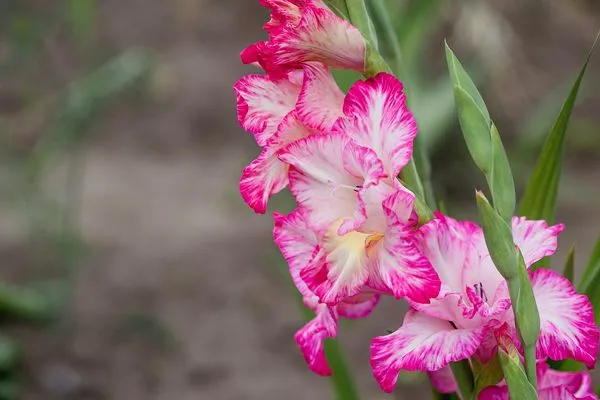
Sword lilies are flowering perennials that are named for their sword-like leaves and trumpet-shaped flowers. While they are not native to Mexico, sword lilies are used in the ‘Day of the Dead’ and hence classifies as a Mexican flower.
They grow up to 2-5 feet tall, with their flowers reaching a height of 2-4 inches. These Mexican flowers bloom from July to September and are available in a variety of colors, including pink, white, purple, and yellow. These are extremely ecologically beneficial due to their pollinating abilities. The sword lily flowers are a symbol of moral integrity and remembrance and can last up to 2 weeks in a flower vase.
8. Mexican Morning Glory
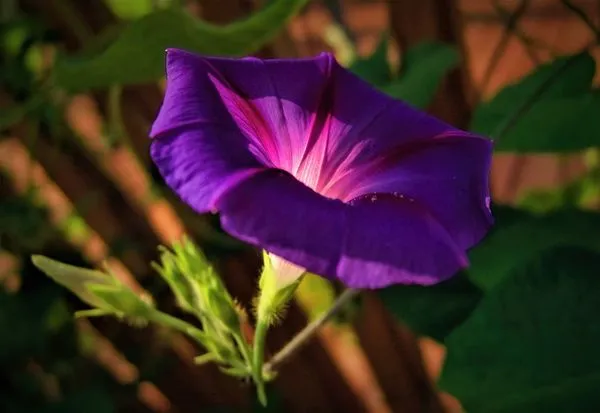
The morning glory flower is a Mexican native renowned for its funnel-shaped flowers, which only bloom for a day. These flowers reach up to a height of 6-10 feet with 2-4-inch blooms in different colors like blue, pink, purple, and magenta. These summer flowers bloom from June to October and are a magnet for pollinating insects.
They are associated with the idea of love and new beginnings and are not popularly used as a cut flower because the blooms only last for a day.
9. Pineapple Sage
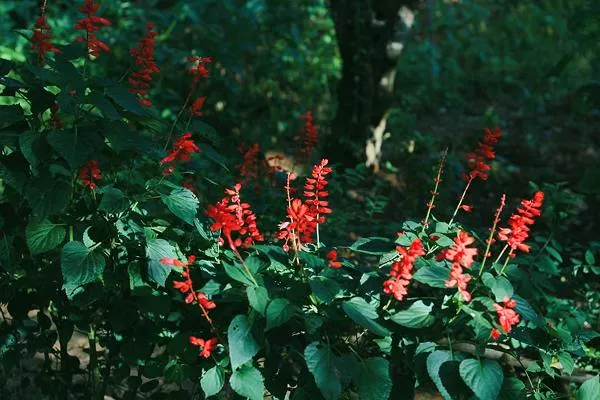
Pineapple sage is a popular culinary herb native to Mexico. These blooms feature 1-3-inch tubular red flowers with green leaves that smell like a pineapple when crushed. They bloom around August until November. The average height of these Mexican flowers is 3-5 feet. They are known to be pollinator-friendly and grown for outdoor landscape gardening. The pineapple sage is a symbol of communication and connection.
They are also known as Salvia elegans and can last up to 5 days in a flower vase. As per NCBI, these flowers have antidepressant, antihypertensive, antihyperglycemic, and antidyslipidemic effects, which means they have the ability to manage blood sugar and stress levels.
10. Mexican Bird of Paradise
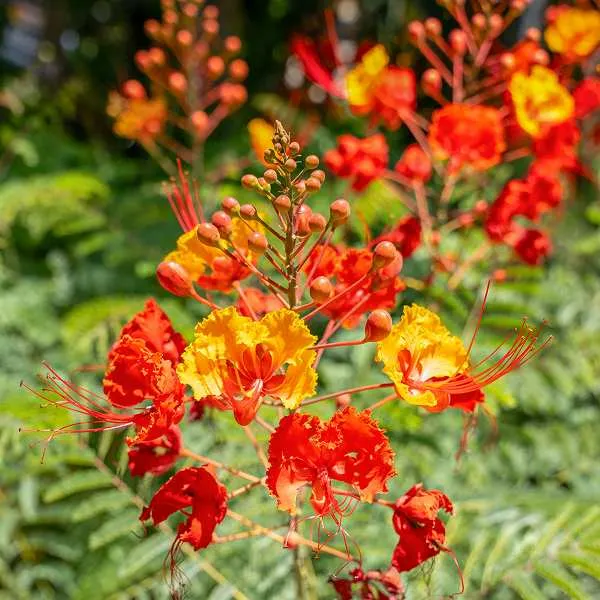
The Mexican bird of paradise, unlike the true variety, features clusters of yellow flowers which bloom from March to November. These indigenous flowers of Mexico grow up to 8-15 feet high and feature 3-6 inches large flowers. They are mostly pollinated by bees and butterflies and have a sweet scent.
The vase life of these blooms is up to 2 weeks, which makes them extremely favourable for occasions. Additionally, they are popularly used as a symbolic flower for 9th wedding anniversaries and are associated with the idea of freedom and joy.
What Are Mexican Flowers? Definition, Types & Meaning
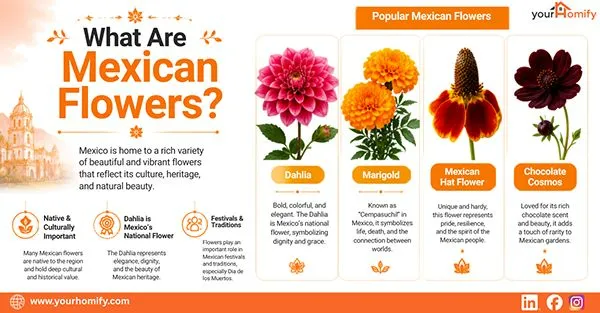
Flowers native to Mexico along with blooms with cultural importance regardless of their native region are known as Mexican flowers. Some flowers like Sword lily are not indigenous to the region but are used popularly in the ‘Day of Dead’ and are hence classified as Mexican flowers.
Mexico is the land of flowers with different blooms carrying different historical significance. The dahlia is the national flower of Mexico and was first grown by the Aztecs. Mexico is known to celebrate various flower festivals like Flower Camino de las Flores and the FYJA Flower and Garden Festival, which have native blooms as the center of their decor and celebrations. Mexican people often use Mexican paper flowers as an alternative to real blooms during the off-season, which is a great way to promote creativity on a budget.
Some popular Mexican flowers are Dahlias, marigolds, Mexican hat flowers, chocolate cosmos, and many more, which have been discussed in detail in the following section.
Historical and Cultural Significance of Mexican Flowers
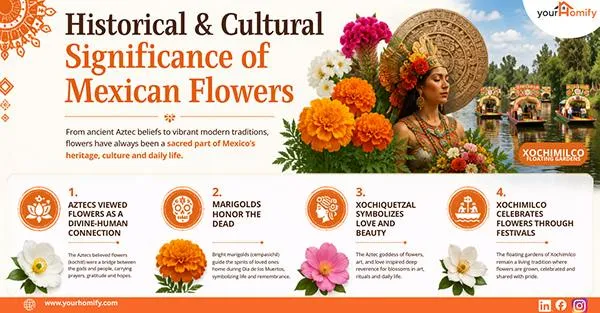
The flower tradition in Mexico dates back centuries to the Aztec era. They believed that blooms are a connection between the divine and human. This translates very well to modern-day rituals like Day of the Dead, which uses marigolds as a focal flower to honor the dead. The flower is referred to as xochitl in Nahuatl (the language of the Aztecs) and is associated with Xochiquetzal, the goddess of love.
Xochimilco, a city in Mexico that is also listed as a UNESCO World Heritage Site, is named so due to its floating gardens. This city also holds a flower festival called Festival de la Flor Más Bella del Ejido to honor the natural roots of the place with the use of dahlias and other Mexican natives. The extensive use of flowers in various festivities and rituals explains the significance of blooms in Mexico for centuries.
How to Care for Mexican Flowers: Growing, Watering & Maintenance Tips
Mexican flowers require direct sunlight for 6-8 hours and medium watering once a week with well-draining soil mixed with organic compost and balanced slow-release fertilizer once a month.
Take a look at the basic care guide for Mexican flowers:
1. Sunlight
Most of the Mexican flowers thrive in bright, direct sunlight for 6 to 8 hours. While they do not prefer dappled shade, some varieties can benefit from afternoon shade, like Mexican honeysuckle. If planting indoors, place them near a south-facing window for the best sunlight exposure.
2. Water
Mexican flowers have medium to high watering needs. They prefer deep watering once a week, quantity varying as per the type of flower. Water until it is drained well and wait until the top inch of the soil feels dry. Avoid overwatering, as it can lead to root rot.
Tips for you
To avoid waterlogging, make sure you use a pot with drainage holes. I prefer a terracotta pot. In case your container does not have drainage holes, you can drill one at the end of the planter yourself.
3. Soil
The best soil for Mexican flowers is a well-draining soil. Avoid using heavy clay soil, as it can lead to waterlogging and eventually damage the roots. Add some organic compost to the soil for added nutrients and better aeration.
4. Fertilizer
Most of the Mexican flowers are not heavy feeders but benefit from some moderate feeding during the growing season. An ideal fertilizer for these flowers is an all-purpose, slow-release plant food with an NPK ratio of 10:10:10 during the growing season works best for these blooms. Make sure you do not go overboard with feeding, as it can lead to root burn.
Tips for you
Avoid fertilizing in fall, as most of the plants go dormant during this time. Due to this, all of the plant’s energy is diverted for survival; therefore, feeding might stress the plant.
Conclusion
Conclusively, Mexican flowers have a deep historical significance in Mexico. Associated with the goddess of love, many Mexican native flowers are a center of flower festivals and traditional festivities. Dahlia is the national flower of the country and tied to its national identity, while Marigold is associated with one of the most significant festivals: Day of the Dead.
Every flower in Mexico is tied to a unique symbolism, which is both a part of cut flower decor and landscaping uses.
FAQs
What is the traditional Mexican flower?
Dahlia and marigold are the most traditional Mexican flowers. Marigolds have been associated with the ‘Day of the Dead’ as a symbol of life and death. Dahlias, on the other hand, are the national flower, symbolizing the rich cultural history of the country.
What flower is popular in Mexico?
Flowers like dahlias, marigolds, poinsettias, Mexican hat flowers, honeysuckle, sword lily, Mexican morning glory, pineapple sage, Mexican birds of paradise, and chocolate cosmos are popular flowers in Mexico.
What do Mexican flowers symbolize?
Mexican flower symbolism is associated with the ideas of natural beauty, historical legacy, and inner strength. Different flowers have varied symbolism; marigolds are linked to life and death, while dahlias are a symbol of culture.
What is the official Mexican flower?
Dahlias are the official flower of Mexico and were designated as the national flower in 1963. These flowers are tied to the rich botanical history of the place and are linked to the idea of beauty, strength, and culture.
What is Mexico’s signature flower?
Dahlias are the signature flower of Mexico, along with marigold and poinsettias, which are used in traditional festivities like the ‘Day of the Dead’ and are a symbol of cultural heritage of the country.
When to Plant Dahlias: Best Time & Planting Guide
[…] Mexican flowers also face the issue of limited bloom growth and excessive foliage due to high nitrogen content in […]
Cat Safe Flowers: 18 Non-Toxic Flowers for Cats
[…] is a Mexican flower, also called the sword lily. This plant is very toxic for cats and dogs. Eating or ingesting the […]