The O-some flowers are calling your attention today with their visually pleasing, vibrant colours and exotic shapes. When I was starting my research, I thought the flowers that start with O were few and far between, but to my astonishment, the list is almost endless, with Oleander, Orange Blossom, and thousands of Orchids.
Although these blooms are not as popular as roses and sunflowers, they are undeniably capable of serving as the showstopping addition to your garden and floral arrangements. Without any further ado, let’s quickly take a look at which O letter flowers I have discovered so far!
Comprehensive List of 35 Alluring Flowers that Start with O
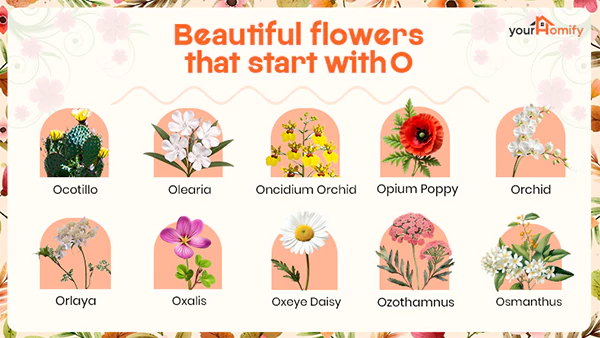
Unlock the beauty of the flower world with these ‘O’ blooms! Here is the complete list of O letter flowers that can enhance the beauty of your gardens:
| Obedient Plant | Okra Flower | Old Man’s Beard | Oleander | Opopanax (Sweet Myrrh) | Opuntia (Prickly Pear Cactus) | Orange Blossom | Olearia (Daisy Bush) | Orchid Cactus | Oregano | Oregon Grape (Mahonia) | Ornamental Onion |
| Osbeckia | Osmanthus (Sweet Olive) | Osteospermum (African Daisy) | Obregonia (Artichoke Cactus) | Oenothera (Evening Primrose) | Orchid (Moth) | Omphalodes | Onopordum acanthium (Scotch Thistle) | Ophiopogon planiscapus ‘Nigrescens’ (Black Mondo Grass) | Oriental Poppy (Papaver orientale) | Orthinogalum (Star of Bethlehem) | Oxeye Daisy (Leucanthemum vulgare) |
| Owl’s Clover (Castilleja exserta) | Oyster Plant (Tradescantia spathacea) | Oxytropis (Locoweed) | Oxalis (Wood sorrel) | Oxypetalum (Blue milkweed) | Orange Coneflower | Osmunda (Royal Fern) | Opium Poppy | Ornithophora radicans | Oriental Lily | Ocotillo |
Top 15 Flowers That Start With O: Showy, Velvety, and Charming Blooms
Elevate your home’s aesthetics with flowers that start with letter O, ranging from the delicate petals of the Okra flower, the dramatic, vibrant blooms of the Opuntia cactus, to the fragrant Orange blossoms. Let’s quickly cover the top 15 “O” flowers first:
- Obedient Plant
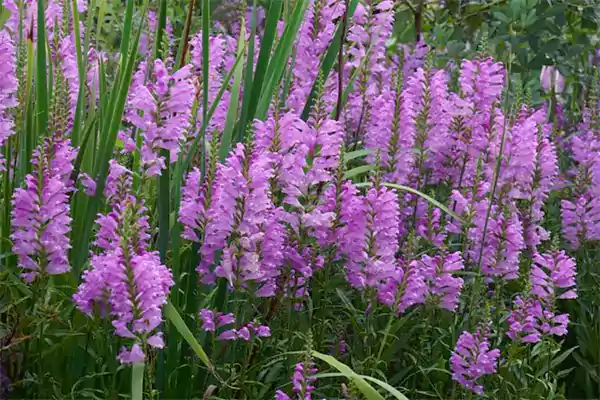
Obedient Plant is a hardy perennial wildflower that starts with O. It is well known by gardeners due to their late summer spikes of white, pink, and lilac blossoms. Part of the mint family, the rhizomatous North American perennial is a butterfly magnet that can instantly brighten up your balcony garden.
Hardiness Zone USDA zones 3-9 Botanical Name Physostegia virginiana Care Needs - Grows best in full sun to partial shade.
- Prefers well-drained, slightly acidic soil but is tolerant of clay.
- Regular watering is recommended, though it is drought-tolerant.
- Okra Flower
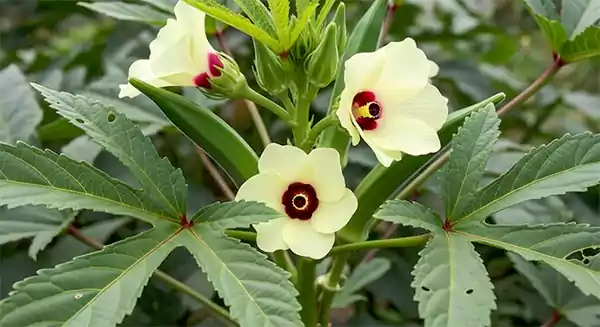
Since my childhood, I have loved Okra for its edible pods, but I did not know of its alluring flowers. Part of the Malvaceae (mallow) family, Okra features pale yellow to white hibiscus-like blooms with a red centre that appear roughly 50-60 days after planting. Traditionally, the pale yellow flowers symbolise cultural endurance and resilience in some cultures.
Hardiness Zone USDA zones 2-11 Botanical Name Abelmoschus esculentus Care Needs - The heat-loving plants need at least 6-8 hours of unobstructed sunlight.
- Prefers well-drained and fertile sandy and loam soils.
- Water consistently for the best pod production.
- Old Man’s Beard
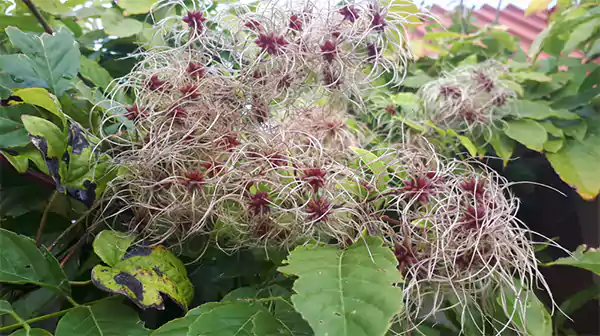
Old Man’s Beard hooked me instantly because of its fluffy seed heads that resemble grey hair. But I must say that the blooms with small creamy white flowers that turn feathery with time were no less enthralling, which makes the vine a perfect addition for hedges and woodland edges.
Hardiness Zone USDA zones 4-8 Botanical Name Clematis vitalba Care Needs - Thrives in full sun to partial shade.
- Needs well-drained soil with a neutral pH.
- Regular watering is required, especially for the young plants, to get them established.
- Oleander
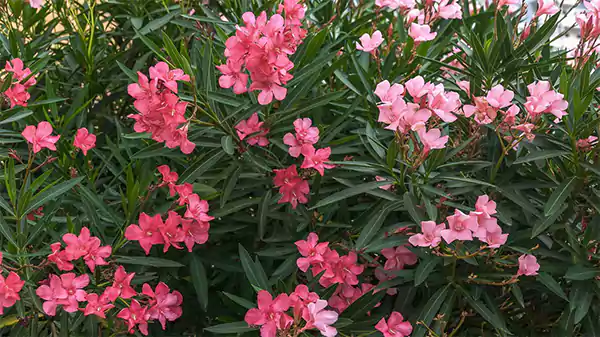
Oleander, being the evergreen Mediterranean shrub, is highly prized among gardeners for its funnel-shaped flowers that bloom in the bright colours of red, pink, purple, white, and yellow. Interestingly, the shrub symbolises dangerous beauty and caution because of its highly poisonous nature.
Hardiness Zone USDA zones 8-11 Botanical Name Nerium oleander Care Needs - Needs more than 6 hours of everyday sun exposure to provide optimal blooms.
- Tolerant of sandy, rocky, and alkaline soils if they are well drained.
- Water it regularly, especially in hot and dry weather.
- Opopanax (Sweet Myrrh)
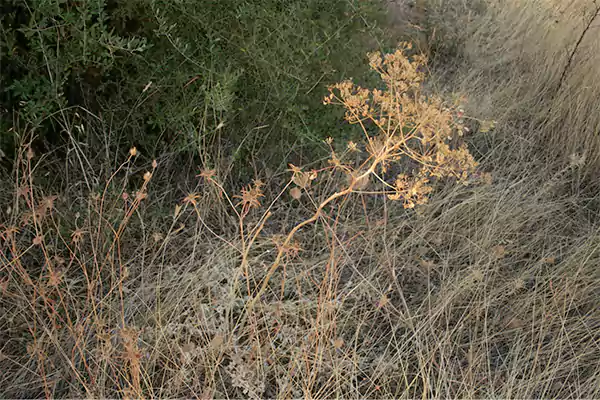
Opopanax or Sweet Myrrh is a tender woody shrub that features clusters of yellow flowers that are known for their rich honey-like fragrance. Due to the warm, woody aroma, the shrub is historically known for its medicinal benefits and use in perfumery.
Hardiness Zone USDA zones 10-11 Botanical Name Commiphora guidottii or Commiphora erythraea Care Needs - Thrives well in full sun to light shade.
- It requires well-drained soils to prevent root rot.
- It needs low water when the soil is dry.
- Opuntia (Prickly Pear Cactus)
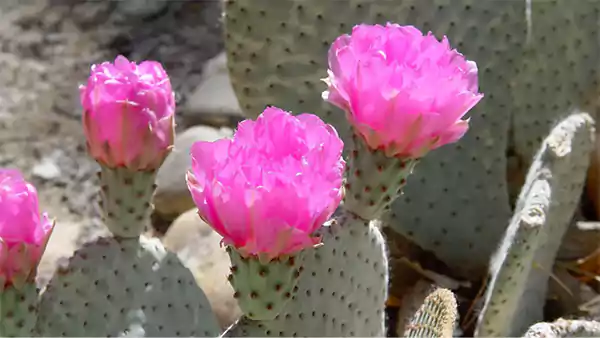
Also known as prickly pear cactus, Opuntia is one of the most popular flowers that start with O. The pollinator-friendly blooms are showy, large, and typically bowl-shaped, blossoming in shades like orange, red, and pink from late spring to early summer.
Hardiness Zone USDA zones 3-11 Botanical Name Opuntia (various species, including O. ficus-indica and O. humifusa) Care Needs - Needs at least 6-8 hours of direct sunlight.
- Grows best in fast-draining sandy, rocky, or loamy soils.
- Allow the soil to dry out between watering days to prevent root rot completely.
- Orange Blossom
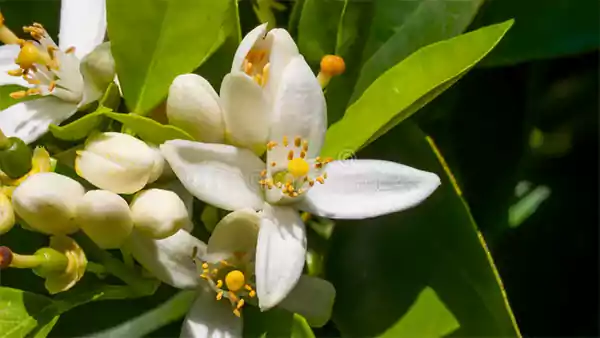
True to their name, orange blossoms are the highly fragrant, white to ivory flowers that appear on the orange tree from winter to spring. Native to Asia, the flowers are very beneficial as they are used in skincare, perfumes, and cooking. In addition to the praises, the blooms symbolise purity and are the state flower of Florida.
Hardiness Zone USDA zones 9-11 Botanical Name Citrus x sinensis Care Needs - Needs at least 8 hours of full sun to produce abundant blooms and proper growth.
- Grows best in fertile and slightly acidic soil.
- Water regularly, but avoid waterlogging to prevent root rot.
- Olearia (Daisy Bush)
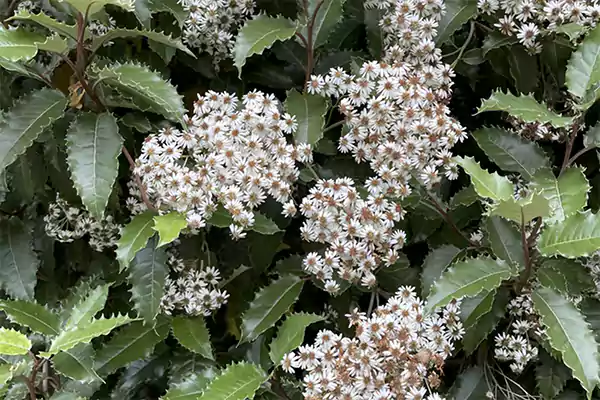
Being the genus of evergreen shrubs, Olearia produces the striking flowers that start with the letter O. Typically blooming in summer, the small daisy-like white, mauve, and pink flowers with a yellow centre capture the attention of all floraphiles.
Hardiness Zone USDA zones 8-10 Botanical Name Contains 130 species, some common ones are Olearia x haastii, Olearia macrodonta, Olearia phlogopappa, Olearia axillaris Care Needs - Requires full sun to partial shade.
- Can thrive in poor, dry, or alkaline soils only if it is well-drained.
- Requires less water once established, and overwatering is not recommended.
- Orchid Cactus
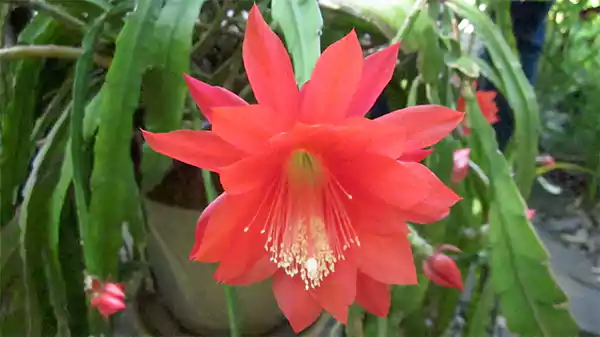
Whenever I think of a unique cactus plant, the Orchid Cactus is one of the best shade perennials that comes to mind, with large and fragrant blooms in vibrant colours like red, pink, white, and yellow. These flowers that start with the letter O are a perfect addition to hanging baskets because of their spineless, cascading stems.
Hardiness Zone USDA 10-12 Botanical Name Epiphyllum cacti Care Needs - Needs dappled sunlight or shady, bright spots.
- Grows best in well-drained, porous soil mix containing orchid bark or perlite.
- Water consistently in the growing season and keep the soil barely moist in winter and autumn.
- Oregano
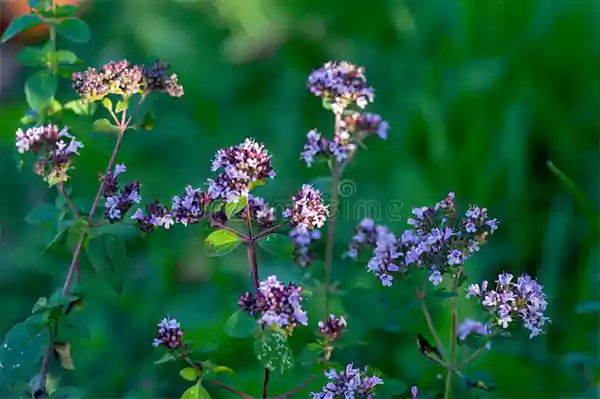
Oregano is the Mediterranean herb that produces edible and tubular blooms in distinct shades like white, pink, and purple. Sharing the plant’s signature spicy flavour, the blooms are used to garnish salads, pizzas and oils.
Traditionally, Oregano symbolises happiness, and the literal meaning of Oregano is “mountain of happiness” in Greek.
Hardiness Zone USDA zones 4-10 Botanical Name Origanum vulgare Care Needs - Prefers 6-8 hours of direct sun exposure.
- Grows optimally in well-drained sandy, loamy soils with pH levels 6 to 8.
- Water deeply when the soil gets dry, and avoid overwatering as it leads to root rot.
- Oregon Grape (Mahonia)
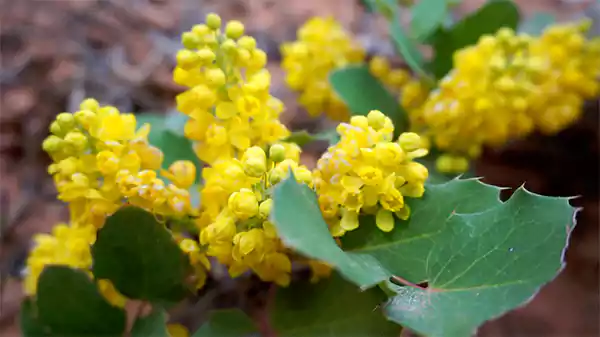
Oregon Grape is the evergreen shrub that is renowned as the state flower of Oregon, featuring bright yellow and scented blooms that appear at the tip of the branches in the late spring. The flowers are found edible with a citrus and bitter taste profile.
Hardiness Zone USDA zones 5-8 Botanical Name Mahonia aquifolium Care Needs - Prefers partial shade but is tolerant of full sun in cooler climates.
- Adaptable to soils like clay, sand and loam until they are well drained.
- Due to high drought tolerance, it has low watering needs only in the dry spells.
- Ornamental Onion
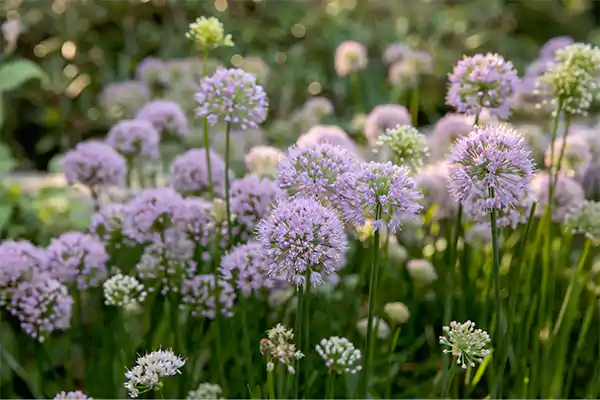
Ornamental Onion is a bulbous perennial with the deer resistant flowers that bloom in the late spring every year. Thanks to the whimsical globe-shaped heads and distinctive bright colours like purple, white and pink, I find the blooms ideal for borders, pollinator gardens and containers.
Hardiness Zone USDA zones 4-10 Botanical Name Allium spp. Care Needs - Requires full sun for abundant flowering, though partial shade is best in some varieties.
- Thrives well in sandy, loamy and moderately fertile soils.
- Water in the dry spells, as it is highly drought-tolerant.
- Osbeckia
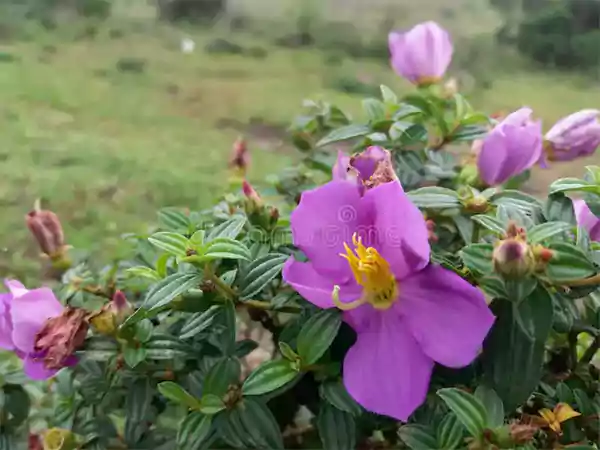
Osbeckia, part of the Melastomataceae family, is a herbaceous perennial famous for its pink, white and purple flowers that have bent stamens. The shrub is well regarded for its long blooming season, which elevates its ornamental value.
Hardiness Zone USDA zones 8-11 Botanical Name Well-known species include Osbeckia aspera, Osbeckia octandra, and Osbeckia chinensis. Care Needs - Requires full sun, which leads to maximised blooms, while afternoon shade is suggested for extremely hot climates.
- Adaptable to all soil types, including clay, loam, sand and rocky soils, as long as they are well drained.
- Water regularly in the growing season, but avoid overwatering as it is susceptible to root rot.
- Osmanthus (Sweet Olive)
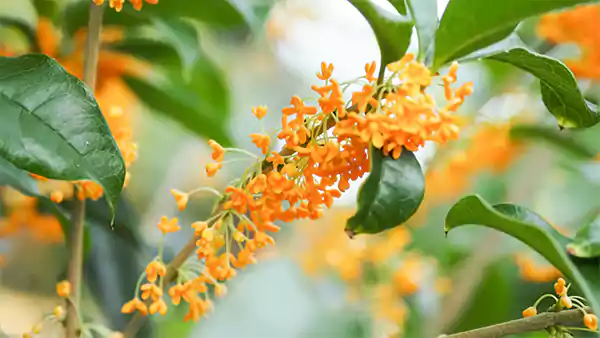
Osmanthus is a genus of evergreen shrubs that blooms in yellow, white and orange clusters in fall and spring seasons. The flowers have a fruity and complex fragrance, used extensively in perfumes, tea and desserts.
Hardiness Zone USDA zones 5-11 Botanical Name Osmanthus fragrans, Osmanthus heterophyllus and others Care Needs - Prefers 6-8 hours of direct sunlight daily.
- Grows best in well-drained, fertile neutral to acidic soils. Water deeply twice a week in new plants.
- Once established, it is highly drought-tolerant.
- Osteospermum (African Daisy)
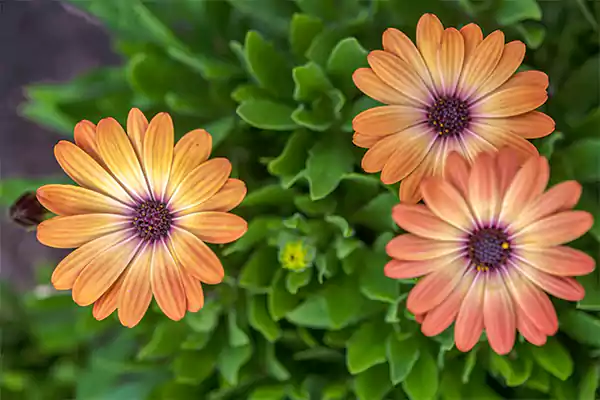
Osteospermum, native to Africa, is a sun-loving perennial that blooms with daisy-like flowers with distinctive dark centres in vibrant colours like purple, white, pink and yellow. These flowers that start with an O are versatile to fit into your container gardening, hanging baskets and mass plantings.
Hardiness Zone USDA zones 9-11 Botanical Name Osteospermum spp. (commonly O. ecklonis) Care Needs - Requires at least 6-8 hours of direct daily sunlight for optimal blooming, but afternoon shade is suggested in the extreme heat.
- Prefers well-drained, slightly acidic soils.
- Water consistently to avoid it drying out.
An Extended List of Stunning Flowers That Start With the Letter O
As we have discussed, the top 15 flowers that start with O, let’s dive further into the ‘O’ zone of the botanical world, and move on to the equally beautiful 20 flowers that start with an O, including Opium Poppy, Oxeye Daisy and Ocotillo blooms:
| SNo. | Flower Name | Image | Descriptive |
| 16. | Obregonia (Artichoke Cactus) | 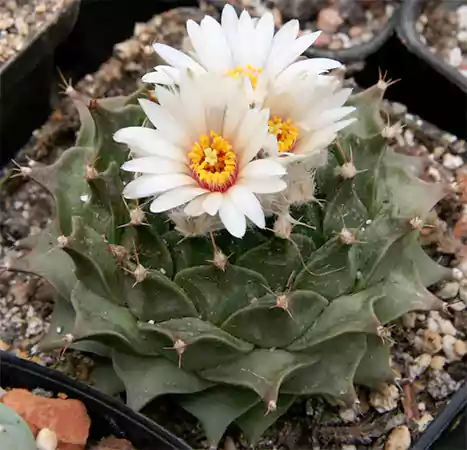 | Obregonia is a cactus that features small, funnel-shaped pinkish-white flowers emerging from the woolly centre of the plant. |
| 17. | Oenothera (Evening Primrose) | 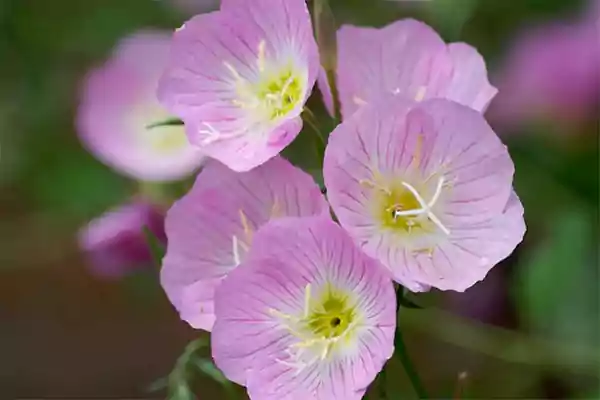 | Oenothera is a hardy perennial that is known for large, four-petaled, yellow, white and pink flowers that typically open in the evenings. |
| 18. | Orchid (Moth) | 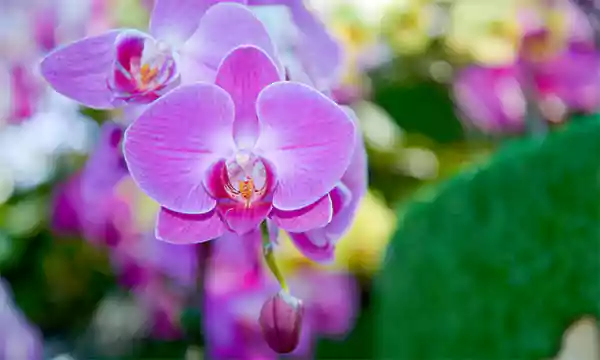 |
|
| 19. | Omphalodes | 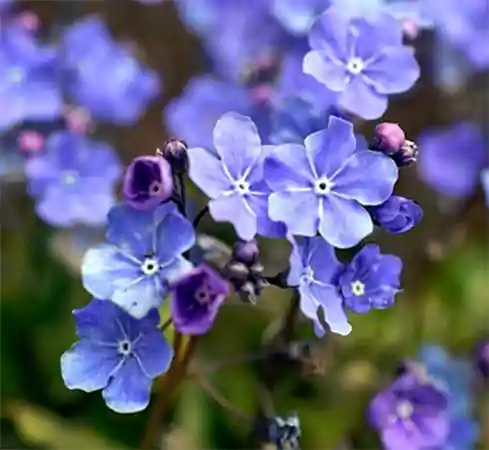 |
|
| 20. | Onopordum acanthium (Scotch Thistle) | 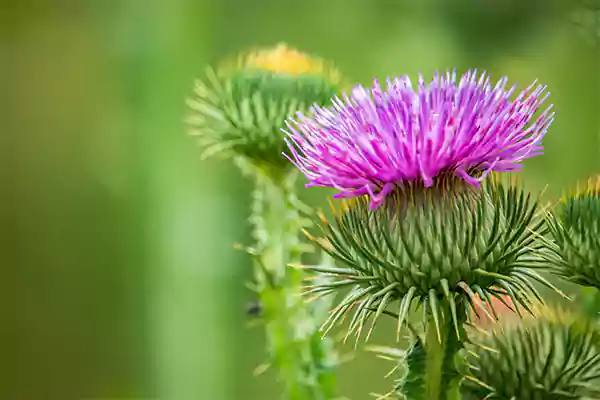 |
|
| 21. | Ophiopogon planiscapus ‘Nigrescens’ (Black Mondo Grass) | 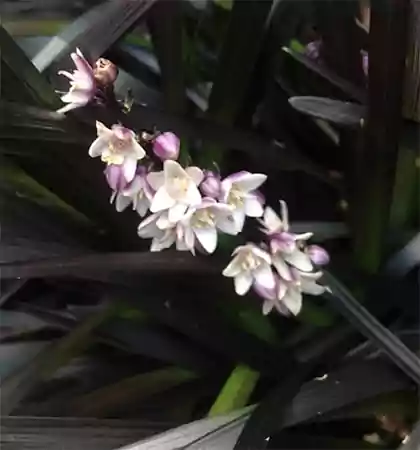 | Ophiopogon planiscapus ‘Nigrescens’ is a grass-like perennial that produces bell-shaped flowers in summer, in vibrant pale pink to lavender shades that develop into the shiny fruits by the fall season. |
| 22. | Oriental Poppy (Papaver orientale) | 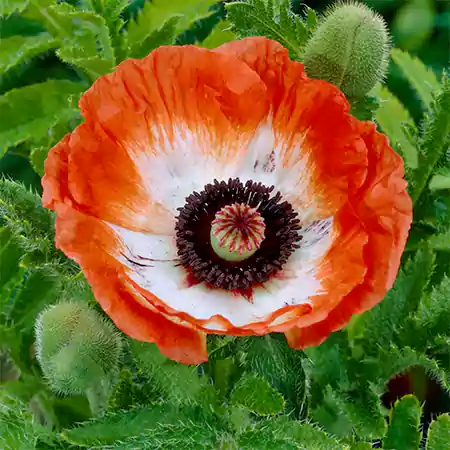 | Oriental Poppy is a long-lived perennial that is known for its large, cup-shaped flowers, which make it well-suited for cottage gardens. |
| 23. | Orthinogalum (Star of Bethlehem) | 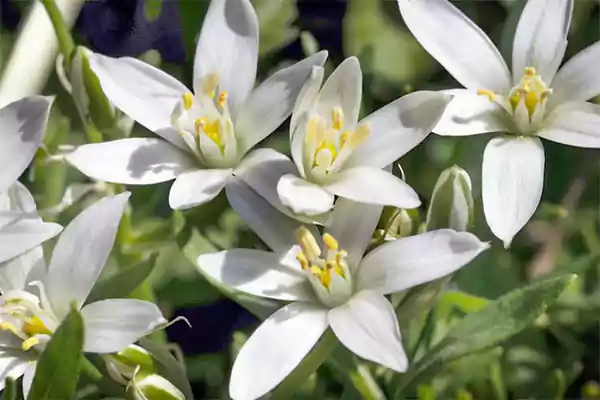 |
|
| 24. | Oxeye Daisy (Leucanthemum vulgare) | 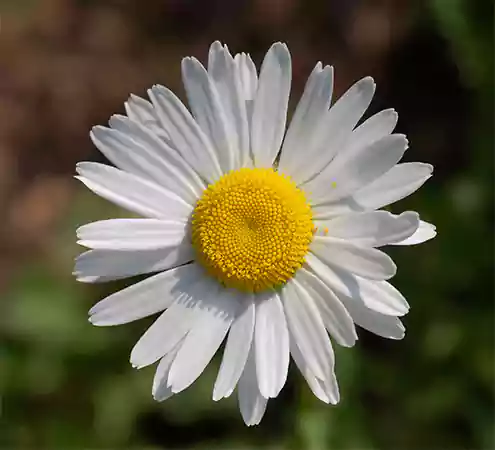 |
|
| 25. | Owl’s Clover (Castilleja exserta) | 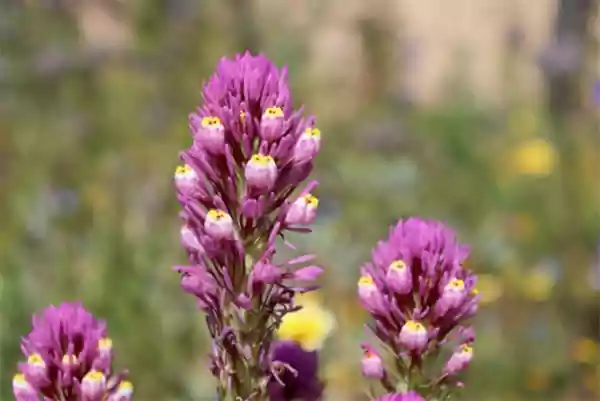 | Owl’s Clover is the native annual herb that features pollinator-friendly magenta, purple and lavender flowers in early spring that look similar to an owl’s face. |
| 26. | Oyster Plant (Tradescantia spathacea) | 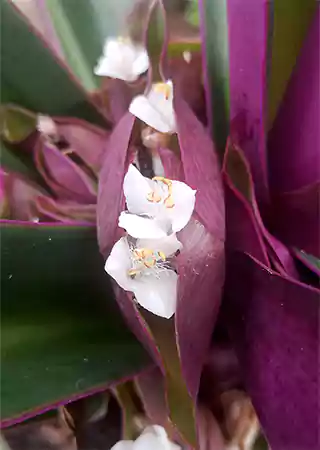 |
|
| 27. | Oxytropis (Locoweed) | 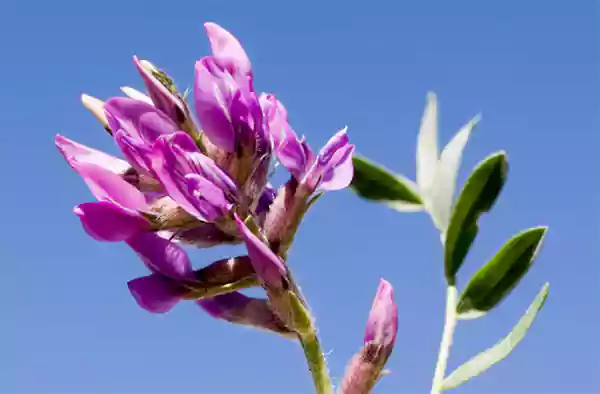 |
|
| 28. | Oxalis (Wood sorrel) | 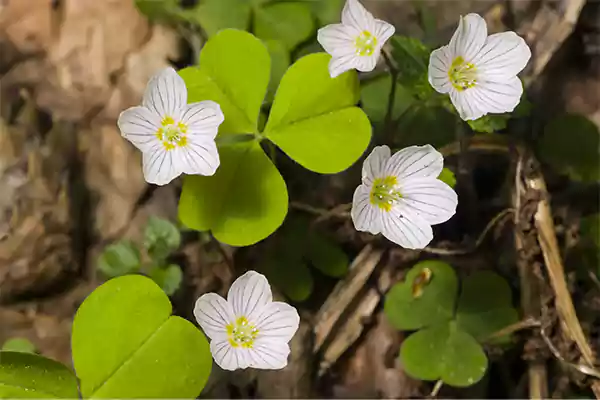 | Oxalis are widely grown by gardeners because of their clove-like leaves and bright flowers in distinct colours, including white, pink, yellow and purple that attract many pollinators to the landscape. |
| 29. | Oxypetalum (Blue milkweed) | 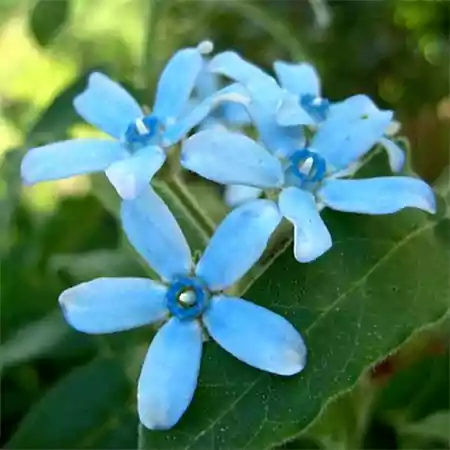 | Oxypetalum is a tender perennial vine, thriving in full sun and well-drained soil, with star-shaped blue flowers that transform to violet with time and beautiful silver-green foliage. |
| 30. | Orange Coneflower | 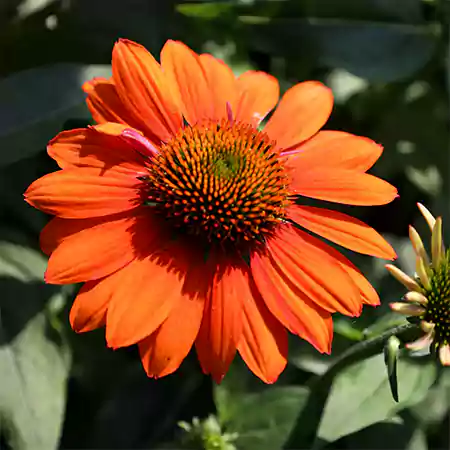 | Orange Coneflower is a clump-forming herbaceous perennial that has the potential to add a vibrant orange splash to your outdoor space with its yellow-orange daisy-like blooms. |
| 31. | Osmunda (Royal Fern) | 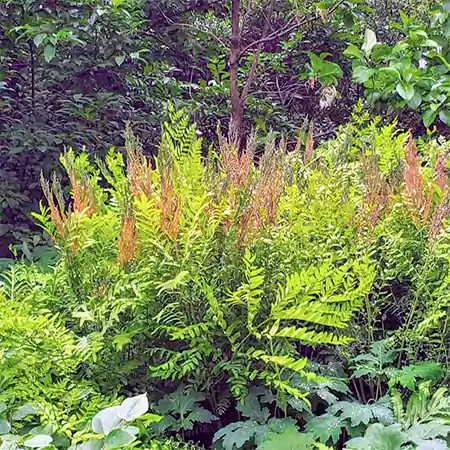 | Though not a true flowering plant, Osmunda deserves a spot on this list because of its brownish-green fertile fronds that resemble flowers, often turning into golden-brown clusters. |
| 32. | Opium Poppy | 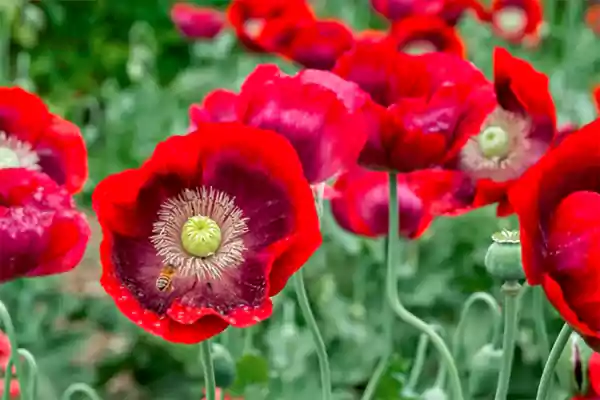 |
|
| 33. | Ornithophora radicans | 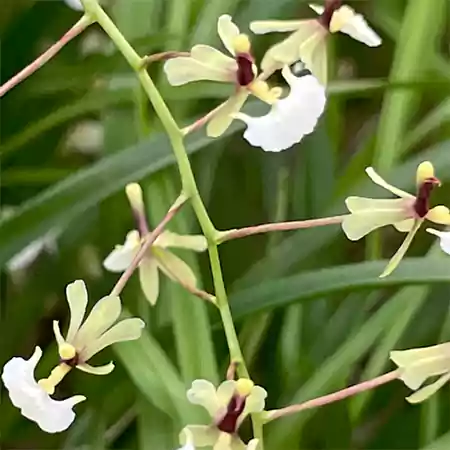 |
|
| 34. | Oriental Lily | 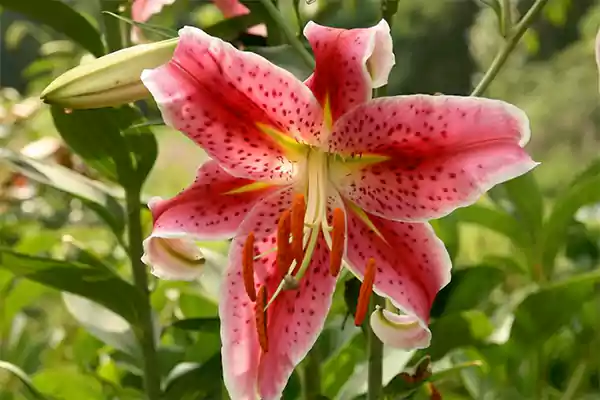 |
|
| 35. | Ocotillo | 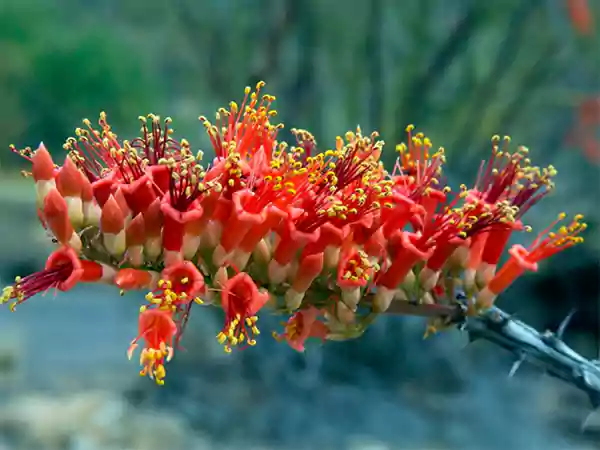 |
|
Wrapping Up
Following the journey of exploring the flowers alphabetically is fun! The flowers that start with O offer the intriguing blend of dramatic beauty and architectural structure, whether it is the “Flaming sword” like Ocotillo flowers or small and sweetly scented Ornithophora radicans.
Every flower is exceptionally elegant and possesses the unique capability to transform diverse landscapes, ranging from arid, sun-scorched environments to shady, refined gardens.
FAQs
What are some perennial flowers that start with o?
Many perennial flowers start with the letter O, including Orange Coneflower, Oxeye Daisy, Omphalodes, and Osbeckia.
What are some popular purple flower names that start with o?
If you are looking for the purple blooms that start with the letter o, then some popular ones are Osbeckia, Oxalis, Owl’s Clover, and Onopordum acanthium.
Can you name some flowers that start with o?
Yes! The names of the O flowers are endless, like Orange blossoms, Osmunda, Obedient plant, Ornamental Onion, and Olearia.
What are some fragrant flowers that start with the letter o?
Some O letter flowers that are known for their fragrance are Osmanthus, Orchid Cactus, Orange Blossom, and Opopanax.
Are there any yellow flowers that start with o?
There are many vibrant yellow O letter flowers, including Oxalis, Oxytropis, Oxeye Daisy, and Oenothera (Evening Primrose).
- Oregon Grape – National Park Services
- Plants that start with ‘O’ – Plant Delights