


Snake Plant, Marble Queen Pothos, Ponytail Palm, Mini Monstera, and Peace Lily are some of the best easy indoor plants for beginners. Most of these species require only occasional watering, indirect sunlight, and basic maintenance to remain healthy.
In this article, you will discover 5 low-maintenance indoor plants for beginners, along with some practical care tips and common mistakes to avoid.
Quick Answer
Snake Plant, Marble Queen Pothos, Ponytail Palm, Mini Monstera, and Peace Lilies are the most popular easy indoor plants. These species can be easily grown in areas with filtered sunlight. They need moderate watering and an organically rich soil mix for optimal growth. It is important to regularly monitor your indoor plants for pest and disease infestation
What Do Low Maintenance Indoor Plants Mean?
Low maintenance indoor plants are resilient houseplants that can thrive with minimal care. These are ideal for someone who is just starting their gardening journey. If you are choosing plants for your office, apartment, kitchen, or bedroom, make sure to understand their basic care needs so that they do not struggle to adapt.
Many easy indoor plants are a preferred choice for home gardeners as they are drought-tolerant and can store water in their thick leaves, stems, or underground.
The fact that almost all these hardy plants are “hard to kill” and generally have a forgiving nature makes them ideal for novice plant lovers. They do not need regular pruning, and even after slight neglect, they can easily bounce back.
5 Low Maintenance Indoor Plants for Beginners
Snake plant, marble queen pothos, ponytail palm, mini monstera, and peace lily are some popular easy indoor plants for beginners. These low-maintenance houseplants add beauty and freshness to your home space without requiring much effort.
Let’s explore them in detail in this section.
1. Snake Plant
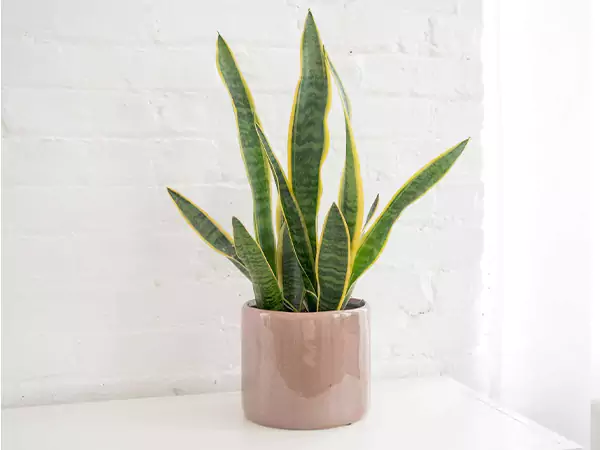
- Botanical Name: Dracaena trifasciata
- Hardiness Zone: 9-12 USDA
- Native Range: Tropical West and Central Africa
- Bloom Time: Spring to early summer
- Plant Type: Evergreen perennial succulent
The snake plant is a perfect beginner-friendly houseplant. It is also known as mother-in-law’s tongue. There are many snake plant varieties available, and all of them are appreciated for their striking upright foliage.
You can plant the species in a well-draining cactus potting mix. The plant grows best in bright, indirect sunlight with minimal watering. Water only when the top 2 inches (ca. 5 cm) of the soil feels dry.
Please note that the snake plant is toxic to humans and pets if ingested. It may cause nausea or gastrointestinal discomfort.
2. Marble Queen Pothos
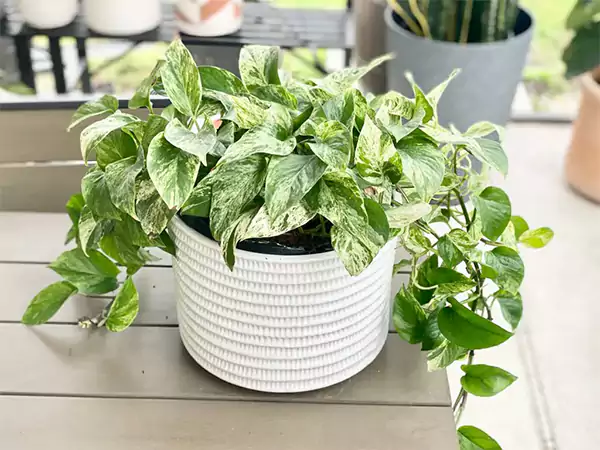
- Botanical Name: Epipremnum aureum ‘Marble Queen’
- Hardiness Zone: 10-11 USDA
- Native Range: Tropical forests of Mo’orea (French Polynesia)
- Bloom Time: Spring to Summer
- Plant Type: Broadleaf evergreen perennial vine
If you wish to add a cheerful and refreshing ambience to your balcony garden, then the Marble Queen Pothos is a perfect option. It has variegated, heart-shaped leaves. The plant is extremely adaptable. Pothos is known to symbolize financial prosperity and resilience.
Similar to other varieties, the Queen Marble prefers growing in low-light conditions, with sandy but fertile soil and consistent watering. Ensure occasional pruning of the plant to make it more visually appealing and bushy.
3. Ponytail Palm
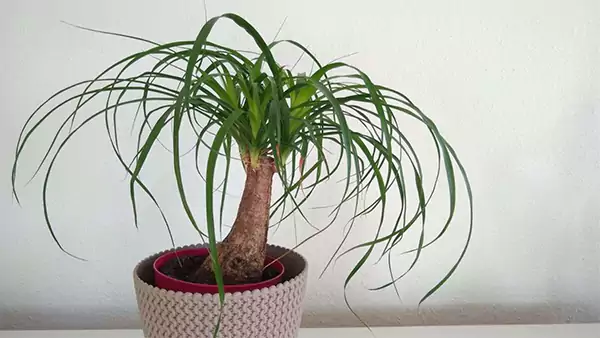
- Botanical Name: Beaucarnea recurvata
- Hardiness Zone: 10-11 USDA
- Native Range: Southeastern and Eastern Mexico
- Bloom Time: Summer
- Plant Type: Succulent shrub
Ponytail palm is not a true palm variety. The species is often grown as a low-maintenance houseplant in temperate climates. It is a slow-growing evergreen shrub and is also called Elephant’s Foot or Bottle Palm.
This easy indoor plant features a brown, bulbous, trunk-like stem with narrow and curly green leaves. When planted indoors, make sure to place the plant near a window where it can get bright, indirect sunlight. It requires moderate watering and a permeable succulent soil mix to grow properly.
4. Mini Monstera
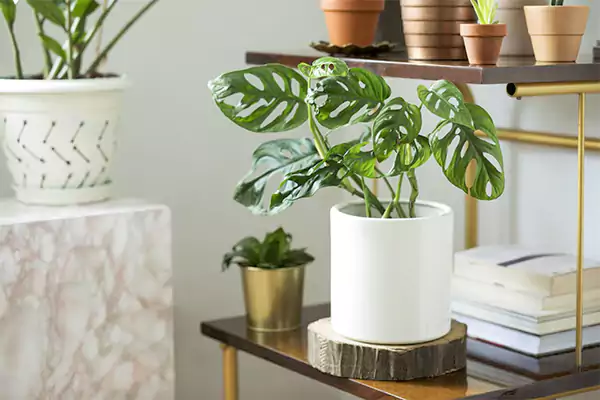
- Botanical Name: Rhaphidophora tetrasperma
- Hardiness Zone: 9-12 USDA
- Native Range: Southern Thailand and Malaysia
- Bloom Time: Spring through summer
- Plant Type: Tropical evergreen perennial
The lance-shaped leaves of the mini monstera have striking splits or gaps in them. Ideal for both beginner gardeners and seasoned enthusiasts, the plant can grow about 6-8 feet tall and has minimal care needs.
Since it is a low-light indoor plant, the genus thrives in bright, indirect sunlight, and it is best to place the pot near a north-facing window. A well-draining potting mixture works wonders for the species, with continuous watering to keep the soil moist.
5. Peace Lily
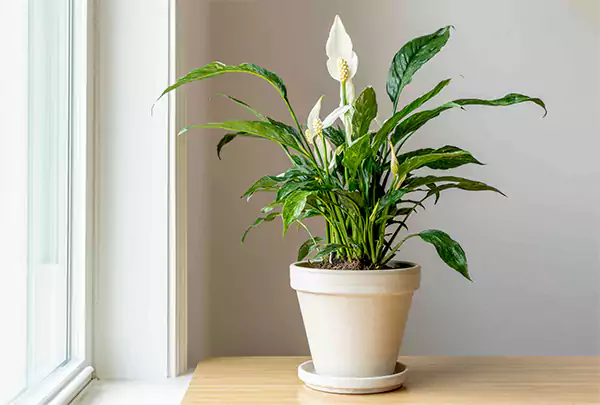
- Botanical Name: Spathiphyllum spp.
- Hardiness: USDA zones 10-12
- Native Range: Central and South America
- Bloom Time: April
- Plant Type: Evergreen, herbaceous perennial
The Peace Lily is considered one of the best low-maintenance indoor plants for beginners. It features large, oval, glossy green leaves and beautiful white blooms. The species is usually used for gifting purposes, as it symbolizes purity, harmony, innocence, and sympathy.
To keep this houseplant thriving, it is ideal to place the pot in an area where it can get bright, indirect sunlight. An organically rich potting mix and consistent watering can ensure its optimal growth rate.
How to Care for Indoor Plants?
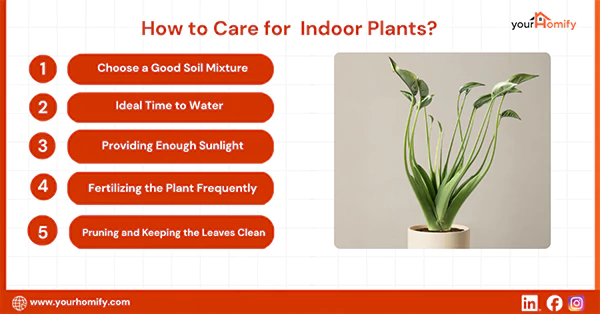
By choosing the right soil mixture, watering only when required, providing proper sunlight, and fertilizing at the appropriate time, you can ensure optimal health for your houseplants.
Although sunlight, water, and soil are the basic needs of any plant, knowing how much light to provide, when to water, and what soil type would be best is essential.
Here are some basic care tips that you can keep in mind to keep your houseplants flourishing.
- Choose a Good Soil Mixture: The houseplant needs to have a strong rooting structure; therefore, it requires an organically rich, permeable, and well-aerated soil mix. I usually prefer mixing perlite and peat moss into the mixture to make it suitable for different plant types.
- Ideal Time to Water: Most houseplants start wilting because of overwatering. It is ideal to adjust the frequency and pour only when the top 2 inches (ca. 5 cm) of the soil feel dry. Knowing the right time and accurate quantity of watering is essential for optimal growth of the plant.
- Providing Enough Sunlight: Wrong lighting is one of the major reasons your indoor plants are dying. Many houseplants grow best in shaded areas with filtered sunlight. If the leaves start turning pale brown, you have probably kept the pot under bright direct light.
- Fertilizing the Plant Frequently: The best time to fertilize your houseplant is during the active growing season, which is spring or summer. Do not dig the soil to mix plant food too frequently, as this can deprive the plants of essential nutrients.
There are different types of fertilizers available, such as granular, water-soluble, or liquid, and the right type depends on the growth habit of your plant.
- Pruning and Keeping the Leaves Clean: Proper pruning and maintaining basic cleanliness around the houseplant is essential. Make sure to remove all the dead or damaged leaves and branches of the plant so that it can focus its energy on growing.
Do not let dust accumulate on the leaf surface, as its tiny pores can get clogged, which hinders the process of photosynthesis.
It is important to regularly monitor your indoor plants for pest and disease infestation. Tiny insects like spider mites, aphids, or mealybugs can spread quickly and damage the overall plant.
Conclusion
Low-maintenance indoor plants like pothos, snake plant, peace lily, and mini monstera are ideal for beginners because they tolerate low light, infrequent watering, and filtered sunlight. These hardy plants absorb harmful air pollutants and promote a healthy and calming environment.
As a novice plant lover, you simply need to understand the basic care needs of these plants, and with regular monitoring, you can witness your houseplant flourishing.
FAQs
Can houseplants trigger allergies?
Yes, houseplants can trigger allergies through airborne pollens. Fern, weeping figs, and peace lilies are common indoor species that can cause allergies, as they produce high levels of pollen or mold spores.
Which houseplants remove the most toxins?
Snake plant, Peace lily, English ivy, Spider plant, and Chinese evergreen are some popular houseplants that help remove most toxins from indoor spaces.
What’s the most toxic plant to humans?
Rosary Pea is the most toxic plant to humans. It is native to tropical regions, and ingesting its seeds can cause severe poisoning.
What plant removes 78% of airborne mold?
English ivy, botanically called Hedera helix, removes 78% of airborne mold. It is a popular vining houseplant that acts as a natural air purifier.
What plant absorbs odors?
Many houseplants absorb odors by drawing volatile organic compounds (VOCs) and other gases through their pores and roots.
Expert Installation and Care for Garage Doors and Gates
[…] discover low-maintenance indoor plants for […]
Zygocactus Plants: Growing, Care Guide & Pest Control
[…] Zygocactus is beginner-friendly and requires only bright, indirect light, moderate watering, and a well-draining potting mix to thrive. It is a perfect low-maintenance indoor plant. […]