


Succulent arrangement ideas are creative ways to display succulent plants together in decorative containers or unique designs. They have become a favorite choice for home decor because they are beautiful, versatile, and easy to care for. These arrangements can be displayed on tables, shelves, office desks, or walls.
In this guide, you will discover creative succulent arrangement ideas, learn how to curate your own display, choose the best plants and containers, and keep them healthy for years.
Quick Answer
Popular succulent arrangement ideas include tabletop centerpieces, glass bowl arrangements, ceramic pot displays, hanging basket succulent layouts, and wall-mounted displays. These plants are low-maintenance and come in a variety of shapes, colors, and textures, which makes them an excellent choice for plant displays.
5 Best Succulent Arrangement Ideas For Every Home
Some popular succulent arrangement ideas are a glass bowl design, a ceramic pot arrangement, a wall-mounted framework, a hanging planter display, and a mini tabletop succulent arrangement. Explore these creative layouts to add greenery and personality to your home.
1. Glass Bowl Succulent Arrangement
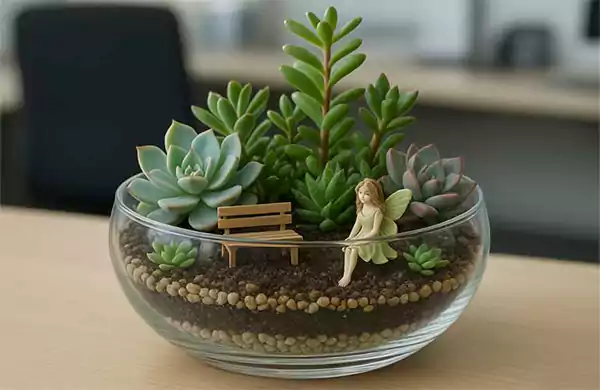
A glass bowl succulent arrangement is your personal miniature garden where shallow-rooted plants are placed inside a clear glass vessel. Because the containers do not have drainage holes, the design relies on layered materials, making it a decorative centerpiece.
Let us quickly explore how to make a glass bowl succulent arrangement on your own.
Step 1: You will need a glass bowl, potting mix, activated charcoal, succulent plants or cuttings, and small rocks or stones for layering.
Step 2: Take a glass bowl and add a layer of small stones at the bottom for drainage. I personally like adding a thin layer of activated charcoal to prevent toxins and odor from building up.
Step 3: Add your potting mix and start arranging the plants and the cuttings as per the design you finalized.
Step 4: Ensure you add rocks or other decorative material as you go instead of waiting till you finish arranging all your plants. This also helps in keeping everything together, and your glass bowl arrangement is ready.
2. Ceramic Pot Succulent Arrangement
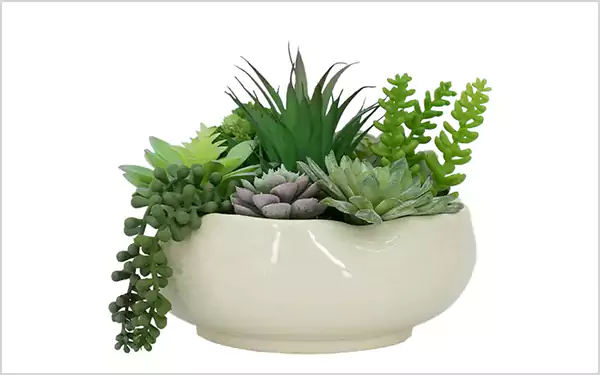
A ceramic pot succulent arrangement is a decorative design curated using living or artificial succulents planted together in a single ceramic container. The setup is extremely low-maintenance and is ideally used to enhance any indoor space such as a bedroom, bathroom, kitchen, or living area.
Some of these pots have built-in drainage holes, which makes them a versatile option. Here is how you can make this design for yourself in a few easy steps.
Step 1: Take a ceramic planter. It can be of any shape, design, or size.
Step 2: Start by adding a layer of 2 inches of gravel at the base. This is important because succulents don’t like to be watered, and this is a good way to create drainage.
Step 3: Now add a generous layer of cactus succulent compost. Make sure it is a bit gravelly or sandy, as this helps with proper drainage and prevents root rot since the plants do not like too much watering.
Step 4: Start positioning your plants as per the layout you decided. Consider trying different arrangements before firmly placing the succulents.
Step 5: Once you finalize the layout, start fixing the root ball in the succulent compost by pressing it onto it gently. It is ideal to have the petals of the plant just a little above the rim of the container.
Step 6: Consider adding a little soil around the plant placed in the middle. This ensures that all the succulents stay firm and properly rooted. I also prefer adding small stones or gravel in any empty spaces to make the arrangement look fuller.
3. Hanging Basket Succulent Arrangement
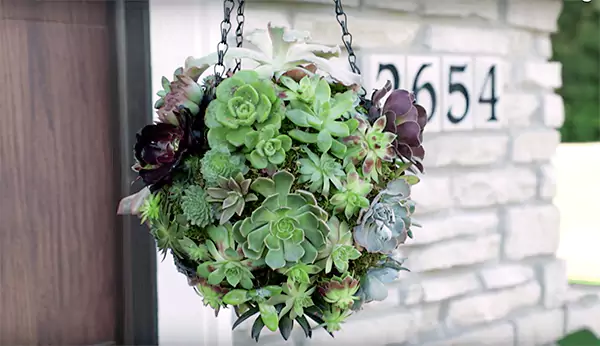
A hanging planter succulent arrangement consists of low-maintenance, drought-tolerant plants in suspended containers. These typically have a tall focal plant surrounded by many trailing filler species. This type of arrangement is ideal for compact urban homes, as they are space-saving.
Make sure that the containers you are using have excellent drainage to prevent root rot. Quickly check out the steps to curate your own hanging succulent arrangement.
Step 1: Choose an appropriate bowl or planter. Make sure that it is a wide, shallow, lightweight hanging basket with proper drainage holes.
Step 2: Add a drainage layer. Put small gravel or broken pottery pieces at the bottom of your pot to prevent root rot. Fill your basket with succulent soil mix about an inch below the rim.
Step 3: Position your succulents as per your layout. I prefer placing the tallest plant in the center or slightly off-center. Fill the remaining gaps with filler plants, and if you have trailing varieties, place them near the edge so that they can hang down.
Step 4: Secure the arrangement by adding more soil or gravel around the base of the plants and pressing down gently so that the roots are firmly placed.
Step 5: Place your container inside your macrame hanger. Secure it with a heavy ceiling hook, and your hanging succulent arrangement is ready.
4. Wall-Mounted Succulent Arrangement
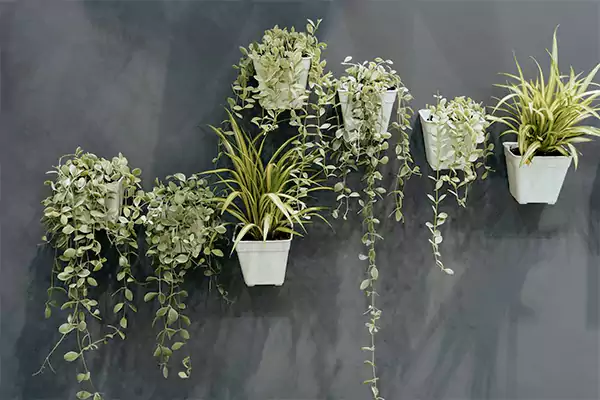
A wall-mounted succulent arrangement is a vertical display of succulents inside a frame box or a mounted planter. It is like living wall art, which is typically secured using chicken wire or mesh so that the arrangement can be hung upright without falling.
To water the plants, the frame or planter must be taken off the wall. Lay it flat, lightly water the plants, allow the excess water to drain, and hang the frame back up. Check out these steps to curate your personalized wall-mounted succulent arrangement.
Step 1: Gather all the materials. You will need a shadow box, scissors, a plastic sheet, wire mesh, a staple gun, and safety gloves.
Step 2: Line your shadow box with a plastic sheet. Make it a bit larger than the actual size of the box so that you can press it inside the frame and use it as a lining. Secure the sheet using the staple gun.
Step 3: Put on your safety gloves. Cut the wire mesh to the exact size of your frame. Lay it over the top and secure it using the staple gun every few inches, especially around the edges.
Step 4: Now, start adding your succulent soil mix and fill the shadow box with the mixture. Shake the box and level your potting mix properly.
Step 5: Next, start adding your succulents. Gently brush off any excess soil from the root ball of the plant and start tucking it in through the gaps present on the mesh wire.
Step 6: Similarly, arrange all the focal and filler plants as per the layout you have decided. You can use different colors and textures to make the floral wall art look more eye-pleasing.
Note that you cannot hang the shadow box up right away. Allow the succulents to sit and develop firm roots so that they do not fall off when hung on the wall.
5. Mini Table Top Succulent Arrangement
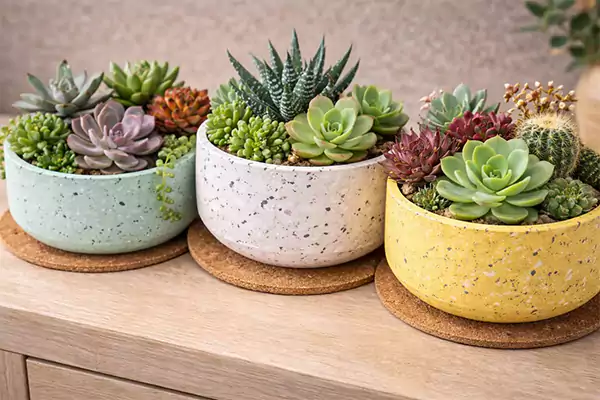
A mini tabletop succulent arrangement is a small decorative display made by adding 2-3 varieties together in a compact container. It is usually placed on flat surfaces such as tables, desks, shelves, coffee tables, or countertops. These arrangements are designed to add greenery and visual interest without taking up much space.
Here are some easy steps to make a tabletop succulent arrangement.
Step 1: Choose a suitable container. Select a shallow ceramic pot, wooden planter, concrete bowl, or decorative dish with drainage holes. It should be large enough to hold multiple succulents.
Step 2: Add succulent potting mix, leaving about 1-2 inches below the rim. Use a mix that drains quickly to prevent root rot.
Step 3: Remove each plant from its nursery pot. Gently loosen the roots if they are tightly packed and place them in the prepared soil.
Step 4: Place the tallest variety in the center or as per the layout that you have decided. Position the other medium-sized succulents or trailing species near the edges.
Step 5: Fill any gaps with additional potting mix and lightly press the soil around the roots to secure the plants. Cover the soil with decorative pebbles, gravel, or small stones to give the arrangement a nice finish.
Make sure to keep the arrangement in a spot that receives at least 4-6 hours of bright light each day. Water only when the soil is completely dry, and remove all the dead or damaged leaves to keep the layout looking fresh.
Why Choose Succulents for Home Decor?
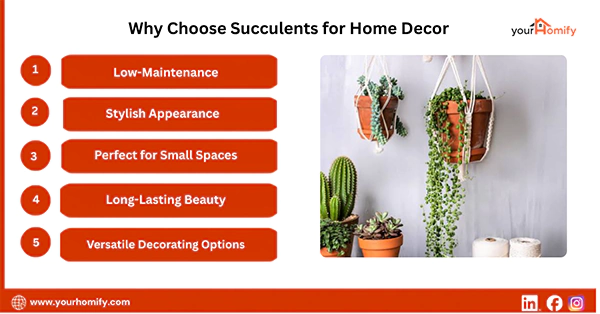
Succulents are one of the best plants for home decor because they combine beauty with practicality. They are low-maintenance, have a stylish appearance, and are long-lasting compared to other indoor plants. Here are some reasons why choosing succulents for home decor is the right decision.
- Low-Maintenance: Most succulents need infrequent watering and minimal attention, which makes them an ideal choice for people with busy lifestyles.
- Stylish Appearance: Their unique-looking leaves, geometric shapes, vibrant colors, and distinct textures create modern and eye-catching displays that instantly enhance any indoor space.
- Perfect for Small Spaces: Succulents can easily thrive in small containers, making them suitable for compact apartments, desks, shelves, or window panes.
- Long-Lasting Beauty: These types of plants do not need much sunlight. With moderate watering and the right potting mix, succulents can remain healthy and attractive for many years.
- Versatile Decorating Options: They can be arranged in ceramic pots, wooden boxes, hanging planters, wall frames, terrariums, and many other creative stands.
- Budget-Friendly: A few small succulents can be combined into one attractive arrangement without spending much money; hence, it is also a budget-friendly option to start with your gardening journey.
Common Mistakes to Avoid When Making Succulent Arrangements
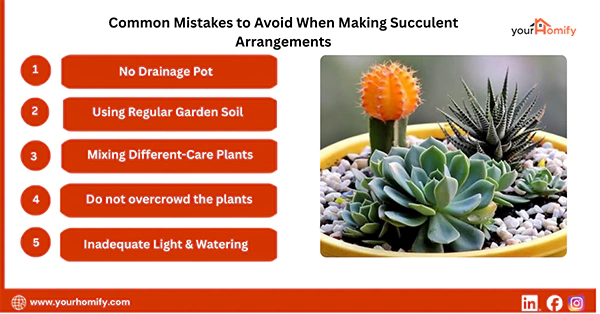
Here is a list of common mistakes to avoid when making a succulent arrangement at home.
- Choosing a pot without drainage holes. These containers tend to trap stagnant water, which can eventually lead to root rot.
- Using standard garden soil or potting mixture. It is always ideal to use a fast-draining blend specifically formulated for succulents or cacti.
- Mixing plants with different care needs. If you are grouping drought-tolerant plants with moisture-loving indoor species, your arrangement will not survive for a long period.
- Do not overcrowd the plants. Although a tightly packed layout might look artistic, it restricts proper airflow, which can cause pest and disease infestation.
- Inadequate sunlight and watering schedule can also be a problem. If your indoor arrangement is changing color or the flowers are wilting, it is likely that it is demanding more sunlight. Also, water only when the soil is completely dry.
Conclusion
Succulent arrangement ideas are a simple and stylish way to enhance any home with natural beauty. From compact desk planters to beautiful centerpieces, there is a succulent design for every room and decor theme. With proper sunlight, occasional watering, and an organic soil mix, your plants can thrive for years.
Whether you are a beginner or an experienced plant enthusiast, these arrangement ideas can make your home enjoyable and your planting journey rewarding.
FAQs
How do you arrange succulents together?
If you have a large variety, start by placing them in the center. Always add medium-sized plants around the big ones, and the trailing varieties should be placed near the edges of the container.
What succulents look good together?
It is ideal to group succulents together that have similar care needs. Echeveria, Sempervivum, and Graptopetalum can be grouped, as they all belong to the rosette succulent family. Haworthia, Gasteria, and Aloes can be clustered in one container, as they all are bright-shade lovers.
Are succulents still popular in 2026?
Yes, even in 2026, succulent arrangement ideas are very popular, as they add greenery and liveliness to any home space or outdoor corner. These plants are low-maintenance and can also be fit into compact spaces.
What not to do with succulents?
Do not overcrowd succulents in one arrangement. Make sure the container you are using has drainage holes. Do not use standard garden soil, and do not overwater the plants.
What is the average lifespan of a succulent?
The lifespan of succulents depends on their care needs and many other environmental factors. Some species live for 3 years, while others can stay alive up to 100+ years.
Outdoor Succulents for Full Sun: 10 Best Varieties
[…] this guide, we will discover the best outdoor succulents that can add structure to any landscape and the best ways to use these species, along with some […]