


Pollination is one of the most significant steps for flowers to survive, and hummingbirds are really beneficial for the overall health of the garden. When I started gardening, I made sure there were plenty of flowers that attract hummingbirds, and given that they feed on more than 2,000 flowers every day, the choice was not hard to make.
If you are also looking for flowers that attract hummingbirds and butterflies, dive into this comprehensive list, which covers 25 such blooms along with their special features and care guide.
Quick answer
The flowers that attract hummingbirds are azalea, beardtongue, bee balm, bleeding heart, cardinal flower, carminy, butterfly bush, columbine, hosta, trumpet vine, salvia, morning glory, coral bells, and many more, which are perfect for enhancing the health and aesthetics of the garden.
List of 20 Flowers That Attract Hummingbirds
Hummingbirds are attracted to tubular and colourful flowers, which also contribute to the beauty of the garden.
Take a look at these 20 flowers that attract hummingbirds and butterflies with their unique features:
1. Azalea
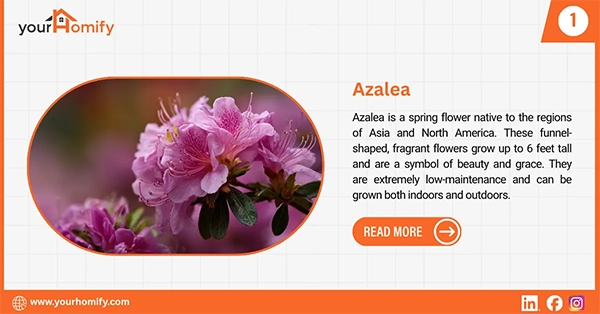
- Botanical Name: Rhododendron spp.
- Native Area: Asia and North America
- Height: 4-6 feet tall
- Bloom Season: Early spring to summer
One of the most famous garden flowers that attracts hummingbirds and butterflies, the azalea, belongs to the Ericaceae family and produces fragrant funnel-shaped pink flowers. This evergreen shrub can be grown both indoors and outdoors and is also available in the shades white, green and yellow.
Lastly, the meaning of the azalea flowers is associated with the idea of beauty and grace.
2. Beardtongue
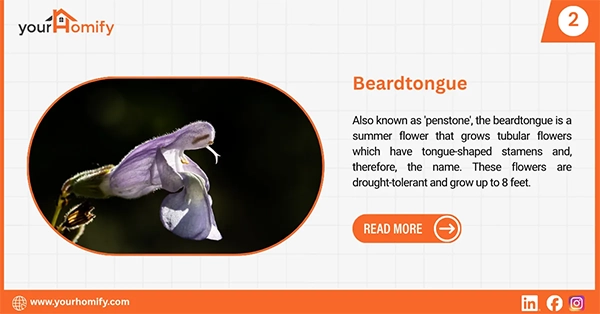
- Botanical Name: Penstemon
- Native Area: North America
- Height: Up to 8 feet
- Bloom Season: Summers
Also known as the Penstone, the beardtongue is a summer plant that grows tubular flowers with a stamen resembling a tongue, hence the name. These drought-tolerant flowers grow in the shade, white, yellow and pink, and are considered safe for pets, which makes them an ideal indoor plant option.
3. Bee Balm
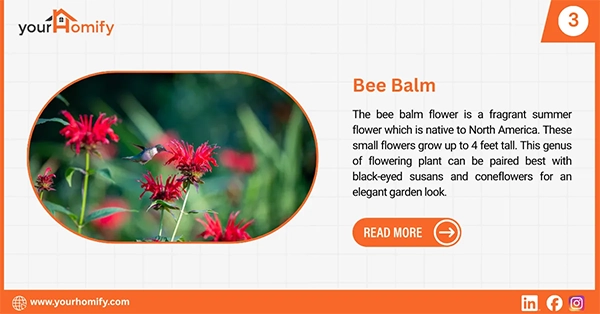
- Botanical Name: Monarda spp.
- Native Area: North America
- Height: 2-4 feet
- Bloom Season: Summer
The bee balm is a genus of flowering plants which has thin petals and a sweet fragrance. These deer-resistant flowers grow best in full sun and should be watered weekly, as they love consistent moisture.
Best paired with coneflowers or black-eyed-susans, these herbaceous perennial flowers die back in the winter and regrow in spring, making it a great long-term investment.
4. Bleeding Heart Flower
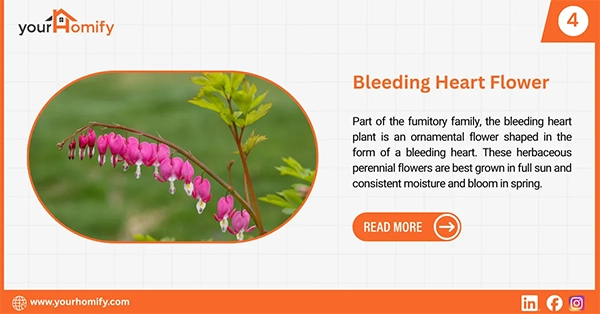
- Botanical Name: Lamprocapnos spectabilis
- Native Area: China and Korea
- Height: 3 feet tall
- Bloom Season: Spring
Part of the fumitory family, the bleeding heart plant is a popular ornamental flower which grows in the form of a climbing vine and features heart-shaped flowers, which are associated with a Japanese myth.
These herbaceous perennial flowers grow in the colours red, yellow, pink, white and also black and thrive on consistent moisture.
5. Cardinal Flower
- Botanical Name: Lobelia cardinalis
- Native Area: America
- Height: Up to 6 feet
- Bloom Season: Late spring to summer
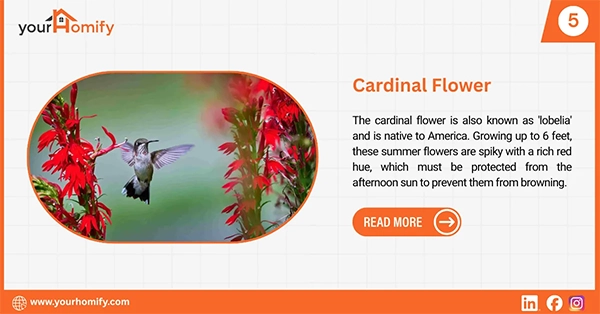
The cardinal flower is a summer flower which grows spiky scarlet flowers in deep red colour, which are ideal for attracting hummingbirds. These flowers thrive in moist soil and should be protected from the afternoon sun.
Note that these flowers are toxic to pets and should be kept out of reach from your friends and family.
6. Catmint
- Botanical Name: Nepeta cataria
- Native Area: Europe, Asia and Africa
- Height: 1-3 feet
- Bloom Season: Late spring to early summer
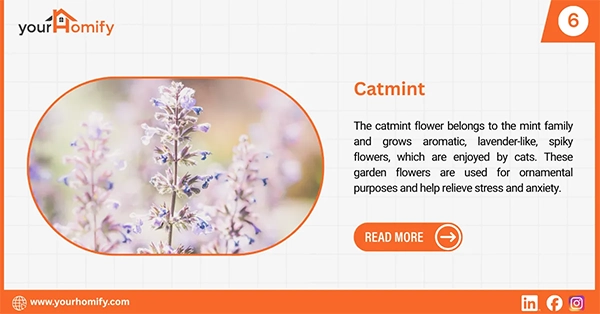
Part of the mint family, catmints are herbaceous perennial flowers that attract hummingbirds and feature lavender-like, spiky flowers in the colours purple, white, blue and pink. Ideally grown as a garden ornamental flower in garden hedges, the catmint flowers are edible and enjoyed by cats due to their fragrance.
Additionally, this fragrant flower can be used to make herbal teas and ease a stomachache and calm anxiety.
7. Butterfly Bush
- Botanical Name: Buddleja davidii
- Native Area: Western China
- Height: Up to 12 feet
- Bloom Season: Summer
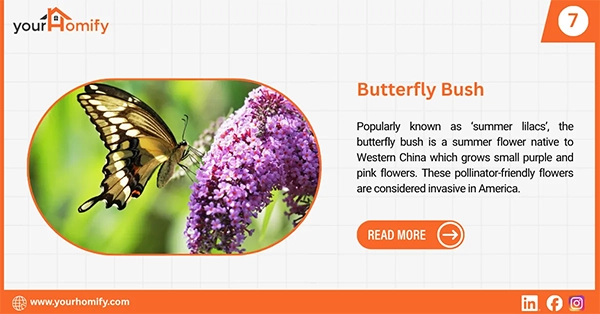
Also known as the ‘summer lilacs’, this butterfly bush is a deciduous flowering shrub that is rightly named so because of its pollinator-friendly flowers. Although the purple and pink flowers are popular in gardens, they can be invasive in America; hence, plant mindfully.
8. Columbine
- Botanical Name: Aquilegia spp.
- Native Area: North America
- Height: 1-3 feet
- Bloom Season: Spring to summer
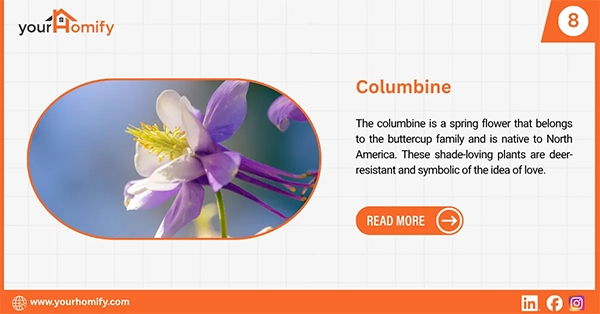
Part of the buttercup family, columbine is a wildflower that grows bell-shaped purple flowers. This shade-loving plant is not only a pollinator magnet but also resistant to deer, which makes it low-maintenance and easy to plant outdoors.
The Greeks and Romans associated the meaning of the columbine with the goddess of love, Aphrodite, which makes it symbolic of love.
9. Hosta
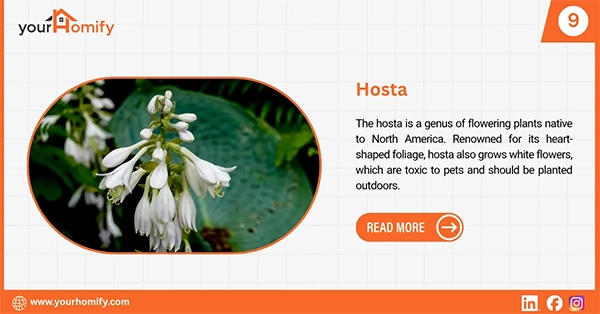
- Botanical Name: Hosta
- Native Area: Northeast Asia
- Height: Up to 4 feet
- Bloom Season: Summer
Hosta is a genus of flowering plant that belongs to the Asparagaceae family. This plant is famous more for its heart-shaped leaves than for its white flowers, and rightly so, as the large foliage looks elegant.
I mostly grow these flowers outdoors and in shade, as direct sunlight can scorch the leaves.
According to the ASPCA, hosta is toxic to pets and should be kept out of reach from them.
10. Trumpet Vine
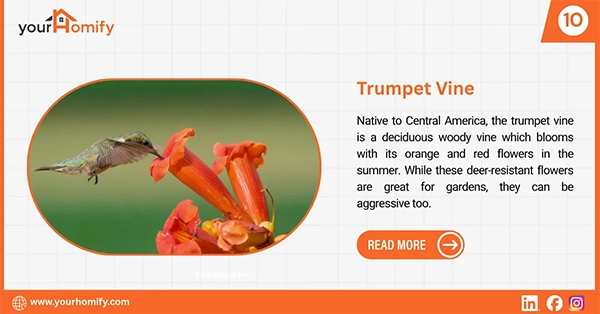
- Botanical Name: Campsis radicans
- Native Area: Central America
- Height: Up to 40 feet
- Bloom Season: Summer
The trumpet vine is a deciduous woody vine that grows trumpet-shaped flowers. Grown mostly for its ornamental value, this climbing vine features orange and red flowers, which are drought-tolerant.
While planting, make sure they receive direct sunlight for 6+ hours and are spaced properly, as they have an aggressive growth habit and can hamper the growth of adjacent flowers.
11. Salvia
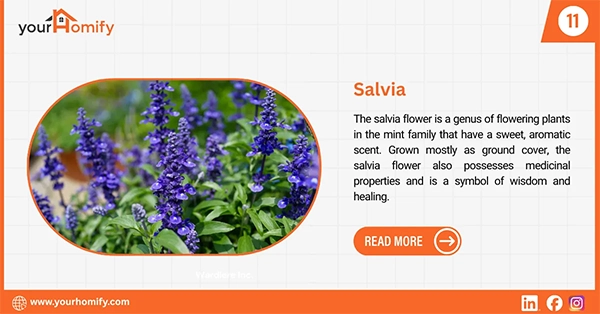
- Botanical Name: Salvia spp.
- Native Area: Central America
- Height: 2-3 feet
- Bloom Season: Late spring to summer
Salvia is a genus of flowering evergreen shrubs that are used both as shrubs and as ground cover. Deriving from the name, which means ‘to heal’, the flower has medicinal properties, as it is used to treat inflammation.
With its flowers shaped like lavender, the salvia flower has an aromatic scent and is a symbol of wisdom, healing and protection.
12. Morning Glory
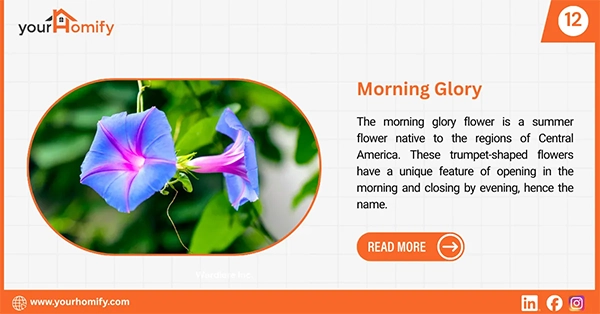
- Botanical Name: Ipomoea purpurea
- Native Area: Central America
- Height: Up to 15 feet
- Bloom Season: Summer
Popularly known as the September birth flower along with the aster, the morning glory is a bloom that opens up in the morning and closes by night. Along with the trumpet-shaped flowers, this annual flower also has heart-shaped leaves, which perfectly complement the blooms.
Additionally, there is a morning glory pool in the United States that is named after this flower due to its stark resemblance.
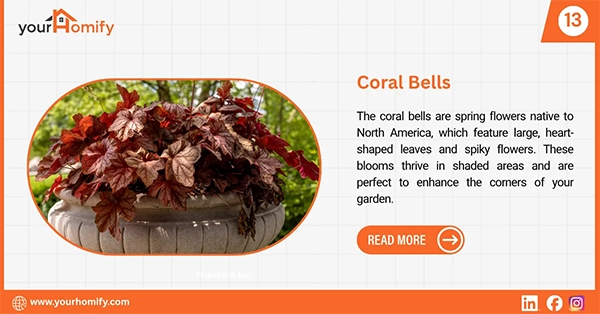
13. Coral Bells
- Botanical Name: Heuchera spp.
- Native Area: North America
- Height: Up to 2 feet tall
- Bloom Season: Spring
The coral bell is an evergreen shade plant that is grown in partial to full shade and can be perfect to light up the bleak corners of your garden. These large, star-shaped leaves and flower spikes are seen in garden borders, with the purple variegated ones shining the brightest.
Lastly, these evergreen flowers grow in full sun and in soil rich in organic matter.
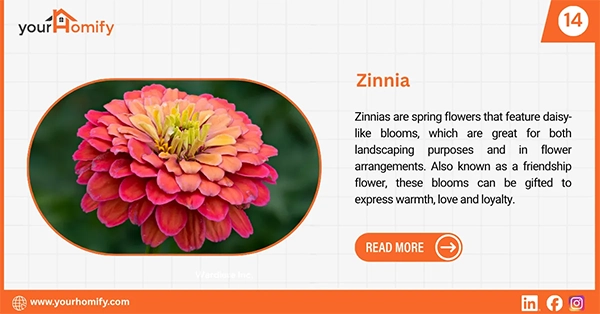
14. Zinnia
- Botanical Name: Zinnia elegans
- Native Area: Central America
- Height: 1-3 feet
- Bloom Season: Spring
Featuring small daisy-like flowers, the zinnia is one of the most popular garden flowers, which are also used as cut blooms around the world.
While these warm-season annuals are easy to grow, as they are drought-tolerant once established, zinnias are also great in flower arrangements.
Also known as friendship flowers, these spring flowers last up to 7 days in a vase and are also cat-safe, in case you have a pet at home.
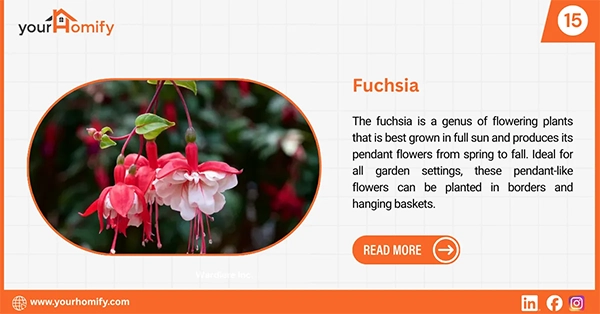
15. Fuchsia
- Botanical Name: Fuschia spp.
- Native Area: Central and South America
- Height: 1 to 5 feet
- Bloom Season: Spring to fall
Fuchsia is a genus of flowering plants that are popular for their pendant-like flowers, which have a trailing growing habit. I mostly grow these flowers in a mixed border pattern, but they fit in any garden design.
These elegant flowers add an exotic touch to the garden and thrive in full sun, and can be planted in a hanging basket too.
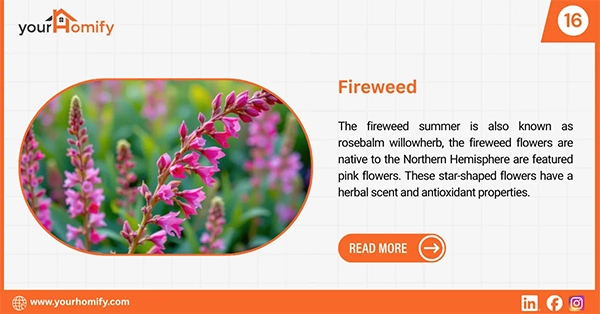
16. Fireweed
- Botanical Name: Chamerion angustifolium
- Native Area: Northern Hemisphere
- Height: 2-5 feet
- Bloom Season: Summer to early fall
Also known as the rose-balm willowherb, the fireweed flower features pink flowers, which are popular in wedding bouquets. With star-shaped flowers with a herbal scent, these blooms are a gardener’s delight.
Additionally, the fireweed grows best in full sun and moist soil and has antioxidant properties.
17. Foxglove
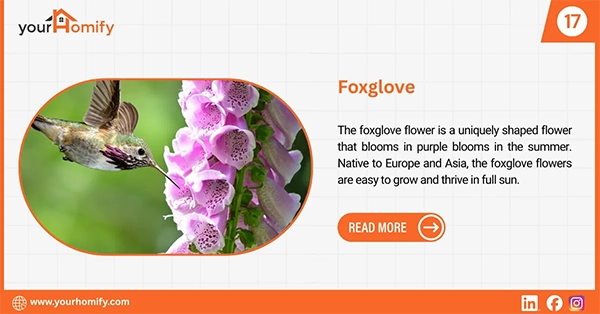
- Botanical Name: Digitalis purpurea
- Native Area: Europe and Western Asia
- Height: 3-4 feet
- Bloom Season: Summer
Renowned for their unique finger-like shape, the foxglove flowers feature trumpet-shaped blooms, which are grown for their ornamental value. Not only do they look elegant, but they are also easy to grow in home gardens.
In the Celtic traditions, the foxglove flowers are symbolic of guiding the spirits in the afterlife.
18. Lantana
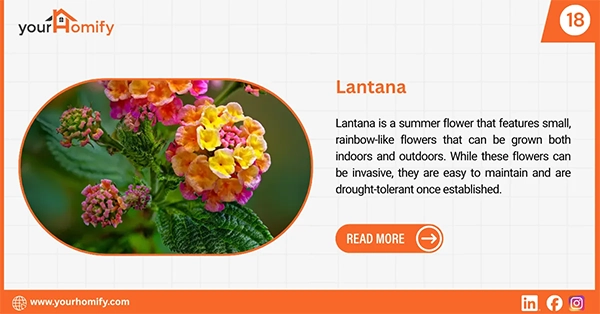
- Botanical Name: Lantana camara
- Native Area: America and Africa
- Height: 3-4 feet
- Bloom Season: Summer to fall
Lantana is one of my favourite garden flowers because of its small, rainbow-like flowers. They are extremely low-maintenance and also have a sweet scent, which makes them an ideal garden choice.
Although these tubular flowers attract hummingbirds, they can also be invasive.
19. Lupine
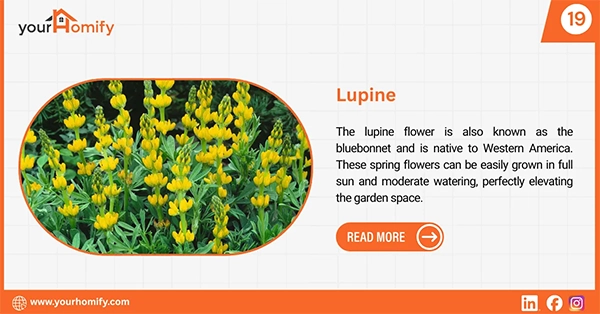
- Botanical Name: Lupinus spp.
- Native Area: Western America
- Height: 1-5 feet tall
- Bloom Season: Late spring
Popularly known as the bluebonnet, lupine is a tall wildflower that grows in the colours yellow, pink, purple, red and blue. These tall, spiky flowers are great for adding height and colour to the garden.
Ideally grown in full sun, they can tolerate a bit of afternoon shade too, but not overly moist. Therefore, make sure the plant is watered moderately and grown in soil rich in organic matter.
20. Petunia
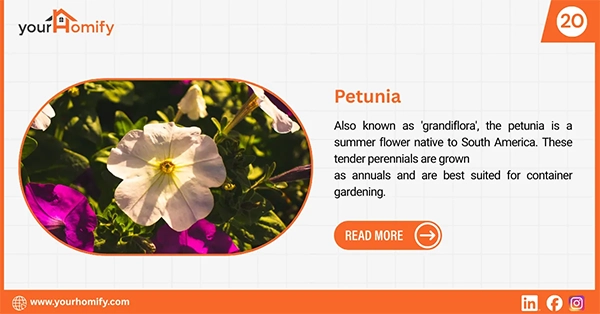
- Botanical Name: Petunia x hybrida
- Native Area: South America
- Height: 1-2 feet
- Bloom Season: Summer
Part of the nightshade family, the petunia is a tender perennial that is grown mainly as an annual. Often referred to as ‘grandiflora’, petunias are best grown in full sun, either as container plants or garden borders. The symbolic meaning of these summer blooms is associated with the idea of anger and resentment.
Concluding Remarks
There is a lot of effort that goes into creating a colourful and healthy garden. While one method cannot solely transform your ecosystem, planting flowers that attract hummingbirds can do wonders.
Since pollination is extremely significant, it must not be ignored. These flowers are not only beneficial for your garden but can also make the space look much more vibrant than before.
Happy Gardening!
FAQs
What are the flowers that attract hummingbirds?
Some flowers that attract hummingbirds are foxglove, lupine, petunia, fireweed and azalea.
Is a bleeding-heart plant a climbing vine?
Yes, the bleeding heart plant is a climbing vine that attracts hummingbirds.
Why are flowers that attract hummingbirds beneficial?
The flowers that attract hummingbirds make pollination easier, which benefits the flowers in producing more species.
Does the foxglove flower attract hummingbirds?
Yes, the foxglove flower attracts hummingbirds.
What are the pet-safe flowers that attract hummingbirds?
Fuchsia and zinnia are flowers that attract hummingbirds and butterflies.
1. Plants for Hummingbirds: The Pennsylvania state university
2. Attracting Hummingbirds to your garden: US Forest Service
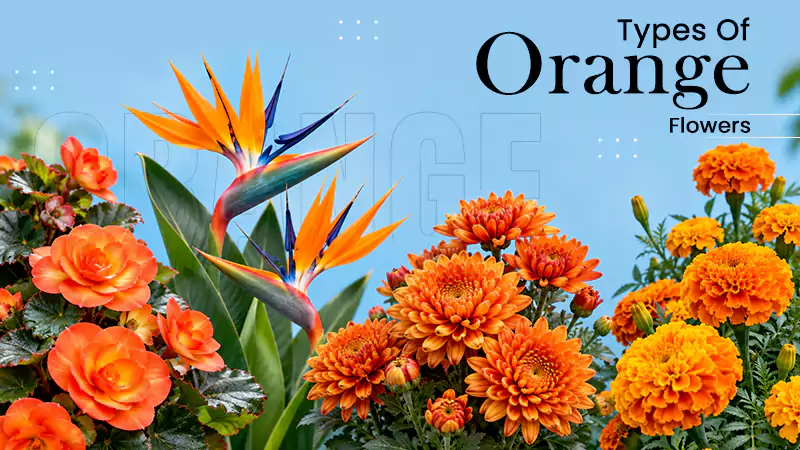

41 Types of Orange Flowers: Names, Meanings & Pictures
[…] They usually bloom in fall and summer and have 5 to 7 days of vase life and have no fragrance; other species of begonia may have fragrance. This flower is moderately pollinator-friendly and usually attracts bees, butterflies, and hummingbirds. […]