


Flowers, once cut, don’t last past a few days. Capturing this fleeting beauty calls for mastering the delicate art of drying flora. This process requires precise timing, specialized handling, and a clear understanding of floral biology. To preserve a wedding bouquet, for example, simpler techniques such as air-drying, freeze-drying, or pressing the flowers inside a book could be used. More complex methods include silica gel desiccant drying, using wax, or resin casting to ensure your arrangement lasts for decades.
This article explains how to preserve flowers using 6 different methods to achieve the best results. It also explains how to make them last longer, which flowers are most suitable for preservation, and common mistakes you should avoid, along with various ways to use them.
Quick Answer
Flowers are preserved in various ways, such as air-drying, pressing them inside a heavy book, using silica gel crystals to cure them, casting them in epoxy resin, or locking them in paraffin or soy wax. A more temporary method involves storing the flowers overnight in a refrigerator, then putting them in a vase filled with water at room temperature.
How to Dry and Preserve Flowers? 6 Best Methods for Preservation
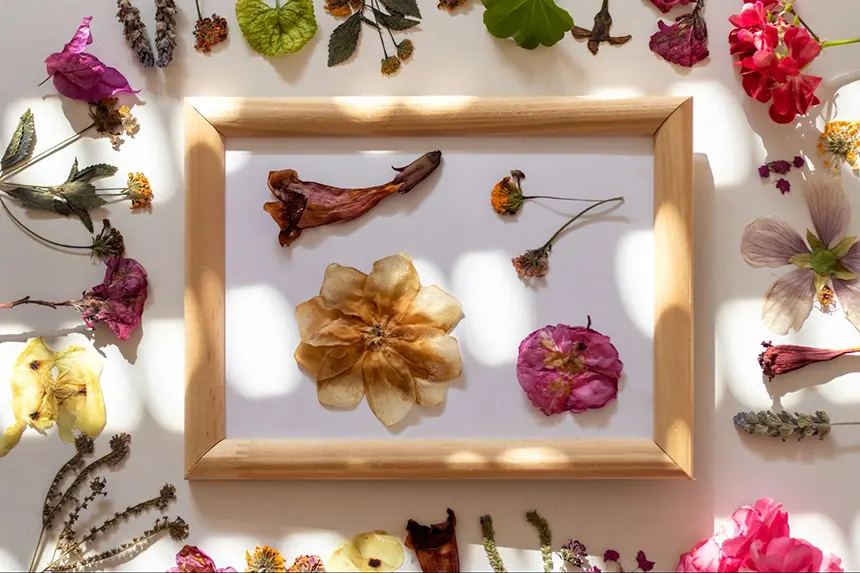
Some of the common ways to dry and preserve flowers include air-drying, pressing, silica gel, paraffin or soy wax preservation, casting them in epoxy resin, and storing them at room temperature after refrigerating them.
Let me take you through all these methods in detail to preserve your flowers and bouquet.
1. Air-drying Flowers
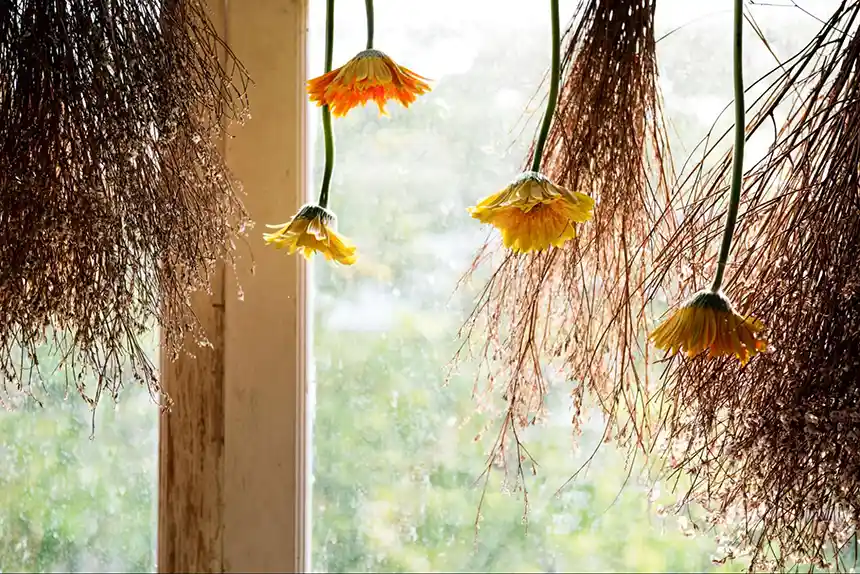
To air-dry flowers, cut them right before they are fully open or trimmed at their peak bloom. Remove leaves from the stems and tie them in a loose bundle together. Moving further, hang the flowers upside down from a hanger or rafters and allow proper ventilation to prevent rotting.
Keeping them in a dark room prevents them from fading away as quickly. Wait for 2-4 weeks for the flowers to dry out and become crisp, so that they can be used. Bigger blooms might take longer to dry, since they hold more moisture.
2. Pressing
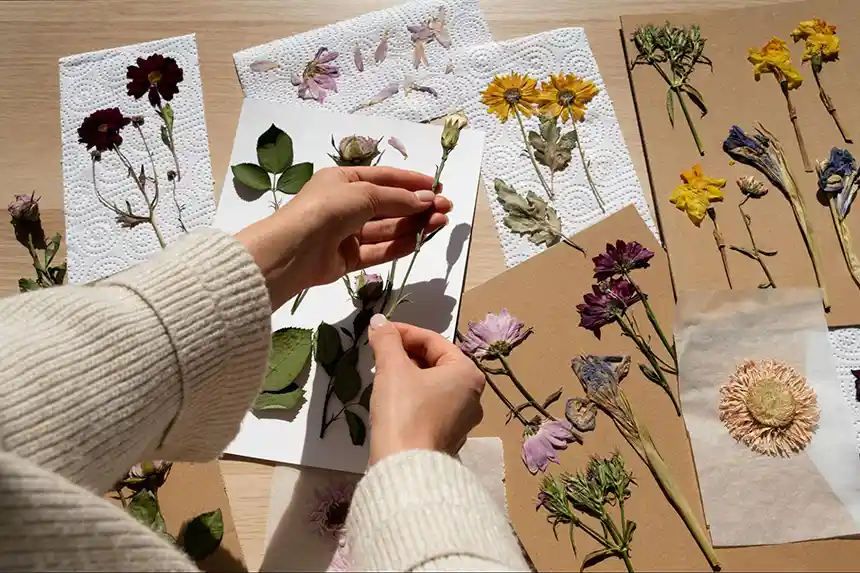
For pressing, put the flowers between parchment or coffee filters to preserve their form and colors. Place them between the pages of a heavy book, layers of newspaper, or pages of a catalog, and weigh the top with a flat and heavy object. The foliage should dry within a week, and the flowers in about 2 weeks. Place them in a dark and dry place.
This method is suitable for flat or single flowers, since thicker or more flowers will take longer to dry, and you’ll have to change the paper in case it gets damp, or they will get moldy.
3. Silica Gel
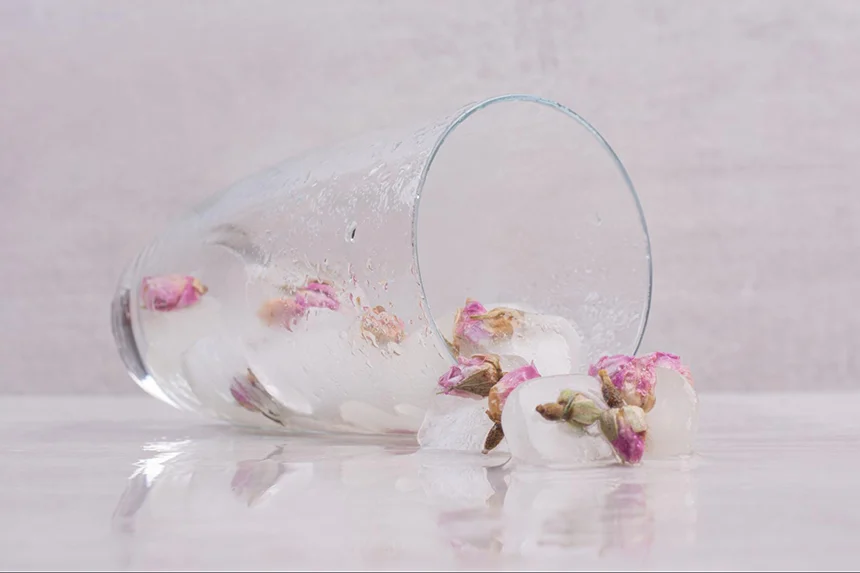
Silica gel is a dehydrating agent that absorbs moisture and facilitates drying while maintaining the color and shape of the flowers. Pour silica gel into an airtight container and gently place your flowers inside, buds upright, after trimming the stems and keeping them well-spaced. Add another layer of silica gel and seal the container. They should be ready in a week. Now remove them and brush off any excess crystals.
This is an ideal method to store wedding bouquets and bridal flowers. However, silica is toxic to pets in nature and can be harmful if inhaled or ingested, causing vomiting and diarrhea or an obstruction in the intestinal tract, so it is strongly suggested to keep it away from pets.
4. Wax
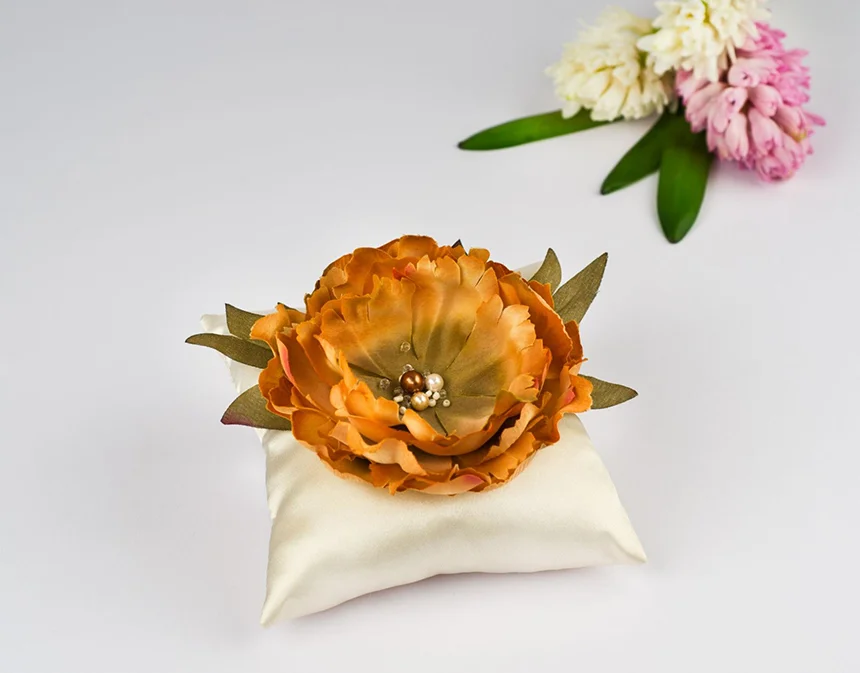
Melt a wax of your choice, paraffin or soy, in a double boiler or heat it in a microwave until it’s completely melted. The temperature for both paraffin and soy should be around 130-140℉, because if the wax is too hot, it will burn the flower.
Trim the stems of the flowers, hold them by their stems, and dip the bloom; pull it out right away and shake it gently to remove the excess. Place the flower in a jar or bottle by its stem and let it set for at least 10-15 minutes until it hardens. This arrangement will last for 2-3 weeks.
5. Resin Cast
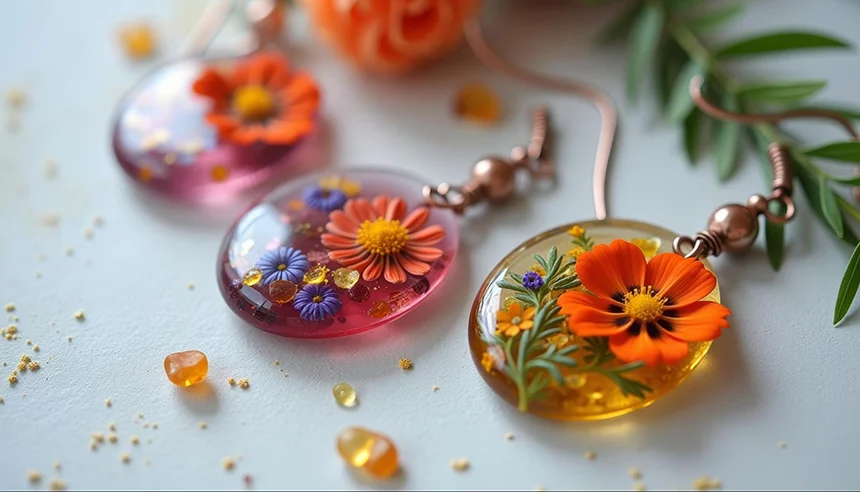
Resin casting requires completely dry blooms, because fresh flowers have a high probability of rotting due to their high moisture content. Pour a base layer of epoxy resin and let it sit in your container for a while so that all the bubbles can be dispersed with a blowtorch. Place your flowers face down or sideways and pour resin along with a hardener in equal measure, typically 1:1, until suggested otherwise by the specific brand you are using. A thicker base usually requires a 3:1 ratio. Now let it set for 1-2 days before demolding.
This cast lasts for several years; however, it can release toxic fumes, so it is suggested to work in a ventilated environment and keep it away from children and pets.
6. Refrigeration and Water
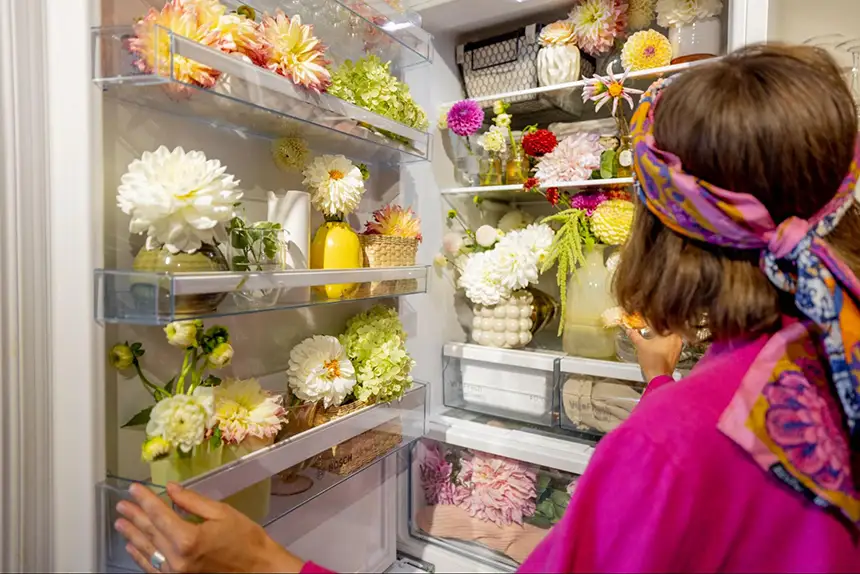
Place fresh flowers in clean water at room temperature. Trim their stems every 1-2 days to slow down the aging process by reducing respiration and moisture loss. Store them in a fridge overnight so that they don’t wilt quickly. Most cut flowers are safe to be stored at 33-38℉. Tropical flowers need a higher temperature at 50-55℉, as extreme cold damages them. Anything below 32℉ will ruin the flower. Freezer-dried flowers should last up to 2 weeks.
How to Make Preserved Flowers/Bouquets Last Longer?
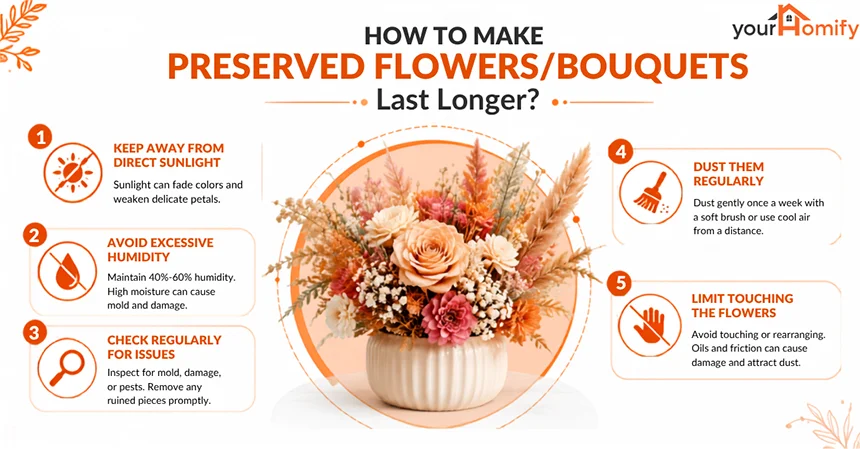
To maintain your preserved flowers/wedding bouquet, a few things to keep in mind include keeping them away from direct sunlight, avoiding a humid atmosphere, keeping track of the flowers regularly for any issues, dusting them on a daily basis, and limiting touching the flowers.
Moving further, let’s discuss these precautionary measures in more detail.
1) Keeping from Direct Sunlight: Preserved flowers get damaged in direct sunlight. It acts as a bleach for the arrangement. The exposure causes their natural colors to fade over time. Sun or heat, like drafts, will prematurely kill your flowers. Avoid heat and temperature fluctuations for longer-lasting flowers.
2) Avoiding Humidity: The relative humidity (RH) level for preserved flowers is between 40% and 60%. High humidity tends to damage both resin and pressed frames, because the dampness makes room for mold and eventually rotting of your arrangement. Exposing them to water will damage their delicate structure over time, causing them to lose their vibrancy. Meanwhile, low humidity can dry out the flowers, making them brittle and causing breakage.
3) Keeping Track of Issues: Regular inspection is necessary for arrangements to ensure there are no signs of mold or damage. Remove any ruined pieces as soon as possible, and make necessary adjustments if required. Dried flowers can invite pests like the Indian meal moth, silverfish, or drugstore beetles if stored in a damp environment, so it is crucial to check on them occasionally, especially during humid months.
4) Dusting Them Regularly: Dusting should be done once a week to keep them looking fresh, and the preserved petals need to be handled delicately, or they will break. Using a soft makeup or paintbrush will do the job. You could also use a hairdryer in a cool setting with very low speed, held 30-40 cm away. For larger arrangements, a low-pressure electronic air duster can also be used.
5) Limit Touching the Flowers: Once the petals are dry and brittle, it is better not to touch them. Picking them up, even to rearrange them, can cause a mishap and lead to breakage of the flower or its foliage. Touching them constantly might transfer skin oils and natural moisture onto the petals, inviting dust. Friction due to skin contact might cause microscopic tears, which often lead to premature shedding.
Best Flowers for Preservation
Some popular flowers for preservation are roses, carnations, hydrangeas, and baby’s breath. These flowers preserve well with professional methods and often appear in weddings and other celebrations.
Now let’s understand why each flower is suitable for preservation and the best methods for each one of them.
1. Roses
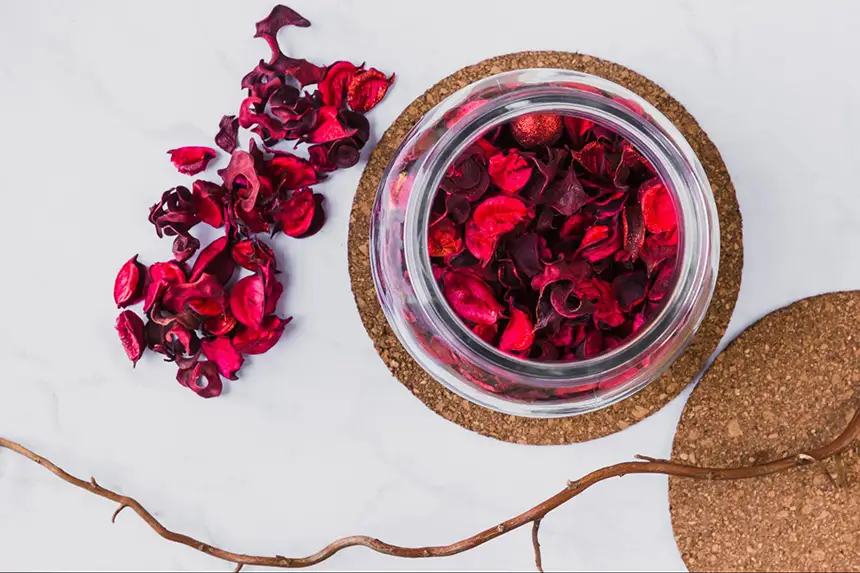
Roses maintain their shape and color in both resin and pressed formats. Silica gel and freeze-drying are good options, too. Variety matters in this case, because red roses tend to dry darker, while white roses turn beige, and it is difficult to maintain the light shade.
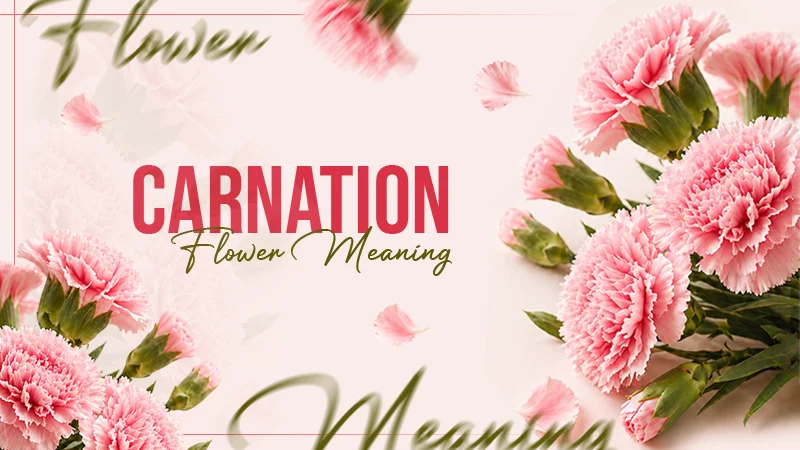
2. Carnations
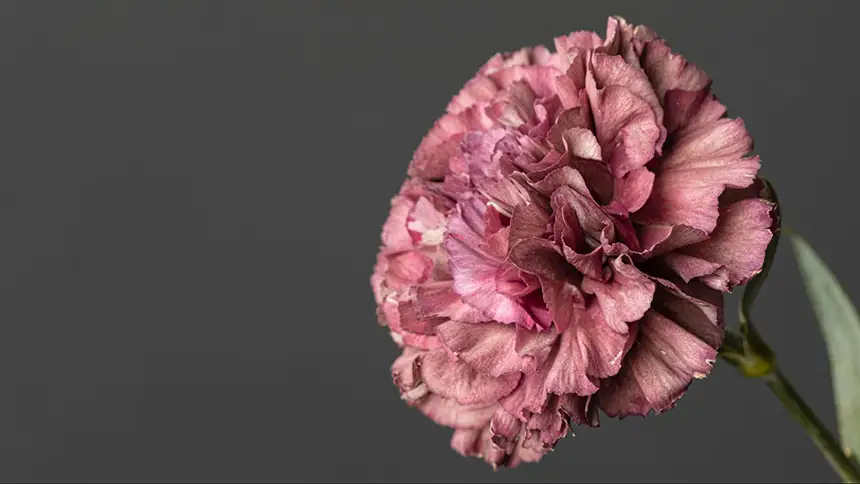
Carnations do well across multiple methods like air-drying, pressing, silica gel, and resin casting. They are available in various colors, performing the best in bright pinks and reds generally. These flowers do not have fragility issues, unlike dahlias and hydrangeas. They make for interesting textures post-preservation.
3. Hydrangeas
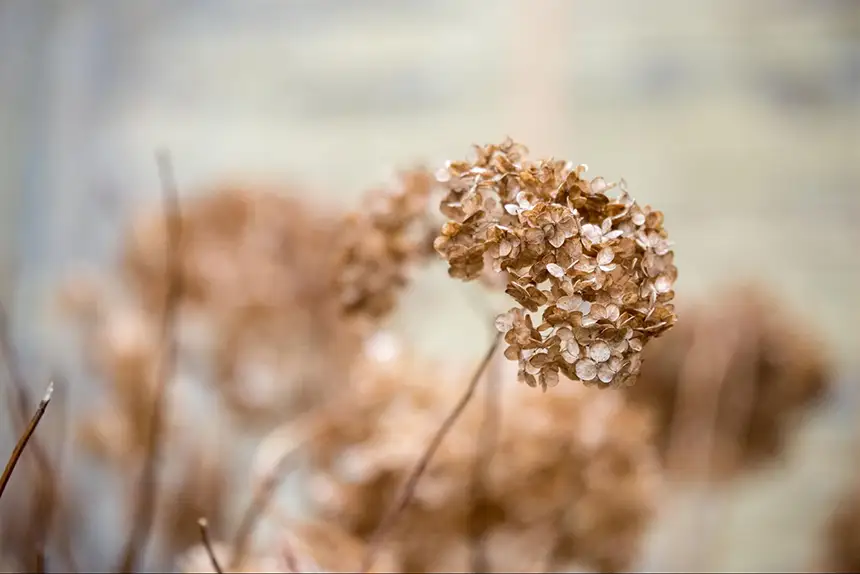
Hydrangeas are a fragile variety for preservation, and the best method is to let them air-dry in a vase until the moisture disappears. They require careful handling since the florets tend to break easily; however, the beautiful lace-like appearance helps their case, making them a popular choice despite the challenges.
4. Baby’s Breath (Gypsophila)
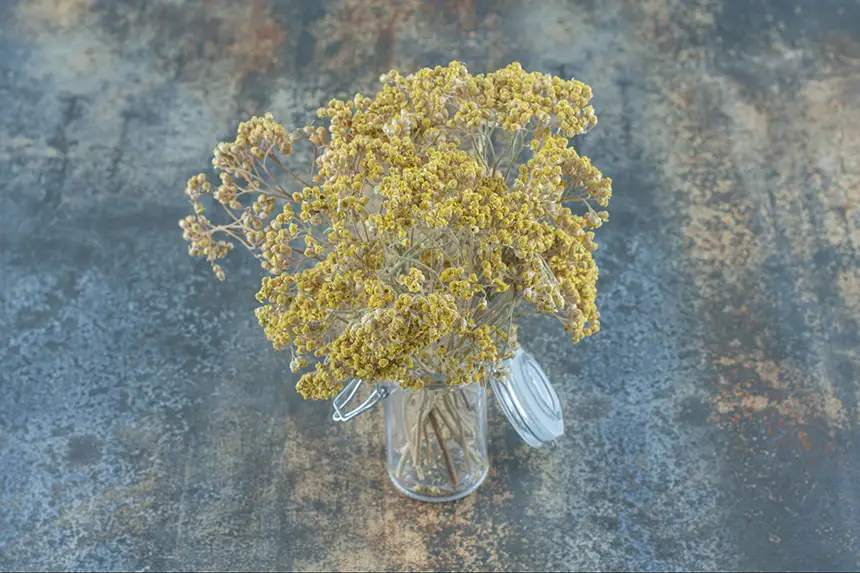
Baby’s breath is a tiny white flower, which makes it easy to preserve by air-drying, pressing, or resin casting. Air-drying is the most suitable option for them because it takes minimal effort and little to no special handling. White is their best variety for preservation, as it stays true to its soft texture and dainty form and retains its natural shape, eventually drying to a soft ivory.
5. Lavender
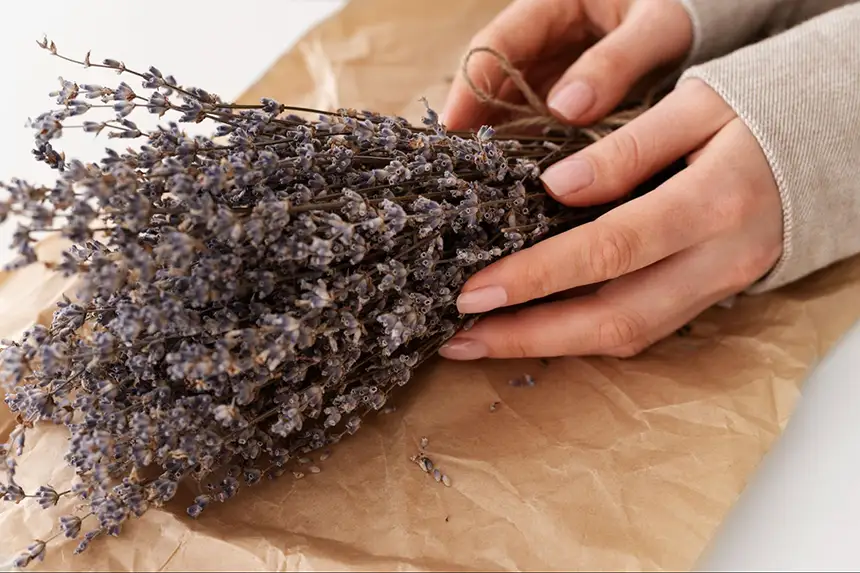
Lavender is best for air-drying. As a beginner, this is an ideal choice as it retains its purple hues and even its fragrance afterwards, making it an easy choice for successful craft projects. Post-preservation, the purple darkens further and maintains color longer than most blooms. Resin casting and pressing are decent options as well.
Common Mistakes to Avoid When Preserving Flowers
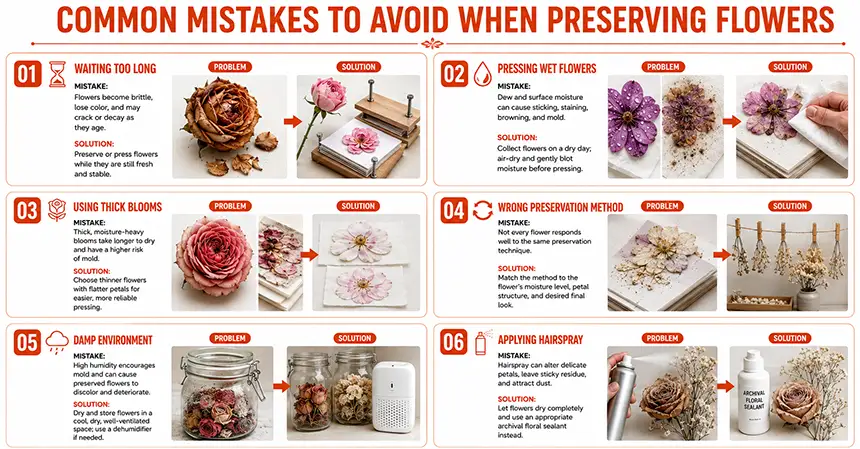
Some of the most common mistakes while preserving flowers are waiting too long to dry them, pressing dewy, wet flowers, using thick and moisture-heavy blooms, using the wrong method to preserve them, drying them in a damp environment, and applying hairspray.
I’ll take you through each condition so that you can avoid making these mistakes and protect your flowers properly.
Mistake 1: Waiting Too Long
Flowers that are softening, browning, or curling won’t press well and will lose color quickly due to their aging effects. Waiting too long leads to moisture loss, which results in rigidity and a brittle texture of the petals. They might start cracking when pressed. Gradually, the flower will start to decay and will no longer be in a condition to be used.
Solution: Pressing immediately after harvest, or at least while the bloom is still fresh and stable, is key here. RHS suggests picking the best ones from your bouquet for preservation.
Mistake 2: Pressing Dewy/Wet Flowers
Picking flowers that are already damp from morning dew will increase the probability of sticking, staining, and mold while you press your blooms. Trapped external water combined with the natural internal moisture leads to mold and fungal growth. Prolonged wetness causes browning and eventually rotting, weakening its structure and causing tearing while pressing the blooms.
Solution: It is suggested to collect flowers on a dry day or later in the day to avoid dampening. You could also let them air-dry and then blot the moisture gently.
Mistake 3: Using Thick and Moisture-Heavy Blooms
The issue with thick blooms is that they tend to mold before they dry. Chunky flowers such as multi-petal roses, peonies, and carnations are thick, so they take a long time and require more attention. It becomes a hassle to open the flowers and press them in parts, rather than as whole blooms.
Solution: A range of 8-11.5% moisture content ensures good quality and firmness in dried flowers. This is why it is better to start with single flowers that have flatter petals.
Mistake 4: Using the Wrong Method
Every flower requires a different method of preservation. For example, lavender is best preserved through air-drying because it has low moisture content, does not droop easily, and retains its color well. However, methods such as pressing crush the buds, while silica gel ruins their texture. Similarly, wax paper and paper towels are bad options in some cases since they can imprint on the texture of petals.
Solution: A general solution is to try to match the method to the specific moisture content, petal fragility, and desired final look of your bloom type. Dry them as per how you will use them for art and decorative purposes.
Mistake 5: Drying Them in a Damp Environment
Storing flowers in damp rooms such as a basement supports moisture buildup and eventually leads to mold, which shows up as black or white fuzzy spots on the petals. Preserved flowers require low humidity to maintain their treated state, but excess moisture in the environment breaks down plant pigments and causes chemical changes. This turns the preserved blooms brown, gray, or translucent, with a slimy texture.
Solution: It is suggested to relocate flowers to rooms where air can circulate properly. You can use a dehumidifier or an air conditioner if the humidity is too high indoors and increase the airflow.
Mistake 6: Applying Hairspray
Hairspray contains alcohol and hydrofluorocarbons, which may damage the flowers’ petals, as they are delicate. The polymers may change the color and texture of the flowers, and it might end up looking worse. It is also a short-term hack to give them some shine. Sticky residue from hairspray invites dust and dirt over time, causing rotting eventually.
Solution: Let the blooms dry completely and use a hairdryer to blow away any dust settled on the petals due to the product’s stickiness. To counteract sticky residue, you can apply cornstarch powder with a brush, or seal the spray with an archival-grade acrylic mist.
Different Ways to Use Dried and Preserved Flowers
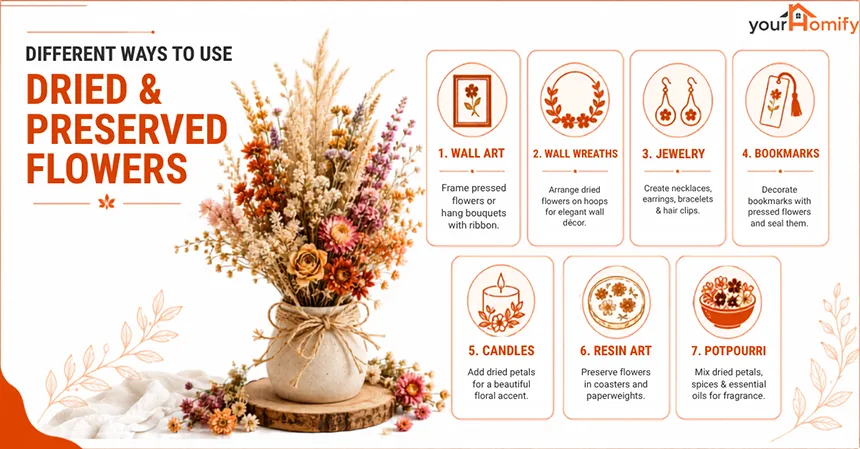
Dried flowers can be used in numerous ways, such as wall art in a picture frame, as wall wreaths, as a centerpiece, as various kinds of jewelry, bookmarks, candles, resin coasters or paperweights, and as a potpourri to make your home smell good.
Now let us explore how to make functional art or decorative items out of your preserved flowers.
- Wall Art: Pressed flowers can often be used in wall art. The botanical flowers give a fresh and beautiful look in your home and will last a long time. You can tie the stems together with a silk ribbon and pin them on the wall with a hook. Alternatively, you can also add a three-dimensional touch by putting flowers in a picture frame.
- Wall Wreaths: You can use floral wires, metal hoops, or grapevines to tie as many dried flowers and florals as you want at the base of the wire and hang them as a centrepiece on a wall. It will also make a great entryway decor.
- Jewelry: Silica-gel or resin-cast jewelry made from real, dried, and pressed botanical flowers captures them in a 3D finish. You can create necklaces, bracelets, earrings, and even hair clips with it. Flower jewelry makes for great personalized gifts. Preserved wedding flowers can be turned into custom-wearable pieces too.
- Bookmarks: Another project idea is to cut out a bookmark from an old piece of cardboard and apply glue all over it. Arrange your flowers however you want and stick them onto the bookmark. Now trim the edges to give it a clean look. The final step is to put another coat of glue over the flower arrangement to finish it.
- Candles: The first method is to arrange dried petals around the candle container. Keep them at a decent distance from the wick, or it’ll burn. A more traditional but time-consuming method is to melt soy wax and let it cool for 1-2 minutes. Add flowers of your choice and insert a wick in the middle. Now cover everything with another layer of wax and let it cool so that you can use it.
- Resin Coasters/Paperweights: For more functional art pieces, get a silicone mold and stretch it open. Put your dried flowers inside and pour resin, along with a hardener, in a specific ratio of about 1:1. Let it solidify with a weight on top and check for bubbles in between, removing them with a blowtorch. After 24 hours, it can be demolded and used.
- Potpourri: Place your dried flower petals, buds, and accent spices like cinnamon or cloves in a bowl. Stir your mix and add 6-8 drops of essential oil to it to match your floral theme. Use a fixative such as orris root powder or crushed vanilla beans to lock in the fragrance, preventing essential oils from evaporating too quickly. Store it in an airtight container for 4-6 weeks for curing. Transfer it to a dish on your table or put it in a sachet.
Final Thoughts
Drying and preserving flowers might seem like a daunting task, but it is easy once you get the hang of it. There are various methods to dry them, depending on how you want to use them later on. You just need to select the right kind of flowers, suitable for drying and preserving, and make sure to keep them away from direct sunlight or damp rooms. Avoid waiting too long to dry them, and do not use hairspray, even though a lot of websites suggest it as a hack.
The end results of drying and preserving flowers can be enjoyed in the form of functional art to decorate your home or gift your loved ones. It is also a fun leisure-time activity.
FAQs
How do you dry flowers to keep them forever?
Air-drying, silica gel, and pressing work best when preserving flowers. Silica retains the colors best and gives a 3D look; air-drying is preferred for storing rustic bouquets, and pressing is suggested for framing flowers.
How long do flowers last once dried?
Some varieties might last up to 2 years, like lavender, baby’s breath, and roses, while others like hydrangeas will go bad in about 6-12 months. Preservation methods and environmental factors contribute a lot in this case.
How to properly dry and flatten flowers?
Place fresh and dry flowers between parchment paper or a coffee filter and put them inside a heavy book. You could weigh the book down with some more books for about 1-2 weeks until the flower is completely dried up and crisp.
Which flowers cannot be dried?
Flowers like daffodils, freesia, and anemone cannot be dried properly because they have thick petals that retain too much moisture to be able to dehydrate quickly. This leads to browning and rotting of the flower.
How to make flowers dry fast?
You could use a microwave with a specialized press or silica gel. Check the moisture levels constantly and use silica gel if you wish to retain your flowers in 3D design. Alternatively, you could also use an iron for your flowers. Both of these methods take 1-2 minutes to dry your flowers.
- CIR495/EP004: Drying and Preserving Plant Materials for Decorative Uses – University of Florida
- Plant Craft: Preserving Flowers—University of Florida
- Flower drying techniques – A review | International Journal of Farm Sciences | IndianJournals.com
How to Dry Roses: 5 Easy Methods That Actually Work
[…] is one of the simplest and most commonly used ways to preserve whole roses. Fresh roses give the best outcome in dried flower art. This method requires minimal materials and […]