Orange flowers are a symbol of warmth, energy, and creativity, and they instantly elevate the charm of the landscape. Some popular varieties include marigolds, tulips, daylilies, and roses. There are different types of orange flowers, and each one has different properties, native regions, and bloom times.
In this article, I will tell you the meaning and significance of orange flowers in detail and also describe 41 types of orange flowers here, including 10 flowering trees with orange flowers.
Quick Answer:
Orange flowers symbolize enthusiasm, energy, and creativity. There are various types of orange flowers, like marigolds, tiger lilies, zinnias, butterfly weed, and daylilies. Gardeners usually prefer this flower because of the bold color that attracts pollinators.
What Do Orange Flowers Mean? Symbolism and Hidden Meaning
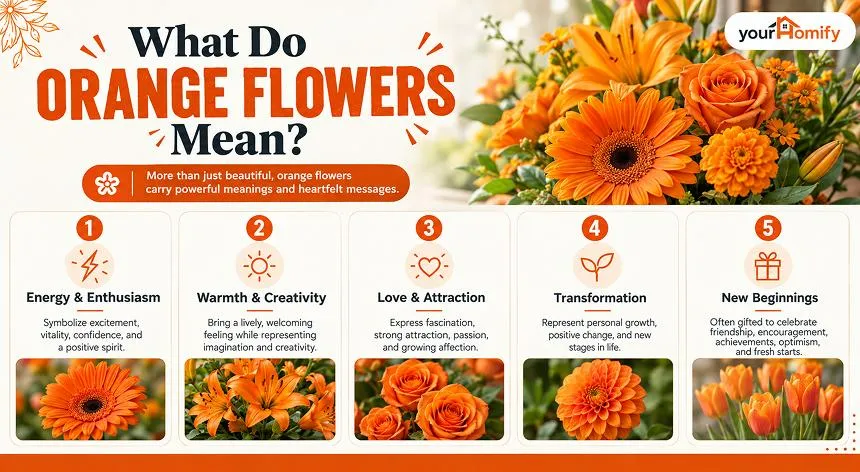
Orange flowers symbolise energy, enthusiasm, warmth, and creativity. It creates a welcoming and lively atmosphere in the gardens. It adds a visual warmth to the landscapes. This flower is often connected with excitement, confidence, creativity, and encouragement. In relationships this flower has been connected with strong attraction, fascination, and growing affection.
This flower is linked with transformation in various cultures; in Eastern cultures, orange flowers are associated with spiritual growth, whereas in Western culture, this flower is associated with optimism and creativity.
These flowers are often gifted to signify a new beginning, friendship, encouragement, and achievement. Their bright and energetic color represents excitement, confidence, and a positive outlook.
21 Types Of Orange Flowers
Chrysanthemum, marigold, rosa, true lilies, flowering maple, begonia genus, bird of paradise, trumpet vines, carnation, iris, day lily are famous orange flowers. These are bright, cheerful, and filled with warmth and will instantly fill the garden with color and make it more lively. There are different varieties of orange flowers; each one has different tropical requirements and characteristics.
Here I have discussed 21 types of orange flowers with a short description of them.
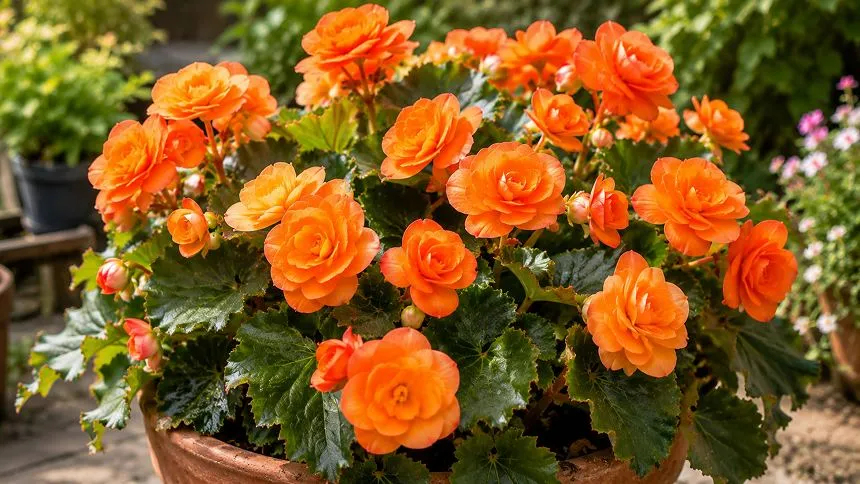
1. Begonia genus (Begonia)
Native Range: Tropical and subtropical region of Asia, Africa, and Central and South America.
Hardiness Zones: 9-11 USDA zone
Care: Easy to grow
Flower type: Genus of perennial flowering plants.
Begonia genus is a semi-tropical or tropical ornamental plant. They have beautiful, bright flowers with dark green leaves. It grows in different colors like red, white, and pink, and can bloom easily in shaded areas. The plant size usually varies from 8 inches to 2 feet; it has a wide variety, due to which the size and shape vary a lot.
They usually bloom in fall and summer and have 5 to 7 days of vase life and have no fragrance; other species of begonia may have fragrance. This flower is moderately pollinator-friendly and usually attracts bees, butterflies, and hummingbirds.
2. Bird of Paradise (Strelitzia reginae)
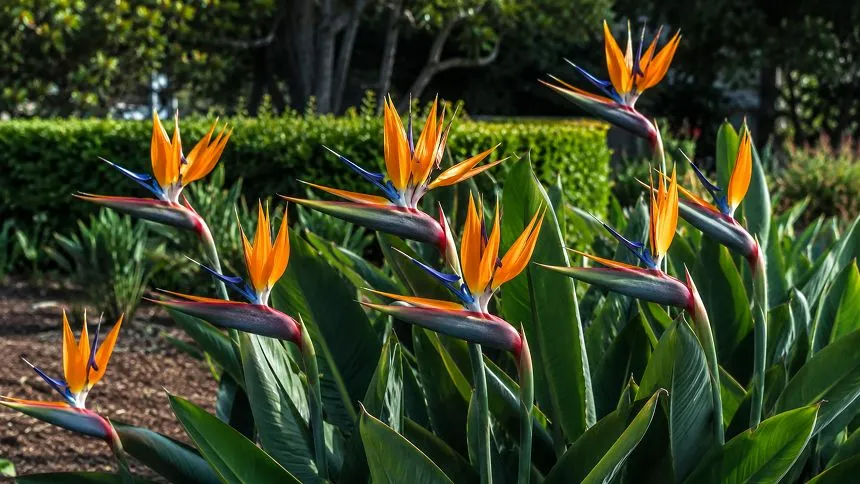
Native: Tropical and subtropical regions of South Africa
Hardiness zone: 10 to 12
Bloom time: Fall and summer
Bloom size: 6 inches
Birds of paradise bloom in fall and summer. They have the shape of a flying bird and are 6 inches long. It is typically found in blue, orange, purple, and white colors. The plant’s height is 3 to 4 feet. They are counted among the most beautiful orange flowers.
The plant is found in 10 to 12 hardiness zones. Different birds, particularly sunbirds, act as pollinators for the bird of paradise and help in its pollination. They have a very mild fragrance and can stay fresh for 2 weeks in a vase; with proper care, they can last longer.
3. Chrysanthemum (Chrysanthemum)
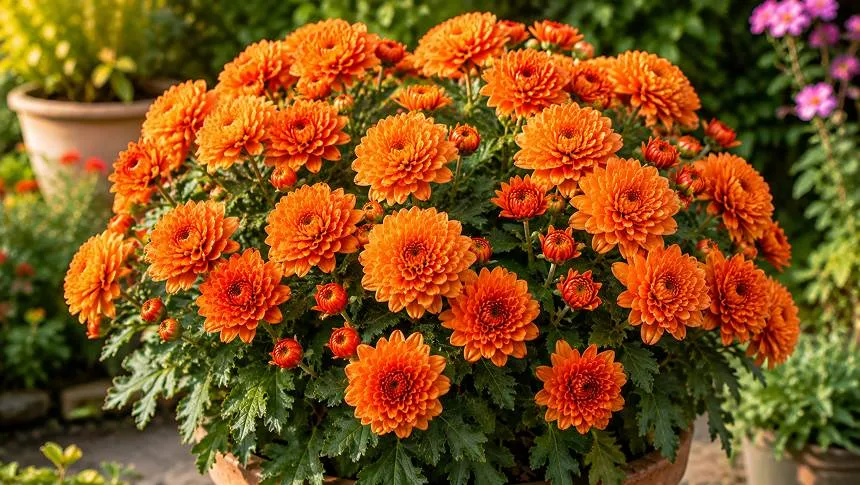
Native: Asia, Europe, and North America
Plant height: 2 to 4 feet.
Hardiness zone: 3 – 9
Bloom time: Fall and summer
Chrysanthemum flowers are available in various colors like red, pink, yellow, and white. The flowers are in radial shapes and bloom up to 2.5 to 3 inches(5 to 8 cm). The plants are usually 2 to 4 feet long; they are easy to grow.
They grow in USDA zones 5 to 9 and have an earthy, herbal, and sharp smell. With proper care, they can last up to 3 weeks in a vase. They are moderately pollination-friendly and attract bees.
4. Marigold (Tagetes)
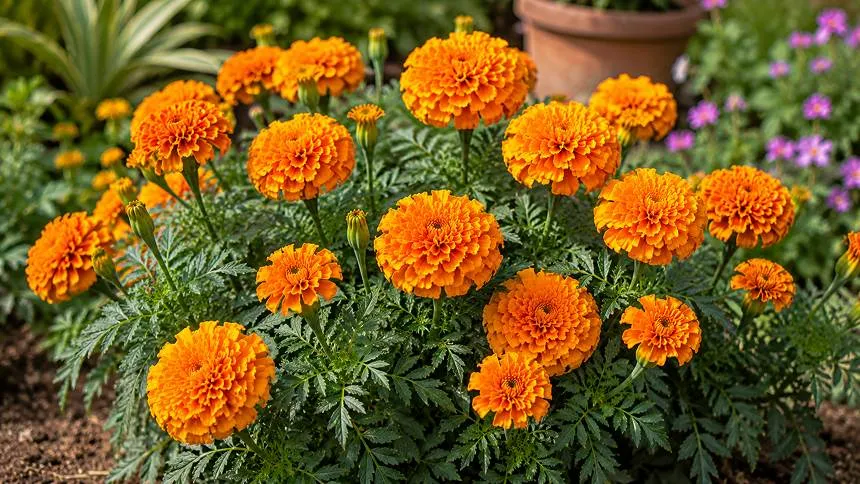
Native: Central to South America
Hardiness zone: 2 to 11
Flower size: 0.5 to 5 inches
Bloom time: Summer
Marigold flowers are round in shape, and their bloom size is between 0.5 to 5 inches in diameter. These October birth flowers usually grow up to 1 to 4 feet high, mainly yellow and orange in color. They bloom in the summer season. It has a sharp, pungent, and musky smell that sometimes feels unpleasant.
They are found in 2 to 11 hardiness zones, are pollinator-friendly, and attract butterflies and songbirds. They can typically stay fresh for 7 to 12 days in a vase.
5. Rosa (Rosa)
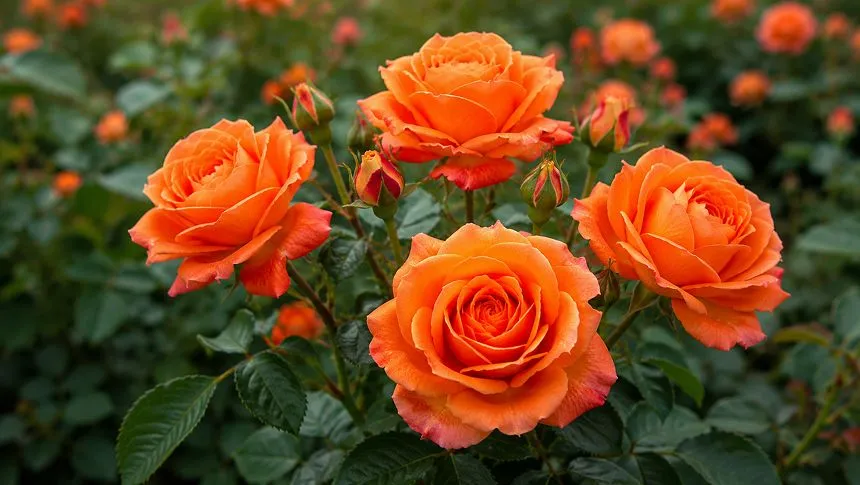
Native: North America, Europe, and Asia
Hardiness zone: 5 to 11
Flower size: 1 to 3 inches
Flower height: 1 to 8 feet
Orange roses feature cup-shaped blooms that grow up to 1-3 inches large with 7-20 petals per head. They have 5 pointed sepals in the base. The plant size is usually 1 to 8 feet. They bloom in the summer season. Alongside orange, rose is available in multiple colors like pink, red, white, etc, which are used for both ornamental and gardening purposes.
They grow in hardiness zones 5 to 11 and have a vase life of 7 to 12 days. It has a fruity, musky, and myrrh fragrance. This flower is considered pollinator friendly, and mostly it attracts bees.
6. True lilies (Lilium)
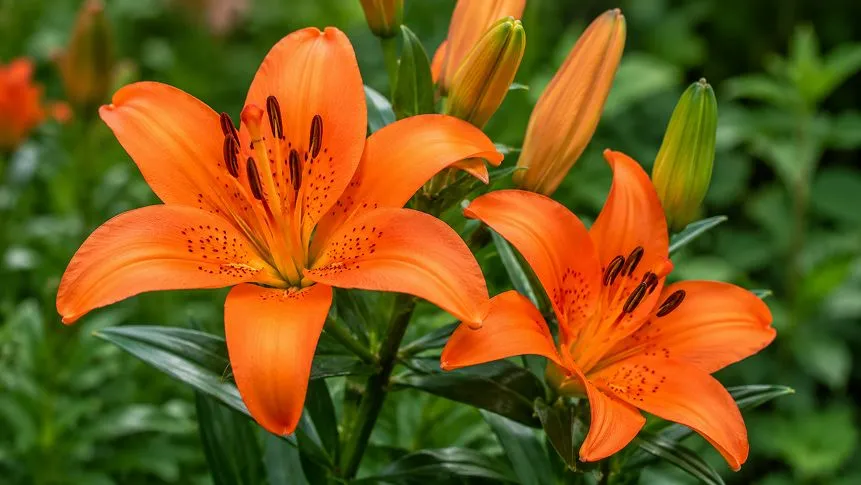
Native: North America, Europe, and Asia
Hardiness zone: 3a to 8b
Bloom time: Summer
True lilies are cup- or funnel-shaped flowers. They bloom 3 to 6 inches wide and have 6 petals on each plant. The plant’s height is between 1 and 6 feet based on the variety. They bloom in the summer season.
The plants mainly grow in USDA hardiness zones 3 to 8 and are excellent pollinators. They have a strong, comforting scent and will last in a vase for 9 to 14 days, usually.
7. Flowering Maple (Abutilon)
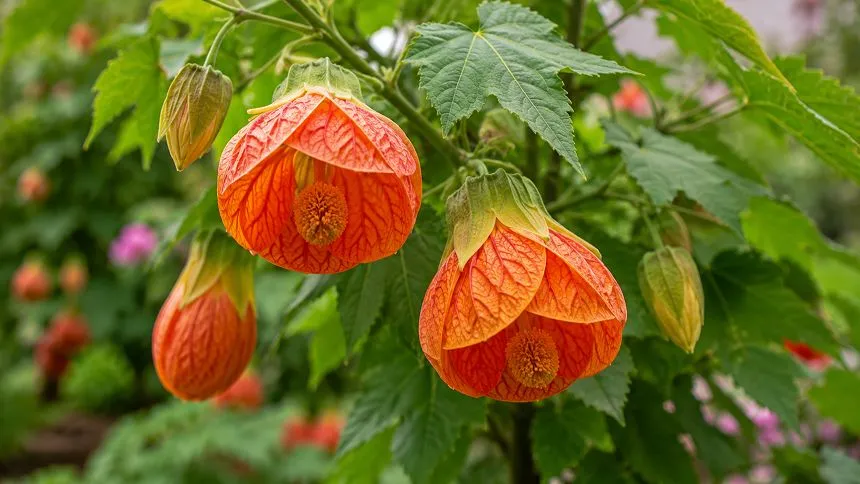
Hardiness Zone: 9 to 10
Bloom time: Fall, Spring, and Summer
Flower Height: 8 to 10 feet
Flowering maple tree flowers are bell- or cup-shaped, and they bloom 1 to 3 inches wide. The plant’s height reaches 8 to 10 feet in tropical areas, but in colder areas, they reach 2 to 4 feet. They grow in other different colors including yellow, pink, white, red, and variegated colors.
The flower usually grows in USDA zones 9 to 10. They can stay fresh for 12 hours only once they are cut. This flower attracts bees and other pollinators.
8. Frizzle Sizzle Orange Pansy (Viola × wittrockiana)
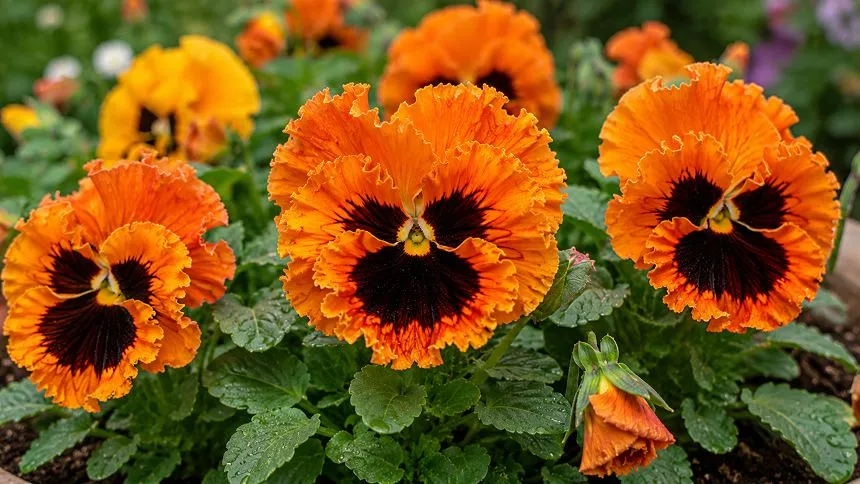
Native: Europe and Asia
Hardiness zone: 6 to 10 USDA
Bloom time: Fall, spring, and winter
Flower height: 6 to 9 inches
Orange pansy flowers are saucer-shaped; they have 4 to 5 petals and bloom 1 to 3 inches in diameter. This flower is usually found in blue, yellow, purple, red, and white colors. They usually bloom in fall, spring, and winter seasons.
The flower grows in USDA zones 6 to 10. They usually have 1 to 2 weeks of vase life and have a sweet, moderate fragrance. These flowers are moderately pollinator-friendly and attract bees.
9. Trumpet Vine (Campsis radicans)
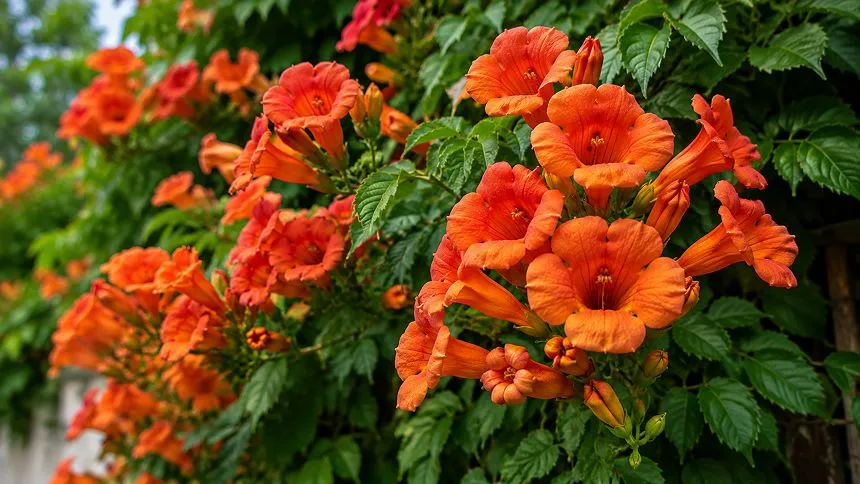
Native: Central and Eastern United States.
Bloom time: Summer
Hardiness Zone: 4 to 10
Trumpet vines are yellow, orange, and red in color. They have a trumpet or tubular shape, and the bloom size is 1 to 3 inches. It blooms in the summer season, and the plant’s height is 30 to 40 feet.
These flowers are usually found in USDA zones 4 to 10. They usually don’t have any fragrance, but they attract hummingbirds that are excellent pollinators. It has 3 to 5 days of vase life.
10. Carnation (Dianthus caryophyllus)
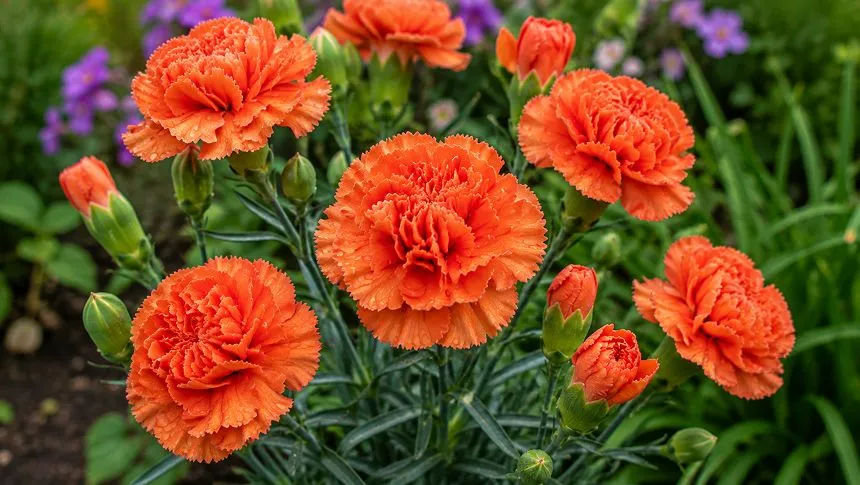
Native: Mediterranean area; no exact range available.
Bloom time: Summer
Flower height: 1-4 feet
Hardiness zone: 6 to 9
Carnation flowers are saucer-shaped; they bloom 1 to 3 inches wide and have 7 to 20 petals. The plant’s height is 1 to 4 feet. These are available in yellow, orange, pink, purple, white, and red colors. They bloom in the summer season.
They grow in 6 to 9 USDA zones. They have a vase life of 3 weeks. Carnation is moderately pollination-friendly and mainly attracts bees, butterflies, and moths. This flower has a spicy, clove-like smell.
11. Gerbera Daisy (Gerbera Jamesonii)
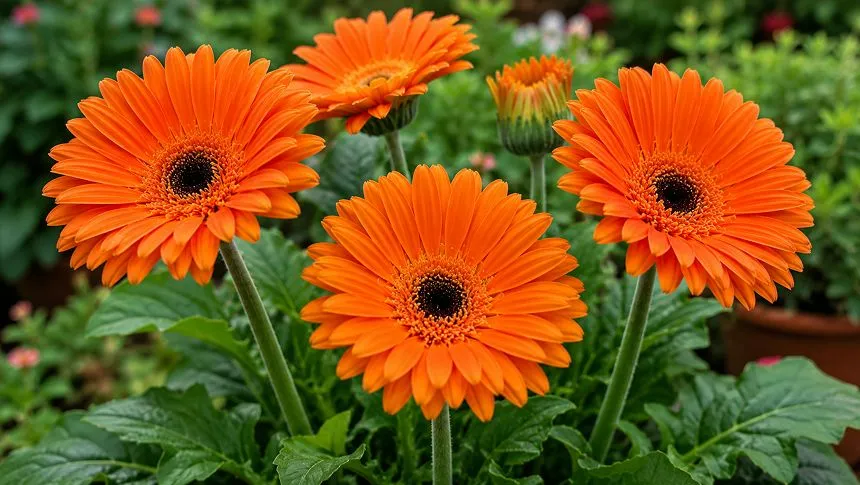
Hardiness zone: 8 to 10
Bloom time: Fall and summer
Flower height: 1 to 1.6 feet.
Daisy flowers are radially symmetrical flowers that have 7 to 20 petals, and the flowers are 3 to 6 inches wide. They are found in yellow, orange, and red colors. The plant height is 1 to 1.6 feet. The flower blooms last from fall to summer.
They are grown in USDA zones 8 to 10. Their vase life is 2 weeks. This variety doesn’t have any scent. They are pollination-friendly and attract bees and butterflies.
12. Daylily (Hemerocallis)
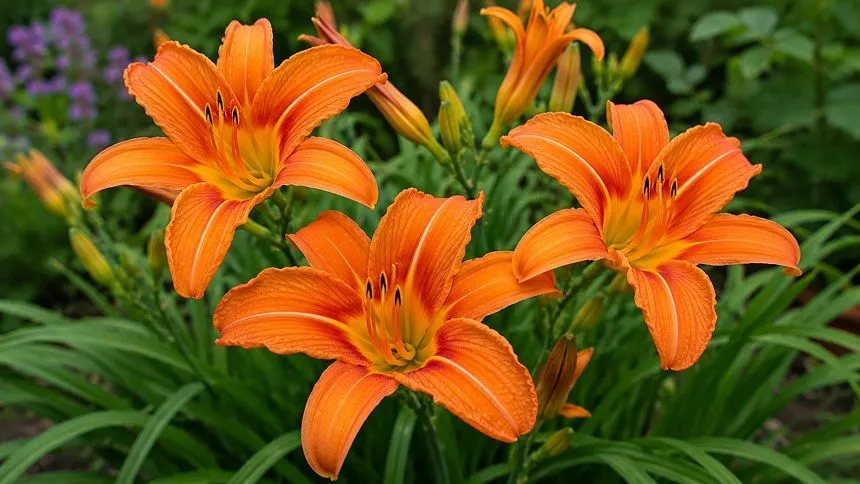
Native: Asia & Central Europe
Bloom Time: Spring–Summer
Hardiness Zone: 3–9
Height: 1–3 ft
Daylily is mainly available in orange, pink, purple, white, and red color. These are trumpet-shaped with 6 petals, and the bloom size is 3 to 6 inches. They usually bloom in spring and summer. The flowers are usually 1 to 3 feet long.
They don’t have fragrance, and their vase lives usually only one day. These are pollinator-friendly and especially attract bees, butterflies, and birds. It grows in USDA zones 3 to 9.
13. Iris (iris)
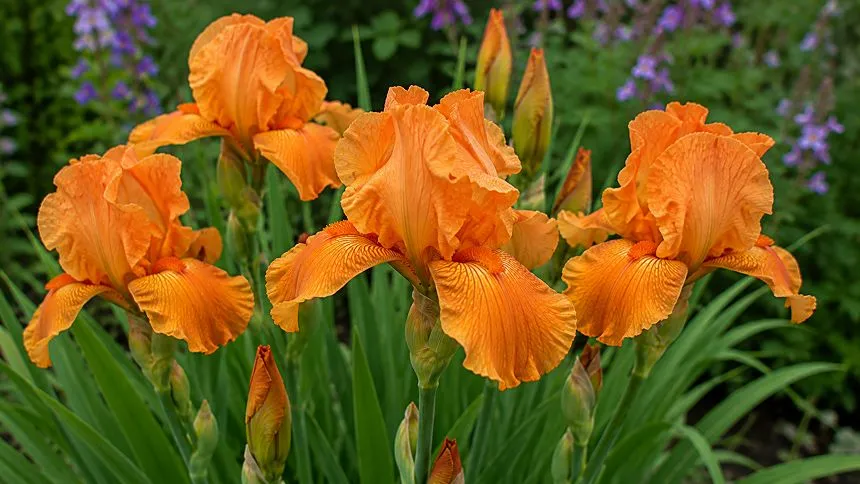
Native: North America, Europe, Africa & Asia
Bloom Time: Spring–Summer
Hardiness Zone: 5–9
Height: 1.6–2.6 ft
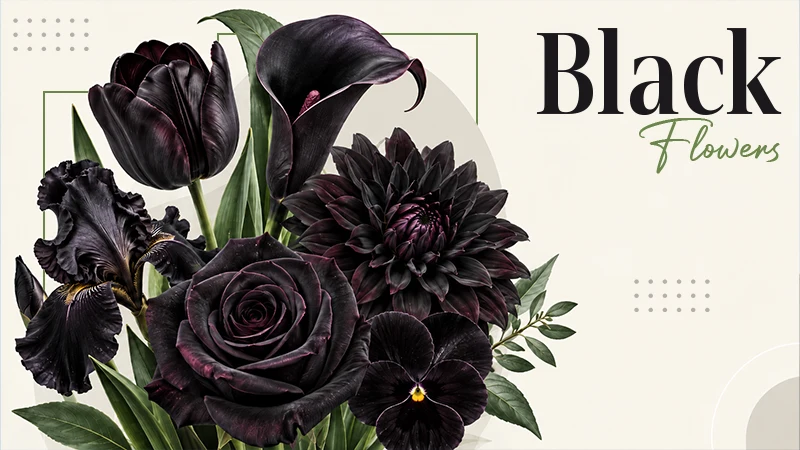
Iris plants are 1.6 to 2.6 feet tall; the flower bloom size is under 6 inches, and they have 2 to 3 petals. The peak bloom season is spring and summer. This flower is found in various colors other than orange like, black, blue, pink, cream, golden, purple, red, and white. The black iris flower contrasts well with the orange ones in a flower bouquet.
They have a special spicy, woody, and dry fragrance based on the flower variety. The vase life is 3 to 7 days with proper care. They mainly grow in USDA zones 5 to 9.
14. Ranunculus (Ranunculus)
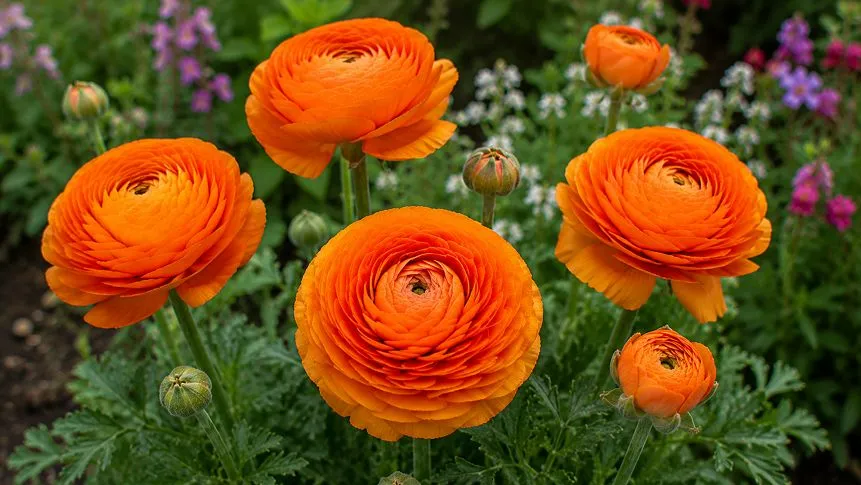
Native: Eurasia, Americas, Australia & Africa
Bloom Time: Winter–Summer
Hardiness Zone: 7–11
Height: 2 in–2 ft
Ranunculus flowers bloom in spring, summer, and winter. They are cup- or saucer-shaped flowers. It has 4 to 5 petals and blooms up to 1 to 3 inches. They are found in gold, green, orange, pink, red, and white colors. The plant size varies from 2 inches to 2 feet.
There is no fragrance in these flowers, and the flowers can stay fresh for 2 weeks with proper care. They are pollinator-friendly, and they grow in USDA zone 7 to 11.
15. Bulbine (Bulbine frutescens)
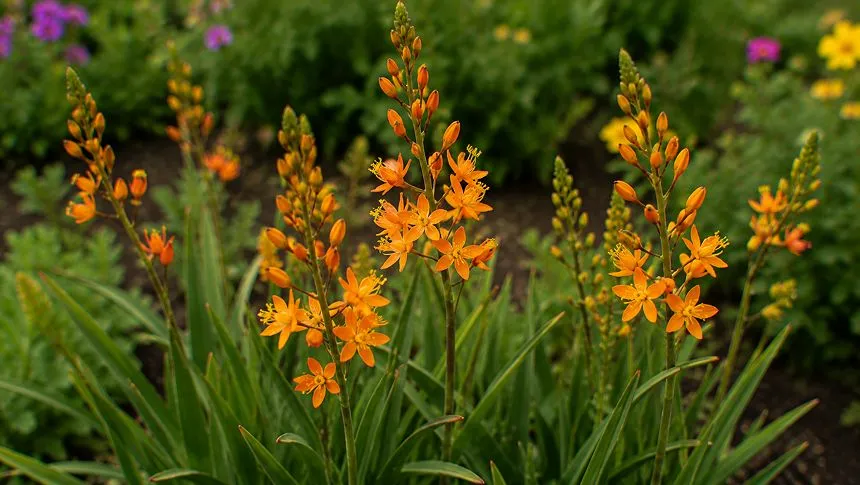
Native: Southern Africa
Bloom Time: Fall–Spring
Hardiness Zone: 9–11
Height: 1–1.5 ft
Bulbine flowers are 1 to 1.5 feet long. The flowers are star-shaped and have 6 petals. They are found in orange and yellow colors. The flowers bloom from fall through spring.
These flowers grow in USDA zones 9 to 11. This plant is pollinator-friendly and attracts bees, hummingbirds, and butterflies. They have no fragrance.
16. Cosmos (Cosmos)
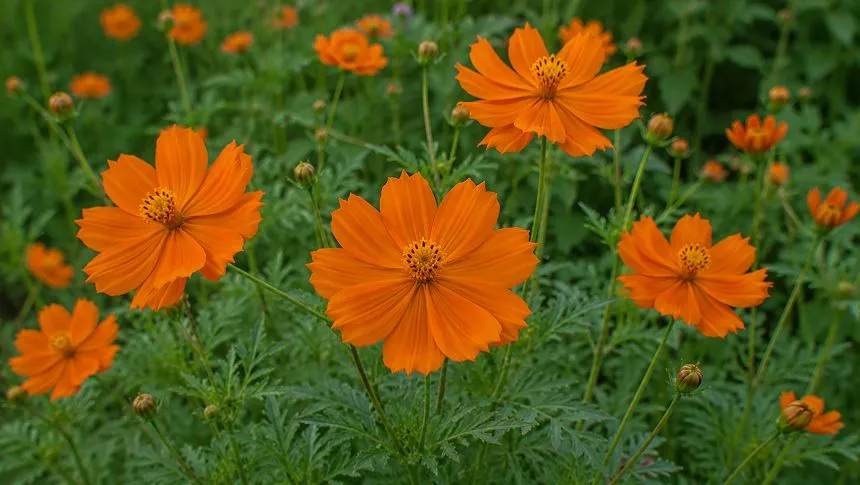
Native: North & South America
Bloom Time: Spring–Fall
Hardiness Zone: 2–11
Height: 1–6 ft
Cosmos plants are 1 to 6 feet in height. They are found in gold, yellow, orange, pink, purple, red, and white. The flowers mainly bloom in the fall, spring, and summer seasons. The flowers are 3 to 6 inches wide with 7 to 20 petals. It is saucer-shaped.
The flowers have a cocoa and vanilla fragrance and can stay fresh in a vase for 7 days. It grows in USDA zones 2 to 11 and is also pollinator-friendly. It attracts bees, butterflies, and pollinators.
17. Aloe (Aloe barbadensis)
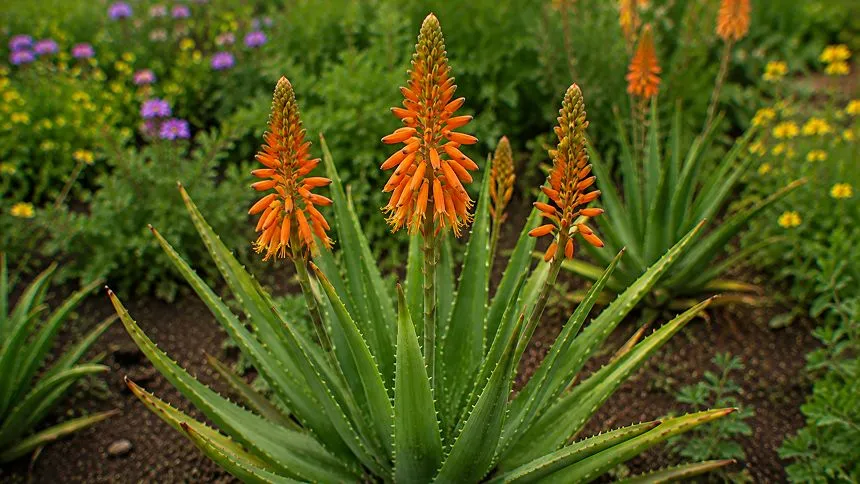
Native: Arabian Peninsula
Bloom Time: Winter–Spring
Hardiness Zone: 10a–12b
Height: 1–2 ft
Aloe flowers bloom in the spring and winter season, they are orange, yellow, and red in color. The blooms are tubular in shape and are found in elongated clusters on a spike and the bloom size is from 1 to 3 inches.
These flowers don’t have fragrance, but they are pollinator-friendly and attract bees, butterflies, hummingbirds, and songbirds. They usually grow in USDA zones 10 to 12.
18. Alstroemeria (Alstroemeria)
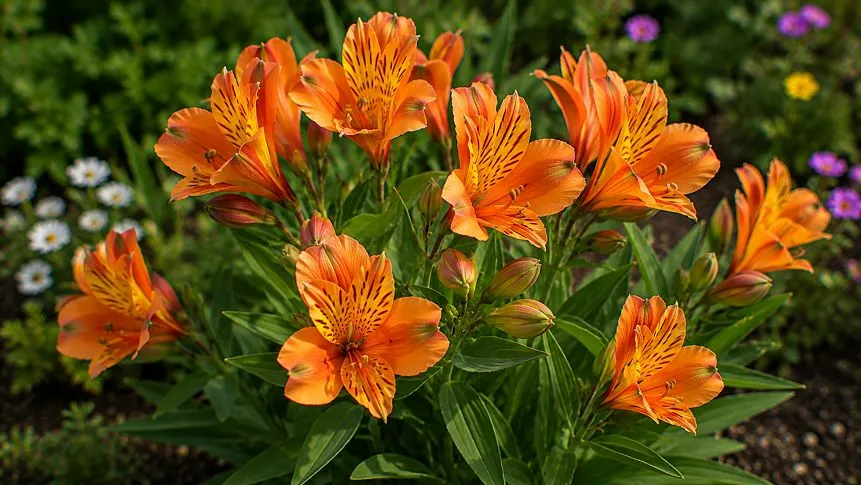
Native: Chile & Argentina
Bloom Time: Spring–Fall
Hardiness Zone: 7a–10b
Height: 1–4 ft
Alstroemeria flowers are usually yellow, orange, pink, purple, red and white. They are tubular and bilaterally symmetrical; it has 6 petals, and bloom diameters are 1 to 3 inches in size. It blooms in spring, summer, and fall, the plant’s height is 1 to 4 feet.
These flowers stay fresh for 2 to 3 weeks, it doesn’t have a fragrance. They are found in hardiness zones 7 to 10. This flower is pollinator-friendly and attracts pollinators, butterflies, and hummingbirds.
19. Canna (Canna)
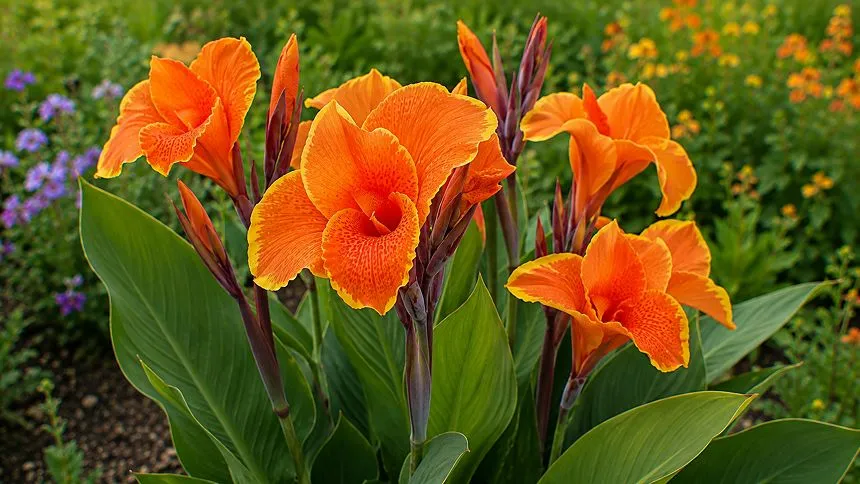
Native: Tropical Americas & parts of Africa
Bloom Time: Summer–Fall
Hardiness Zone: 6a–10b
Height: 1.5–8 ft
Canna flowers are available in cream, yellow, orange, pink, red, and variegated colors. The flowers’ bloom size is 3 to 6 inches, and they are lipped or gladiolus-shaped. The flower height is between 1.5 and 8 feet. The flowers usually bloom between summer and fall, typically in the month from July to October.
They grow in 6 to 10 USDA zones, are pollinator-friendly, and attract hummingbirds. It has only a little fragrance with a green and sweet smell. Canna flowers have a 3- to 5-day vase life.
20. California Poppy (Eschscholzia californica)
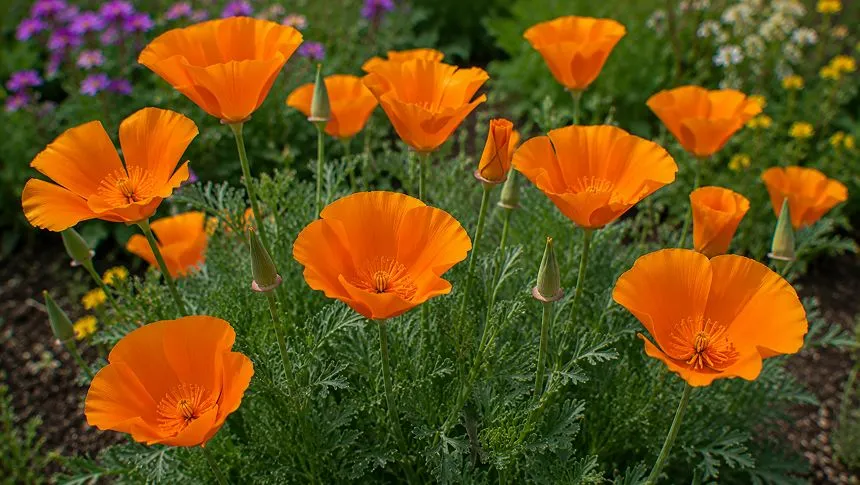
Native: Western U.S. & Mexico
Bloom Time: Spring–Summer
Hardiness Zone: 8–10
Height: 1–2 ft
California poppy flowers feature 1-inch-large cup-shaped flowers with 4-5 petals per flower head. The flowers bloom in spring and summer. They are usually found in yellow, gold, and orange colors. The plant height is 1 to 2 feet.
They grow in USDA zones 6 to 12, and they have a vase life of 5 to 7 days. It doesn’t have a fragrance. These flowers are pollinator-friendly and attract butterflies, birds, and pollinators.
21. Lion’s Tail (Leonotis leonurus)
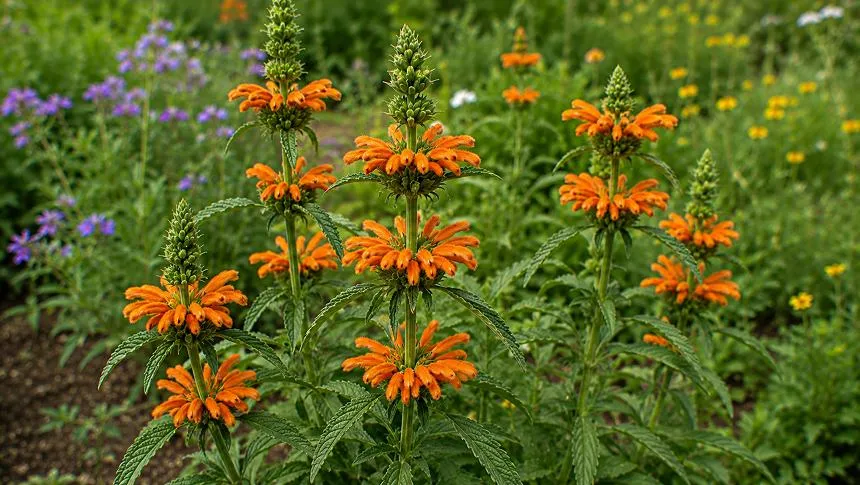
Native: Southern Africa
Bloom Time: Spring–Fall
Hardiness Zone: 8–11
Height: 3–6 ft
Lion tail flowers are orange in color. They are tubular or lipped-shaped, and the bloom size is 1 to 3 inches. The plant height is 3 to 6 feet. The flowers usually bloom from spring to fall.
These flowers are pollinator-friendly and attract bees, butterflies, and hummingbirds. The hardiness zone is 8 to 11. The leaves of this flower give a pleasant fragrance when it is crushed.
10 Plants With Orange Flowers
Zinnia, Dahlia, Boat Orchid, Lantana, Crown Imperial, Helenium, Safflower, Red Hot Poker, Butterfly Weed, and Chinese Lantern are 10 beautiful plants with orange flowers. If you are wondering what flowers are orange, the answer is that flowers between yellow and reddish tones are orange flowers.
To know what different orange flowers mean and which is best for planting, you should take a look at their description for better knowledge.
1. Zinnia (Zinnia elegans)
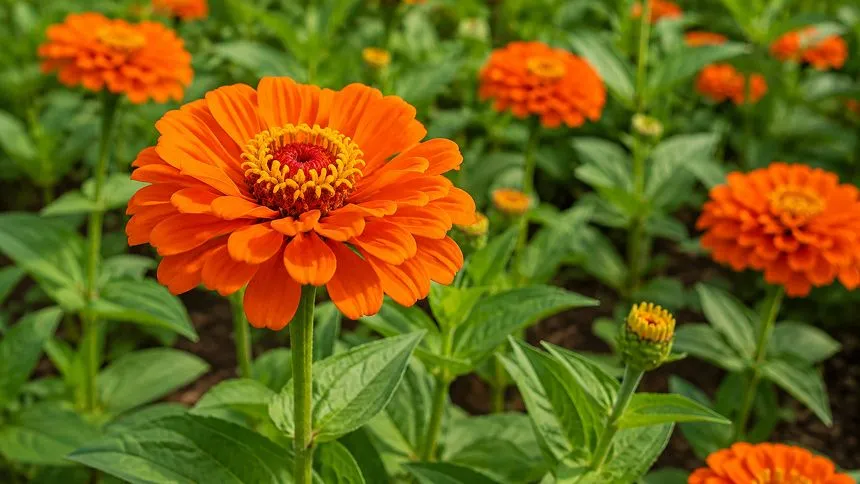
Pollinator friendly: Highly, particularly for butterflies.
Blooming season: Spring and fall.
Flower size: 1 to 3 inches.
Flower shape: Dome
Zinnia flowers are found mainly in Southern North America and South America; they bloom annually. They have a tall, slender stem and a daisy-like head. Available in various colors, this plant prefers full sun and well-drained soil. It has 7 to 20 petals. These plants are usually found in USDA zones 3a to 10 b.
The flower height is usually 8 inches to 4 feet tall. These are found in different colors like orange, red, white, pink, purple, etc. Usually, they have no fragrance; the vase life of these flowers is 7 to 10 days. Its bold colors usually attract insects and pollinators. Zinnia itself is an open pollinator flower.
2. Dahlia (Dahlia)
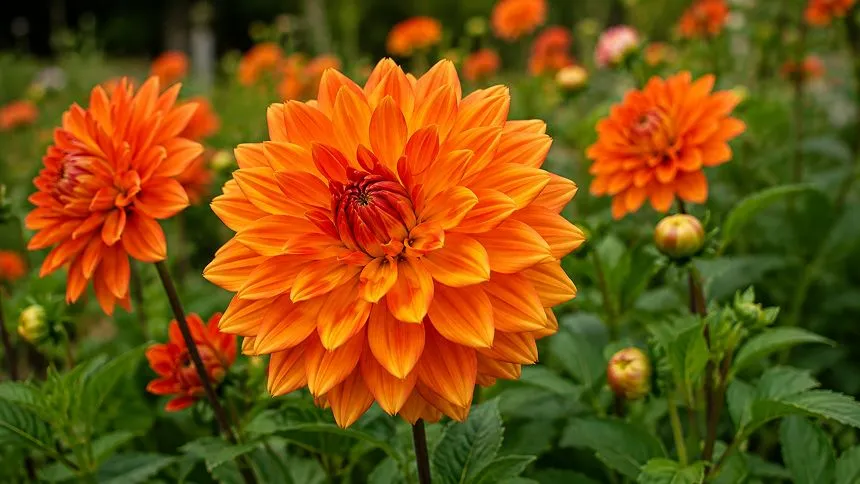
Vase life: 4 to 6 days
Bloom time: Mid-summer to early fall.
Flower height: 1 to 3 inches
Native: Mexico and Central America region
Dahlias are beautiful flowers that are native to the Mexico and central america region. They usually bloom between mid-summer and mid-fall. It is available in various colors like black, orange, red, white, purple, and pink. Dahlias have no fragrance, and they are also helpful in pollination.
The flower is available in different shapes, like decorative, cactus, ball, and single. The bloom size varies between 2 and 12 inches. These perennial flowers grow in USDA zones 8 to 11. In zones 3 to 7, these flowers are considered annual. This flower is edible for humans but is dangerous for small animals.
3. Boat Orchid (Cymbidium)
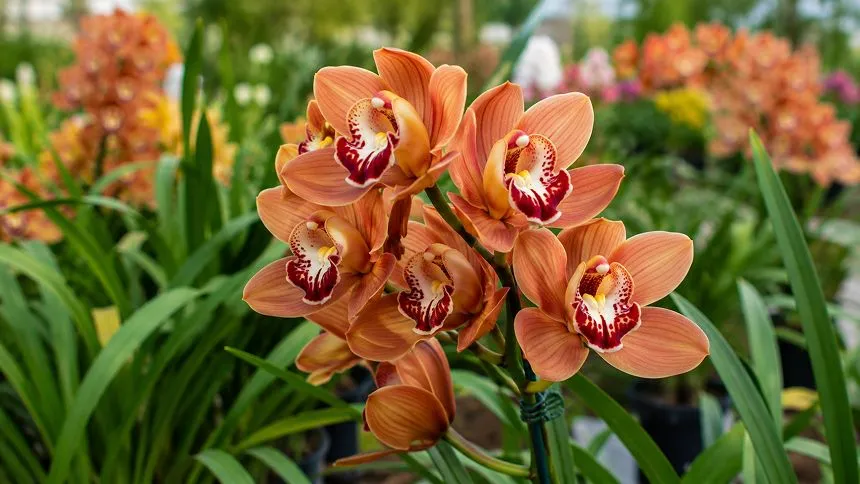
Native: Asia and Australia
Bloom size: 1 to 5 inches
Hardiness zone: 10 to 12
Boat orchid flowers usually grow 1 to 4 feet tall. The flowers are 1 to 5 inches wide and last from 1 to 3 months. They usually bloom in groups of 6 to 12, and each flower has 3 sepals and 2 petals. This flower is available in various colors like white, pink, orange, yellow, etc. in which white is the most famous.
They usually bloom between winter and early spring. This flower has a sweet floral, citrusy to musky fragrance. However, they are specifically adapted to bees and wasps. They will stay fresh in a vase for 3 to 6 weeks.
4. Lantana (Lantana)
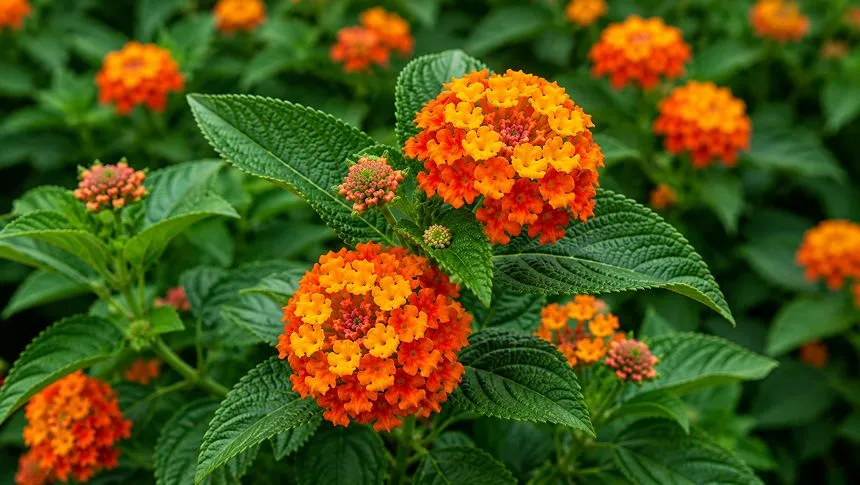
USDA zone: 7 to 11
Native: West Indies and Mexico to Tropical America
Bloom time: Fall and summer
Vase life: 3 to 5 days
Lantana flowers are star- or tubular-shaped, and the size is usually less than 1 inch. They are found in clusters, and the flowers have 4 or 5 petals. It is found in different colors. These flowers are poisonous in nature. They usually bloom in fall and summer.
The plants grow up to 18 to 24 inches tall. It has a very slightly minty scent. They will stay fresh in a vase for 3 to 5 days. This flower is highly pollinator-friendly and attracts butterflies, bees, and hummingbirds.
5. Crown Imperial (Fritillaria imperialis)
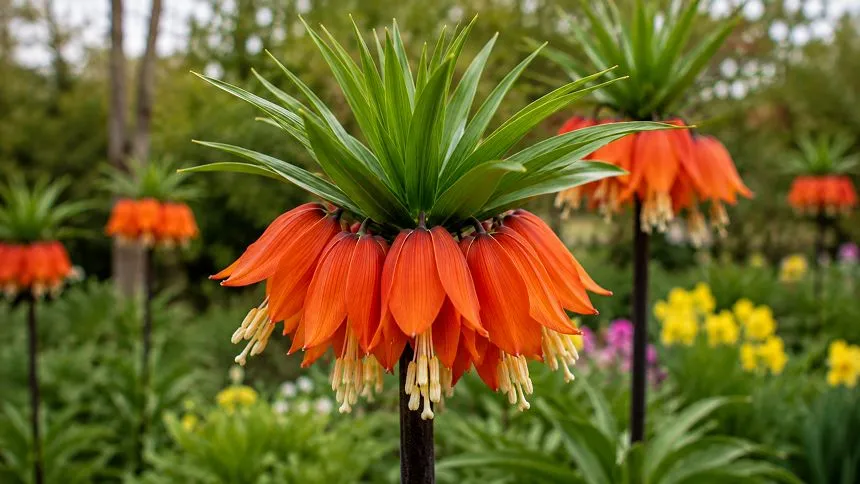
Native: Western Asia and part of the Middle East.
Hardiness zone: 5 to 8.
Bloom time: Spring and fall
Crown Imperial flowers are bell- or cup-shaped, 2-3 inches long. The plant size is usually 3 to 4 feet. It is a perennial flower that is mainly found on western Asia and some parts from the middle east. The flowers are usually found in spring and fall.
These are found in various colors like red, yellow, bright and burnt orange. It has a strong, pungent, and musky scent; some say it’s like garlic, and others say it’s like a fox. It has a vase life of 5 to 8 days. These are pollinator friendly, attract bees, hummingbirds, etc.
6. Helenium (Helenium)
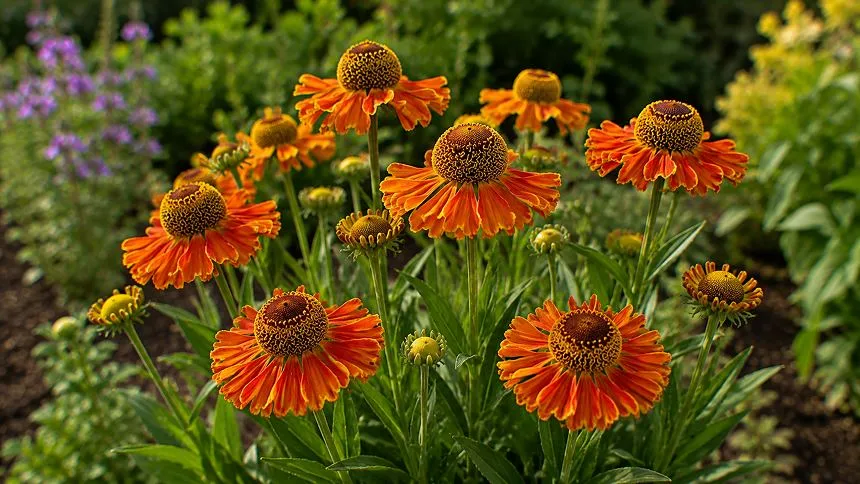
Hardiness zone: 3 to 8
Native: Throughout the United States
Bloom time: Fall and summer.
Helenium flowers are radial in shape and bloom 3 to 5 inches. They usually have 7 to 20 petals, and the plant’s height is up to 3 to 5 feet tall. This flower has a daisy-shaped face and is found in warm tones between red and yellow; the petals usually have 2 tones, with the lighter color being on the edge.
These plants grow in USDA zones 3 to 8. They bloom in the fall and summer seasons and are pollinator-friendly, mainly attracting butterflies, pollinators, small mammals, and songbirds. The flowers have no particular fragrance and can stay fresh in a vase for 1 week.
7. Safflower (Carthamus tinctorius)
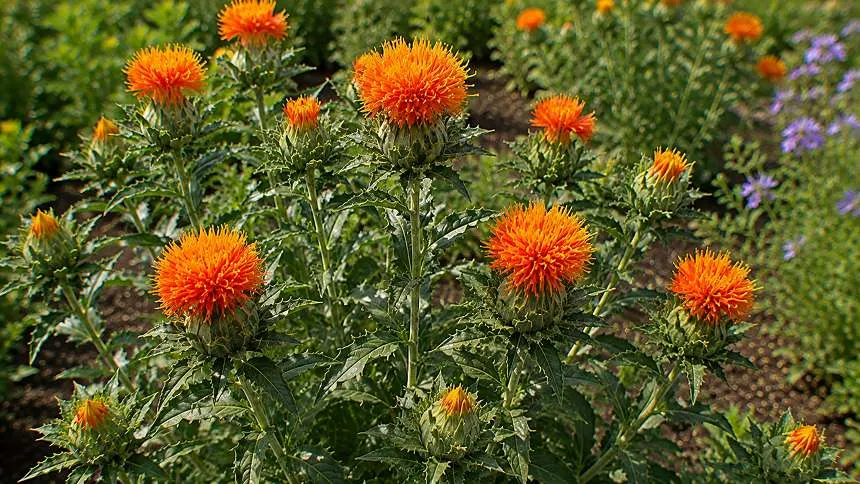
Native: Asia and the Mediterranean region.
Bloom time: Mid-spring to fall
Hardiness zone: 3 to 9
Vase life: 7 to 14 days
Safflower has yellow and red petals emerging from a one-inch thistle that looks like a globe. The bloom size is 1 to 2 inches. Usually, the plant size is 1 to 3 feet; however, some varieties may go up to 5 feet. They usually bloom between mid spring to fall season.
This flower is only found in orange and yellow colors. It has a delicate, floral, dusty, and earthy smell. This flower attracts bees, butterflies, mammals, and birds, but it is self-pollinating. They can be kept fresh in a vase for 14 days if cared for properly.
8. Red Hot Poker (Kniphofia)
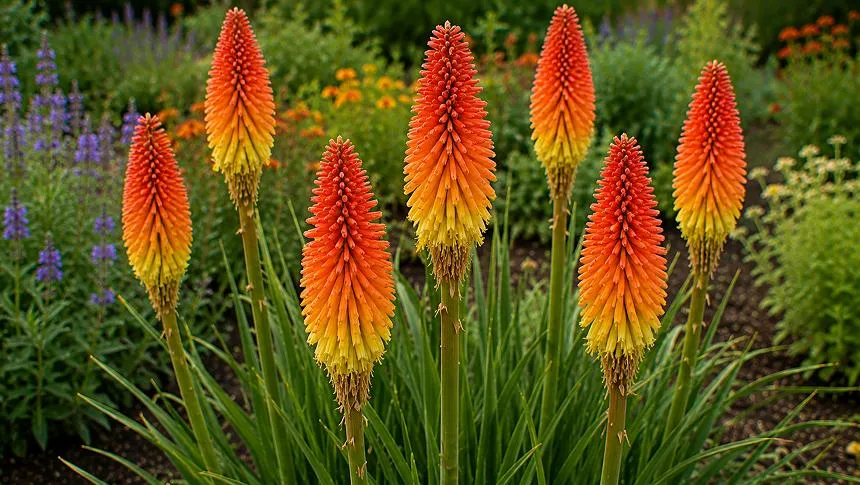
Bloom time: Fall and summer
Native: Mountainous areas in southern to tropical Africa
Hardiness zone: 5 to 8
Red Hot Poker flowers are tubular in shape; they are found in orange, pink, white, red/ burgundy, gold, and yellow colors. The flower spikes from bottom to up, with the spike’s length descending towards upwards. The size of the plant varies between 1 ft and 6 feet. The flowers bloom in fall and summer.
They are pollinator-friendly and attract bees, hummingbirds, pollinators, and songbirds. It doesn’t have any fragrance. They can last for up to 18 days in a vase.
9. Butterfly Weed (Asclepias tuberosa)
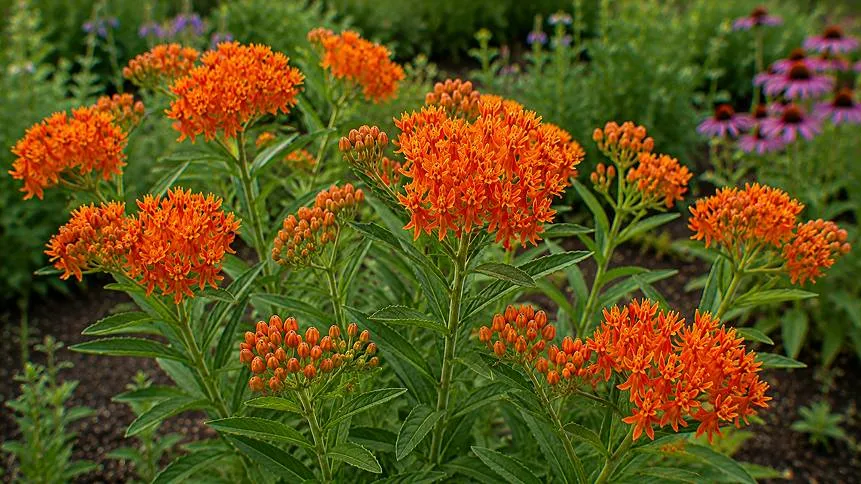
Native: Eastern and southern North America, including Mexico.
Hardiness zone: 3 to 9
Bloom time: Spring and summer
Flower size: 1 to 2 feet.
Butterfly weeds bloom in spring and summer. It blooms 1 inch wide in a crown or tubular shape. They are usually found in orange, red, burgundy, gold, and yellow colors. The plant size is between 1 and 2 feet.
They grow in USDA zones 3 to 9 and are also pollinator-friendly, attracting bees, butterflies, moths, hummingbirds, pollinators, and some specialised bees. It has a very mild, sweet, vanilla and candy-like fragrance. It lasts for a week in a vase; with proper care, it can last longer.
10. Chinese Lantern (Physalis alkekengi)
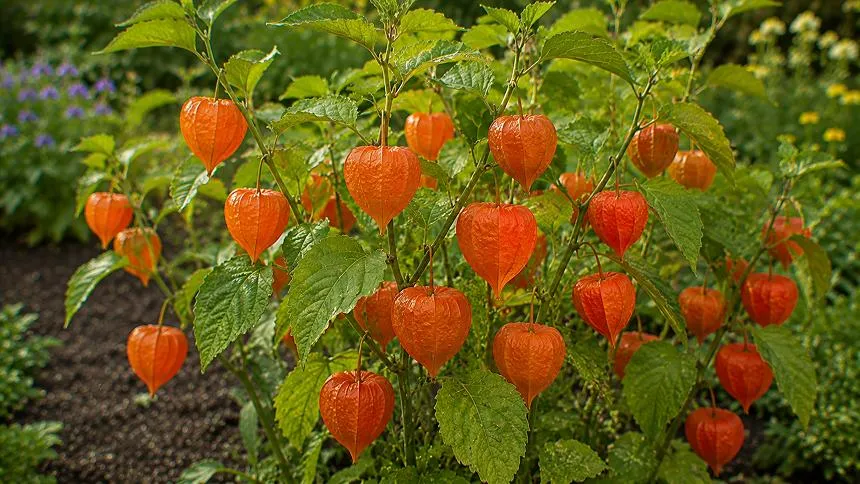
Native: From southeastern Europe to East Asia.
Hardiness zone: 3 to 9
Bloom time: Summer
Chinese lanterns are bell- or funnel-shaped flowers the bloom size is up to 3 inches wide, with each head has 4 to 5 petals. The plant height is between 1 and 3 feet. They usually bloom in the summer season. Except orange, these flowers are usually found in brown, copper, cream, tan, gold, and yellow colors.
This flower is pollinator friendly and attracts specialized bees and pollinators. They prominently grow in 3 to 9 USDA zones. It can stay fresh for 5 to 10 days in a vase. They don’t have a specific fragrance, but it is liked by people due to its shape.
Top 10 Flowering Trees With Orange Flowers
Tulip Tree, Royal Poinciana, Red Buckeye, Pomegranate, Geiger Tree, Silky Oak, Flame Tree, Coral Tree, Orange Champak, and Jamaican Rain Tree are the 10 flowering trees with orange flowers. These trees bloom with orange flowers and can be the best choice to add bright color to your garden.
Take a look at the list of 10 flowering trees with orange flowers:
1. Tulip Tree (Liriodendron tulipifera)
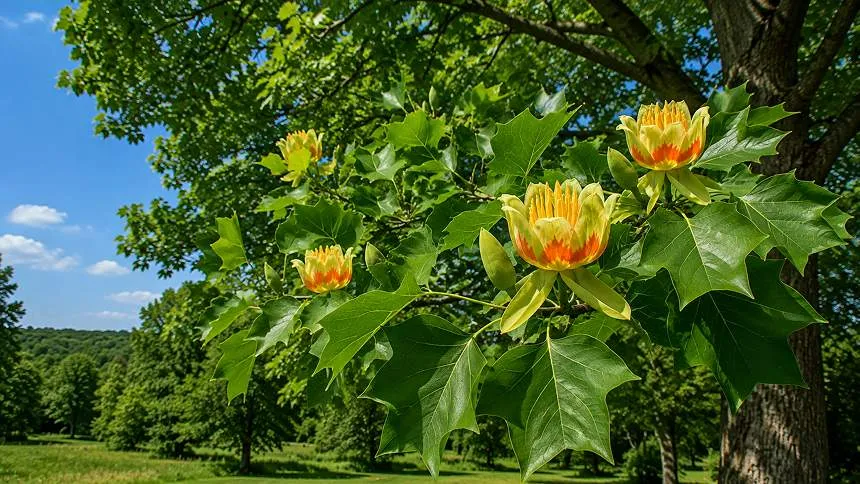
Flower shape: Oval
Care: Easy to grow
Height: 60-90 inches
Botanical family: Magnoliaceae
Tulip trees usually need well-draining clay or loamy soil with an acidic soil pH (4.5-6.8). Make sure the soil is consistently damp and receives direct sun exposure. These are among the largest native trees in America. This plant can be grown in hardiness zones 5 to 9. The plant size varies from 60 to 90 feet, whereas the width is 30 to 50 feet. Well, the usual flower size is 2 inches.
It is typically grown for its ornamental value and shade. The flower is filled with different shades, and the leaves have a distinctive shape, it has a squarish and broad appearance with an intended notch at the top. Easy to propagate, usually blooming in spring. They have only 1 to 3 days of vase life; they are not pollinator-friendly as they don’t have nectar.
Buy now: Tulip Tree
2. Royal Poinciana (Delonix regia)
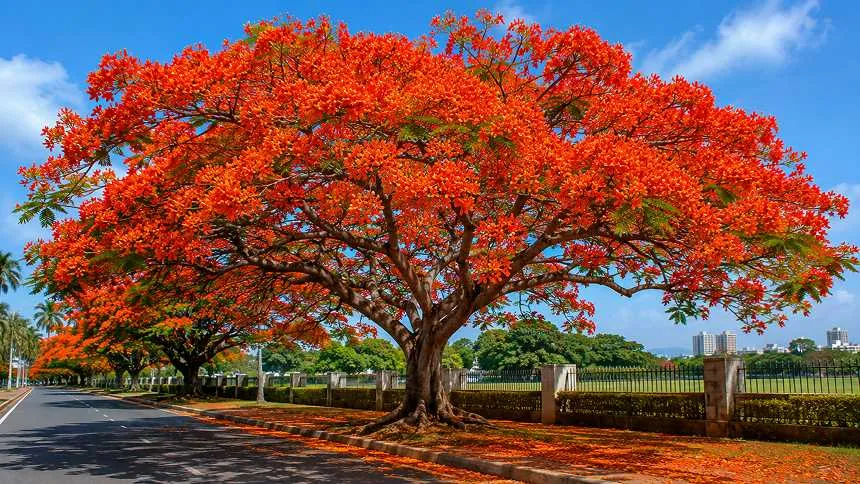
Hardiness zones: USDA zones 9 b to 11.
Pollinator-friendly: Moderate
Native range: Tropical and semi tropical region of Madagascar.
Care: Required proper care.
Mature tree height is 40 feet, and the canopy is usually 40 -60 feet wide. It has a flat topped umbrella look, the flowers are 3 to 4 inches with 5 spreading petals in which 4 are spoon shaped and one slightly large petal, they start blooming in winter and typically shed in spring. It has minimal fragrance.
The tree starts blooming within 5 years of planting; the vase life is usually 1 to 2 days. The flowers are moderately pollinator-friendly. The tree needs proper sunlight, moist soil, and well-drained, sandy, loamy, clay soil that can tolerate various soils and pH.
3. Red Buckeye (Aesculus pavia)
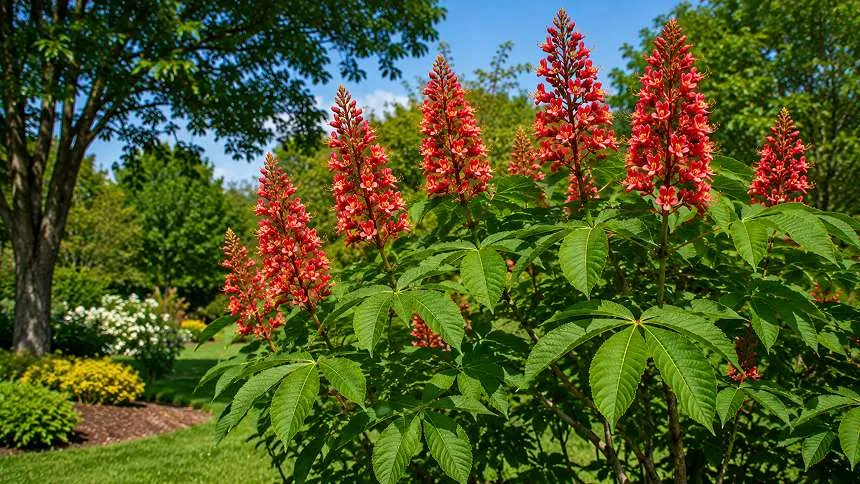
Native range: Illinois, North America
Plant height: 15- 20 feets height and 15-30 feets width.
Bloom time: Late spring
Hardiness zones: 4 to 8 USDA zones.
The flowers are tubular-shaped with 4 to5 petals, and their bloom size is 1 to 3 inches. An individual flower is about 1 to 1.5 inches long. They are orange and red in color and typically bloom in March and April. The plant height varies between 15 and 25 feet.
These plants grow in USDA zones 4 to 8. They are pollinator-friendly and attract bees, butterflies, hummingbirds, and others. This flower has no fragrance.
4. Pomegranate (Punica granatum)
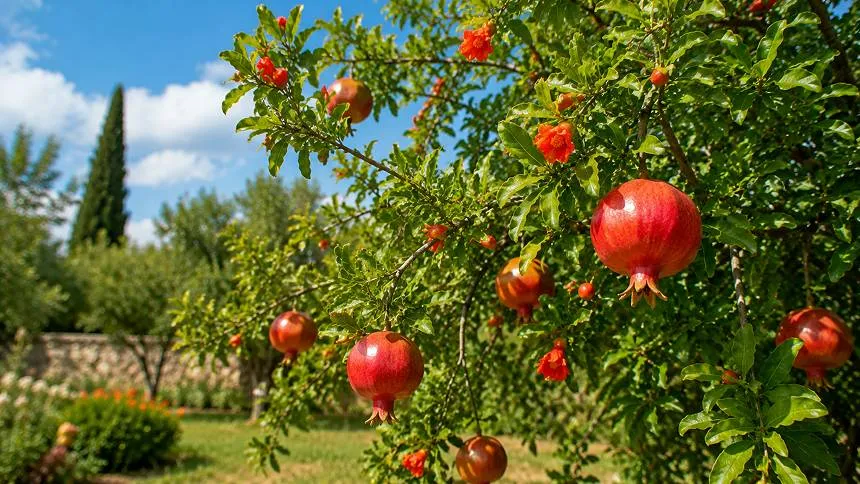
Native: Western & Central Asia
Bloom Time: Spring–Fall
Hardiness Zone: 8a–10b
Height: 10–12 ft
Pomegranate flowers are trumpet-shaped flowers with fused and crepe paper like petals. They bloom 1 to 3 inches wide and are typically found in yellow, orange, pink, red, and white colors. The plant size is 10 to 12 feet.
This plant mainly grows in USDA zones 8 to 10. These flowers are pollinator-friendly and attract hummingbirds mainly.
5. Geiger Tree (Cordia sebestena)
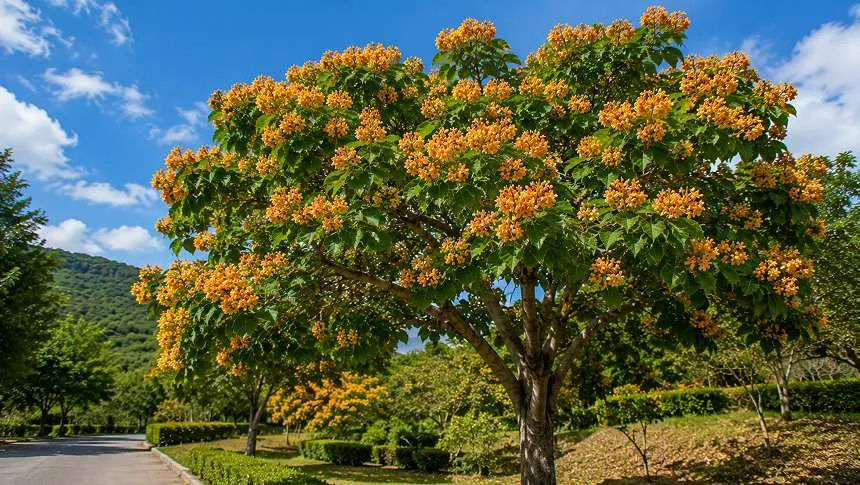
Native: Florida, Caribbean & Tropical Americas
Bloom Time: Year-round; mainly Spring–Summer
Hardiness Zone: 10b–11
Height: Up to 30 ft
Geiger trees are about 30 feet in height. The flowers are tubular in shape and about 2 inches wide. They are dark orange and red in color, and the blooms grow in spring and summer.
These plants are usually found in USDA zones 10 b to 11. It has a pleasant fragrance, is pollinator-friendly, and attracts butterflies and hummingbirds.
6. Silky Oak (Grevillea robusta)
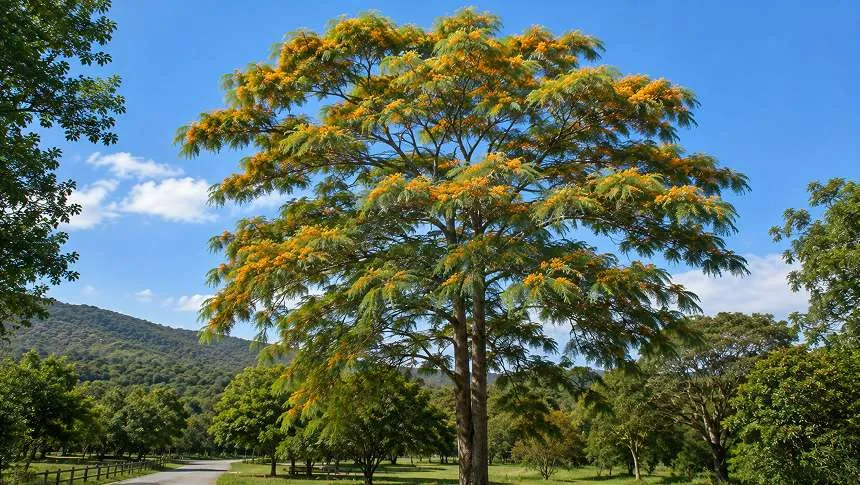
Native: Australia
Bloom Time: Fall
Hardiness Zone: 9a–11b
Height: 50 – 100 feet
Silk oak trees are 50 to 100 feet tall. The flowers are usually golden orange and yellow in color. The flowers come in the fall season. The flower clusters are 4 to 6 inches long. They are shaped like a toothbrush.
The trees grow well in hardiness zones 9 to 11. The flowers usually don’t have any fragrance; they are pollinator-friendly and attract birds, bees, and other nectar-feeding animals.
7. Flame Tree (Brachychiton acerifolius)
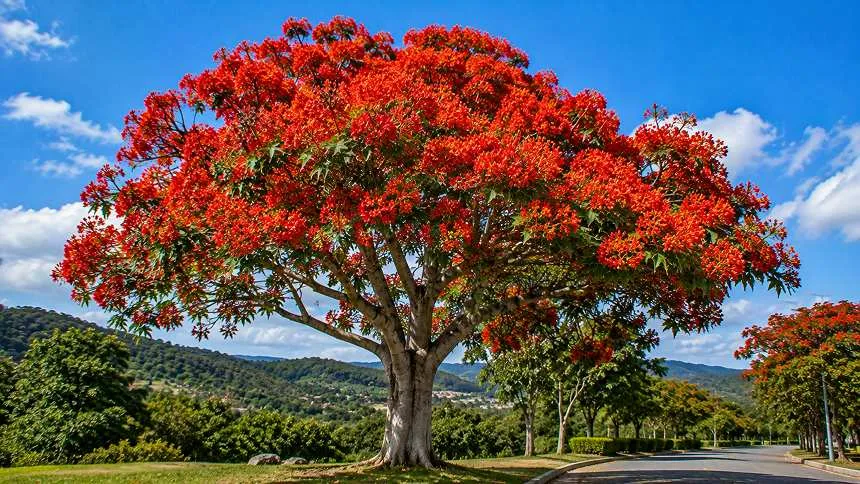
Native: Australia
Bloom Time: Early Summer
Hardiness Zone: 10–12
Height: Up to 30-60 ft
Flame trees reach up to a height of 30 to 60 feet. These flowers are bell-shaped and have 5 petals; their bloom size is up to 5 inches. They typically bloom in the spring season.
The plants grow in USDA zones 10 to 12. These are nectar-rich flowers, which means they are pollinator-friendly and attract bees, birds, and other pollinators. They have little to no fragrance.
8. Coral Tree (Erythrina species)
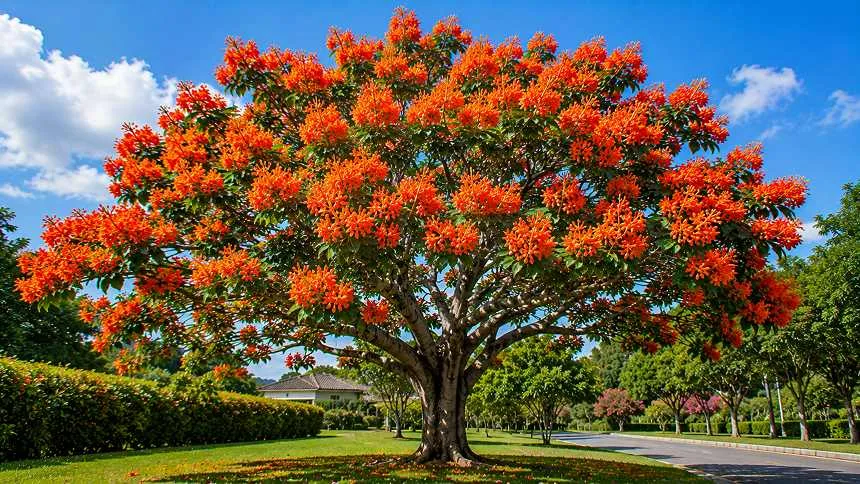
Native: South Africa and South America
Bloom Time: Spring
Hardiness Zone: 9 and above
Height: 33 and 65 feet.
Coral tree flowers are slightly curved and have narrow, conical shapes. The flowers are tubular-shaped and typically found in bright red, scarlet, or orange-red colors. The flower size is 1.5 to 3 inches, and the tree size is between 33 and 65 feet.
Most of the coral trees grow in USDA zones 9 to 11. These plants are pollinator-friendly and nectar rich that usually attracts nectar birds, bees, and butterflies. They usually don’t have a fragrance.
9. Orange Champak (Magnolia champaca)
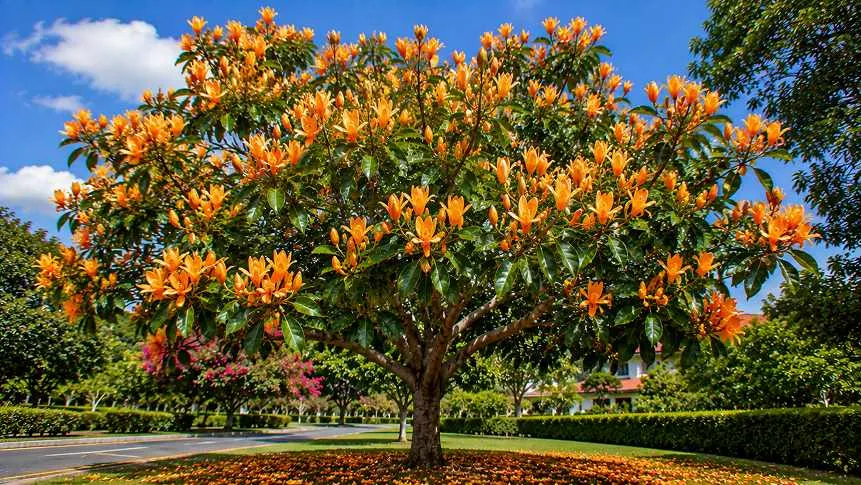
Native: South & Southeast Asia
Bloom Time: May–July
Hardiness Zone: 10–11
Height: Up to 10-30 ft
Orange champak flowers are cup or star shaped like they have several narrow and fresh petals. Each flower has a 2 to 3-inch-wide bloom, and typically they are yellow to deep orange in color. It blooms in the summer season. The trees are 10 to 30 feet tall.
These plants grow in USDA zones 10 and 11, and they are moderately pollinator-friendly and attract bees and insects. These flowers have a strong and sweet fragrance and are typically used in perfume.
10. Jamaican rain tree (Brya Ebenus)
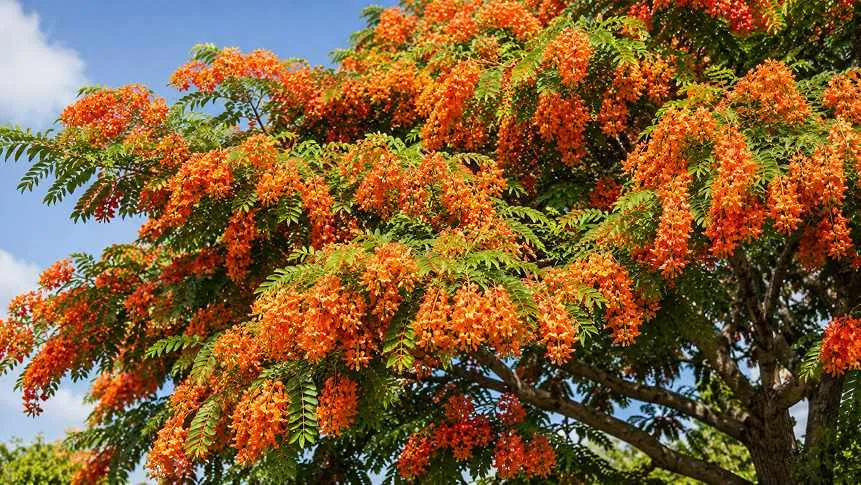
Native: Cuba
Bloom Time: Year-round, especially after rain
Hardiness Zone: 10–11
Height: Up to 26 ft
Jamaican rain tree flowers are small, pea-shaped, with 5 petals and usually bloom 0.5 inches wide. They usually grow in bright yellow and orange-yellow flowers that bloom in the late summer and fall season. The trees are small and reach 20 to 30 feet.
They grow in USDA zones 10 to 11. The flowers are pollinator-friendly, it usually attracts bees and butterflies and also has a delicate scent.
Conclusion
Orange flowers bring warmth, energy, and a cheerful look to the garden. There are popular flowers like roses, daylilies, zinnias, and marigolds, and trees like flame tree, coral tree, and silky oak; there are different varieties that you can explore.
Each orange flower is different; its features, bloom season, requirements, and appearance are different. You can choose based on the climate, garden space, flower type, etc. Whether you are looking for a small flower or a large tree covered with blooms, we have told you about multiple options and also given a description that you can choose from.
FAQs
What kind of flower has orange flowers?
Marigolds, daylilies, and tiger lilies are the most popular and vibrant orange flowers that grow easily in the garden. These flowers show enthusiasm, creativity, and warmth. People often give these flowers to convey gratitude and encouragement.
What perennial flower is orange?
Several popular perennial flowers bloom in shades of orange, and they return every year. Daylily, butterfly weed, coneflower, avens, and blanket flower are famous perennial orange flowers.
What are orange blossoms called?
The scientific name of orange blossoms that grow on sweet orange trees is Citrus sinensis, whereas the flowers grown on bitter orange trees are called Citrus aurantium.
What do orange flowers symbolize?
Orange flowers symbolise energy, enthusiasm, warmth, and creativity. The bright color makes the garden more beautiful and attractive. Orange flowers can be the best option for gifting for new beginnings.
hat is the most beautiful orange flower?
Orange gloriosa lilies are widely considered the most beautiful orange flowers. They feature brilliant curved, ruffled petals of burnt orange and deep umber color.