Imagine fresh green leaves, delicate ferns, or colorful foliage, all growing inside a glass container. That’s a terrarium! Some of the best plants inside a terrarium include jade plant, burro’s tail, hen and chick plant, baby’s tears, nerve plant, Moon Valley, and many more.
However, not all terrarium plants enjoy the same growing conditions. A cactus might thrive in an open glass bowl while tiny ferns prefer growing in a closed container. Here in this article, I have listed 7 open and 8 closed terrarium plants that are even easy for beginners to handle.
Quick Answer:
Terrarium plants are usually compact plant varieties that are grown inside a clear glass or plastic jar. These are usually divided into two types: closed terrarium plants and open terrarium plants.
Air plants, haworthia, jade plant, echeveria, hens and chicks, ox tongue, and burro’s tail are some of the best open terrarium plants. Whereas the nerve plant, moon valley, asparagus fern, strawberry begonia, peperomia, moss, asparagus fern, and baby’s tears are closed terrarium varieties.
What are Terrarium Plants?
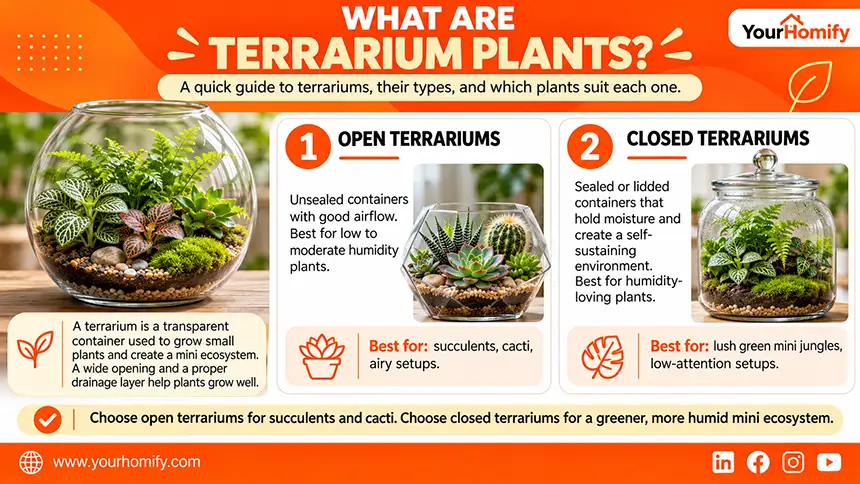
A terrarium is a transparent container that contains various small plants, creating a mini ecosystem. I like the fact that you can turn any glass or clear plastic container into a terrarium, provided it meets a few basic requirements. The mouth of the vessel should be wide, and it should have a proper drainage layer.
There are mainly two types of terrariums: open terrariums and closed terrariums. Let us quickly understand what these two are.
- Open Terrariums: An open terrarium is basically an unsealed container that allows proper air circulation and is usually ideal for plants that require low to moderate humidity.
- Closed Terrariums: A closed terrarium is a sealed or tightly lidded vessel that creates a self-sustaining ecosystem. Plants that require high humidity can be easily grown in these.
If you like succulents or cacti varieties and can manage sufficient time for their care, go for open terrariums. For a lush green mini jungle and plants that do not need much attention, closed, self-sustaining terrariums are best.
7 Open Plants Inside a Terrarium That You Should Know
Air plants, zebra haworthia, echeveria, jade plant, burro’s tail, hens and chicks, and ox tongue are some of the most popular open terrarium plants. Let us explore them in detail in this section.
1. Air Plants (Tillandsia species)
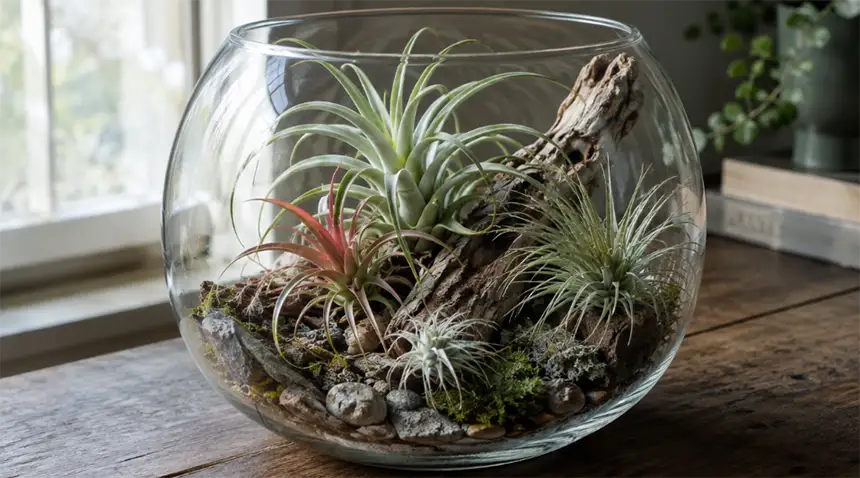
Air plants are one of the easiest open terrarium species. They can thrive without soil, easily growing in sand, pebbles, or wood logs within an open container. Since they are soil-free epiphytes, they can absorb nutrients and moisture directly through the leaf structures called trichomes.
The care needs of the air plants are simple. They need bright, indirect sunlight. Take the species out of the terrarium every 1-2 weeks and soak them in water for 20-30 mins. Shake off the excess water and place it inside only when the plant is completely dry.
2. Zebra Haworthia (Haworthia fasciata)
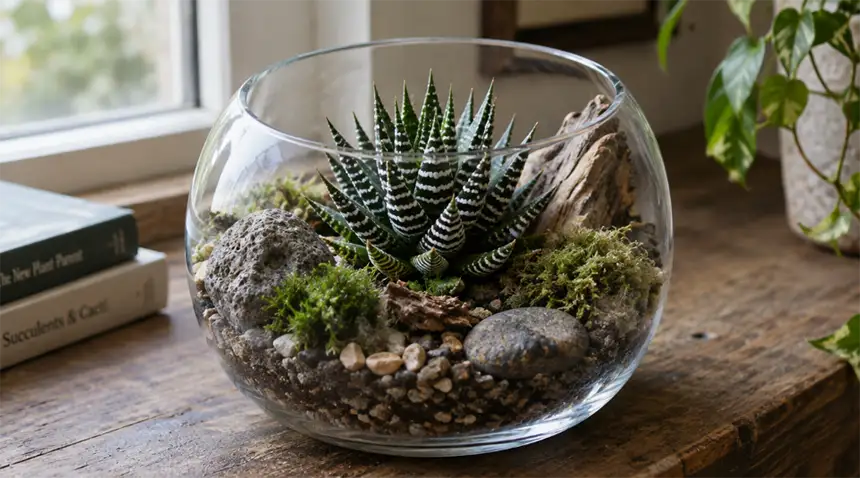
Zebra Haworthia is a perennial succulent that belongs to the Haworthiopsis genus. It is one of the most admired open terrarium plants and is mainly used for ornamental purposes. The species grows about 8 inches tall and wide, and because the leaves have white lines on them, it reminds one of Zebra stripes, hence its name.
This species only survives indoors if proper care is given. The Haworthia fasciata features white and orange flowers during the spring or summer season, and the lifespan of the species is up to 50 years. It prefers bright, indirect sunlight and moderate watering, which makes it a perfect terrarium plant for beginners.
3. Echeveria (Echeveria spp.)
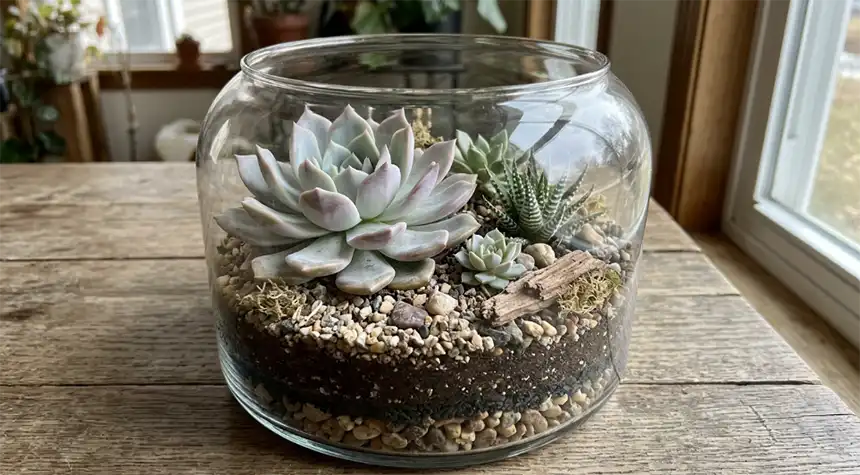
You might have seen echeveria growing as an outdoor succulent, but these can also be easily grown inside an open terrarium. A wide-mouthed glass bowl, open dish, or jar that allows proper air circulation and does not trap humidity works well for such species. Echeveria is one of the best terrarium plants and can be easily used in succulent arrangements.
The symmetrical rosette-like structure of the species and its fleshy leaves make it very similar to the hens-and-chicks plant. Make sure the terrarium is placed in a bright spot and water the species sparingly for proper growth.
4. Jade Plant (Crassula ovata)
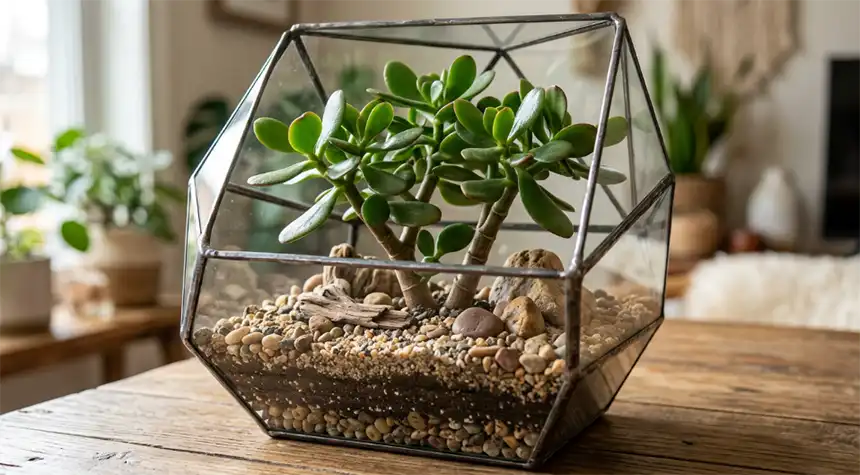
The Jade Plant is a slow-growing succulent that features thick, glossy leaves that can store water. It is a popular indoor plant and is sometimes also called a friendship plant or money plant. The species requires an open terrarium or a wide-mouthed bowl or jar for proper air circulation. Jade plants cannot survive in high humidity; therefore, they are not suitable for closed containers.
Ensure that the plant gets 4-6 hours of bright, indirect sunlight. Use a succulent soil mix and a layer of gravel and rocks at the base.
5. Burro’s Tail (Sedum morganianum)
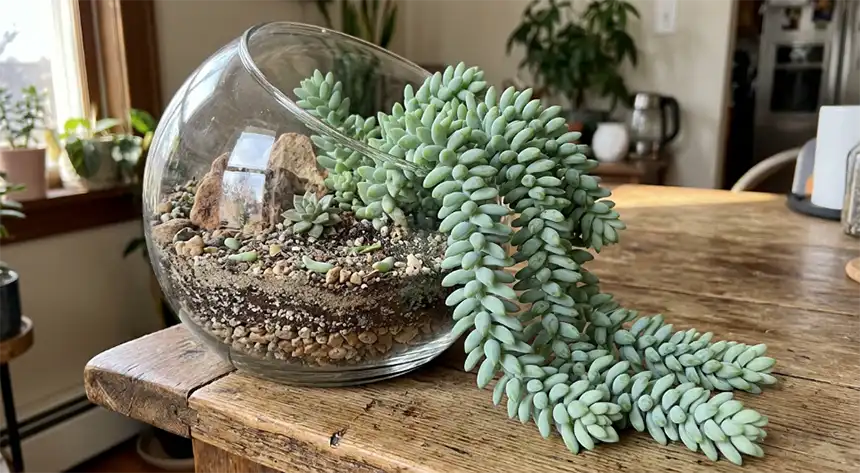
Burro’s tail is one of the best terrarium plants. You can easily grow it in an open terrarium because it requires good airflow and dry conditions. Make sure the container is wide-mouthed and never sealed. The leaves of the species drop off very easily; therefore, it is ideal to place the plant in such a way that it is positioned near the rim of the jar so that it can give a cascading effect when mature.
Although a burro’s tail can be grown with other plants inside a terrarium, it is important to manage proper spacing so that the delicate foliage can grow profusely.
6. Hens and Chicks (Sempervivum spp.)
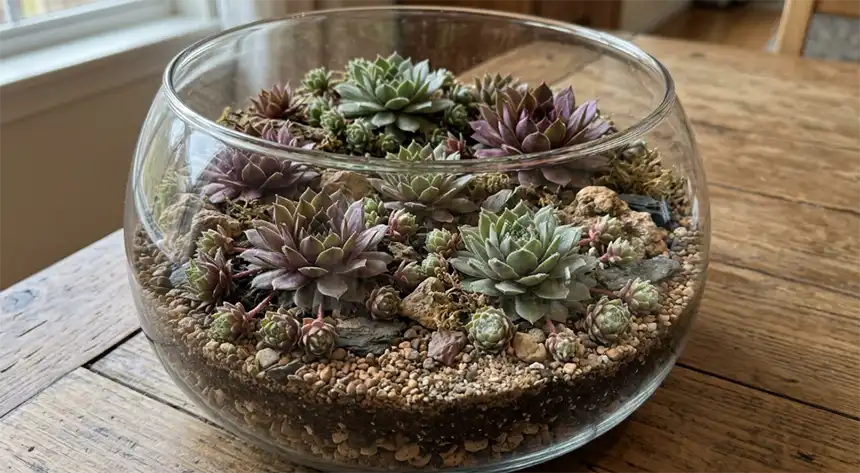
Hens and chicks is a rewarding, easy-to-grow succulent. It is an excellent choice for open terrariums, as this prevents stagnant moisture around the leaves and reduces the risk of fungal infections. Placing this species in an open-mouthed container also keeps the moisture level low, which is important since sempervivum naturally flourishes in dry surroundings.
It is important that you use a proper succulent soil mix for this variety. Overwatering, dim light, and no drainage layer are the top killers of this plant inside a terrarium.
7. Ox Tongue (Gasteria spp.)
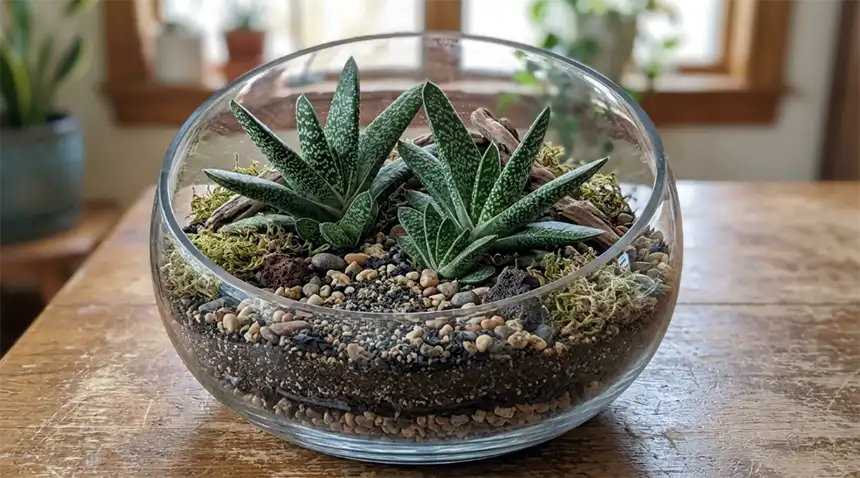
Many garden enthusiasts believe that Ox Tongue is not the ideal plant for open terrariums. Gasteria are small succulents that feature thick, fleshy leaves covered with small white dots. The species got its name because of its tongue-shaped leaves. Never use a closed terrarium, as the plant needs dry air and proper ventilation. Trapped moisture inside the container can kill the plant.
Since open terrariums do not have drainage holes, make sure that before placing the plants inside, you make a thick bottom layer for enhanced drainage. Use gravel and pebbles, and separate the layer using a thin mesh.
8 Easy-to-Maintain Closed Plants Inside a Terrarium
Nerve plant, moon valley, moss, asparagus fern, radiator plant, arrowhead vine, strawberry begonia, and baby’s tears are some exceptional plants that can be grown inside a closed terrarium. Check these out in detail in this section!
1. Nerve Plant (Fittonia albivenis)
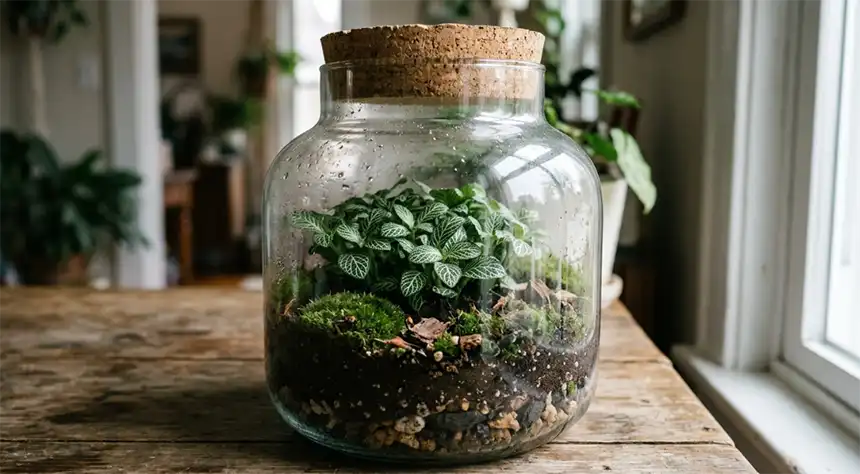
The nerve plant is one of the most popular and best terrarium plants. It is native to the South American rainforest and grows well in areas that have constant moisture and humidity. In a closed terrarium, the sealed container or jar mimics the humid environment. The slow-growing habit and compact size of the plant make it a perfect terrarium species.
Before you place it inside, add a proper drainage layer of small gravel or rocks, a layer of mesh, and activated charcoal to filter water. Make sure to open the vent or the lid of the jar for a short period once a month to prevent mold or rot.
2. Moss (Bryophyta)
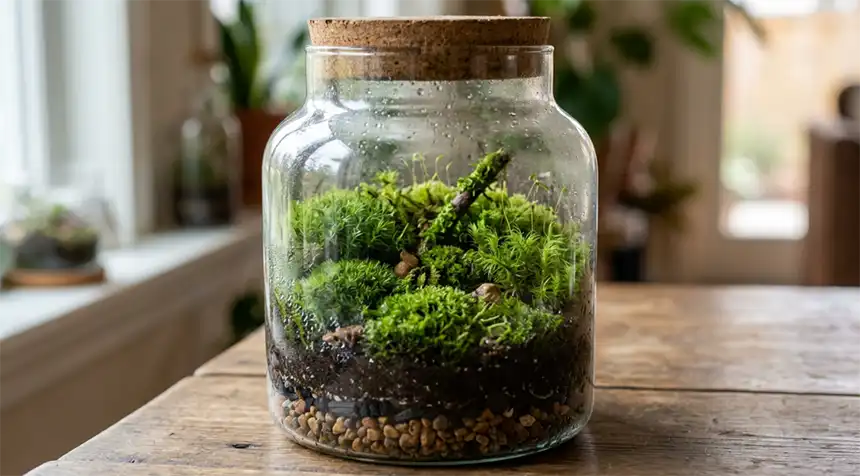
Moss is ideal for a closed terrarium because it can thrive in high humidity and can be easily added to a miniature glass jar setup. Most of the terrarium moss species grow in humidity levels above 70%. They are also known to purify the internal air by absorbing impurities and releasing oxygen.
You can say that moss is like an unsung hero of the terrarium. The soft and green leaves add texture and vibrancy to the container. If you wish to cover the soil and create a balanced look, moss is the perfect addition. It requires minimal care and gives a lush appearance.
3. Moon Valley (Pilea mollis)
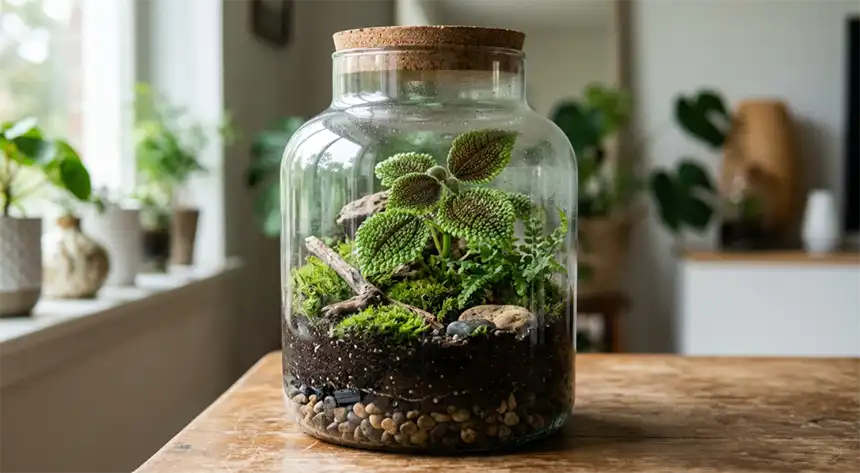
Although not a popular choice for closed terrariums, Moon Valley works well because of certain traits. The species is native to tropical rainforests, which means it thrives in moist and humid spaces. It grows about 6 to 12 inches and would not easily outgrow a closed terrarium.
The textured green leaves with brown veins make Moon Valley a stunning addition to the container. It is non-toxic to cats, dogs, and humans, making it a safe option for decorative displays.
4. Asparagus Fern (Asparagus setaceus)
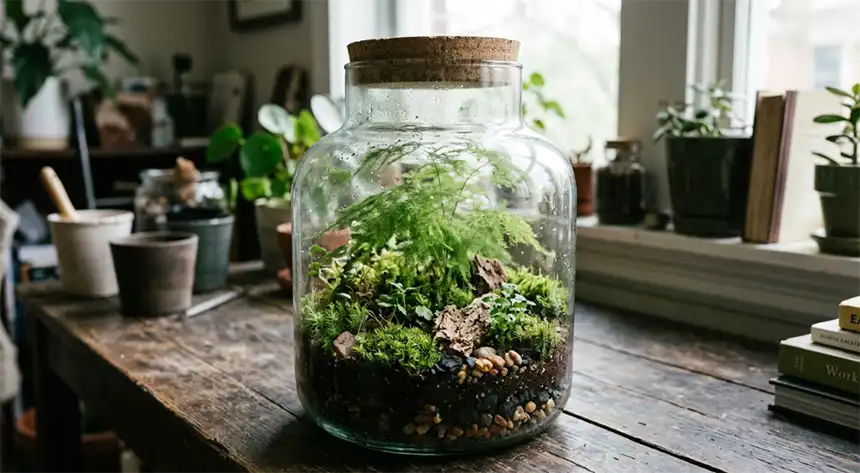
Asparagus fern can only be grown in a closed terrarium if the container is large enough and the soil does not stay soggy. The species grows quickly and can easily outgrow a small glass jar. Make sure that the roots and fronds get proper space to grow. While the ferns prefer growing in high humidity, closed terrariums can make the environment waterlogged or swampy.
I have seen plant enthusiasts using a well-draining soil blend along with coco coir and a layer of activated charcoal to maintain a balance. Also, make sure that the terrarium does not sit in bright sunlight, as the rays can scorch the leaves.
5. Radiator Plants (Peperomia)
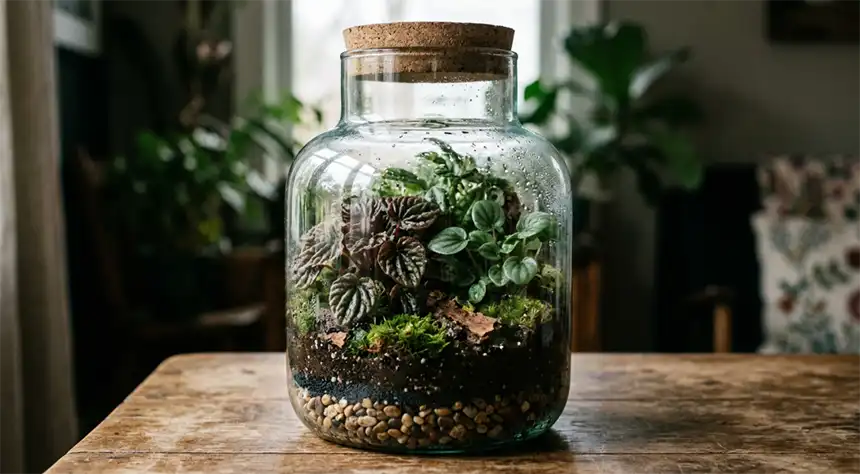
Radiator plants are exceptionally well-suited for closed terrariums due to their ability to grow in tropical conditions. A closed container tends to create a self-sustaining water cycle, which encourages high humidity and warm temperatures. Peperomia grows slowly, and placing the plant inside a terrarium prevents it from growing aggressively, which also means less pruning.
Peperomia caperata and Peperomia prostrata are the most popular varieties that are usually grown in a closed terrarium because of their bushy, compact, and trailing growth habit.
6. Arrowhead Vine (Syngonium)
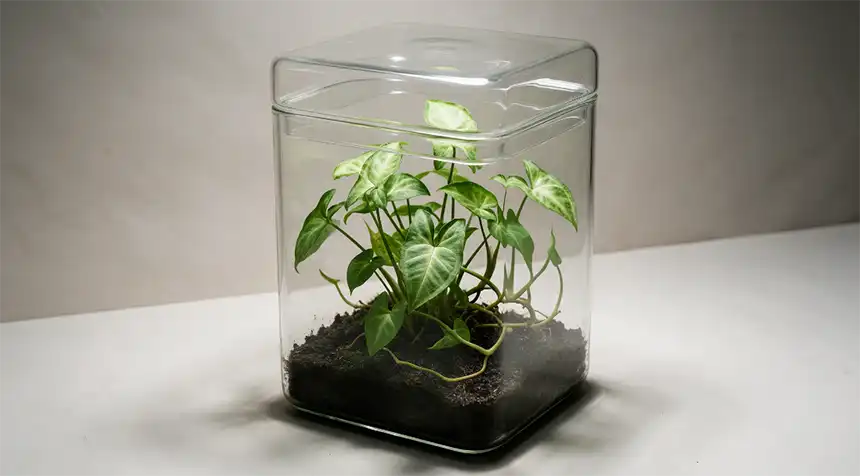
The arrowhead is a great choice for a closed terrarium because it loves humidity, grows well in indirect light, and has attractive, arrow-shaped leaves that add a tropical feel to miniature gardens. However, the species can grow too large for a small container, so choosing a young plant or a compact variety and pruning it at regular intervals is best.
Make sure that the soil you use is moisture-retentive but well-aerated. Always place the terrarium in a bright location away from direct sunlight. Keep the plant away from pets and children, as the leaves of the species are toxic if chewed.
7. Strawberry Begonia (Saxifraga stolonifera)
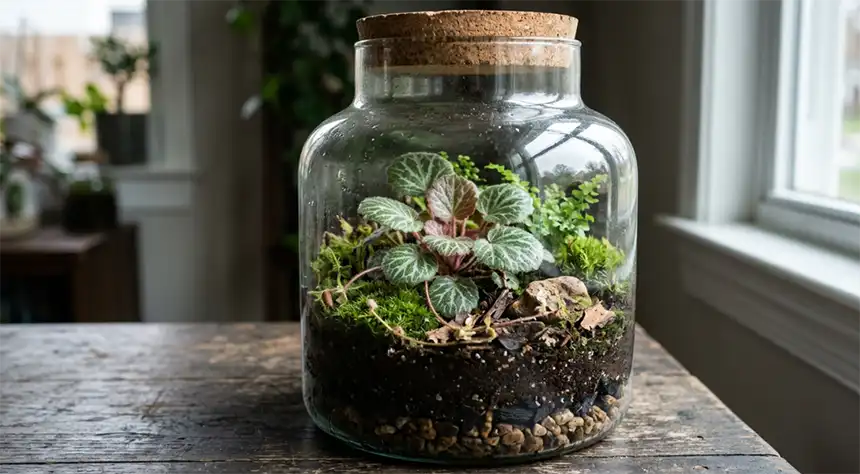
Strawberry begonia is a good choice for a closed terrarium, especially if the container is medium-sized. Despite its name, it is not a true begonia and is not related to strawberries either. It gets its name because it has begonia-like leaves. Strawberry begonia thrives in moist and organically rich soil and is mostly grown in glass jars or bottles to fill empty spaces.
Avoid spraying water directly onto the leaves, and make sure to open the lid of the container temporarily if you notice the soil getting excessively moist. Trim the shoots regularly so that they do not spread aggressively in the terrarium.
8. Baby’s Tears (Soleirolia soleirolii)
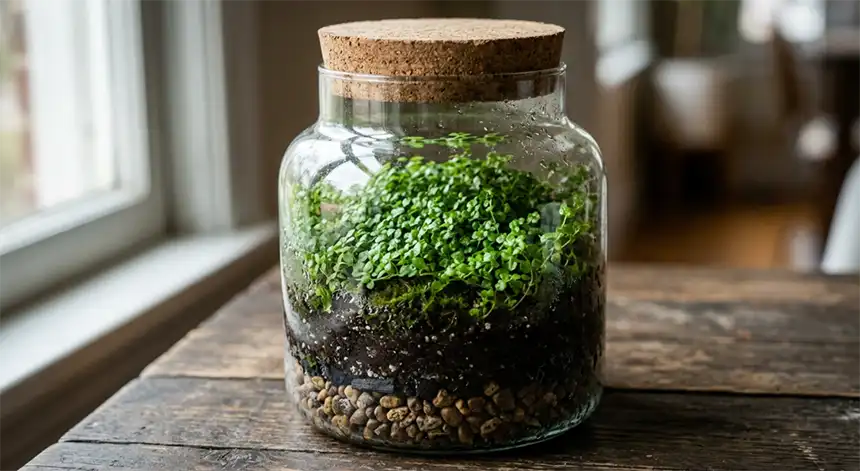
Baby’s Tears is one of the best plants for a closed terrarium. It grows into a dense carpet of tiny, rounded green leaves, which create a lush appearance. The plant thrives in humid conditions and likes consistently moist soil, making it well-suited for closed terrariums or glass containers. The mini root structure of the plant helps it spread across the terrarium floor. Regular pruning is necessary so that it does not overshadow other plants in the terrarium.
Difference Between Open and Closed Glass Gardens – Quick Glance
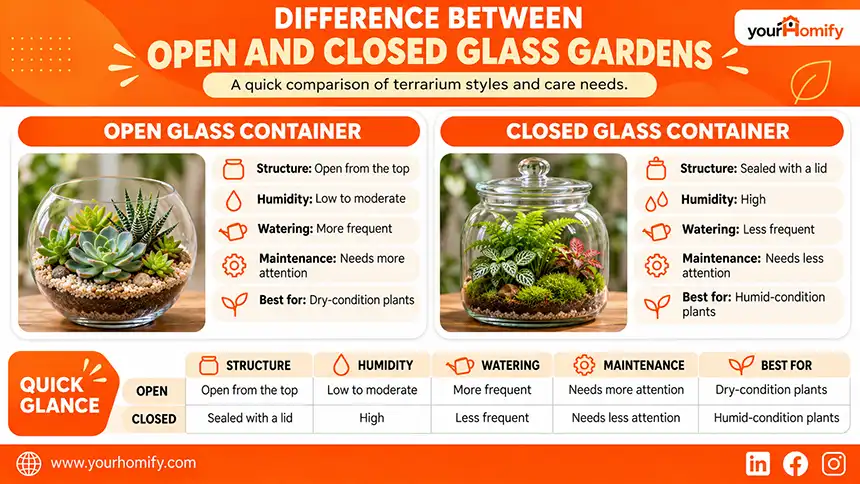
Both open and closed glass container plants differ in terms of certain requirements such as humidity levels, watering needs, and maintenance. Plants inside a terrarium are easy to maintain but have distinct needs.
Here is a quick comparison table for you to understand the difference between open and closed glass gardens.
| Feature | Open Glass Container | Closed Glass Container |
| Structure | Open from the top | Sealed with a lid |
| Humidity | Low to moderate | High |
| Watering Needs | Requires frequent watering | Does not require regular watering |
| Maintenance | Needs more attention | Needs less attention |
| Best for | Plants that prefer dry conditions | Plants that thrive in humid conditions |
Final Words
Growing plants inside a terrarium or any glass jar is like creating your own lush ecosystem. The only secret to maintaining it is to provide ideal growing conditions, and you are good to go. Remember that the open plants inside a terrarium are the ones that need proper ventilation, and the closed ones can thrive in humid conditions.
FAQs
What plants are good to put in a terrarium?
Choosing the right plants depends on whether you are making an open terrarium or a closed one. Some of the best species are nerve plants, hens and chicks, asparagus ferns, moss, baby’s tears, arrowhead vine, and many more.
How long can plants live in a terrarium?
Some plants can thrive for only 2-3 months in a terrarium while there are some species that live up to 6 months. Some sealed containers can also keep plants alive for up to 10 years. The lifespan totally depends on the species and the growing conditions being given.
What are some of the common mistakes one needs to avoid in a terrarium?
Overwatering, skipping the drainage layer, using the wrong soil combination, and placing the container under direct sunlight are some common terrarium mistakes that one should avoid.
How often should I water my terrarium plants?
Watering frequency depends on the needs of the plant you are growing. Open terrariums need consistent watering, while closed ones can go for weeks without watering.
- Terrariums and Bottle Gardens – RHS Grow