


Outdoor succulents full sun are drought-tolerant plants that can store water in their fleshy leaves and thick stems. These species require well-draining soil, abundant sunlight, and moderate watering for optimal growth.
Agave, Sedum, Kalanchoe thyrsiflora, Jade Plant, Ice Plant, Pencil Cactus, Hens and Chicks, Aloe Vera, Portulacaria Afra, and Echeveria are some of the popular succulent species.
In this guide, we will discover the best outdoor succulents that can add structure to any landscape and the best ways to use these species, along with some practical care tips.
Quick Answer
Agave, Sedum, Kalanchoe thyrsiflora, Jade Plant, Ice Plant, Pencil Cactus, Hens and Chicks, Aloe Vera, Portulacaria Afra, and Echeveria are some of the popular succulent species. All these outdoor succulents can grow well in bright direct or indirect sunlight. These are highly resilient, can withstand harsh climatic conditions, and require minimal care.
What Do Outdoor Succulents for Full Sun Mean?
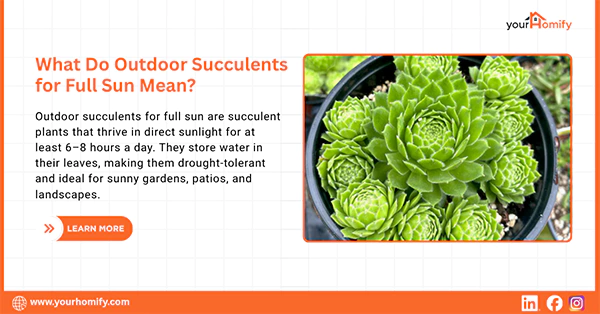
Outdoor succulents for full sun mean plants that can survive in 4-6 hours of direct, unfiltered sunlight daily. These species can store water in their fleshy leaves and thick stems, which enables them to withstand intense heat.
In recent years, these plants have been a popular choice among people who have just begun their gardening journey, as they are extremely low-maintenance.
10 Best Outdoor Succulents for Full Sun
Agave, Sedum, Kalanchoe thyrsiflora, Jade Plant, Ice Plant, Pencil Cactus, Hens and Chicks, Aloe Vera, Portulacaria Afra, and Echeveria are some popular heat-tolerant outdoor succulents for full sun. These can be easily planted in well-draining soil and do not require much attention.
1. Agave
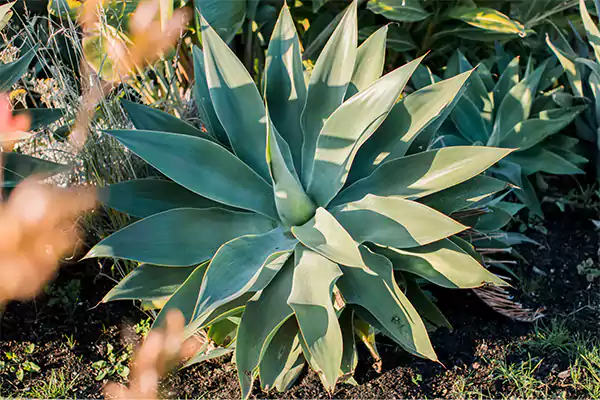
Agave is a slow-growing monocarpic plant, which means that it produces flowers only once in its lifetime and starts dying after that. It reaches a mature height of 1-6 feet, spreads 2-10 feet wide, and has a lifespan of 10-30 years. The botanical name of this terrarium plant is simply Agave because it is a genus in itself.
Native to the arid and semi-arid regions of America, the plant requires full sun, highly porous soil, and moderate watering. It is suitable for hardiness zones 5-11, and the bloom season depends on the species. The leaves of the plant are usually blue-green or gray-green; it has a wide-spreading fibrous root system, and the species is mildly toxic to humans and pets.
2. Sedum
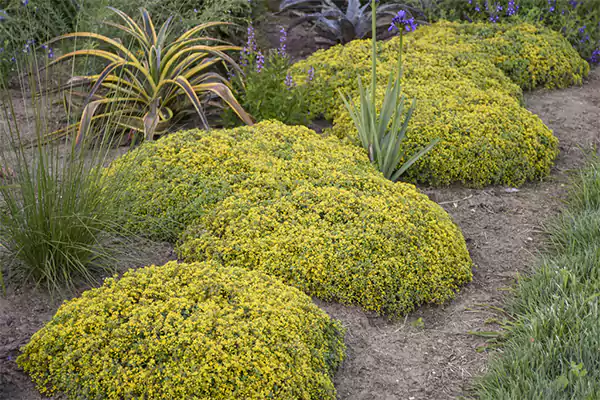
Sedum is a low-growing succulent that typically reaches 2-24 inches in height and spreads 12-24 inches wide. It has a spreading and trailing growth habit. The leaves of the plant have a soft, fleshy texture that can store water in them. This plant is native to the Northern Hemisphere, parts of Africa and America, and is suitable for hardiness zones 3-9.
The plant has a shallow, fibrous root system, and most of its varieties produce clusters of small star-shaped flowers from summer to fall. For proper growth, the species need full sun, low watering, and a gravelly soil type. With proper care, this outdoor succulent full sun plant can survive for 10 years or more, depending on the species, and is non-toxic to humans and pets.
3. Hens and Chicks
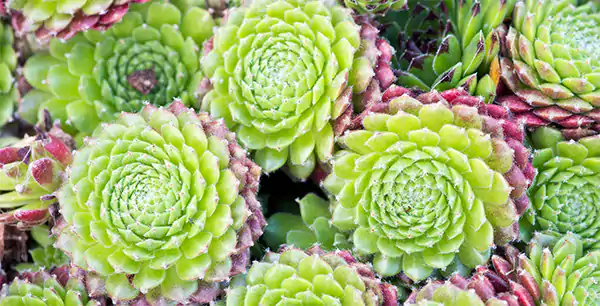
Hens and Chicks is a low-growing evergreen succulent that is best known for its rosette-shaped leaves. It grows up to 2-8 inches tall and spreads about 6-18 inches wide and thrives in USDA hardiness zones 3-11. This hardy succulent is called hens and chicks because the main rosette (hen) produces many smaller blooms (chicks), living up to 3-4 years.
Native to the mountain regions of Europe, North Africa, and Western Asia, the botanical name of the plant is Sempervivum. Its fleshy leaves come in various shades of green, blue, purple, or burgundy. The species has a shallow, fibrous root system and is non-toxic to humans and pets. Sempervivum is a slow-to-moderate-growing perennial and thrives in full sunlight, low watering, and permeable soil.
4. Aloe Vera
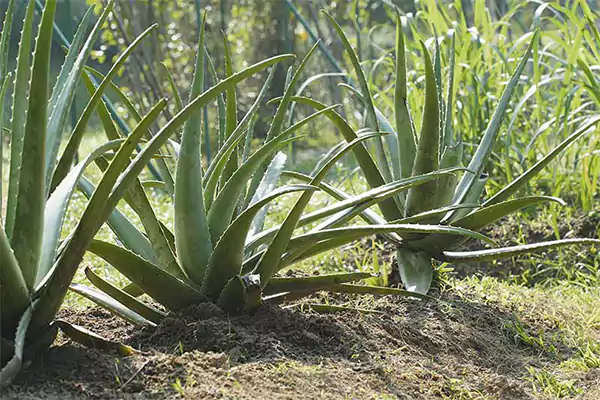
Aloe vera is a fast-growing evergreen succulent that is widely known for its thick, gel-filled leaves and medicinal properties. It reaches a mature height of 1-2 feet, spreads 2-4 feet wide, and has a lifespan of 5-25 years. The botanical name of the outdoor succulent full sun plant is Aloe barbadensis Miller; it belongs to the Aloe genus, and the gel present in its leaves is mildly toxic to humans and pets.
This compact, rosette-shaped plant is native to the Arabian Peninsula and can be easily grown in warm and dry regions across the world, as they need filtered sunlight, moderate watering, and sandy soil. With proper care, the species features yellow flowers or orange tubular flowers and can live for many years.
5. Jade Plant
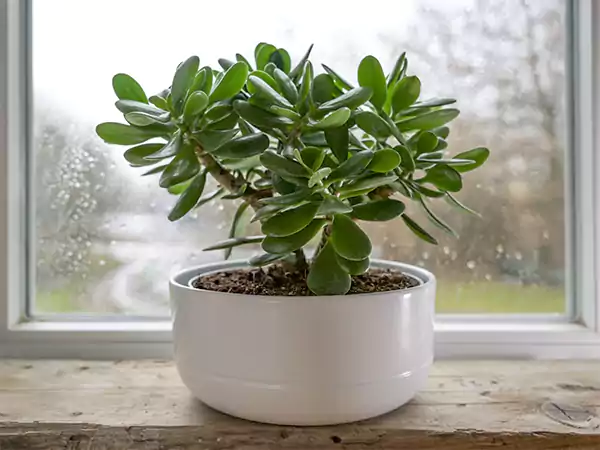
According to South Dakota State University, the jade plant can live for approximately 100 years with proper care. The botanical name of the plant is Crassula ovata, and it is an evergreen succulent shrub. Native to the Eastern Cape in South Africa and Mozambique, this plant typically grows 3-6 feet tall and 2-3 feet wide with abundant sunlight and moderate watering.
The jade plant is a slow-growing species and is often known to symbolize friendship, prosperity, and wealth. It is also given as a housewarming gift representing good luck and fortune. Although it can also be grown indoors, this outdoor succulent is toxic to pets and humans.
6. Portulacaria Afra
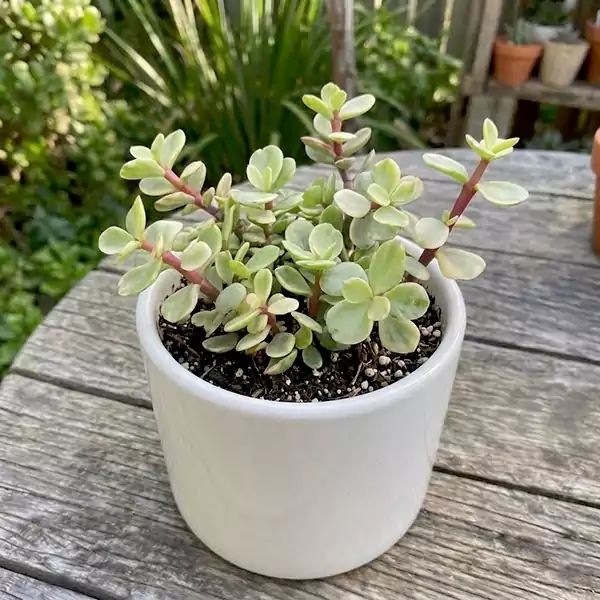
Portulacaria Afra is a well-branched evergreen succulent native to South Africa and some parts of Swaziland, Mozambique, Namibia, and Kenya. Elephant bush, spekboom, porkbush, and mini jade are some of its common names. It has round, fleshy, emerald green leaves and can easily survive for 20-50 years. The succulent is ideal for beginners, as it requires filtered light, low watering, permeable soil, and minimal attention.
This outdoor succulent full sun grows about 8-12 feet tall and 4-6 feet wide, and is suitable for USDA hardiness zones 9-11. It also produces tiny star-like white flowers during late spring or early summer. The genus can tolerate extreme heat conditions but not frost climates. These are ideally grown as ground covers or ornamental garden plants and are completely non-toxic.
7. Kalanchoe Thyrsiflora
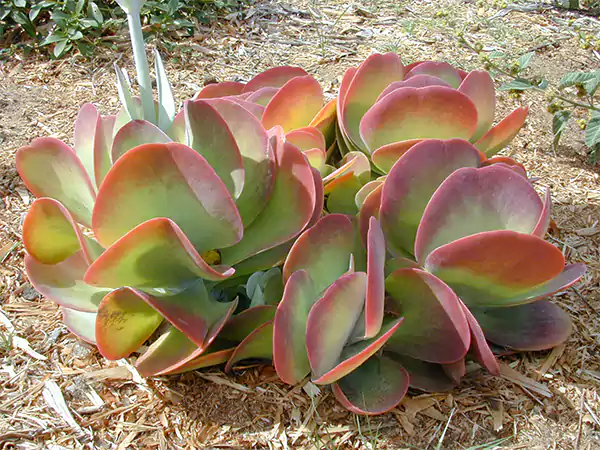
Kalanchoe thyrsiflora is a drought-tolerant, evergreen succulent that is commonly called Flapjacks, Dog Tongue, and Desert Cabbage. It typically grows about 12-18 inches tall, 3-6 inches wide, and lives up to 3-5 years. The plant is native to South Africa and is highly prized for its large, fleshy, paddle-shaped leaves. It can flourish in partial shade, with minimal watering, and in porous soil.
Suitable for USDA hardiness zones 10-12, the species is toxic to dogs, cats, and humans. Once the succulent is mature, it produces small, fragrant, yellow-green flowers in clusters and is especially used as accent flowers in rock gardens or as border cover plants.
8. Echeveria
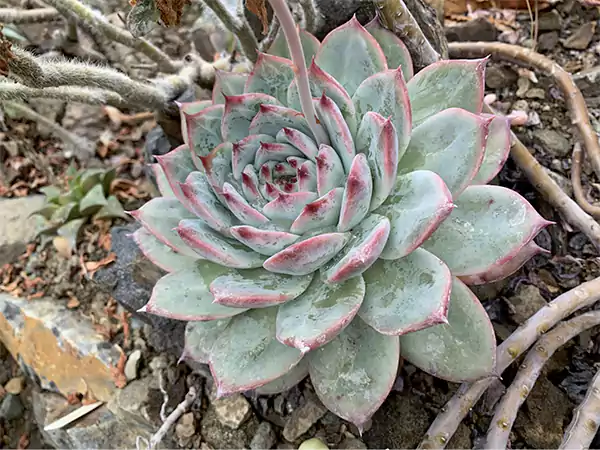
Echeveria is a striking, low-maintenance succulent native to the arid regions of Central America, Mexico, and northwestern South America. The plant has thick, fleshy, spoon-shaped leaves that come in a range of color shades such as green, blue-gray, pink, or even purple. Echeveria has a lifespan of 5-10 yrs and thrives in 4-6 hours of bright sunlight, moderate watering, and organic soil types.
With bright and nectar-rich flowers, Echeveria attracts a variety of pollinators such as bees, butterflies, and hummingbirds. They generally grow about 4-8 inches tall and 4-12 inches wide. Typically blooming in spring and summer, this succulent is suitable for USDA hardiness zones 9-11. These perform well as outdoor container plants or border cover plants.
9. Pencil Cactus
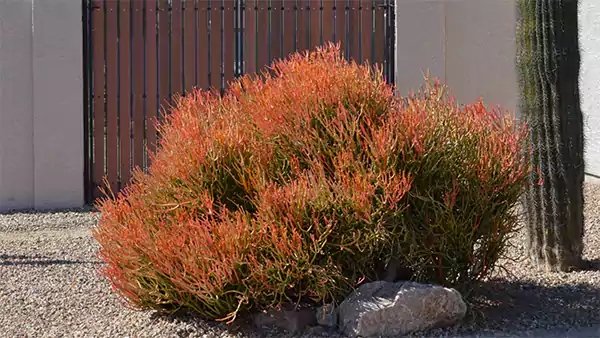
The Pencil Cactus is a highly resilient, drought-tolerant, and fast-growing succulent native to the semi-arid regions that can live for 60+ years. Despite its name, the species is not a true cactus and is a member of the Euphorbiaceae family. This particular variety is appreciated for its vibrant colors and is suitable for USDA hardiness zones 10-12.
It prefers growing in full sunlight and well-draining soil, with moderate watering, and generally blooms in late spring to early summer. The milky latex sap of the plant is said to be toxic to both humans and pets if ingested in excess.
Botanically called Euphorbia tirucalli, the plant typically grows up to 20-30 feet tall and spreads about 6-10 feet wide. The plant has been traditionally used for treating medical conditions like inflammation, joint pain, warts, and other skin diseases. Pencil cactus is usually added to the garden spaces to add structure and make the area more lively.
10. Ice Plant
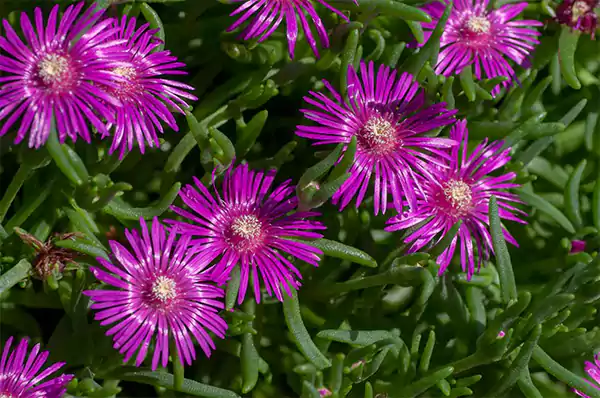
Ice plant, botanically called Delosperma, is a ground-covering evergreen or semi-evergreen perennial suitable for USDA hardiness zones 5-9. The plant features fleshy leaves and daisy-like blooms. It is non-toxic and grows in a dense mat-forming habit. Typically growing up to 3-6 inches, the exact spread of the succulent depends on the variety.
It is a short perennial and has a lifespan of 3-5 years. Native to southern and eastern Africa, this low-carpet succulent adds texture to the landscape and can easily survive in partial shade and an organic soil mix. Ensure that the plant gets adequate watering. Do not use standard garden mix for the plant.
How to Care For Outdoor Succulents Successfully?
According to the BBC Gardeners World Magazine, almost all succulents are low-maintenance and easy to care for. With bright, indirect light, moderate watering, and a permeable soil mix, these species can flourish. Let us quickly check out a detailed care guide.
- Sunlight Requirements: 4-6 hours of direct morning sunlight is ideal for the plant. If you live in extremely dry regions, it is best to protect the succulents from harsh afternoon light using a damp cloth to prevent the leaves from scorching.
- Temperature: The ideal temperature range for these succulents is 15°C to 30 °C. Though the species can tolerate freezing temperatures, during frost season, it is best to bring them indoors or cover them using a mesh cover.
- Soil Mix: Succulents can also be planted in pots. Using terracotta or ceramic pots would be ideal, as they have large drainage holes, allowing the soil to dry out faster. Do not use standard garden soil mix.
I generally prefer making my own soil mixture. 50% regular potting mixture + 50% inorganic compounds like perlite, coco peat, peat moss is an ideal measurement for these plants.
- Watering Schedule: Water the plant deeply until it starts flowing freely from the drainage holes of the pot. Allow the soil to dry out completely before the next watering session. During hot summer days, it is advisable to water the succulents every 7-10 days. You can reduce the frequency during the humid or rainy season, and in winter, water only once every 4-6 weeks.
- Pest Management: Outdoor succulents are susceptible to certain pests such as mealybugs, spider mites, aphids, and snails. If you notice the leaves wilting or turning yellow, it is likely infested with pests. Consider using insecticidal soap or horticultural oils to treat the issue.
Best Ways to Use Heat-Tolerant Succulent Varieties?
You can use these heat-tolerant succulents to design rock gardens, container gardens, Mediterranean-style gardens, and terrariums. Here are some of the best ways to use heat-tolerant succulent varieties.
- In Rock Gardens
- Choose a sunny location and improve the drainage of the soil by mixing coarse sand.
- Arrange rocks of different sizes and plant your drought-tolerant succulents as per your desired layout.
- Finish the setup by adding decorative pebbles for a more refined look.
- In Container Garden
- Choose a container with proper drainage holes.
- Fill it with a well-draining succulent soil mix.
- Arrange the pots by height, color, or as per your decided layout.
- You can place decorative pebbles around the base of the plant, on the top of the pot.
- Succulents in Terrariums
- Arrange a succulent terrarium by adding layers of small rocks and pebbles to enhance drainage.
- Add cactus or succulent soil mix.
- Place the taller ones at the back and smaller plants in the front for a uniform look.
- You can also add decorative stones or moss to make the layout more eye-pleasing.
- Mediterranean Style Succulent Garden
- Choose a south-facing area or where the plants can get abundant sunlight.
- Prepare the soil and improve its drainage by mixing coarse sand, perlite, and pumice.
- For a more defined look, you can create small soil mounds.
- Start adding your focal plants. Add decorative rocks around the plant, and you are good to go.
Conclusion
To sum up, outdoor succulent full sun offers a beautiful and resilient option for gardening enthusiasts looking to add a touch of greenery to their landscapes. These species need bright indirect sunlight, moderate watering during summer, a permeable soil mixture, and organic fertilizer for optimal growth rate.
All the succulents mentioned in this article are easy to care for and can also be used to create a Mediterranean-style garden, container garden, or rock garden. The unique appearance and distinct features of the plant make it stand out in any outdoor space.
FAQs
Which succulents can live outside?
Hens and Chicks, Agave, Sedum, Aloe Vera, and Jade Plant are some of the best succulents that are cold-tolerant and can live outside easily. They do not need much care and can thrive in frost conditions.
What is the best outdoor succulent plant?
Sempervivum and Sedum are said to be the two best outdoor succulent plants. They are resilient and drought-tolerant, which makes them an ideal option for novice planters, also.
Can succulents take hot afternoon sun?
Some succulents can tolerate direct sunlight, while others are shade-loving species. Agave, Aloe Vera, Sedum, and Sempervivum are some varieties that can take hot afternoon sun.
Why do you put cinnamon on succulents?
Cinnamon powder is usually sprinkled on succulents as a preventive measure to keep ants away from the pot. This is also done to treat fungal infections and to prevent the stems from rotting.
Which succulents are winter hardy?
Hens and Chicks, Sedum, Sempervivums, and Echeveria are some winter-hardy succulents. Make sure to bring them indoors during frost conditions.
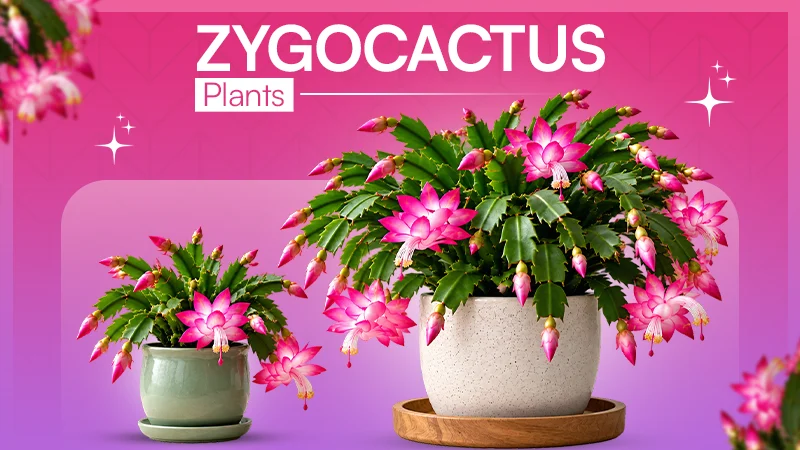
Zygocactus Plants: Growing, Care Guide & Pest Control
[…] isn’t your typical desert cactus. It has completely different care needs and treating it like other succulents is where most people go […]