


Indoor plants are low-maintenance species grown to elevate the indoor space and improve the overall surroundings. Snake plant, peace lily, and bamboo palm are some of the best bedroom plants, which also purify the air. Air-purifying plants also result in better sleep quality, which makes them favorable for many beginners as well.
Bedroom plants are generally low-maintenance and forgiving. Let me take you through some easy-to-grow indoor plants for bedrooms along with some key considerations before growing one.
Quick answer
Some popular bedroom plants are Snake plant, Monstera, Lavender, Lady palm, English ivy, Spider plant, Boston fern, Rubber plant, Philodendron, and Dumb cane. Most of these species thrive in low light, which makes their indoor placement easier and classification as bedroom plants clearer.
10 Bedroom Plants to Improve Sleep
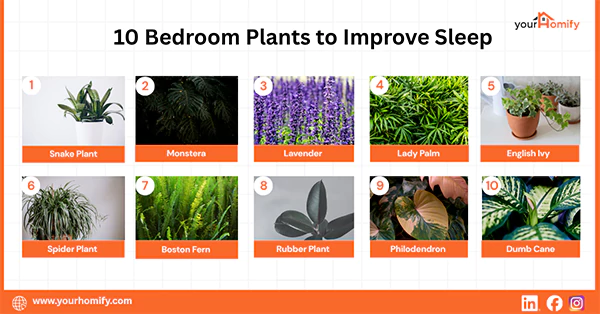
The Snake plant is one of the best bedroom plants known to improve air and sleep quality. Other options include Monstera, Lavender, Lady palm, English ivy, Spider plant, Boston fern, Rubber plant, Philodendron, and Dumb cane.
Here are 10 bedroom plants with their features and benefits:
1. Snake Plant
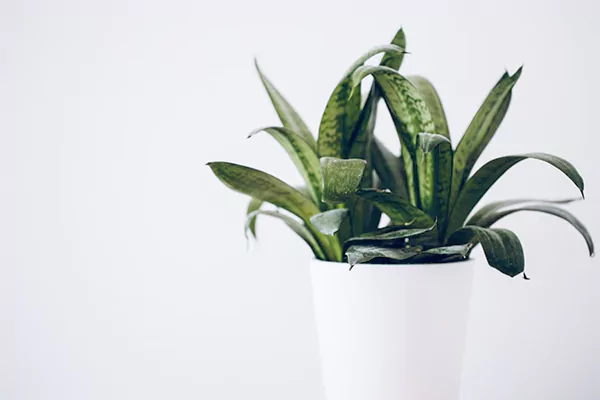
- Botanical Name: Dracaena trifasciata
- Hardiness: USDA zones 9-11
- Native Range: Tropical regions of West and Central Africa
- Bloom Time: April to August
- Plant Type: Herbaceous perennial
Snake plant is one of the most common indoor plants, which features long, sword-like leaves and white flowers. They are best grown in bright, indirect sunlight and a well-draining soil mix.
It is symbolic of resilience; these low-maintenance indoor plants have air-purifying properties and are mildly toxic to pets.
2. Monstera

- Botanical Name: Monstera deliciosa
- Hardiness: USDA zones 10-12
- Native Range: Southern Mexico, Central America, and South America
- Bloom Time: June to August
- Plant Type: Evergreen shrub
Monstera is a part of the arum plant family. It is also known as the Swiss cheese plant, which naturally has fenestrations in its leaves, making it capable of thriving in the tropical climate that it prefers.
This indoor plant is also known as the split-leaf philodendron due to its unique leaf design, but they are two entirely different species.
YourHomify Suggestion
Wear gloves while handling the Monstera plant, as it contains some toxic compounds that can cause skin irritation.
3. Lavender
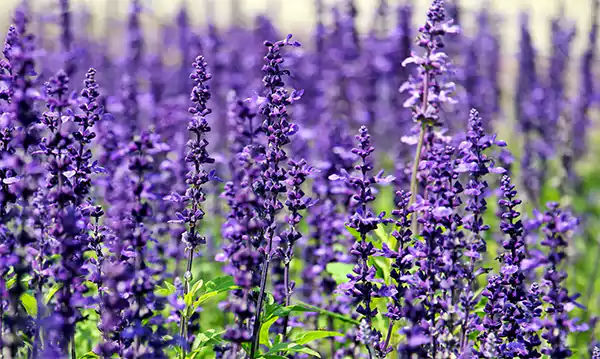
- Botanical Name: Lavandula
- Hardiness: USDA zones 5-9
- Native Range: Mediterranean regions
- Bloom Time: May to June
- Plant Type: Herbaceous perennial
Lavender is a part of the mint family along with basil and rosemary. It is not usually grown as an indoor plant, but its fragrant purple flowers can be a great addition to the indoor space. Unlike other houseplants, lavender is a sun-loving species that thrives in 4-6 hours of sunlight, ideally near a south-facing window.
Lavender is a low-humidity plant, with its ideal growing temperature being 68-85°F. It is symbolic of purity, silence, devotion, and grace.
4. Lady Palm

- Botanical Name: Rhapis excelsa
- Hardiness: USDA zones 9-11
- Native Range: China, Northern Vietnam, and Taiwan
- Bloom Time: May to June
- Plant Type: Rhizomatous perennial
The lady palm is named so due to its thin, finger-like fronds and fan-shaped leaves that purify the air as well. This popular houseplant sometimes grows tiny yellow flowers in summer.
They are ideally grown in partial to full shade with moderate watering, as they develop drought tolerance upon maturity.
5. English Ivy
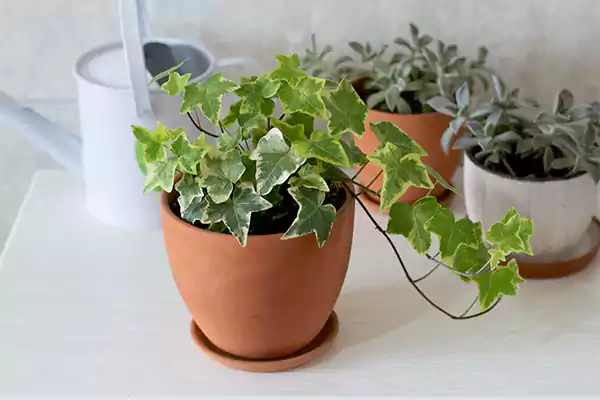
- Botanical Name: Hedera helix
- Hardiness: USDA zones 4-11
- Native Range: Europe, Scandinavia, and Russia
- Bloom Time: August to October
- Plant Type: Evergreen climbing vine
English ivy is an evergreen climbing vine that usually grows as a ground cover outdoors and a hanging plant outdoors. The aerial roots of this bedroom plant spread aggressively and are considered invasive in many areas.
It is best planted in partial to full sun; English ivy is also tolerant of direct sunlight.
6. Spider Plant
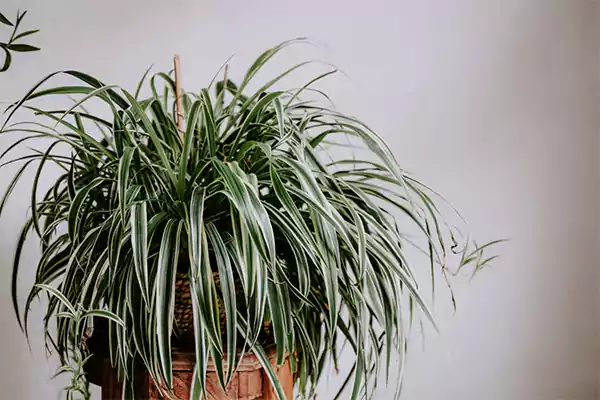
- Botanical Name: Chlorophytum comosum
- Hardiness: USDA zones 9-11
- Native Range: Africa
- Bloom Time: April to August
- Plant Type: Vine
Similar to the snake plant, the spider plant also grows thin, sword-like fronds, but with white edges. This member of the lily family has arching leaves that are best suited for hanging baskets but can be styled according to personal preference.
They are best grown in bright, indirect sunlight and moist, loamy soil with little care, which makes them extremely low-maintenance.
7. Boston Fern

- Botanical Name: Nephrolepis exaltata
- Hardiness: USDA zones 9-11
- Native Range: South America, West Indies, and Mexico
- Bloom Time: Doesn’t bloom
- Plant Type: Herbaceous perennial
The Boston fern is also known as the sword fern due to its sword-like fronds and alternate leaves. It thrives in bright, indirect sunlight and regular watering. These indoor vine plants are extremely beginner-friendly and grown as hanging plants due to their cascading roots. They reach up to a height of 2-3 feet and are great for compact spaces.
Lastly, the Boston fern plant is safe for pets and hence can be easily grown indoors.
8. Rubber Plant

- Botanical Name: Ficus elastica
- Hardiness: USDA zones 10-12
- Native Range: Asia
- Bloom Time: Spring to summer
- Plant Type: Evergreen tree
Scientifically known as ficus elastica, the rubber plant is a broadleaf evergreen tree. It is a part of the Mulberry family along with weeping figs. These bedroom plants feature large, oval leaves that produce white latex sap when damaged.
The ideal temperature for rubber plants is 60-65°F along with partial shade.
9. Philodendron
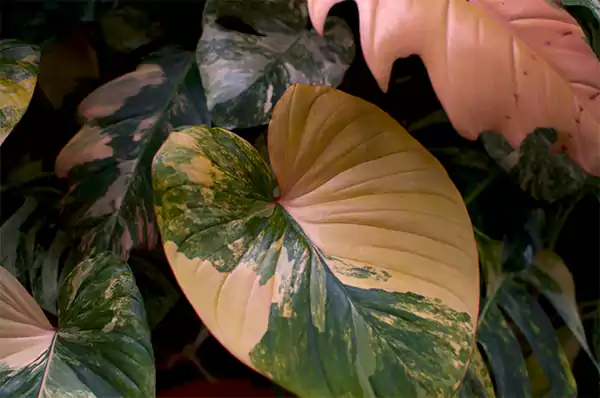
- Botanical Name: Philodendron spp.
- Hardiness: USDA zones 9-11
- Native Range: Central and South America
- Bloom Time: May to July
- Plant Type: Climbing vine
Philodendron is a climbing vine from the Araceae family. It grows up to 6-10 feet tall with proper care and attention. The large green leaves thrive in dappled shade. According to ASPCA, these bedroom plants are toxic to pets.
10. Dumb Cane
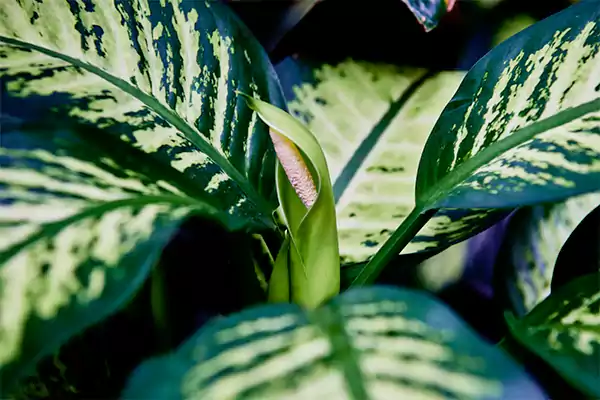
- Botanical Name: Dieffenbachia
- Hardiness: USDA zones 10-12
- Native Range: Central and South America
- Bloom Time: March and August
- Plant Type: Tropical plant
Dumb cane is a tropical evergreen plant known for its large, patterned leaves. This member of the Araceae family grows up to a height of 3-6 feet. It grows best in warm and humid environments with bright, indirect sunlight. All parts of the dumb cane are toxic and cause mouth numbness upon ingestion.
5 Essential Tips Before Growing Bedroom Plants
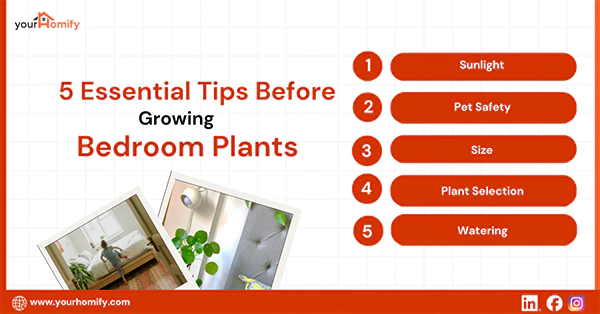
Sunlight is the most important factor to consider before choosing an indoor plant. Correct lighting is the key to a healthy plant, along with other factors like pet safety and pest control.
I have listed down 5 main tips before growing an indoor plant:
- Sunlight: Indoor plants have different light requirements. Most of them prefer bright, indirect sunlight, which is best achieved near a south-facing window with curtains.
- Pet Safety: Check the pet safety of the plant and place it accordingly. Like, snake plants should be placed at a safe distance from the pets.
- Size: Some houseplants like the lady palm are larger in size, which can be hard to manage indoors. Choose varieties that suit the space requirement of your place.
- Plant Selection: Every bedroom plant has a different care requirement. If you are a beginner, choose plants like Boston fern and Spider plant.
- Watering: All bedroom plants require regular watering. Check the moisture by placing a finger 2 inches deep in the soil and water accordingly.
Concluding Remarks
Conclusively, indoor plants for bedrooms are a low-maintenance way to purify air and improve sleep quality. The most popular indoor plant is the snake plant, which is also the easiest variety to grow.
Some key considerations before growing an indoor plant are being mindful about the size, light requirement, and pet safety. This makes care and management much easier, especially for beginners.
FAQs
Which plant is best for a bedroom?
Snake plants and Lady palms are best for bedrooms.
Should I sleep with plants in my bedroom?
Yes, it is totally alright to sleep with plants in the bedroom. In fact, many plants are believed to be great for sleep and air quality.
What plant is best for a room?
Many species like spider plant, snake plant, lavender and peace lily are great for bedrooms.
What plants should not be put in the bedroom?
Gardenia and Jasmine should be completely avoided in the bedroom due to their toxicity.
What plants help purify bedroom air?
Snake Plant, Spider Plant, and Aloe Vera are some air-purifying bedroom plants.



Essential Characteristics of Belgian Bluestone Flooring
[…] attractive aspects of Belgian Bluestone Flooring is its low maintenance requirements, just like the bedroom plants. Unlike other flooring options that need frequent attention, Belgian Bluestone is easy to clean and […]