


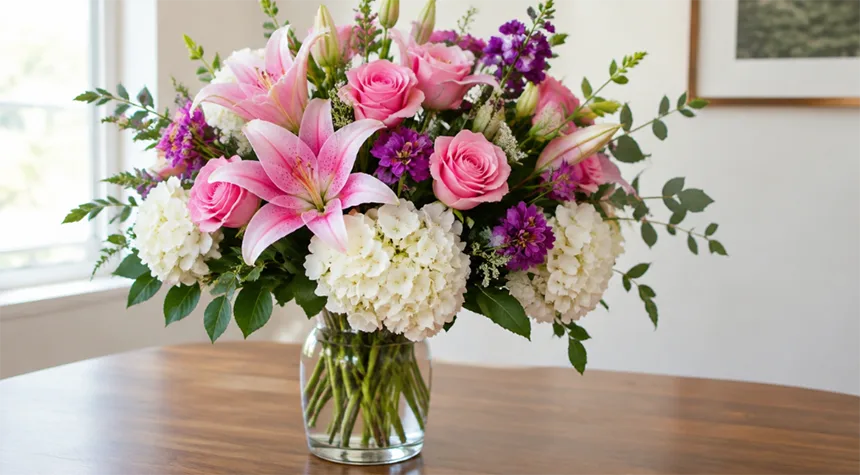
Flower arrangement is the process of combining flowers, greenery, stems, and foliage to create a beautiful and balanced display. Do you think flower arranging is tedious or difficult? Not at all! I have broken the process down into simple steps to make flower arranging easy, enjoyable, and stress-free even if you are a complete beginner.
Dive in to discover how to make a flower arrangement in a vase, what tools you’ll need, the essential 3:5:8 rule, and some popular floral design styles that you can try out at home.
Quick Answer:
Flower arranging is simple if you follow the right steps. Start by choosing the right vase, cleaning it, and filling it with fresh water. Remove all the extra leaves and cut the stems at a 45-degree angle.
Create a greenery base and add focal flowers. Arrange secondary blooms and filler flowers to cover all the empty gaps. This will give you a well-organized flower arrangement.
What is a Flower Arrangement? Tools and Materials Needed
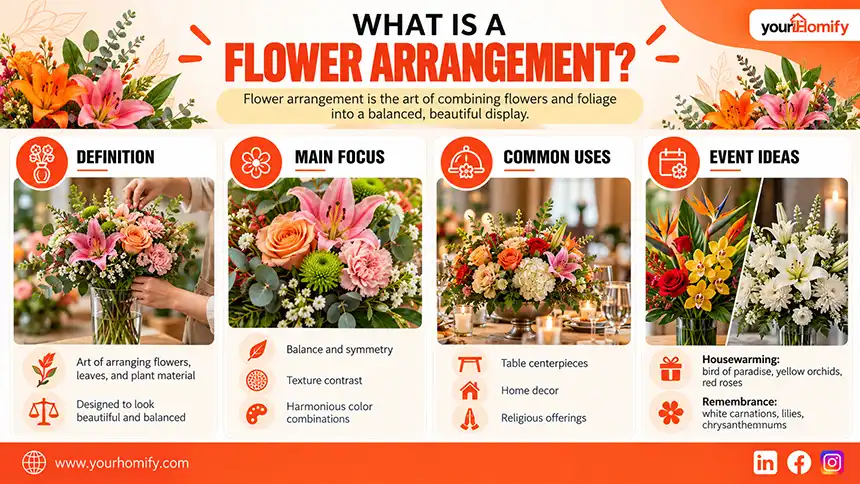
A flower arrangement is the art of arranging flowers, leaves, and other plant material together in a way that they look beautiful and balanced. The main focus is to create symmetry in appearance, texture, and color combinations.
I have mostly seen these used as table centerpieces for parties, home decor, or as religious offerings. You can also curate these depending on the event.
For example, you could combine orange birds of paradise, yellow orchids, and red roses for a housewarming party, or mix white carnations, lilies, and chrysanthemums to convey honor and remembrance.
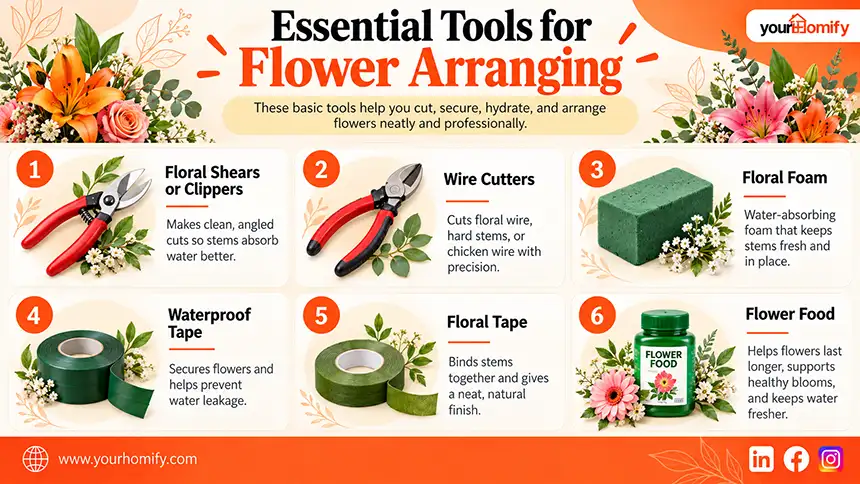
Let us quickly check out the tools and materials required to bring together a floral arrangement.
Did You Know?
The art of flower arrangement originated in ancient Egypt around 2500 BCE. Flowers that carried deep symbolic meanings were used in religious ceremonies. Later, floral garlands, corsages, and wreaths made of lilies, roses, lotus, or carnations were used on several occasions.
Types of Flowers Used in a Floral Arrangement
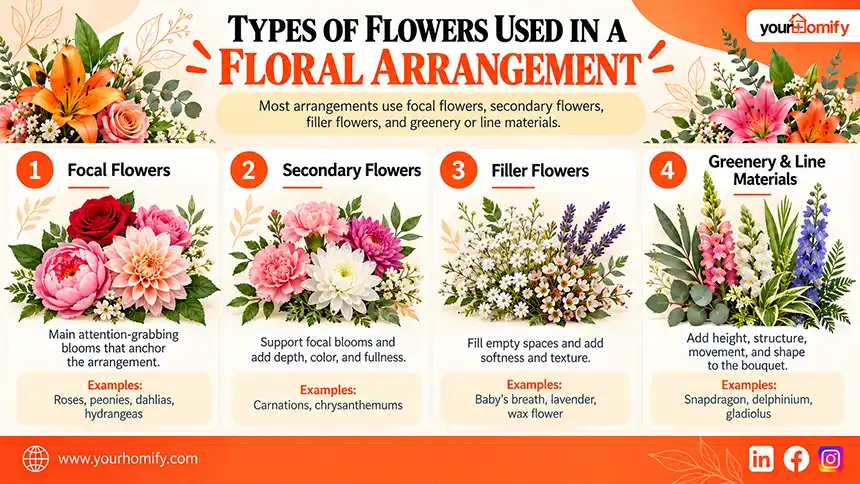
The four main types of flowers used in a floral arrangement are:
| Focal Flowers | Secondary Flowers |
| Filler Flowers | Greenery and Line Materials |
- Focal Flowers: These are the main striking blooms that grab attention and act as the anchor of a floral arrangement. Example: roses, peonies, dahlias, or hydrangeas.
- Secondary Flowers: Mainly added to support the focal flowers. These are medium-sized blooms such as carnations or chrysanthemums, which add depth and color to an arrangement.
- Filler Flowers: These are clusters of small and delicate blossoms that are typically used to fill empty gaps and give texture to the whole design. Example: baby’s breath, lavender, or wax flowers.
- Greenery and Line Materials: Line flowers are typically used to incorporate height, length, and structure into a bouquet. Examples: snapdragon, delphinium, and gladiolus.
How to Make a Flower Arrangement?
Flower arranging can be simple if you follow the right steps. It is all about cutting, preparing, and placing the flowers and fillers in a manner that looks aesthetic and balanced when put together.
Here is a beginner-friendly step-by-step process to make a flower arrangement.
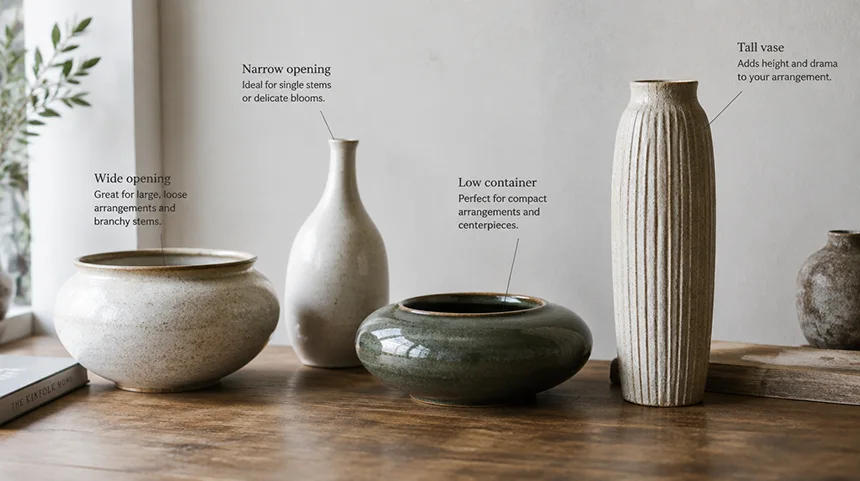
Step 1: Choose the right container as per your floral design. If you are a beginner, you can opt for a vase with narrow openings. Containers with wide openings will need more stems. For table centerpieces, low-height vases are best.
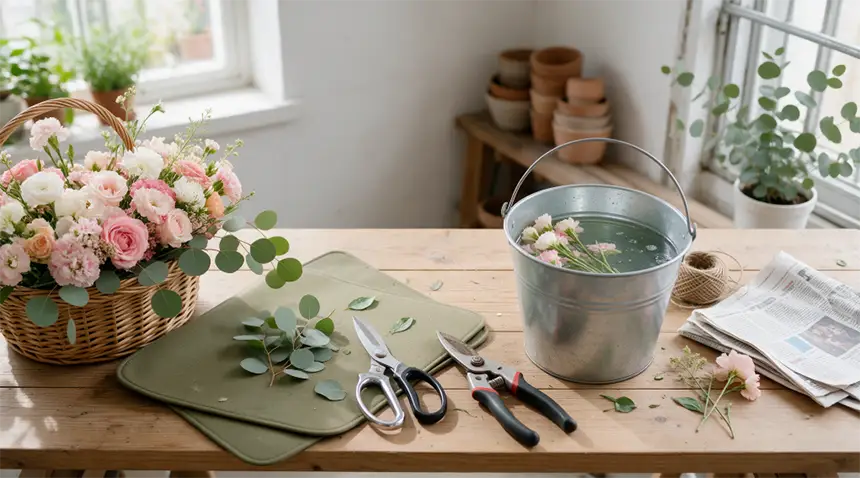
Step 2: Select the flowers you wish to use and prepare them. Remove all the wilting blooms. Cut off dead or damaged leaves. Trim the stems at a 45-degree angle so that they can absorb water easily.
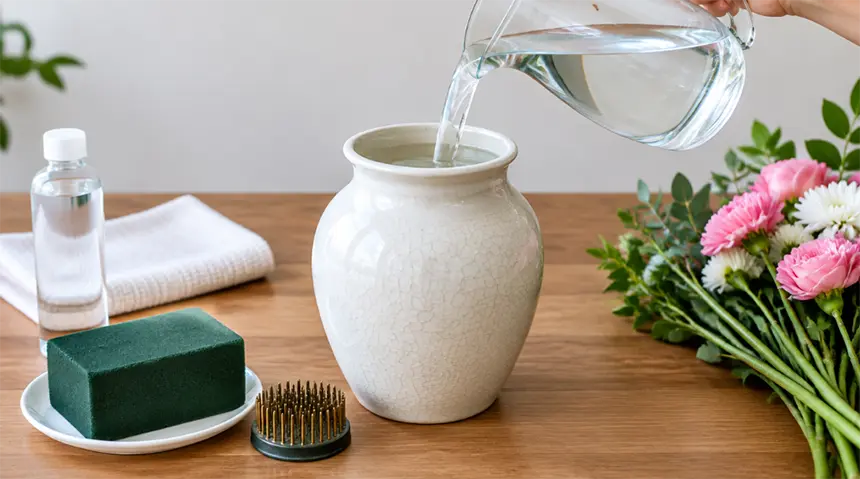
Step 3: Clean the vase and add fresh water. Make sure there is no bacteria in the vase or in the water, as it can shorten the life of the bouquet. You can use floral foam or a floral frog to hold the stems in one place.
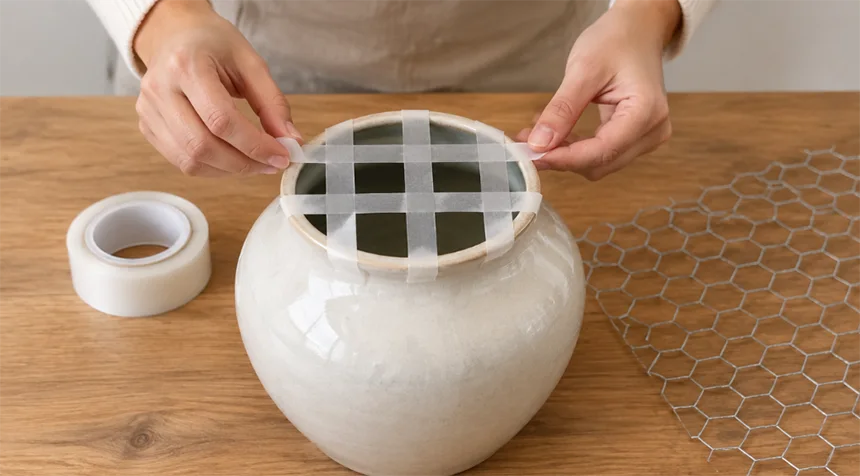
Step 4: Before you add any flowers, start making a structural base. Take waterproof tape and make a tic-tac-toe over the top of the vase, or add chicken wire at the base so that the stems and the flowers can stand firmly.
Step 5: Begin by placing the focal flowers, starting with the large, eye-catching blooms. Arrange them at varying heights to create low, medium, and small layers.
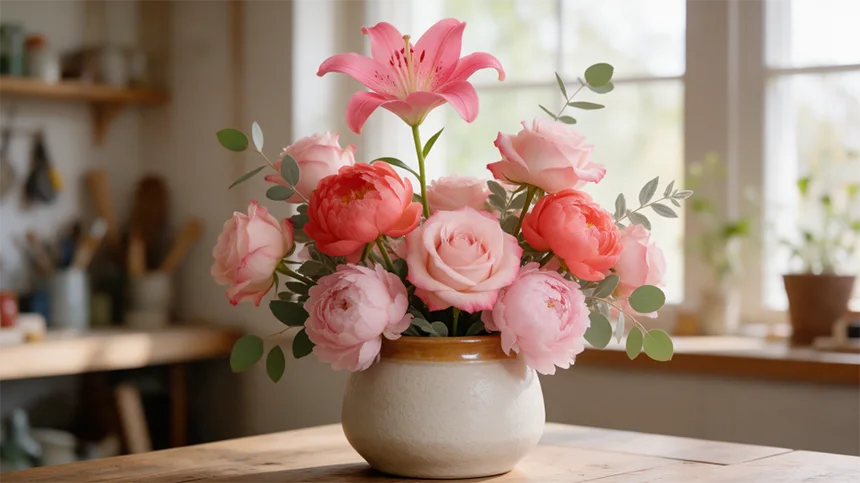
Step 6: Next, add medium-sized blooms around the focal ones. These are basically supporting flowers and should complement the main flowers, either in terms of color or texture.
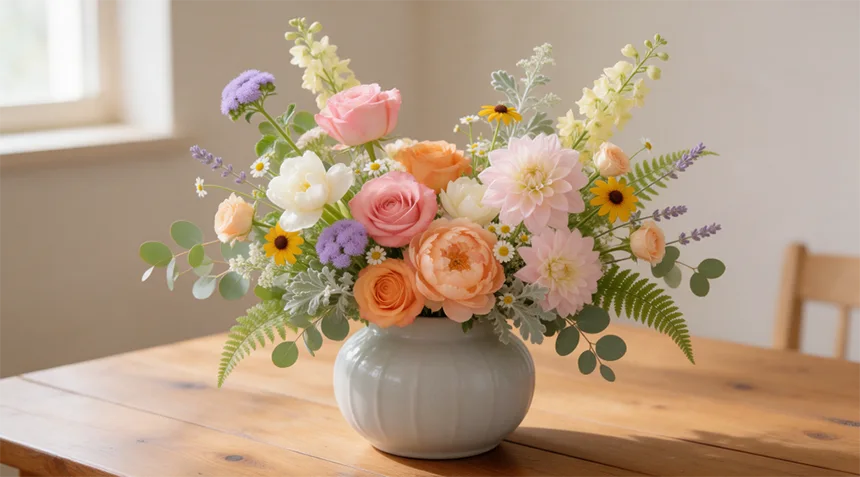
Step 7: Fill the empty spaces and gaps using filler flowers. Place the leaves or small filler plants around in a way that brings together the whole design. This will give your flower arrangement a more natural look.
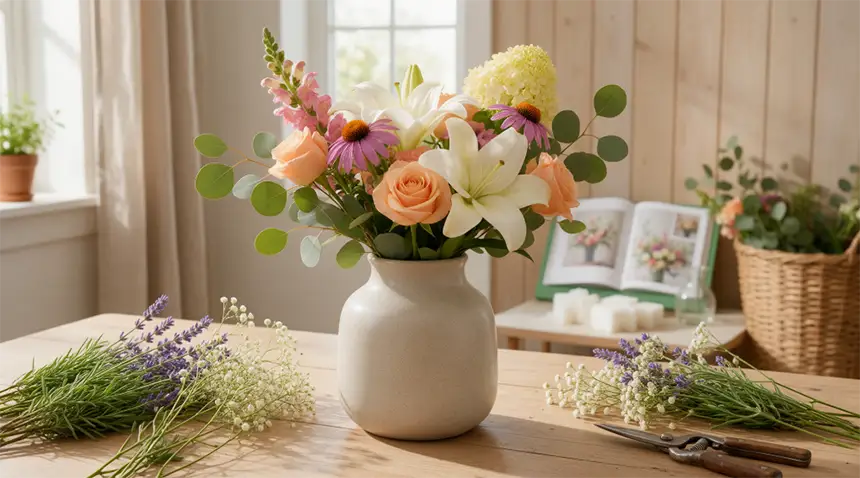
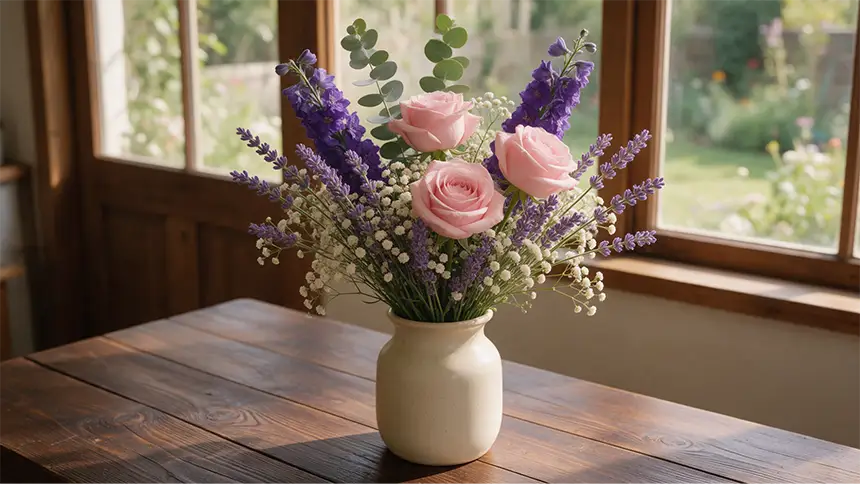
Step 8: Give final touches to your arrangement. Organise all the flowers in a way that they look naturally crafted. Make sure that heavy blooms do not crush the fillers or small flowers.
What is the 3:5:8 Rule For Arranging Flowers?
At a Glance
The 3:5:8 rule for making a flower arrangement states that you should use 3 focal flowers, 5 secondary flowers or greenery stems, and 8 filler blooms. This will give your floral design a more well-defined look.
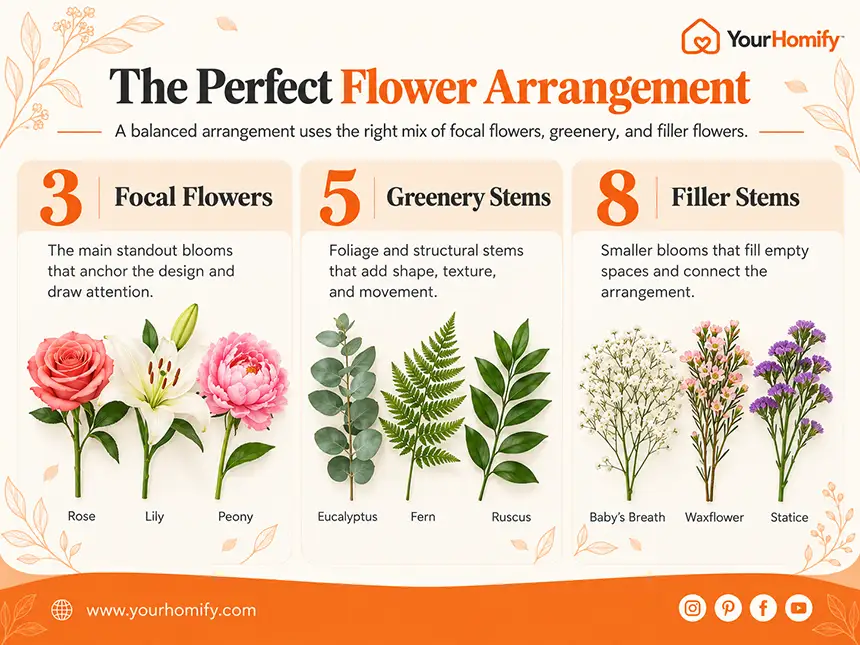
Note that it is not important that you stick to these numbers. You can arrange the flowers as per your own wish. Creating an eye-pleasing design depends on the vase type, blooms you select, and the shape you opt for.
Popular Flower Arrangement Shapes and Styles
Some of the popular flower arrangement shapes and styles are:
- Round flower arrangement
- Vertical flower arrangement
- Horizontal flower arrangement
- Triangular flower arrangement
- Fan-shaped arrangement
Here, in this section, I have explained each in a little detail for better understanding.
1. Round Flower Arrangement
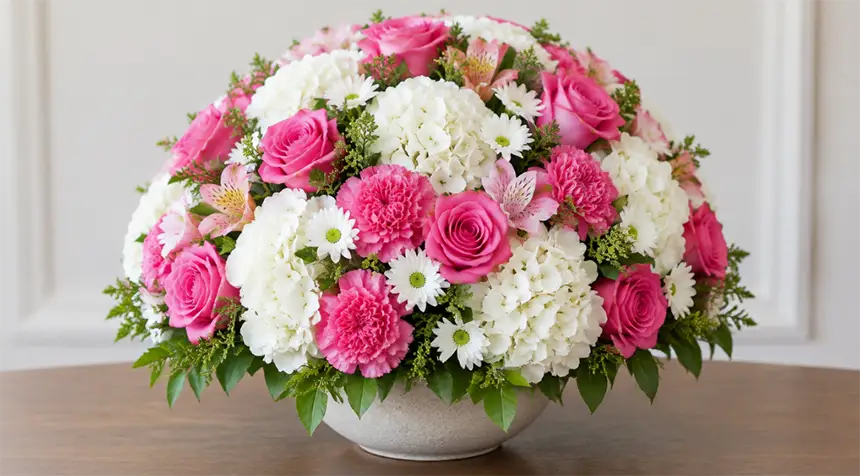
A round flower arrangement is a dome-shaped design. It is perfect for coffee tables or entryways. I mostly use them as centerpieces and to give my space a vibrant touch. A low or wide-mouthed glass vase works best for this style.
Types of flowers needed: roses, peonies, and hydrangeas are perfect.
2. Vertical Flower Arrangement
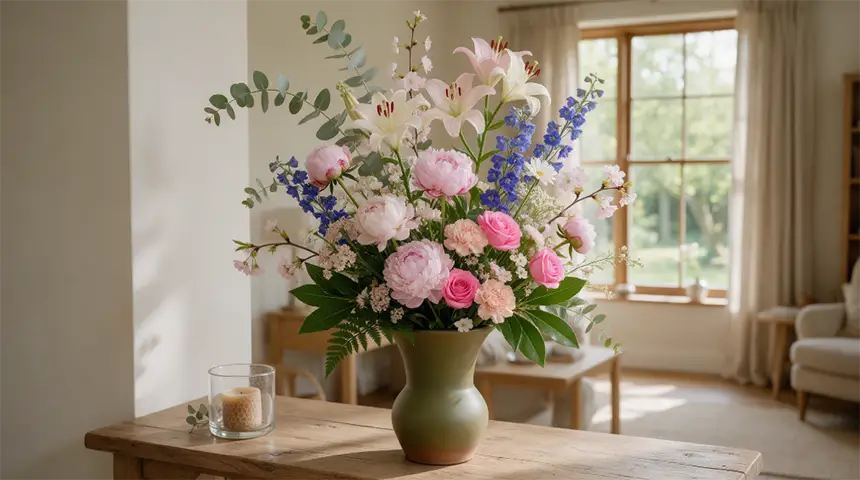
Looking to add drama to your space? What’s better than adding a vertical flower arrangement to your living room or bedroom? This floral design focuses on height. Long-stemmed line flowers and tall foliage blooms such as gladiolus, delphiniums, and snapdragons work best for this style. A vertical flower arrangement creates a dramatic effect while saving table space.
3. Horizontal Flower Arrangement
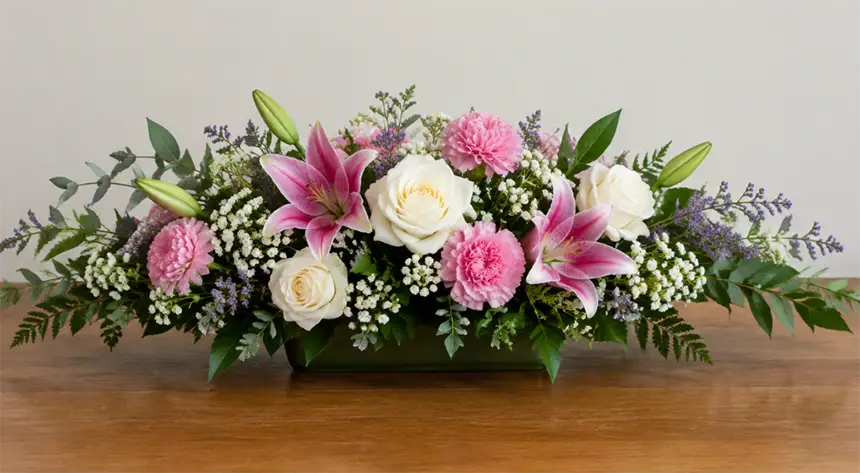
A horizontal flower arrangement is usually made in shallow containers or pots that have a flat base. This type of design focuses on width rather than height. I have mostly seen only one or two focal blooms being used in this. Sprawling foliage or drooping stems bring together the whole design.
Flowers like gerberas, carnations, and sunflowers work best for this type, and you can keep them on dining tables or mantels.
4. Triangular Flower Arrangement
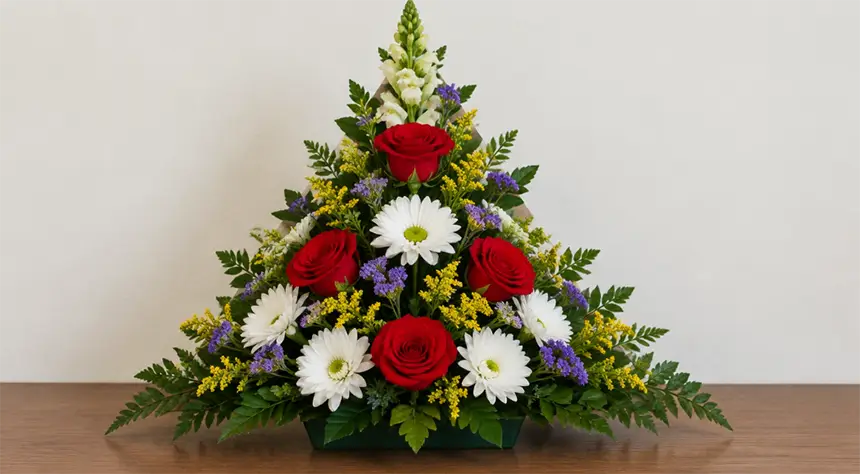
A triangular flower arrangement is usually made for special occasions. In this design, the blooms are placed in a manner that they form a distinct shape of a triangle. Balance and versatility are its main focal points. This design is best for beginners, as it is pretty easy to curate. I like how you can pin these to a wall and have your own mini flower wall, since the back of the design is flat. Lilies and chrysanthemums work best for this design.
5. Fan-Shaped Flower Arrangement
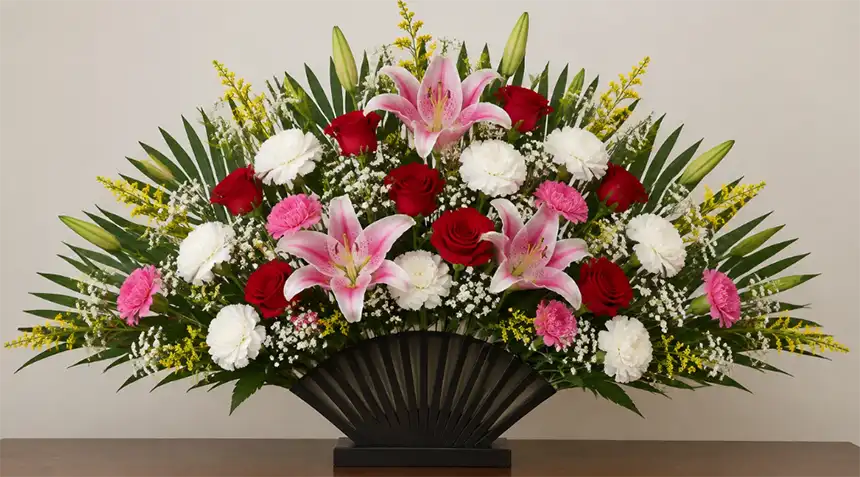
A fan-shaped flower arrangement is a semi-circular design that looks similar to an open-hand fan. The focal blooms are kept in the center, and the secondary and filler flowers are positioned in a way that they form a fan shape. You can place them at entryways, mantels, and shelves. These are mostly used for gifting purposes at various formal events. Chrysanthemums, marigolds, and daisies are perfect for this design.
How to Make a Flower Arrangement Last Longer?
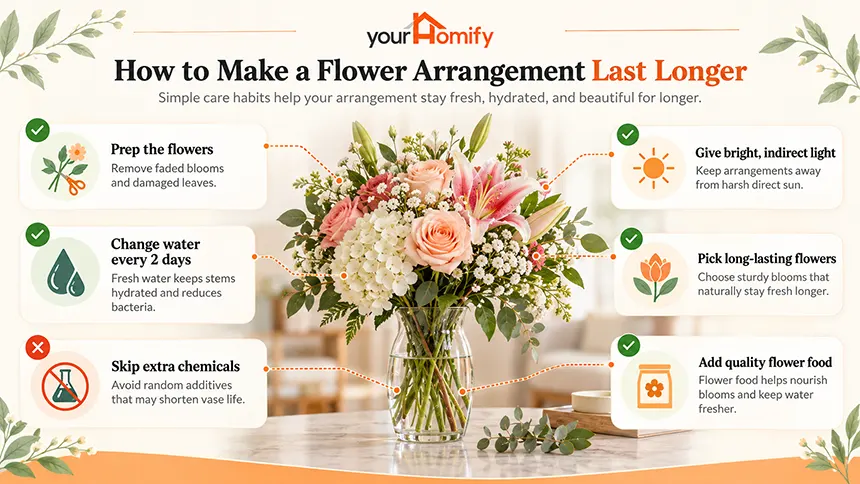
If you think that the longevity of a flower arrangement totally depends on the lifespan of the flowers you are using, you are wrong! It also depends on the quality of the water, temperature setting, flower food, bacterial growth, and flower prep.
- Vase water should be changed every two days. This removes bacterial buildup and enhances the hydration in flowers.
- A good quality flower food contains sugar for nourishment, acidifiers for hydration, and antibacterial agents.
- Placing the floral design in a heated area can lead to water loss, and keeping it under direct sunlight can damage the petals. Make sure to place it in an area where it can get bright, indirect light.
- Flower prep is necessary to increase the lifespan of the design. Remove all the faded blossoms and damaged leaves, which can affect other flowers also.
- Last but not least, choosing flowers that naturally last longer can also help, but only if you give them proper care. Avoid using any kind of extra chemicals. These can cause wilting in the long run.
Common Flower Arranging Mistakes to Avoid
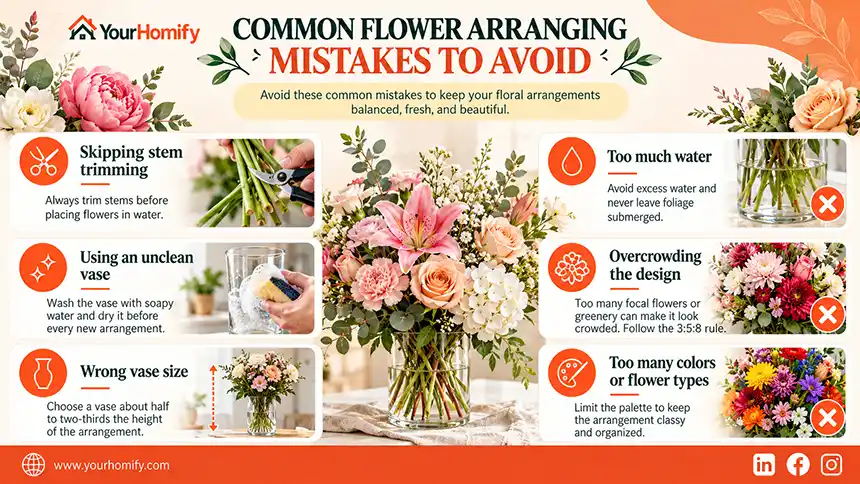
Here are some of the common mistakes that one should avoid while making a floral arrangement:
- Placing the flowers directly into the vase without trimming the stems.
- Adding too much water and leaving the foliage submerged in water.
- Do not reuse a vase without washing it. Clean the container properly with soapy water and allow it to dry. Do this every time you make a new arrangement.
- Using too many focal flowers or greenery stems. This can make your arrangement look crowded or flat. It is better to follow the 3:5:8 rule.
- If your vase height does not match the flowers you plan to use, it can be a problem. Always use a vase that is half or two-thirds of the total arrangement height.
- Mixing too many flower colors or using distinct flower types can make the whole floral design look messy. It is always better to go for a single color palette. This will make your arrangement look classy and well-organized.
Final Words
Flower arranging is an art, and through this guide, I have tried to simplify the process for you. You simply need to choose the right container, prep the flowers, arrange them in a way that looks eye-pleasing, and you are all set. Make sure that you do not use too many flowers and overcrowd the vase.
Let these flowers bring color, freshness, and joy to your space; after all, every bloom has a story to tell, and curating a flower arrangement brings all of them together.
One lesson that I have learned the hard way is to always select blooms that have similar care needs. Combining blooms that cannot stay in water for long with the ones that need watering to stay fuller can be a bad idea!
FAQs
What is the 3:5:8 rule for arranging flowers?
The 3:5:8 rule for arranging flowers is using 3 focal flowers, 5 secondary flowers or greenery stems, and 8 filler flowers/stems to make an eye-catching floral design that looks natural.
What flower arrangements are trending now?
Current flower arrangements focus on minimalism. The main goal behind creating a design nowadays is experimenting with textures and color palettes. Loose-garden style, vertical, or horizontal arrangements are the most preferred ones these days.
What is a flower arrangement called?
A flower arrangement is also called a floral arrangement or a floral design. You can also call it a bouquet or a table centerpiece.
How to do a simple flower arrangement?
Flower arranging is simple if the right steps are followed. Choose an appropriate container, select the flowers, trim all the dead and damaged leaves, arrange them in the container as per the style you have decided, and you are good to go!
What flowers should not be mixed?
Daffodils should not be mixed with other flowers unless treated. They release a toxic sap when cut from the bottom, which can cause other flowers to wilt and eventually die. Keep them in a separate vase filled with water for 24 hours before adding them to the arrangement.
Flower Colors and Their Meanings: A Complete Guide
[…] other colors, such as pink and purple. A combination with pink can make a clean and sophisticated flower arrangement. Whereas purple can bring a strong […]