Roses are the only flowers that strike our minds when we talk about flowers that start with R, but with more research, I discovered a list of elegant blooms that must grace your gardens at least once. Right from the low-growing ruellia to the trailing vines of Rocktrumpet, these blooms are versatile and can be grown without much hassle.
If you, too, are curious, come along and take a look at 15 flowers that start with R with growing guides, features, and more.
Flowers That Start With R: 15 Elegant Types With Names and Pictures
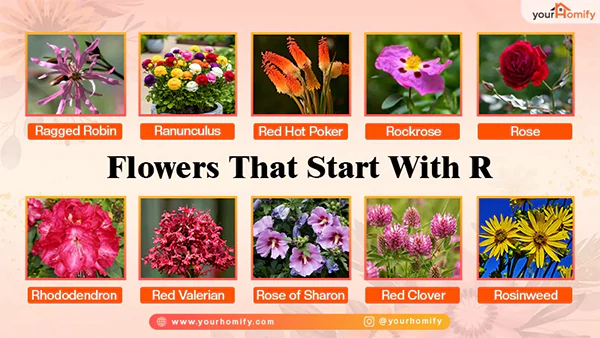
The flowers that start with R include Roses, Ranunculus, Rhododendron, Rain Lily, Rocktrumpet, Ruellia, Romneya, and many more. From the timeless beauty of roses to the trailing vines of rocktrumpet and the delicate blooms of rain lilies, these flowers showcase a wide range of colors, forms, and growing habits.
Whether you’re designing a garden, selecting cut flowers for special occasions, or simply exploring unique blooms, the flowers that start with R offer versatile and elegant choices for every plant loverH2
Take a look at the 15 flowers that start with R:
- Roses
- Ranunculus
- Rose Mallow
- Rattail Cactus
- Rhododendron
- Romneya
- Russian Sage
- Ratibida
- Rain Lily
- Rock trumpet
- Rothmannia
- Ruellia
- Red Valerian
- Rock Rose
- Romulea
Roses
- Botanical name: Rosa spp.
- Native Area: Asia, Europe, and North America
- Hardiness: USDA zones 2-4
- Height: Up to 1 foot (shrubs) and 20 feet (climbing vine)
- Colors: Red, pink, white, yellow, orange, and purple.
- Plant Type: Perennial shrubs/vines
- Bloom time: Late spring
- Soil Type: Loose, loamy, well-draining soil with acidic to neutral pH.
- Maintenance: Low
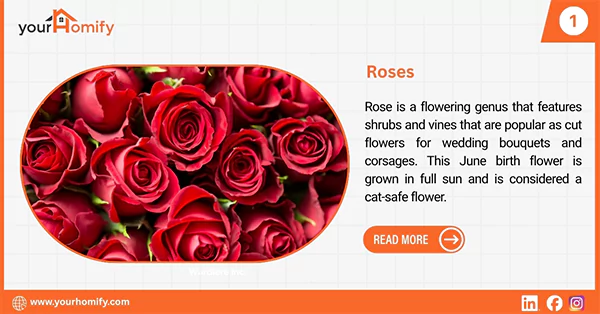
Also known as the June birth flower, the rose is a flowering genus that features flowering shrubs and vines. Popular as garden shrubs and cut flowers, which require full sun to grow, the red rose’s meaning is associated with the idea of love and passion.
Roses are considered cat-safe flowers and are also popular as a flower in corsages and other DIY activities.
- Botanical name: Ranunculus spp
- Native Area: Europe, Asia and North America
- Hardiness: USDA zones 7-10
- Height: 1-2 feet
- Colors: Peach, white, yellow, red, and orange
- Plant Type: Herbaceous perennial (can be grown as an annual too)
- Bloom time: Late spring
- Soil Type: Sandy, loamy soil mixed with organic matter
- Maintenance: Moderate
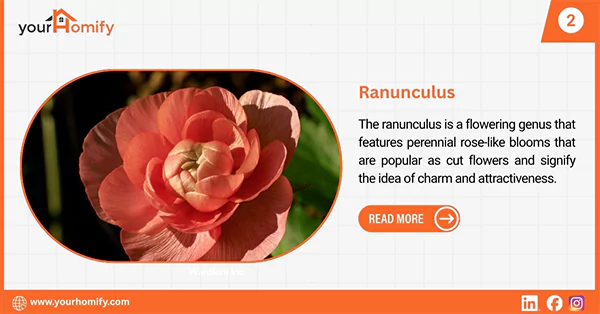
Ranunculus is a flowering genus that grows a variety of rose-like blooms with black centers, famous as cut flowers rather than indoor plants. In floriography, “ranunculus” means “charm and attractiveness,” which is appropriate for its appearance.
Interestingly, “ranunculus” is derived from the Latin words “rana” and “unculus,” which mean “a little frog.”
Rose Mallow
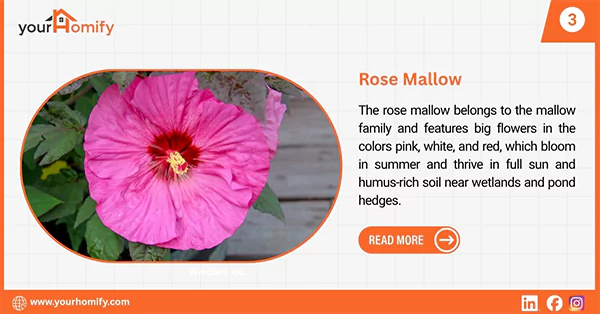
- Botanical name: Hibiscus moscheutos
- Native Area: Southern and eastern America
- Hardiness: USDA zones 4-9
- Height: 3-8 feet tall
- Colors: White, pink, red, and some bi-coloured species
- Plant Type: Herbaceous perennial
- Bloom time: Midsummer
- Soil Type: Well-draining, humus-rich soil
- Maintenance: Low
Part of the mallow family, the rose mallow is a summer flower. The most striking feature of the rose mallow is its big flowers, which often grow as large as 8 inches.
They are typically found in wetlands and ponds and like bright, direct sunlight for 6+ hours. Perfect for new gardeners, rose mallow is a pollinator-friendly plant as well.
Rattail Cactus
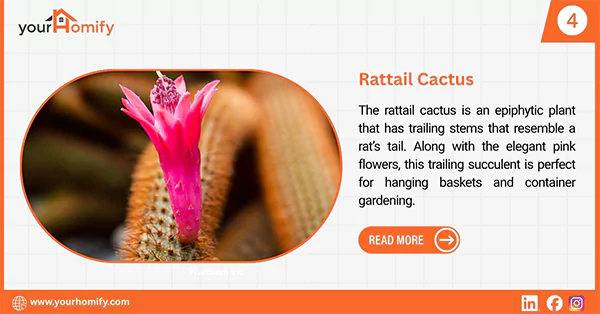
- Botanical name: Aporocactus flagelliformis
- Native Area: Central America
- Hardiness: USDA zones 10-12
- Height: 3-6 feet
- Colors: Pink, red, and magenta
- Plant Type: Trailing succulent
- Bloom time: Late spring to early summer
- Soil Type: Cacti potting mix
- Maintenance: Low
The rattail cactus is an epiphytic type of cactus that resembles the Easter cactus. This trailing cactus resembles a rat’s tail and grows red and pink flowers.
Perfect for hanging baskets and balcony gardens, the rattail cactus is a perfect plant for beginners, as it survives with less care as well.
Rhododendron
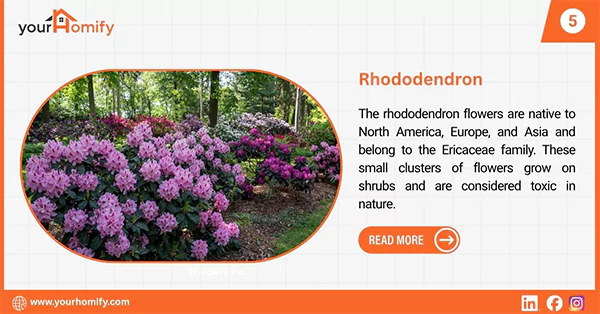
- Botanical name: Rhododendron spp.
- Native Area: North America, Europe, Asia and Australia
- Hardiness: USDA zones
- Height: Up to 20 feet
- Colors: Red, pink, orange, white, and yellow
- Plant Type: Shrub
- Bloom time: Spring to fall
- Soil Type: Well-draining sandy loamy, humus-rich soil.
- Maintenance: Low
The rhododendron is a shade perennial that belongs to the Ericaceae family. Popular for their funnel-shaped flowers, they are mainly grown as garden borders, which signifies the idea of danger and caution because their flowers are toxic in nature.
Romneya
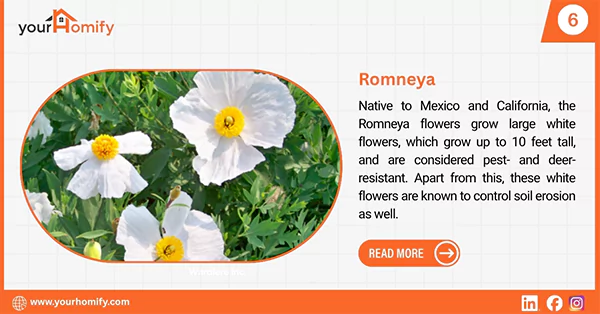
- Botanical name: Romneya coulteri
- Native Area: Northern Mexico and California
- Hardiness: USDA zones 8-10
- Height: Up to 10 feet
- Colors: White
- Plant Type: Tender perennial
- Bloom time: Early spring to late summer
- Soil Type: Well-draining sandy, rocky soil
- Maintenance: Low
Also known as the tree poppy, the Romneya flowers are popular as ornamental flowers that elevate the gardening space with their tall heights.
Additionally, it is believed that these flowers control soil erosion, which makes planting even more beneficial.
The Romneya flowers thrive in full sun and need a considerable amount of space as they spread aggressively. A great choice for new gardeners, these flowers are pest- and deer-resistant as well.
Russian Sage
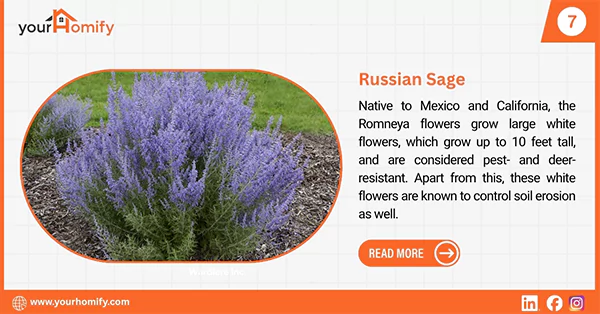
- Botanical name: Salvia yangii
- Native Area: Southwest and Central Asia
- Hardiness: USDA zones 4-9
- Height: 3-5 feet
- Colors: Lavender, violet, and blue
- Plant Type: Perennial
- Bloom time: Midsummer to fall
- Soil Type: Well-draining loamy soil
- Maintenance: Low
Part of the Salvia plant genus, Russian sage grows spiky, lavender-blue, fragrant flowers that are rabbit- and deer-resistant. Resembling the lavender flowers, the Russian sage is named in honor of Russian general V.A. Perovsky.
Additionally, in the language of flowers, Russian sage flowers mean good health and thoughtfulness.
Ratibida
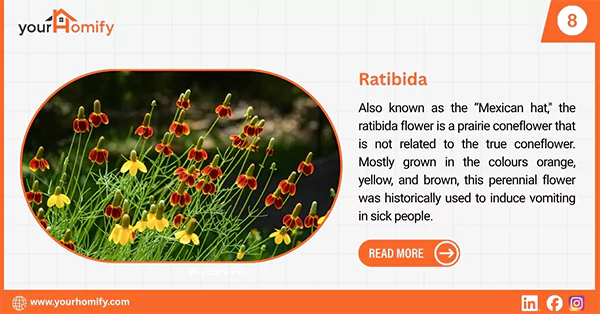
- Botanical name: Ratibida columnifera
- Native Area: North America
- Hardiness: USDA zones 4-9
- Height: Up to 3 feet tall
- Colors: Yellow, orange, and brown
- Plant Type: Herbaceous perennial
- Bloom time: Spring to fall
- Soil Type: Well-drained sandy and loamy soil
- Maintenance: Low
The Ratibida flower, also known as the “Mexican hat” and the “prairie coneflower.” Although similar in appearance, Ratibida is not the same as the true coneflower.
Keep the plant in full sun for the best blooms, but look out for waterlogging, as they cannot tolerate overly moist soil.
Historically, the Zuni people from North America used the plant to create an infusion that helped induce vomiting in sick people. Lastly, the meaning of the ratibida flower is associated with the idea of resilience and endurance.
Rain Lily
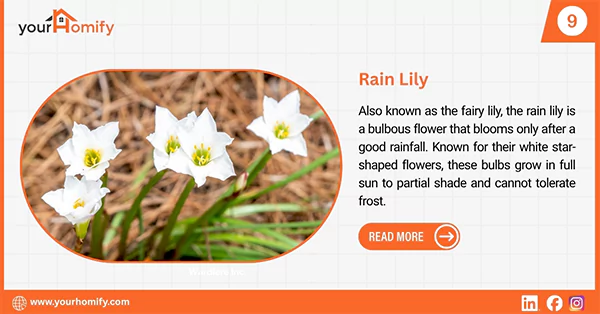
- Botanical name: Zephyranthes
- Native Area: South America
- Hardiness: USDA zones 7-9
- Height: Up to 1 foot
- Colors: White
- Plant Type: Bulbs
- Bloom time: Summer to fall
- Soil Type: Well-drained sandy, loamy soil.
- Maintenance: Low
Part of the Amaryllis family, the rain lily is also known as the “fairy lily,” which grows star-shaped white flowers that bloom only after a good rainfall, which gives justice to its name.
This tropical wildflower grows in full sun to partial shade and is not frost-hardy, so it should be brought indoors in winter.
In many cultures, the rain lily flower is considered a symbol of good luck.
Rocktrumpet
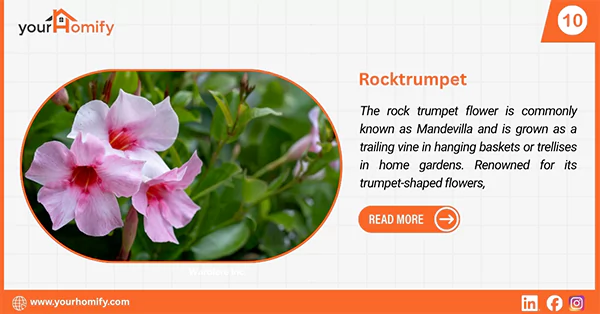
- Botanical name: Mandevilla spp.
- Native Area: North and South America
- Hardiness: USDA zones 9-11
- Height: 10-20 feet
- Colors: Pink, red, yellow, and white
- Plant Type: Flowering vine
- Bloom time: Spring to fall
- Soil Type: Well-drained sandy loamy soil
- Maintenance: Low
Commonly known as Mandevilla, the rock trumpet is a flowering vine mainly grown as a hanging plant indoors. They majorly prefer full sun to partial shade to thrive and offer many ecological benefits like attracting hummingbirds, bees, and butterflies.
The mandevilla plant is a symbol of love, romance, and passion.
Rothmannia
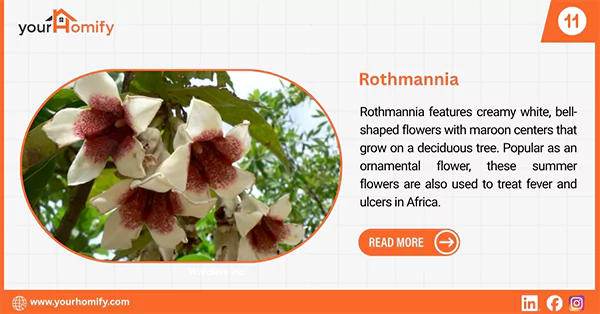
- Botanical name: Rothmannia globosa
- Native Area: South Africa
- Hardiness: USDA zones 10a-12b
- Height: Up to 12 meters
- Colors: Creamy white/beige with maroon centres
- Plant Type: Deciduous tree
- Bloom time: Spring to summer
- Soil Type: Well-draining sandy loamy soil
- Maintenance: Low
Part of the Rubiaceae family, Rothmannia has bell-shaped flowers, which are also known as “September bells” as they bloom during that time. Apart from the ornamental uses, these summer flowers are used to treat fever symptoms in Africa and to make body wash, shampoos, and soaps.
It is also believed that the seeds can potentially treat ulcers.
Ruellia
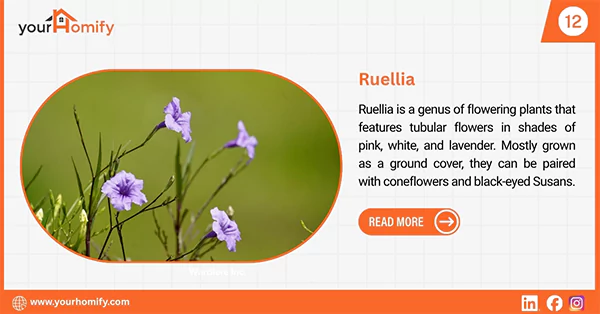
- Botanical name: Ruellia simplex
- Native Area: Central and South America
- Hardiness: USDA zones 8-10
- Height: 3-4 feet
- Colors: Purple, white, lavender, and pink
- Plant Type: Shrub
- Bloom time: Summer, fall
- Soil Type: Well-draining loamy, sandy soil
- Maintenance: Low
Also known as the Mexican petunia, the Ruellia is a genus of flowering plants that are mainly grown as a ground cover with their showy tubular blooms that look elegant when paired with coneflowers and black-eyed susans.
Majorly planted outdoors in full sun to partial shade, these perennial flowers are treated as annuals in cooler regions. They are very easy to maintain and are drought-tolerant once established.
Red Valerian
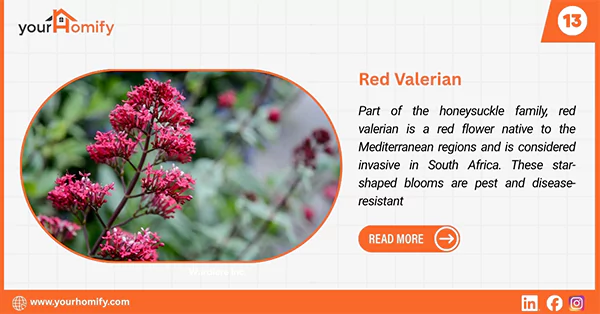
- Botanical name: Centranthus ruber
- Native Area: Mediterranean regions
- Hardiness: USDA zones 4-9
- Height: 2-3 feet tall
- Colors: Red
- Plant Type: Herbaceous perennial
- Bloom time: Summer, fall
- Soil Type: Well-drained sandy, clay soil
- Maintenance: Extremely low
Part of the honeysuckle family, red valerian is a red flower grown for its ornamental, star-shaped blooms, which are pest-resistant. Also known as Jupiter’s beard, this wildflower thrives in full sun and is considered invasive in South Africa.
Note that these red flowers are not the same as the common valerian, which is used as a herbal medicine, and red valerian is an ornamental bloom.
Buy Red Valerian 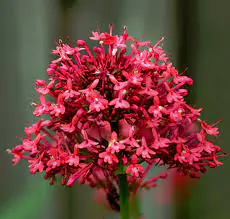 |
Rock Rose
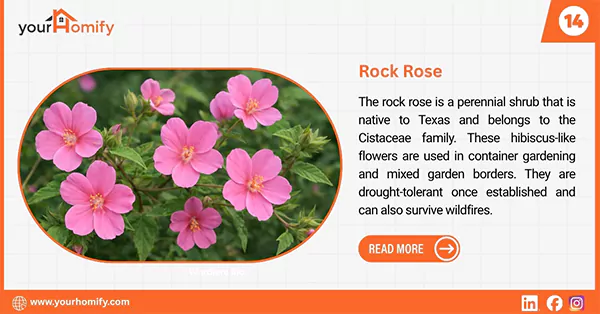
- Botanical name: Pavonia lasiopetala
- Native Area: Texas
- Hardiness: USDA zones 8-13
- Height: Up to 4 feet tall
- Colors: Pink and yellow
- Plant Type: Perennial shrub
- Bloom time: Spring to fall
- Soil Type: Well-draining rocky soil
- Maintenance: Low
Rock rose is a flower in the Cistaceae family that features hibiscus-like blooms. These small flowers prefer full sun and are drought-tolerant once established.
Ideal for rock gardens, mixed borders, and container planting alike, the rock roses can also survive wildfires. These spring flowers symbolize the idea of resilience and beauty.
Romulea
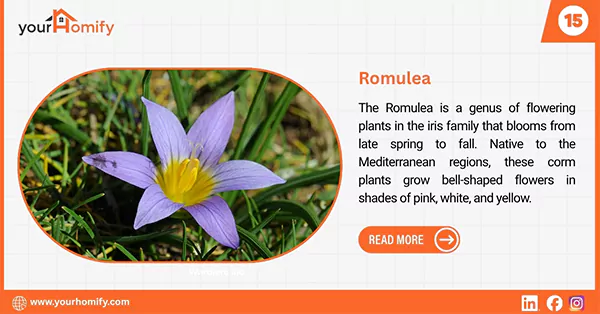
- Botanical name: Romulea spp.
- Native Area: Mediterranean regions
- Hardiness: USDA zones 8-13
- Height: 2-5 feet tall
- Colors: Pink, white, and yellow
- Plant Type: Corm
- Bloom time: Late spring to fall
- Soil Type: Well-draining, sandy, rocky soil
- Maintenance: Low
The Romulea is a genus of flowers that features crocus-like corm plants, which are popular as ornamental flowers in rock gardens or garden borders. This member of the iris family grows bell-shaped flowers that like direct sunlight and are pollinator-friendly.
Concluding Remarks
Exploring flowers that start with R is never a waste, as it introduced me to so many blooms that I later went on to plant. Whether you are an experienced or a new gardener, planting these versatile blooms should make it to your to-do list this spring.
Happy Gardening!
FAQs
What are the names of flowers that start with R?
The flowers that start with R are roses, ranunculus, rose mallow, romneya, rattail cactus, and many more.
What are the pink flowers that start with R?
Ranunculus, rose mallow, rattail cactus, and rhododendron are some pink flowers that start with the letter R.
Are Rose Mallow and Rose the same?
No, rose mallow and rose are two different flowers with similar-looking blooms; hence, the name.
What are some popular flowers that start with the letter R?
Roses, ranunculus, red valerian, and rose mallow are some popular flowers that start with R.
What are some perennial flowers that start with the letter R?
Romneya, roses, and ranunculus are some perennial flowers that start with letter R.
How to grow and care for red valerian—BBC Gardeners