

Have you ever come across a flower that looks delicate but can make a garden feel full of life? Well, that’s Lavatera for you! It is a beautiful flowering genus known for its large, colorful blooms and fast-growing habit. The species is mainly planted for its visual appeal and attractive foliage.
From choosing the right location to understanding its ideal care guide, maintenance tips, popular types, and pest problems, learning how to plant and grow lavatera can help you enjoy these elegant blooms throughout the growing season.
Quick Answer
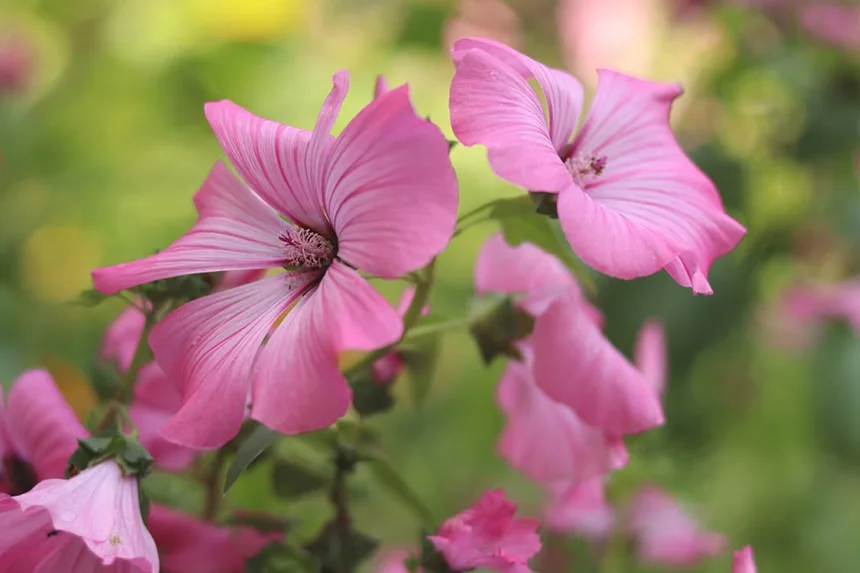
The Lavatera flower is a hardy, fast-growing flowering genus famous for its hibiscus-like blossoms. It belongs to the Malvaceae family and is also known as Tree Mallow and Annual Mallow. The species features cup-shaped flowers. It has both annual and perennial varieties, and its basic care guide includes full sunlight, well-draining soil, and consistent watering.
Lavatera Flower: A Brief Overview and Taxonomy
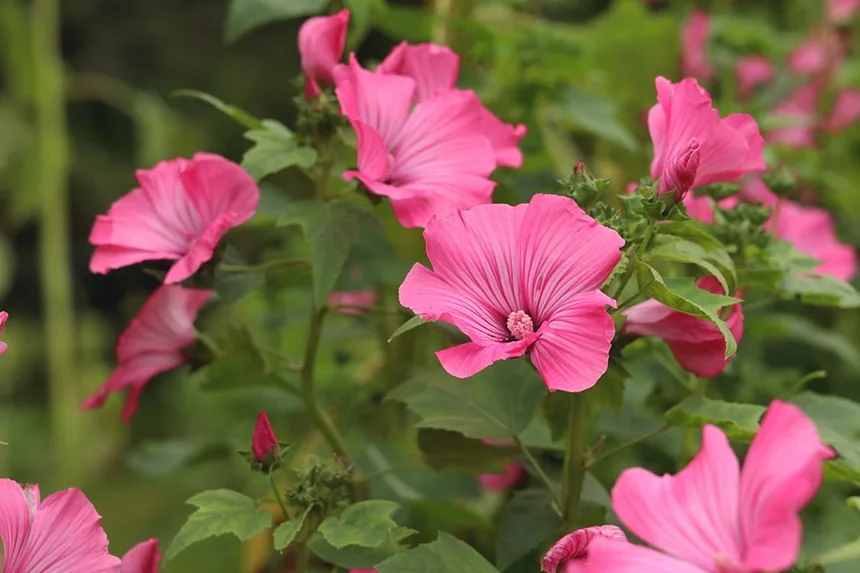
Lavatera is a fast-growing flowering genus. It is commonly known as tree mallow or mallow. According to the National Gardening Association, this genus roughly constitutes 20 to 25 species, which are both annual and perennial. These are usually grown to add a visual impact to the garden space. Its low-maintenance nature makes it a top choice among new flora lovers.
Apart from being a treat to the eyes, what I like about this purple flower is its versatility. You can easily add the taller varieties in the back of the yard as a border cover, and the compact varieties can be grown in containers. Its large and vibrant funnel-shaped flowers look extremely stunning and add a tropical vibe to any landscape.
| Genus Name | Lavatera |
| Botanical Name | Lavatera spp. |
| Plant Type | Annual & Perennial |
| Family | Malvaceae |
| Native Region | Mediterranean, Europe, North Africa, West Asia |
| Hardiness Zone | 7-10 USDA |
| Color Shades | Pink, purple, white |
| Maintenance | Low to Moderate |
| Blooming Period | Summer to late fall |
| Height | 2-10 feet tall (depends on the variety) |
| Light | Full sunlight |
| Water | Consistent watering |
| Soil | Well-draining and fertile |
| Toxicity | Non-toxic |
How to Plant Lavatera: Step-by-Step Procedure
You can either sow lavatera seeds directly into the soil or start by growing them inside in a seed tray, just like I did. The best time to plant lavatera in the UK is spring, typically from April to May, when the frost season has passed.
| Annual Varieties | Indoors: Early spring (March to April)Outdoors: Late spring (May) |
| Perennial Varieties | Should be planted outside in spring (April to May) |
Planting lavatera correctly is important for healthy growth. Let us quickly check out the steps for the same.
Step 1: Prepare the soil. Remove all the weeds or debris and loosen the soil using a garden fork. This helps the roots to develop quickly. Make sure that you do not make the soil too fertile, as it will encourage leafy growth and reduce flower production.
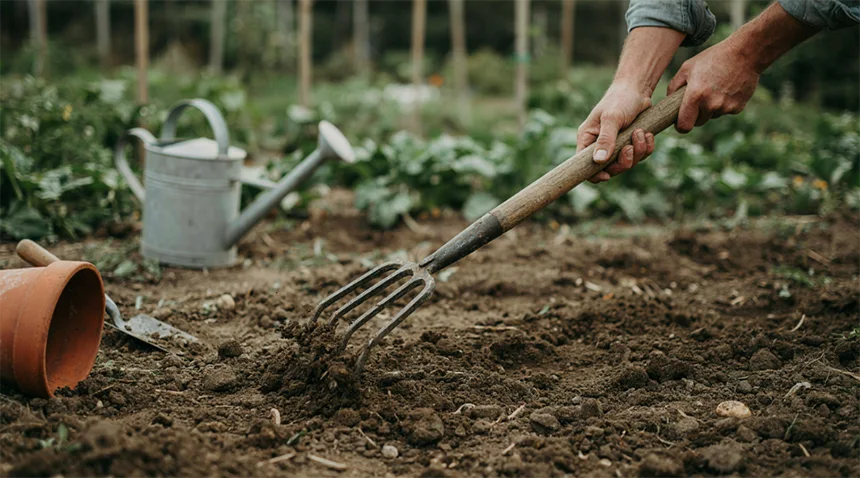
Step 2: Select a sunny spot. Before sowing seeds or transplanting a young sapling, ensure that the area gets at least 4-6 hours of bright light. Space the seeds/transplant properly to avoid disease-prone growth.
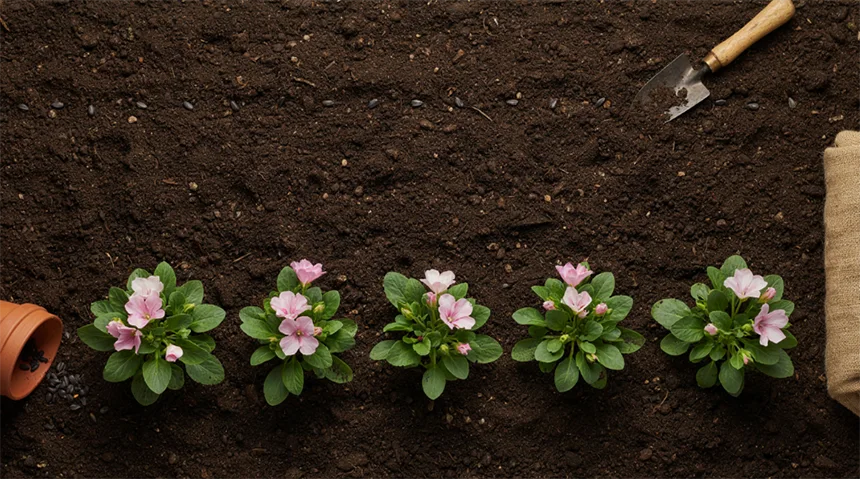
Step 3: Plant at the right depth. If you are transplanting the seedling, dig a hole a little wider than the root ball. Place the plant in a manner that the root ball sits level with the soil.
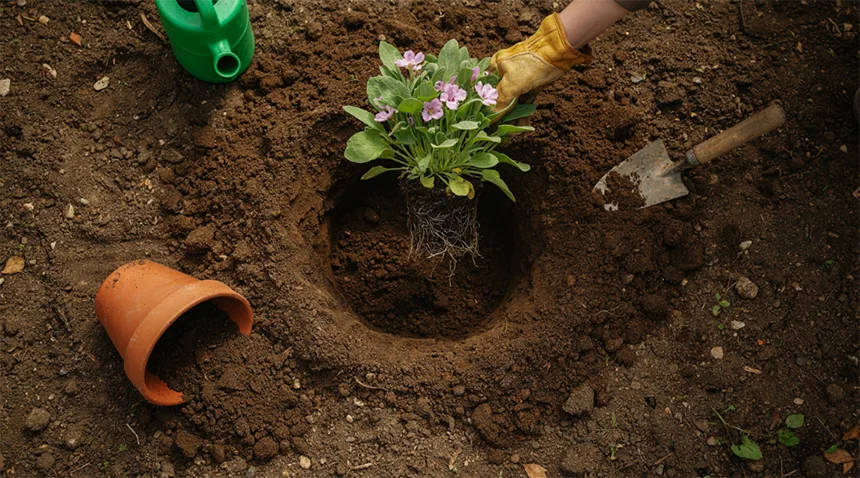
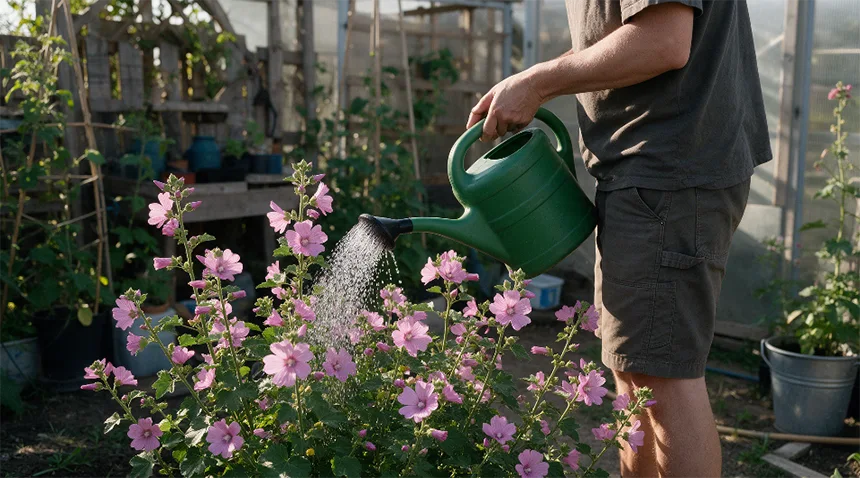
Step 4: Water thoroughly. After planting, water properly so that the soil settles down nicely. Consistent watering is important for the initial few weeks for the optimal development of the Lavatera plant.
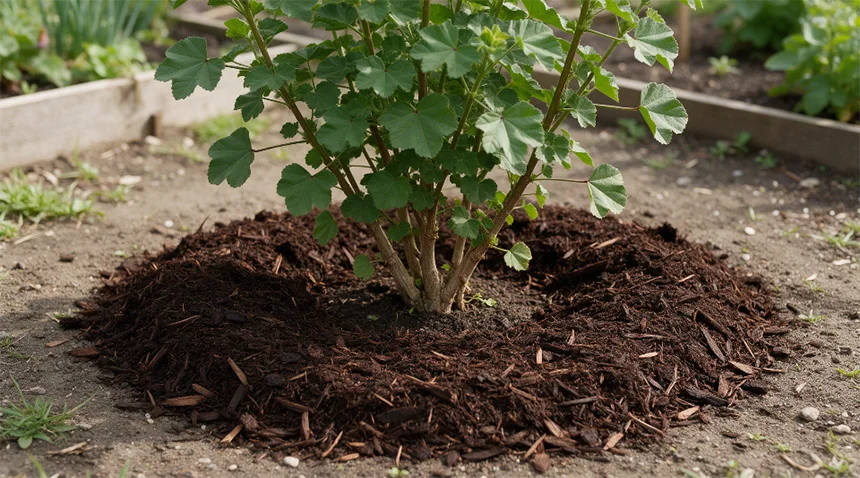
Step 5: Apply a light mulch around the base of the plant to retain moisture and suppress weed growth. Keep the mulch slightly away from the stem to avoid any kind of fungal infection.
YourHomify Tip
Harden off the indoor seedling before transplanting it by slowly exposing it to the outdoor conditions.
Ideal Growing Conditions for Lavatera Plants
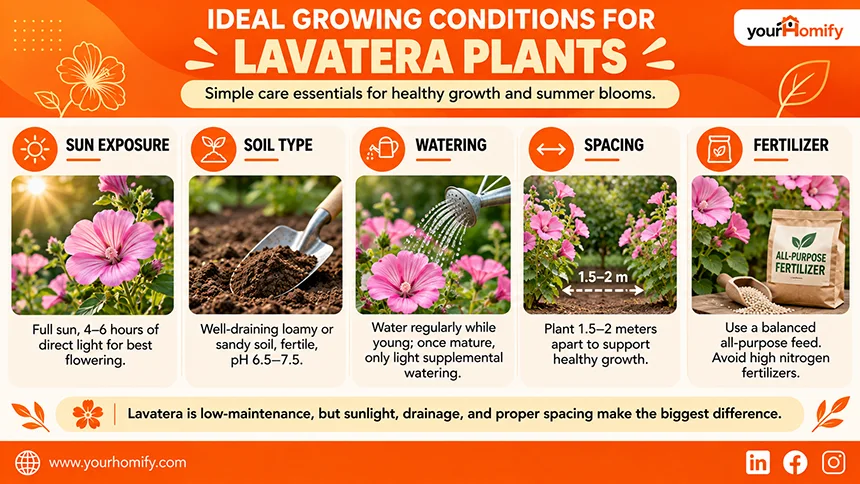
An ideal care guide for this elegant summer flower includes full sunlight, well-draining soil, moderate watering, proper spacing, and a balanced fertilizer. Most Lavatera species are said to be low maintenance, but they do need a little attention to flourish.
| Sun Exposure | Lavatera grows best in full sunlight. The plant needs at least 4-6 hours of direct sunlight for optimal flower development. |
| Soil Type | Well-draining, loamy, sandy soil works best for these species. Make sure that it is fertile and the pH is between 6.5 and 7.5. |
| Watering Needs | Water regularly during the initial growing stage. This helps the root system establish properly. Once they are mature, they need very little supplemental water. |
| Spacing | Since this bloom grows aggressively, it is ideal to space them at least 1.5-2 meters apart from each other to ensure healthy growth. |
| Fertilizer | Lavatera is a light feeder; therefore, a balanced, all-purpose fertilizer works best. High nitrogen fertilizers can give you leggy growth. |
Lavatera Care and Maintenance Tips
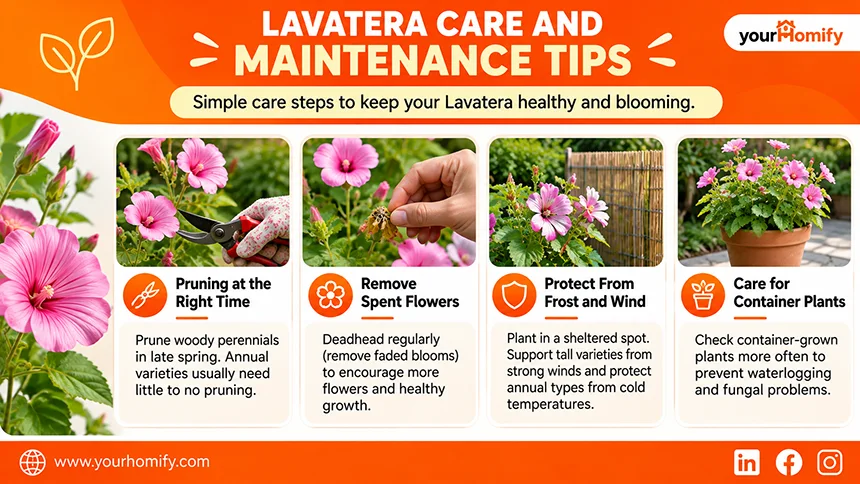
Apart from the ideal growing conditions, there are some additional care tips one needs to follow before and after planting lavatera. This includes pruning at the right time, removing spent flowers, protecting the plant from frost and strong winds, and checking container-grown plants more carefully.
- Pruning Lavatera at the Right Time: Generally, the right time to prune lavatera plants depends on the species/variety you are growing. Wondering when to prune lavatera? Woody perennials should be pruned in late spring, while the annual ones do not need much pruning.
- Removing Spent Flowers: Deadheading is a simple way to keep your lavatera looking fresh during the flowering season. Remove the faded flowers before they form seed pods. This helps the plant to focus its energy on new growth.
- Protecting Lavatera From Frost and Strong Winds: It is always best to choose a sheltered area for this bloom. Strong winds can loosen the tall varieties and disturb their roots. The annual species of the genus are sensitive to cold and should be protected as soon as the temperature gets cold.
- Keeping a Check on Container-Grown Plants: Many garden enthusiasts believe that lavatera plants grown directly in the ground are easier to care for than the ones grown in containers. Waterlogging issues and fungal problems are the two main reasons.
Some Popular Types of Lavatera Varieties
Some popular types of Lavatera varieties are Mont Rose, Mont Blanc, Malva Rose, Barnsley Baby, and Silver Cup. Let us explore a little about them in this section.
| Lavatera Variety | Image | Description |
| Mont Rose (Annual Variety) | 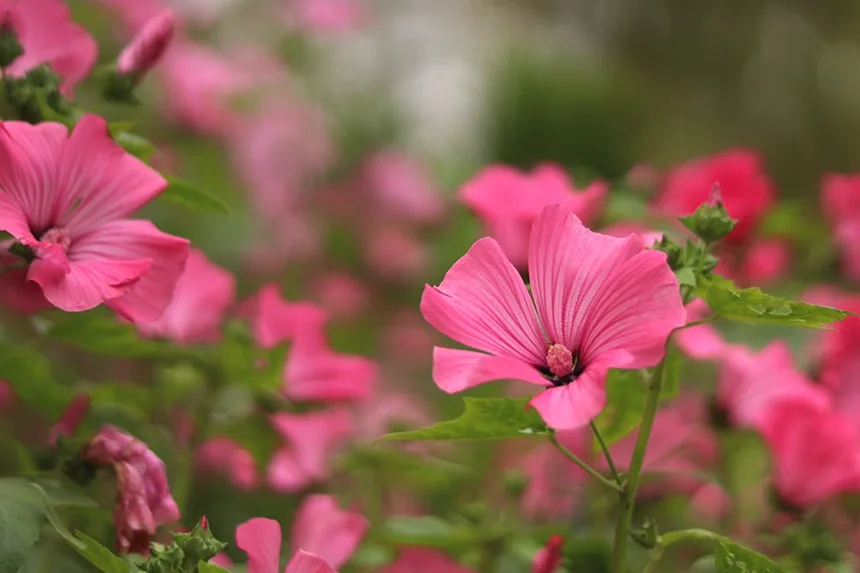 | Mont Rose, also known as Rose Mallow, is a stunning pink flower lavatera variety. It blooms from mid-summer to late autumn and grows about 2-3 feet tall. |
| Mont Blanc (Annual Variety) | 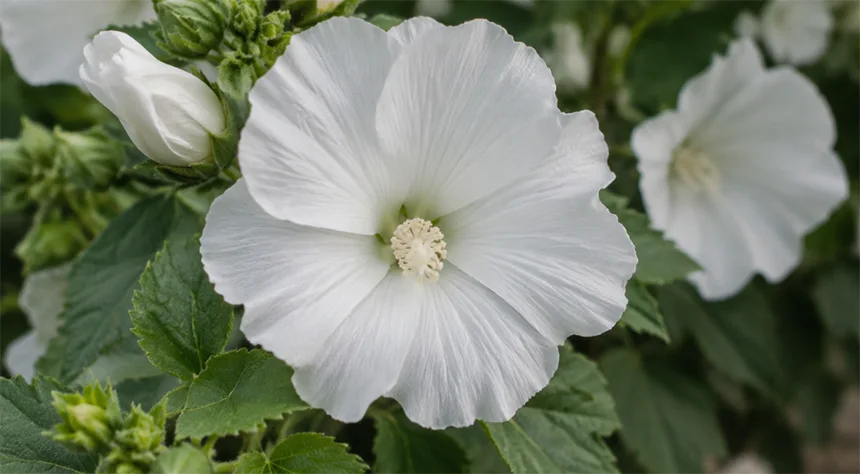 | This variety features pure white flowers. It is a fast-growing bushy lavatera species. These are mainly grown for pollination or as cut flowers. |
| Malva Rose Lavatera (Perennial Variety) | 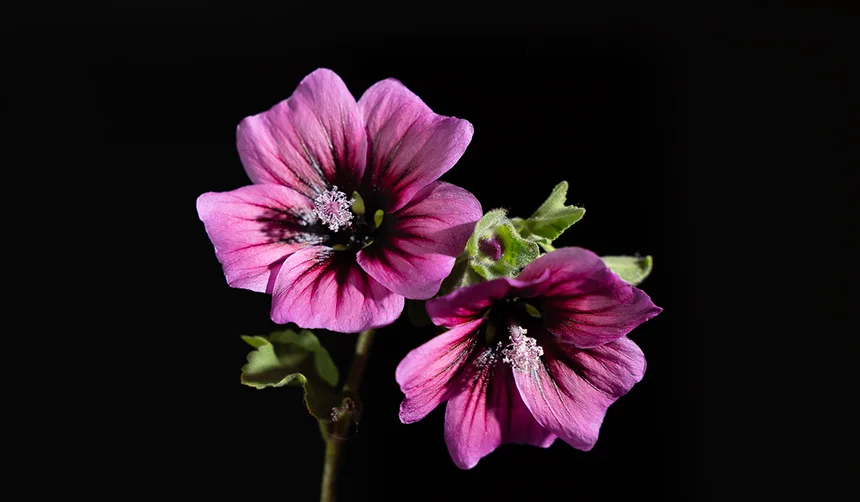 | Malva rose, better known as rose mallow or tree mallow, is a showy, fast-growing Lavatera species. The hibiscus-like flowers look extremely stunning with green leaves. |
| Barnsley Baby (Perennial Variety) | 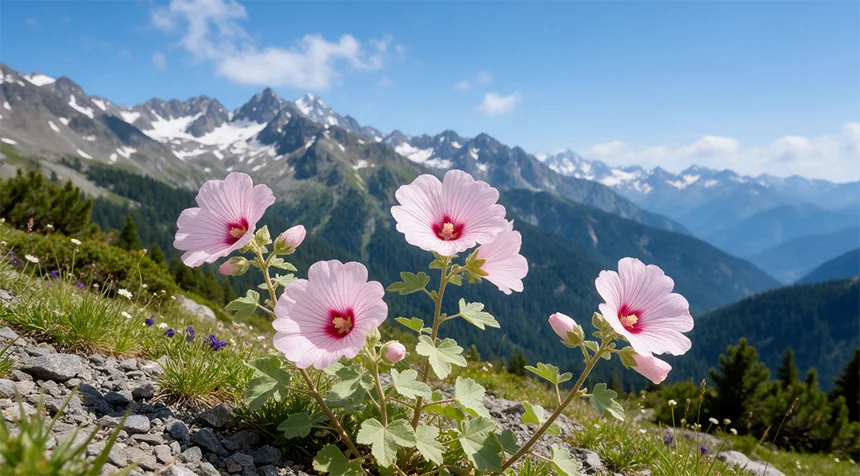 | Barnsley Baby is one of the most widely appreciated varieties of the Lavatera genus. The soft white to powdery pink flowers look extremely breathtaking in a garden space. |
| Silver Cup (Annual Variety) | 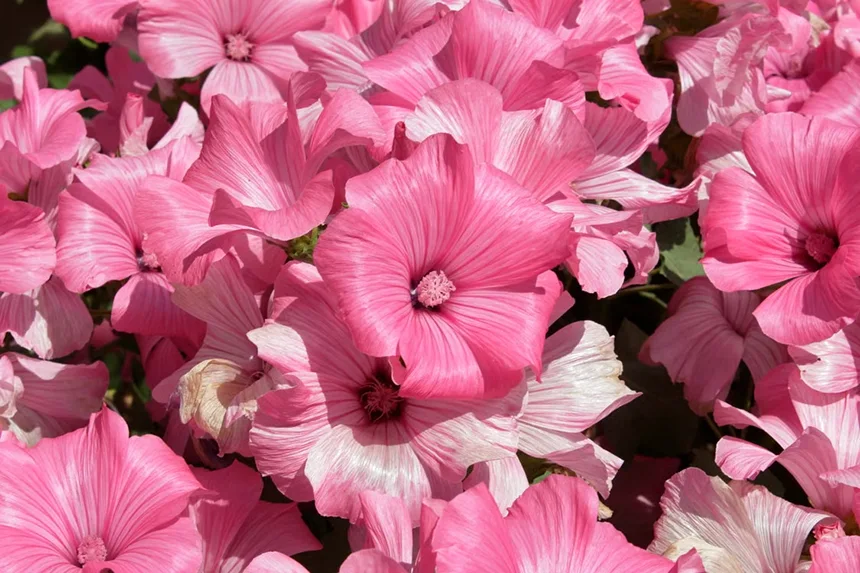 | Silver Cup Lavatera produces large and vibrant funnel- or trumpet-shaped blooms. This variety is low maintenance and grows till late autumn. |
Common Pest Problems and Their Solutions
As mentioned earlier, lavatera is an easy-to-grow flowering genus, but a few pests can damage its leaves, stems, or blossoms. Some common pests are aphids, spider mites, whiteflies, slugs, and leaf-eating beetles. It is important to keep a regular check so that you can detect these issues on time.
| Pest Name and Image | Signs and Symptoms | Solution |
Aphids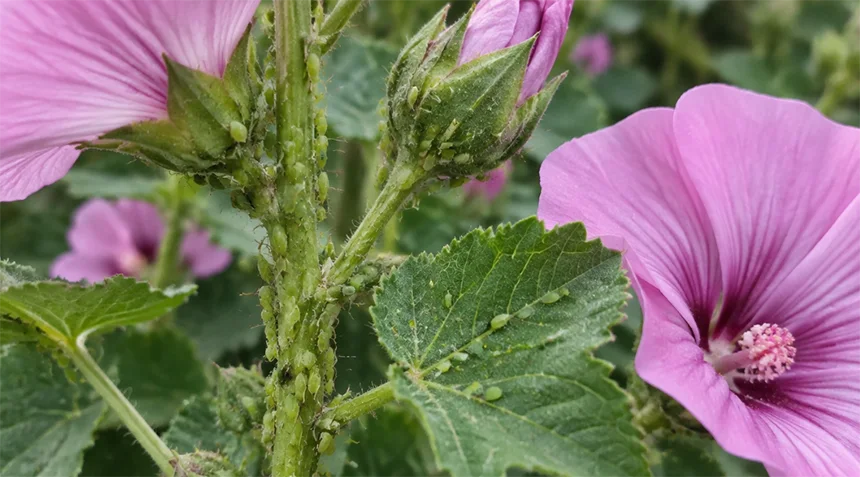 | Aphids feed on plant sap and often affect the new growth and delicate shoots that emerge. | Spray the affected areas with a gentle stream of water. Use insecticidal soaps or neem oil if the issue persists. |
Spider Mites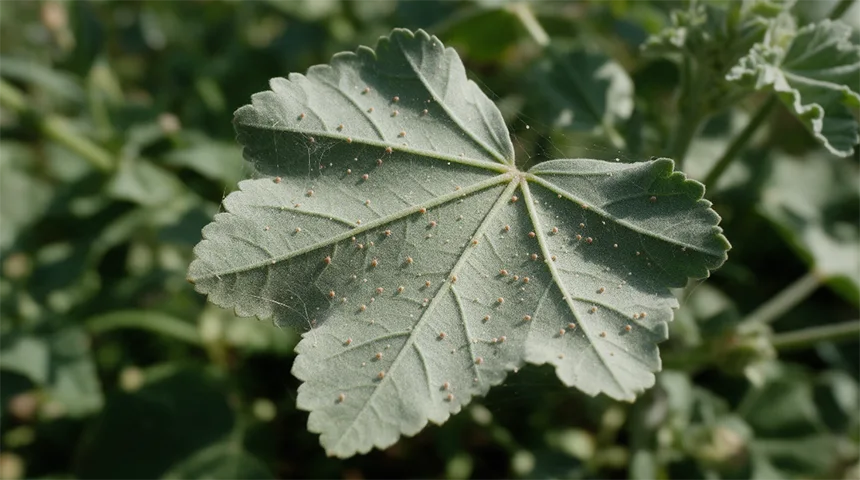 | These tiny insects are a problem, especially during hot, dry weather. Heavy infestation can weaken the plant and cause leaves to drop. | Wash the underside of the leaves with water. If the issue does not resolve, use neem oil or insecticide to wash the leaves. Isolate in case of heavy infestation. |
Whiteflies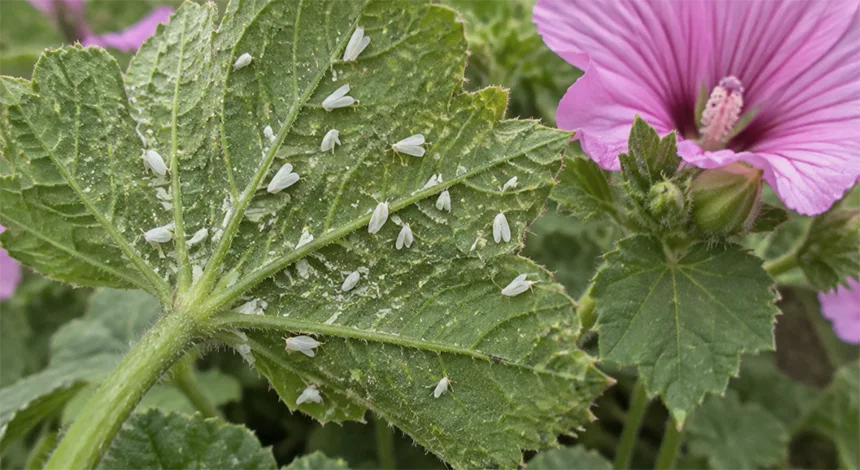 | Whiteflies suck sap from the leaves and can leave behind honeydew, which might encourage black mold. | Remove heavily infected leaves, rinse the rest of the foliage, and use sticky traps to remove the whiteflies. Consider using an insecticidal soap. |
Slugs and Snails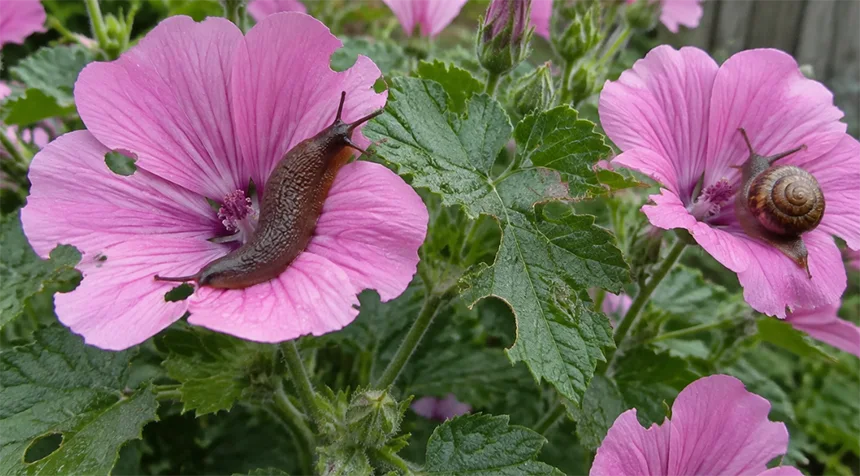 | These pests feed on young leaves, especially if the garden area is damp and the plant is young. | Check the plant in the evening and remove the slugs and snails manually. Move the plant away from damp areas and debris. |
Leaf-Eating Beetles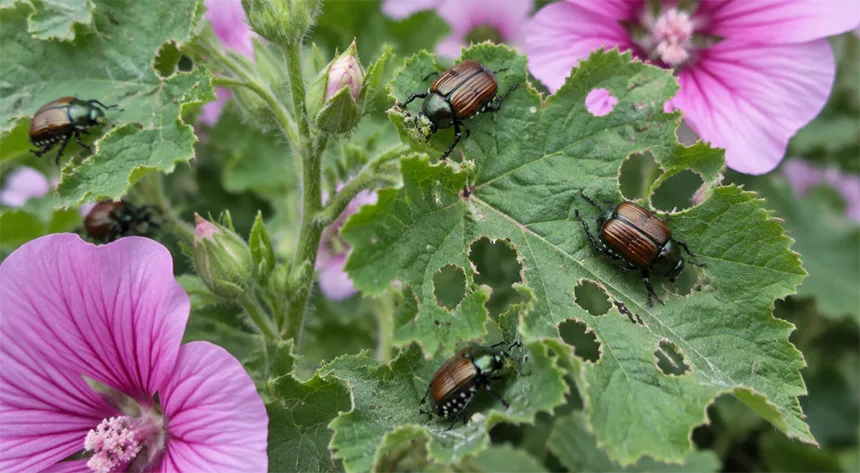 | Some beetles feed on Lavatera foliage, although the particular species depends on the region. | Inspect the plant regularly and remove visible beetles by hand. Use a proper net to trap the flea beetles and shake off the blooms nicely. |
5 Best Companion Plants for Lavatera
Choosing the right companion plants for your lavatera will not only give you a fuller and balanced garden, but they will also help it flourish and grow profusely.
Some of the best companion plants for Lavatera are given below. You can also pair these together for flower arrangements or other floral artworks.
| Companion Plant | Why it Goes Well With Lavatera |
Salvia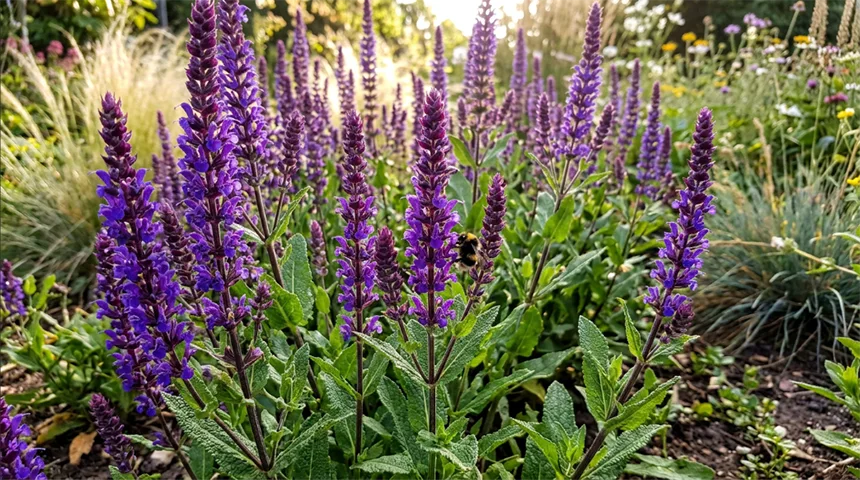 | The upright spikes in purple or blue shades go nicely with the cup-shaped blooms of lavatera. |
Yarrow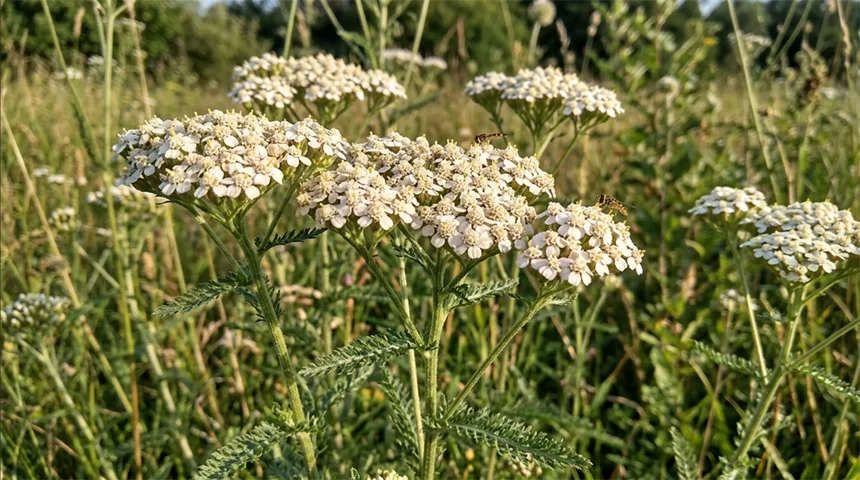 | Both yarrow and lavatera have the same growth requirements, which makes them low-maintenance companion plants. |
Buddleja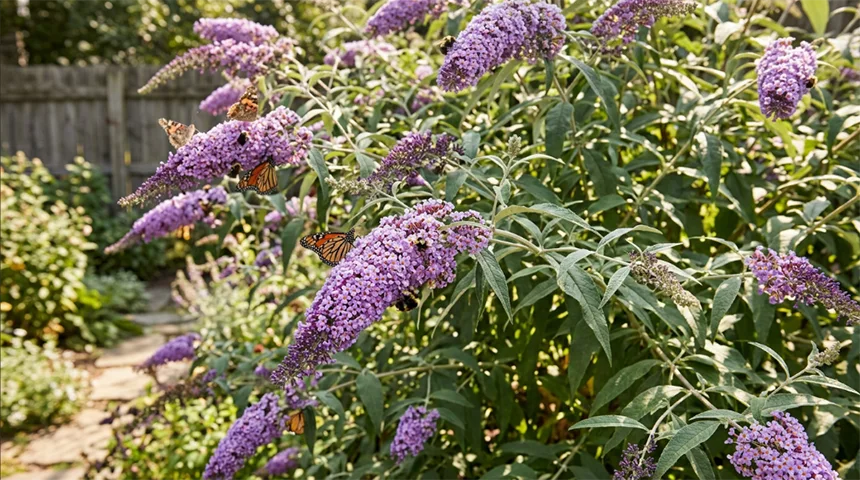 | Buddleja and lavatera make a great planting companion because of their similar growing needs. You can grow these together as border cover plants. |
Rose Bush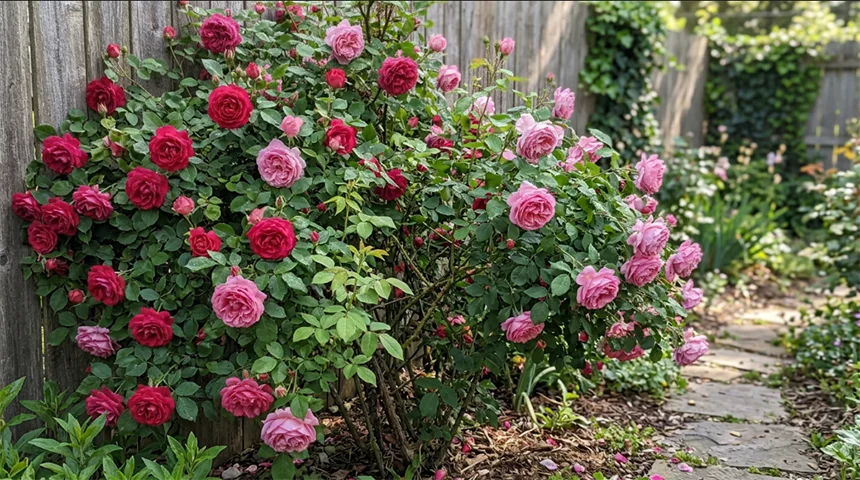 | Planting lavatera and roses together attracts all the beneficial pollinators, such as bees and butterflies, that help enhance the local biodiversity. |
Clematis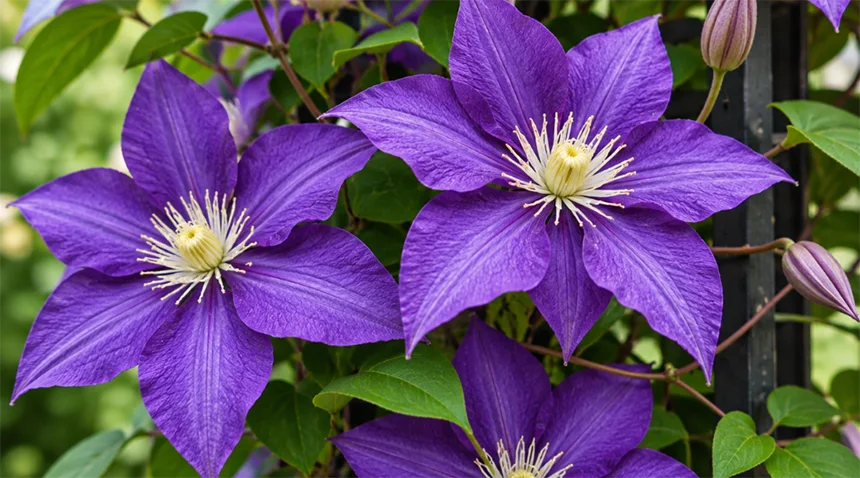 | The color and texture of both clematis and lavatera go well with each other. Except for some varieties, almost all clematis plants share the same pruning season as lavatera, making it an easygoing companion plant. |
Final Words
Undoubtedly, lavatera is one of the most stunning purple flowers. It stands out as an exceptional choice for both novice and experienced gardeners. If you wish to add a visual impact with minimal effort, growing lavatera is a choice you won’t regret. You simply need to understand its care needs and the right time to prune it, and you are good to go.
I like how the bloom acts as an abundant food source for all the essential pollinators. To summarize the lavatera plant, one can say it is an easy-to-grow bloom that can easily add a pop of color to your dull gardens.
FAQs
Do lavatera come back every year?
Whether lavatera will come back every year or not depends on the species you grow. Shrubby Lavatera are often short-lived (roughly 5 to 7 years) and can be damaged in hard winters. Lavatera is a flowering genus that comprises both annual and perennial varieties.
Where do lavatera grow best?
Lavatera grows best in areas that have full sunlight. Make sure the soil is well-draining and loamy. Do not forget to water the plant regularly during the initial growing stages.
How can you use the lavatera flower?
Lavatera is a multipurpose flower. You can use the raw flowers for culinary purposes. Its young leaves can be eaten raw, and the flowers can be used to make brewed tea. The crushed leaves can be crushed and applied directly to the wounds. It has a soothing effect.
Can Lavatera be grown in containers?
Whether Lavatera can be grown in containers or not depends on the variety you choose. Dwarf varieties or annual ones are best for pots. You need to make sure that the container has proper drainage holes and the potting mixture is fertile.
Can Lavatera be used as a cut flower?
Yes, you can grow Lavatera as a cut flower. It can be easily used in bouquets or for floral decorations, both indoors and outdoors.
- Lavatera – Royal Horticultural Society
- Lavatera Landscape Plant – Oregon State University