


Purple flowers mean elegance, creativity, and calmness. They are a beautiful choice for adding character to any garden or landscape. I mainly use these blooms for gifting and to add vibrant to my front lawn because they symbolize admiration and royalty. You can plant them as border covers or use them in containers or bouquets.
In this article, I have covered a beautiful range of 31 purple blooms from deep violet to soft lilac such as lavender, verbena, clematis, bellflower, dwarf iris and many more. Explore the complete list of vibrant purple flowers that are perfect for every garden setting.
Quick Answer
Purple flowers generally mean royalty, elegance, admiration, creativity, and grace. Their meaning can vary with color shade. Some popular purple flowers that can be planted in the garden or used for gifting are lavender, clematis, bellflower, catmint, salvia, allium, and many more. These are often prized for their appearance and deep meanings.
What Do Purple Flowers Mean? Symbolism and Significance
Purple flowers mean spirituality, royalty, imagination, and transformation. They are often used to convey wealth and luxury. Because of the rare availability, many beautiful purple flowers are often used for gifting or home decor.
The flower is also known to signify nobility and elegance. Purple dye was historically rare and expensive and was often reserved for kings, queens, and high-ranking officials. Gifting purple flowers represented honor, appreciation, and success.
21 Types of Purple Flowers: Names, Pictures, and Growing Details
Purple flowers are widely appreciated for their rich and regal hues. Their meaning can vary depending on the species. Some popular types of purple flowers, such as Orchids, Tulips, Hyacinths, Asters, and zinnias, are often used for gifting or culinary purposes. From deep violet blooms to soft lavender, I have listed 21 purple flowers in this section for your reference.
1: Lavender
- Native Range – Mediterranean region, southern Europe
- Care – Low-maintenance
- Vase Life – 5-7 days
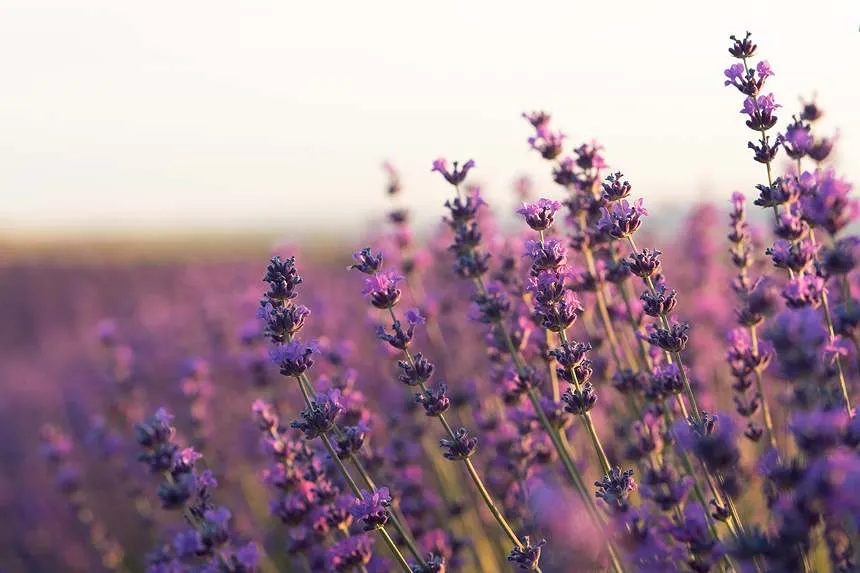
Lavender is a flowering plant that belongs to the mint family. Botanically called Lavandula, this is one of the most widely appreciated purple flowers because of its medicinal uses. The flower is often grown in clusters reaching up to a height of 1-8 inches. It blooms from late spring through mid-to-late summer.
This evergreen shrub has a strong, sweet, and earthy fragrance. It is associated with purity and calmness. For more about the symbolism and significance of lavender, see our article on lavender flower meaning.
BUY NOW – Bring the beauty of lavender home with munstead lavender.
2: Violet
- Flower Type – Herbaceous perennial
- Botanical Name – Viola
- Native Range – Temperate regions of the Northern Hemisphere
- Care – Low to moderate
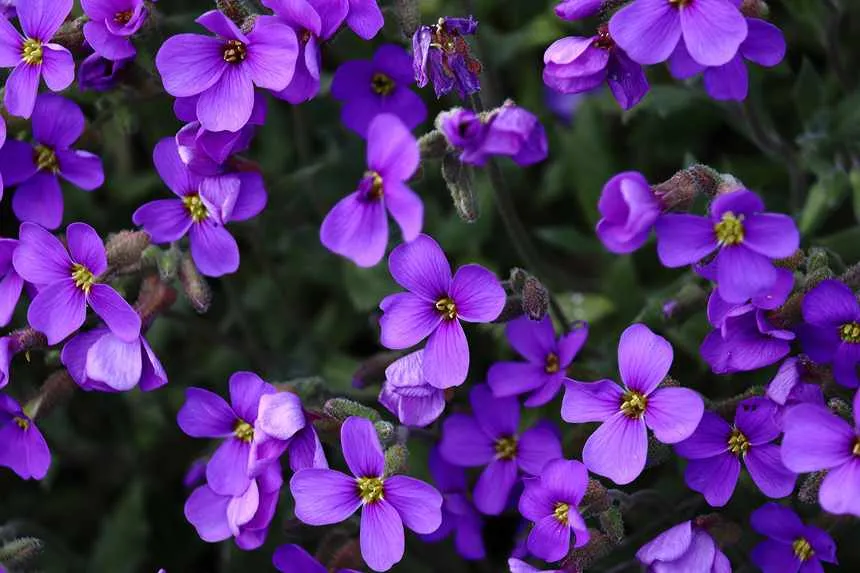
Violet is a popular February birth flower. It is a delicate, low-growing perennial purple flower that features heart-shaped blooms. It grows about 3-6 inches tall and can be used as an indoor plant. Violets typically bloom from early spring to early summer and have a vase life of about 3-5 days.
The flowers and the leaves of the violet are edible and medicinal. These are pollinator-friendly and available in different shades like dark purple, blue, yellow, and white. This blue purple flower has been designated as the official state flower of Illinois.
3: Verbena
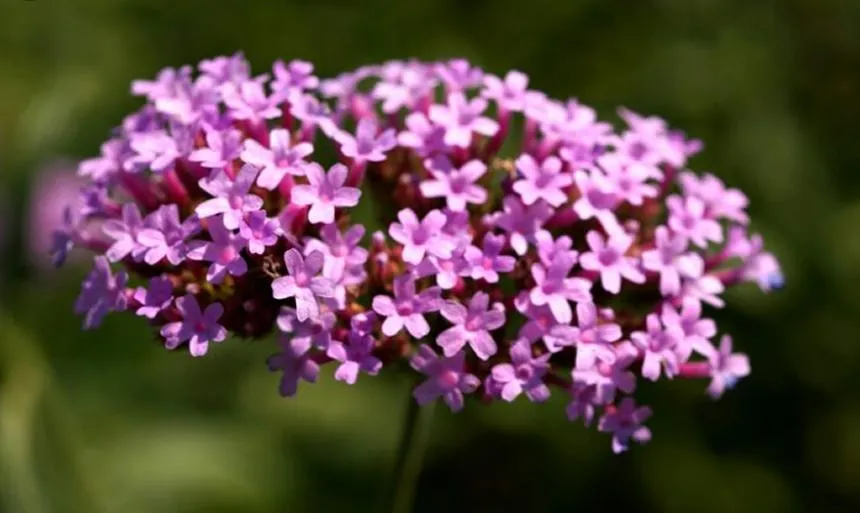
- Botanical Name – Verbena officinalis
- Flower Type – Low-trailing or tall upright growth
- Native Range – South America (Argentina, Brazil) and parts of Europe
- Care – Low-maintenance
Verbena is a group of herbaceous perennial flowering plants originally found in South America and parts of Europe depending on the species. It usually blooms from late spring to first frost that is from May to October. The vase life of these dark purple flowers is 5-7 days. Verbena is a popular fall flower because it adds color to the garden all year round.
In ancient Rome, this flower was considered a sacred herb and was used to clean the altars before religious ceremonies. Verbena typically spreads about 6-18 inches wide and the flowers have a light sweet fragrance. It is highly attractive to butterflies, bees, and hummingbirds.
4: Clematis
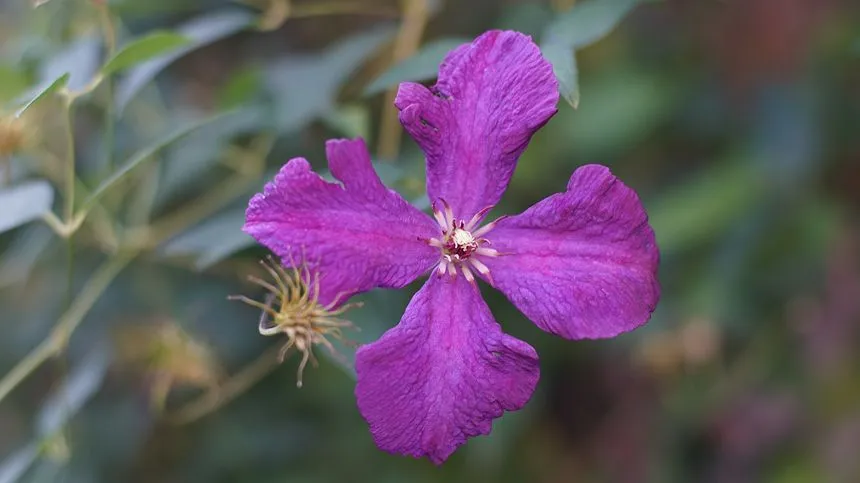
- Native Range – Parent species native to China and Europe
- Flower Size – 4-6 inches across
- Bloom Time – Early summer to early fall (June – September)
Clematis is one of the most beautiful purple flowers because it bears large, flat, star-shaped blooms with 4-6 petals. The species has a vase life of around 3-5 days and is often grown as a cut flower. It is also found in different colors such as deep purple, bright blue, soft pink, pure white, and rich red.
The species is also called as “Queen of Climbers” because it has a vigorous climbing habit. It needs a minimum of six hours of direct sunlight and well-draining soil for proper growth. I usually plant this flower in my balcony garden but you can also add them around trellises, railings, and living walls.
5: Bellflower
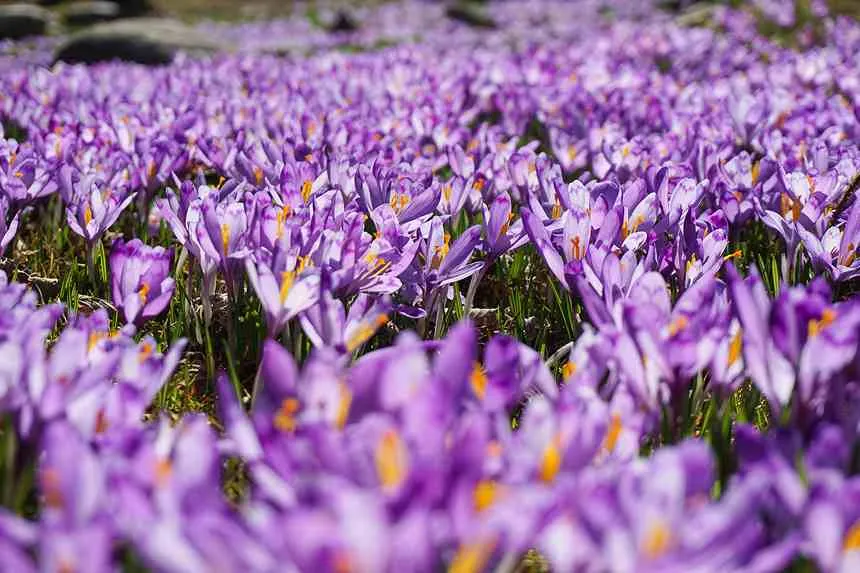
- Botanical Name: Campanula spp.
- Native Range: Europe and parts of Asia
- Special Fact: The flower shape gives the bellflower its common name.
Purple bellflower produces bell-shaped flowers in shades of purple, usually from late spring through summer. The flowers hang from slender stems and attract bees and other pollinators. They have little to no fragrance and can last days as a cut flower. The flowers belong to the Campanula species, a group native to Europe and parts of Asia. Bellflower usually grows 12-36 inches tall and spreads 1-2 inches wide. This purple flower is often used for gifting as it symbolizes gratitude and everlasting love.
6: Dwarf Iris
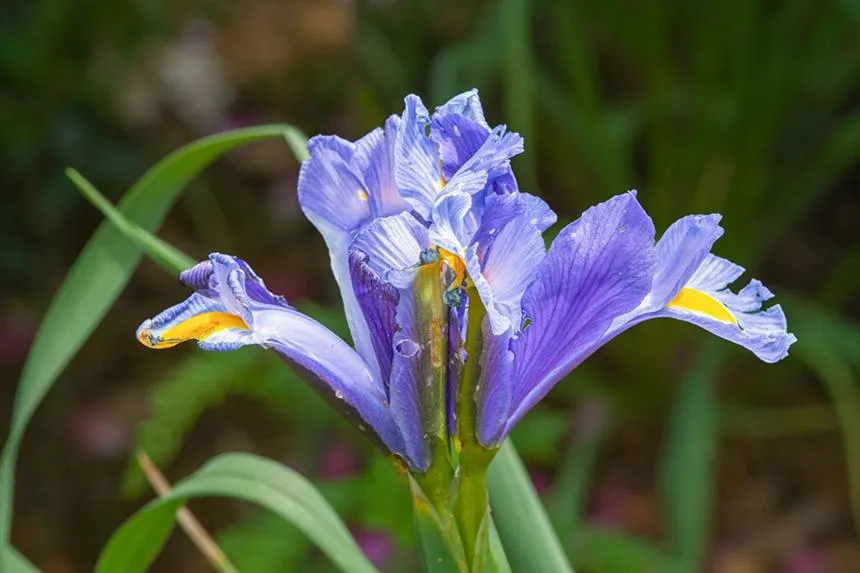
- Botanical Name – Iris spp.
- Native Range – Europe, Asia, and North Africa
- Special Fact – Dwarf Iris is among the earliest iris types to bloom in the year.
This purple iris flower is usually planted to add a burst of color to any garden space. It is a flowering perennial belonging to the Iridaceae plant family and produces flowers that are 2-4 inches in diameter and have 6-12 inch tall flower stems.
The blooms come in purple, blue, yellow, white or mild colors and have a light fragrance. They usually bloom in late winter to spring. The flowers have three upright petals and three hanging petals and can last about 5-7 days in a vase.
7: Balloon Flower
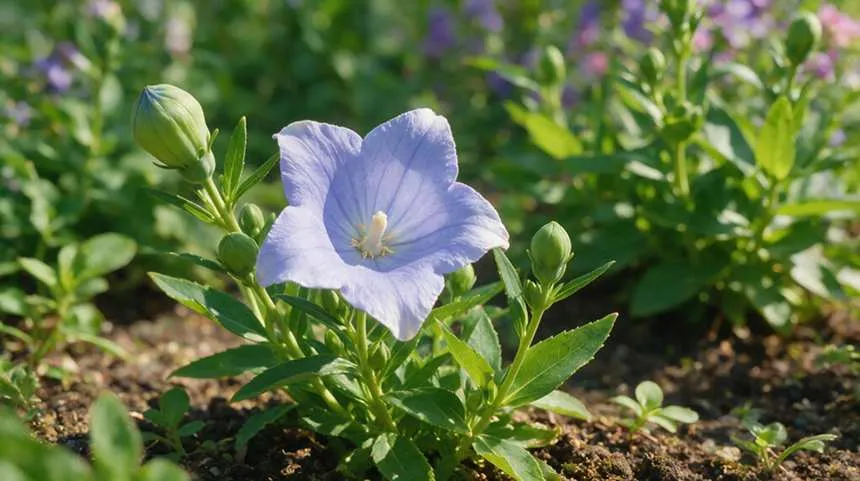
- Botanical Name – Platycodon grandiflorus
- Native Range – China, Korea, Japan, and eastern Russia
- Hardiness Zone – USDA zones 3-8
Balloon flower produces 2-3 inches diameter blooms on 12-24 inch tall flower stems. The flowers come in blue, violet, pink, or white and have little to no fragrance. It requires very low-maintenance and is deer-resistant. This purple flower blooms from summer to early fall.
Each flower opens into a five pointed, star-shaped bloom after starting as a round, balloon-like bud. The flowers can last for about 5-7 days in a vase and attract bees and butterflies for pollination. What usually fascinates the gardeners is how the unopened flower bud swells like a small balloon before it opens.
8: Catmint
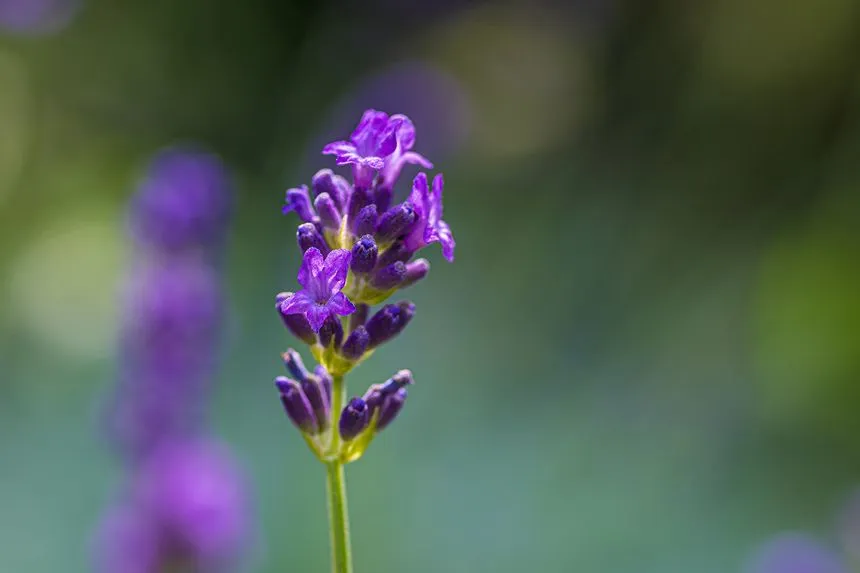
- Botanical Name – Nepeta spp.
- Native Range – Europe, Asia, and parts of the Middle East
- Bloom Time – Late spring to early autumn
Purple Catmint produces 0.5-1 inch diameter flowers on 12-24 inch tall flowering stems. The blooms of this long blooming perennial are usually blue purple to violet and have a light, mint-like fragrance. They appear from late spring to early autumn but may continue to flower in fall with proper trimming.
Each catmint flower has a tubular, two-lipped shape and grows in clusters along the stems. The flowers are useful as cut flowers, with a vase life of about 5-7 days, and attract bees and butterflies. Its shape makes it easy for the pollinators to reach its nectar.
9: Salvia
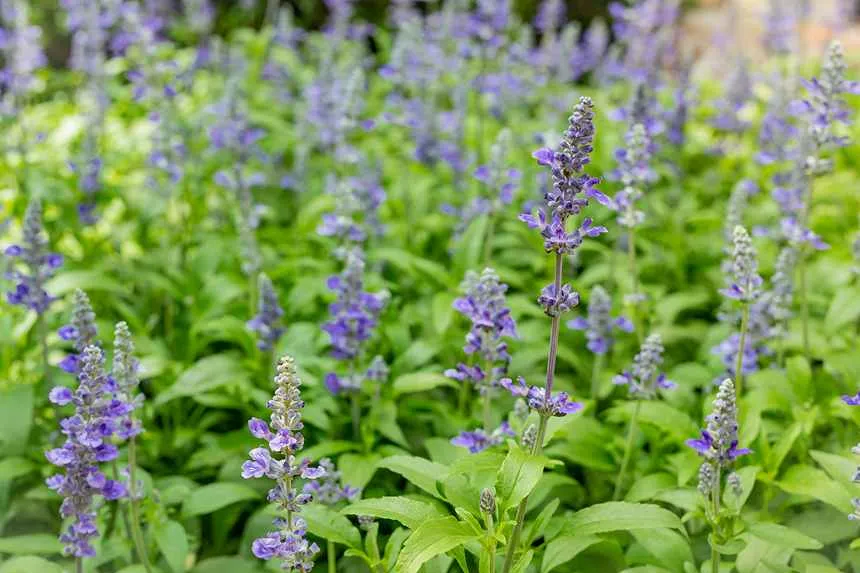
- Botanical Name – Salvia spp.
- Native Range – Europe, Asia, Africa, and parts of the USA
- Special Fact – The tubular flowers produce nectar that attracts hummingbirds and many insect pollinators.
Salvia produces 0.5-1 inch diameter flowers on 18-36 inch tall flowering stems. The bloom ranges from purple and violet to blue-purple and has a little to no fragrance. They appear from late spring to fall, depending on the species and are often used as a landscaping flower. This ornamental flower is known to symbolize spirituality, wisdom, intellect, and deep admiration. I have mostly seen them growing in rock gardens or as border cover blooms.
The purple flowers can last about 5-7 days in a vase. To plant them in a pot, they need bright direct sunlight, well-draining, sandy or loamy soil, and moderate watering.
10: Allium
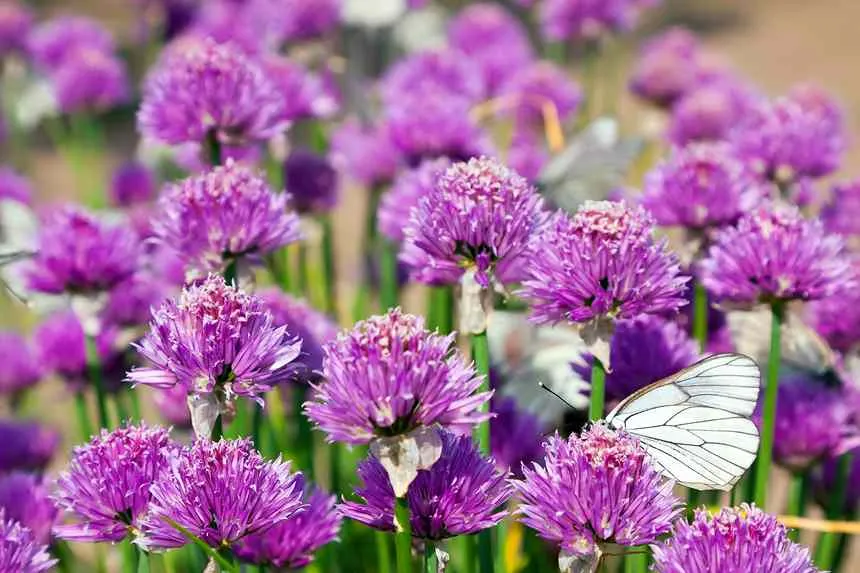
- Botanical Name – Allium spp.
- Native Range – Europe, Asia, North Africa, and North America
- Usage – Ornamental garden design, pest-resistance, and gifting
The blooms of the Allium flower spreads about 2-6 inches in diameter and grows about 12-48 inches tall. Its flowers can be purple, violet, pink, white, or yellow, with purple being the most commonly found. They bloom from late spring to early summer and have a light onion-like fragrance.
Each flower head contains many small, six-petaled star-shaped flowers. Cut alliums can last around 7-14 days in a vase and attract bees and butterflies. These are one of the most widely grown purple flowers because they symbolize unity, patience, good fortune, and prosperity.
11: Monkshood
- Botanical Name – Aconitum
- Native Range – Mountainous regions of Europe, Asia, North America
- Growth Habit – Herbaceous, tuberous-rooted perennial
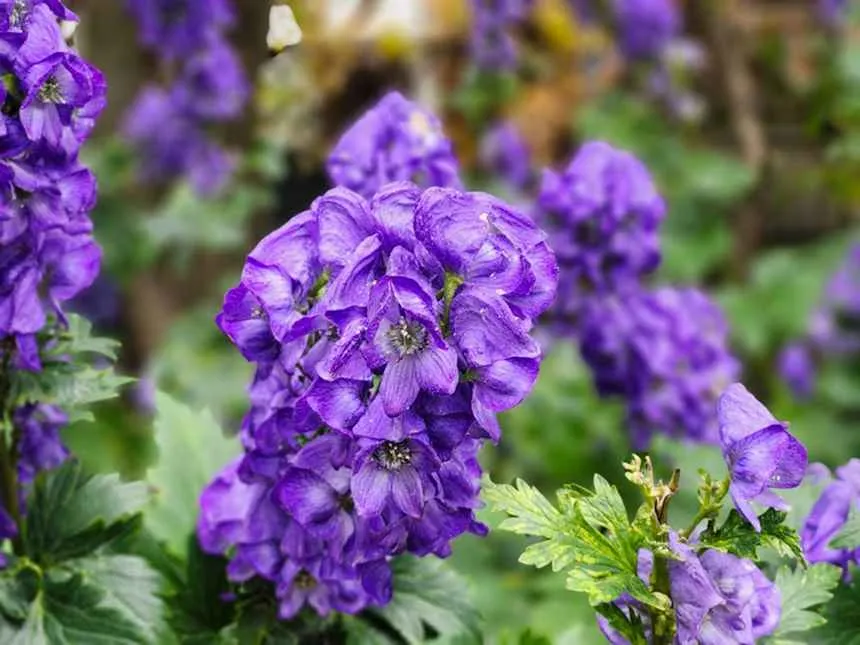
Monkshood is a perennial flowering species known for its tall spikes of hood-shaped blooms. The flowers are most commonly deep blue to violet, although some varieties produce white, pink, or bi-colored blooms as well. All parts of the plant, especially the fleshy, tuberous roots contain a deadly poison called aconitine and should not be planted indoors if you have small kids or pets.
This purple flower generally blooms from mid to late summer. Cooler climates and partial shade can help maintain its attractive blooms for a longer period. In ancient times, Monkshood was usually planted to signify danger and warning but was also grown for its ornamental appearance.
12: Alpine Betony
- Botanical Name – Betonica officinalis
- Native Range – Parts of Europe, Asia, and Africa
- Care – Low-maintenance
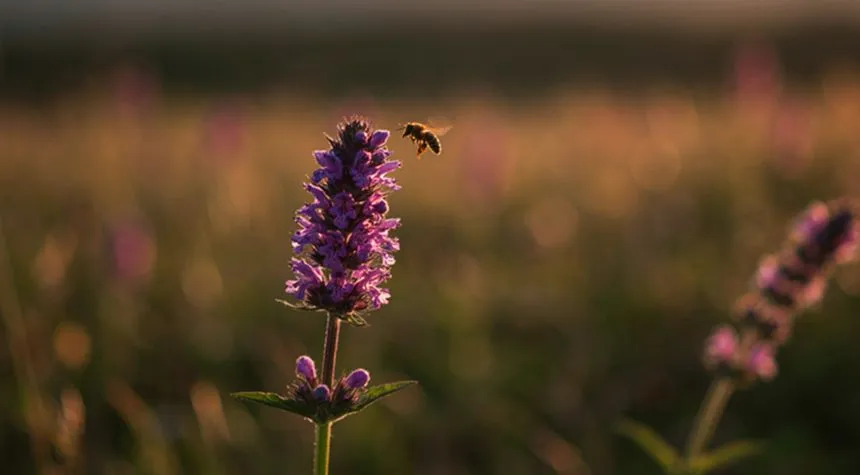
Alpine Betony is a tough, low-maintenance, clump-forming, perennial purple flower. It grows up to 12-23 inches tall and spreads about 16-23 inches wide. It has deep green, crinkled, slightly velvety and crisp leaves and the dense upright spikes of bright purple, lavender or pink flowers can make any garden space vibrant.
The species prefers growing in full sunlight, thrives in normal, sandy or clay soils, and requires moderate moisture. Alpine Betony is usually planted in hardiness USDA zones 4-8. This purple flower is pollinator friendly and pest resistance.
13: Lily of the Nile
- Botanical Name – Agapanthus africanus
- Native Range – Southern Africa
- Usage – Ornamental, border, containers, or cut flowers
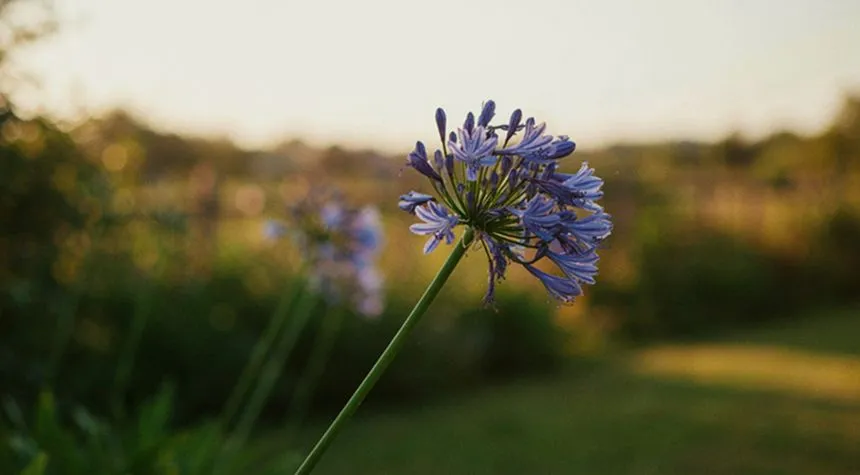
The lily of the Nile is a popular flowering perennial known for its large, globe-shaped clusters of bright blue, purple, or white trumpet-shaped flowers. Despite its name, the bloom does not grow along the Nile river. It grows well in warm climates though some deciduous types can also withstand colder zones.
Being a stunning ornamental flower, lily of the Nile is sometimes specifically grown because of its rich symbolism. It usually means love, devotion, fertility, prosperity, strength, and endurance. As per my opinion, this can be a great bloom for floral arrangements or for bouquets.
14: Anemone
- Botanical Name – Anemone genus
- Native Range – Europe, North America, and Asia
- Hardiness Zone – USDA zones 3-10
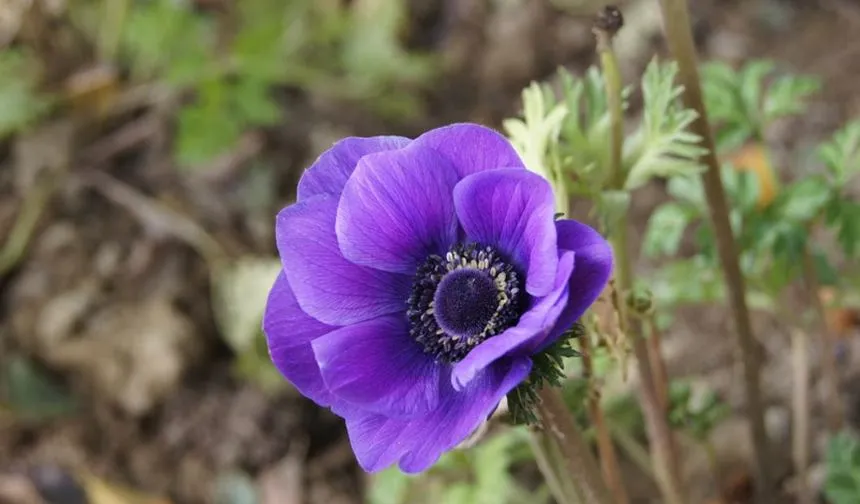
Anemone flower is a delicate, cup-shaped flower belonging to the buttercup family and is also known as the windflower. It is available in many different colors which is why it is widely used during the wedding season for floral arrangements or landscape designing.
In the language of flowers, this species is known to symbolise many different emotions. Its early arrival during the spring season indicates surprise, while many used the species for gifting representing love, beauty, and deep admiration. The bloom is extremely pollinator-friendly and requires minimal care.
15: Bee Orchid
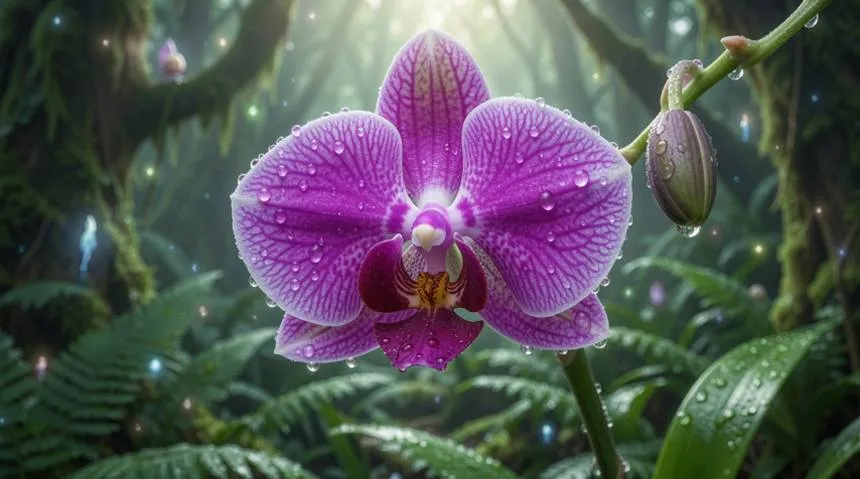
- Botanical Name – Ophrys apifera
- Hardiness Zone – USDA Hardiness Zone 6-9
- Growth Habit – Herbaceous perennial
Bee orchid is beautiful wild flower famous for its bee-like shape in the center. The species is usually grown in dry grasslands or at roadsides. It generally blooms from late spring to mid summer that is from May to July. Each flower consists of three outer sepals, usually pale pink, and three inner petals.
The botanical name of the flower is Ophrys apifera and it typically reaches a height of 6-20 inches. Native to a wide range of habitats such as Europe, the Mediterranean region, and the Middle East, this clump-forming species supports pollinators and contributes to biodiversity. The plant is non-toxic and can be added in the balcony garden as well.
16: Bittersweet Nightshade
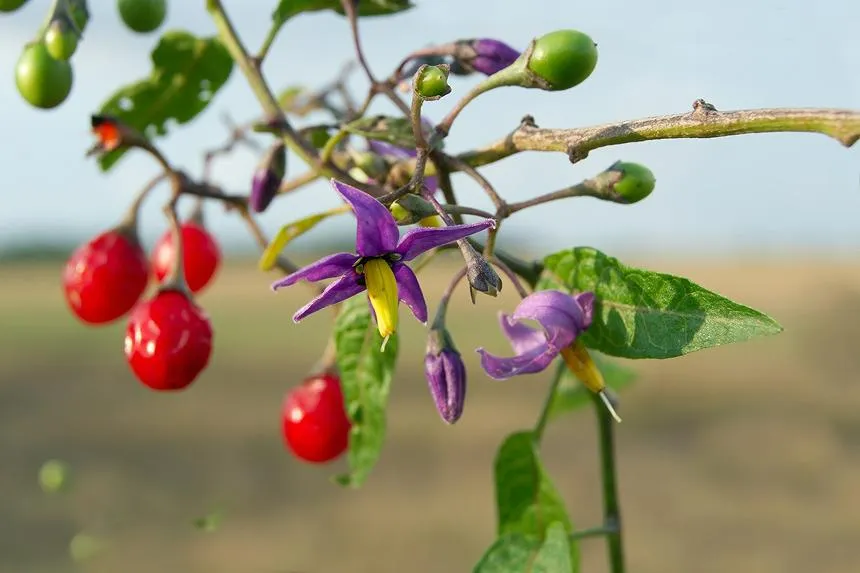
- Native Region – Solanum dulcamara
- Toxicity – Toxic to pets and humans
- Growth Type – Perennial climbing vine
Bittersweet Nightshade is a climbing perennial vine known for its delicate, star-shaped purple flowers with bright yellow centers. The flowers are followed by clusters of berries that change from green to orange-red as they mature. While the blooms are attractive and useful to pollinators, the species is toxic if eaten, so it should be handled with care.
This flower generally blooms from late spring to summer and the colorful berries develop later in the season. Bittersweet nightshade is adaptable and can grow in moist, well-drained soil, full sun to partial shade, and needs moderate watering.
17 : Bell Heather
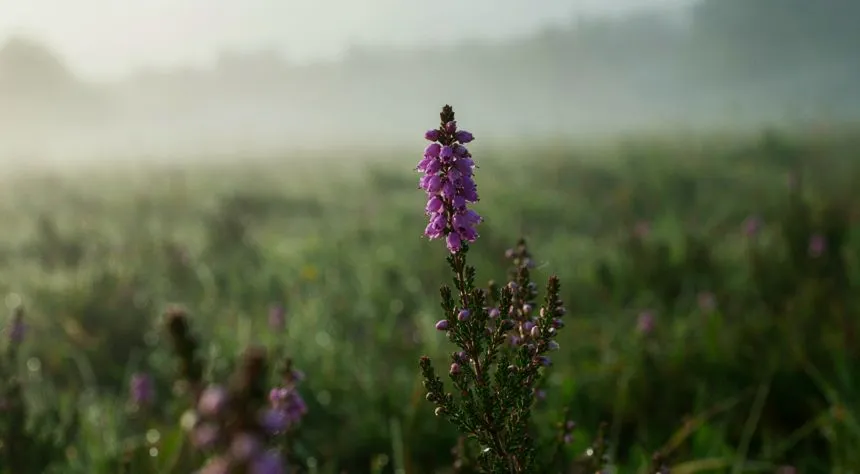
- Native Region – Western and Central Europe, UK, and Ireland
- Toxicity – Not toxic to humans, dogs, or livestock
- Growth Type – Low-growing, evergreen shrub
Bell Heather is a low-growing evergreen shrub mainly found in western and central Europe. It grows about 15-24 inches tall and features rich purple, pink, or reddish bell-shaped flowers. The species is generally considered non-toxic to humans and pets. As per the botanical society of Britain and Ireland, bell heather is mostly found growing on dry and well-draining pastures.
Its tiny bell flowers are perfect hiding spots for small insects on a windy day. Because of its vibrant purple shade, some places use this flower to turn the hillsides into a sea of purple, especially during summer. This purple flower usually blooms from summer to early autumn.
18: Blue-Eyed Grass
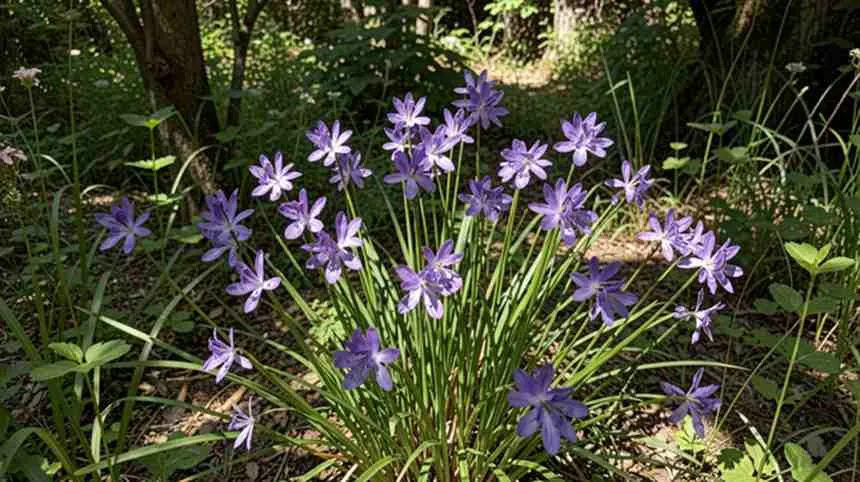
- Hardiness Zone – USDA zones 4-9
- Botanical Name – Sisyrinchium
- Native Range – North America, eastern and western USA
The Blue-eyed grass is a wildflower with a clump-forming growth pattern. It also has narrow, blade-like leaves and blue-violet flowers with yellow centers. What fascinates me the most is the name of this purple flower. Though it is called blue-eyed grass, it is not a true grass plant.
Typically blooming in spring and summer, blue-eyed grass is native to North America, eastern and western USA. It can be grown in full to partial shade, moist or well-draining soil with a slightly acidic pH. Do not mulch around the base of the flower as it can cause root rot.
19: Wild Hyacinth
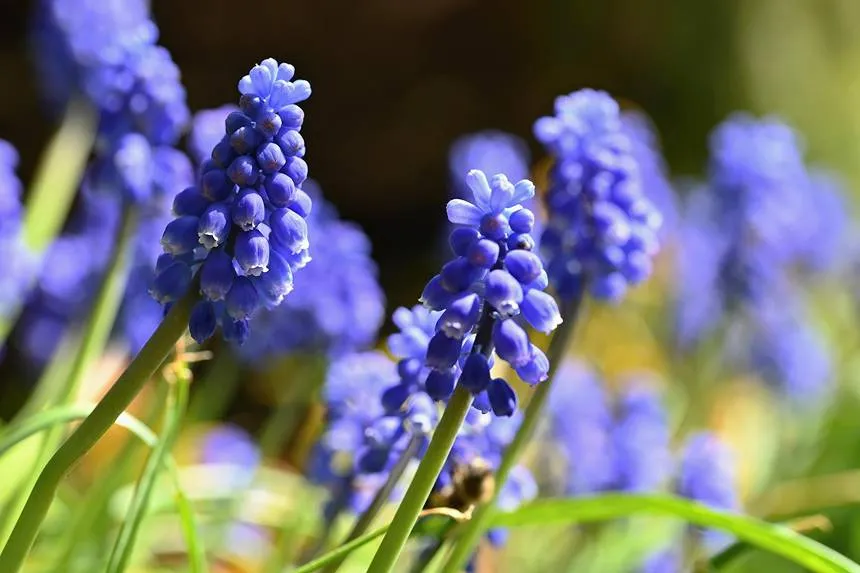
- Usage – Grown for ornamental and pollination purposes
- Toxicity – Non-toxic and edible
- Care – Low-maintenance, some varieties need extra care
Wild Hyacinth is also called as Camassia scilloides in botanical language. It is a spring blooming perennial native to North America. The flower is usually grown for ornamental purposes in the native woodland gardens, or cottage garden borders.
I have personally grown this flower in my backyard and it is very easy to care for. The bloom needs full sun to partial shade, organically rich soil and regular watering, especially during the initial growing days. It is also a popular Easter flower. Looking for more Easter flowers? Our detailed blog covers many beautiful options.
20: China Aster
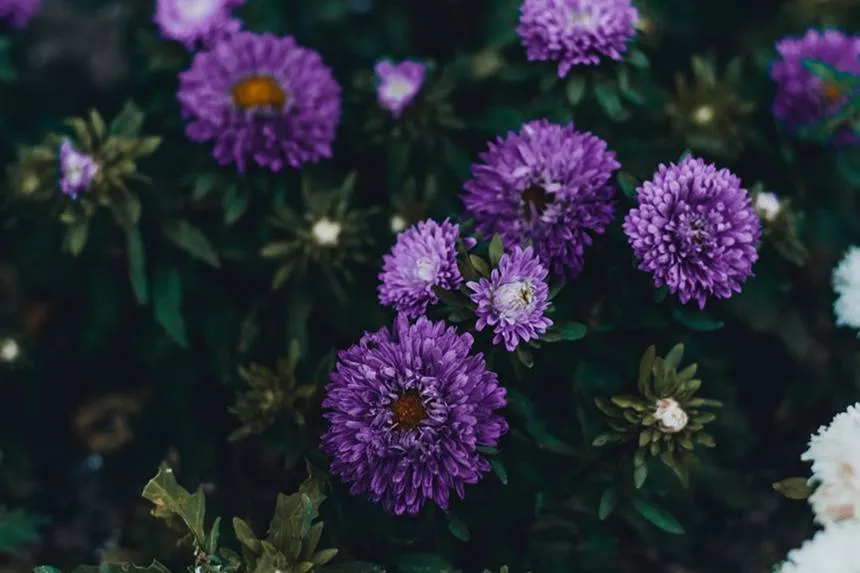
- Available Colors – White, pink, red, blue, and lavender
- Fragrance – Usually mild to no fragrance
- Bloom Time – Summer to early fall
This Aster variety is a popular flowering annual species liked for its large, colorful blooms and long flowering season. It is available in many different shades and is especially grown as a garden or cut flower. The vase life of this purple flower is about 5-10 days. You can use this bloom for gifting also as it represents love, patience, elegance, and remembrance.
It is best grown in fertile, well-drained soil with full sunlight. I always make sure that the soil is evenly moist but not too soggy. The large blossoms of China Aster are used to make bouquets or for floral arrangements.
21: Canterbury Bells
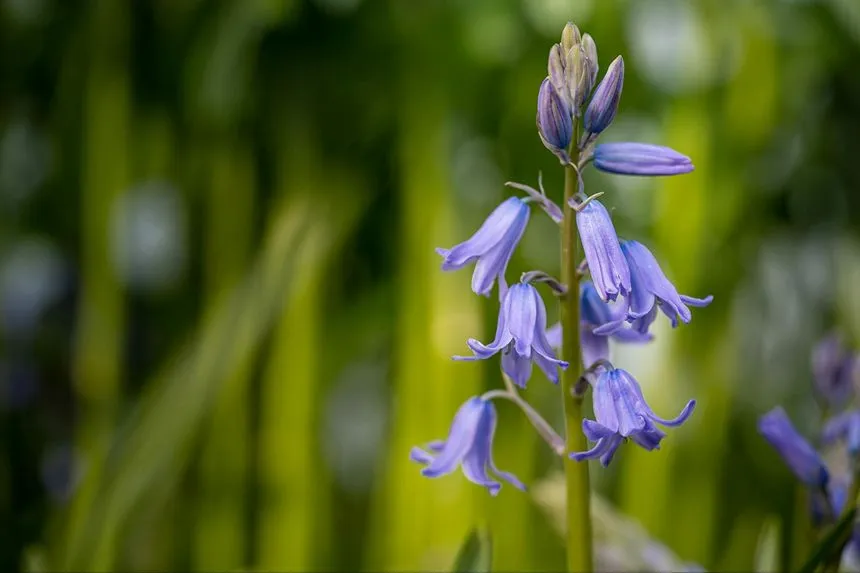
- Hardiness Zone – USDA zones 4-10
- Growth Type – Flowering bell-shaped blooms on upright stems
- Care – Partial sunlight and well-drained soil
Canterbury Bells is scientifically called a campanula medium. It is an elegant flowering species known for its bell-shaped bloom on upright stems. This flower comes in shades of blue, violet, pink, and white. It is particularly popular as cut flowers because of their tall stems and attractive flowers.
The height of canterbury bells is about 3 ft tall and the bloom size is about 1.5-2.5 inches wide. This purple flower generally blooms from late spring to summer and has a vase life of about 7-10 days. Canterbury bells are associated with gratitude, affection, and faith. They are also a symbol of welcome and deep admiration.
Top 10 Beautiful Purple Flowers for Gardens
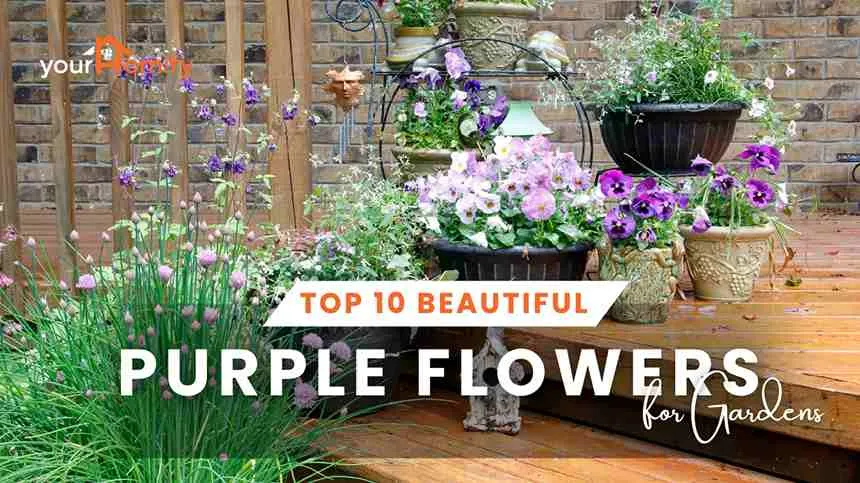
Purple flowers are usually added in the garden for ornamental appeal and to add a burst of color to a landscape. I usually pair them with blue and yellow flowers to create a contrast. This section covers purple flower names that are both popular and easy to grow. As per my opinion they are beginner-friendly and adaptable.
| Lilac | Heliotrope | Petunia | Coneflower | Geranium |
| Calibrachoa | Phlox | Sweet Pea | Blazing Star | Speedwell |
1: Lilac
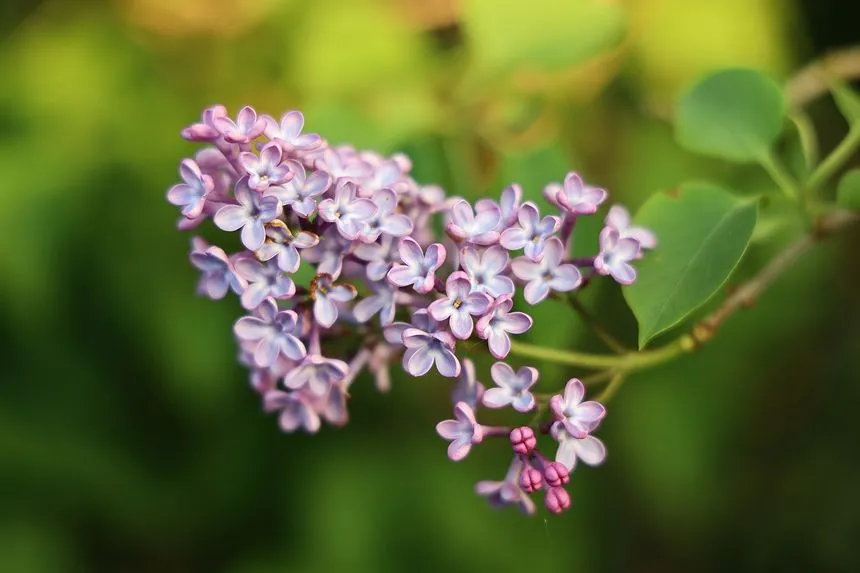
Lilac is a stunning purple flower that produces blooms usually in mid to late September. It has a strong, sweet scent and is majorly used to make perfumes or infused in drinks.
2: Heliotrope
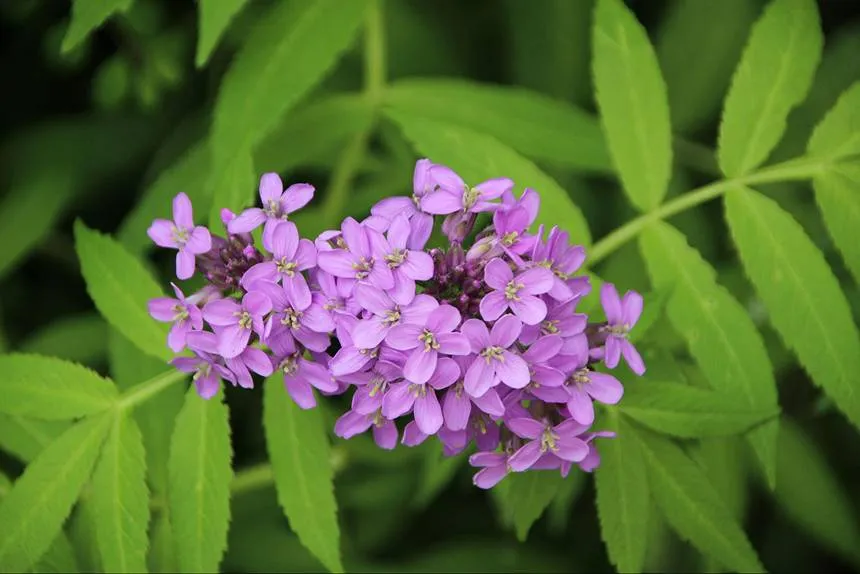
Heliotrope is a popular purple garden flower which is usually grown for its vanilla-scented blooms. It is usually grown as an annual and thrives in USDA hardiness zones 9-11.
3: Petunia
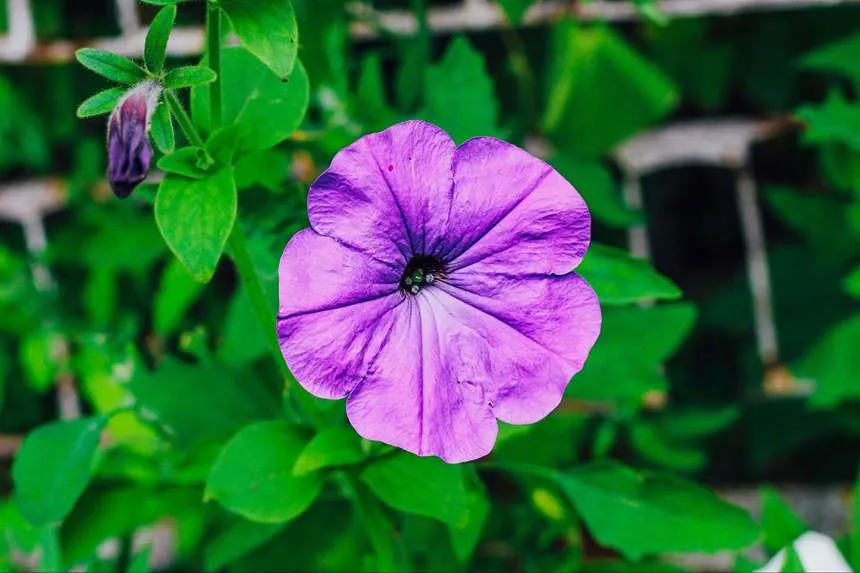
Purple petunias are vibrant flowering species which feature beautiful trumpet-shaped flowers. It typically grows about 7-10 inches and spreads about 8-30 inches wide. This seasonal flower is mainly known for its rich hues.
4: Coneflower
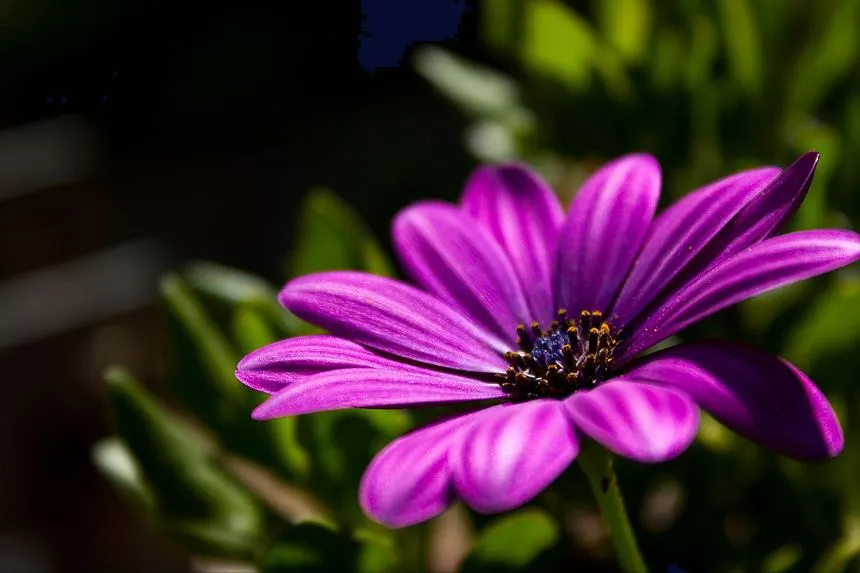
Botanically called the Echinacea hybrid, purple coneflower produces daisy-like blooms that have a cone-shaped orange-brown center. It is a hardy, easy-to-grow perennial that attracts bees and butterflies and blooms from summer to early fall.
5: Geranium
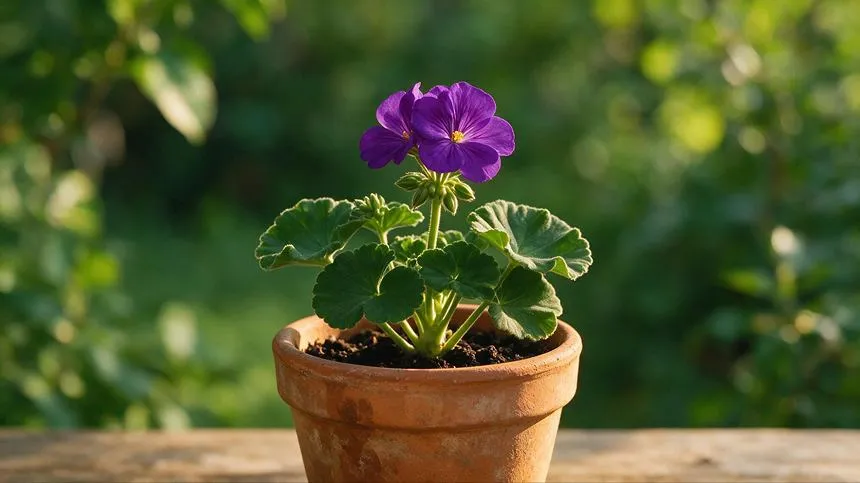
An average geranium flower grows about 12 inches tall and spreads 20 inches wide. It prefers growing in full sun to partial shade with fertile soil and moderate watering. The flower is used for gifting as it represents friendship, positivity, and comfort.
6: Calibrachoa
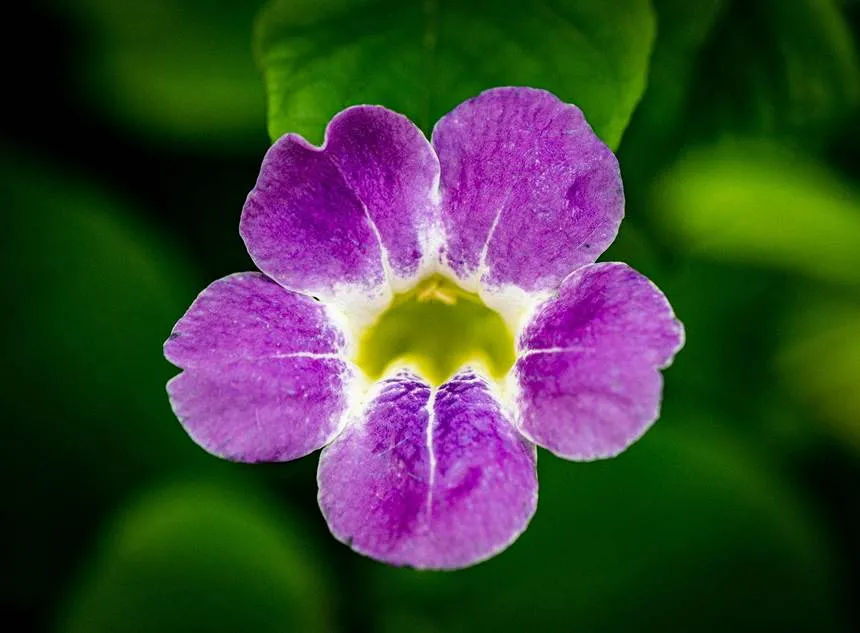
Calibrachoa are known as mini petunias as they produce masses of small, trumpet-shaped flowers in shades of purple, pink, red, yellow, and white. It is a popular, easy-care flowering species that can be planted in containers, hanging baskets, or garden borders.
7: Phlox
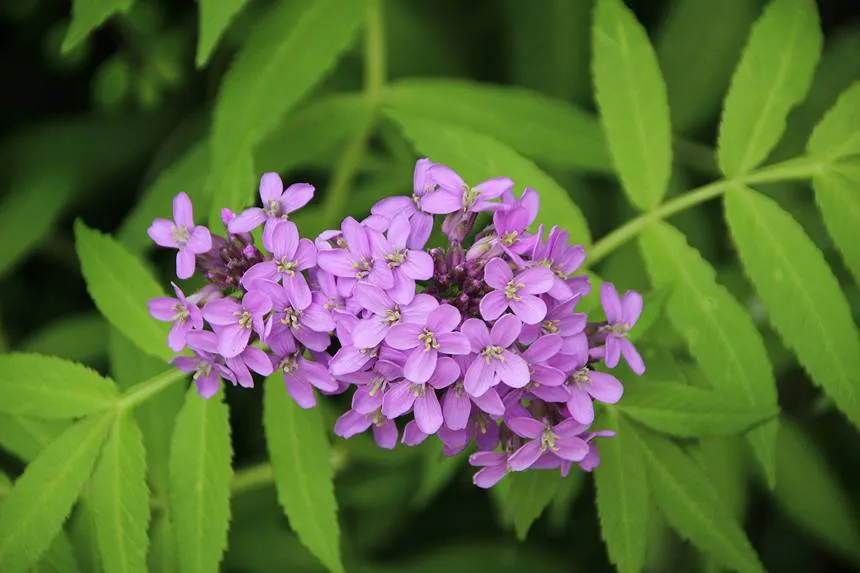
Phlox produces clusters of small, star-shaped flowers in beautiful shades of purple, pink, white, and red. It is a popular purple garden flower that adds vibrant color to borders, beds, and rock gardens blooming from spring through summer.
8: Sweet Pea
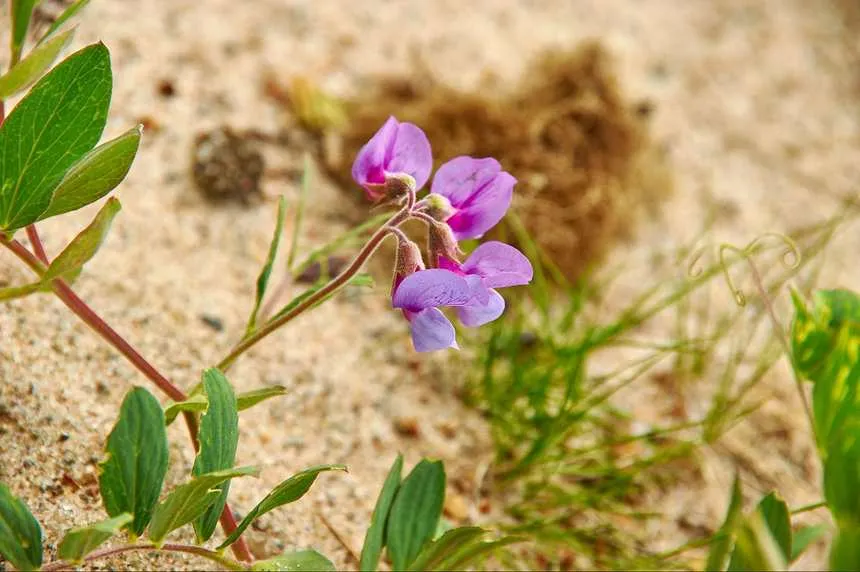
Sweet Pea features delicate, butterfly-like flowers in different shades of purple. They are best known for their sweet, pleasant fragrance. These graceful flowers symbolize pleasure, gratitude, and goodbyes and are planted in cottage gardens and floral arrangements.
9: Blazing Star
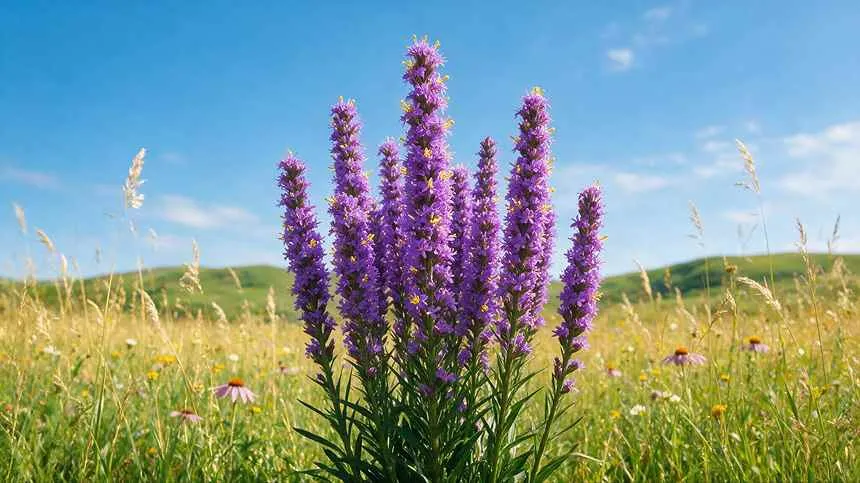
A blazing star is a magenta-purple flower that has tall upright flower spikes. It is best planted in pollination gardens as it attracts bees, butterflies, and hummingbirds. The flower grows about 3-4 feet tall and 12-18 inches wide.
10: Speedwell
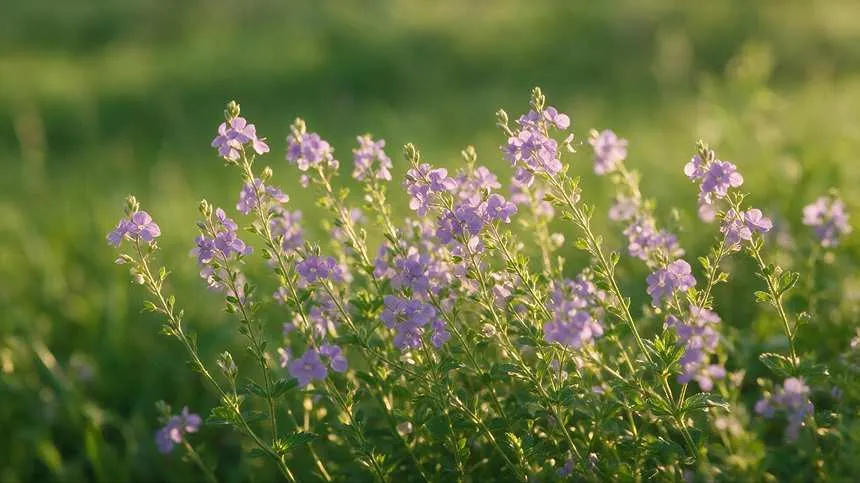
Speedwell produces slender spikes of small, star-shaped flowers in shades of purple. It is a hardy, low-maintenance perennial that adds a vertical color to any garden space, border, rock gardens or landscapes.
10 Stunning Purple Plants You Cannot Miss
Purple plants are eye-catching and are available in shades ranging from deep violet to lavender or soft lilac. In this section I have covered top 10 stunning purple plants that can brighten your green surroundings and you surely cannot miss.
| Purple Plant Names | Image |
| Bell Heather | 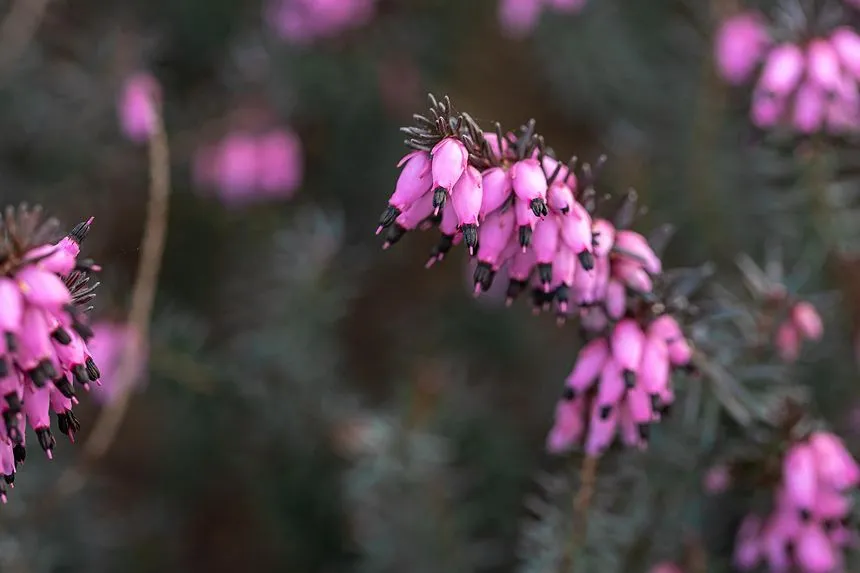 |
| Cattleya Orchid |  |
| Sea Thistle | 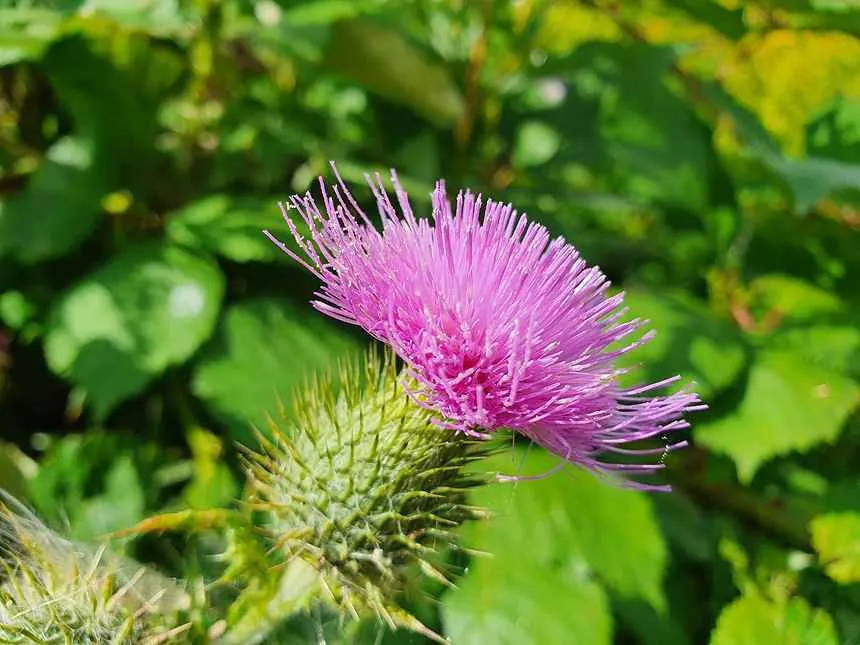 |
| Calla Lily | 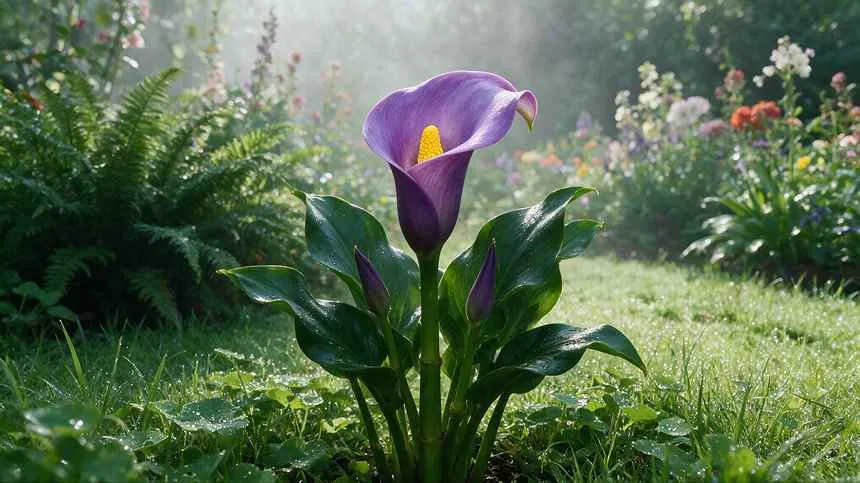 |
| Cosmos | 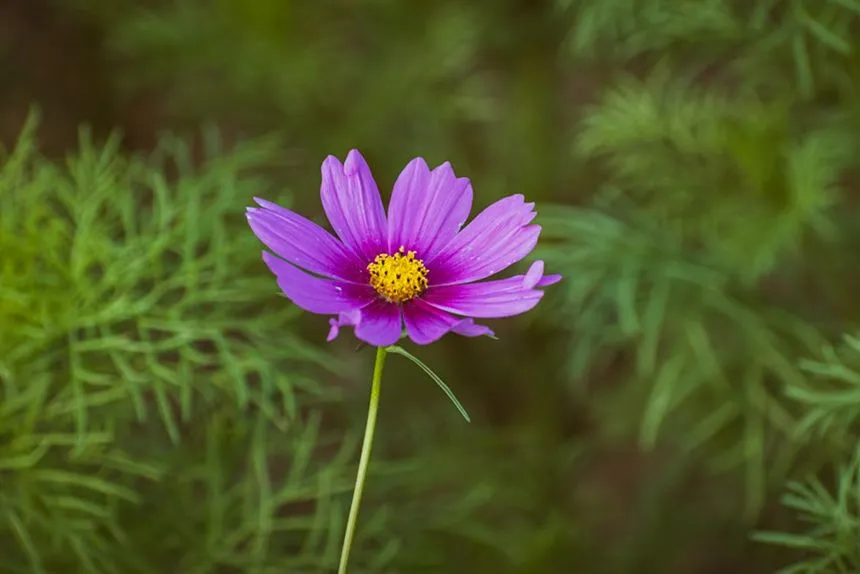 |
| Tulip | 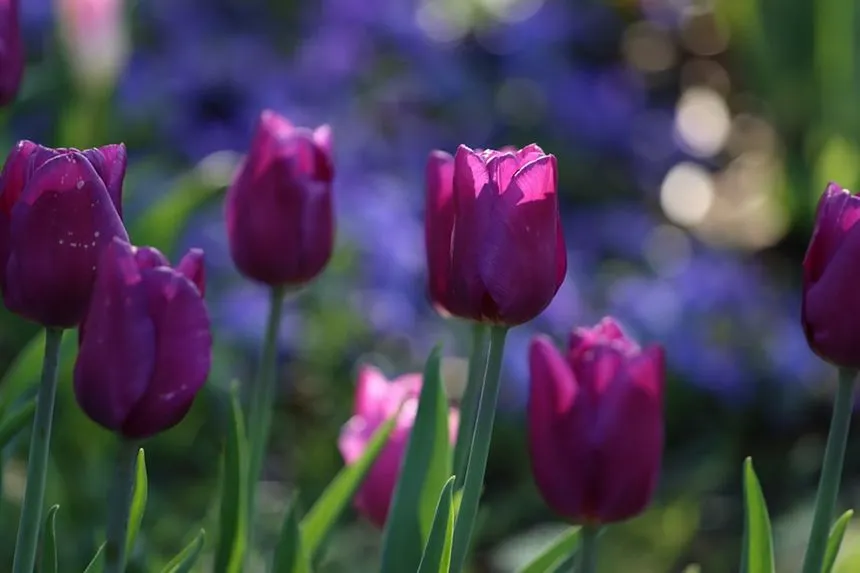 |
| Rose | 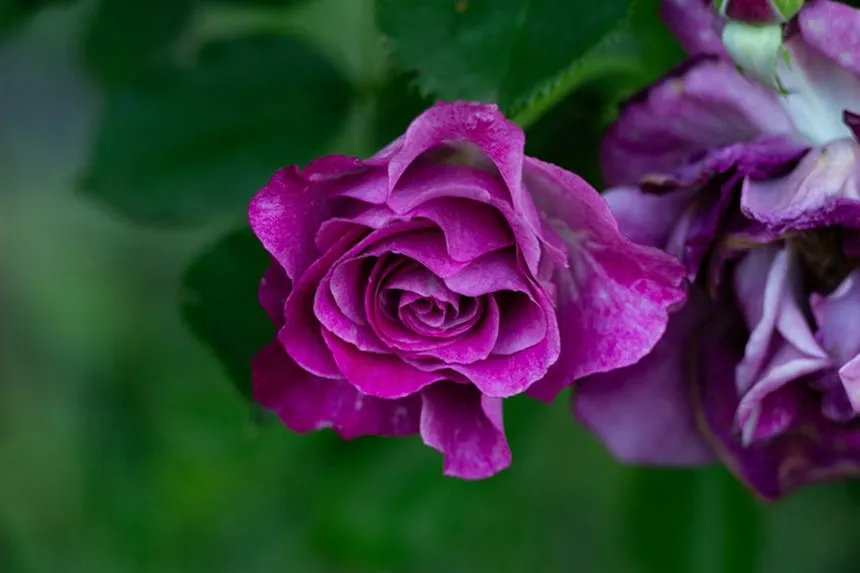 |
| Common Comfrey | 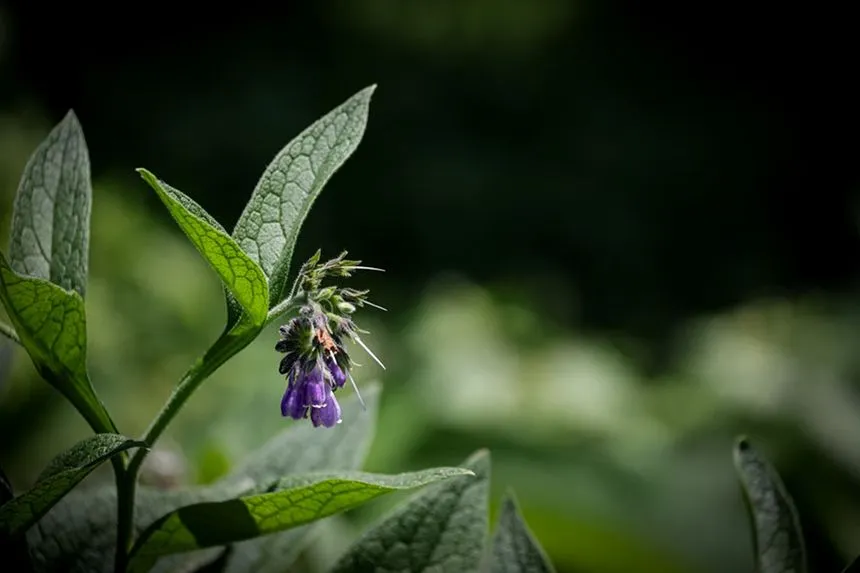 |
| Candytuft | 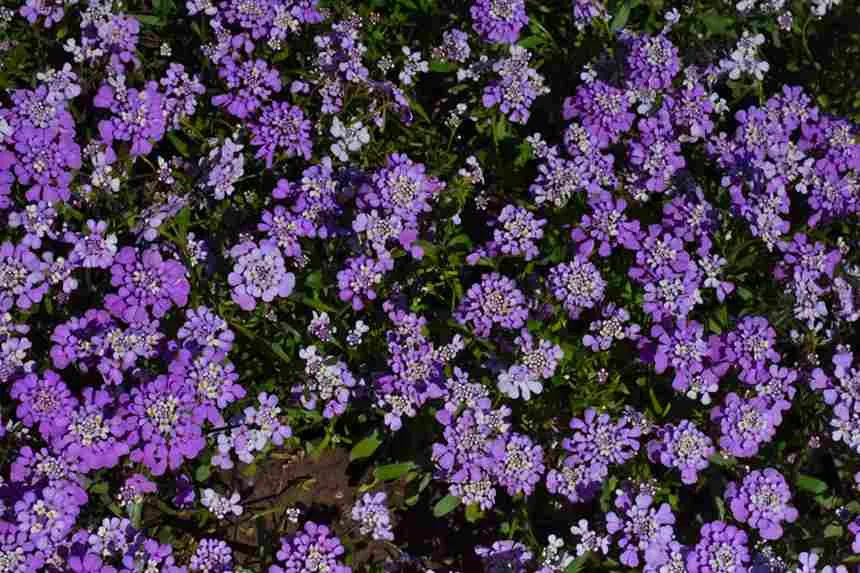 |
| Cyclamen | 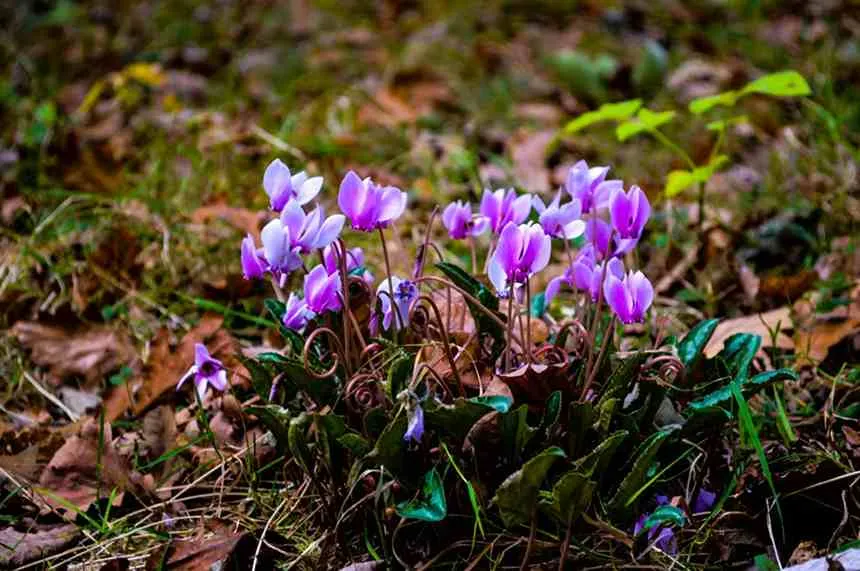 |
Top 10 Purple Flowering Trees: Trees That Bloom Purple Flowers
Purple flowering trees bring height, color, and seasonal interest to any landscape. This section covers 10 beautiful trees that bloom purple flowers including popular and relatively easy-to-grow options that can add a stunning touch to gardens.
| Name | Image | Specifications |
| Chaste Tree | 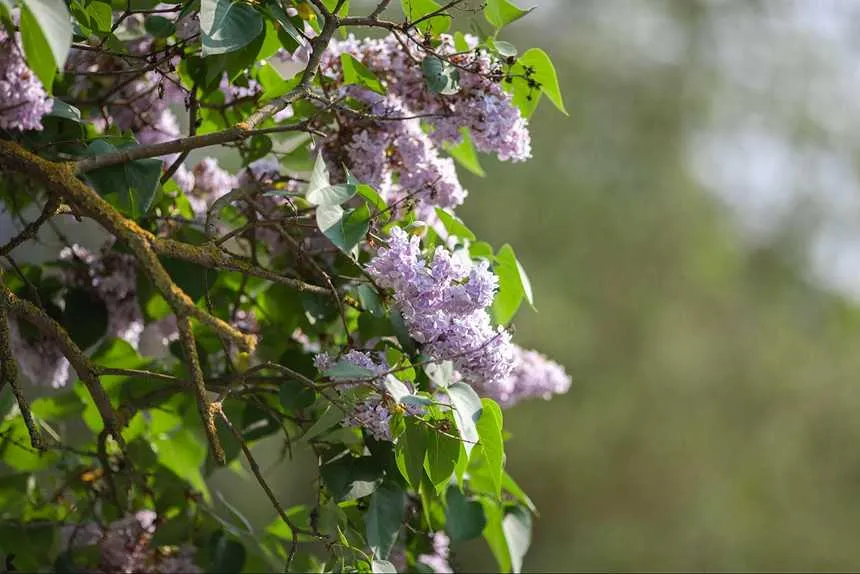 |
|
| Crape Myrtle | 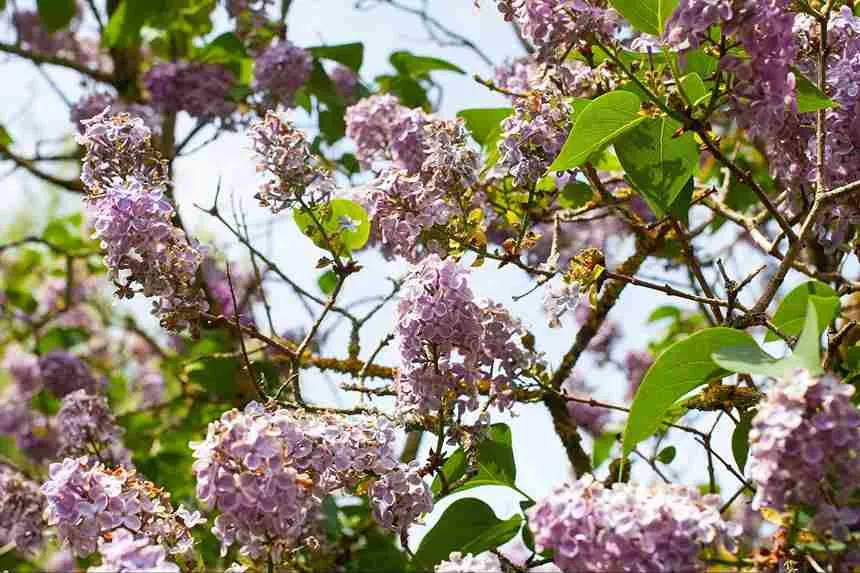 |
|
| Desert Willow | 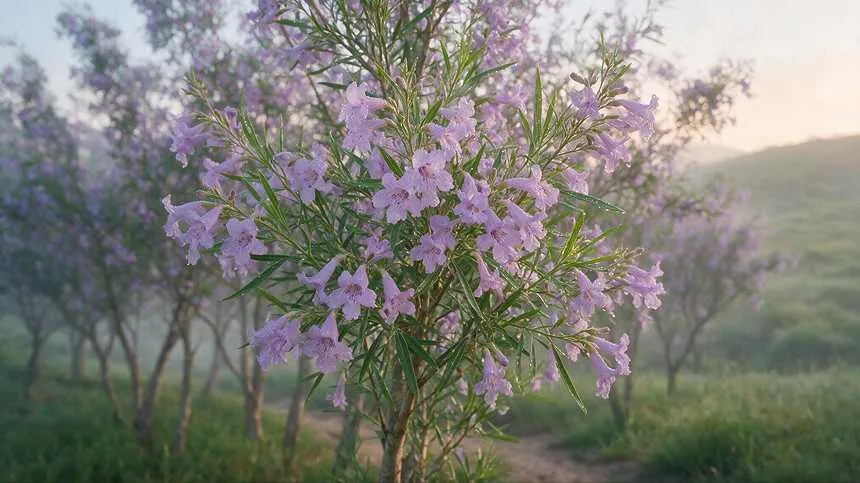 |
|
| Dogwood | 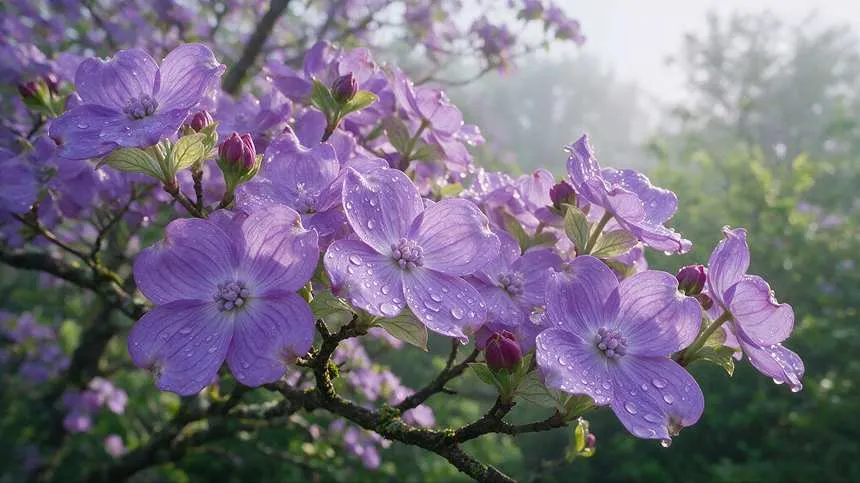 |
|
| Eastern Redbud | 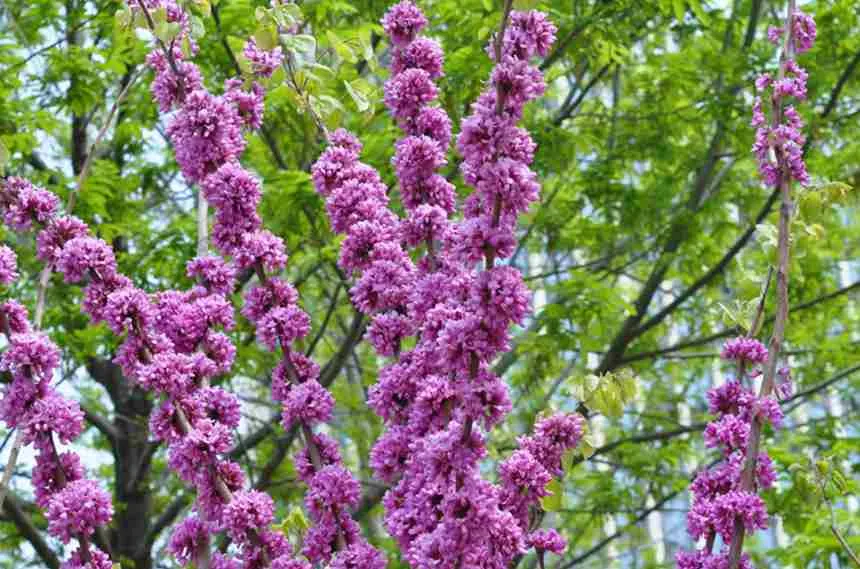 |
|
| Hibiscus Tree | 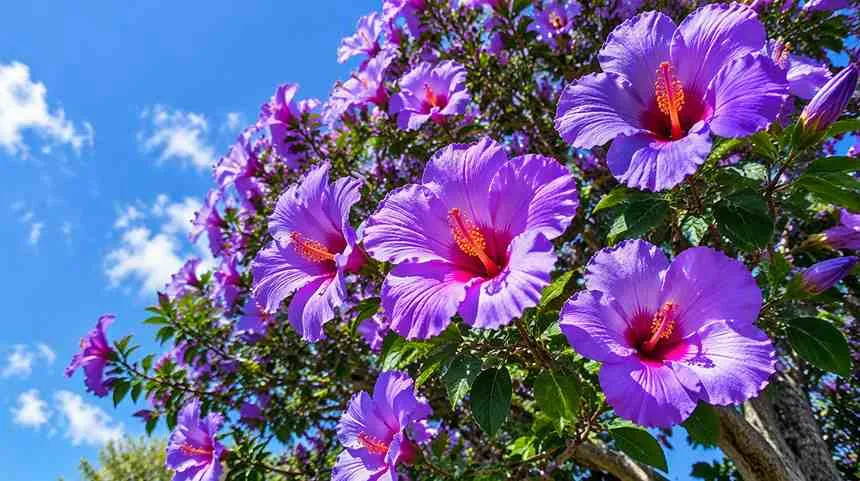 |
|
| Jacanranda Tree BUY NOW | 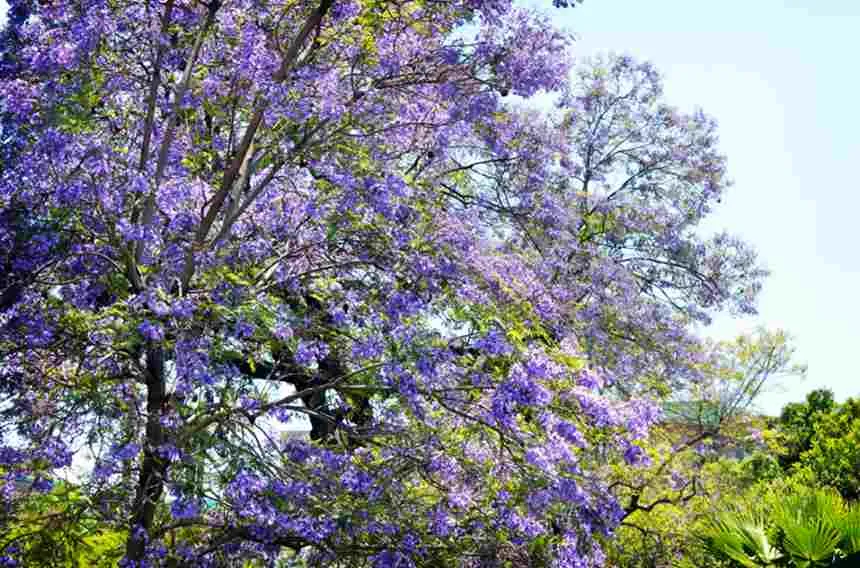 |
|
| Korean Lilac Tree | 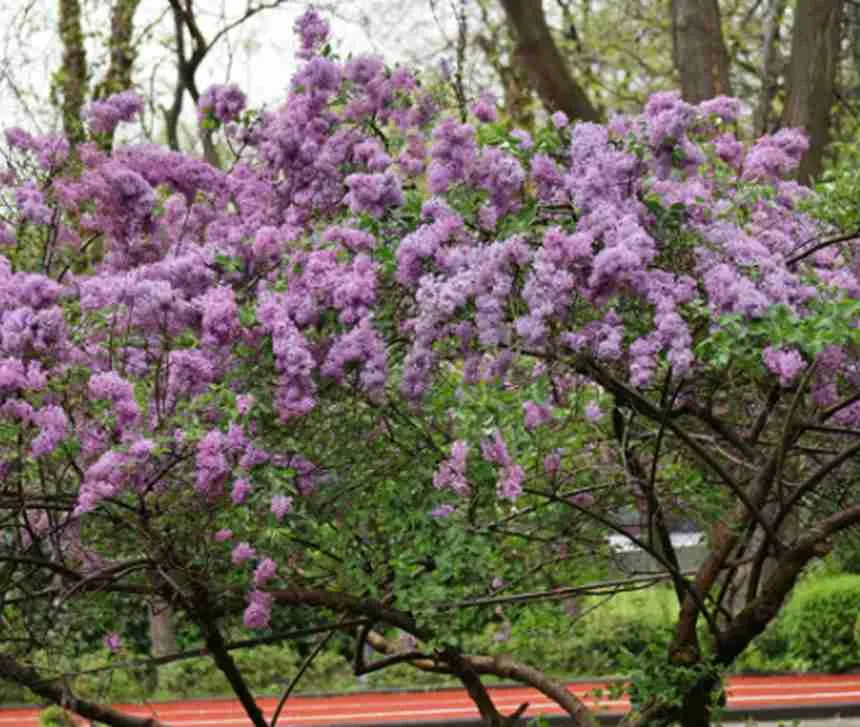 |
|
| Lavender Twist | 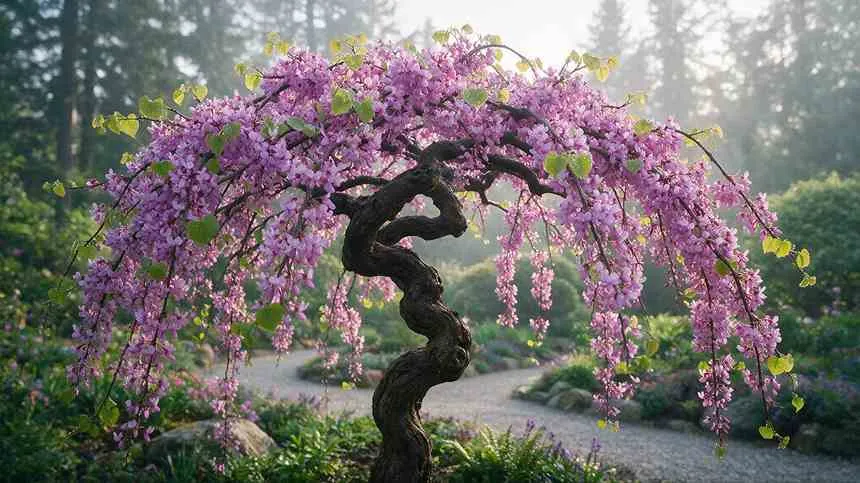 |
|
| Royal Purple Magnolia | 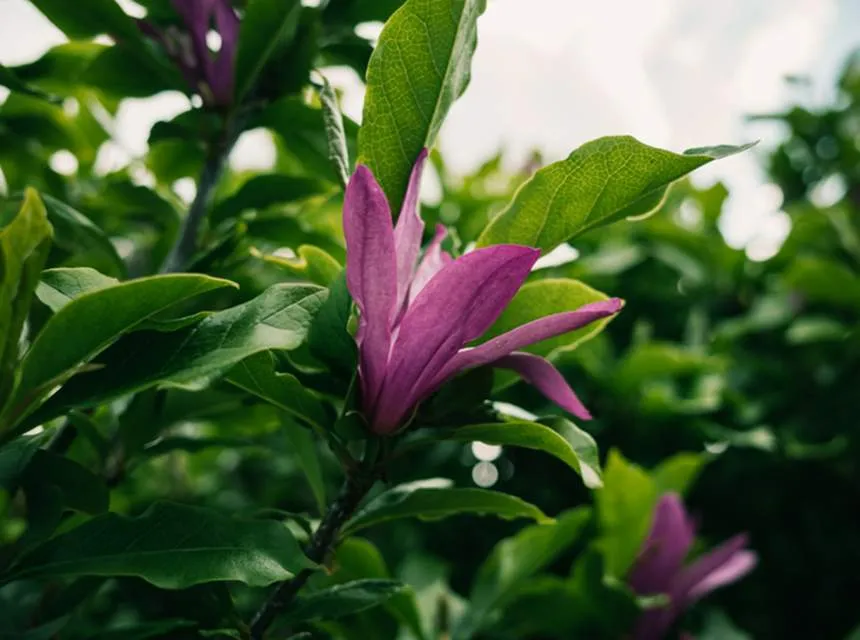 |
|
Conclusion
Purple flowers can transform an ordinary garden into a more colorful and beautiful space. Shades like deep violet, royal purple, lavender, or soft lilac can add vibrancy to a landscape. Whether you want bold focal flowers, delicate blooms, flowering trees, or easy to grow plants, there is a purple flower for all your needs in this article.
FAQs About Purple Flowers
What is the most popular purple flower?
Lavender is the most popular purple flower. It is widely appreciated for its appearance. Many use this flower as an indoor plant to enhance the visual appeal of their space. You can also use them for gifting.
What is the rarest purple flower?
Neelakurinji and Cyananthus hookeri are the rarest purple flowers. The former flower is known to appear only once in 12 years in the western ghat of India and Cyananthus is a beautiful blue-purple bellflower.
What flower represents love and admiration?
Almost all the purple flowers are known for their rich meaning and deep symbolism. Orchids, lilacs, violets, and roses are often associated with feelings like deep admiration and long-lasting love.
Which purple flowers bloom year-round?
Mexican heather, petunias, cosmos, roses, and verbena are some popular purple flowers that are known to bloom all year round. They are often planted to add visual interest to any garden space.
What trees have purple flowers?
Chaste, crape myrtle, dogwood, magnolia, desert willow and eastern redbud are some of the popular flowering trees with purple flowers.
Lotus Flower Meaning: Symbolism, Colors & Spirituality
[…] unique color shows introspection and awareness, making this a symbol of personal transformation. Purple flowers can be a unique flower for […]