

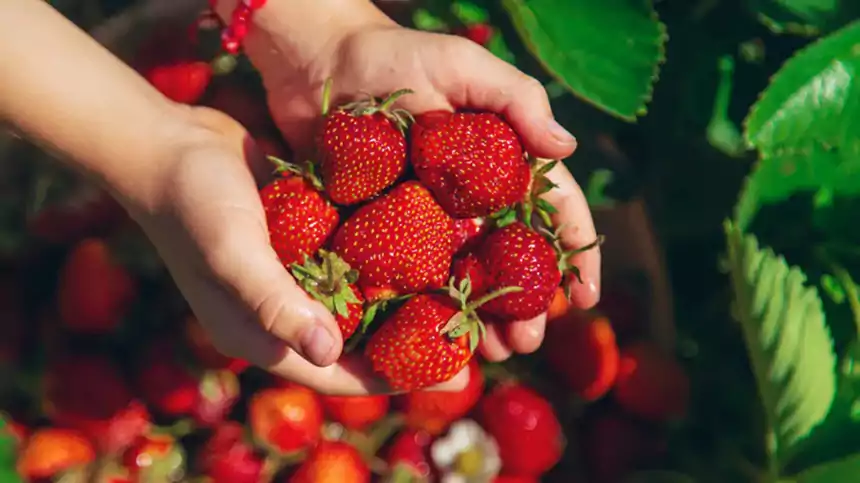
Growing strawberries is a rewarding experience, but it takes more than sunlight and regular watering. Adding the right companion plants can also contribute to a healthy harvest. Some excellent strawberry companion plants that influence growth and fruit production include lettuce, alliums, spinach, asparagus, dill, sage, and many more.
By choosing the right co-plants, you can naturally attract pollinators, deter common pests, improve soil conditions, and make better use of your garden space. In this guide, you will discover the best strawberry companion plants, how they benefit your crop, and which plants you should avoid for a more productive harvest.
Quick Answer
Lettuce, alliums, spinach, asparagus, dill, sage, borage, thyme, catnip, and yarrow are some of the best strawberry companion plants. They work well alongside strawberries by repelling pests, attracting beneficial insects, conserving soil moisture, and reducing weed growth. Selecting the right companion plants can lead to healthier and better fruit production.
What Does Strawberry Companion Planting Mean?
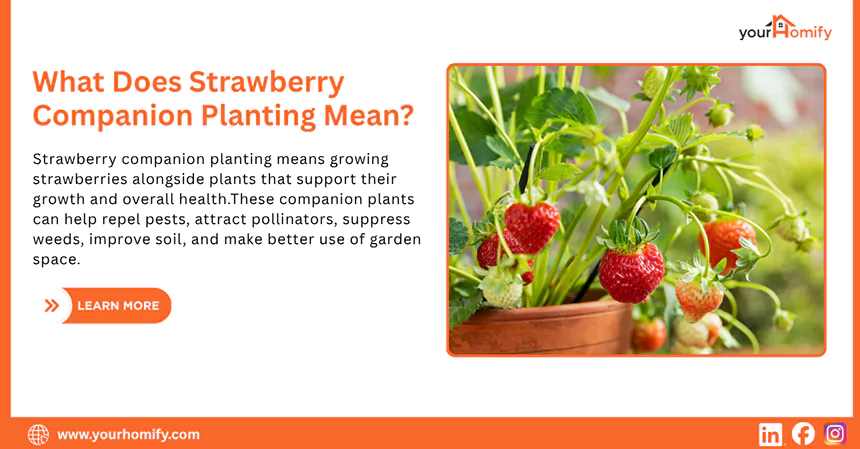
Strawberry companion planting is the practice of growing strawberries alongside compatible plants that support their growth and fruit production. Gardeners typically use this method to improve plant health, reduce pest infestation, attract beneficial insects, and make better use of space.
For example, lettuce and spinach are commonly planted with strawberries because they thrive in similar growing conditions and can help repel certain pests.
According to Virginia University Extension, companion planting also enhances soil health. Different plants with distinct root systems throughout your garden can help resolve soil compaction issues.
10 Best Companion Plants For Strawberries
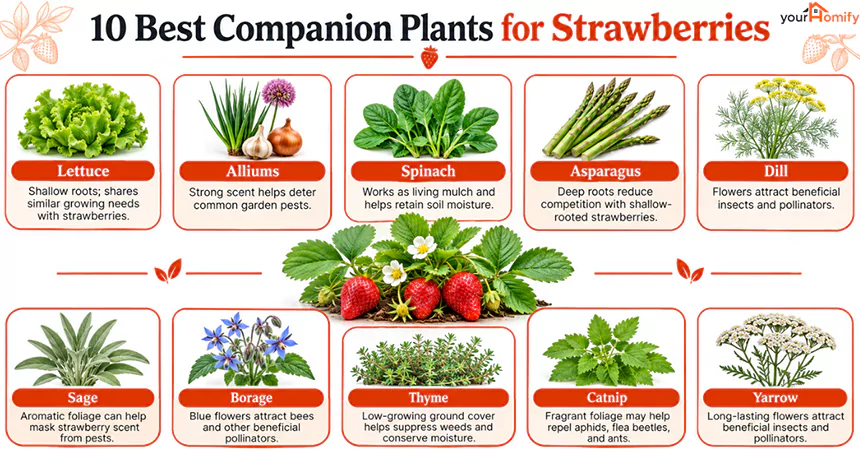
Some of the best strawberry companion plants are lettuce, alliums, spinach, asparagus, dill, sage, borage, thyme, catnip, and yarrow. If you are learning how to grow strawberries, understanding companion plants can make a noticeable difference. Let’s delve deeper into this section to learn more about them.
1. Lettuce
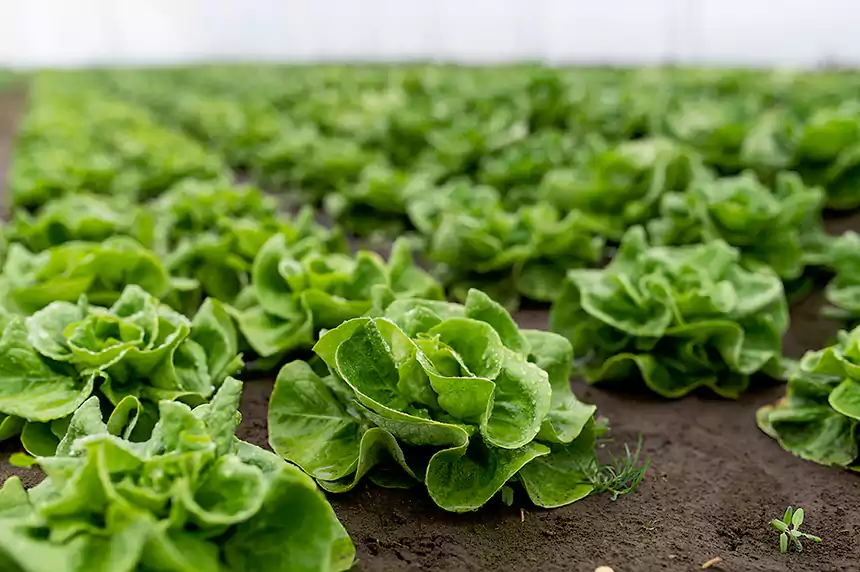
Lettuce is an excellent companion plant for strawberries because its shallow roots do not compete heavily for nutrients or water. The big canopy-like leaves of this winter garden vegetable help hide strawberries, protecting them from pests and hungry birds.
Since lettuce has a fast growth rate and similar growing needs, both crops can thrive together. Blooming from late spring to summer, lettuce has an annual lifespan and is suitable for USDA hardiness zones 2-11. It grows about 6-12 inches in height and spreads equally. The crop is non-toxic to humans, requires full sunlight, moderate watering, and a permeable soil type (pH 6.0-7.0).
2. Alliums
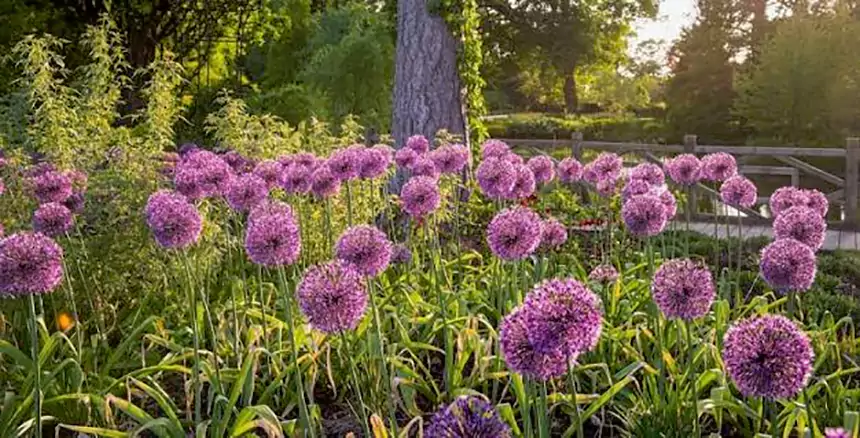
Alliums include garlic, onions, leeks, shallots, and chives. These are one of the best strawberry companion plants because their strong pungent scent helps deter common pests such as aphids, spider mites, slugs, and some beetles.
Their moderate growth rate and upright structure allow them to grow profusely without competing for space. Allium is a bulbous herbaceous plant that is mostly perennial and grows well in USDA hardiness zones 3-9. It grows about 12-48 inches tall and spreads 6-18 inches wide.
This companion plant requires full sunlight, minimal watering, and fertile or sandy soil (6.0-7.5) to bloom. Generally safe for humans, allium is toxic to pets and grows from late spring to early summer.
3. Spinach
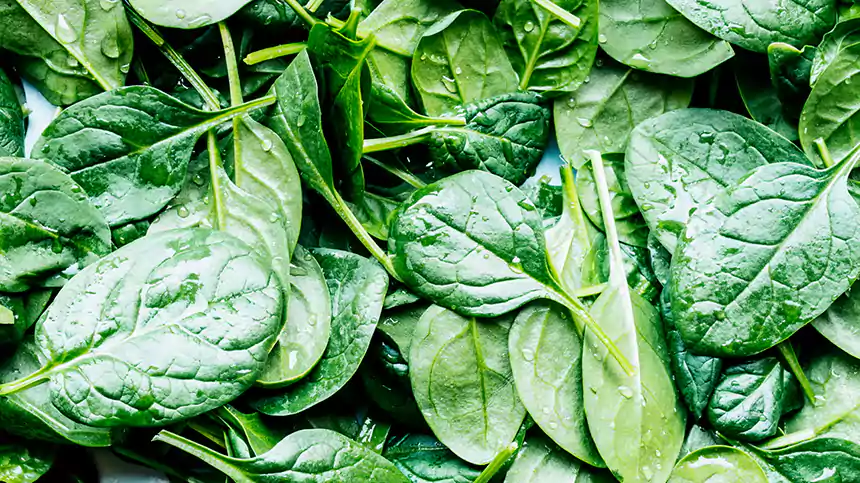
Spinach pairs well with strawberries because its shallow root system grows well alongside the deep roots of the strawberry plants without competing heavily for nutrients and water.
The leafy crop also works as a living mulch, retains moisture, and suppresses weed growth. Non-toxic to humans and pets, spinach has a fast growth rate and an annual lifespan.
This companion plant grows about 6-12 inches in height and spreads equally. It is suitable for USDA hardiness zones 2-11, requires full to partial sun, moderate watering, and fertile soil (pH 6.5-7.5) for optimal growth. You can plant these from late spring to early summer, and they can be harvested before strawberry plants reach their peak.
4. Asparagus
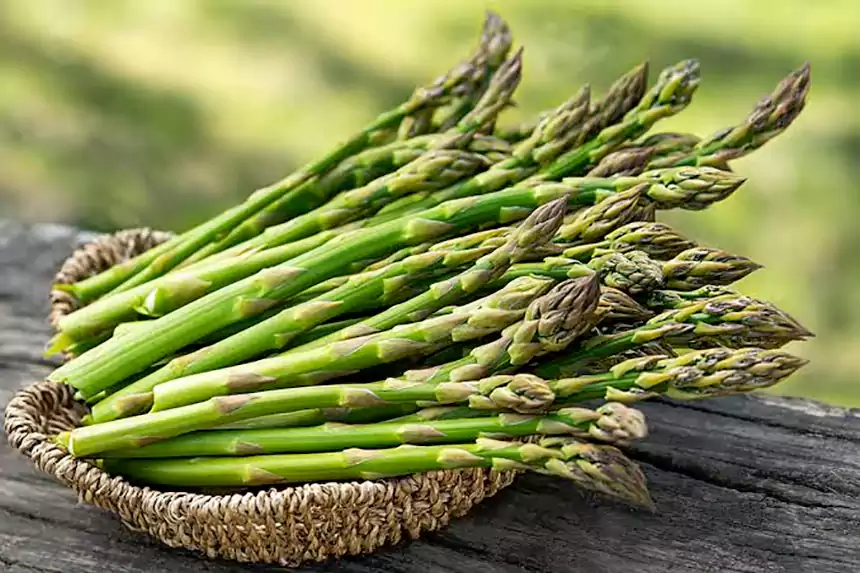
Both asparagus and strawberries are ideal companion plants because they are long-blooming perennials with different root patterns. Asparagus develops deep roots, while strawberries have a shallow root system that reduces the competition for nutrients and other basic growing needs. This combination also encourages efficient use of garden space.
This herbaceous perennial vegetable has a moderate growth rate and upright habit. It grows about 36-108 inches long and spreads 24-48 inches wide.
Asparagus is suitable for USDA hardiness zones 3-8 and requires full sunlight and consistently moist, fertile, or sandy soil (pH 6.5 -7.5). Being non-toxic to humans, the berries produced by the female parts are toxic to animals.
5. Dill
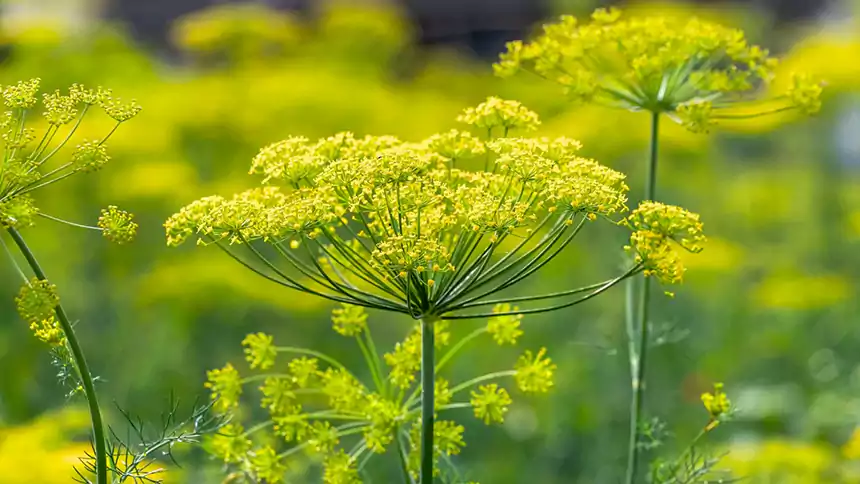
Dil is a fantastic strawberry companion plant. It attracts a wide range of beneficial insects, including ladybugs, lacewings, hoverflies, and parasitic wasps, which feed on pests like aphids and spider mites. The umbrella-shaped flowers draw bees and other pollinators that support healthy fruit production.
Because of the fast-growing upright structure, it can be easily grown alongside strawberries without overcrowding the plants. Dill is a non-toxic annual herb that grows well in USDA hardiness zones 3-11. It grows about 18-48 inches tall and 24-36 inches wide from mid to late summer.
Due to the plant’s height, you may require staking to prevent wind damage. 6-8 hours of direct sunlight, well-draining soil (pH 5.5 – 6.6), and consistent moisture are the basic growing needs of the plant.
6. Sage
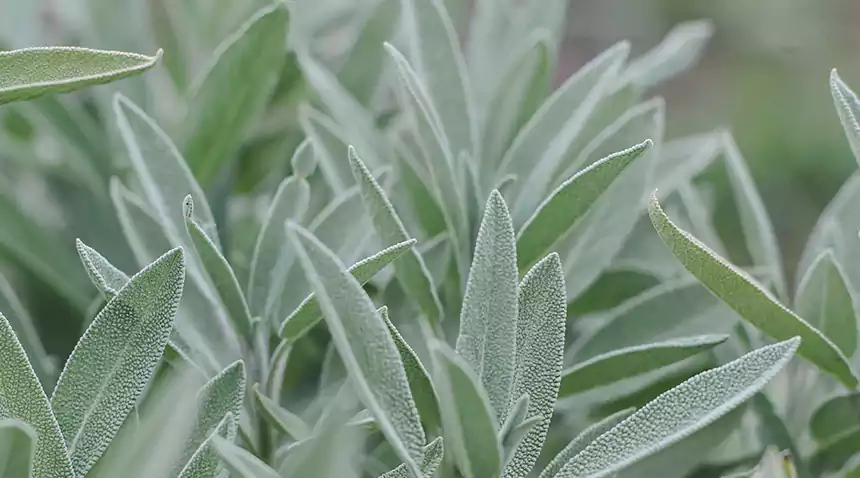
The aromatic fragrance of sage helps mask the scent of strawberry plants, making it harder for certain insects or pests to locate them. It also encourages better pollination and fruit production.
As a drought-tolerant herb with an upright growth habit, sage grows well near strawberries and does not compete for nutrients. Sage thrives in full sunlight and permeable soil. It performs best in USDA zones 4-10.
The plant grows 12-36 inches in height and spreads 18-36 inches wide. Non-toxic to humans and animals, sage blooms from late spring to early summer. This evergreen sub-shrub has a moderate growth rate and a lifespan of 4-5 years. In ideal growing conditions, it may survive up to 15 years.
7. Borage
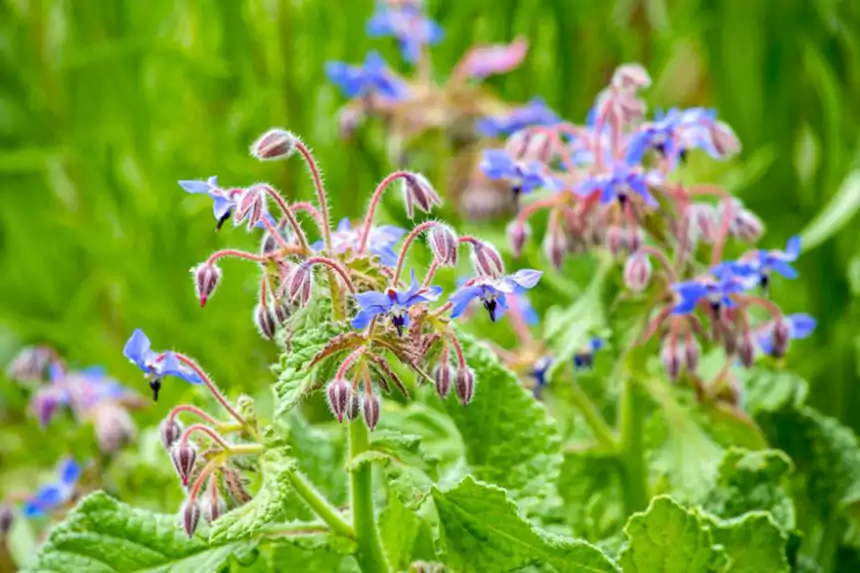
Borage is a fast-growing, star-flowered annual herb that is widely planted alongside strawberries because its nectar-rich blue flowers attract bees and other beneficial pollinators throughout the growing season. The flowers also draw hoverflies and predatory wasps, which help in managing pests like aphids and mealybugs.
This herbaceous annual blooms from early summer through fall and thrives in filtered sunlight, well-draining soil, and moderate watering. It grows about 18-36 inches tall and spreads 12-24 inches wide. Do not transplant borage frequently, and sow the seeds directly into the ground in early spring.
Borage is generally regarded as a safe garden plant and is used in various culinary applications. However, it can be toxic if consumed in large amounts due to the presence of pyrrolizidine alkaloids, which can harm the liver.
8. Thyme
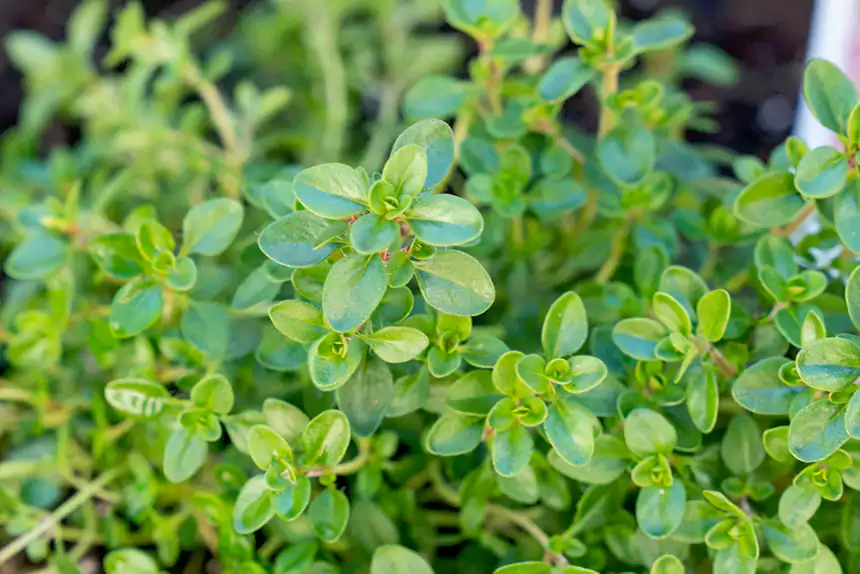
Thyme forms a dense, low-growing mat that acts as a living mulch around strawberry plants. It helps suppress weeds, reduce soil moisture loss, and keeps the root zone cool during warm weather. The small nectar-rich flowers attract bees and other beneficial pollinators, while the aromatic leaves deter pests.
Since this species has a compact, low-growing habit, it is an ideal companion plant for strawberries. Both species have similar care needs: 6 hours of direct sunlight, well-draining soil, and minimal watering since it is drought-tolerant.
Thyme grows about 6-12 inches tall and spreads equally. It blooms from late spring to early summer and performs best in USDA hardiness zones 4-10. This herbaceous, woody-based perennial has a lifespan of 3-5 years and is completely safe for humans and animals.
9. Catnip
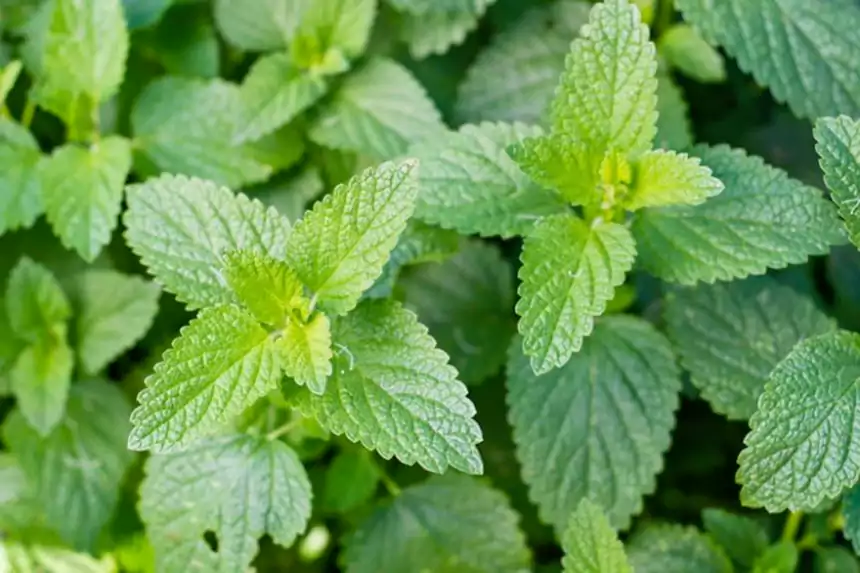
Catnip is a herbaceous perennial in the mint family and contains natural compounds that can help repel common garden pests, including aphids, flea beetles, and ants. They are mostly grown as a protective border plant around strawberry beds. The fragrant foliage of the plant attracts beneficial pollinators encourage healthy fruit production.
This fast and vigorously growing strawberry companion plant is not toxic to humans and pets. It blooms from late spring through early fall and grows best in USDA hardiness zones 3-9. Catnip creates new plants by self-seeding and has a lifespan of about 2-3 years.
You can also plant it in containers or a balcony garden. The basic care needs include full sunlight to partial shade, loamy, well-draining soil, and moderate watering only when the soil is dry.
10. Yarrow
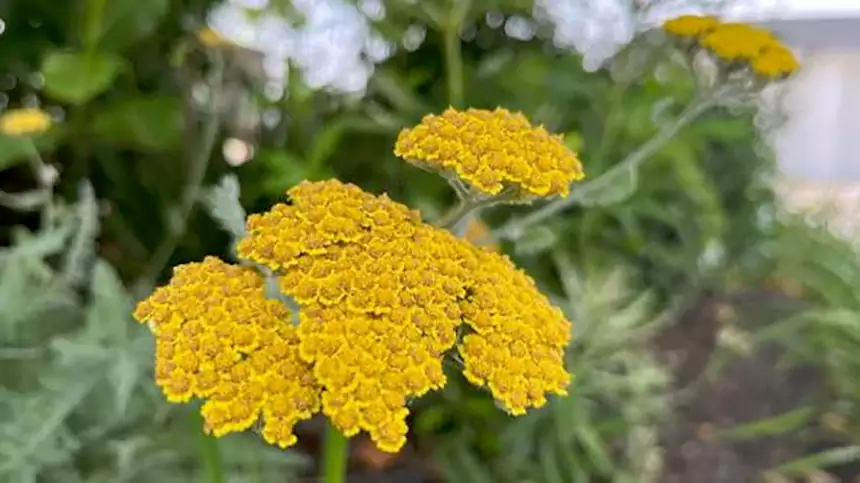
The long flowering season of Yarrow supports bees and butterflies, improving pollination in the garden. Due to its upright growth habit and drought tolerance, yarrow pairs well with strawberries without depleting the plant of its nutrients. It also attracts beneficial insects that are natural predators and protects strawberries from pests.
Yarrow is a fast-growing, long-lived herbaceous perennial that reaches a mature height of 12-36 inches and spreads equally. Blooming from late spring through early fall, with proper care, yarrow lasts for 5 to 10 years.
The ideal care guide for this companion plant includes full sunlight for 6-8 hours, any soil type that has excellent drainage, and minimal water. Yarrow is mildly toxic to dogs, cats, and horses.
5 Plants to Avoid Growing With Strawberries
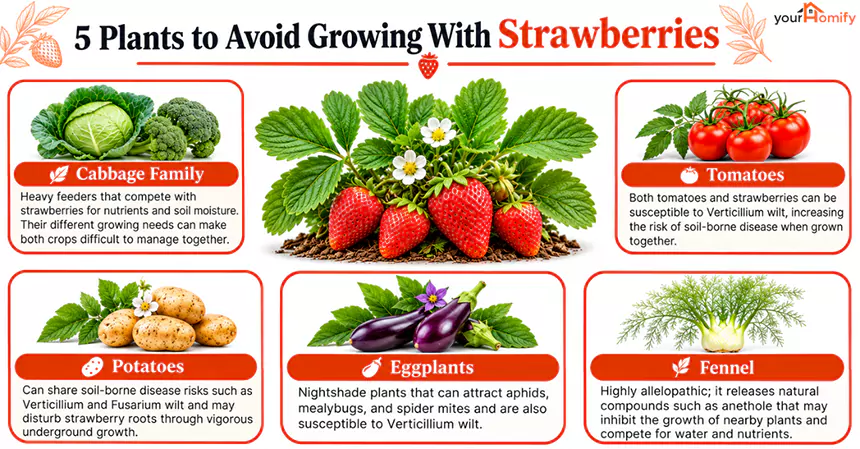
Cabbage family, tomatoes, potatoes, eggplants, and fennel are the top 5 plants that you should avoid planting with strawberries. Many of these species attract unwanted pests and compete for water and nutrients. Let us explore why we should avoid them.
- Cabbage Family: Vegetables belonging to the cabbage family (cabbage, broccoli, cauliflower, kale, and Brussels sprouts) are heavy feeders that usually compete with strawberries for nutrients and soil moisture. The growing conditions of these plants are different, which makes it difficult to manage both crops simultaneously.
- Tomatoes: Both tomatoes and strawberries are susceptible to verticillium wilt, a soil-borne fungal disease that can spread between the crops. Planting both these plants together can increase the risk of disease and may reduce fruit production.
- Potatoes: Similar to tomatoes, potatoes can also attract soil-borne diseases such as verticillium & fusarium wilt or root rot. The vigorous underground growth of the crop can disturb the roots of strawberries, which will eventually hinder fruit production.
- Eggplants: Eggplants belong to the nightshade family. They are known to attract common pests like aphids, mealybugs, and spider mites, which can easily affect your strawberry plants. The crop is also susceptible to verticillium wilt and can damage other plants grown nearby.
- Fennel: Avoid planting fennel near strawberries as it is highly allelopathic and secretes a natural chemical like anethole, which can stunt the growth of any plant grown nearby. The species also compete for water and essential nutrients, so it is generally best to grow them separately.
Why Are Companion Plants Helpful for Strawberries?
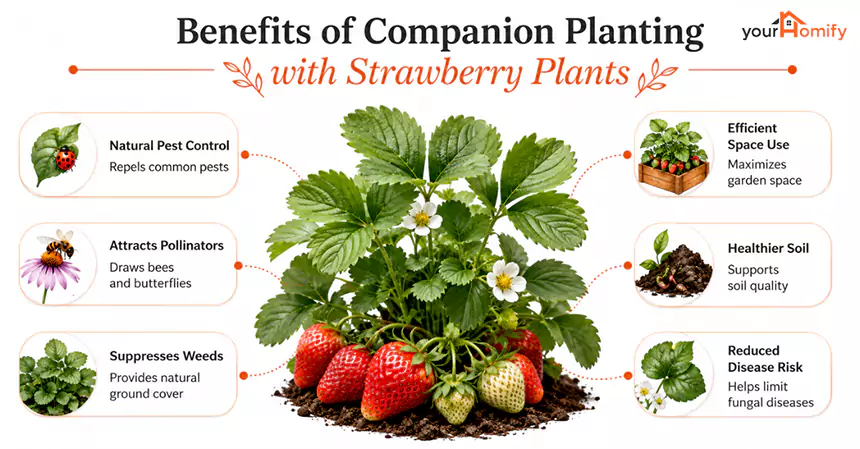
The companion plants help strawberries control natural pests, attract beneficial pollinators, suppress weeds, efficiently use space, provide healthier soil, and reduce the risk of diseases. Let us discuss these in more detail.
- Natural Pest Control: Plants like alliums and thyme are specifically planted along with strawberries so that their pungent smell can repel pests like aphids, spider mites, slugs, and other insects that commonly attack strawberry plants.
- Attracting Beneficial: Flowering companion plants such as borage, thyme, and yarrow are grown alongside strawberries to attract beneficial pollinators such as bees, butterflies, and hummingbirds, which eventually leads to better fruit production.
- Suppressing Weeds: Low-growing crops like lettuce and spinach cover the soil properly, which helps reduce weed growth around strawberry plants. The large leaves of these plants provide shade to the soil and repel unwanted insects and weeds.
- Efficient Use of Space: A combination like asparagus and strawberries is ideal, as both plants have different root systems and growth habits. This reduces the competition for nutrients and other basic growing needs.
- Healthier Soil: Some companion plants are known to release organic compounds into the soil when planted or help in maintaining the soil structure. This enhances the overall soil health and creates better growing conditions.
- Reduced Risk of Diseases: All the aforementioned benefits combined help lower the spread of certain fungal diseases. Make sure you do not overcrowd your garden space, and you are good to go.
Final Words
Still thinking what to plant with strawberries? Choosing the right strawberry companion plants can make a noticeable difference in the health and productivity of your garden. The right co-plants attract pollinators, deter common pests, suppress weeds, and help maintain the right moisture levels.
By pairing strawberries with compatible plants such as lettuce, alliums, spinach, asparagus, dill, sage, borage, thyme, catnip, and yarrow, you can encourage stronger growth and enjoy a healthier and more fruitful harvest with less maintenance.
FAQs
What cannot be planted next to strawberries?
Cabbage, tomatoes, potatoes, eggplants, and fennel are the top plants that cannot be grown alongside strawberries. All these crops are heavy feeders and are susceptible to a devastating soil-borne disease that will eventually kill strawberry plants.
Are strawberries better in raised beds or on the ground?
Strawberries should ideally be grown in raised beds. This promotes healthy fruit production and prevents pests and weeds from affecting the plants.
What’s the best thing to plant next to strawberries?
Some of the best strawberry companion plants are lettuce, alliums, spinach, asparagus, dill, sage, borage, thyme, catnip, and yarrow. All these crops help deter pests, attract beneficial pollinators, and suppress weeds.
What is the trick to growing strawberries?
The ultimate trick to growing strawberries is providing full sunlight, 1-1.5 inches of water per week, permeable soil, and getting the planting depth right.
How long does it take for a strawberry plant to bear fruit?
Strawberry plants usually take around 60-90 days to produce fruit with ideal growing conditions.
- 15 Strawberry Companion Plants That Help You Grow Sweeter, Juicier Berries – Yahoo
- Best Friends in the Garden—Companion Planting – University of California Research Paper