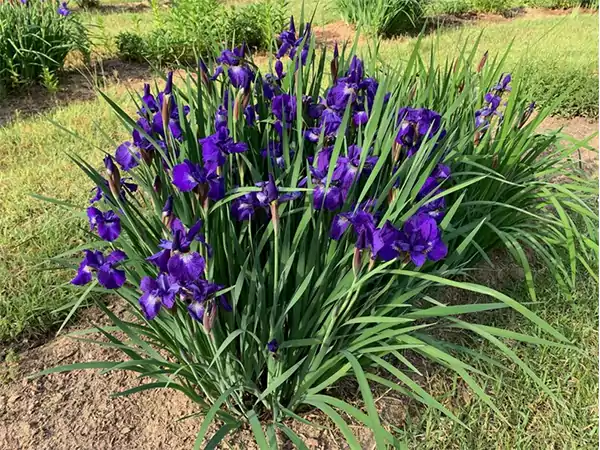
Want to add a burst of color to your front lawn or balcony garden? A purple iris flower can easily become the star of your green yard with its vibrant petals and striking appearance. What I find most interesting about the bloom is that it offers much more than good looks.
This spring flower symbolizes wisdom, hope, and admiration while being a relatively low-maintenance plant. Jump in, as I have covered the features, meanings, growing conditions, and some popular varieties of the Iris flower, so that you can get to know more about this botanical marvel.
Quick Answer
The Purple Iris flower is a six-petaled perennial that usually features three standard petals (upper bloom) and three fall petals (lower bloom). It can be easily grown in abundant sunlight and permeable soil with moderate watering. The genus has more than a thousand varieties and is associated with wisdom, affection, and royalty.
What is a Purple Iris Flower?
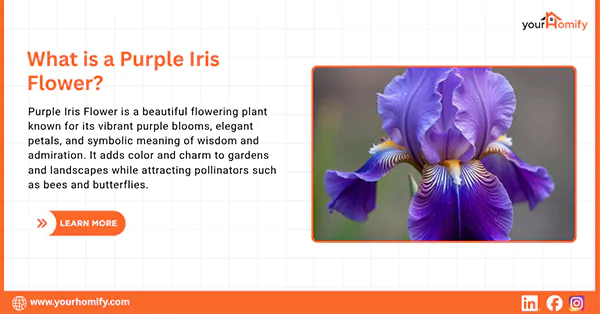
The purple Iris flower is a flowering perennial belonging to the Iridaceae plant family. It is appreciated for its long, slender sword-like leaves and large, showy blossoms. What makes this bloom stand out is that there are approx 300 iris species and around a thousand cultivars.
Let us quickly take a look at some of the astonishing features and benefits of this stunning purple flower.
- Irises are low-growing flowers that produce large and eye-catching blooms in many distinct hues.
- It is an extremely hardy flower and can thrive in a variety of climatic conditions. They are also appreciated for their drought-tolerant nature.
- Beyond their beauty, Iris is known to support the local ecosystem by attracting beneficial pollinators like bees and butterflies.
- Irises are one of the most versatile flowers. Some of its dwarf varieties can also be grown indoors, while it is mainly planted in an outdoor setting.
- I personally like the fact that this bloom can be used as cut flowers or can be grown perfectly in flower beds, containers, or rock gardens. Being extremely low-maintenance and deer-resistant, it can also be used for border planting.
The vibrant blooms of the genus, along with glossy green leaves, add a pop of color to any landscape. As per the United States Department of Agriculture, the grace and minimal care needs of the Iris flower make it a valuable garden ornament among both novice and experienced gardeners.
Botanical Profile and Plant Classification of purple iris flower
Did you know that the Iris flower is highly toxic to cats and dogs? While butterflies and hummingbirds love the nectar, the petals of the bloom can cause severe vomiting and gastrointestinal issues.
Moving further, let us take a quick look at the botanical profile and classification of the purple iris flower.
| Botanical Features | Details |
| Kingdom | Plantae |
| Clade | Tracheophytes |
| Clade | Angiosperms |
| Clade | Monocots |
| Order | Asparagales |
| Family | Iridaceae |
| Genus | Iris |
| Plant Type | Herbaceous Perennial |
| Bloom Time | Spring to Early Summer |
| Growth Habit | Clump forming |
| Hardiness Zone | 3-9 USDA (varies by species) |
Meaning and Historical Significance of the Purple Iris Flower
The dark purple iris flower is admired not only for its striking look but also for the meaning and history attached to it. Many native settlers consider the bloom a symbol of honor and wisdom. It is often used for gifting purposes to represent admiration.
Spanning across Europe, Asia, North America, and parts of Africa, there are several positive meanings attached to the bloom.
- Hope and Strength: The ability of the flower to thrive in cold weather conditions and rebloom during spring makes it a symbol of strength. Being one of the early bloomers, once the frost has passed, irises give a sense of hope and a reminder that brighter days are ahead.
- Wisdom and Royalty: Often associated with knowledge, good judgment, and royalty, the purple and white iris flower is typically used in many ceremonies and is also used for floral arrangements, specifically during weddings.
- Admiration and Affection: Purple Iris is also popularly known as a friendship flower and is frequently given to express respect and appreciation. It is used to express a long-lasting bond as a symbol of trust and affection.
- Nobility: Throughout history, purple has been considered a royal and noble color representing wealth and power. As a result, the purple Iris flower became associated with kings, queens, and noble families.
In Greek mythology, Iris was a goddess who served as a messenger between the gods and humanity. She traveled on rainbows, and beautiful purple-bluish flowers would sprout wherever she stepped. The elegant shape and vibrant colors of these blooms made them popular among many artists, and they continued to be used as a symbol of royalty.
Popular Purple Iris Varieties You Cannot Miss
There are wide, stunning varieties of Iris flowers that you can plant in your garden and enhance the overall aesthetics. The Iris genus comprises nearly 300 species and thousands of cultivars. Here are some of the most popular and easy-to-grow ones for your front lawn.
1. Purple Bearded Iris Flower
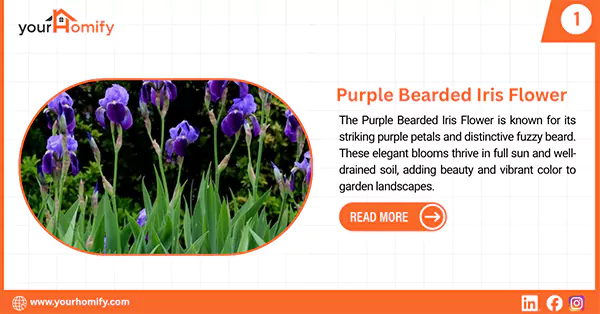
The purple-bearded iris flower is a beautiful perennial that produces a six-petaled blossom. It is usually appreciated by many garden enthusiasts for its citrusy scent and ruffled petals. Botanically called Iris germanica, this famous cultivar is native to Southern Europe and the Mediterranean area. The sword-shaped leaves of the bloom are its focal point of attraction.
2. ‘Scent Sational’ Iris Flower
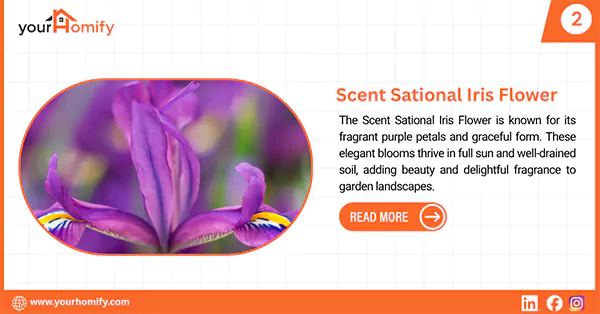
Scent Sational is a beautiful dwarf iris known for its relatively large, soft lavender-blue flowers and a sweet fragrance. What makes this cultivar special is its ability to bloom more than once in a season if given proper growing conditions. It is mostly grown alongside other stunning plants like daffodils or hyacinths, and its elegant appearance makes it a lovely addition to many landscapes.
3. ‘Best Bet’ Iris Flower
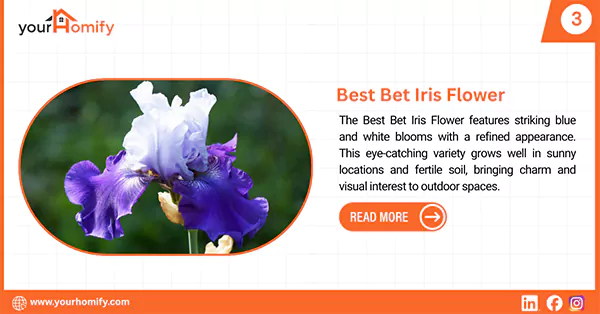
The ‘Best Bet’ is one of the most graceful purple bearded iris flowers, which is admired for its bi-colored blooms. It features soft lavender standards (upper petals) and dark violet-blue falls (lower petals) that tend to create a mesmerizing visual display in late spring. The strong and dependable flowers of the species add vibrancy and classic charm to garden beds and borders.
4. ‘Magic Opal’ Iris Flower
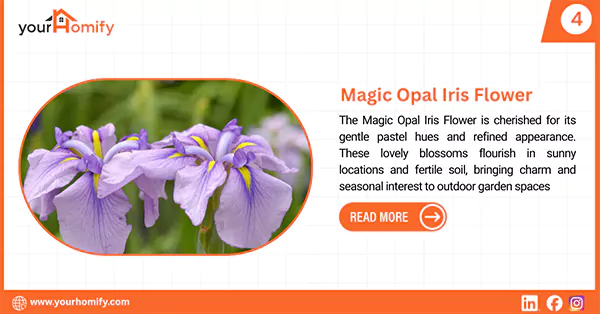
Magic Opal is a graceful Japanese Iris flower that produces wax-like blooms in shades of lavender, pink, lilac, sky blue, and creamy white. The cultivar performs best in full sunlight and can be easily planted in garden soil. It is deer-resistant but can be toxic to cats and dogs. I have usually seen them planted on patios as welcome flowers or near water streams.
5. ‘Gypsy Romance’ Iris Flower
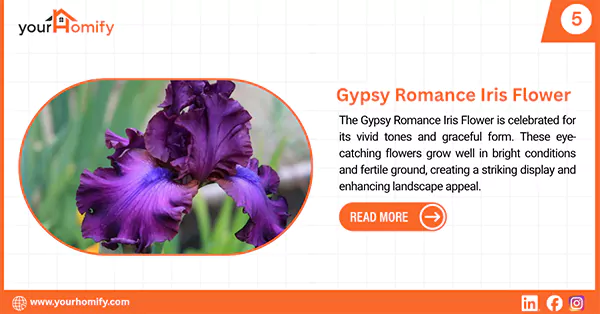
Gypsy Romance is a dark purple iris flower that tends to create a dramatic display in any garden space. It grows up to 4 feet tall and bears uniformly ruffled petals. Widely appreciated for its long blooming period, this iris variety is often paired with yellow and orange roses and used for gifts. The bloom is known to symbolize warmth and affection, and adds a pop of color to spring gardens.
Ideal Growing Conditions Needed for the Purple Iris flower
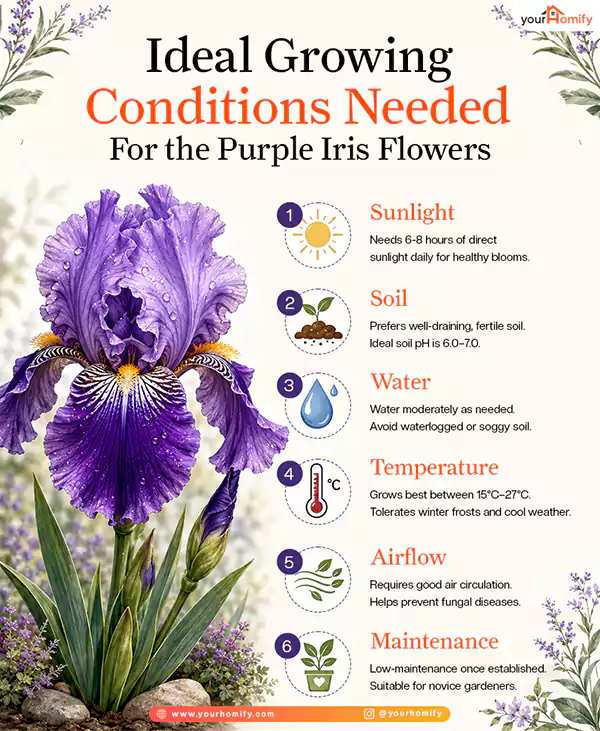
Just like me, if you are also planning to add this alluring blossom to your home garden, it is ideal to understand the growing conditions it needs to thrive. With proper sunlight, water, and soil, you can witness stronger irises season after season.
- Sunlight Requirements: The purple bearded iris flower performs best in abundant sunlight. It needs a minimum of 6-8 hours of bright, direct light for proper flowering. Though irises can flourish in afternoon shade as well, too much shade may result in stunted growth.
- Soil Type: Well-draining soil works best for the genus. I personally prefer using fertile, loose, and permeable soil mix for my Iris plants. Make sure the pH level of the mixture is between 6.0 and 7.0. As suggested by many plant experts, it is advisable to avoid heavy clayey soil.
- Water Needs: Purple iris flower prefers moderate watering but cannot tolerate soggy conditions. Allow the top layer of the soil to completely dry out before the next watering session. It is better to adjust the frequency during the winter, and once the roots of the bloom are fully established.
- Temperature and Climate: Many iris varieties can tolerate cold winters and seasonal frosts. This alluring bloom grows best in temperatures between 15 °C and 27 °C. Make sure to maintain proper air circulation to keep the plants healthy.
Purple irises thrive when given full sun, permeable soil, and moderate water. If you are a novice plant lover, you simply need to meet these basic requirements, and you are good to go. Once they are fully established, they do not need regular attention, which makes them a popular choice among many beginner gardeners.
Did You Know?
With proper care, the average lifespan of the Iris flower is around 3-20 years, but as an individual bloom or a cut flower placed in a vase, it can only last up to 3-7 days.
Care and Maintenance Tips for Purple Iris
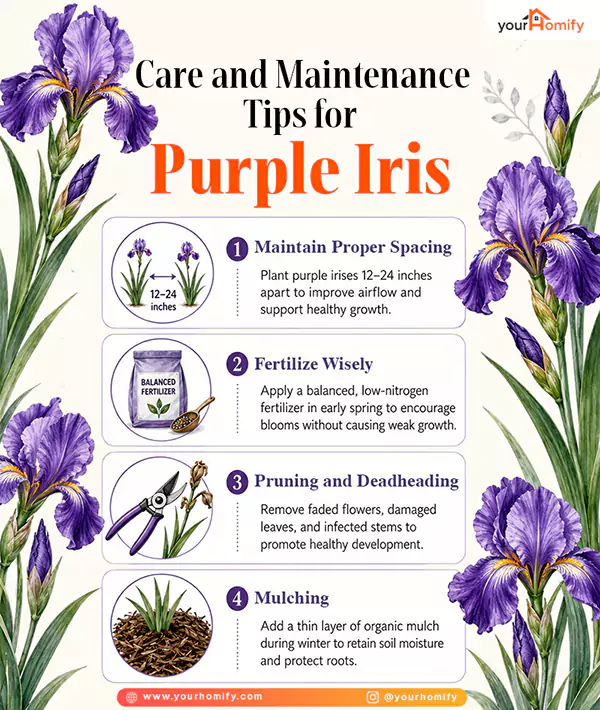
By following the proper care tips for flowers, you can ensure that they are healthy and produce stunning blossoms. This not only encourages new growth but also reduces the risk of pests and diseases. Here are a few simple steps that I usually follow to ensure my beautiful blooms return year after year.
- Maintain Proper Spacing: It is ideal to space the purple iris flowers at least 12-24 inches apart. Overcrowding can result in restricted airflow and a stunted growth rate of the overall plant.
- Fertilize at the Right Time: Fertilizing the flowers at the right time supports healthy foliage and flower production. I always advise my team to apply a balanced, low-nitrogen fertilizer during early spring. Excess plant food can also lead to droopy flowers; therefore, maintaining a balance is necessary.
- Pruning and Deadheading: During my initial gardening days, I did not realise the importance of pruning or trimming damaged leaves. Removing dead or damaged blooms or cutting off infected stems can help the overall plant focus its energy towards growth. If you notice any wilting or yellow leaves, it is better to remove them to encourage a healthy blossom.
- Mulching: Use a thin layer of organic mulch during winter to retain the moisture of the soil. It is better to spread it evenly around the base of the flower and change it whenever needed, especially during the active growing season.
Pests and Diseases Problems in Purple Iris
Like any other garden plant, purple iris also occasionally gets affected by certain pests and diseases. Regular monitoring and treating the issues at an earlier stage can help maintain the overall plant health.
| Pest or Disease | Signs and Symptoms | Treatment |
| Iris Borer | Holes in leaves, damaged rhizomes, and wilting growth | Remove the affected parts of the plant and clean the debris. |
| Aphids | Clusters of small insects, often found on stems or tiny buds | Wash off with water and use insecticidal oils or sprays to prevent spreading. |
| Bacterial Soft Rot | Water-soaked tissues, foul odor, and collapsing rhizomes | Remove the infected parts and adjust the water frequency. |
| Leaf Spot | Brown, black, or pale yellow spots on the leaves. | Cut off the infected leaves and improve air circulation. |
| Rhizome Rot | Soft, mushy, and foul-smelling rhizomes | Repot in a well-draining soil mix and do not overwater. |
Conclusion
The purple iris flower is simply much more than a beautiful garden plant. Its vibrant bloom, rich mythological history, meaning, and symbolism make it one of the most cherished species from the Iridaceae family.
I simply wanted to add a pop of color to my balcony garden and ended up growing an alluring flower that carries distinct emotions.
Furthermore, the fact that you simply need to understand its basic growing needs and you can witness a flourishing purple flower in your garden year after year, completely amazes me.
Whether you wish to transform your front lawn or simply want to use the Iris species for gifting, the purple cultivars offer a perfect combination of elegance and appeal.
FAQs
Do iris flowers come back every year?
Yes, the purple iris flower is a hardy perennial, and with proper care, they come back year after year.
Where do purple irises grow best?
The purple irises grow best in areas with abundant sunlight and a permeable soil type. It is advised to water the bloom generously during its initial growing stages for optimal development.
What does a purple iris symbolize?
Purple irises are often associated with wisdom, nobility, and royalty. They are often used for expressing faith, hope, trust, and admiration.
Do purple irises spread?
Yes, the species are known to have a spreading nature, but they tend to do so in an upright, clump-forming habit, which is quite manageable and not invasive. If you notice overcrowding, it is better to divide the rhizomes for optimal plant health.
What is the lifespan of an Iris flower?
Since Iris flowers are hardy perennials, they can easily thrive in a garden for around 15-20 years, if proper care is given.
- Gypsy Romance – Historic Iris Preservation Society
- Purple Bearded Iris – Texas University Research Paper
- Iris – Chicago Botanic Garden