


There is a soft elegance in white flowers, the one that makes you stop and admire the beauty. White iris flowers are not rare but have a unique charm to them, which I have been admiring for years now.
These elegant summer flowers are symbolic of the idea of purity and innocence and are used extensively in flower arrangements for weddings.
Now, if you are intrigued to grow these elegant blooms at home, come along as I share a detailed guide about the white iris flower, starting with its features, care guide, and varieties.
Quick answer
The white iris flower is a herbaceous perennial from the iris plant family. This white flower is not a single variety but rather an umbrella term for all the white colored species of the family. Symbolic to the idea of purity and innocence, these summer flowers are used in wedding bouquets and grown in water gardens.
What is the White Iris Flower?
Part of the Iris family, the white iris is not a single type of bloom but rather an umbrella term for creamy white-coloured flowers. These blooms are commonly grown as indoor plants in balcony gardens.
The most popular variety of the white iris is the tall bearded iris, which is planted for its exotic 6-petal blooms, 3 facing upwards and 3 downwards.
White irises ideally suit water accents and pond hedges due to their moisture requirements and can last up to 14 days in a vase, making it perfect for home decor.
As we move further in the article, I will cover the meaning, varieties and growing guide of these white ornamental flowers.
White Iris Flower Meaning and Symbolism
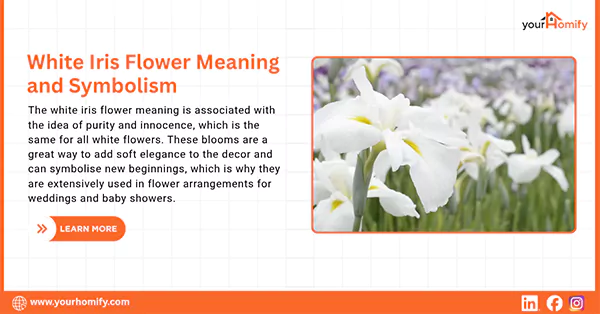
The iris flower meaning is multifaceted, but the white flower is symbolic of the idea of innocence and purity, and therefore used on occasions like weddings and baby showers, also symbolising new beginnings.
A white iris bouquet can instantly elevate the vibe of any occasion with its soft elegance and charm. Giving someone white flowers is a way of appreciating their innocence and purity.
What are the Popular Varieties of White Iris?
There is no single variety of the white iris, but various types of irises that grow white flowers, which can be bearded, non-bearded, or crested.
I have mentioned 4 white iris varieties that can be planted easily at home:
1. Immortality
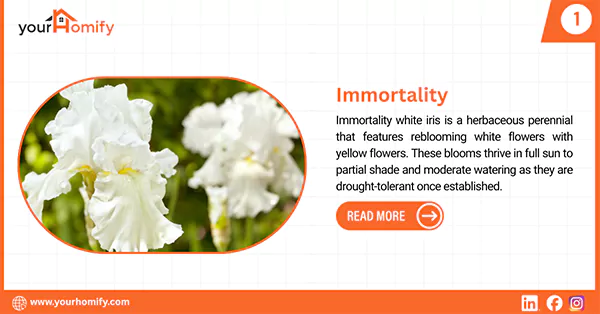
- Botanical name: Iris germanica ‘Immortality.’
- Height: 2-3 feet
- Native Area: Mediterranean regions
- Hardiness: USDA zones 3-9
- Type: Bearded
This herbaceous perennial features elegant white flowers with yellow beards and gets its name from its reblooming features. These deer-resistant flowers thrive in full sun to partial shade, humus-rich soil, and moderate watering, as they are drought-tolerant once established.
Note that they are toxic to pets and should be planted accordingly.
2. African Iris
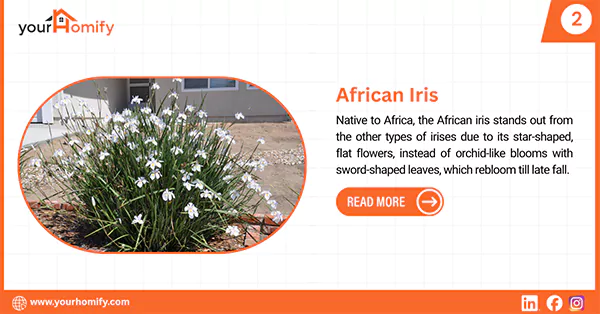
- Botanical name: Dietes iridioides
- Height: 2-4 feet
- Native Area: Southern and Eastern Africa
- Hardiness: USDA zones 8-11
- Type: Beardless
Also known as the fortnight lily, the African iris is a unique variety due to the star-shaped, flat flowers resembling a butterfly. These medium-sized flowers last only 1-2 days but rebloom from spring to fall and thrive in a warm climate.
3. Dwarf Crested Iris
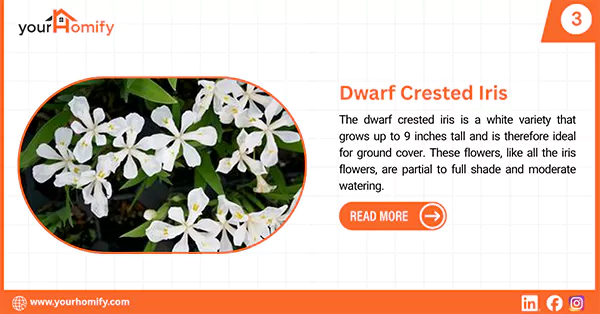
- Botanical name: Iris cristata
- Height: 4-9 inches
- Native Area: Eastern and Midwestern America
- Hardiness: USDA zones 3-9
- Type: Crested
As the name suggests, the dwarf white iris is ideal as a ground cover planted in partial to full shade and medium watering due to its moderate drought-tolerance. These herbaceous perennials feature both purple and white iris flowers.
4. Japanese Roof Iris
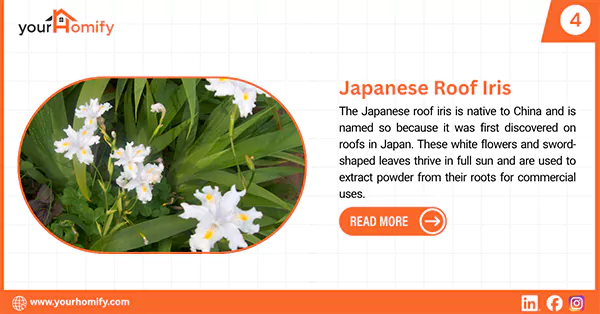
- Botanical name: Iris tectorum
- Height: 1-1.5 feet
- Native Area: China
- Hardiness: USDA zones 4-9
- Type: Crested
Native to China, these flowers are named so because they were discovered on the roofs in Japan. These white flowers with their sword-shaped leaves are perfect to elevate any garden setup.
However, more than flowers, the plant is grown for the powder obtained from the roots, which has cosmetic and culinary uses.
Did you know?
Keizer was officially designated as the “Iris capital of the world” in 1987.
How to Grow the White Iris Flower?
White irises ideally bloom in late spring to summer, but a few varieties also grace the garden during fall, which makes them ideal for a year-long flower show, leaving no dull spaces in the garden.
If you are planning to add these ornamental blooms to your garden, here is a full-fledged planting guide that will help you grow beautiful blooms this coming spring:
Growing Requirements
Iris is a moisture-loving plant and does not tolerate dry spells. It is important to make sure all the growing requirements are met adequately.
Keep the given growing requirements in mind while planting these white blooms:
| Sunlight Requirements | Full sun |
| Watering | Weekly |
| Planting Time | Early spring |
| Soil Type | Well-draining sandy, loamy soil |
| Hardiness | USDA zones 3-9 |
| Temperature | 60-85°F |
| Fertiliser | Granular, slow-release fertiliser |
Planting Guide
White iris is a low-maintenance plant that can be grown easily by beginners as well.
For guaranteed planting success, follow my tried and tested planting guide for these summer flowers:
- Select a location with well-draining soil because irises like moisture but not waterlogged conditions.
- Turn up the soil and add compost to make the soil more fertile.
- Dig a hole that is at least 6 inches deep and 12 inches wide to provide the rhizomes enough room to grow.
- Following up, create a mound of soil inside that hole and place the rhizome in that mound.
- Now cover up the mound and the hole with soil properly without letting the leaves submerge underneath.
- Water the plant weekly for adequate moisture, but look out for waterlogging as it can lead to root rot.
- Feed the plant with a granular, slow-release fertilizer once before and after flowering for better blooms.
Care Guide for the White Iris Flower
The white iris flower is a low-maintenance flower that does not require any additional steps, just normal plant care for proper maintenance.
If this is your first time planting a white iris flower, here are some basic care steps that will help you maintain consistent, healthy growth:
1. Sunlight
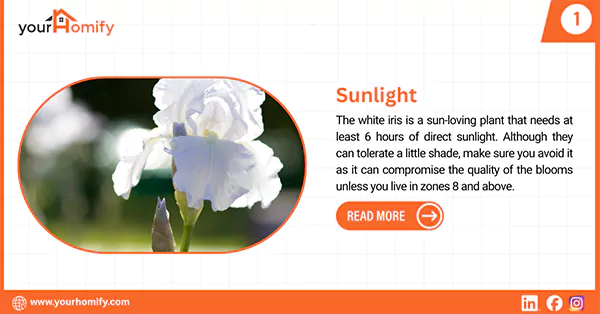
- White iris flowers must receive 6+ hours of direct sunlight for strong and healthy flower heads.
- If you live in zones 8 and above, afternoon shade will help you protect the flower from sunburn.
- They are tolerant of a little shade but can compromise on the quality of the blooms.
2. Watering
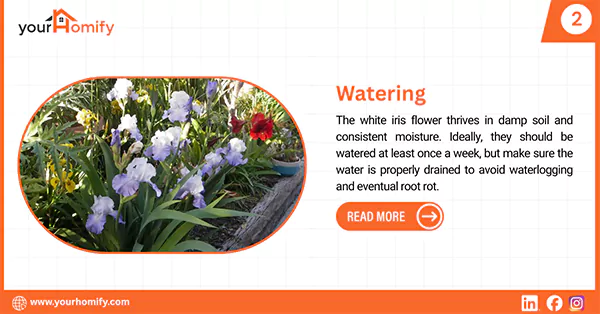
- It has been well established in the article so far that the white iris loves moisture.
- These perennial wildflowers need to be watered weekly with soil that drains the water well to avoid root rot.
- Although they have a moderate drought tolerance, my advice would be to avoid any dry spells.
Gardening Tip
Add a layer of mulch, which will help in moisture retention and also suppress weeds.
3. Fertiliser
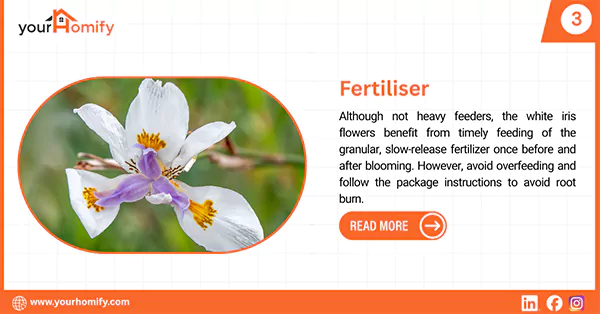
- The white iris flowers are not heavy feeders and should be fed cautiously in appropriate amounts.
- They are ideally fed with plant food in early spring or after the flowering using a granular, slow-release fertiliser with low-nitrogen content.
- Make sure you do not overfeed the plant, as it can lead to root burn.
Additional Tip
The process of fertilising usually differs as per the soil nutrient content, variety, and the brand used. Hence, research well and follow the package instructions. One way might not do well for all the types.
4. Pruning
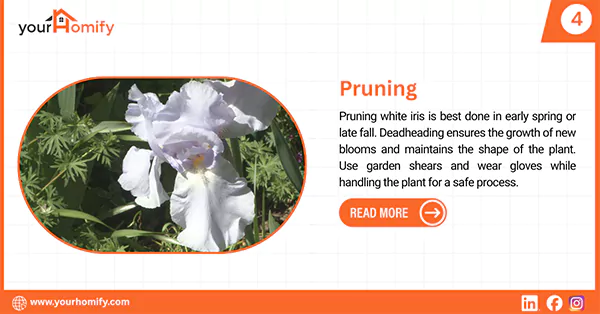
- Pruning is one step I never skip, whether it is significant or not.
- Deadheading the white iris is best done in early spring or late fall to encourage new blooms.
- Remove all the dead and damaged parts of the flowers before they spread to the entire plant.
- Do not cut more than ⅔ of the flower as it can shock the plant, leading to premature wilting.
5. Pests and Diseases
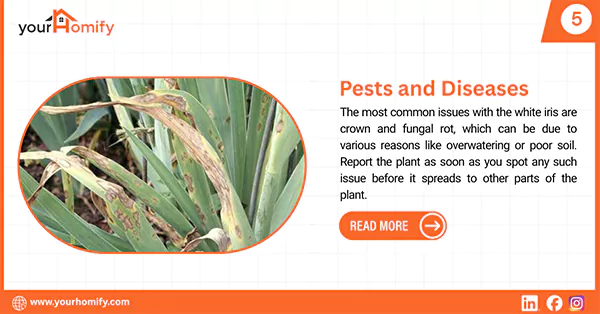
- White irises have the same pest infestations as other iris types, like crown rot, fungal rot, and bacterial spot rot.
- These issues could arise due to various factors, including overwatering, shade, and dry conditions.
- As soon as you spot any kind of rot, repot the plant immediately before the infection spreads to other parts of the plant.
Are White Iris Flowers Toxic to Pets?
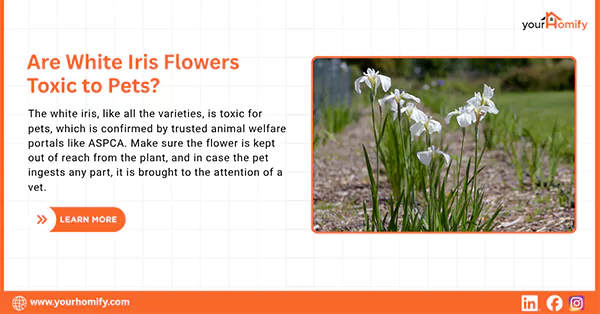
According to ASPCA, the white iris flowers and all the other varieties of the flowers are toxic to pets, which is a concerning point for all plant and pet owners.
These flowers have a unique appeal as indoor plants and cut flowers, but can be a little toxic for your furry friends. Confirmed by the Pet Poison Helpline, ingesting iris can cause digestive discomfort to pets.
If your pet ingests any part of the plant, take it to the vet immediately before symptoms worsen. Make sure you keep the plant away from the reach of the flowers on an elevated surface.
Concluding Remarks
The iris flower family is rightly named after the rainbow goddess, as all the colors are so intriguing. White iris, particularly, has been on my wishlist as a gardener. These herbaceous perennials are so elegant and classy that they can elevate any landscape style with their simplistic charm.
Symbols of purity and innocence, these white flowers are used in flower arrangements for weddings and baby showers, and can be easily planted as indoor plants or used as cut flowers for home decor.
FAQs
What do white irises symbolise?
The white iris flowers are symbolic of the idea of purity and innocence and are used in flower arrangements for weddings and baby showers.
Do coffee grounds help irises?
Uncomposted coffee grounds might not be the best for white irises, as they are acidic and irises prefer alkaline soil.
Are white irises rare?
No, white iris flowers are not rare and are commonly grown as indoor plants and garden flowers.
What months do iris flower?
The iris flower from the month of April to July, which is later spring to early summer.
Is white iris toxic to pets?
Yes, the white iris flowers are toxic to pets and can cause mild digestive discomfort upon ingestion.
- How to Grow and Care for African Iris? – Yahoo
- Iris ‘White City’ – BBC Gardeners’ World


Iris Flower: Meaning, Types, Colors, Symbolism & Care Guide
[…] White Iris Flower […]
White Flowers Meaning: 15 Types, Meanings & Symbolism
[…] white iris is a popular flowering plant that is typically grown as cut flowers and for home decor. I have […]