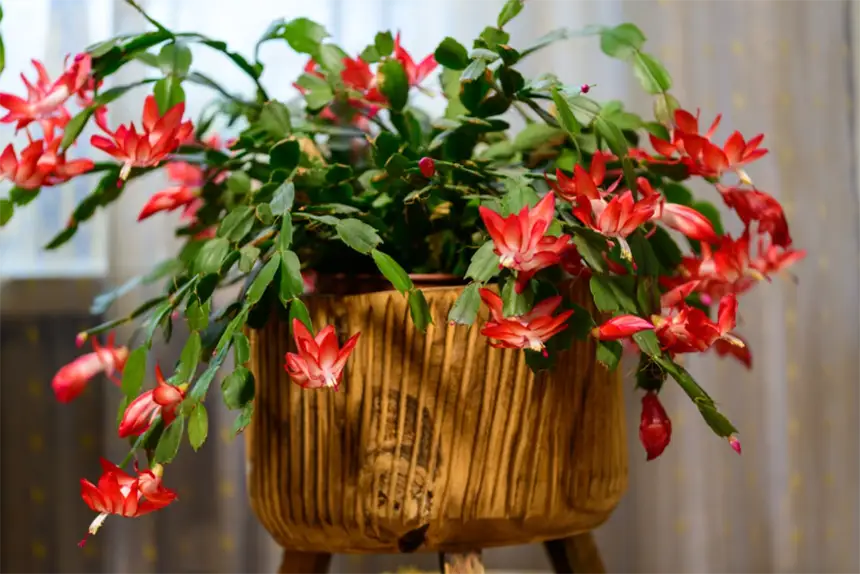
Zygocactus plants – a tropical houseplant, cold tolerant indoor plant, easy to care for, pet friendly, and looks so stunning that it can be used as a centerpiece – what’s there not to like about this unique type of cactus?
But here’s the catch: despite the name, this isn’t your typical desert cactus. It has completely different care needs and treating it like other succulents is where most people go wrong!
So, in this article, I have covered everything. From how to grow this species and the care routine to why it’s worth having in your home. Also, check out the pests and diseases that can be a real problem for you, if not monitored properly.
Quick Answer
A zygocactus is a tropical epiphytic succulent from the Schlumbergera genus. It is native to the tropical rainforests of southeastern Brazil and is suitable for growing in USDA hardiness zones 10-12. With proper care, the plant can have an exceptionally long lifespan of around 20-30 years. The species is non-toxic, hardy, and low-maintenance.
What is a Zygocactus Plant?
A zygocactus is a tropical, epiphytic succulent from the Schlumbergera genus, native to the tropical rainforests of southeastern Brazil. This cactus variety is grown as a houseplant in cooler regions and is most suitable for USDA hardiness zones 10-12. It typically reaches a mature height of 6-12 inches and spreads about 12-24 inches wide.
Unlike other desert cacti, zygocactus plants have arching, trailing stems made of flattened segments that bloom from late fall to winter.
Just like me, if you wish to turn your indoor environment into a colorful canvas, adding this plant is the best option. It is often found in different color shades. The botanical name of the species is Schlumbergera truncata.
Some common names of the plant are Christmas cactus, Thanksgiving cactus, Crab cactus, and Holiday cactus.
According to the ASPCA, the species is non-toxic to humans, cats, and dogs. However, if the leaves of the plant are ingested in excess, it may cause mild stomach irritation and gastrointestinal issues. I prefer keeping my pet dog Coco away from this one!
A zygocactus plant has an exceptionally long lifespan. With proper care, the species can live for 20 to 30 years. This cactus variety is quite hardy, and some common cultivars can even thrive for 50-100 years.
Just at the beginning of your gardening journey? Don’t worry, this species is easy to handle!
How to Grow Zygocactus Plants? (Stem Cutting Vs Potting)
As per my research and personal experience, stem cutting is the most common and cost-effective way to grow a new zygocactus plant.
Potting a nursery-bought plant is another method. If you want to propagate new plants from an existing zygocactus, stem cutting is an ideal choice. You can also cut the chase and use an already established plant for faster results.
1. How to Grow Zygocactus Plants from Stem Cuttings?
Growing zygocactus plants from stem cuttings is the easiest and most reliable method of propagation. It produces a healthy plant that is genetically identical to the parent.
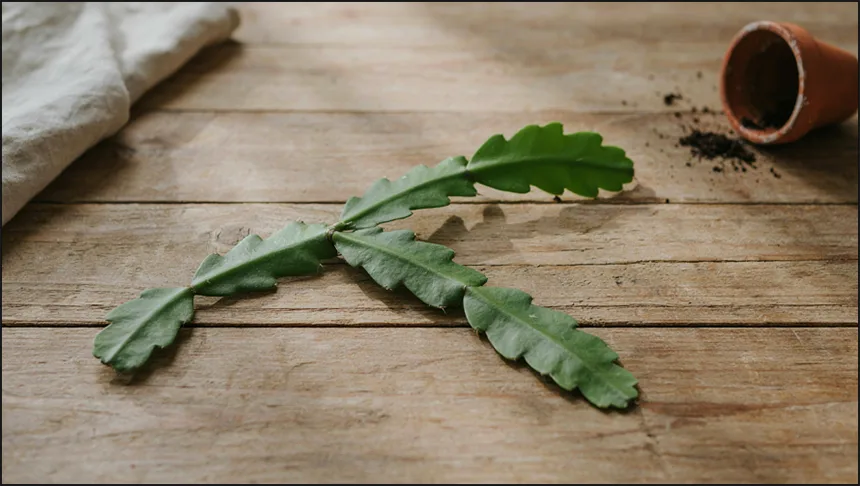
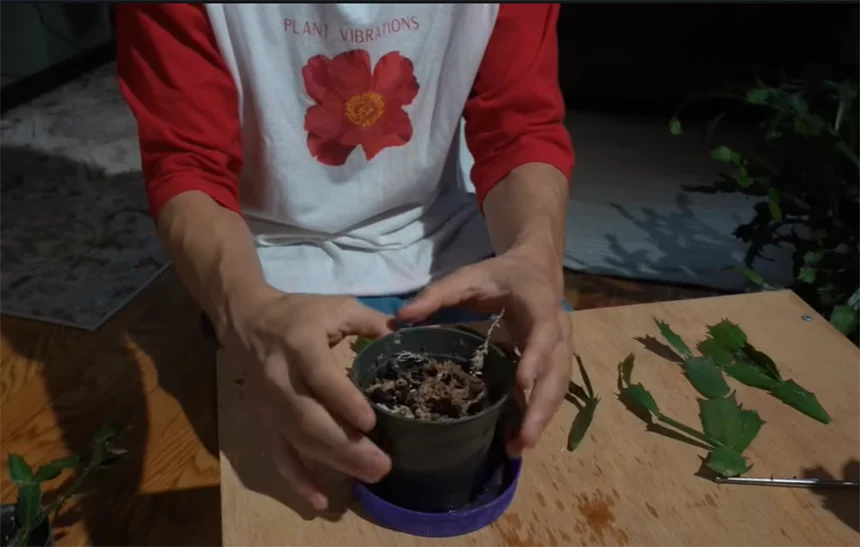
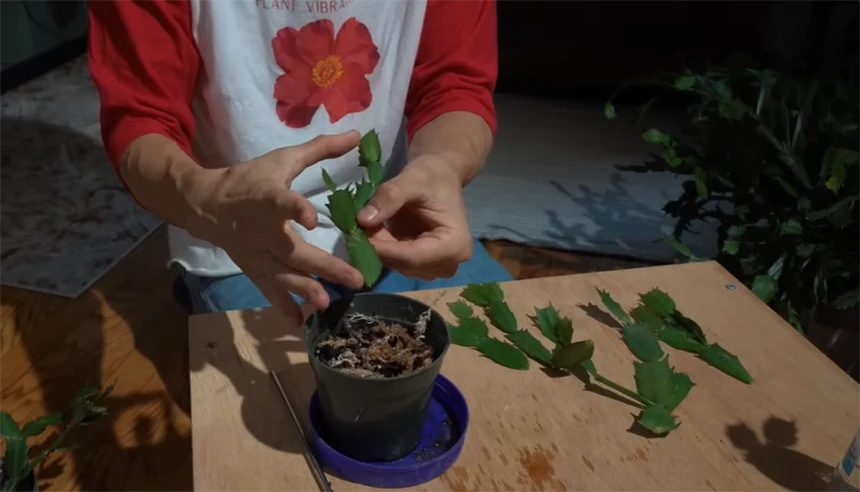
- Choose a mature, disease-free stem with 2-4 healthy, connected segments. Avoid stems that are damaged, wilting, or flowering.

- You can remove the stem cutting by gently twisting it at the joint or using sterilized garden scissors. Make sure you do not damage the segments.
- Place the cutting in a dry, shaded spot for around 24-48 hours. This allows the stem end to dry, which eventually reduces the risk of rot when planted in a pot.

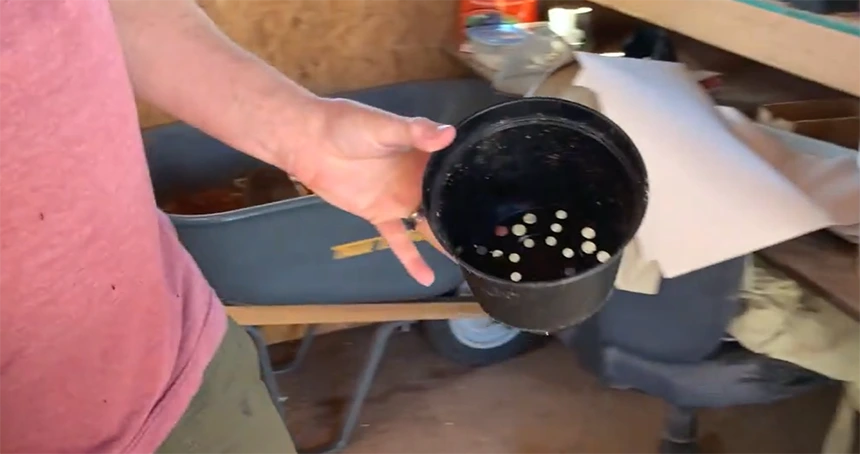
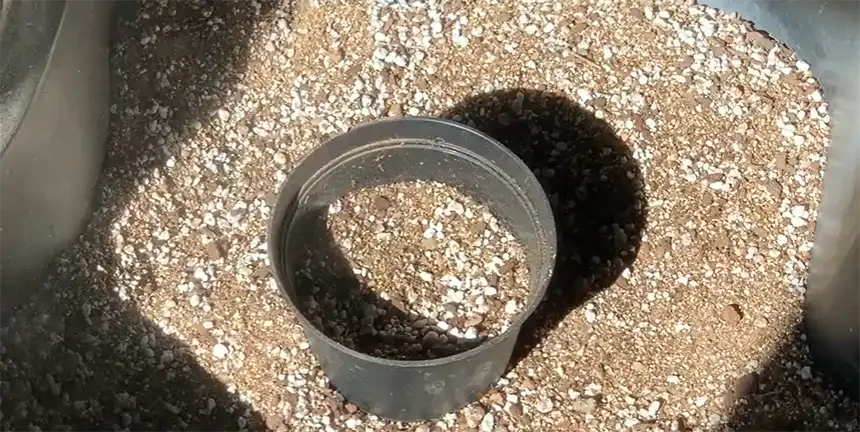
- Fill a small pot with a light, well-draining mix made for tropical cacti, or combine 2 parts potting soil, 1 part perlite, and 1 part orchid bark or coco chips.

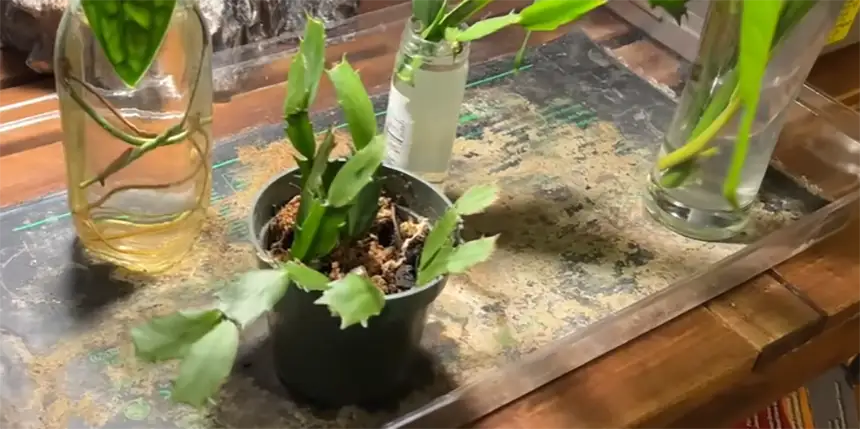
- What are you waiting for? Plant the callused cutting into the soil. Place it about 1 inch inside the potting mix. Press the soil around the cutting to keep it upright.

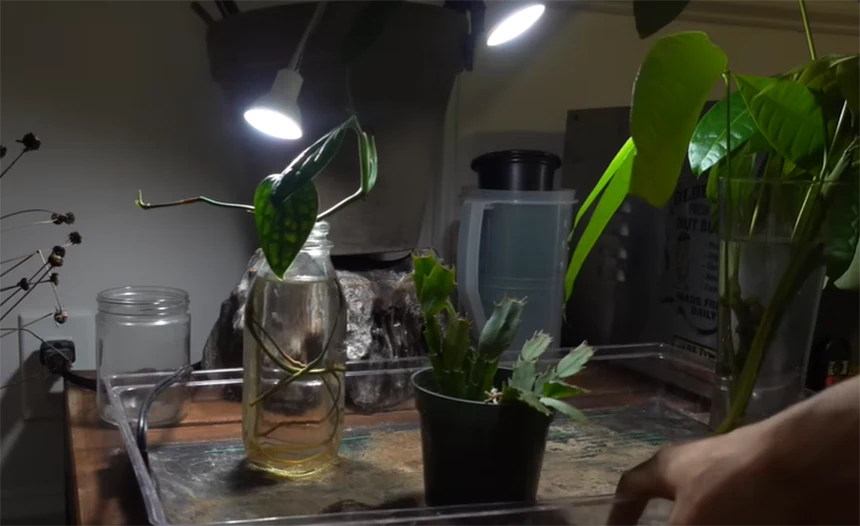
- Moisten the soil after planting and water only when the top inch of the soil feels dry. Place the pot in bright, indirect light with temperatures between 65–75°F (18–24°C).
- Roots usually develop within 3-6 weeks. Once new stem segments begin growing, you can continue caring for it like a mature zygocactus plant.

2. How to Grow a Zygocactus by Potting a Nursery Plant?
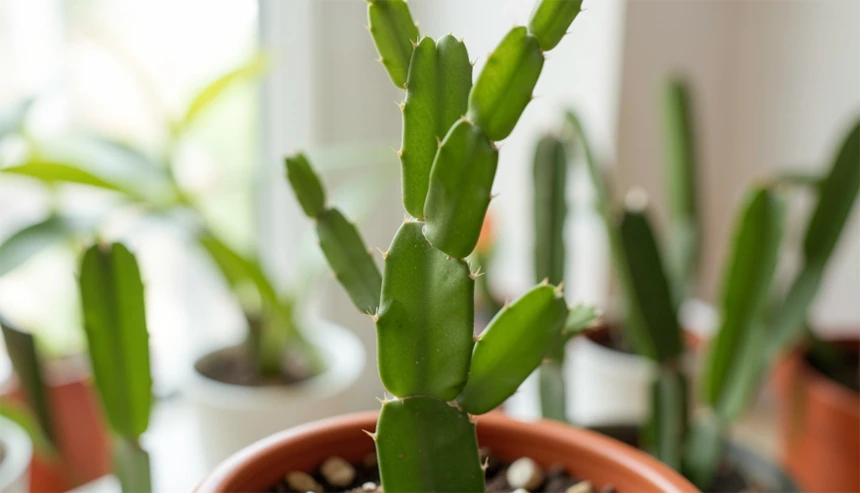
Buying a healthy nursery-grown plant is the fastest way to enjoy blooms with minimal effort.
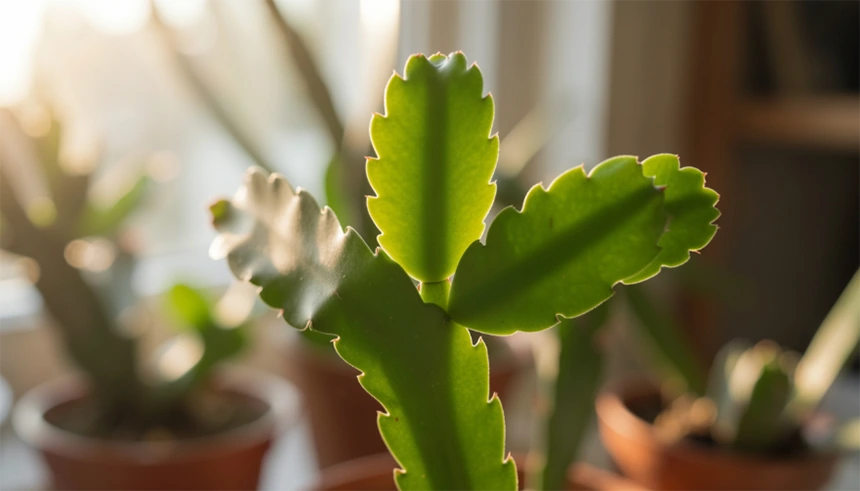
- Select a compact sapling with firm green stem segments, healthy roots, and no signs of pests or diseases.

- Use a pot that is slightly 1-2 inches wider than the root ball and has proper drainage holes. A snug pot or a tightly fitting container can sometimes encourage flowering.

- Use a loose, airy potting mix specifically designed for epiphytic cacti, or you can also create your own mixture by combining potting soil, perlite, and orchid bark.

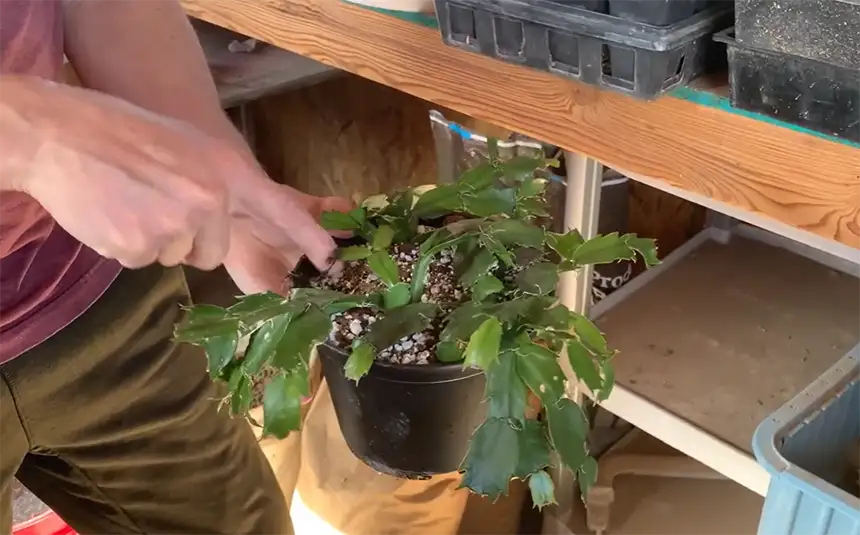
- Gently loosen all the tightly packed roots without breaking them and shake off all the excess dust.
Place the root ball at the same depth as it was in the earlier container. Do not position it too deep. Fill the remaining pot and gently press the soil around to remove any air pockets.

- Water the plant until all the excess moisture drains from the bottom.
Yes, it’s that easy to grow a zygocactus plant.
Complete Care Guide for Zygocactus Plants
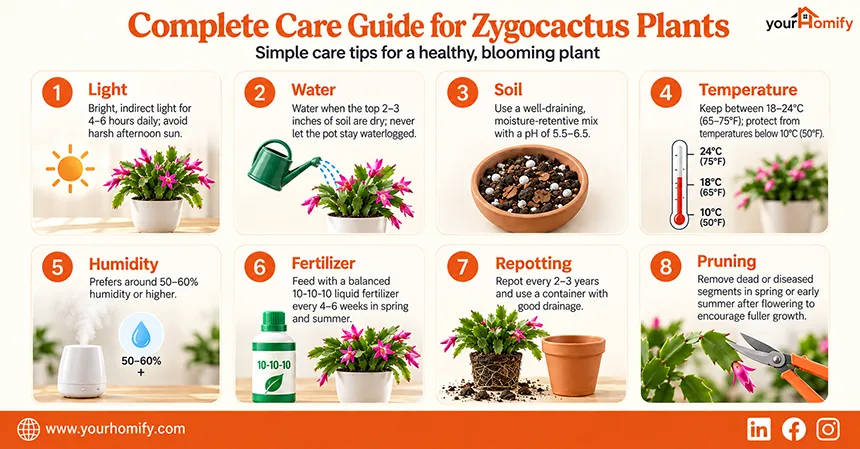
Honestly speaking, zygocactus pretty much takes care of itself. It only needs proper sunlight for a good amount of hours, moderate watering, and a soil type that can provide enough nutrition for its healthy development.
Just like me, if you are planning to add this beauty to your interiors, keep the room somewhere between 18 – 24°C. Do all of this and see how this cactus plant transforms your space.
- Sunlight Needs: The Zygocactus plant grows best in bright, indirect light. It requires 4-6 hours of daily light and is one of the best plants for a north-facing window. Avoid direct afternoon sun, which can scorch the segments and cause wilting.
- Water Intake: Water only when the top 2-3 inches of the soil feels dry. Make sure that all the excess water drains from the bottom to avoid waterlogging.
- Soil Type: Use a well-draining potting mix that retains some moisture. You can make a suitable mixture for zygocactus plants by combining 2 parts potting soil, 1 part perlite, and 1 part orchid bark or coco chips. The ideal pH range for soil should be between 5.5 and 6.5.
- Temperature: Try to maintain the temperature around the plant between 65°F and 75°F (18 and 24°C), especially during the active growing season.
But, make sure to protect the species from frost conditions and temperatures below 50°F (10°C). I learnt this the hard way!
- Humidity: Unlike other desert plants, zygocactus prefers 50-60% humidity or higher. You can increase the humidity by using a pebble tray or humidifier. Grouping it with other houseplants or placing it in high-moisture areas like a bathroom or kitchen can also work. Avoid keeping the plant near heating vents or air conditioners.
- Fertilizer: Use a balanced liquid fertilizer in the ratio 10-10-10 every 4-6 weeks during spring and summer. Stop adding the plant food in late fall; allow the plant to set its buds and bloom profusely.
- Potting and Repotting: Always choose a pot with good drainage holes and keep the plant slightly root-bound, as this encourages blooming. Repot every 2-3 years or whenever the roots outgrow the container.
- Pruning: Although this is a part which I don’t like much, I cannot deny its importance!
Prune all the dead and diseased segments. This encourages healthy branching and creates a fuller plant. The ideal time to prune the plant is during spring or early summer, after the blooming has finished.
How to Get Zygocactus to Rebloom?
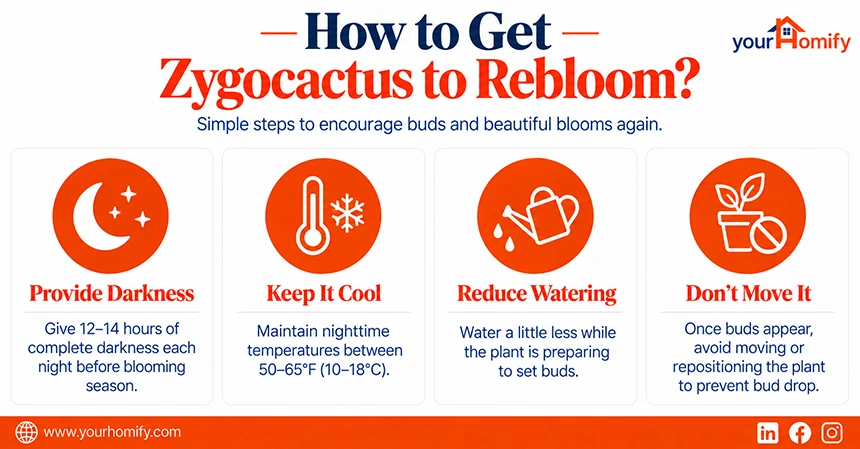
To rebloom the species, you need to keep it in complete darkness for a minimum of 12-14 hours, maintain the nighttime temperature between 50°F and 65°F, reduce watering, and stop moving the plant once the bud appears to avoid transplant shock.
A zygocactus typically blooms once a year during late fall or winter. Reblooming entirely depends on giving the plant the right growing conditions before its natural flowering season.
What are the Benefits of Zygocactus Plants?
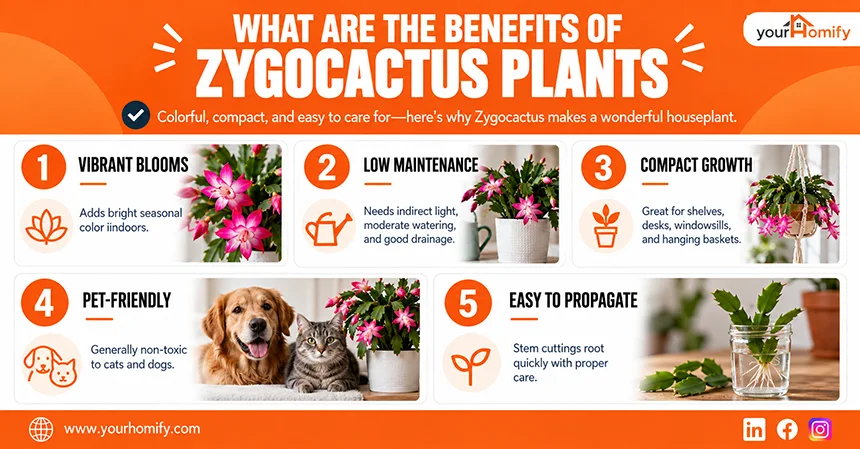
Zygocactus plants offer several benefits, including bright indoor spaces, easy maintenance, compact growth, pet-friendly nature, and simple propagation.
Without any further ado, check out why this plant is worth keeping.
- This plant produces vibrant flowers in many distinct color shades like pink, red, white, purple, orange, peach, and yellow. It adds freshness to any corner when many other houseplants are dormant.
- Zygocactus is beginner-friendly and requires only bright, indirect light, moderate watering, and a well-draining potting mix to thrive. It is a perfect low-maintenance indoor plant.
- The compact, arching growth habit makes the plant ideal for windowsills, desks, shelves, balconies, and hanging baskets. It can easily be incorporated into small spaces.
- Zygocactus is considered non-toxic to cats and dogs, making it one of the best pet-safe houseplants. However, ingesting its fibrous stems in excess can cause mild indigestion.
- The plant is very easy to propagate. With proper care, stem cuttings can establish roots quickly. This allows gardeners to grow new plants identical to the parent species.
Common Pests and Diseases Affecting Zygocactus
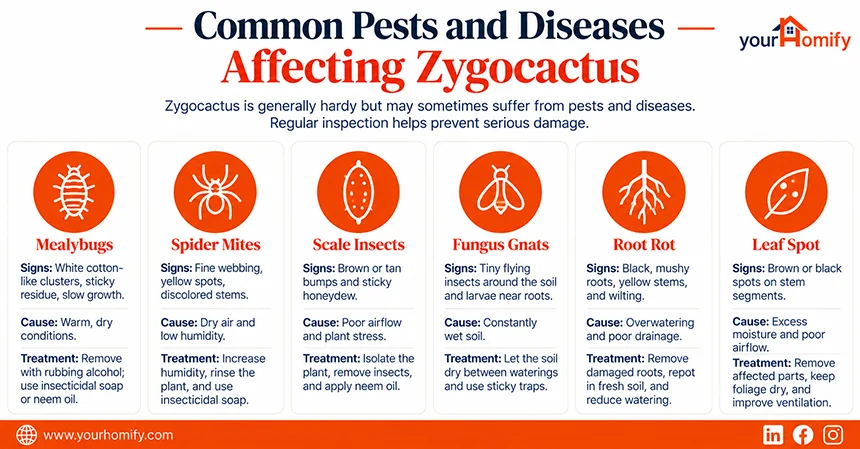
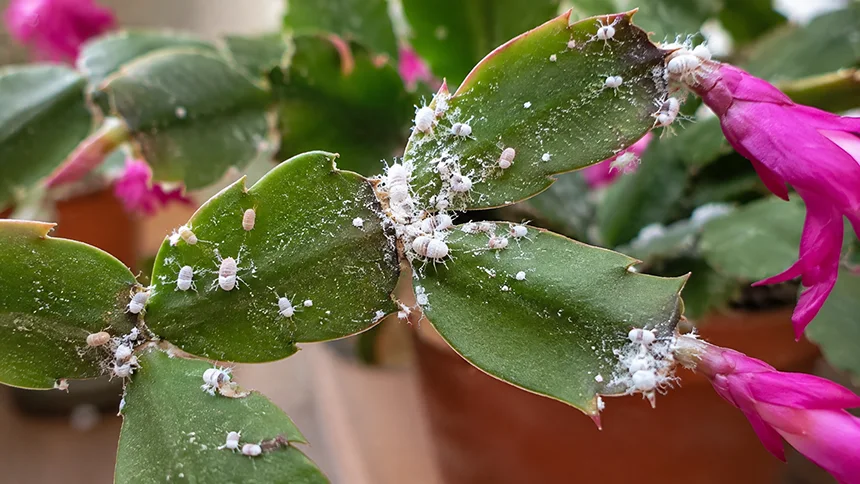
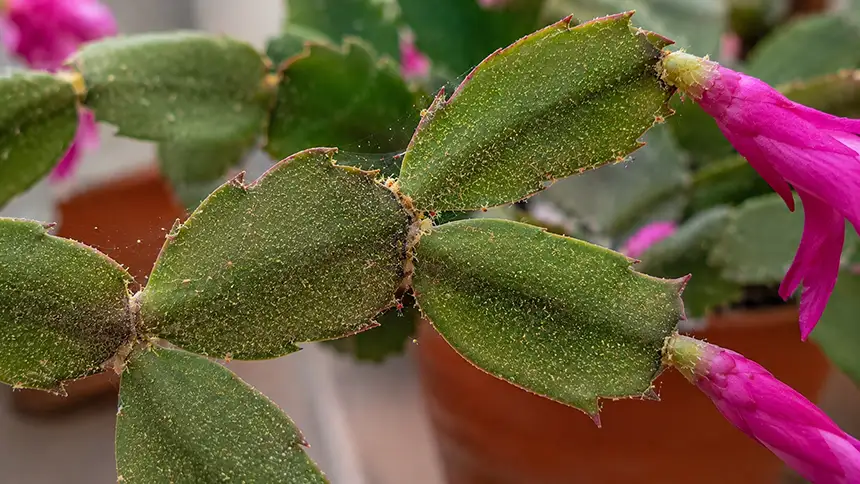
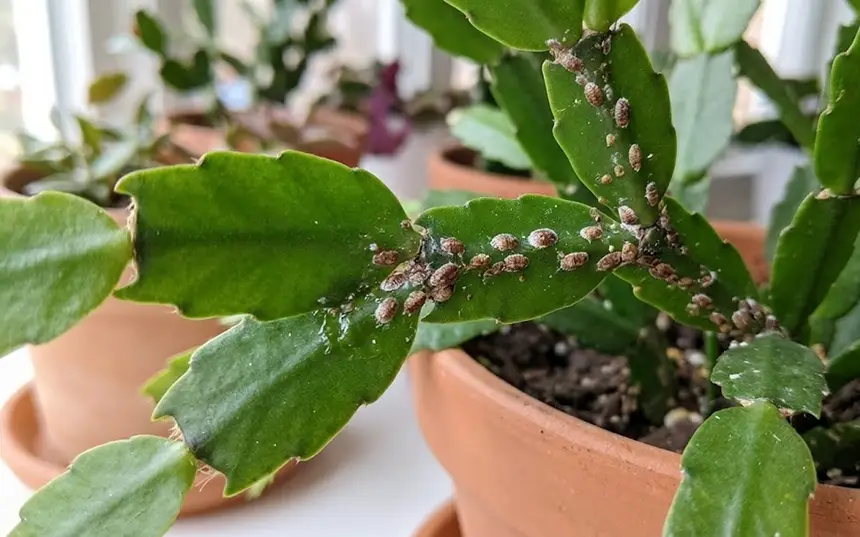
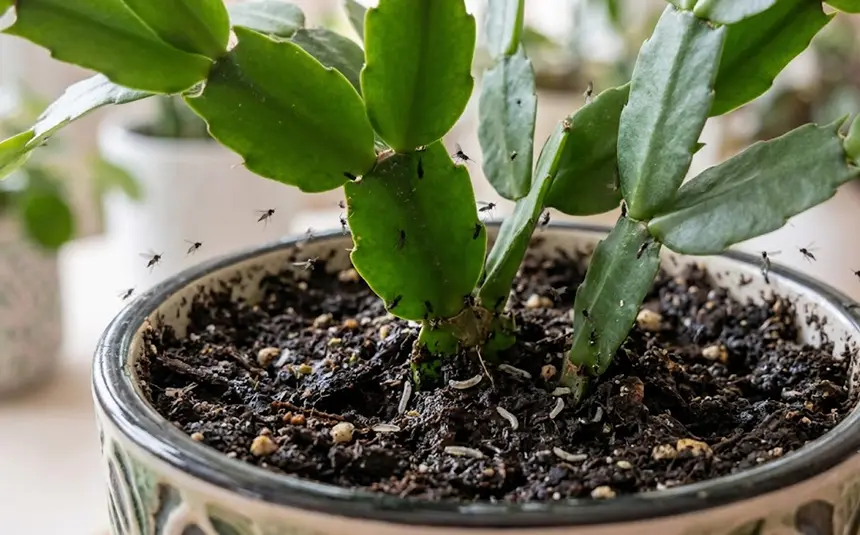
Although zygocactus is a hardy, low-maintenance houseplant, it can occasionally be affected by pests and diseases like mealybugs, spider mites, scale insects, fungus gnats, root rot, and leaf spot. Noticing early symptoms and regular monitoring can help prevent most problems.
- Mealybugs: These are white, cotton-like clusters on stems and joints, have a sticky residue, and slow down the growth rate of the plant.

Causes: Warm and dry indoor conditions.
Treatment: Remove using a cotton swab dipped in rubbing alcohol and spray with insecticidal soap or neem oil if needed.
- Spider Mites: You will notice fine webbing around the plant. This leaves tiny yellow or pale spots on the leaves and discolored stems.
Causes: Low humidity and dry air.
Treatment: Increase humidity, rinse the plant with water, and use insecticidal soap or horticultural oils.
- Scale Insects: These are small brown or tan bumps visible on the surface of the stems. They tend to leave a sticky honeydew.

Causes: Poor air circulation and stressed plants.
Treatment: Isolate the plant to prevent further infestation. Gently scrape off insects and apply neem oil or insecticidal soap on the infected areas.
- Fungus Gnats: If you notice tiny bug-like flying insects around the soil and larvae feeding on the roots, they are fungus gnats.
Causes: Consistently wet soil
Treatment: Allow the top few inches of the soil to dry out completely between waterings. Use sticky traps and improve the drainage of the potting mix.
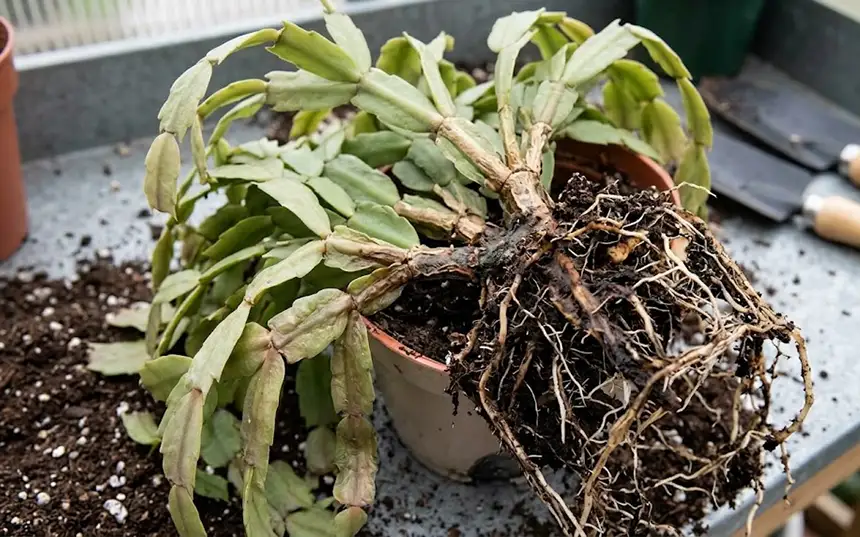
- Root Rot: You will notice soft, mushy, black roots and yellowing stems. The plant will start wilting despite moist soil.
Causes: Overwatering and poor drainage
Treatment: Remove all the affected roots and repot in a fresh container. Use well-draining soil and adjust the watering frequency.
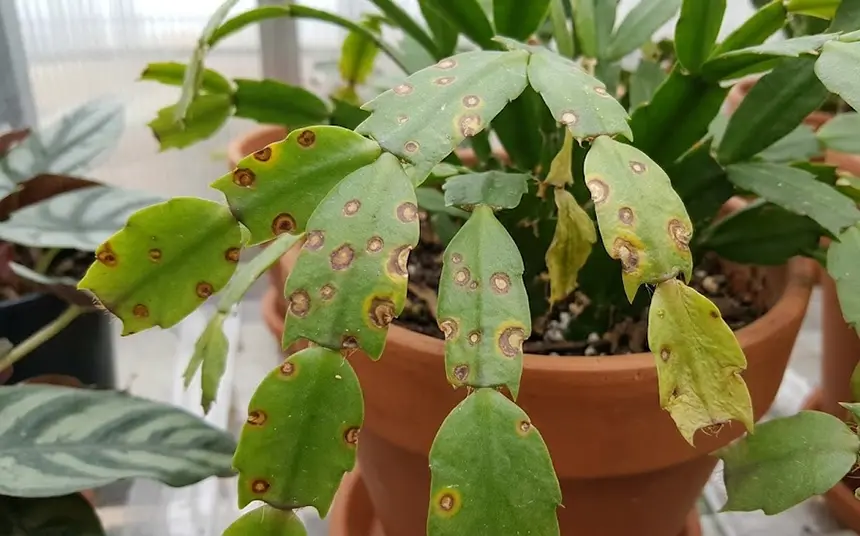
- Leaf Spot: This is a fungal disease. You will notice brown or black spots on stem segments. This can also cause yellow spotting on the surface of the foliage.

Causes: Excess moisture and poor airflow.
Treatment: Remove all the affected segments, keep the foliage dry, and improve the growing conditions of the plant.
Final Words
There is something magical about a plant that blooms when almost all the other plants go dormant. Bright, indirect light, moderate watering, well-draining soil, and a proper rest period before blooming is what it takes for zygocactus to flourish.
You may think that the plant is fussy, but it just needs a few things done right and you are all set. Once it matures, it can take care of itself and does not demand much attention.
FAQs
Do Zygocactus like sun or shade?
Zygocactus plants thrive in bright, indirect shade. They cannot tolerate scorching sunlight; therefore, it is always best to keep the plant near a north-facing window.
How long do Zygocactus flowers last?
The flowers of Zygocactus typically bloom from late autumn through winter.
How do you take care of a Zygocactus?
Zygocactus needs bright, indirect light for 4-6 hours, consistent watering when the top 2-3 inches of the soil feels dry, a light, well-draining potting mix, temperatures between 65–75°F (18–24°C), 50-60% humidity, and a well-balanced fertilizer in the ratio 10-10-10.
Do Christmas cacti like small or large pots?
Christmas cactus prefers growing in small, snug pots that make the plant root-bound, as it encourages flowering.
What is the lifespan of a Christmas cactus?
The average lifespan of a Christmas cactus is around 20-30 years. Some cultivars can even last for 50-100 years.
- Schlumbergera truncata – NC State Extension Research Paper
- Zygocactus – Society of American Florists