


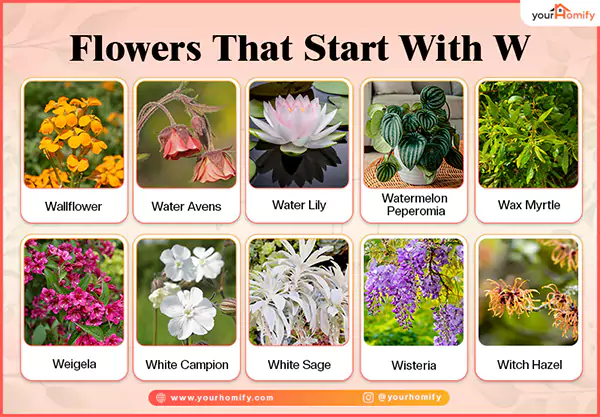
When I started exploring flowers that start with W, I was surprised to find such a wide variety of beautiful and unique botanical marvels. From graceful water lilies to fragrant wisteria vines and decorative wax myrtle shrubs, each species has something special to offer.
These flowers are extremely versatile and stand out because of their unique foliage, fragrance, or ability to attract pollinators. Moving further, in this guide, I have shared some of the most popular flowers that begin with the letter W, along with some fascinating facts that make them worth knowing.
Quick Answer
Flowers that start with W include wallflower, water avens, wax myrtle, white sage, and witch hazel. These are ornamental, easy to care for, and help in sustaining the ecosystem.
List of 10 Flowers That Start With W
If you are also looking for flowers that start with W, this list has a surprising variety of beautiful blooms suited to different growing zones. I personally prefer them planting next to flowers that start with V for a more defined or organized backyard.
- Wallflower
- Water Avens
- Water Lily
- Watermelon Peperomia
- Wax Myrtle
- Weigela
- White Campion
- White Sage
- Wisteria
- Witch Hazel
The flowers mentioned in the list above are easy to care for and carry their unique charm, making the surroundings more lively. Some blossoms are natural pollinators that help in sustaining the ecosystem.
1. Wallflower
- Botanical Name: Erysimum spp.
- Flower Type: Herbaceous perennial, biennial, annual
- Bloom Season: Spring to early summer
- Growing Zones: 6-10 USDA
- Origin: Europe, Asia, and North America
- Color: Yellow, orange, red, pink, purple
- Height: 10-12 inches tall
- Soil Type: Fertile and slightly acidic
- Maintenance Level: Low to moderate
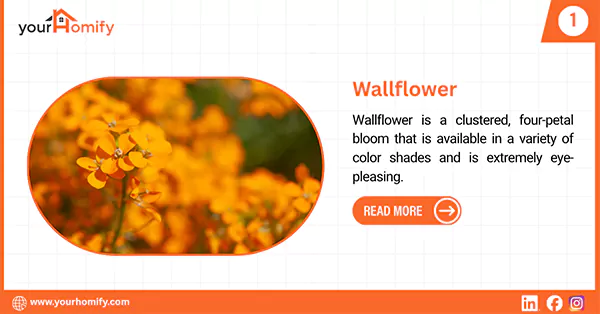
Wallflower is a stunning spring flower. It is ideally used as a ground cover plant and can be effortlessly grown in gardens, containers, or along the pavement. The bloom is known to symbolize faithfulness and also has medicinal properties. Its leaves were typically used to make herbal teas for treating stomach cramps. Apart from being an important food source for pollinators, it is also visually appealing and easy to care for.
2. Water Avens
- Botanical Name: Geum rivale
- Flower Type: Herbaceous perennial
- Bloom Season: Late spring into summer
- Growing Zones: 3-7 USDA
- Origin: Eurasia and North America
- Color: Cream, purple-pink petals with a reddish stem
- Height: 8-18 inches tall
- Soil Type: Moist to wet soil type
- Maintenance Level: Medium
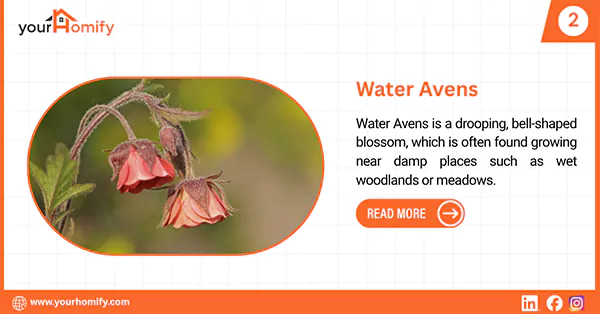
Water Avens is a graceful perennial wildflower known for its bell-shaped bloom in soft-pink, red, or purple shades. It commonly grows near streams, wetlands, and damp meadows, adding a natural charm to any landscape. The delicate petals of the species make it visually appealing throughout the growing season. It is also pollinator-friendly and attracts bees, butterflies, and birds.
3. Water Lily
- Botanical Name: Nymphaea
- Flower Type: Aquatic herbaceous perennial
- Bloom Season: Early summer to early fall
- Growing Zones: 3-11 USDA
- Origin: Tropical Asia and Indonesia
- Color: White, pink, red, yellow, orange
- Height: Cannot be specified
- Soil Type: Loamy, clayey, rich in organic compost
- Maintenance Level: Low
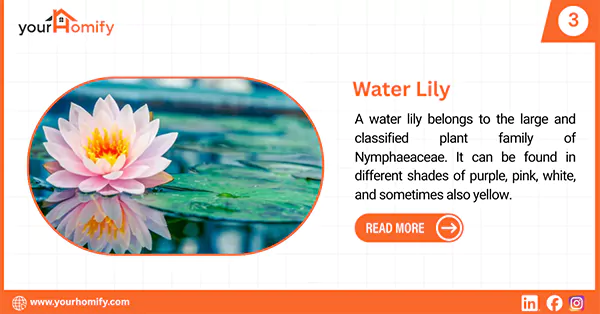
The Water Lily is also known as the July birth flower. It is a stunning aquatic bloom with broad green leaves that rest on the water’s surface. For many years, this species has been carrying spiritual significance. In Hinduism and Buddhism, the water lily is specifically known to represent rebirth. It thrives in still, sunny water and is known to attract pollinators like bees and butterflies.
4. Watermelon Peperomia
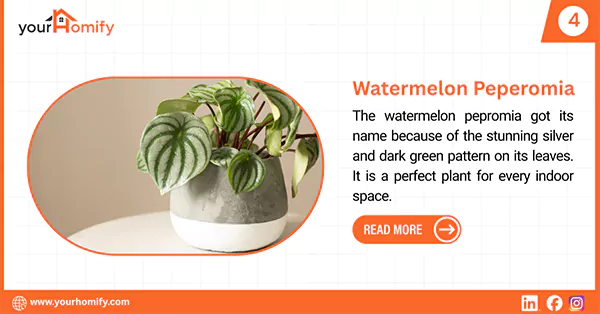
- Botanical Name: Peperomia argyreia
- Flower Type: Compact, bushy, tropical perennial
- Bloom Season: Summer
- Growing Zones: 10-12 USDA
- Origin: Rainforests of South America
- Color: Light green leaves with dark green stripes
- Height: 6-12 inches tall
- Soil Type: Well-draining, slightly porous soil works best
- Maintenance Level: Low
The watermelon peperomia is a compact, tropical houseplant loved for its striking green leaves. Its glossy, round foliage and easy-to-care nature make it a perfect indoor vine plant. This plant grows well in bright indirect sunlight with moderate watering and thrives in small containers. As per ASPCA, peperomia is completely non-toxic to cats and dogs, and is known to create a fresh and lively indoor atmosphere for them.
5. Wax Myrtle
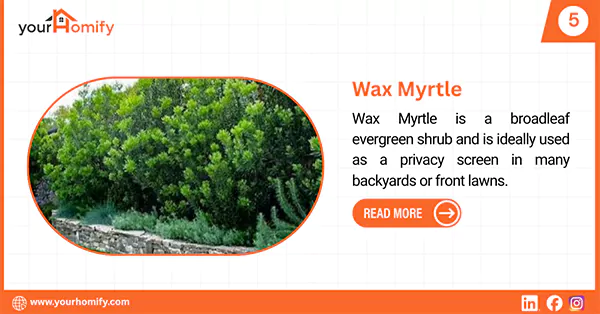
- Botanical Name: Morella cerifera
- Flower Type: Deciduous evergreen flowering shrub
- Bloom Season: Late winter to spring
- Growing Zones: 7-11 USDA
- Origin: Southeastern United States, Central America, and the Caribbean
- Color: Red, pink, white, and yellow
- Height: 10-20 ft tall
- Soil Type: Sandy, loamy, and acidic soil
- Maintenance Level: Moderate to low
Wax Myrtle is a fast-growing evergreen shrub and is commonly called Southern Wax Myrtle or Southern Bayberry. It is one of the most stunning flowers that start with W and has a lifespan of 30-50 years. The female wax myrtle produces fragrant red berries, which make it pollinator-friendly. Various parts of this species were used for medicinal purposes by many native Americans.
6. Weigela
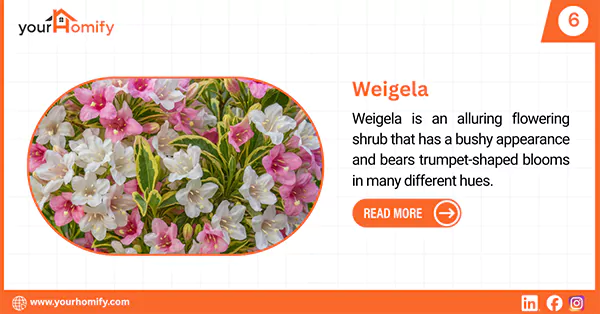
- Botanical Name: Weigela spp
- Flower Type: Trumpet-shaped flowering shrub, arching, mounting
- Bloom Season: Late spring to early summer
- Growing Zones: 4-9 USDA
- Origin: East Asia (Japan, Korea, North China)
- Color: Shades of pink, red, white, and yellow
- Height: 12 inches tall and 18 inches wide
- Soil Type: Acidic and slightly alkaline
- Maintenance Level: Low
If you are looking for a reliable flowering shrub that can be used for flower beds or as foundation planting, Weigela is an excellent choice. This deer-resistant species produces clustered trumpet-shaped blooms and grows perfectly well in bright sunlight. The nectar produced by the Weigela flowers is an optimal food source for essential pollinators like bees, butterflies, and birds.
7. White Campion
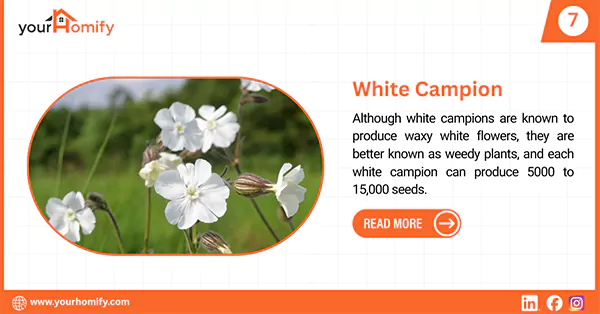
- Botanical Name: Silene latifolia
- Flower Type: 5-petaled dioecious flower
- Bloom Season: Spring to autumn
- Growing Zones: 3-9 USDA
- Origin: Europe, Western Asia, and Northern Africa
- Color: White
- Height: 1-2 inches tall
- Soil Type: Fertile and well-draining
- Maintenance Level: Low
The White Campion is a charming wildflower that usually features alluring, sweet-scented blooms and has soft, hairy stems. It typically blooms from late spring to summer and creates an eye-pleasing display in meadows and cottage gardens. The bloom is easy to care for and is a popular choice among many gardeners because of its natural beauty.
8. White Sage
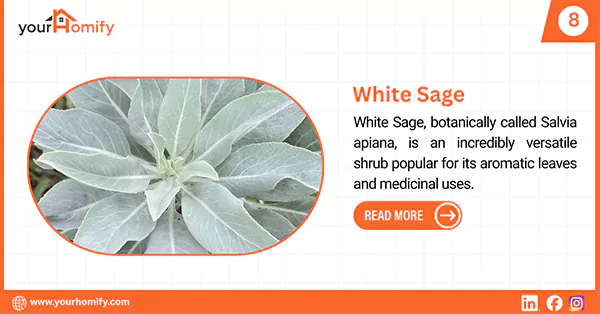
- Botanical Name: Salvia apiana
- Flower Type: Low-growing herbaceous perennial
- Bloom Season: Early spring to late fall
- Growing Zones: 3-11 USDA
- Origin: Europe, Asia, North-Central and South America
- Color: Lavender flowers and white-silver leaves
- Height: 3-5 feet tall
- Soil Type: Sandy or loamy soil type
- Maintenance Level: Low to moderate
The white sage is a fragrant perennial flower valued for its enigmatic leaves and lavender flowers. It is widely appreciated for its aromatic foliage, drought tolerance, and ability to attract essential pollinators. This ornamental white flower is extremely low-maintenance and is a popular choice among many gardeners and novice plant lovers.
9. Wisteria
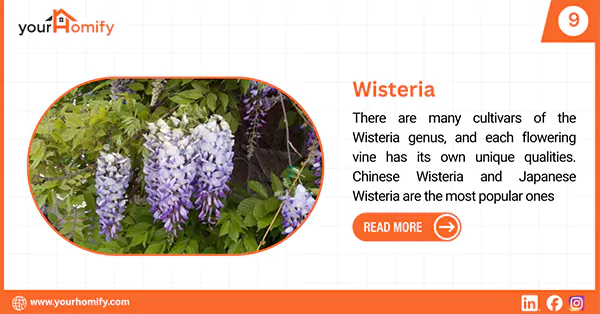
- Botanical Name: Wisteria spp.
- Flower Type: Deciduous flowering vine
- Bloom Season: Late spring to early summer
- Growing Zones: 5-9 USDA
- Origin: Native to parts of Asia and North America
- Color: Violet, purple, blue, pink, and white
- Height: 9-20 meters tall
- Soil Type: grows well in fertile and well-draining soil
- Maintenance Level: High
The Wisteria is a stunning flowering vine that bears a cluster of fragrant blooms. One of the most elegant flowers that start with W, this species creates a beautiful cascading effect in any landscape. Its long-lasting blossoms make it one of the most popular ornamental vines in gardens worldwide.
10. Witch Hazel
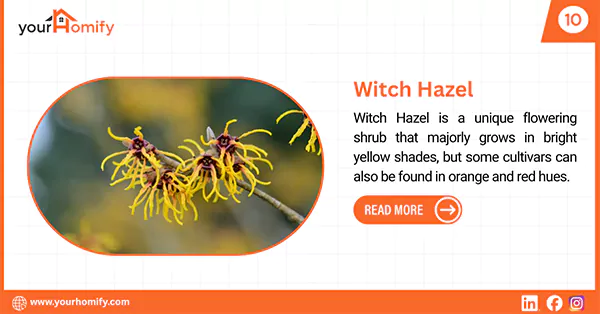
- Botanical Name: Hamamelis
- Flower Type: Upright blooms often growing in a round canopy
- Bloom Season: Late autumn to mid-winter
- Growing Zones: 3-9 USDA
- Origin: Eastern North America and East Asia
- Color: Bright yellow, golden-orange, or red
- Height: 10-20 feet tall
- Soil Type: Moist, acidic to neutral pH levels
- Maintenance Level: Low
The Witch Hazel is a rare-looking flower known for its ribbon-like petals that blossom in shades of yellow, orange, and sometimes even red. It is a fragrant medicinal plant that adds color and drama to any garden space, especially during the cooler months when other flowers go dormant. The flower is also highly valued for supporting the local ecosystem by attracting beneficial pollinators.
Conclusion
As my team and I explored flowers that start with W, we found an impressive variety of plants ranging from aquatic beauties like water lilies to ornamental blossoms such as wisteria and witch hazel. Each blossom comes with its own charm, growing habits, and benefits.
Whether I look for species that make my front lawn more vibrant or fragrant flowers that support the local ecosystem by being excellent pollinator blooms, these W flowers offer plenty of options.
Once you’ve explored these W-letter blooms, the flowers that start with X are a fun, rare group to discover next.
FAQs
What are the prettiest girl names that start with W?
Winter, Waverly, Willi, and Wrenly are some of the prettiest names that start with W.
What kind of flower is 🌺?
This emoji represents a hibiscus flower. It is a trumpet-shaped bloom known for its medicinal properties and charming beauty.
What are the prettiest flower names?
Some of the prettiest flower names are lily, peony, camellia, wisteria, and jasmine.
What is a flower that starts with V?
Violet, Verbena, Vinca, and Veronica are some popular flower names that start with V.
Are flowers that start with W suitable for beginner gardeners?
Yes, many w flowers are beginner-friendly. Plants like white sage, wisteria, and wax myrtle do not require much attention and are easy to care for once they are fully established.
- Water Lily – US National Park Service
- Wallflower – US National Park Service
- Common Witch Hazel – University of Maryland Research Paper
- Wisteria – Britannica
Flowers That Start With V: 15 Beautiful Types & Guide
[…] So, if you, too, are an anthophile, come along as I share 15 flowers that start with the letter V with features, fun facts, and a care guide, before continuing on to the flowers that start with W. […]
Flowers That Start With X: Rare X Flowers List & Guide
[…] flowers that start with X may be rare, but the flowers that start with W are just as overlooked and worth […]