



Blue flowers generally mean peace, calmness, unwavering trust and loyalty in relationships. Many people use these blooms because they have a naturally calming beauty which can make any garden or bouquet feel more ethereal.
I mainly combine these with yellow flowers to create a vibrant contrast. You can use deep blue flowers or blue flowering trees for gifting or for decoration purposes.
From delicate Azure Aster and Birdbill Dayflower to deep violet blue varieties of hydrangeas or orchids, in this article, I have covered a complete list of 41 blue flowers and flowering trees. These can be easily added to the garden and are easy to care for.
Quick Answer
Blue flowers mean rarity, peace, loyalty in long-term relationships, and trust. These blooms always stand out because they are less common than many other flower colors. Some popular blue flowers are forget me nots, cornflowers, geraniums, delphiniums, brunnera, and many more. You can use them for gifting or as border cover plants in rock gardens or large landscapes.
What Do Blue Flowers Mean? Symbolism and Hidden Meaning
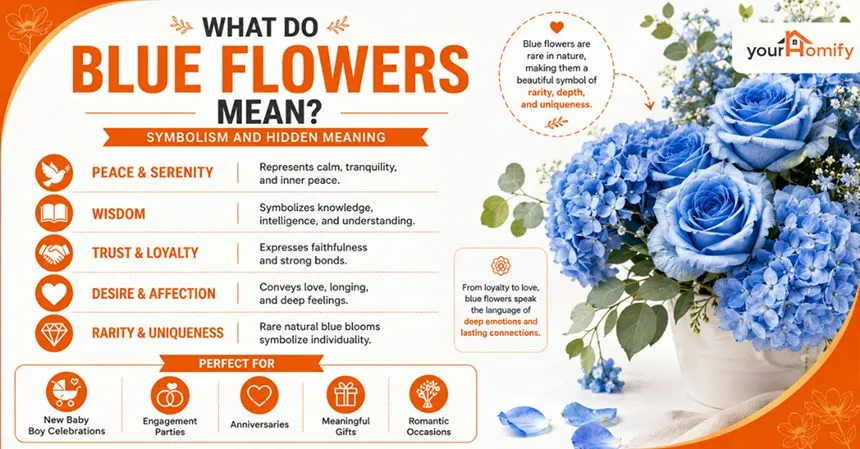
Blue flowers mean peace, wisdom, and sometimes serenity. They are used to convey deep sentiments like loyalty, desire, and stand for unique individuality. Since naturally blue flowers are rare to find, they are also known to symbolize rarity and a strong feeling of desire.
No matter what the occasion is, you can never go wrong with vibrant blue flowers. This color has always been associated with masculinity; therefore, if you are attending a celebration for a newborn baby boy, what’s better than gifting blue roses or hydrangeas?
Because of their representation of emotions like trust, loyalty, and a strong bond of affection, I have often seen these flowers being used on special days like anniversaries, engagement parties, or other romantic events.
21 Popular Types of Blue Flowers To Add a Pop of Color
Blue flowers bring a cool, peaceful charm that can instantly make a garden or bouquet feel more special. It usually means calmness and serenity, with a strong spark of trust and loyalty.
From sky blue shaded chicory, bluebells, and clematis to deep blue cornflower and columbine, this list covers 21 popular blue flowers that you cannot miss!
1: Azure Aster
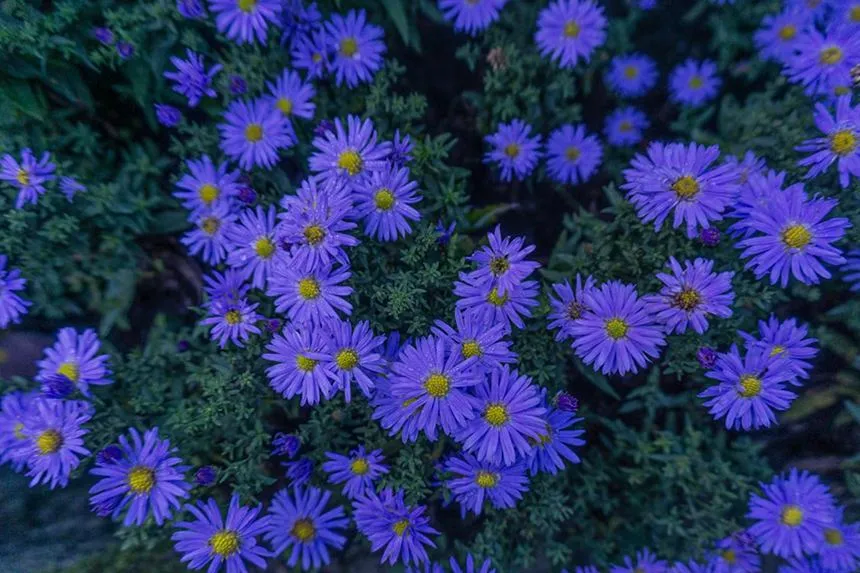
- Botanical Name – Symphyotrichum oolentangiense
- Hardiness Zone – USDA zone 3-8
- Symbolism – Wisdom, trust, and patience
Throughout the summer season if there is one flower that produces bright blue flowers, it is the azure aster! This beautiful flowering species originally grows in North America and produces blooms that are very similar to daisies. It grows about 2-3 ft tall. The flowers of this bloom are in blue-violet shade with a light yellow-green center.
As per my opinion, aster thrives in full sunlight. But, I prefer growing these in partial shade. Being a low-maintenance species, it needs fertile soil and moderate watering and you are good to go!
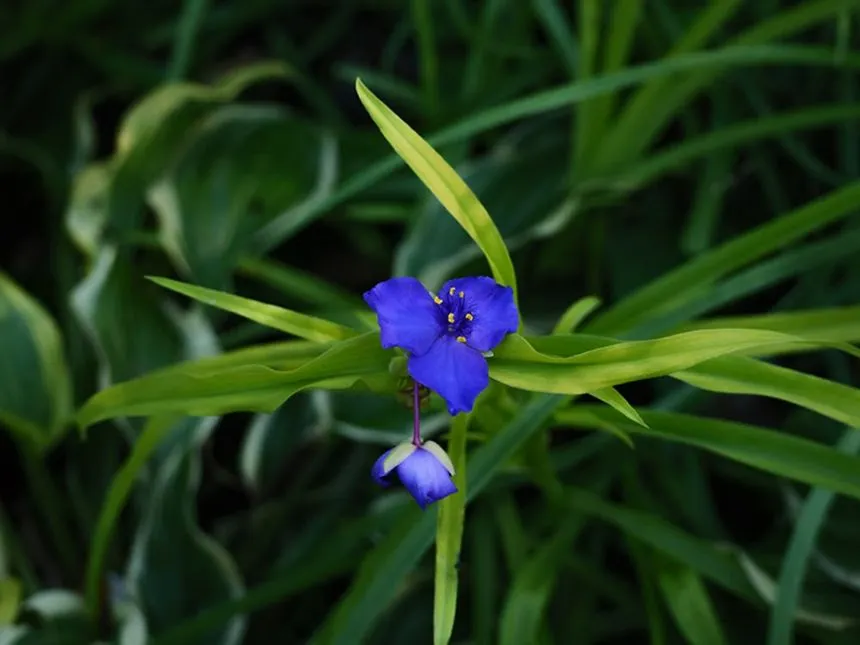
2: Birdbill Dayflower
- Hardiness Zone – USDA growing zone 8-10
- Symbolism – short lifespan, beauty, elegance
- Uses – medicinal and ornamental uses
The botanical name of the birdbill dayflower is Commelina dianthifolia. It is a small tuberous perennial wildflower commonly found in the southwestern United States and northern Mexico.
But why is it liked by garden enthusiasts? – Because of the contrast it creates with its deep blue blossom and glossy, dark green leaves.
According to the US Forest Service, the blossoms of this species open in the daylight and wither by mid-day. The flower has medicinal properties. I have often seen my grandmother using the flower to make herbal tea for treating sore throat or joint pain.
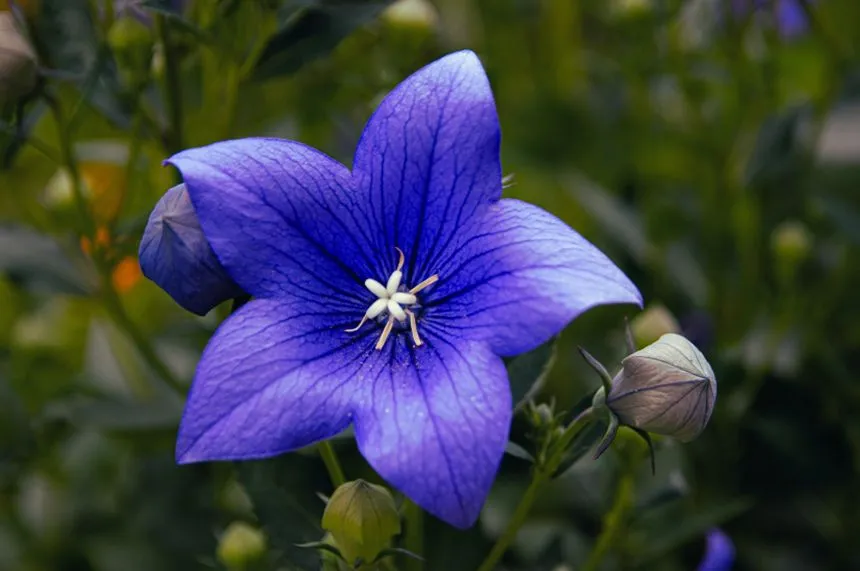
3: Balloon Flower
- Native Region – East Asia
- Flower Type – Perennial herbaceous
- Care Needs – Low to moderate
If you are living in USDA zones 3-8, you may have seen this stunning balloon flower blooming profusely in large landscapes. The flower got its name after its puffy, balloon-shaped blooms. I also have some varieties of this genus in other color shades like pink and white.
It is native to China, Korea, Japan, and Siberia. Gardeners prefer growing them in areas with proper sunlight, loamy and fertile soil. Water them moderately only when the top few inches of the soil feels dry.
4: Bluebells
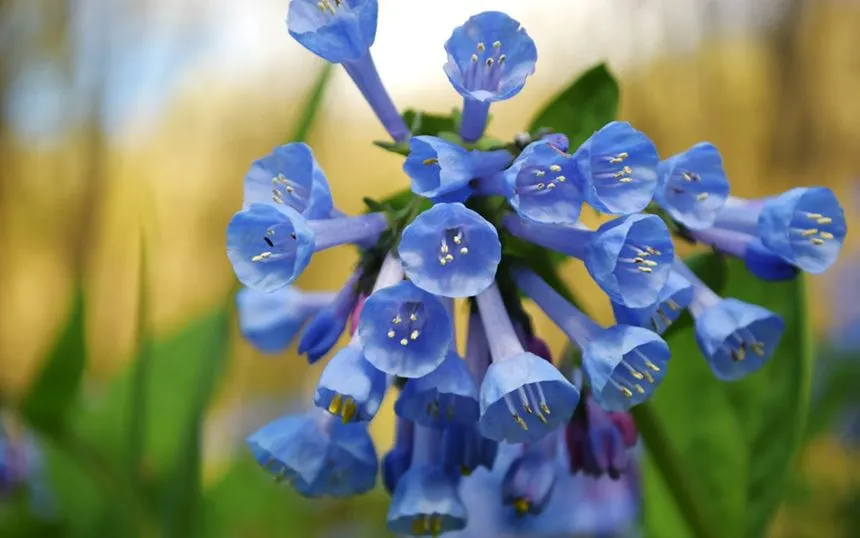
- Native Range – Western Europe
- Hardiness Zone – USDA 4-9
- Symbolism – Gratitude, humility, and love
Bluebell is a bulbous perennial wildflower mostly planted for its unique bloom shape. I usually pair these with pink and yellow flowers to add a pop of color to my front lawn. You can also use this blue flower for gifting. It is known to symbolize gratitude, happiness, and a love that knows no bounds.
Many flower enthusiasts and botanists grow this species for their unique appearance. Because of its low-maintenance needs, it is very popular among beginners also. It is also the UK’s most loved spring flower.
5: Blue Violet
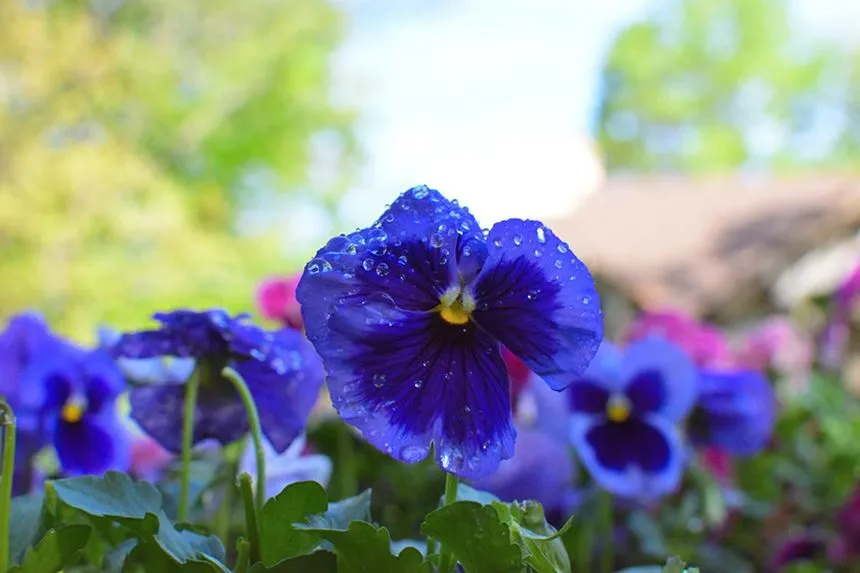
- Native Range – Central and eastern North America
- Uses – Culinary, medicinal, and ornamental uses
- Bloom Time – Early spring to early summer (March to May)
Blue violet is commonly found in the meadows of North America. What makes it one of the most stunning flowers is its heart-shaped petals. The contrasting yellow center of the bloom is truly eye pleasing. You can grow this species in large landscapes to attract beneficial pollinators.
I was amazed to see the medicinal benefits of the blue violet. The blossom is used to make herbal teas which are mostly used to treat headaches, digestion issues, and joint pain. I would definitely like to try making dips or sauces using this.
Since it is a popular February birth flower, you can use it for gifting purposes. Looking for gift ideas? Explore this complete birth month flowers list, along with their meanings and curate a customised bouquet for your loved ones.
6: Bluecrown Passionflower
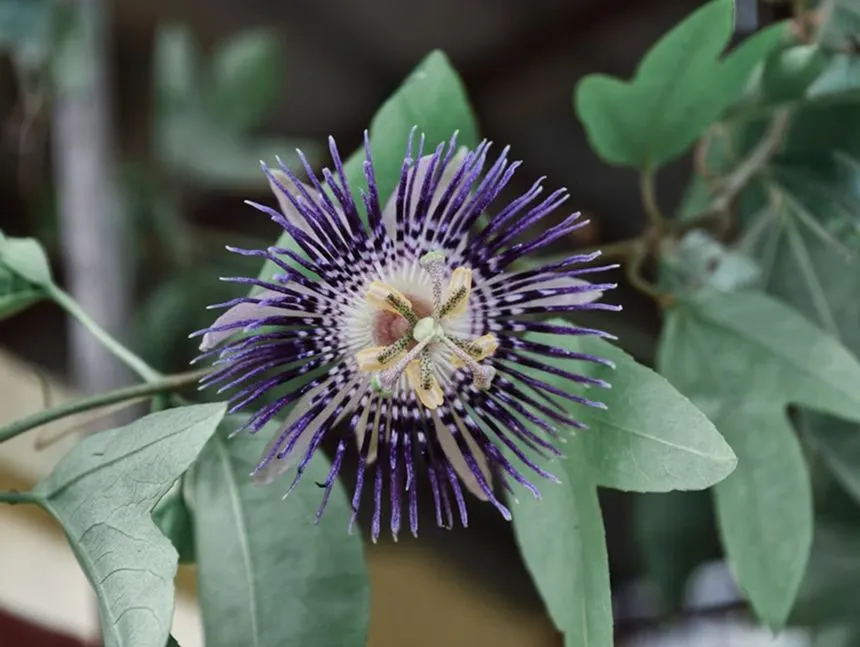
- Botanical Name – Passiflora caerulea
- Hardiness Zone – USDA 6-10
- Bloom Time – Early summer to early fall
According to the NSW Department, bluecrown passionflower is mildly toxic. Ingesting its leaves or fruits can cause vomiting and nausea. This blue flower is a fast growing, climbing vine, native to South America. You can use it as a border cover plant or as a trellis.
The flower thrives in partial shade but can also tolerate direct sunlight. Sow the seeds in well-draining, loamy soil for optimal growth and water moderately. Make sure that you prune the flower in late winter or early spring during the active growing season.
7: Blue Star
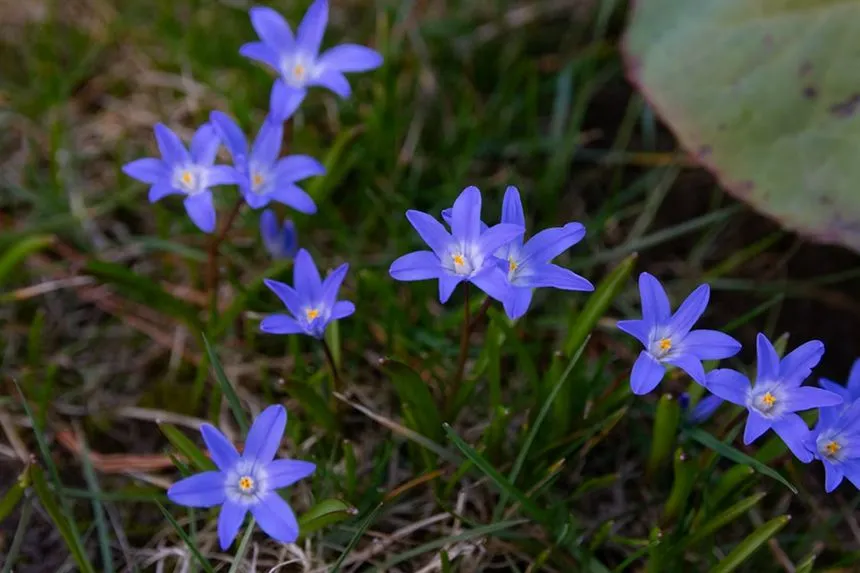
- Scientific Name – Amsonia tabernaemontana
- Symbolism – Resilience, endurance, hope, and guidance
- Uses – Border cover, cottage and rain gardens, pollination
Blue Star – a flower that requires minimal care and instantly enhances any garden space! Isn’t this perfect for first time gardeners? This is a long blooming perennial flower which is often grown as border cover. You will mostly find these on roadside pathways in central and eastern regions of the United Kingdom.
Not only are they easy to maintain, but they also look extremely beautiful and can survive in different climatic conditions. Proper sunlight and organically rich soil are its basic needs.
8: Chicory
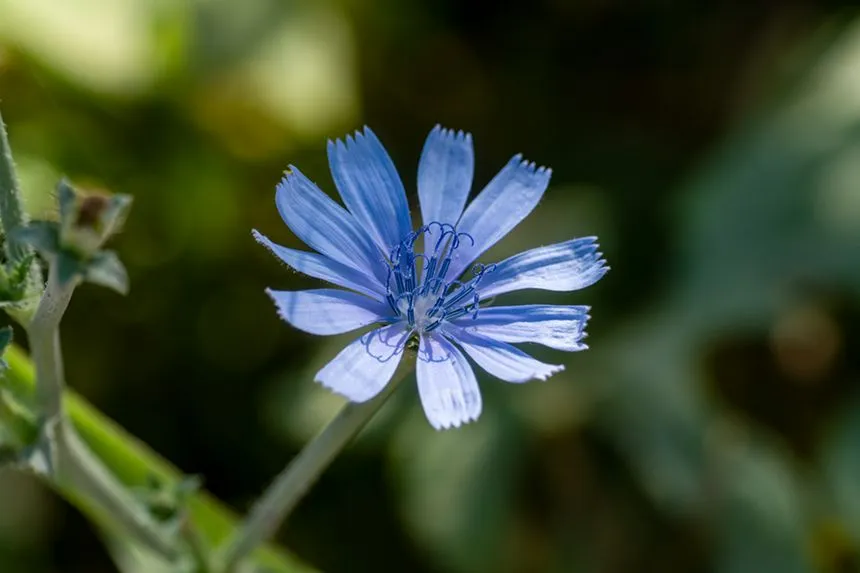
- Scientific Name – Cichorium intybus
- Flower Height – Rigid and upright, 2-5 ft tall
- Toxicity – Toxic (only if ingested in large amounts)
Doesn’t it look like the petals of this flower are made of paper and the edges are cut using a designer scissor?
Chicory is a bright, sky-blue, daisy-like flower that grows about 1-2 inches wide. It blooms from mid summer to early frost season. The lifespan of an individual bloom is very short. It blooms profusely under bright sunlight but typically curls up during the evening. I have also used this flower for many culinary purposes. Toss these into salads or make herbal teas!
You can also gift chicory flowers to your loved ones as they symbolize faith, protection, love, and a spark of undying passion.
9: Clematis
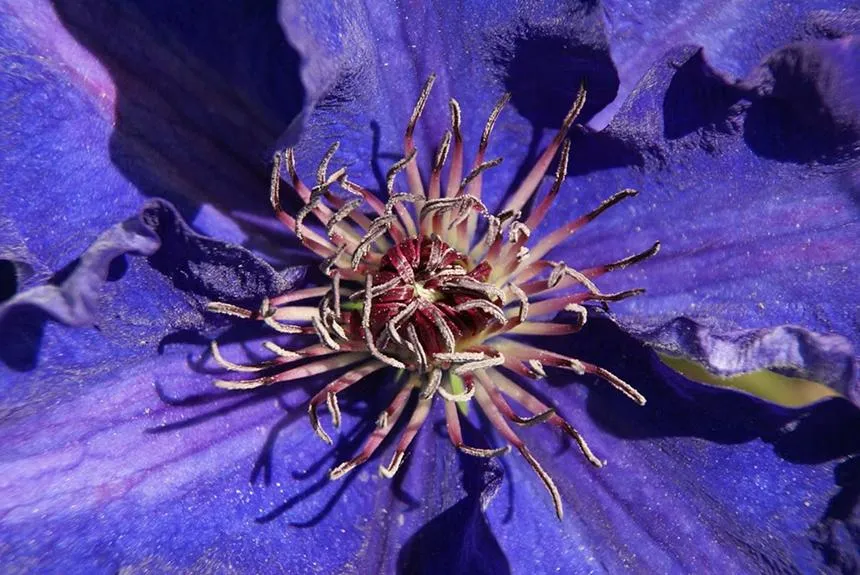
- Flower Type – Evergreen climbing vine
- Scientific Name – Clematis spp
- Care – Low to moderate
Clematis is a deciduous, evergreen, climbing vine that grows as an upright shrub. This floral species can be found in many different colors such as purple, violet, pink, red, white and yellow. I usually pair blue clematis with yellow ones to make my backyard look a bit quirky.
It attracts beneficial pollinators like bees, butterflies and hummingbirds. Most species are native to Asia and thrive in USDA hardiness zones 4-11. You can grow them as border cover or ground cover flowers.
10: Columbine
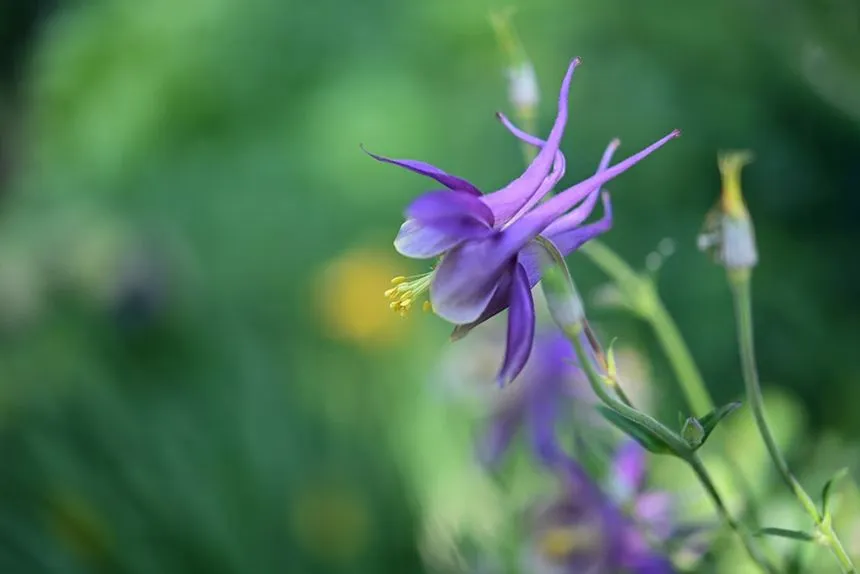
- Scientific Name – Aquilegia
- Care Needs – Full sunlight and well-drained soil
Columbine is a beautiful perennial flower that produces bell-like blooms. The fact that it blooms during autumn when all other flowers go dormant makes it extra special. This blue flower can be grown under full sunlight. You can sow them in well-draining soil that is organically rich.
It is easy to grow and is most commonly found in gardens. Grow them as border cover or ground cover flowers – the choice is yours! The center of the flower produces rich nectar which attracts beneficial pollinators.
11: Cornflower
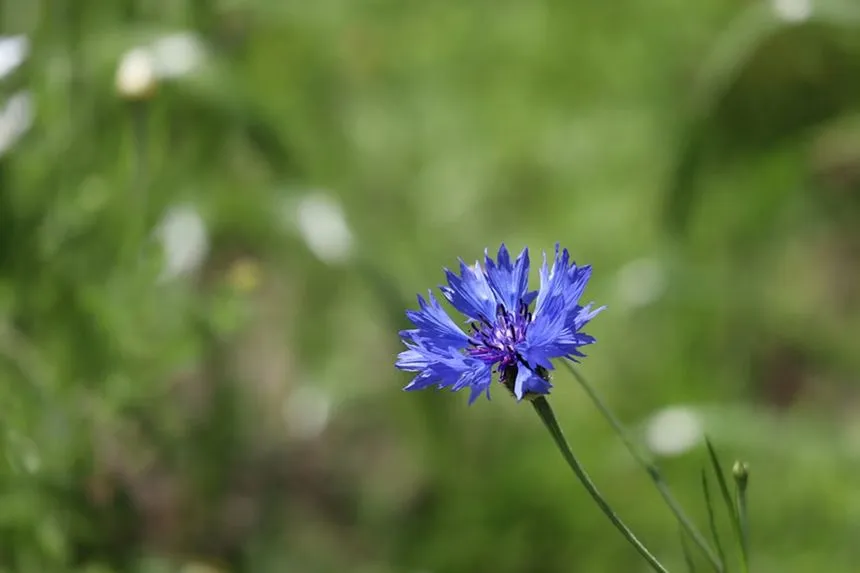
- Scientific Name – Centaurea cyanus
- Common Name – Bachelor’s Button
- Hardiness Zone – USDA growing zone 2-11
Cornflower is popularly called the bachelor’s button. It is a hardy, annually growing species. The watering and sunlight needs of this blue flower are average and it is like a magnet for butterflies, bees, and other beneficial pollinators. I usually use them as cut flowers to make bouquets or for floral arrangements.
Growing upright, the height of the species is usually about 12-36 inches and it spreads about 6-12 inches wide. If you are just stepping into your gardening journey, cornflower is your go to option – it is low maintenance and versatile.
I have added the remaining 10 blue flowers in the table for your reference. These are not only easy to grow but can also add a fresh flair to your garden. Use them for gifting or to add character to your indoor space, the choice is yours!
| Flower Name | Image | Description |
| Daisy | 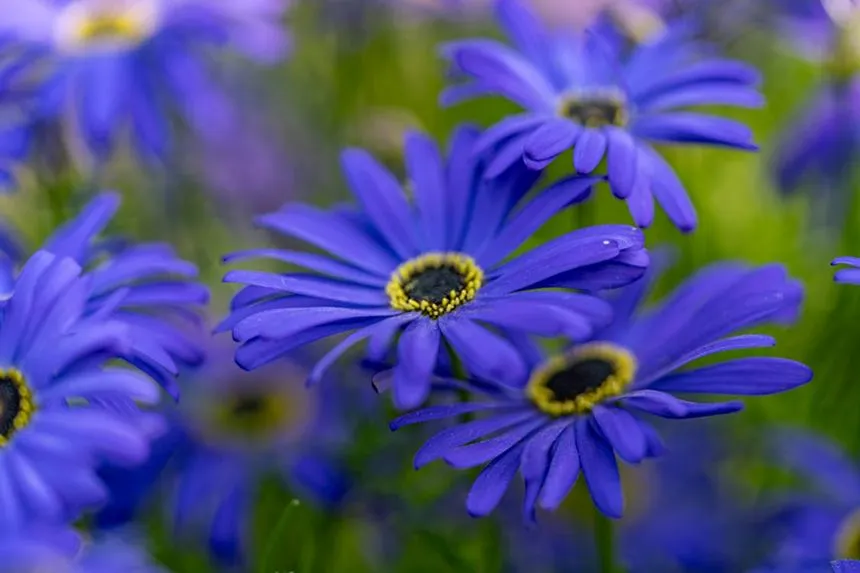 |
|
| Desert Bluebells | 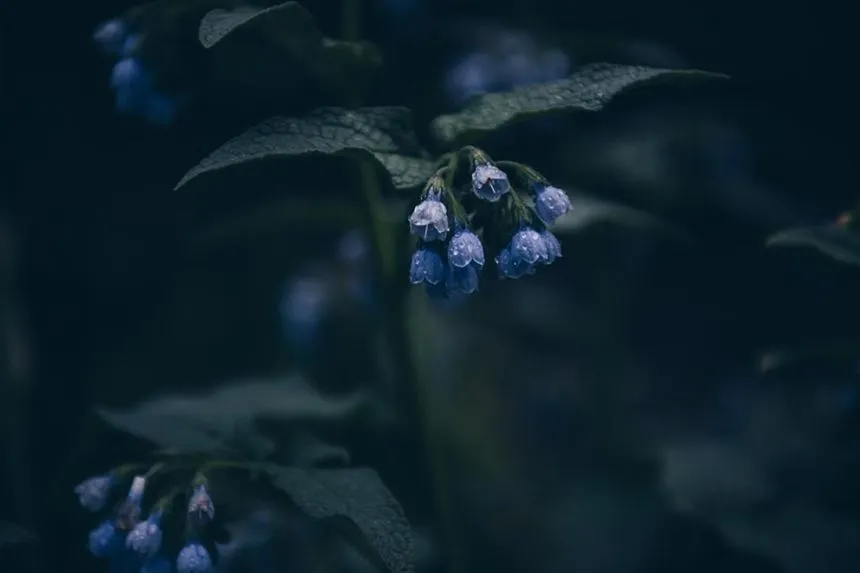 |
|
| Dwarf Morning Glory | 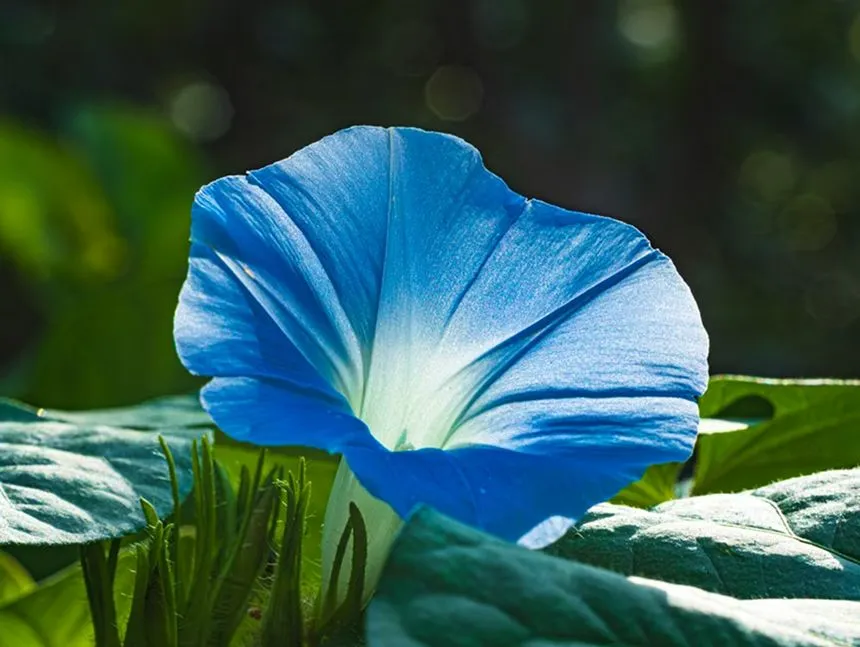 |
|
| Empire Blue Butterfly | 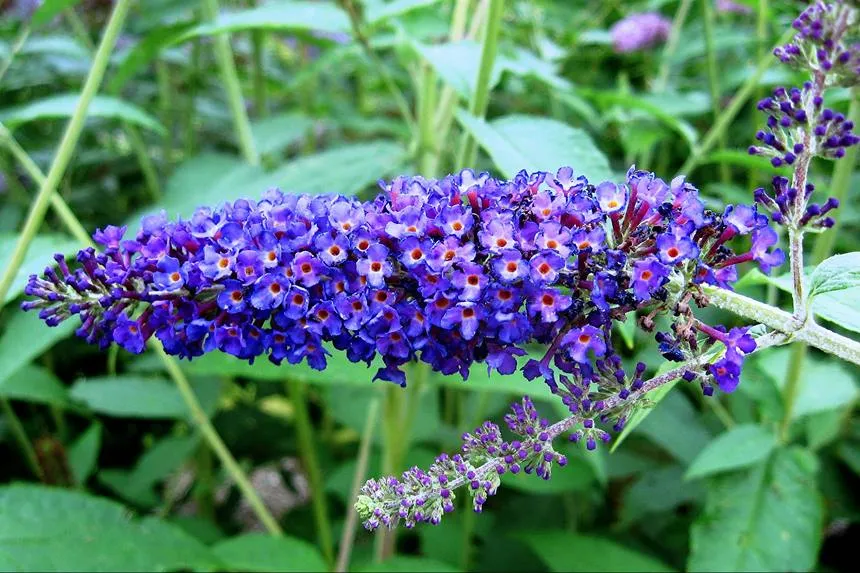 |
|
| Fairy Thimbles | 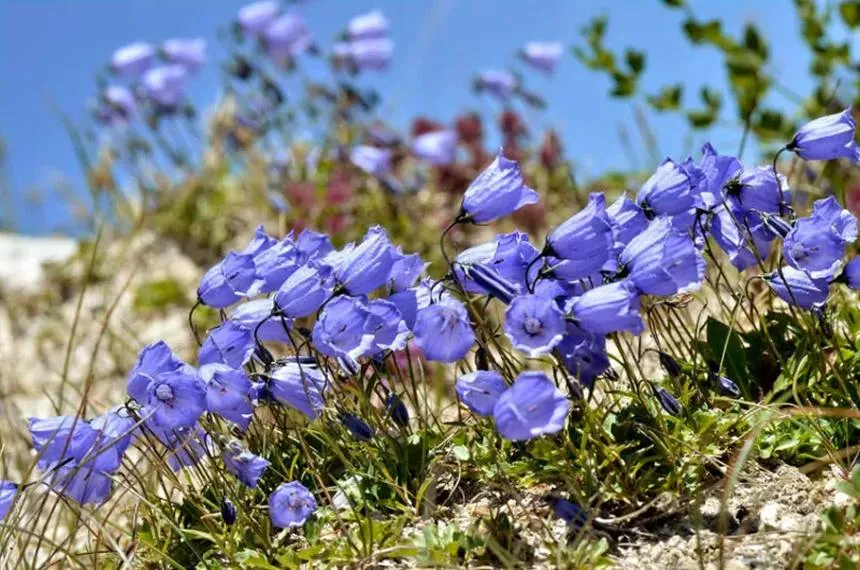 |
|
| Blue False Indigo | 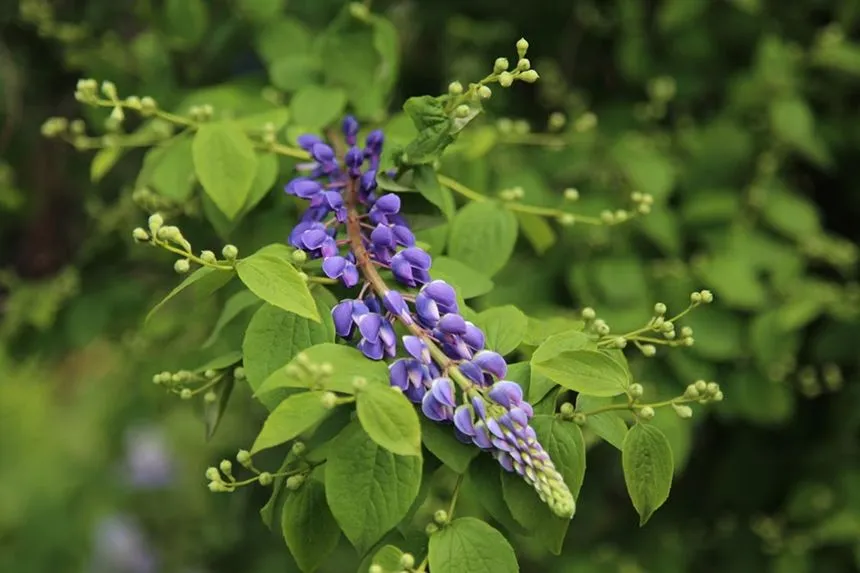 |
|
| Flax | 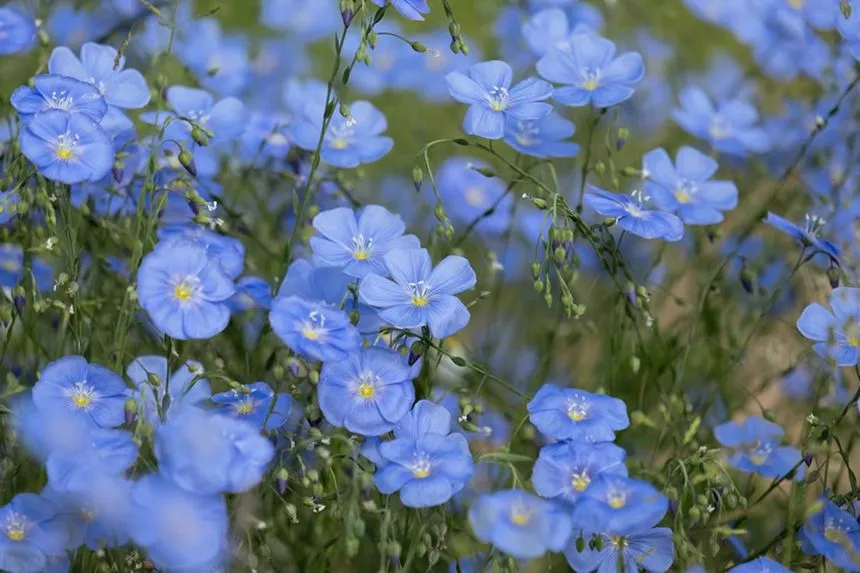 |
|
| Forget Me Nots | 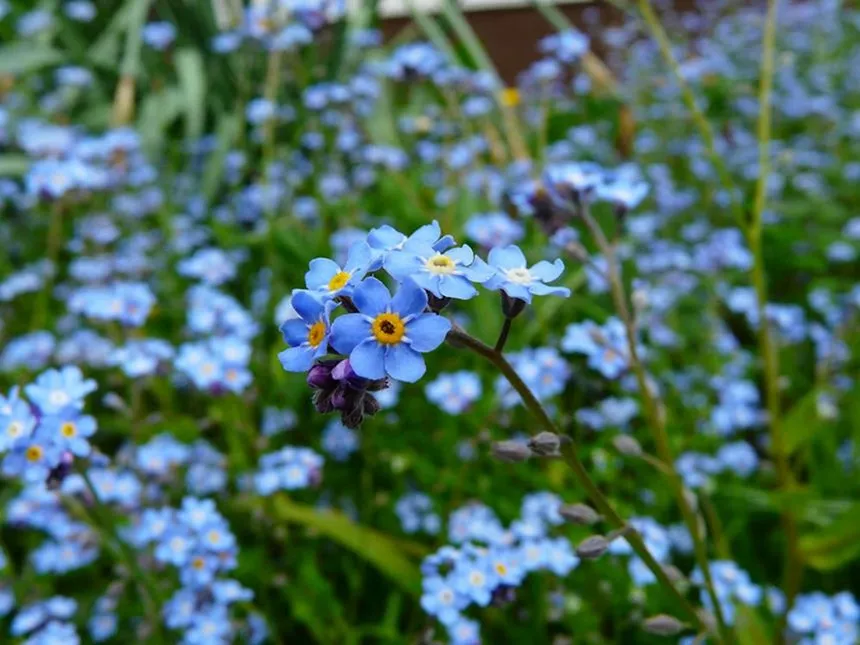 |
|
| Gentian | 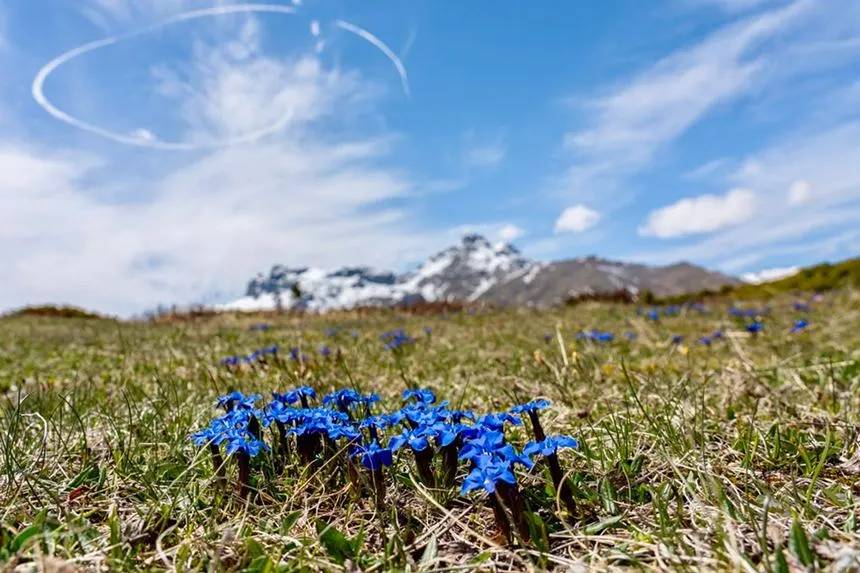 |
|
| Globe Thistle | 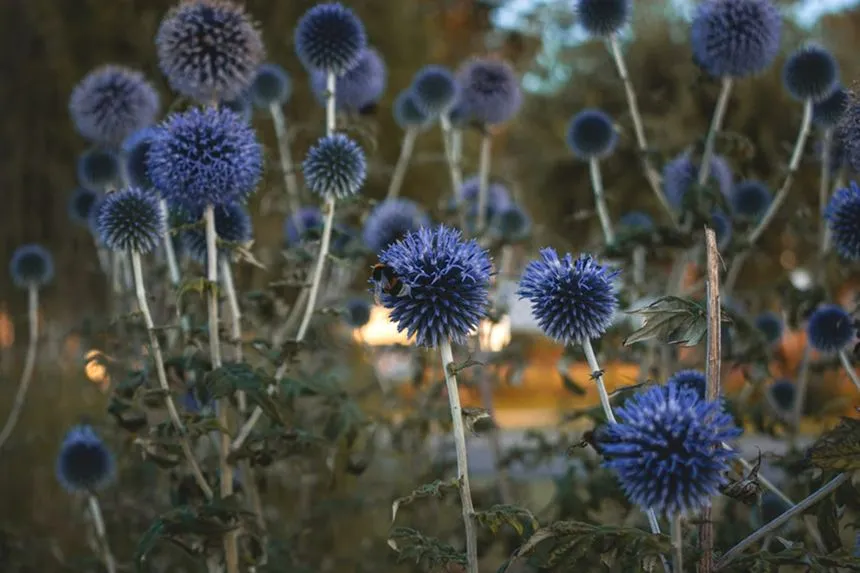 |
|
10 Stunning Plants With Blue Flowers For Your Garden
Blue flowers are mainly used to add a pop of color to any garden or landscape. You can pair them with red or yellow flowers to create a beautiful contrast. From easy growing varieties to rarely found flowers, this section covers 10 stunning plants that produce blue flowers.
| Hydrangea | Salvia | Cornflower | Iris | Lobelia |
| Gentian | Brunnera | Globe Thistle | Delphinium | False Indigo |
1: Hydrangea
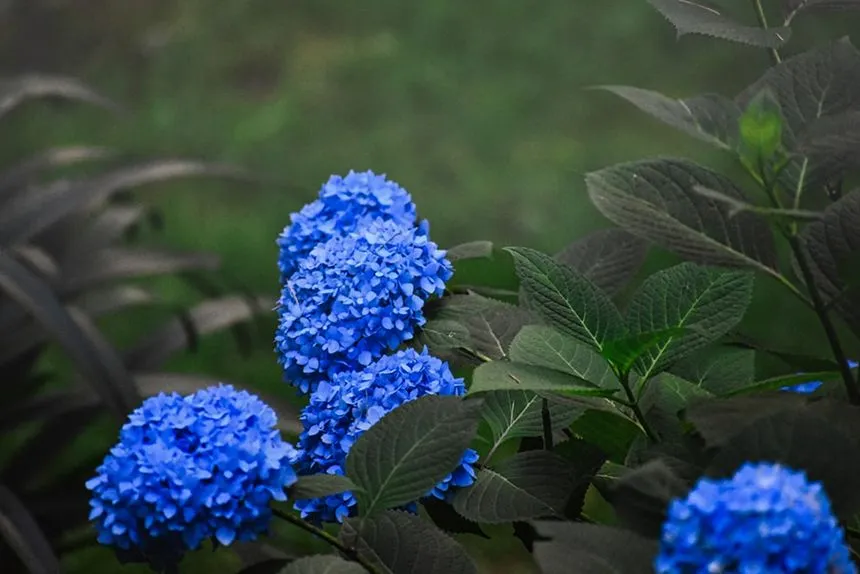
Hydrangea is a popular evergreen deciduous flower. It is a popular wedding flower used for decoration because of its globe or cone-shaped blooms.
BUY NOW – Make your garden vibrant with these stunning blue hydrangeas
2: Salvia
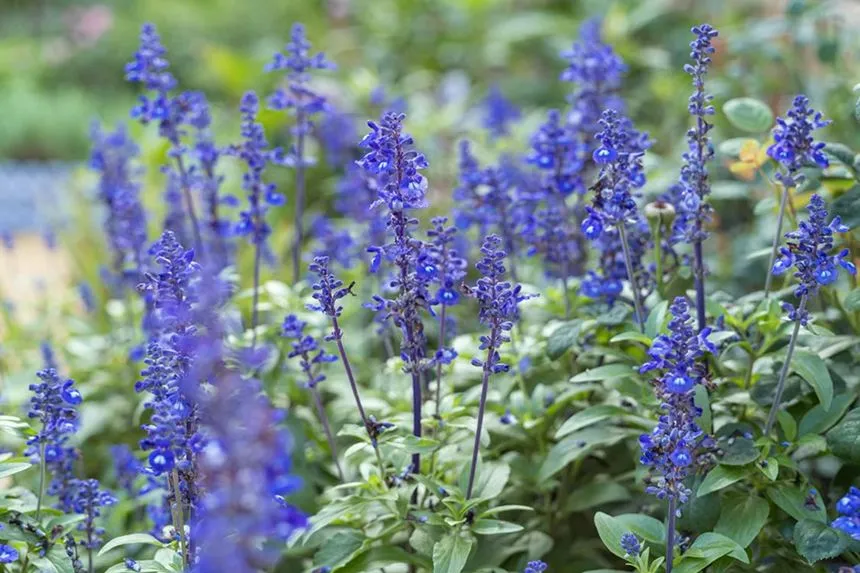
Thinking of adding dark blue flowers to your garden? Salvia is the perfect choice. This plant produces tall and upright spikes all summer long. The bloom symbolizes good, health, wisdom, and sometimes immortality.
3: Cornflower
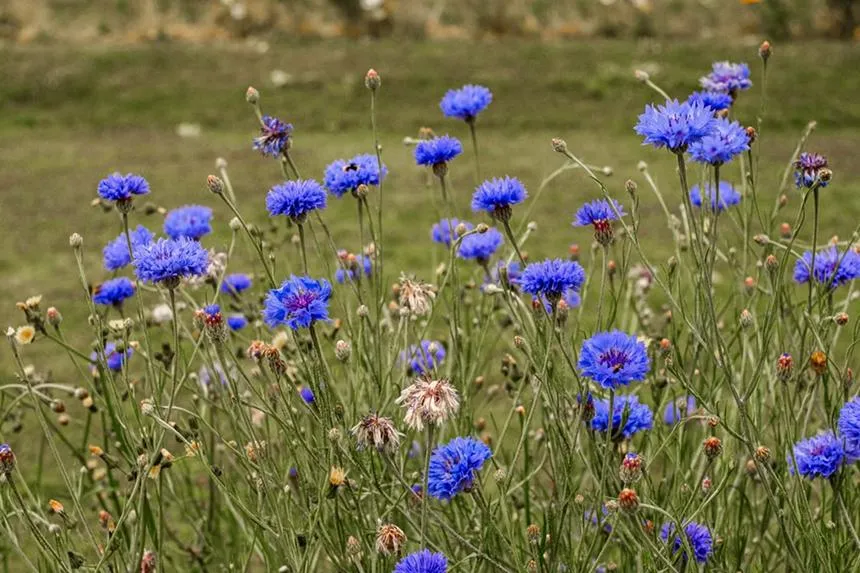
Cornflower is also called the bachelor’s button. It is native to Europe. The flower is often grown in large landscapes for pollination as it attracts bees, butterflies, and hummingbirds.
4: Iris
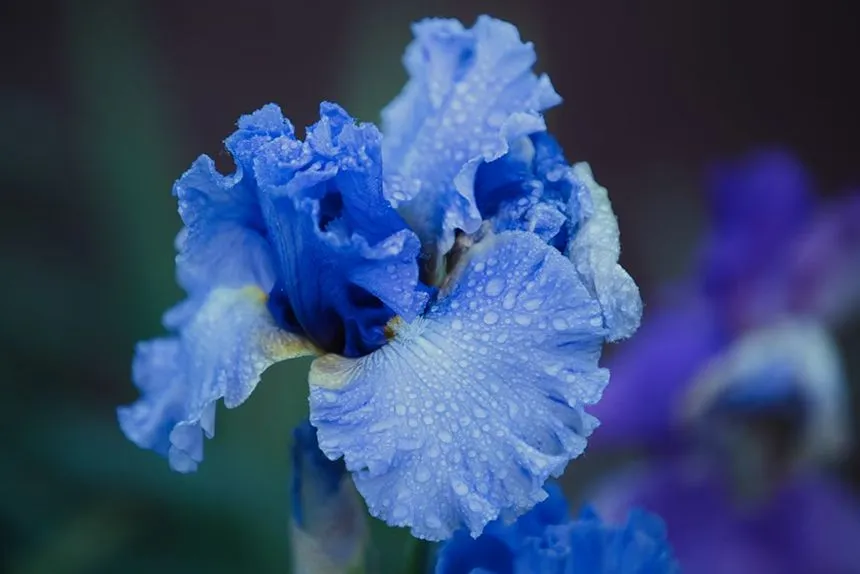
The blue iris plant is a rare variety. It gets its name from a Greek goddess — a messenger between heaven and earth. I have mostly seen this species being used for wedding floral arrangements or for home decor. Planning to use them for gifting? Understand the meaning of the blue iris flower before using them in a bouquet.
5: Lobelia
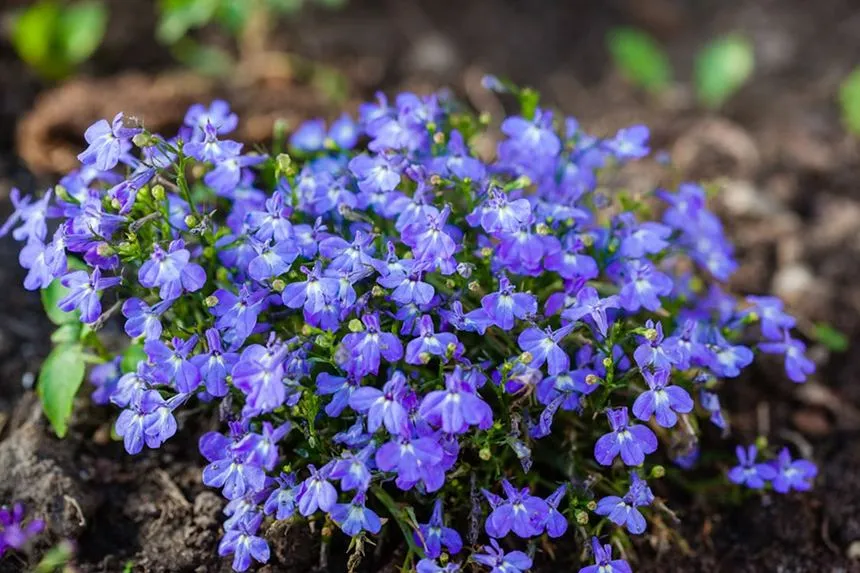
Lobelia generally thrives in USDA hardiness zones 9-11. It grows about 6–12 inches tall and spreads 12–14 inches wide. One of the most beautiful blue flowers — because of its rich hues, I have mostly seen this growing in hanging baskets or ceramic planters.
6: Gentian
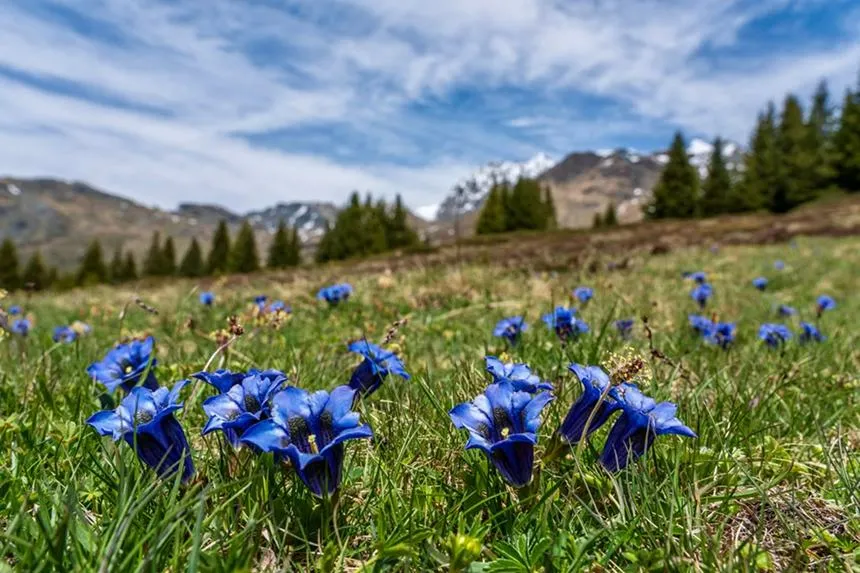
Did you know that the roots of this blue flower were used to treat swelling in the liver or to ease gastric distress? Because of the upright growth structure of the gentian plant, it is often associated with victory.
7: Brunnera
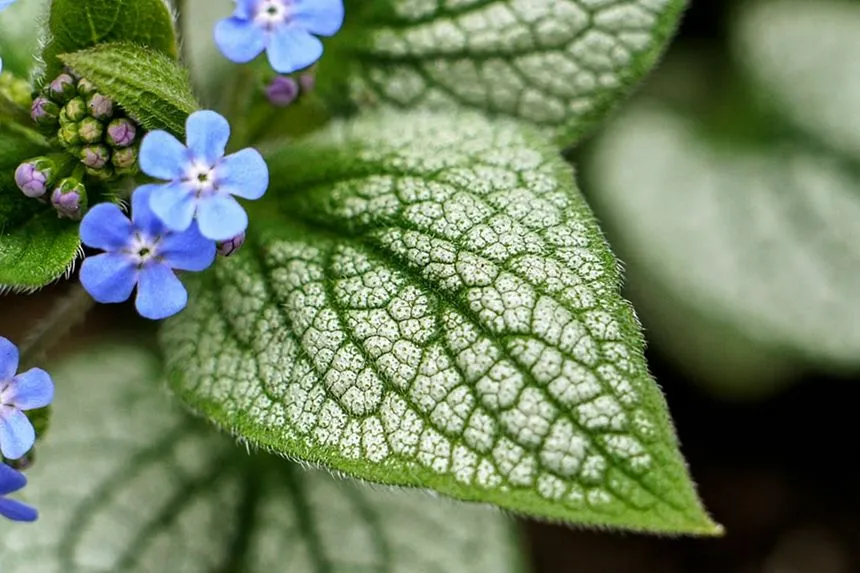
Brunnera features tiny sky blue flowers, mostly in clusters which look similar to forget-me-not flowers therefore; it is commonly called as false forget me not. The leaves of this blue plant are liked by many people because of their beautiful design.
8: Globe Thistle
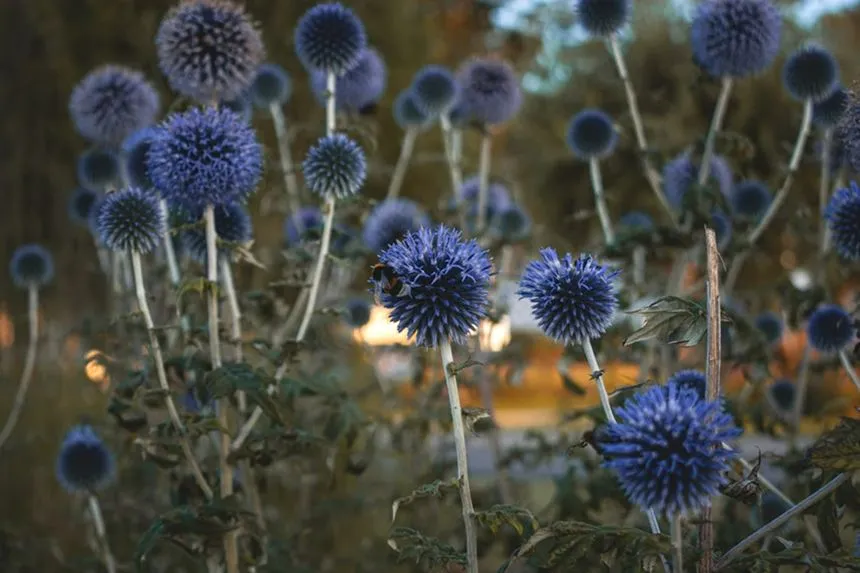
The scientific name of this flower is Echinops spp. It is a perennial flowering plant. Globe Thistle prefers growing from late June to September, mainly in USDA hardiness zones 4-9.
9: Delphinium
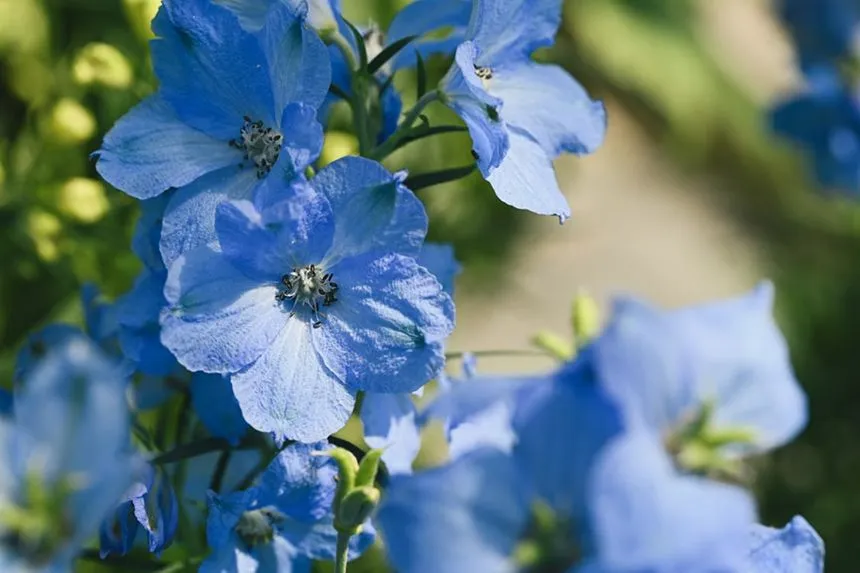
Blue Delphinium is a breathtaking summer flower. It is often used as a cut flower in bouquets. Commonly called larkspur, this blue flower is poisonous to humans and animals.
10: False Indigo
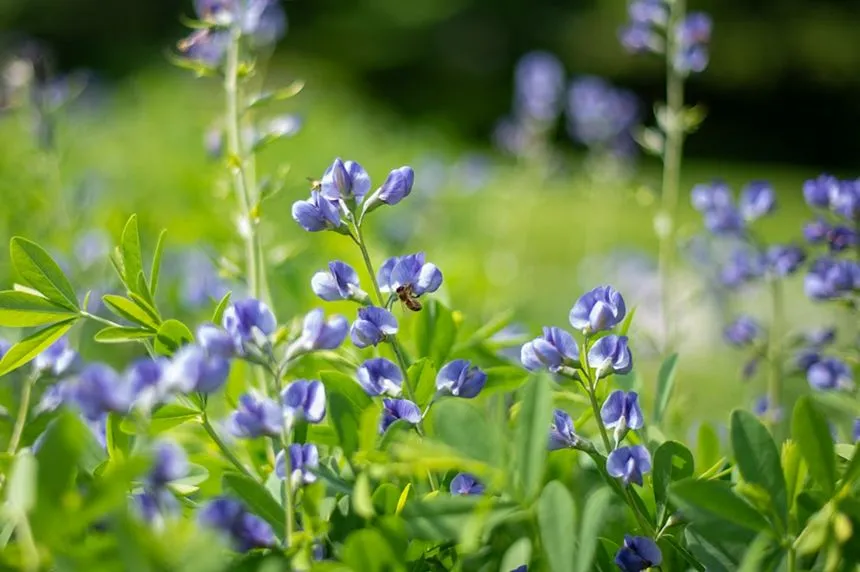
Want to add a tough and long-living perennial flower to your balcony garden? False indigo is your perfect option! The pea-shaped flowers in different shades of blue look so stunning.
10 Blue Flowering Trees: Trees That Bloom Blue Flowers
| Tree Name | Image | Description |
| Ceanothus | 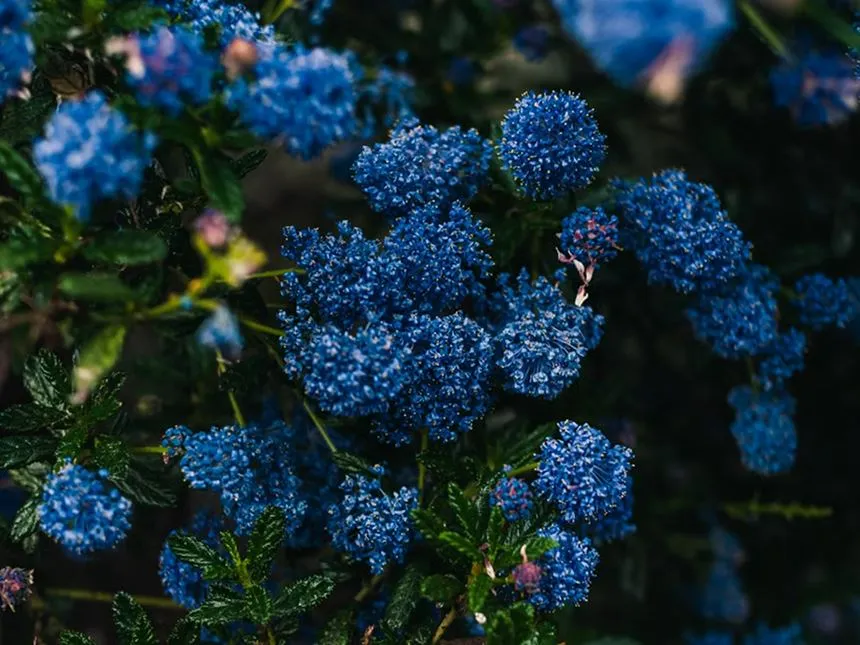 | Ceanothus is an evergreen flowering tree with blue flowers. It is commonly called the California lilac. |
| Orchid Tree | 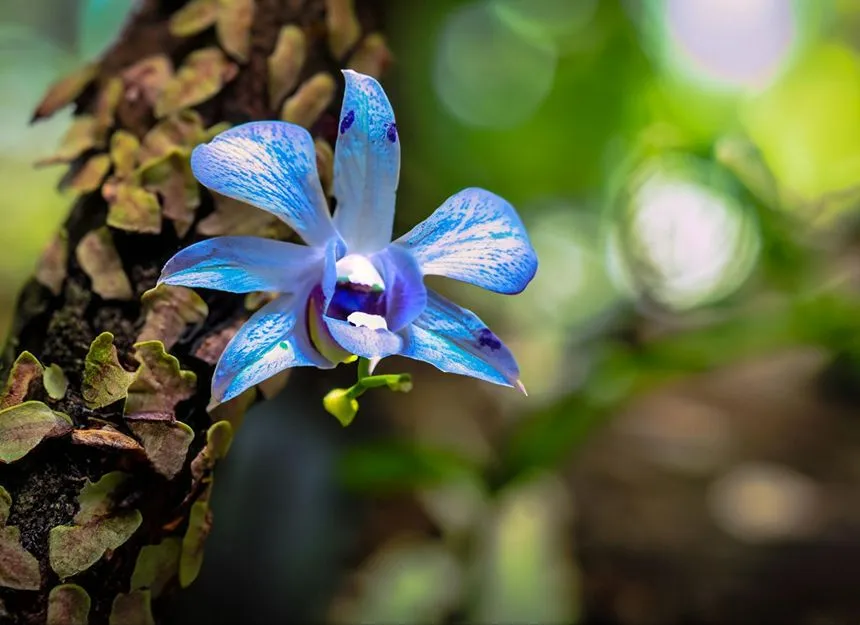 | The blue flower orchid tree can be an exotic addition to your landscape. It attracts many beneficial pollinators. |
| Jacaranda Tree | 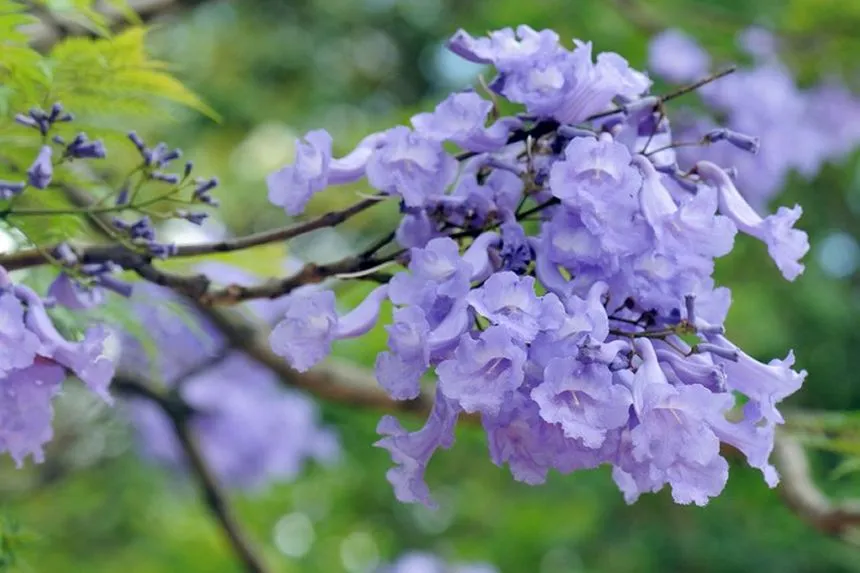 | Jacaranda tree generally blooms blue flowers from late spring to early summer. It is absolutely gorgeous and very easy to grow. |
| Ironwood | 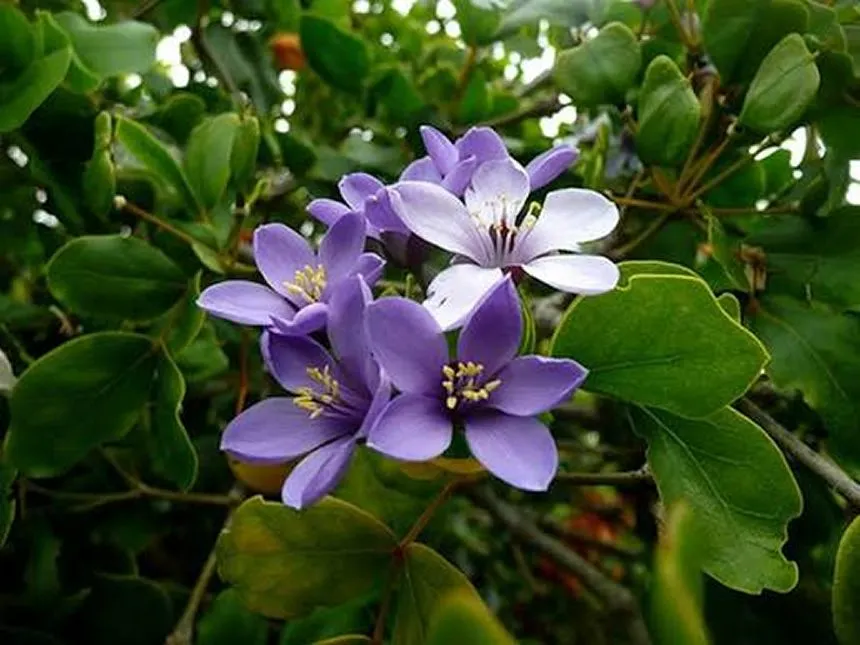 | Ironwood tree is native to Southeast Asia. It is a medium-sized tree that produces violet blue flowers and has dark green leaves. |
| Rose of Sharon | 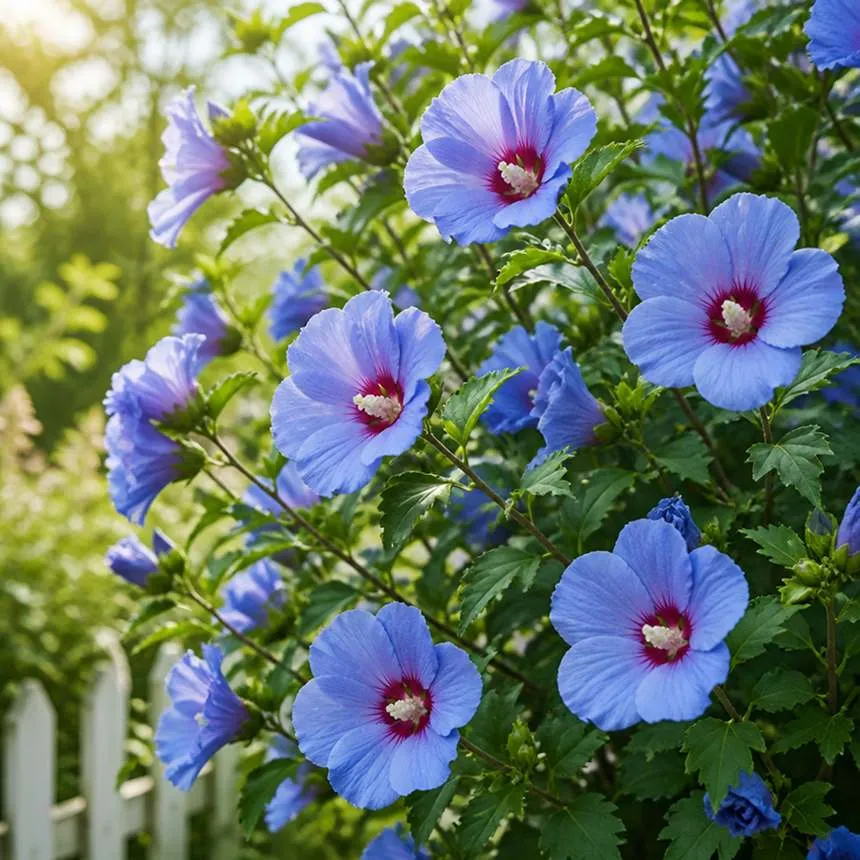 | Rose of Sharon is a hardy hibiscus flower variety. It is one of the most commonly planted flower in a garden because of its beautiful appearance. |
| Paulownia | 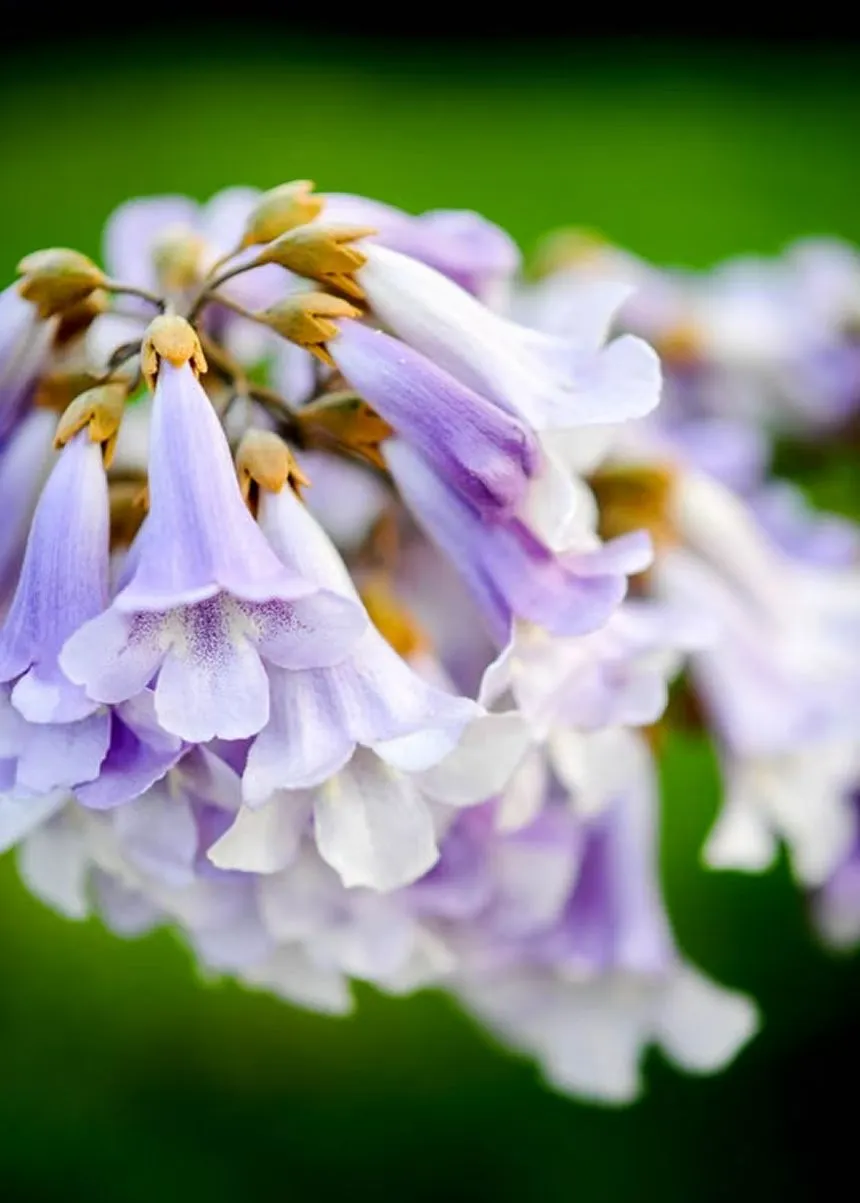 | Paulownia is a princess tree native to China. It is one of the fastest growing trees in the world and thrives in USDA growing zones 5-8. |
| Texas Mountain Laurel | 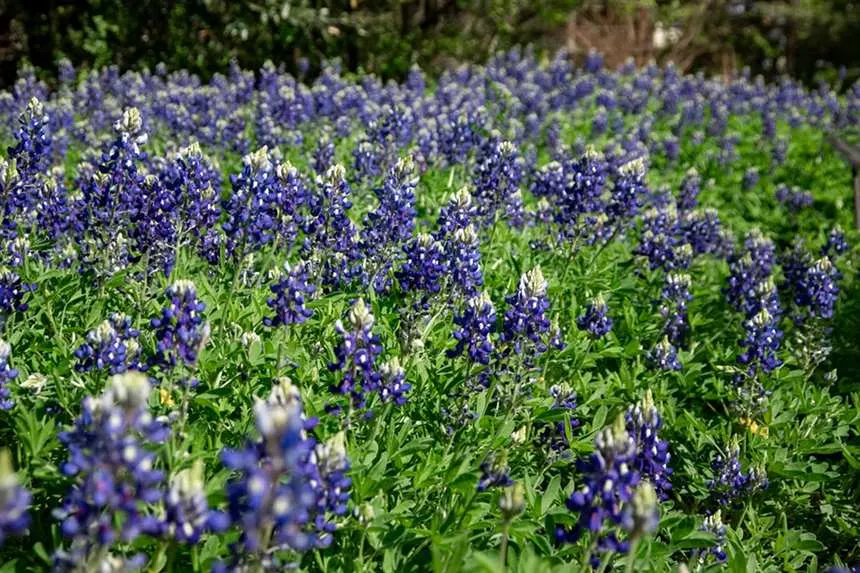 | This is an evergreen tree that blooms purple blue flowers. It also has a sweet scent and leather-like foliage. |
| Wisteria | 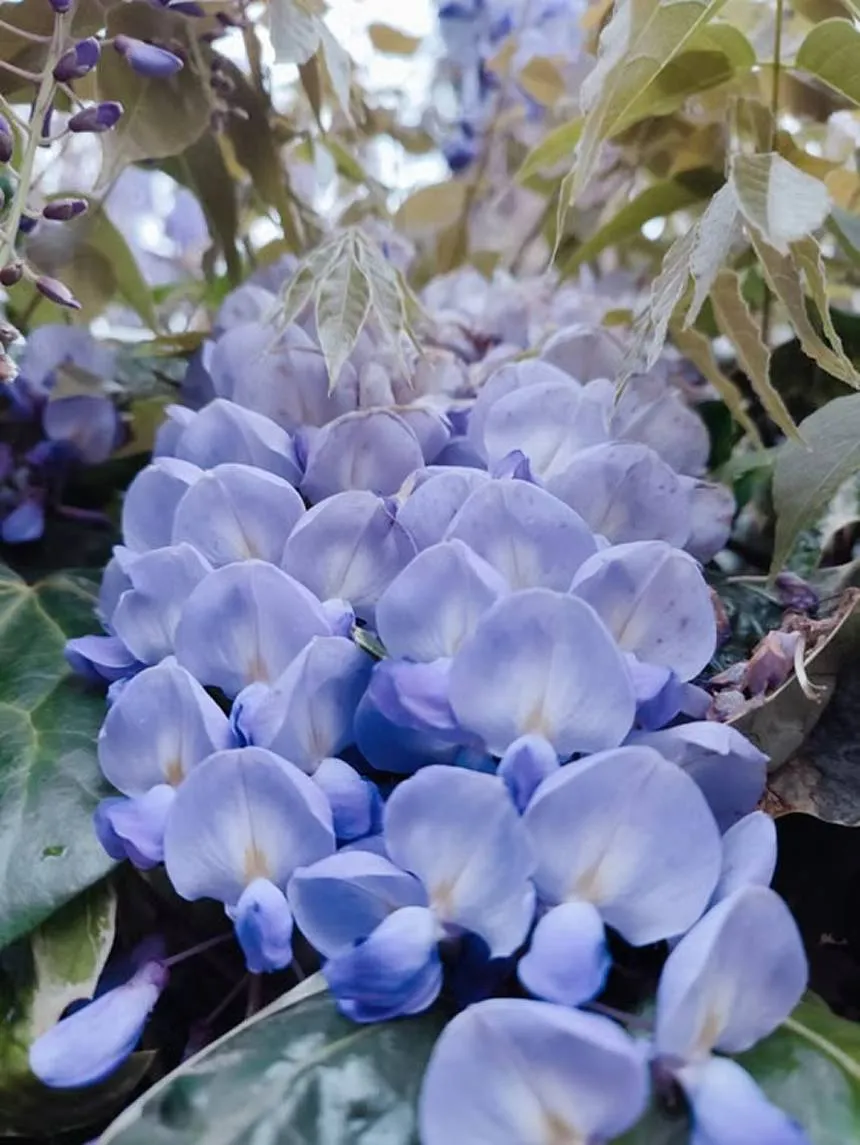 | Blue wisteria is a spring-blooming flowering tree. The droopy flowers and arching branches makes the tree stand out from others. |
| Blue Buddleia | 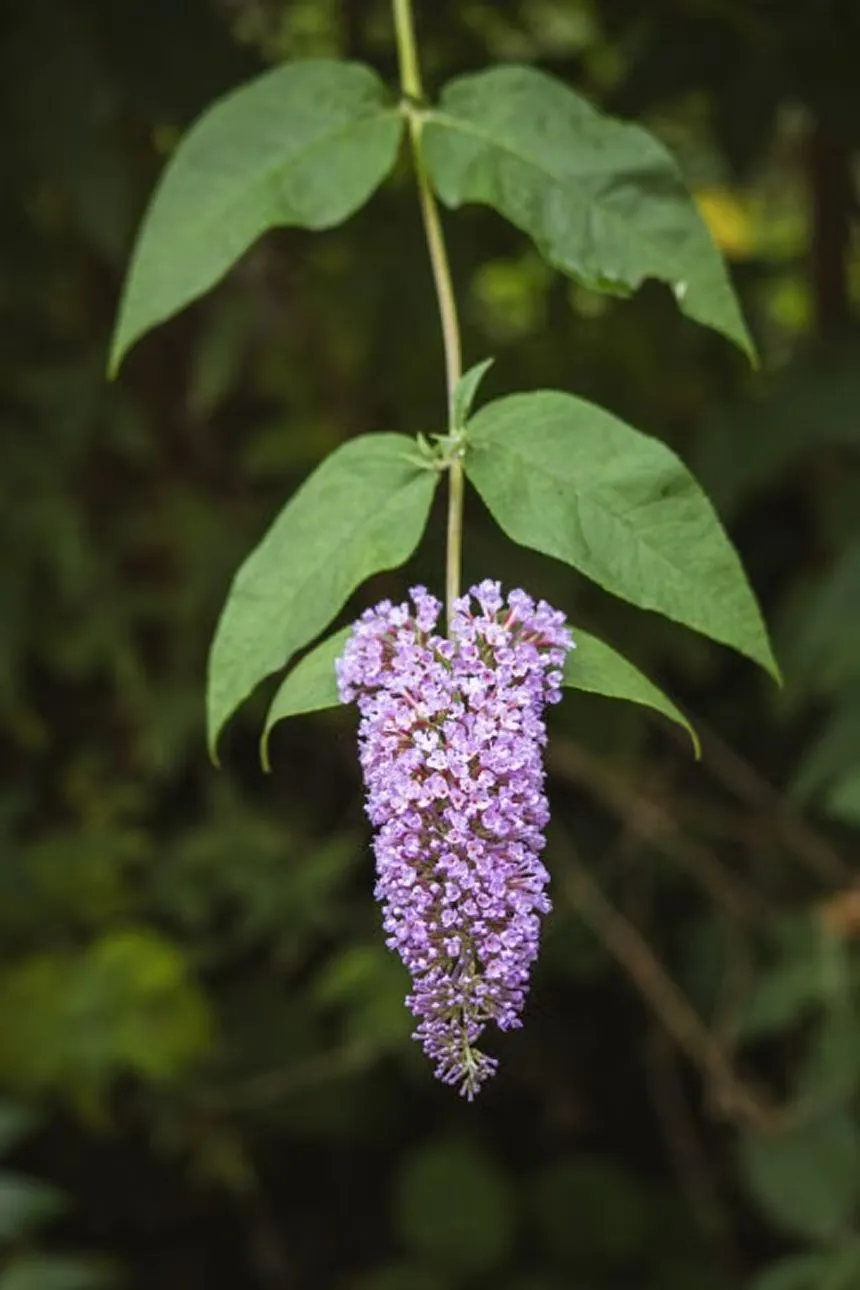 | Blue Buddleia is a blue flowering butterfly bush which produces hardy flowers. It is known to attract pollinators. You can easily grow this in your front lawns or backyards. |
| Blue Rhododendron | 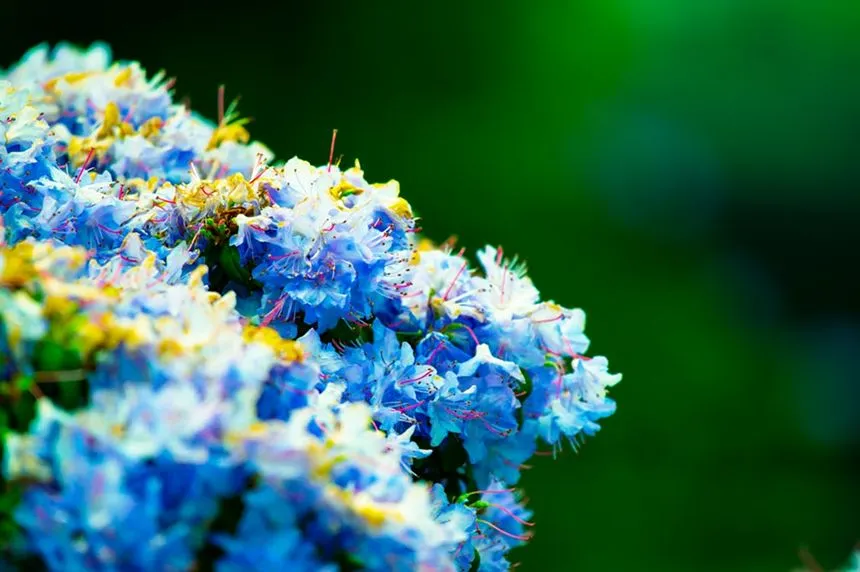 | A blue rhododendron can survive in USDA growing zone 3-4. The trumpet-shaped flowers that appear in clusters can make any garden look stunning. |
Final Words
From tiny forget-me-nots to showy hydrangeas, blue flowers come in more variety than you might expect. In this article, I have covered different shades of blue flowers which have unique meanings and can be used for many distinct purposes. I mostly use these beautiful blooms for decoration. You can use them for gifting or to enhance the visual appeal of your garden.
All the blue flowers mentioned in the article can be found commonly anywhere and are very easy to grow. You can also pair them with red or yellow flowers to make a stunning contrast.
FAQs About Blue Flowers
Are there any naturally blue flowers?
Yes, there are many natural blue flowers. But this color is very rare and not common in plant world. You will often find blooms in different shades of blue such as deep blue, violet, or deep purple.
What are the names of blue flowers?
Forget me not, cornflower, geranium, brunnera, globe thistle, and false indigo are some popular names of blue flowers. These are mostly used for gifting or decoration purposes.
What is the rarest blue flower?
The Himalayan Blue Poppy is one of the most rarely found blue flower species. It typically blooms from late spring to early summer. You can use these as cut flowers or in your balcony garden.
What is the prettiest blue flower in the world?
The blue orchid is said to be one of the most prettiest blue flower. Its blooms appear in cluster. The species has mild fragrance and you can grow them easily as an indoor plant also.
Lotus Flower Meaning: Symbolism, Colors & Spirituality
[…] of self, emotional attachment, and worldly desires behind with the help of awareness and intellect. Blue flowers in general mean tranquillity, trust, and […]
Flower Colors and Their Meanings: A Complete Guide
[…] Read the full guide to Blue Flowers. […]