The color of flowers can set the entire mood of a bouquet, wedding decoration, garden setting, or even the person receiving it.
Where red is romantic, yellow brings out a cheerful impression, and white symbolizes peace. Thus, flower color meaning matters the most when choosing blooms for gifting, celebrations, decor, gardens, or sympathy.
Flower color also affects how a garden feels. Soft pinks and whites create calm; orange, yellow, and red are colors of warmth.
So, when picking flowers, think about the mood you want to create. Even a simple thought can make the entire arrangement different.
However, flower symbolism is not universal; it may change with region, culture, occasion, or personal preferences.
This guide explains the traditional symbols of flower colors. Let’s discover what flowers we should use to uplift the entire vibe of the occasion.
A Quick Overview:
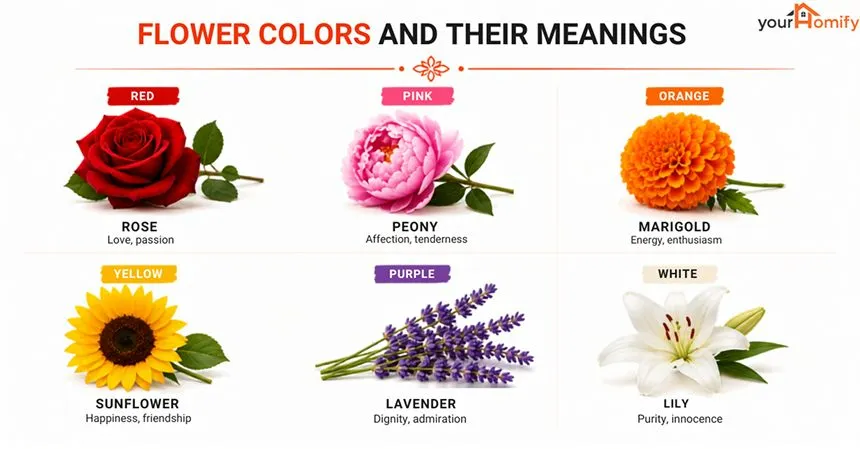
| Color | Meaning |
| Red | Love & passion |
| Pink | Affection & gentleness |
| Yellow | Happiness & friendship |
| White | Purity & peace |
The Science Behind Flower Color
Ever wondered why flowers have different colors? The answer begins with biological pigments.
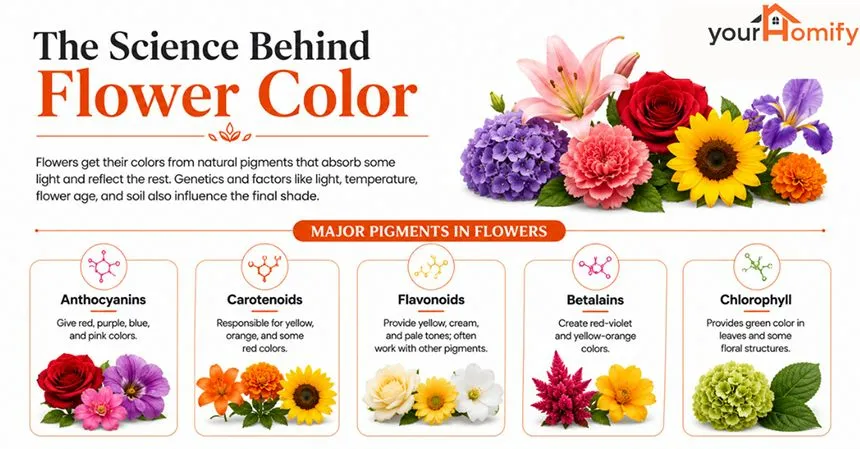
The natural compound absorbs some colors from the wavelength of light and then reflects others, the colors we see in the petals of the flower.
Another determining factor in the placement of different colors on a flower is genetics. Other factors such as light, temperature, flower age, and soil conditions can influence the final shade of the flower.
Here are the major pigments involved in the formation of flower color:
– Anthocyanins: The water-soluble plant pigments that give flowers red, purple, blue, and pink colors. The color may depend on the type of anthocyanin and the conditions inside the plant.
– Carotenoids: Responsible for giving yellow, orange, and sometimes red colors to flowers like marigolds and sunflowers, these pigments are fat-soluble.
– Flavonoids: This broad group of plant compounds provides yellow, cream, and pale tones and is capable of working in collaboration with other colors.
– Betalains: It is found in certain plant families and can create red-violet betacyanins and yellow-orange betaxanthins.
– Chlorophyll: A universally present pigment that provides the green color in leaves and can also contribute to the green coloration in floral structures.
Influence of Soil on Flower Color
Moving forward, we must not neglect one important question:
Can soil change a flower’s color? Well, the answer is “sometimes.”
The classic example of the influence of soil on flower color is the Japanese flower hydrangea. Certain big-leaf hydrangeas can produce flowers that are more blue or pink depending on the type of soil, its condition, and the plant’s ability to access aluminum.
However, we can’t assume that we can change the color of every flower just by changing the pH of the soil. Most flowers have predetermined colors genetically, so pH cannot automatically switch the flower color.
Another change that we witness in the change of flower colors is with age.
Have you ever thought, “Why do some flowers change color as they bloom and age?
That happens because of the pigment concentration and cellular chemistry, which can change as the bloom grows.
How to Dye Flowers Artificially
Color change is not harmful; it can even be useful for pollinators. A flower may look different as it ages, allowing insects to identify whether the flower is newly opened or whether it has already been pollinated.
So, these benefits often lead to another question:
“Can you dye flowers?” The answer will be “Yes.”
It is one of the easiest biology experiments to try at home, known as the “stem-dye method.”
Let’s do it together:
Take a freshly cut white flower, such as a carnation. Now, place its stem in water mixed with food coloring. The fun part is you can take any color of your choice.
As the flower draws up through the vascular system, some part of the dye can travel into the petals, creating a tinted effect.
Want something dramatic? Florists use professional dyes to create stronger colors. The trick is to use white flowers, because they are particularly useful, as the tinted effect is easier to see.
One thing to remember: a dyed blue, green, or rainbow flower is not its natural color. If you are buying flowers for an event, ask the florist whether the shade is natural or artificial.
Flower Color Meaning and Symbolism
Ever wished you could send someone a message without writing or saying anything?
This is when floriography, the “language of flowers,” emerged and became popular during the Victorian era. It was a time when flowers were used to communicate messages and feelings that words can’t express. The flower meanings are still symbolic.
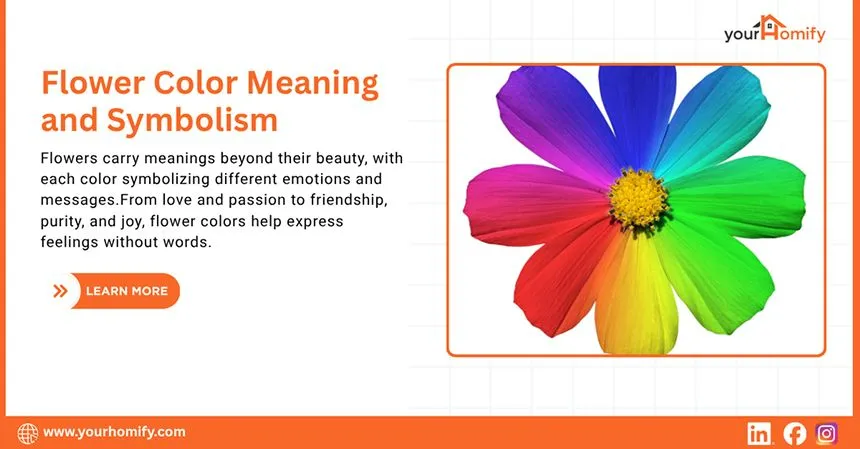
In floriography, the flower species and its color mattered the most. The color adds the real meaning to the flower; for instance, red could suggest passionate love, pink affection, yellow friendship, and white innocence or calm.
But there is a catch! The flower color symbolism is not universal.
Different cultures perceive flower colors differently.
A color that seems positive in one culture may carry an opposite message in another.
The perfect example would be white flowers. In western regions, white flowers are symbols of purity, peace, weddings, and new beginnings, whereas in eastern parts like Asia, white flowers can be strongly associated with mourning and funerals.
The flower type is also quite important. A red rose may not communicate the same meaning as a red chrysanthemum.
Furthermore, occasions matter the most. Giving red flowers on Valentine’s Day creates a different meaning than using red flowers at a formal ceremony.
So, should you strictly follow the symbolism chart? Or are you just overwhelmed with the rules? Don’t stress too much and just follow your heart!
Traditional meanings are useful as starting points, but they do not set strict rules.
For example, if your best friend loves the color yellow, a yellow bouquet will be a symbol of friendship because you both can associate with the color. Personal meanings and feelings are as powerful as color symbolism.
So, if you feel anxious while choosing flowers, just ask yourself these questions.
What am I celebrating?
Who am I giving it to?
What feelings do I want to create?
Once you answer these questions, your choice will become clear.
Flower Colors A–Z: Meaning of Every Shade
Flowers come in breathtaking rainbow colors. Every shade tells a different story and holds its own beauty, adding charm to gardens, bouquets, and landscapes.
Let’s explore the flower colors by type and what they signify.
1) Red Flowers
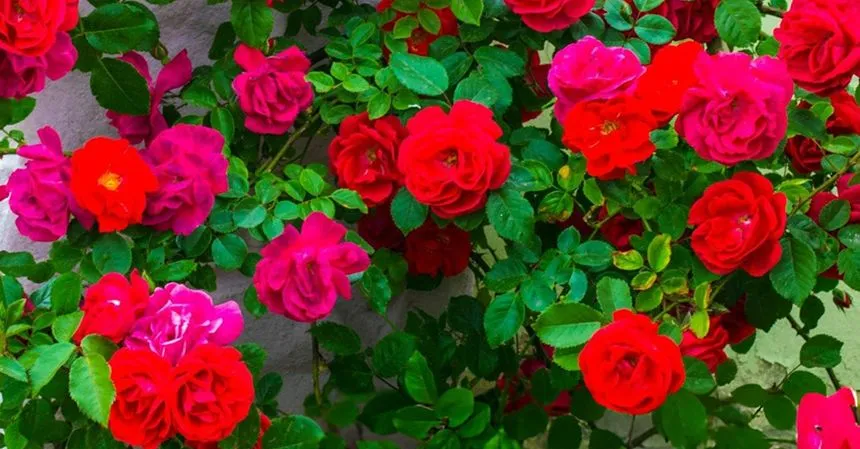
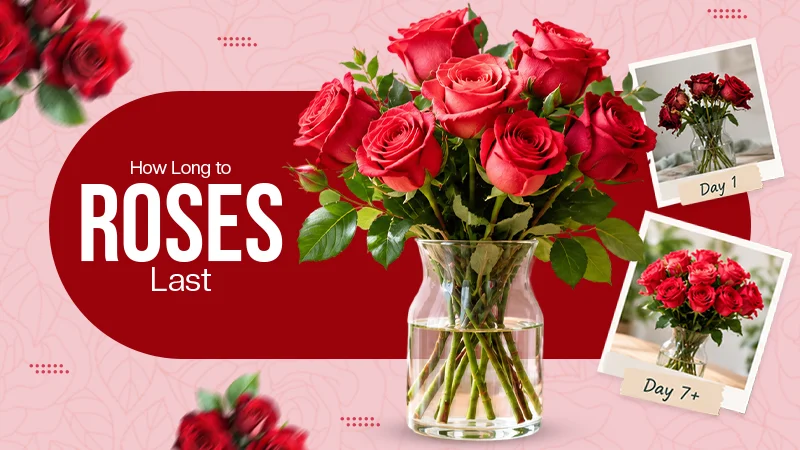
Want to express romantic feelings? Red is the color to start with. Red flowers are mainly associated with love, passion, courage, and deep affection. Thus, red flowers are the most prominent ones on Valentine’s Day and anniversary celebrations.
Not only roses, but red tulips are also equally stunning. Both can give a cleaner, modern look to the bouquet. Whereas red carnations, dahlias, poppies, and geraniums elevate the garden’s look.
Want to create a romantic bouquet? We have an idea. Try combining red flowers with white blooms or greenery.
Now, for a garden. Let’s try pairing red flowers with green foliage along with purple and burgundy shades.
Best suited for: Valentine’s Day, anniversaries, romantic gifts, and bold garden beds.
2) Pink Flowers
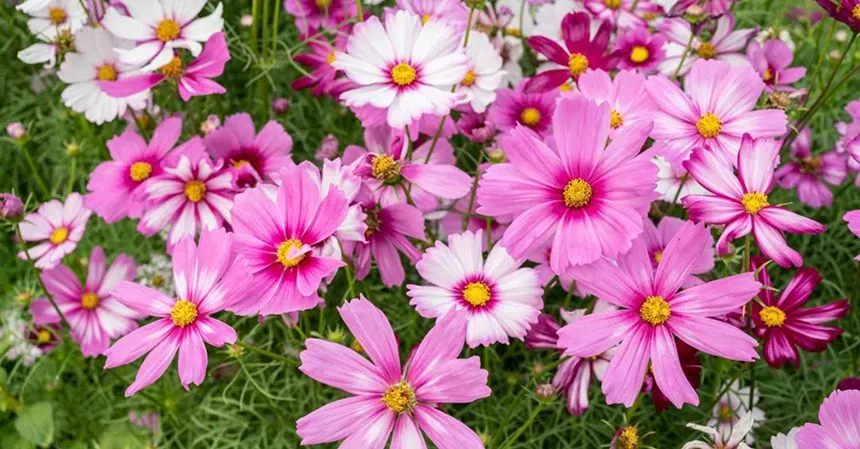
Want something romantic but less intense, gentler, and calmer? Pink flowers can be your go-to. The color is a symbol of affection, tenderness, admiration, gratitude, grace, and gentleness.
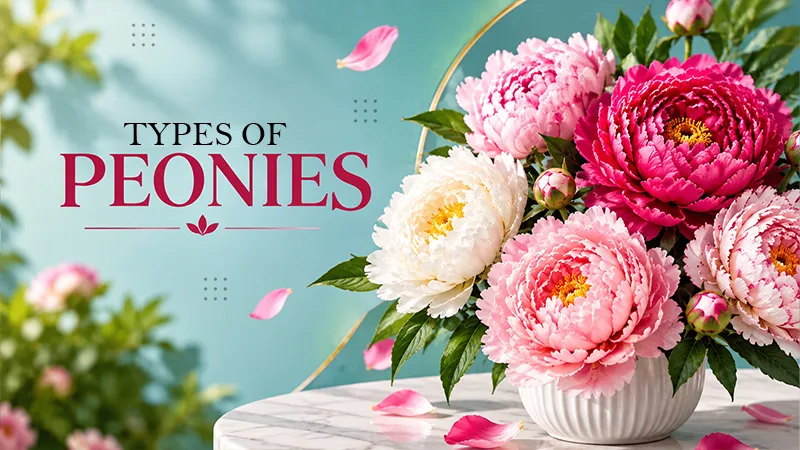
Pink roses are the obvious choice, but pink carnations, peonies, tulips, cosmos, and azaleas are the fresh choices. Pale blush pink is wonderful for wedding arrangements, baby celebrations, and elegant interiors. Furthermore, hot pinks can make gardens look energetic and playful.
But are you not sure what you want to pair with pink? The combination of white and green is perfect to create a soft, timeless, classy look. For a bolder look, try pink with orange or yellow.
Best suited for: Weddings, birthdays, baby showers, admiration, and romantic gestures.
3) Orange Flowers
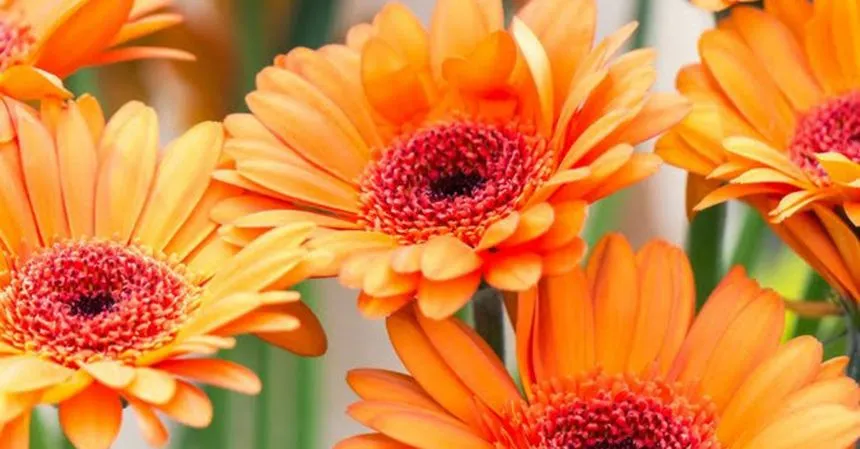
Want a burst of sunshine? Orange flowers can bring warmth and energy at the same time. They are perfect to brighten your garden.
Marigolds, zinnias, lilies, calendula, and gerbera daisies are beautiful orange-colored flowers.
Read the full guide to Orange Flowers.
4) Yellow Flowers
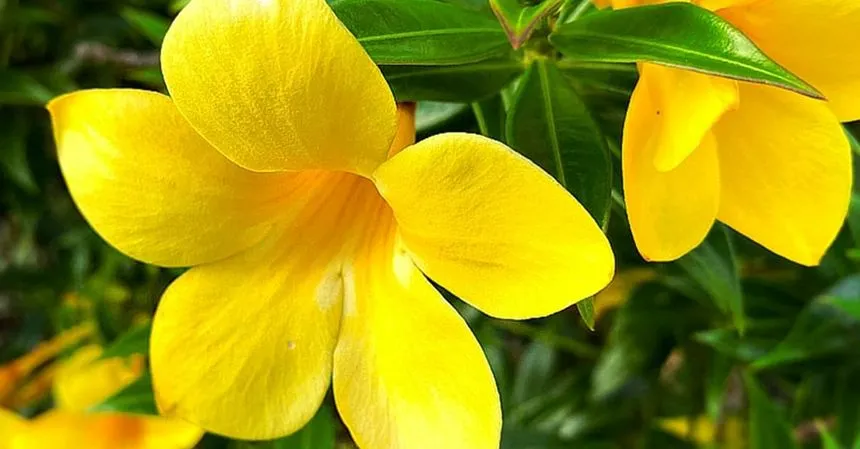
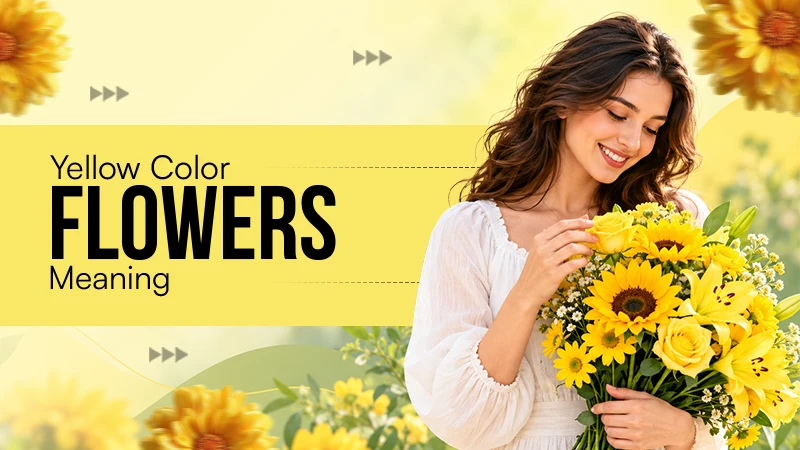
Few colors are meant to brighten spaces, and no other color can do it as quickly as yellow. Yellow flowers are a token of friendship, happiness, optimism, warmth, and cheerfulness.
Sunflowers, yellow roses, daisies, tulips, and marigolds are a few popular choices for a welcoming, sunny-bright look.
Read the full guide to Yellow Flowers.
5) Green Flowers
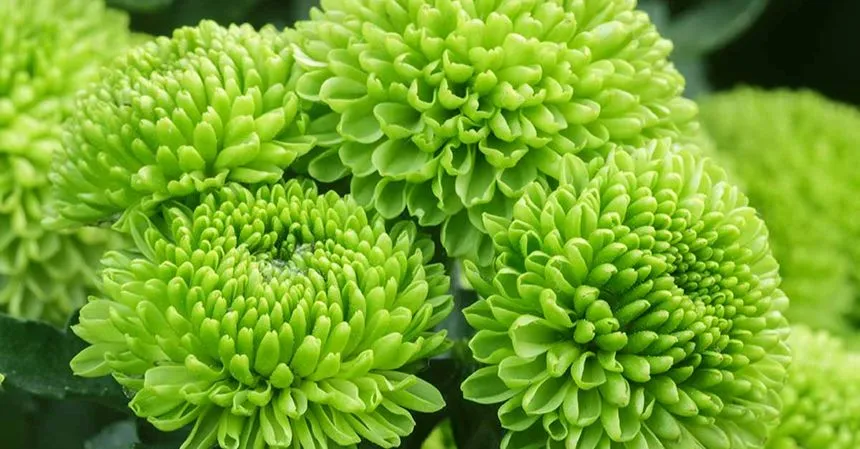
Green flowers are the most interesting choices because they are usually not the first bloom anyone can think of. However, they are often associated with growth, freshness, renewal, harmony, balance, and nature.
Green hydrangeas, carnations, chrysanthemums, bells of Ireland, and certain hellebores are the prime examples of green flowers.
The best thing is that green blooms pair easily with other colors, such as pink and purple. A combination with pink can make a clean and sophisticated flower arrangement. Whereas purple can bring a strong contrast.
Green blooms are useful in modern interiors to add a pop of color without being overly dramatic.
Best suited for: Modern décor, gardens, minimalist bouquets, and nature-inspired spaces.
6) Blue Flowers
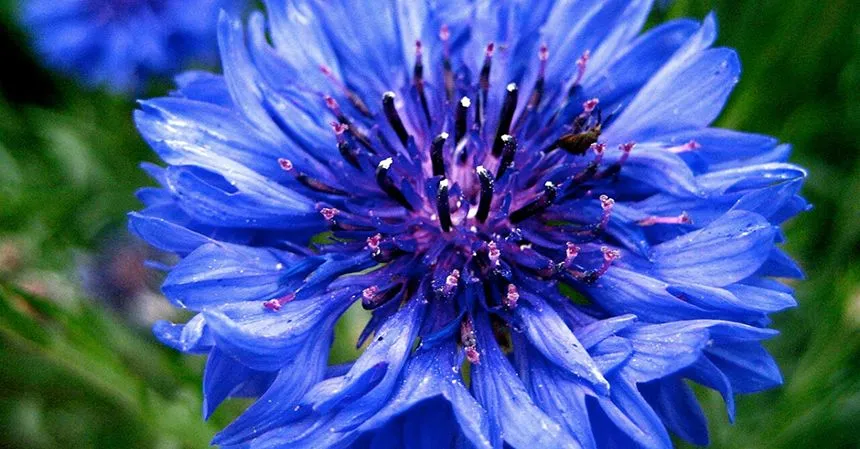
Want a uniquely colored bloom that can add an aquatic vibe to the space? Blue flowers are a great choice. They are mainly related to peace, trust, serenity, faith, and tranquility.
The most common examples are hydrangeas, delphiniums, cornflowers, and blue irises.
Read the full guide to Blue Flowers.
7) Purple Flowers
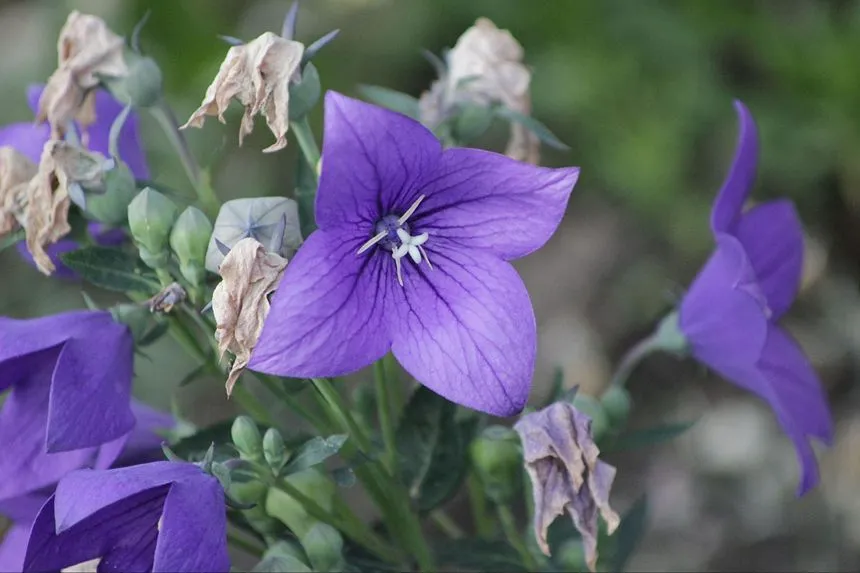
Let’s make your bouquet or garden rich and elegant with a tint of purple. The color hints at royalty, dignity, mystery, spirituality, creativity, and sophistication.
If you want something more dramatic and colorful than pastels, purple will work best for you.
From soft lilac to deep violet, the flowers like lavender, violets, irises, alliums, and clematis are worth considering.
Read the full guide to Purple Flowers.
8) White Flowers
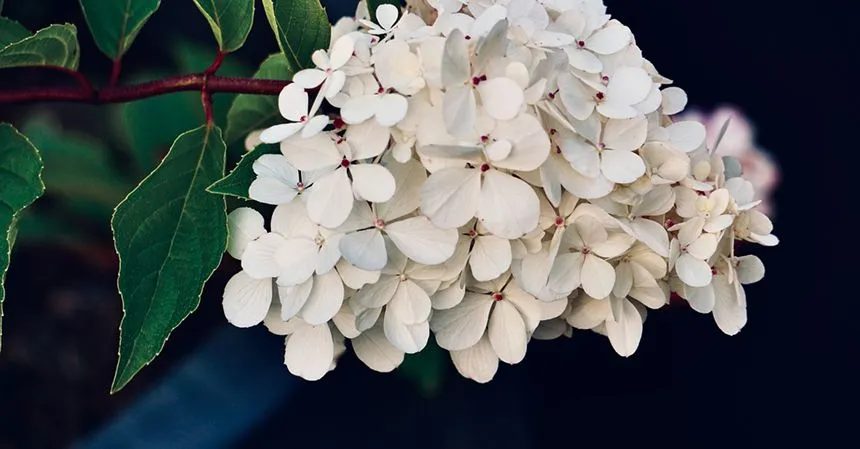
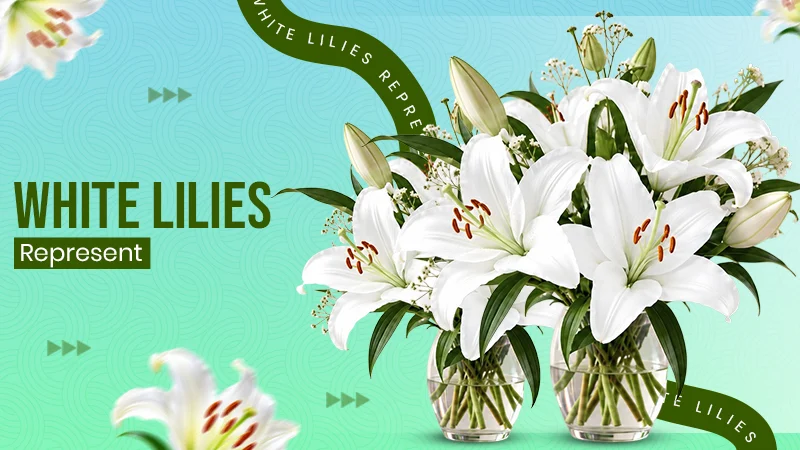
White flowers are the most multipurpose flowers, suited to almost every occasion. Thus, you can never go wrong with white. White flowers are associated with purity, peace, innocence, simplicity, remembrance, and new beginnings.
From white roses, lilies, jasmine, baby’s breath, hydrangeas, to irises, all these can help you create very different looks despite belonging to the same color family.
Read the full guide to White Flowers.
9) Black Flowers
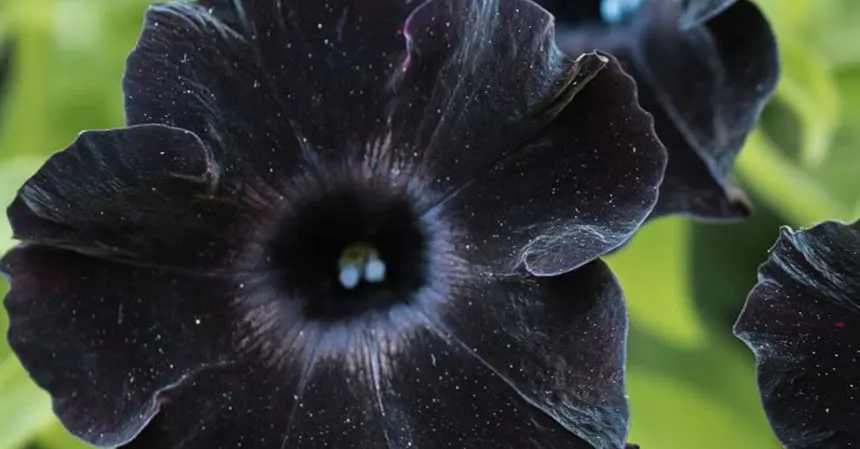
There is a fact about black flowers that very few people know: most aren’t truly black. They are usually dark shades of purple, red, burgundy, brown, or a combination of two or more of these colors.
Well, nothing can make black flowers less dramatic. Dark tulips, dahlias, petunias, and black roses are all strikingly gorgeous and offer contemporary and Gothic-inspired flowers to make gardens look Halloween-y.
Read the full guide to Black Flowers.
10) Multicolor Flowers
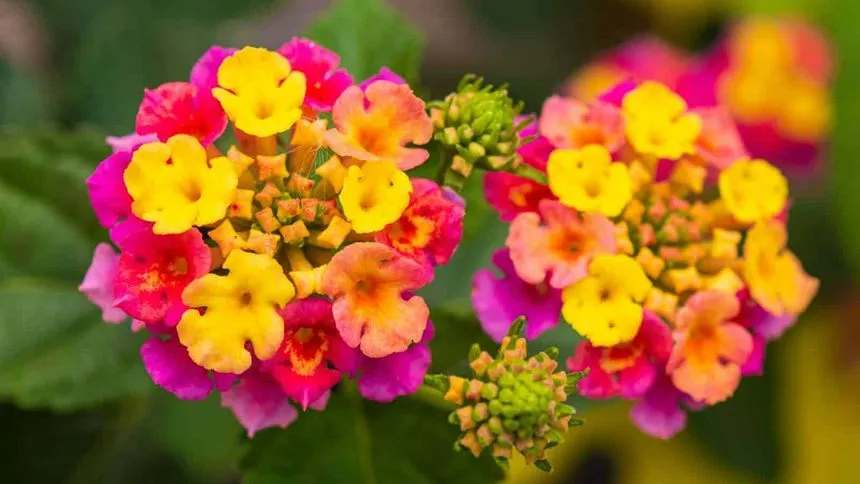
Why settle for one color when you can have several? Multicolor flowers feature two or more shades, whether visible through stripes, spots, contrasting edges, or multicolored centers.
Flowers like orchids, pansies, petunias, tulips, roses, and irises can demonstrate multicolored patterns to create a more cheerful, playful, or creative arrangement.
These flowers are best for solving most of the garden-related problems by bridging several colors together without making a complicated plan and then executing it.
The trick is to just choose a multicolor bloom that already has two existing shades of your garden and can mix with them gracefully.
Best suited for: Birthdays, celebrations, informal gardens, colorful interiors, and playful arrangements.
Flower Color Meaning Chart
| Color | Meaning | Popular Flowers in This Color | Best Occasion |
| Red | Love, passion | Rose, tulip, carnation | Romance, anniversaries |
| Pink | Affection, tenderness | Rose, peony, carnation | Weddings, birthdays |
| Orange | Energy, enthusiasm | Marigold, zinnia, lily | Celebrations, birthdays |
| Yellow | Happiness, friendship | Sunflower, rose, daisy | Friendship, birthdays |
| Green | Renewal, harmony | Hydrangea, carnation, chrysanthemum | Garden, modern decor |
| Blue | Calm, trust, peace | Hydrangea, iris, delphinium | Sympathy, relaxation |
Flower Colors by Occasion: What to Choose and Why
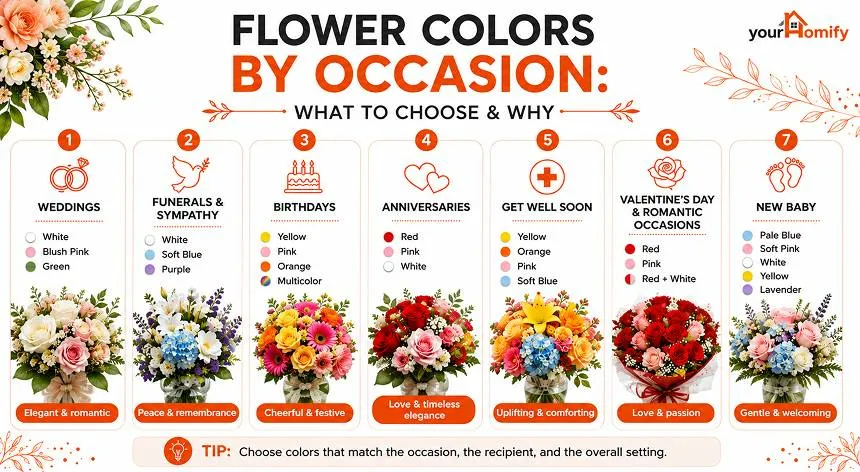
Need help finding flower colors for occasions you are attending? Start with your inner feelings, and then take references from this guide.
– Weddings
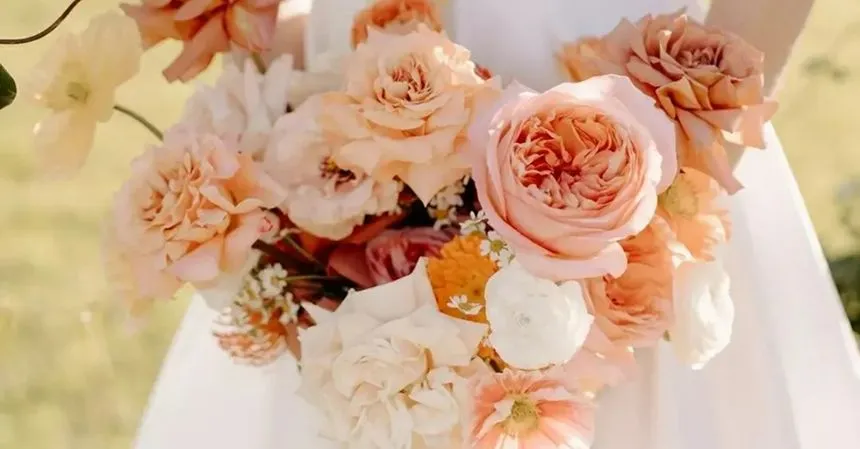
Do you know what’s in these days? The classic look. So, start with white, blush pink, and green blooms. White offers an elegant and clean look, pink screams romance, and greenery keeps everything looking fresh and pleasing.
Nevertheless, if your vibe is more dramatic, try red, white, or purple with blush and cream.
A quite useful trick is to just have a glance at the wedding decor first and then choose a wedding flower arrangement that complements the venue instead of competing with it.
– Funerals and Sympathy
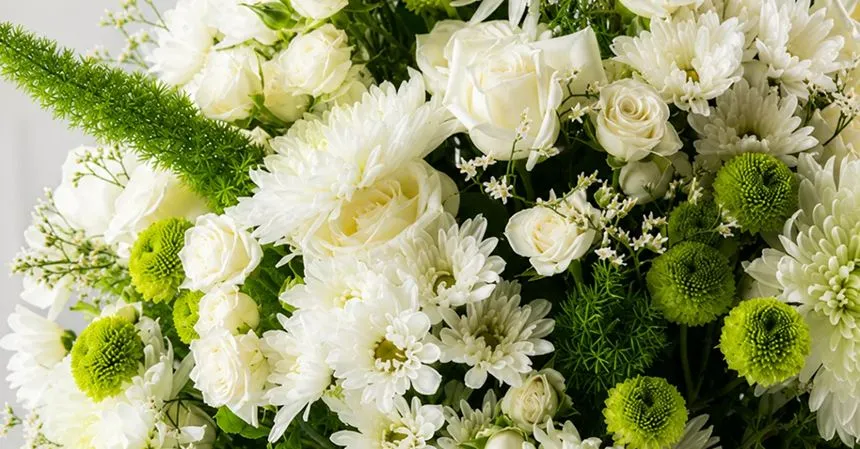
White, soft blue, pale pink, and purple can create a calm and respectful sympathy arrangement. White flowers are mainly the symbol of peace and remembrance; white, blue, and soft purple ones can form a quieter and more reflective feeling.
However, on such delicate occasions, culture and family traditions matter more than any color chart, for that matter. So, if you are unsure what flowers would do justice, follow the family’s preferences and traditions.
– Birthdays
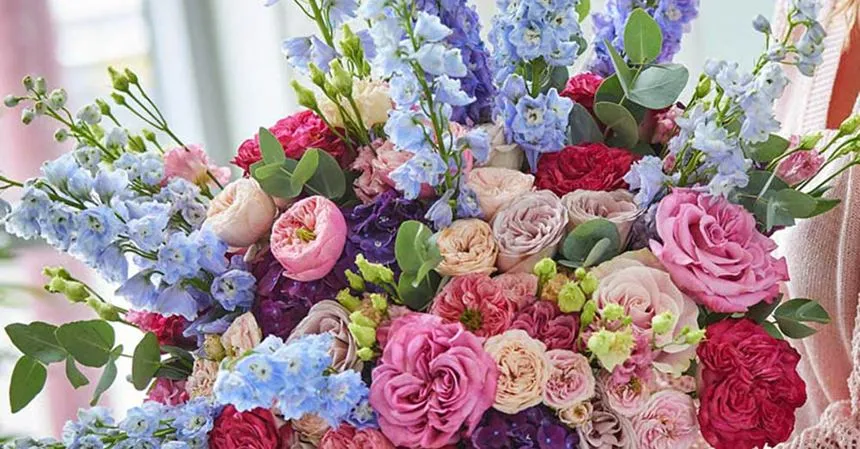
Birthdays are the occasions when you can experiment with colors and have fun with different blooms. Yellow, pink, orange, and multicolor flowers all work well because they are meant to create a cheerful and celebratory mood.
When buying birthday flowers for someone special, just pick their favorite color. Easy, right? Personalization can make your bouquet look more thoughtful.
– Anniversaries
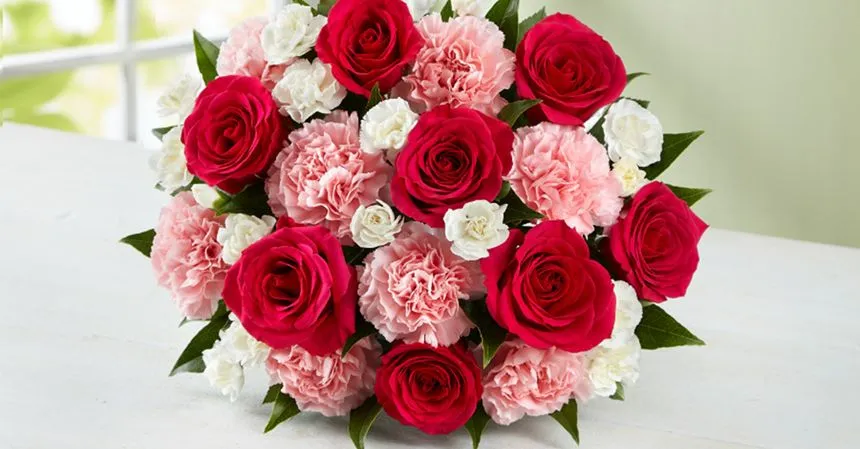
Red is the most straightforward choice for anniversaries because it communicates love and passion. Another good option is Pink, if you want something softer, while white can add an elegant and timeless touch to the bouquet.
You could make a customized bouquet by adding colors from your wedding decor or choosing a flower that reminds you of the person or a special moment in your relationship.
– Get Well Soon
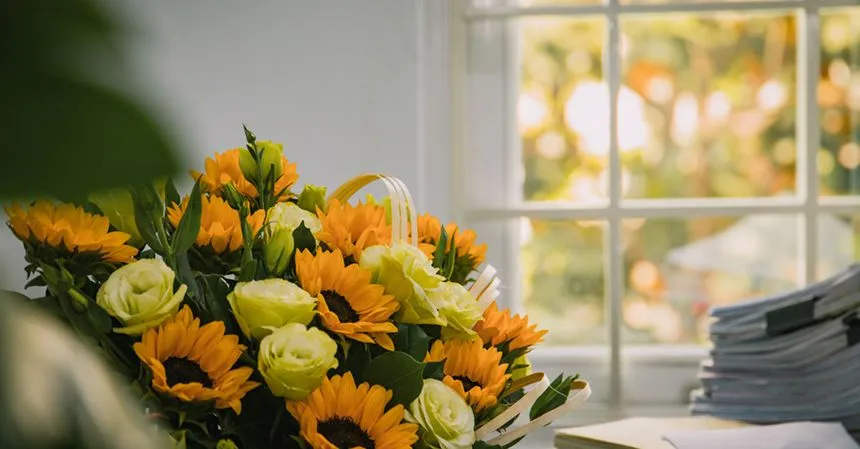
Want to brighten someone’s day who is not at their best temporarily? Choose bright and sunny colors that can uplift their souls. Yellow, orange, pink, and soft blue can be a great choice for a get-well bouquet.
Yellow and orange can be added to cheer up the mood, while pink and blue can feel softer and more comforting. One important tip: if you are buying a bouquet for a small hospital room or compact space, avoid buying overly large ones, as they can become difficult to place.
– Valentine’s Day and Romantic Occasions
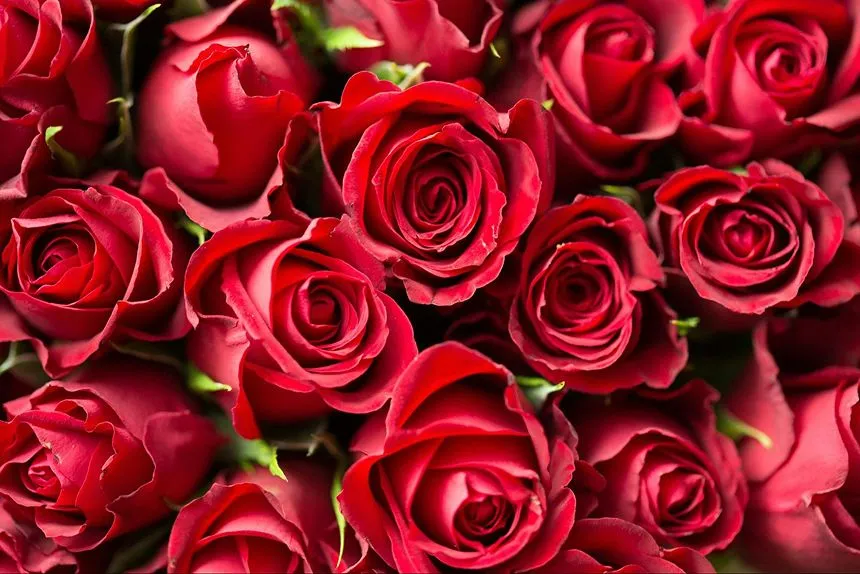
When it comes to Valentine’s Day, red is always the classic choice. Red roses are mostly associated with romantic love and passion. But if you want, you can try some other flow species.
Other options are red tulips, carnations, lilies, and similar blooms. If red feels too intense or obvious, choose pink for affection and admiration. Or, simply combine red with white to create a contrast.
– New Baby
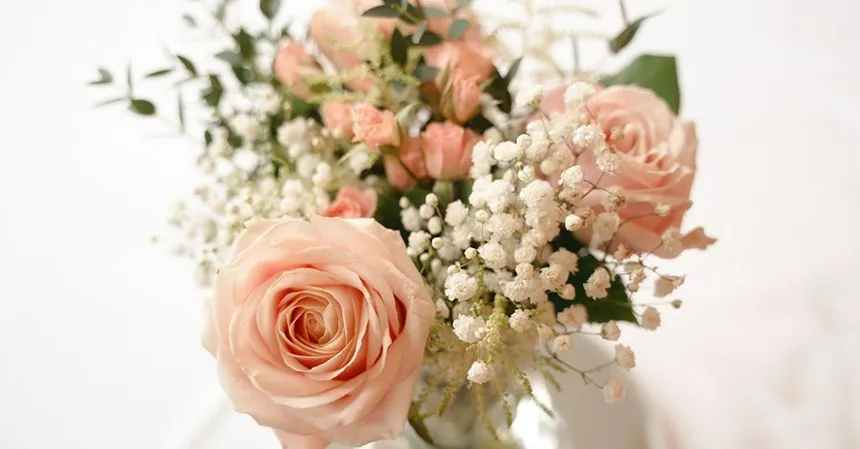
Soft pink, pale blue, white, yellow, lavender, and green are the most popular choices for welcoming a baby. Pink and blue are traditional in modern settings, depending on the baby’s gender. But there is no hard and fast rule to follow that convention.
If you want to give something more gender-neutral, try white, yellow, soft green, or lavender. Keep the shades light because nurseries are often based on softer aesthetics.
Flower Colors by Season: What Blooms When
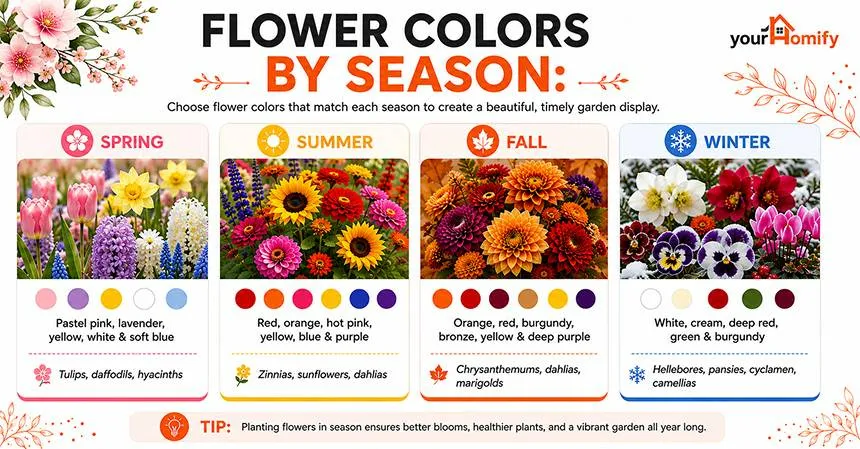
Selecting seasonal flower colors can make your garden feel more connected to the time of the year. Flower availability varies by region, but here are some suggested palettes to start with.
– Spring
The season is fresh, soft, and optimistic. Spring flower palettes feature pastel pink, lavender, yellow, white, and soft blue.
If you want to play safe, try tulips, daffodils, hyacinths, and cherry blossoms because they create an unmistakable spring feeling.
You can also consider yellow and white for a classic look and add pink and lavender for a softer look.
– Summer
Summer is the time to add some color. Think red, orange, hot pink, yellow, blue, and purple.
Some of the best flower summer options for bold displays are zinnias, sunflowers, dahlias, lilies, and marigolds.
But to make the garden feel energetic, mix warm colors like orange, red, and yellow.
Or do you want something cooler and eye-soothing? Try blue, purple, and white flowers.
– Fall
Fall has its own ready-made color palette. Don’t think much; just add orange, red, burgundy, bronze, yellow, and deep purple.
The most seasonal flowers for fall are chrysanthemums, dahlias, and marigolds. Combine them with foliage of green or bronze color to make the display look even more fall-friendly.
– Winter
Winter works beautifully with colors like white, cream, deep red, green, and burgundy. There is no need to add too many different colors; just make one elegant combination.
Depending on your region’s climate, hellebores, pansies, cyclamen, and camellias are the perfect winter-flowering options.
For indoor settings, white flowers combined with evergreen foliage can create a simple and minimalist winter aesthetic.
Rare and Unusual Flower Colors: Black, Blue & Rainbow Blooms
If you are in search of the rarest flowers, colors like black and blue are the main contenders. But there is much more to these unusual shades.
Are True Black Flowers Real?
Not exactly. Most flowers sold as black are not exactly black; they are often extremely dark red, purple, burgundy, or brown. Under normal lighting, these petals look completely black, and it takes intense effort to unveil the original shades.
The dramatic appearance makes black tulips, petunias, dahlias, and other dark flowers popular.
Here is everything about Black Flowers.
Another rare gem is the Blue flowers.
Blue is the trickiest pigment for nature to produce. A flower needs the right combination of pigment and cellular conditions to create an appealing blue shade; thus, it is the rarest of all.
Some flowers are known to be blue but are actually blue-violet or violet-blue. A few prime examples are hydrangeas, delphiniums, cornflowers, and irises.
Know all about Blue Flowers in a single go.
The next interesting bloom is the Rainbow Flower.
The reason is obvious. They are not natural but created artificially.
As we discussed above, florists use different dyes and absorption techniques to color the white flowers. This allows individual parts of petals to take different colors, and the result is always eye-catching.
Though Mother Nature has not created them that way, Rainbow Flowers are worth going gaga over.
Using Flower Color in Garden Design
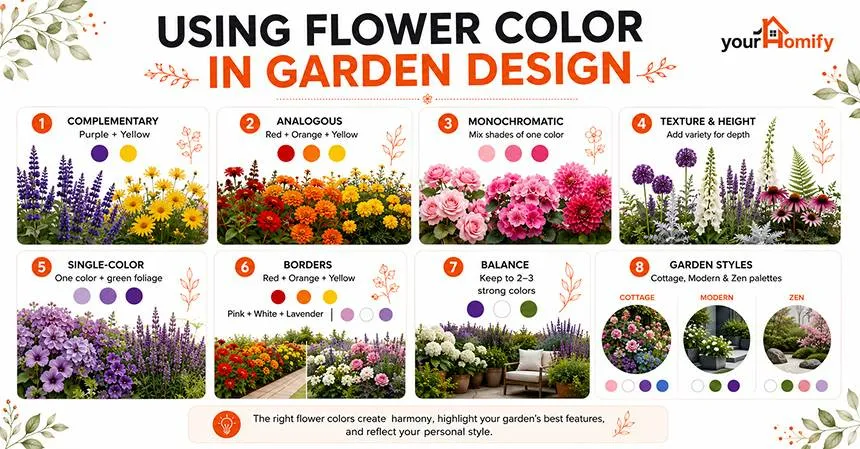
Let’s walk through the handpicked flower color combinations the garden needs. Most importantly, your garden must not look like a children’s art book but more balanced.
Here are a few color-theory tricks to make your garden look coordinated and sophisticated.
– Complementary Colors
Want maximum contrast? Try complementary colors—the shades that sit opposite on the color wheel.
For example, purple and yellow are the easiest examples. Plant purple irises or salvias alongside yellow marigolds or coreopsis. The two colors make each other stand out.
– Analogous Colors
Want smooth color flow and a harmonious look? Use analogous colors, which sit next to each other on the color wheel. Such as a red, orange, and yellow flower bed, this will create a warm and energetic appearance.
The next idea is blue, purple, and violet flowers to create a cooler and more relaxed look.
– Monochromatic Colors
A monochromatic garden sticks to a basic color and different shades of it instead of adding different shades from the color wheel.
One simple example is a pink bed including pale pink roses, medium-pink geraniums, and deep-pink dahlias. The trick to creating contrast in features like height, texture, shape, and shade so the garden doesn’t look flat.
– Designing a Single-Color or Monochromatic Garden Bed
Pick one color of your choice, then choose flowers in several shades of that. Then, add different foliage textures and flower shades to keep the theme interesting.
A white garden is an ideal example. White roses, jasmine, hydrangeas, and baby’s breath, when paired together, can create a beautiful monochrome effect, while green foliage maintains the contrast that eyes need.
– Best Color Combinations for Borders and Beds
For a cheerful border: Try Red + Orange + Yellow.
To create a romantic look: Try Pink + White + Lavender
For a stronger contrast: Purple + Yellow is a great combination
A little tip: If your patio furniture, walls, or outdoor accessories have strong colors, don’t push yourself to add more. Sometimes a simple two- or three-color flower color palette looks more expensive and polished than too many colors.
– Match Flower Color Choices to Garden Style
For a cottage garden: Soft pinks, whites, purples, blues, and informal multicolor plants look amazing.
For a modern garden: Try a controlled palette such as white+green or purple+white. Strong and thick foliage and clean planting patterns can make the space look modern without trying much.
For a Zen-inspired garden: Minimalistic approach, natural elements, and a restrained color palette are perfect for these gardens. Try white, green, muted pinks, or soft purples to create a calm atmosphere without seeking attention.
Practical Color Choosing Guide: How to Pick the Right Flowers
Still not sure how to choose flower colors? Don’t stress much. Start with the occasion.
Color Checklist to Pick a Bouquet for a Specific Occasion:
Ask yourself these questions instead of making a random purchase.
- What’s the occasion: Red for romance, yellow for friendship, bright flowers for celebrations, and restrained shades for sympathy.
- Who is receiving it: Choosing favorite flower colors can create a more personalized statement. It is much more meaningful than traditional symbolism.
- What feelings do you want to create: Red and orange are energetic, pink feels gentle, blue is calm, and white feels clean and peaceful.
- Where are flowers going: Try to create contrast with colors already present in the room or space where the flowers will be placed.
- Consider cultural considerations: Cross-reference the chosen color with the traditional or cultural meanings for the person who is receiving it.
Best Flower Colors for Photos and Instagrams
Everyone wants their flowers to stand out in the pictures they are taking. Strong red, orange, yellow, hot pink, purple, and blue shades tend to create popping pictures; the trick is to use simple backgrounds.
If you desire a dreamy Instagram-worthy shot, try soft colors like blush pink. White, cream, and lavender, combined with plenty of greenery. Keep the light natural to make these shades look extraordinarily gorgeous.
One more useful trick: Repeat the flower color throughout the garden instead of putting all blooms congested in one space. This will provide cohesion across different photos and make your streak look even.
How to Match Flower Colors to Home Decor
Think of the flowers you are choosing as a crucial element of your room’s color scheme.
If your room is white or beige, adding strong colors like red, orange, pink, or purple flowers can serve as great accents. But if the room already has bold colors, pick flowers with existing shades and introduce several new ones to maintain the richness.
For a room that has blue accents, blue, white, lavender, or contrasting yellow flowers will look perfect. And, for neutral shades of interiors, green and white can create a clean look, whereas pink and cream can add some warmth to the space.
Yourhomify already uses color-theory principles to create its guides for floral and garden arrangements. With the goal of enhancing your home and garden’s appearance.
Yourhomify provides practical inspiration to help you choose the right plants, flowers, color palettes, and designs for a beautiful and cohesive space.
Commonly Asked Flower Color Questions
What flower color means “love”?
Red is the classic flower color to represent love. Red flowers are traditionally linked to romantic love, passion, and desire. This is why red roses are the most gifted flowers on Valentine’s Day and anniversaries.
What color flowers are for a funeral?
White is the widely used color for funerals and sympathy occasions because it represents peace, respect, and remembrance. Soft blue, pale pink, and light purple can also create a respectful and calm look. But the main consideration during such occasions should be based on the family’s culture and preferences.
Do flower colors really have meaning, or is it just tradition?
It is mostly tradition and symbolism. Flower meanings have been developed through different cultures and traditions, rather than a universal rulebook.
Which color flower is best?
There is no universal “best” flower color. The choice is subjective and mainly depends on personal preferences, occasions, mood, or decor. Some colors like red, yellow, and orange create energetic accents, while others like blue and purple create a calmer atmosphere.
What are the top 5 beautiful flowers?
The five classic and most used choices for forms, gardens, and home decor are roses, orchids, peonies, tulips, and lilies. Roses are the most versatile ones, as they come in different sizes, colors, forms, and fragrances.
Which flower is considered “luxury”?
Orchids are mostly associated with luxury, elegance, and sophistication, making them a popular choice to enhance interiors and special occasions.
Who is the queen of flowers?
Rose is mainly known as “Queen of Flowers.” Its timeless beauty, fragrance, and variety make it the most iconic gifting option and perfect garden flowers.